The Way You Walk Just Revealed Your Liver and Sleep Health: 7 Things a New 3,328-Person Study Found


Your walk is doing more than getting you from one room to the next. It is quietly carrying clues about your liver, your sleep, and your blood sugar. A new study from Israel suggests those clues are detailed enough for a computer to read.
Researchers at the Weizmann Institute of Science recorded 3,328 adults with a depth sensing camera and fed the movement data to an AI model. The model found links between how people moved and 1,887 of the 3,210 health measures the team examined. That is more than half of everything they checked.
The headline finding is the liver. Movement patterns predicted liver stiffness, a marker of scarring, about as well as standard liver blood tests. The sleep finding runs close behind. The way the torso moved carried information tied to sleep apnea, insomnia, and how long people had slept the night before.
None of this means a camera can diagnose you. The study shows links, not causes, and the technology is not ready for medical use. Still, the results point to a future where a short walk in a clinic could add a whole new layer to a checkup. Here are the seven findings that matter most.
The 5 Movement Tasks
Every volunteer completed the same five short tasks in front of one depth sensing camera.
The camera tracked 26 joints in 3D across all five tasks, producing 17,589 movement sequences in total.
1. The 3,328-Person Experiment That Watched People Move

The study drew on the Human Phenotype Project, a large research group in Israel. In total, 3,328 adults took part. Each person completed five short movement tasks while a single depth sensing camera recorded them. The camera tracked 26 joints in three dimensions, from shoulders to ankles, and the team collected 17,589 movement sequences.
Then came the AI. The researchers trained a foundation model, a type of AI that learns broad patterns from large amounts of data, by hiding parts of the movement recordings and asking it to rebuild what was missing. That training taught the model the language of human motion. Once trained, it could turn any recording into numbers that could be compared against thousands of health measures.
The scale is what makes this study different. Earlier gait research mostly looked at one condition at a time, like Parkinson’s disease or fall risk. This team checked 3,210 health measures across 18 body systems, from blood tests to sleep, mental health, and bone density. The model found statistically significant links with 1,887 of them. The paper, titled “A Gait Foundation Model Predicts Multi-System Health Phenotypes from 3D Skeletal Motion,” was published in Nature Medicine in November 2026.
2. How a Camera Read 26 Joints in 3D

Doctors have watched patients walk for centuries. A limp or a shuffle can hint at a problem long before a lab result comes back. The Weizmann team wanted to know whether a computer could catch the same subtle signs, and catch ones the human eye misses.
The trick was to watch the whole body at once. Most gait studies focus on the legs: how fast you walk and how long your stride is. This study kept the full three dimensional path of every joint. That extra detail mattered. Movement patterns added information beyond familiar measurements such as walking speed and stride length.
Different parts of the body carried different kinds of information. Leg movement held the most clues about metabolism and frailty, the medical term for becoming physically weaker with age. Torso movement, the area between the shoulders and hips, carried the most clues about sleep and daily habits. The arms added their own signals too. Lead author Adam Gabet, a computer scientist at the Weizmann Institute, told ScienceAlert that the team wanted to find out whether a computer could recognize the subtle signs doctors notice. The answer, it turns out, is yes, and then some.
3. The Liver Surprise: Your Walk Matched Blood Tests
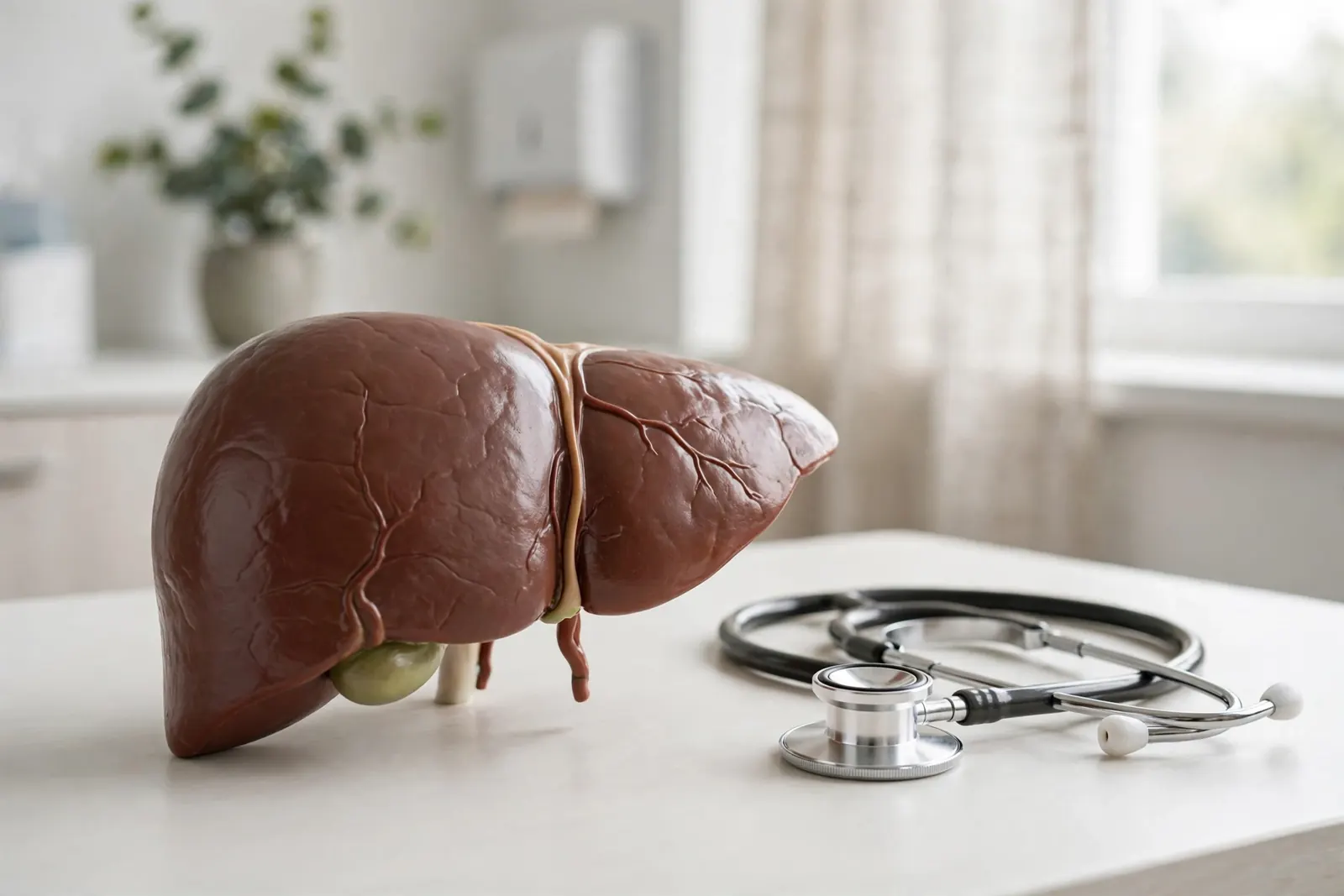
The most startling result involved an organ that has nothing obvious to do with walking. The liver. Doctors judge liver scarring, called fibrosis, by measuring how stiff the organ has become. Stiffness is usually checked with imaging or blood tests.
The researchers found that movement patterns could predict liver stiffness. Adding movement data improved the prediction beyond age and body mass index by as much as, or more than, adding the full panel of standard liver blood tests. That held true for both men and women. In plain terms, a short walk in front of a camera gave doctors roughly as much information about the liver as a blood draw.
Why would the liver show up in a walk? The researchers do not claim to know the mechanism. Liver disease often develops quietly, and fatty liver disease is usually symptom free early on. The body may compensate in tiny ways that change posture before a person feels ill. The study does not prove that chain of events. It only shows the link is real. Still, it could matter most for early detection, since liver problems are far easier to slow down when caught early.
What the Walk Revealed
Out of 3,210 health measures checked, movement patterns were linked to 1,887 of them.
Links covered 18 body systems, from heart and bone to sleep and mood.
4. Your Torso Knows How You Slept

Sleep was the second surprise. The movement of the torso carried information tied to sleep and exercise habits. The model could predict measures linked to sleep apnea, a condition where breathing repeatedly stops or becomes restricted during sleep. It also picked up signals tied to insomnia and to how long people had slept the night before.
“A finding that stood out to me was how much sleep quality affects our body,” Gabet told ScienceAlert. That quote gets at why the result feels so strange. A bad night of sleep does not just leave you tired. It changes how your body moves the next day, in ways a camera can measure even when you cannot feel them.
This does not mean a camera can diagnose a sleep disorder. Sleep apnea needs a proper sleep study, and insomnia needs a clinical conversation. What it suggests is that sleep health leaves a physical imprint on movement. That imprint could one day help flag people who should be tested. Many people with sleep apnea snore, wake up tired, and never connect the dots. A movement check that spots the pattern early could push them toward a real diagnosis sooner.
5. Diabetes, Depression and Pills: The Extra Signals
The model did more than spot the liver and sleep. When researchers added movement data to basic facts like age, weight, height, and belly fat, predictions improved for diabetes, depression, insomnia, and medication use. The walk added something the usual numbers alone could not provide.
The screening results were striking for men. Adding movement data increased the number of detected depression cases by 81% and diabetes cases by 83%. Those are not small bumps. They suggest that movement data could help find people who would otherwise slip through the cracks of a standard checkup.
Depression shows why this matters. It is underdiagnosed, and many people never mention low mood to a doctor. A routine movement test that flags someone for a follow up would be a genuine win. The same logic applies to diabetes, which often develops without symptoms. None of this replaces blood tests or a doctor’s judgment. But as an extra layer of information, gathered in minutes with no needles and no discomfort, it is hard to ignore. The team also found links with bone density, heart health, and frailty, rounding out a picture of movement as a window into the whole body.
6. What 30 Minutes of Movement Did in a Second Study

A separate study of 68,995 UK Biobank adults, published online October 7, 2026 in the American Journal of Epidemiology, looked at the trade off between sleep and movement across the day. Volunteers wore wrist accelerometers over eight years of follow up.
Among adults who already slept enough, moving 30 minutes a day from sleep into moderate to vigorous exercise was linked with a 20% lower risk of death. Moving those 30 minutes into light activity was linked with a 13% lower risk, and into standing with a 15% lower risk. If your sleep is solid, swapping a little of it for movement looks like a good deal.
Short sleepers faced a different picture. Losing 30 minutes of sleep to sitting, standing, or light activity was linked with an 18% to 20% higher risk of death from cardiovascular disease. So the same 30 minutes can help or hurt depending on how much you already sleep. Both studies are observational, which means they show links rather than proof of cause. Together, they point in the same direction. Sleep and movement are not separate parts of health. They shape each other, and your body keeps the score in ways you can measure.
What To Do With These Findings
This is not a home test. It is a reason to pay attention to three everyday habits.
If you snore heavily, wake up exhausted, or feel low for weeks, talk to a clinician. These are signs to act on now.
7. The Honest Limits You Should Know

Good science comes with honest limits. First, the participants were mostly healthy Ashkenazi Jewish adults living in Israel. The results may not apply equally to other populations, ages, or health backgrounds. A model trained on one group needs testing on many others before anyone can trust it broadly.
Second, the study captured one point in time. That design is called cross sectional, which means researchers measured movement and health at the same moment. It cannot tell us which came first. Did poor sleep change how people moved, or did a health problem change both? Only studies that follow people over years can sort out cause and effect.
Third, this is not a diagnostic tool. The researchers do not claim the system can diagnose liver disease, sleep apnea, or depression. It finds patterns and probabilities, not answers. A camera based checkup would need years of validation and careful testing before it ever reached a clinic. Anyone selling you a phone app that claims to diagnose disease from your walk today is getting ahead of the science. Your body is constantly broadcasting information about your health. We are just learning how to listen.
The way you walk is not a medical test, and it should not replace one. But the next time you cross a room, remember that your movement is telling a story. Researchers are now learning to read it. A short walk, a camera, and an AI model found clues to liver health, sleep quality, diabetes, and depression in 3,328 people. The science is young, the limits are real, and the potential is hard to overstate.
For now, the practical takeaway is refreshingly old fashioned. Sleep well, walk daily, and pay attention when your body changes. Those three habits are already linked to better health in study after study. The new research simply shows why: your body keeps score in every step you take, and one day a doctor may be able to read that score the way they read a blood test today.