What Happens to Your Mail, Taxes and Address When You Live in an RV

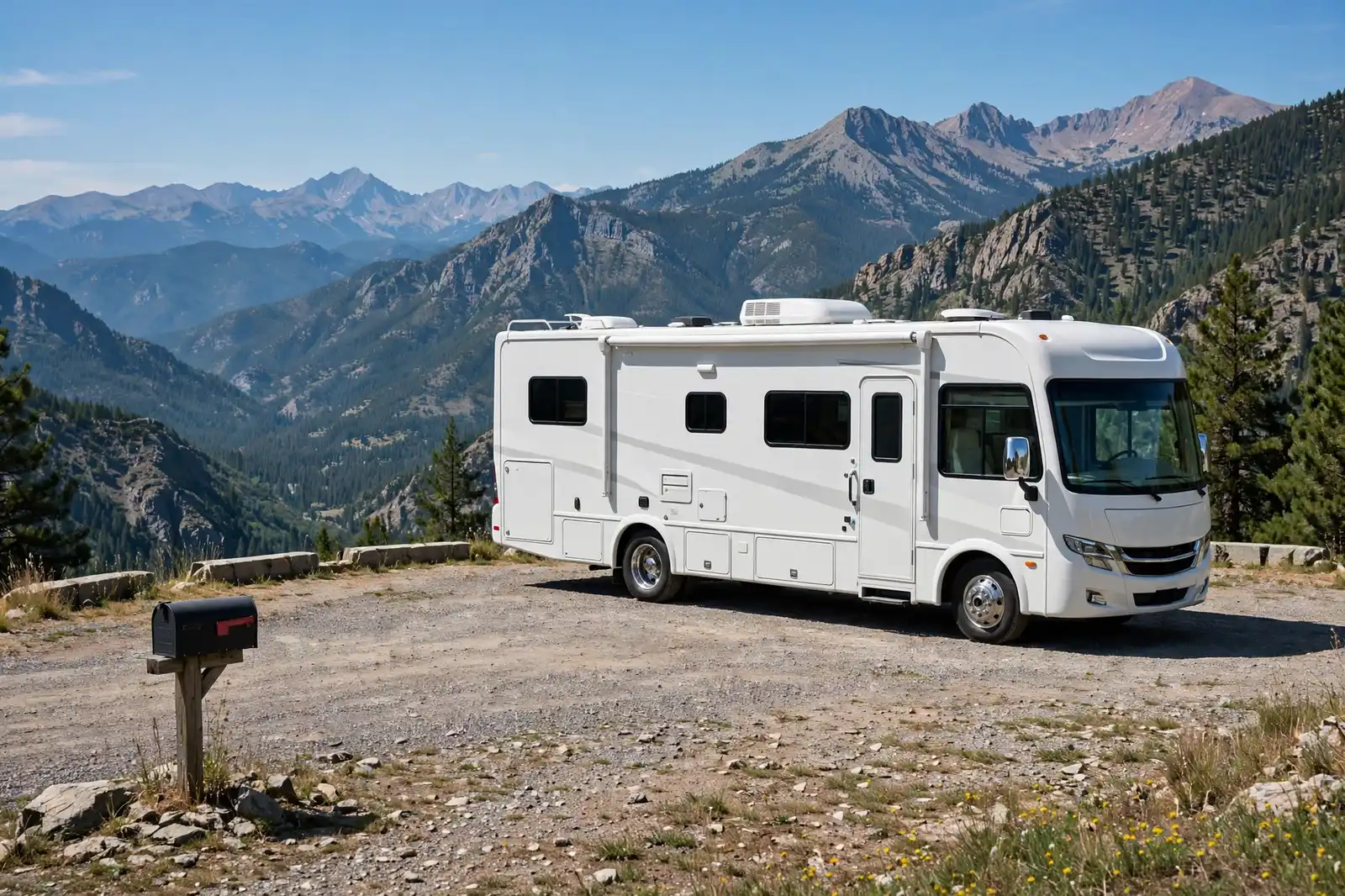
Your house can move. Your paperwork cannot just float along behind it.
When you live in an RV full time, every official system still asks for the same thing: an address. Banks ask for it.
The tax office asks for it. Your license, your voter registration, and your insurance all hang off it.
The good news is that full time RVers have solved this problem many times over. You do not need a house to have a legal home base.
You need one clear domicile, one reliable way to receive mail, and a plan to update every record to match. This guide walks through each piece in plain language, so nothing important slips through a crack in the road.
Start with domicile, not with a mailbox. Once the state is chosen, the mail service, license, and registration all point to the same place.
1. Start With Domicile, Not With a Mailbox
Domicile is a legal word for a simple idea. It is the one state you call home, even when you are parked somewhere else.
You can have only one domicile at a time. That one state decides a lot for you. It decides where you vote, where your vehicles are registered, which state taxes your income, and where you could be called for jury duty.
Residency is a looser word. It can mean where you happen to be parked right now.
You might spend winter in Arizona and summer in Montana. Those stays do not change your domicile unless you intend them to.
That intent matters. Domicile is about the place you mean to return to, not just the place you slept last night. Keep proof of that intent.
A license, a registration, a voter record, and a consistent mailing address in the same state all tell the same story. When the records disagree, problems follow.
So choose first, then build everything else around that choice. A handy explainer on what counts as an address when you live in an RV puts it well: the address becomes the anchor for your license, taxes, banking, insurance, and voting.
2. How Mail Actually Reaches You on the Road
Most full time RVers use a commercial mail forwarding service. That service is called a commercial mail receiving agency (CMRA). It gives you a real street address, not a post office box number.
That street address matters. A post office box will not accept packages from private carriers in most cases. A CMRA address can receive mail and packages from USPS, UPS, FedEx, and other carriers, and then hold, scan, or forward each item to wherever you are parked.
To set one up, you complete USPS Form 1583. That form authorizes the service to accept mail on your behalf. You will need two forms of identification, including a government issued photo ID, and the form must be notarized.
Gather your documents before you apply. A guide to Form 1583 and how it works explains the ID rules.
Once mail arrives, you choose what happens next. Many services scan the outside of each envelope so you can see it online. You can then ask them to open and scan it, forward it to a campground or post office, hold it, or shred junk.
As a backup, General Delivery at a post office, confirmed in advance, can hold mail for you.
3. The Big Three Domicile States, Compared Honestly
Ask a group of full timers where they domiciled, and three names come up again: South Dakota, Texas, and Florida. None of the three charges state income tax. All three have well established mail forwarding services that understand RVers.
South Dakota is often called the easiest start. A one night stay, proven with a campground or hotel receipt, is the physical presence proof used for a license. It also has low registration costs and no vehicle inspections for most RVers.
Texas is a strong pick if you want a central base and a large RV community. The Escapees RV Club is based in Livingston, Texas.
Texas also has no state income tax. Check inspection and renewal rules for your exact rig.
Florida suits snowbirds and anyone who already winters there. It has no state income tax and no annual vehicle inspections, but new residents face a one time registration fee, and insurance can run high near the coast. A comparison of the best states for full time RV residency is a good place to weigh those tradeoffs side by side.
Do not pick on tax alone. Compare registration, insurance, health plan networks, and how often you must return.
4. Taxes: What Changes and What Stays the Same
Federal taxes do not disappear because your home has wheels.
State income tax is where domicile does the heavy lifting. In general, you pay state income tax based on your legal domicile, not based on where you were parked when you earned the money. That is why a no income tax state can save money.
Working on the road adds a wrinkle. If you earn income in another state, that state may still want a filing for income earned inside its borders. Remote workers and business owners should track where work was done, not just where the RV was parked for fun.
Talk to a tax professional who knows mobile workers. This guide is general information, not tax advice.
Your RV itself can count as a home for some federal tax purposes if it has sleeping, cooking, and toilet facilities. That may matter for items like mortgage interest if you financed the rig, keep receipts and loan documents, and confirm each deduction before you claim it.
One more trap: selling a house and moving into an RV in the same year can create a messy tax year. Keep closing documents, moving dates, and domicile paperwork together.
All three skip state income tax. Registration, insurance, and health plan costs still differ, so compare your total cost, not just the tax line.
5. License, Registration, and Inspections
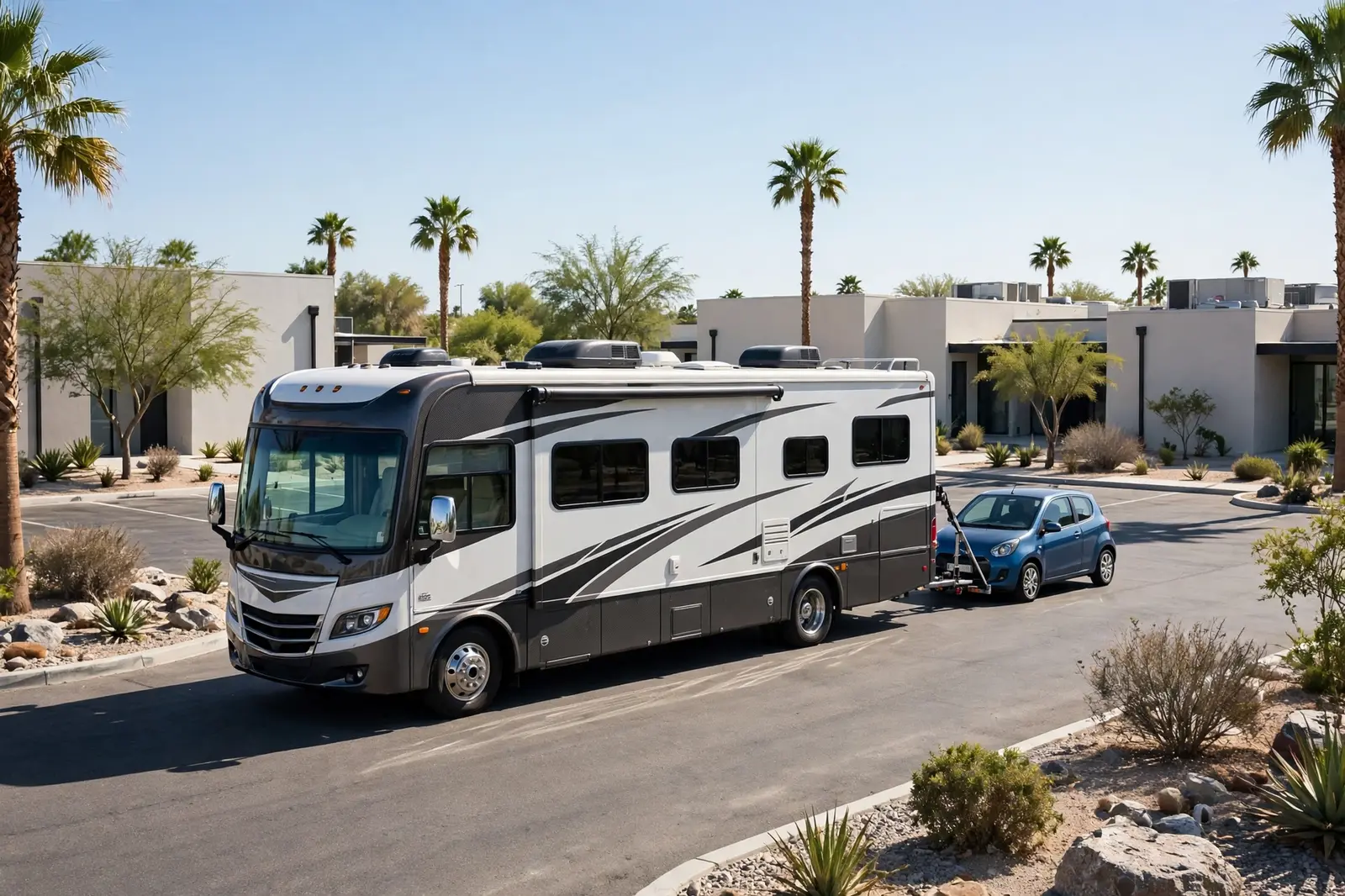
Your driver license and your vehicle registration should match your domicile state. If they point to different states, expect questions at a traffic stop, at a DMV counter, and from your insurer.
Most states require an in person visit to get a license. Bring your mail forwarding address paperwork, proof of your stay where required, and your existing license. Some states also ask for proof of a local address beyond the mail service, such as bank or insurance mail showing that address.
Register the RV and any towed vehicle in the same state. Check weight limits and license classes too. A regular license covers most RVs in many states, but very large or heavy rigs can cross into a higher class in some states.
Do not assume. Check your domicile state’s DMV page for your exact weight and length.
Inspections vary just as much. Some domicile states require none for RVs.
Others require safety or emissions checks, and those checks may force a return trip. Ask about renewal by mail before you leave the state.
Keep every registration, title, and insurance card in one folder, and act on renewal scans the same week.
6. Voting and Jury Duty From the Road
You do not lose your right to vote by living in an RV. You vote in your domicile state, usually by absentee ballot.
Register to vote in the same state where you hold your license and registration. You can often register at the DMV; otherwise register with the county election office.
Request your absentee ballot early. Rules differ by state, and some states require a reason for voting by mail, such as being absent from your county on Election Day.
Give the whole round trip plenty of time: request, delivery to your mail service, forwarding to your current campground, and return before the deadline. A guide to absentee voting from the road stresses the same point: request early, and track the ballot.
Jury duty works the same way, through your domicile county. A summons will go to your mail address.
If you are far away, call the court listed on the notice and explain that you are a full time traveler domiciled in that county. Many courts will defer or excuse you, but only if you respond.
Ask your county election office how your address is treated for local races, and keep the answer in writing.
7. Banking, Insurance, and Health Care Address Traps
Banks are stricter than campgrounds. Federal rules require banks to verify a physical address, and some banks reject a commercial mail address as a home address.
Tell the bank the truth about your setup. Many full timers keep a domicile address for official records and add a separate mailing address for statements.
Go paperless wherever you can, and turn on alerts for every account.
Vehicle insurance must match where the vehicle is registered, and your insurer must be licensed in your domicile state. Rates follow the garaging address on the policy, so an outdated address can mean the wrong rate or even a denied claim.
Health insurance is the trap that catches the most people. Many plans have networks tied to a home region, and care outside that network can cost far more.
Before you switch domicile, check whether your plan covers you nationwide, how it handles urgent care on the road, and where you would go for planned care. A cheap domicile state with a narrow health network can be an expensive mistake.
For prescriptions, ask about 90 day supplies and mail order delivery to your forwarding address.
8. Your Change of Address Checklist
Work through this list, and check each item off when you have proof, not when you sent a form.
First, pick the domicile state and sign up for mail service. Complete Form 1583, get it notarized, and confirm it is receiving mail in your name. Test it with a letter to yourself first.
Next, get the license and register every vehicle in the new state. Then register to vote, update your insurance, and tell your bank. Then update the IRS, your state tax agency, and Social Security if it applies.
Keep your old address active during the switch. Overlap beats a gap.
Finally, set a rhythm. Check mail scans weekly. Review registrations and insurance once a year.
Reconfirm voter registration before every major election. Escapees and RVshare both publish detailed domicile walkthroughs.
If any box is unchecked, fix it before you leave the domicile state. It is far easier to fix in person than from a thousand miles away.
Living in an RV does not free you from addresses. It changes how you manage them.
Pick one state and mean it. Get a real street address through a service you trust.
Line up your license, registration, vote, taxes, bank, and insurance behind it. Then keep it running with weekly checks.
Do that, and the road stays a place to travel, not to chase lost letters.