Where Can You Actually Park a Tiny House? The Rules Nobody Explains Up Front

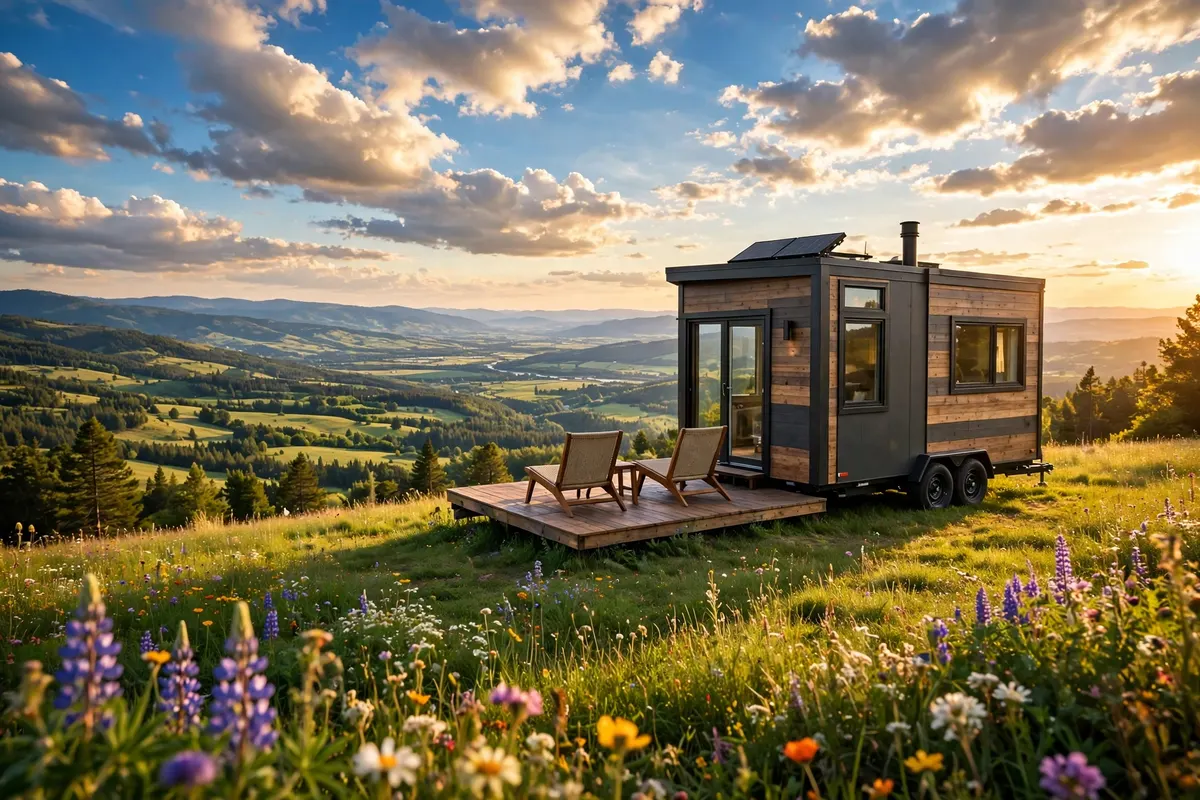
You found the perfect tiny house. You pictured the porch, the loft, the morning coffee with a view. Then someone asked where you plan to park it. And the smile faded.
Parking is the part almost nobody explains up front. A tiny house is not like a car you can leave anywhere. Where it can legally sit depends on what it is, where the land is, and what the local rules say about both.
The good news is that real options exist. RV parks, backyards, tiny house villages, and rural land all work for different people. The trick is matching your house to the right spot before you buy land, sign a lease, or tow across the country.
This guide walks through every realistic option, what each one costs, and the questions that save you from an expensive mistake.
At a Glance: Where Can You Park a Tiny House?
- RV parks and campgrounds: Easiest first stop. Monthly rates often run $400 to $1,200, with resort parks reaching $1,500 or more.
- Tiny house communities: Purpose built lots with hookups ready. Lot leases typically run $300 to $800 a month.
- Private land or a backyard: Often $800 to $1,500 a month in pricey areas, but only where zoning and permits allow it.
- Rural and off-grid land: Cheapest monthly costs, sometimes $200 to $400, but you handle power, water, and waste yourself.
- The golden rule: Your house is either an RV or a dwelling in the eyes of the law. That one fact decides almost everything.
1. First, Figure Out What Your Tiny House Legally Is
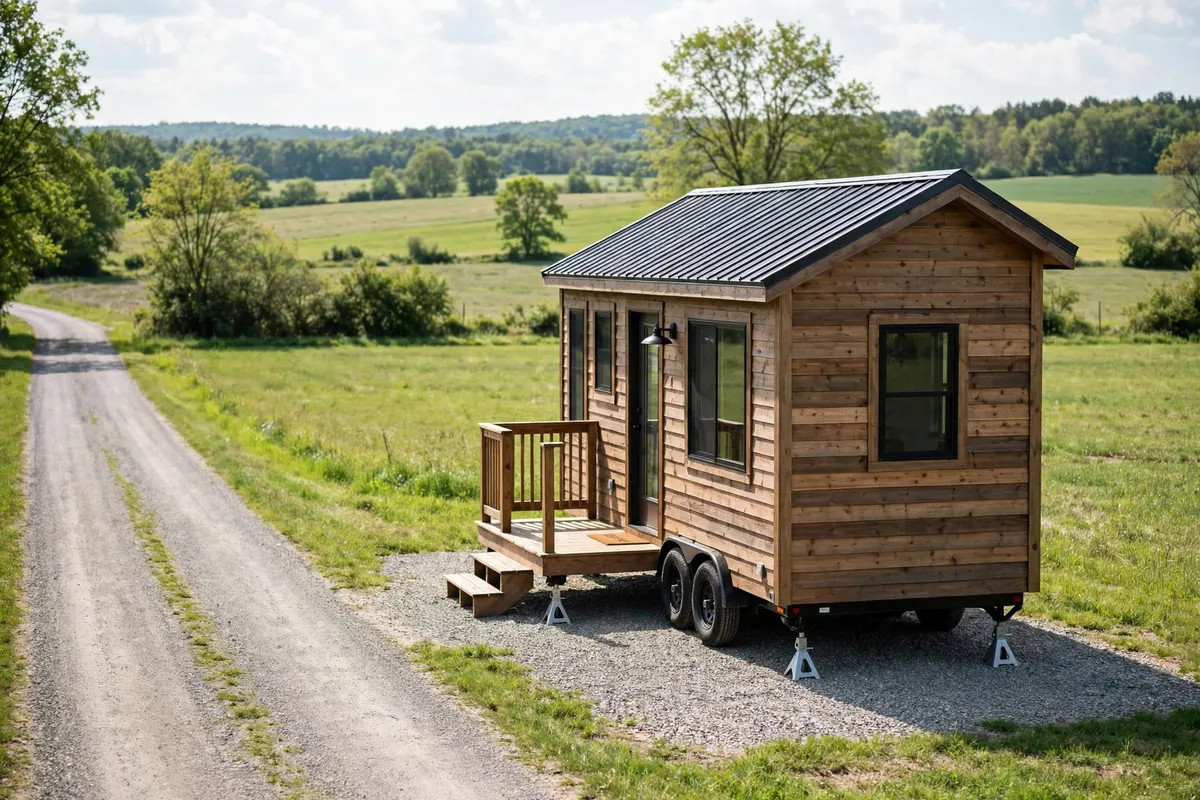
Before you look at a single piece of land, learn how your house is classified. This one detail shapes every option that follows.
A tiny house on wheels is usually treated as a recreational vehicle, or RV. Federal rules define an RV as a vehicle designed only for recreational use, not as a primary residence. The law sees your home as a vehicle first.
A tiny house on a permanent foundation is different. The law usually treats it as a small dwelling, like any other house. It must meet residential building codes, and it can qualify as a primary home or as an accessory dwelling unit, often called an ADU.
Why does this matter? An RV can go where RVs are allowed. A foundation home can go where houses are allowed. Neither one can go just anywhere. Little House Studios puts it plainly: where a tiny house can legally go depends on what it legally is.
Check your build paperwork before you shop for land. RVIA certification means most parks and insurers treat your house as an RV. A home built to residential code on a foundation counts as a dwelling.
2. RV Parks and Campgrounds: The Easiest First Parking Spot
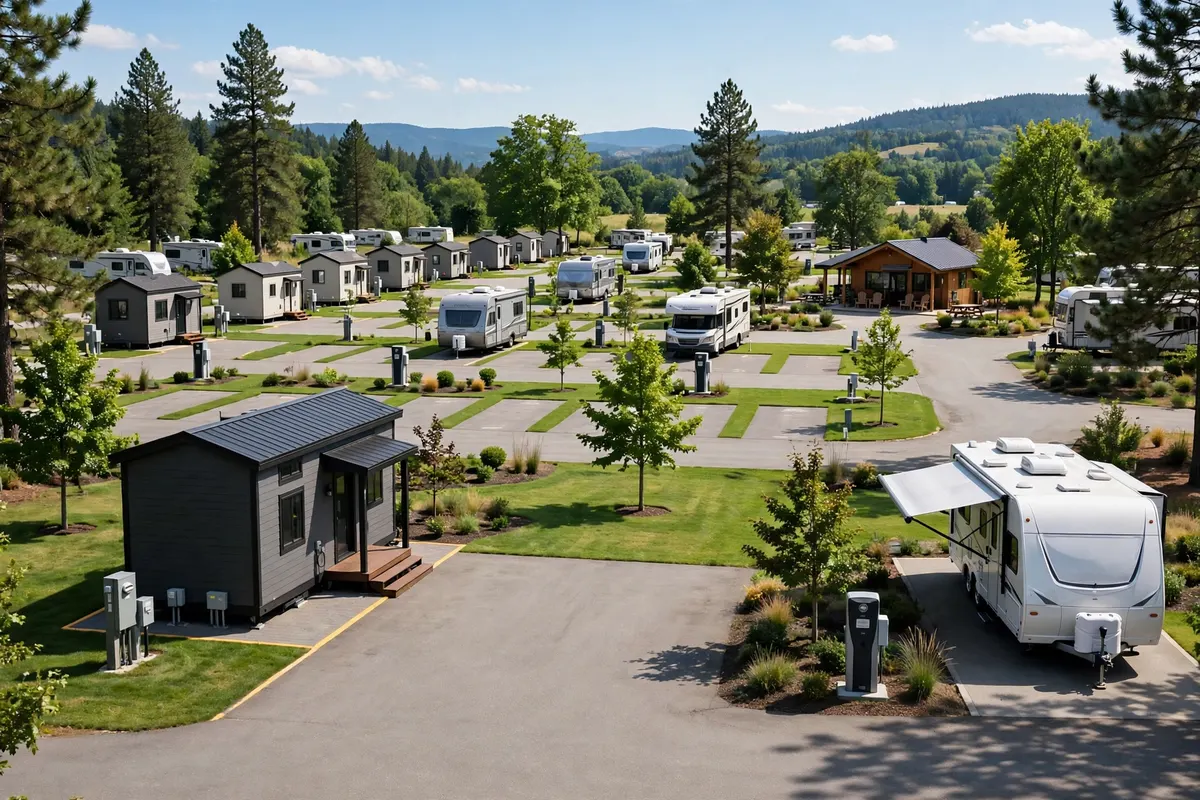
For most people with a house on wheels, an RV park is the simplest place to start. The zoning is already sorted. The hookups are already in the ground. You show up, plug in, and live your life.
Not every park will take a tiny house. Call before you tow and ask whether the park accepts tiny houses on wheels and whether it requires RVIA certification. Some parks also set age limits, size limits, or rules about how your home looks.
Stay limits matter too. Some parks cap stays at 14 or 21 days, while others welcome monthly and long term guests. If you want to stay a year, get the monthly rate in writing and ask what it includes. Water and sewer are often bundled, and electricity is often metered on top.
Costs vary a lot by region. One Florida KOA lists monthly RV sites at $750 to $850, with electricity metered separately. In Sonoma County, long term stays typically run $900 to $1,600 a month. Rural parks can be far cheaper, sometimes $300 to $500.
Parks give you neighbors, laundry rooms, and someone to call when a pipe freezes. You trade privacy for convenience, and for a first year in a tiny house, that trade is often worth it.
3. Parking on Private Land or in a Backyard
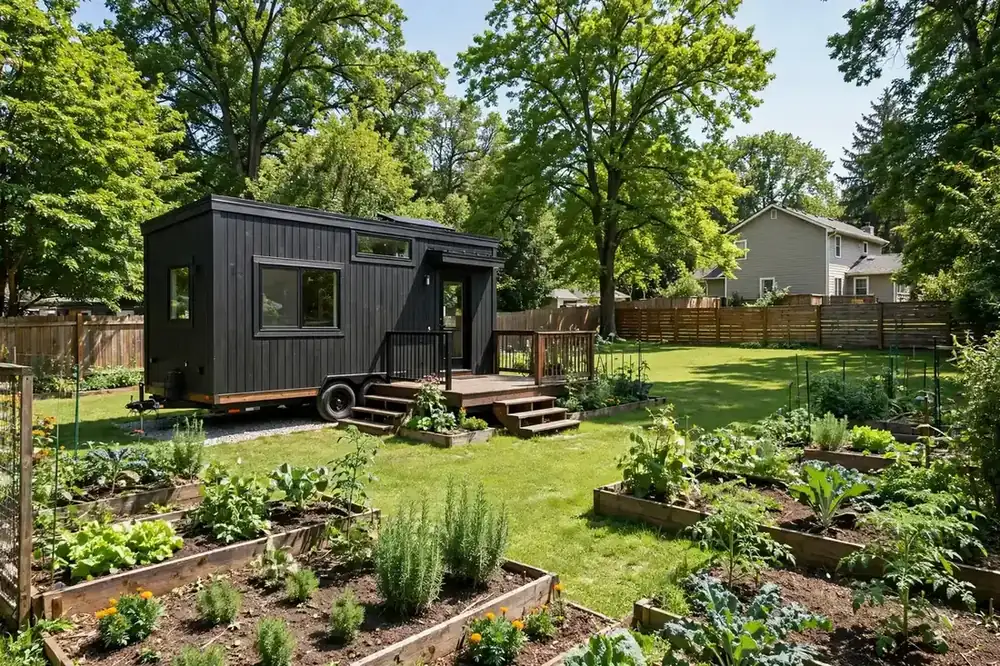
Parking in a backyard sounds like the dream. Low rent. A garden. Maybe family nearby. It can work beautifully, but it is also the option where people get caught out most often.
Owning land does not mean you can live on it in any home you like. Zoning decides what a parcel can be used for, and building codes decide what counts as a dwelling. Many suburban zones require a minimum house size of 1,000 square feet or more, which a 300 square foot house on wheels does not meet.
Many codes also cap RV stays on a private lot at around 14 to 30 days. That works for a guest visit. It is not a plan for full time living.
The legal route is usually an ADU permit or a local tiny house ordinance. Los Angeles allows movable tiny houses as ADUs, and Sonoma County created a Temporary Occupancy permit for tiny houses on wheels used as full time homes.
If a friend or relative offers you a backyard spot, get it in writing. Agree on rent, utilities, waste handling, and how long the stay lasts. A handshake deal turns sour fast when a neighbor complains.
4. Tiny House Communities: Built for This Life
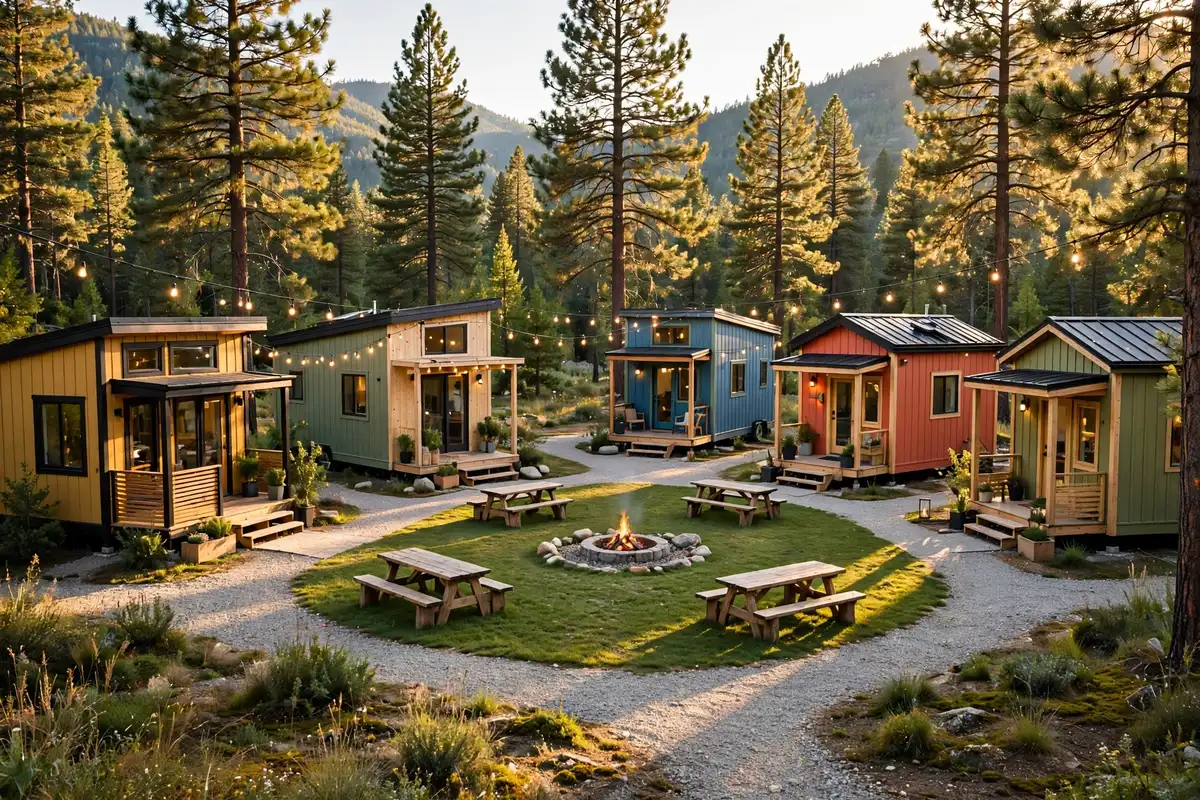
Tiny house communities are the middle path between a park and a backyard. These are purpose built villages where the zoning, the pads, and the hookups are already figured out. You own your house and lease the lot under it.
Life in a village feels different from a park. Your neighbors chose this life on purpose, and there is usually a shared green and a community building. That shared understanding is worth more than most people expect.
Lot leases typically run $300 to $800 a month, with $400 to $600 the most common range, plus possible HOA fees of $50 to $200. A few offer lots for purchase, often $30,000 to $80,000. Utilities are usually metered separately, so ask what a typical monthly bill looks like.
The catch is availability. Popular communities have waitlists of 6 to 24 months, and there are far fewer dedicated villages than the 13,000-plus private RV parks nationwide, so the best ones fill up fast.
Join the waitlist early, even before your house is finished. Visit in person if you can. Walk the lot. Meet the neighbors. A village is a community you are joining, not just a parking spot you are renting.
What Parking Typically Costs Each Month
- Off-grid homestead or land share: $200 to $400, lowest cost but fewest services.
- Tiny house community lot: $300 to $800, typically $400 to $600, plus possible HOA fees.
- RV park, basic or rural: $300 to $500 in cheaper areas, $400 to $1,200 in most regions.
- RV park, resort or coastal: $900 to $1,600, with electricity often metered on top.
- Private land or backyard lease: $800 to $1,500 in pricey counties, less in rural areas.
- Do not forget: deposits, metered electricity, pumping fees for holding tanks, and the cost of moving the house itself.
Ranges drawn from ToGaze and Clever Tiny Homes. Always confirm current prices with the park or landowner directly.
5. Rural Land and Off-Grid Parking
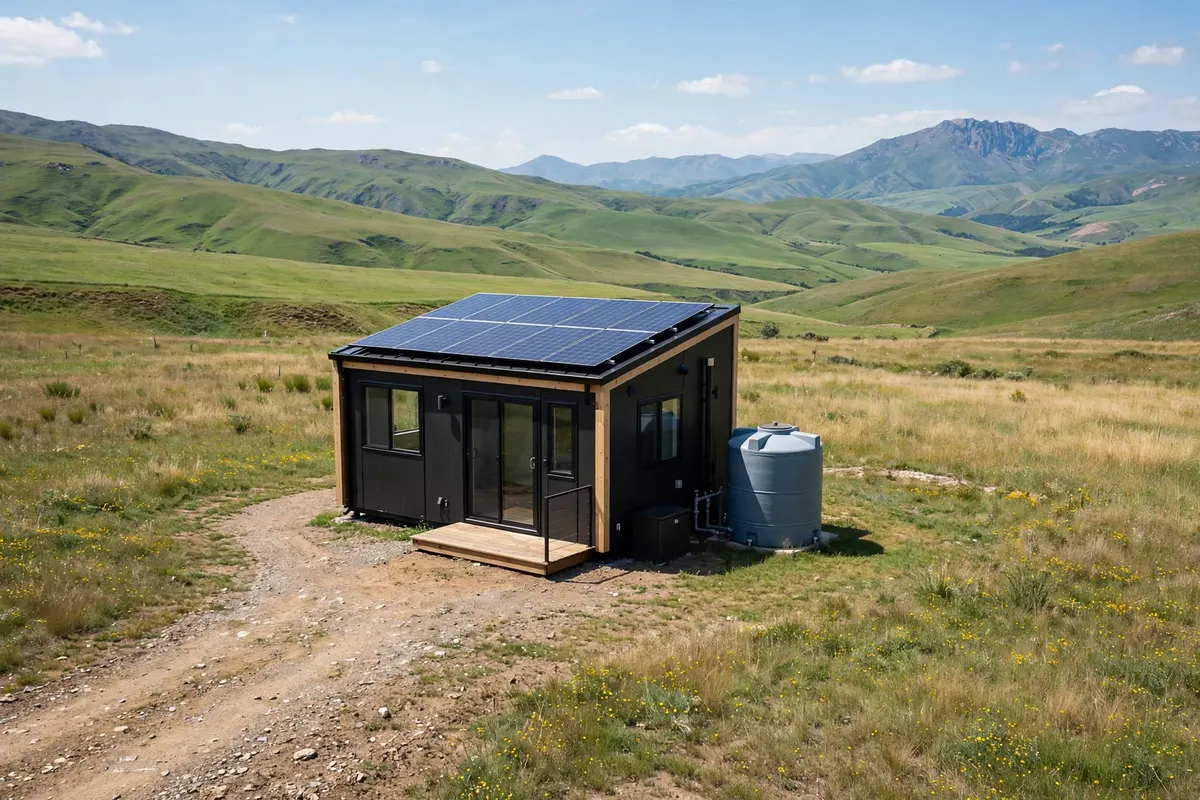
Rural land is where tiny house dreams feel most free. Open fields. No neighbors peering over the fence. Room for solar panels, a garden, and a dog that can actually run.
It is also where the rules get murkiest. Rural does not mean unregulated, and agricultural zoning may not allow a separate permanent residence at all. You still need legal road access, approved sewage handling, potable water, and a permitted electrical setup.
Off-grid setups solve some of this. Solar panels cover power, a water tank and filtration handle drinking water, and a composting toilet handles waste. But off-grid does not mean off the books. Septic rules, well permits, and health department approvals still apply in most counties.
The honest trade is freedom for responsibility. Nobody maintains your road or hauls your trash. Winter access, wildfire risk, and distance to a grocery store all become your problem. Visit the land in its worst season before you commit, not just on a perfect spring afternoon.
Some rural owners lease a corner of their farm to a tiny house dweller. These farm stays can be lovely and cheap. Get the deal in writing, with clear terms on utilities, access, and how much notice either side gives before ending it.
6. Zoning, Permits, and the Appendix Q Question
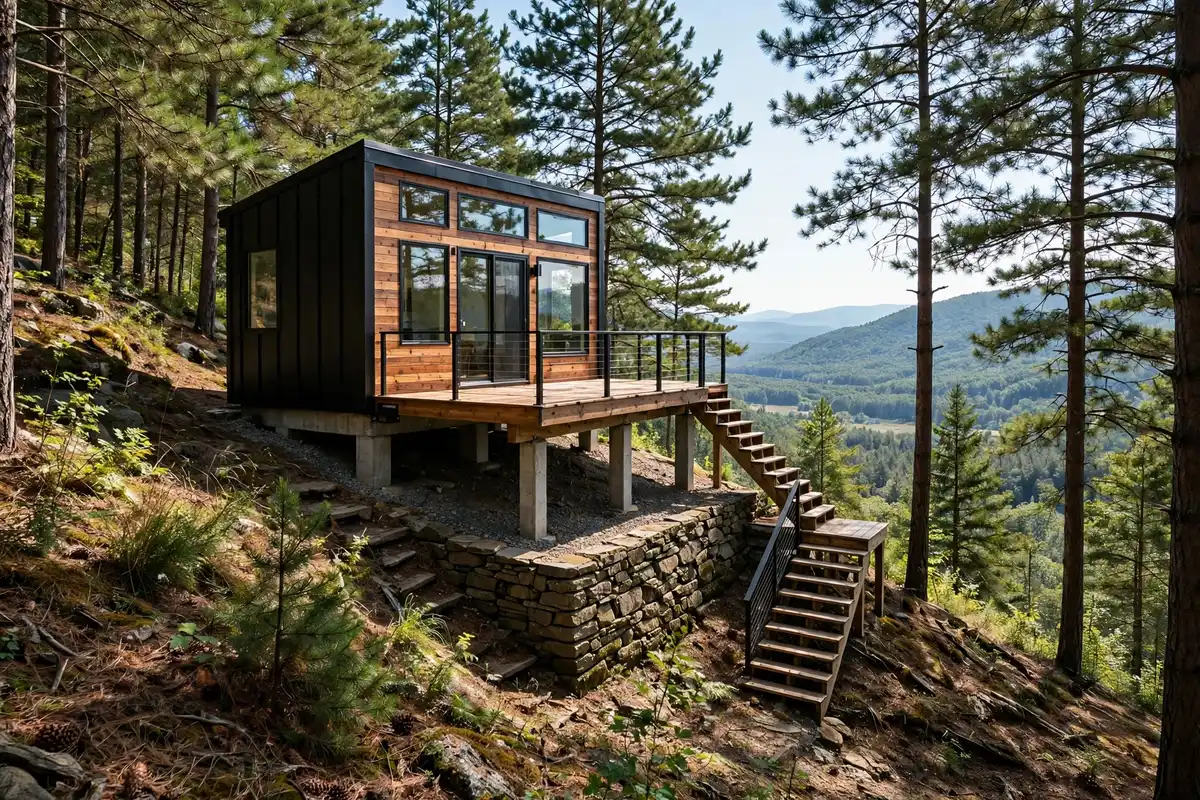
Zoning is the part most people skip, and the part that causes the most trouble. It answers what can be used on a piece of land, while building codes answer how it must be built. A tiny house has to pass both.
For houses on a foundation, the International Residential Code has a special tiny home section called Appendix Q, added in 2018. It defines a tiny house as a dwelling of 400 square feet or less, not counting loft space, with a minimum of 120 square feet, and relaxes rules for ceiling height, loft stairs, and ladders.
Here is the catch. The code has no force until a state, county, or city adopts it, and the appendix is optional even where the rest is adopted. LegalClarity reports several states adopted it statewide, including California, Florida, Georgia, and Washington. Others adopt it city by city, or not at all.
The appendix only covers houses on foundations, not houses on wheels. If your home rides on a trailer, Appendix Q is not your guide. Your path runs through RV rules instead.
Spur, Texas became known as the first American town to remove minimum size rules for tiny homes, but it is the exception. Never assume your town is one of them. Get the answer from the planning department in writing. A verbal yes is not a permit.
7. Utilities and Hookups: What Your Spot Needs
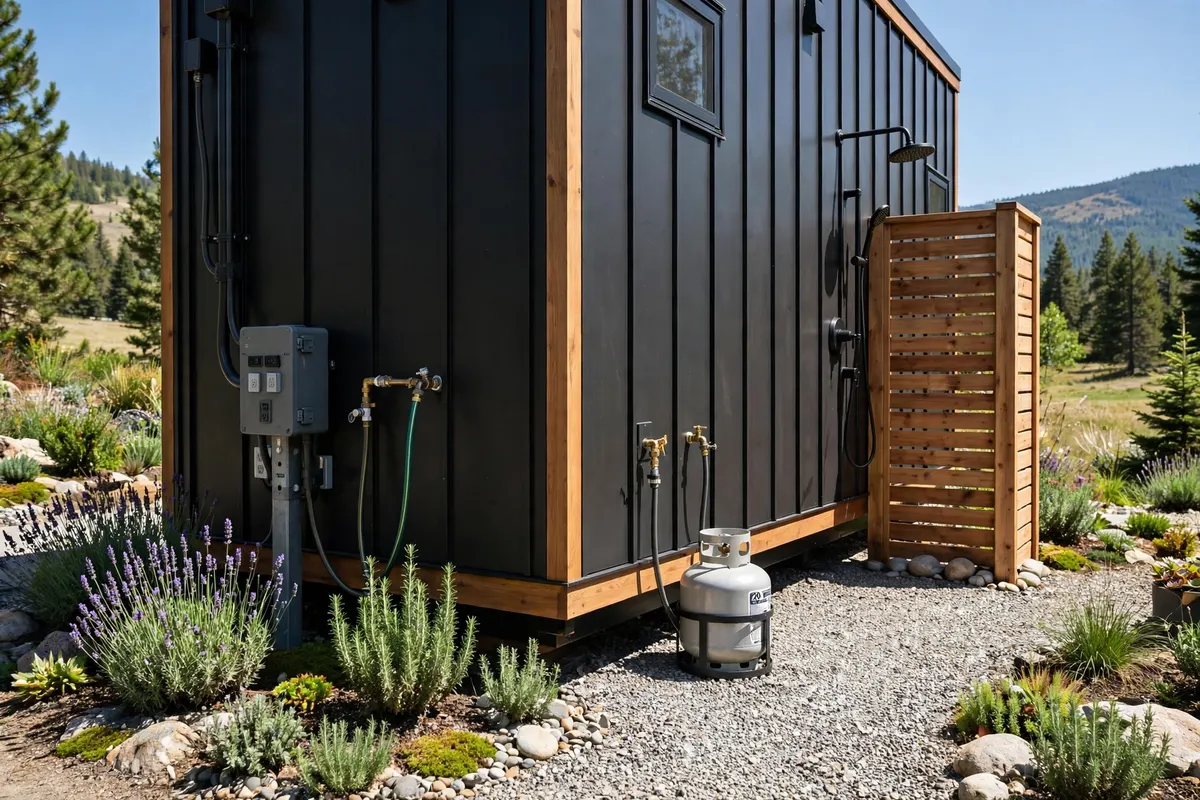
A parking spot is only useful if your house can actually live there. Power, water, and waste decide whether a pretty piece of land is a home or a headache.
Power comes first. Most tiny houses on wheels need a 30 or 50 amp hookup, and a standard household outlet will not run your heater, water heater, and mini split at the same time. Ask what amperage the pedestal provides and whether electricity is included or metered.
Water is next. A park or community usually provides a spigot and a sewer connection. On private land, you may need a hose from the main house, a well, or a water delivery service. In winter, exposed hoses freeze, so ask how other residents handle the cold months.
Waste is the part nobody wants to discuss and everybody needs to plan. A sewer hookup is simplest. A holding tank means regular pumping, and pump out fees can run $150 to $300 per service, according to Clever Tiny Homes. A composting toilet avoids black water but still needs a legal plan for gray water from sinks and showers.
Internet deserves a line too. Rural land often means weak cell signal and no cable, so test your phone signal on the lot before you sign anything. If you work from home, that check matters more than the view.
8. What to Ask Before You Commit
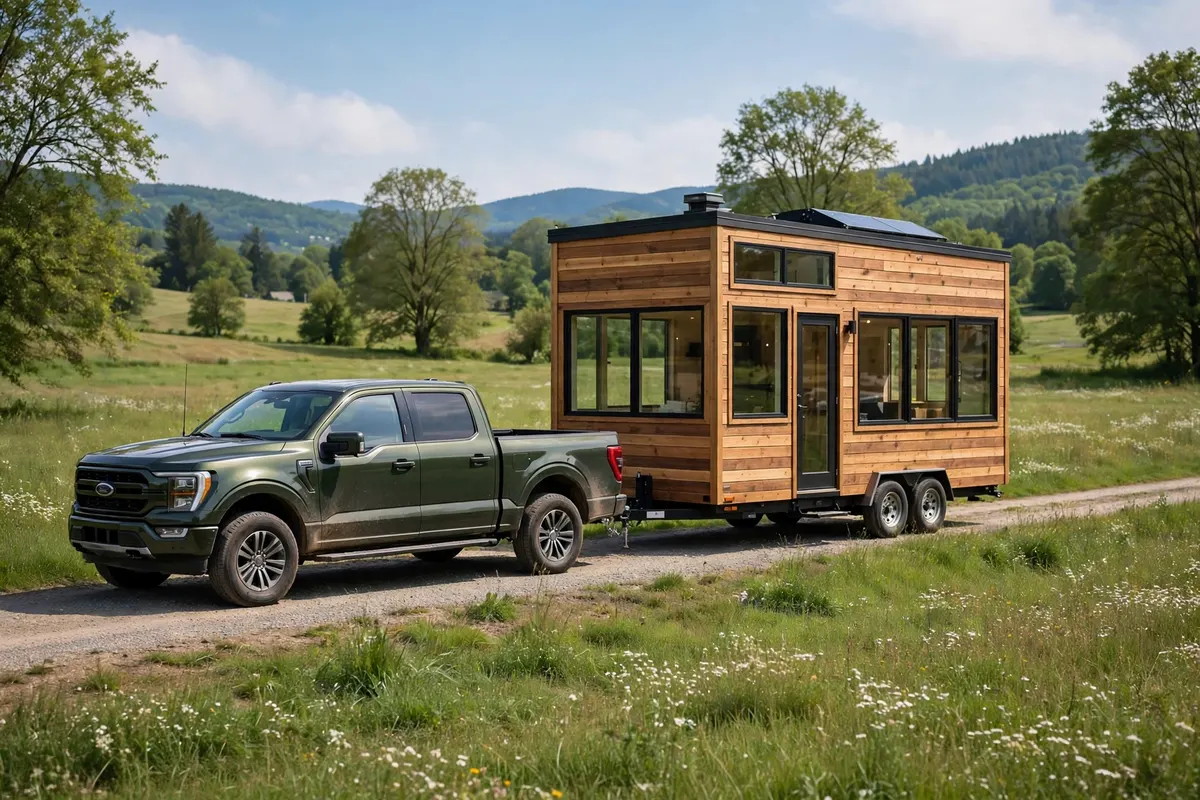
You found a spot. It is affordable. The view is lovely. Before you sign or tow, slow down and ask the questions that protect you.
Start with the legal ones. Is full time living allowed, or only short term stays? Is the permission in writing? What happens if the rules change or the land sells? A spot that depends on one friendly owner can vanish.
Then ask the practical ones. What is the monthly total with utilities, and is there a deposit? Who pays for power, water, and waste? How do you get mail? Are there limits on guests, pets, or vehicles?
Ask about moving day too. Can a truck and trailer reach the pad? Is the road wide enough for a house 8.5 feet wide and up to 40 feet long including the tongue? Low branches and soft ground have ruined many move in days.
Finally, ask yourself one honest question. Does this spot fit your life for the next year, not just the next month? A cheap lot two hours from work gets expensive fast. The right spot is legal, affordable, and a place where daily life actually works.
Your Pre-Commit Checklist
- Confirm in writing whether full time living is allowed here.
- Ask for the monthly total, including utilities, deposits, and fees.
- Check the hookups: amperage, water source, sewer or pumping plan.
- Test cell signal and internet on the lot itself.
- Confirm a tow truck and trailer can reach the pad.
- Read the park or community rules on guests, pets, and vehicles.
- Get any private land deal in writing, with notice terms for both sides.
- Call the county planning department and confirm the zoning yourself.
Parking a tiny house is rarely as simple as finding an empty patch of grass. But it is not a mystery either. The rules are local, the options are real, and the people who do this well all share one habit. They ask the boring questions first, before the exciting ones.
Do that, and the view from your little porch will be yours to keep.