They Traded $1,850 LA Rent for a $25K School Bus and a Homestead Outside Austin

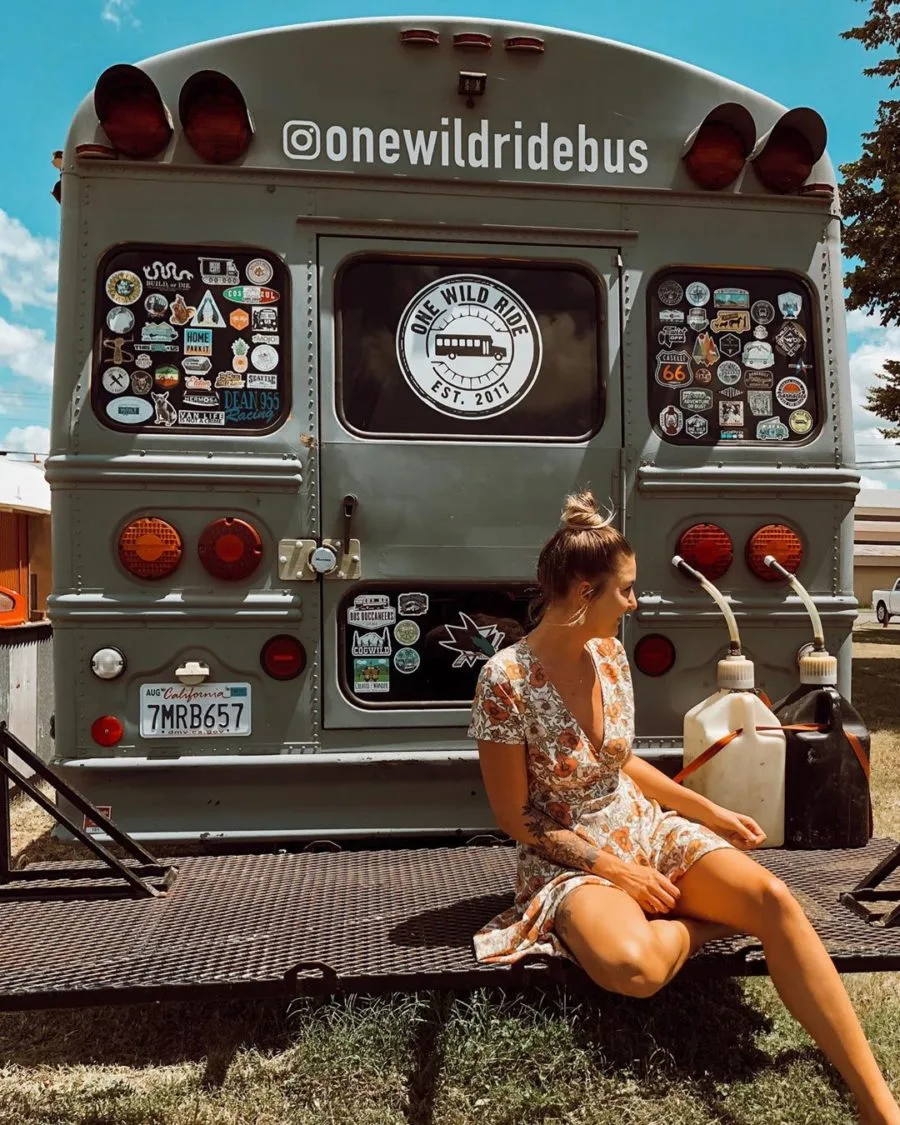
Lexi and Tyler were paying $1,850 a month for a one-bedroom apartment in Los Angeles. They were stuck in the same routine, working to pay rent, with little left over for the life they actually wanted.
So they bought a school bus. They spent about $25,000 in total, bus included, and turned it into a home on wheels. Then they traveled full time for about a year and a half before buying land outside Austin, Texas, and settling down to homestead.
This is their story, in their own words, with their own photos.
At a glance
- Who: Lexi and Tyler, plus their cat Ruca
- Home: A converted school bus, known as a skoolie
- Build cost: About $25,000, including the bus
- Build time: Just under 8 months, after work and on weekends
- Travel: About a year and a half full time, mostly on free public land
- Now: Stationary on land about 45 minutes east of Austin, Texas
- Work: Tyler manages a bar in Round Top; Lexi manages a wedding venue in La Grange
1. Why They Walked Away From $1,850 Rent
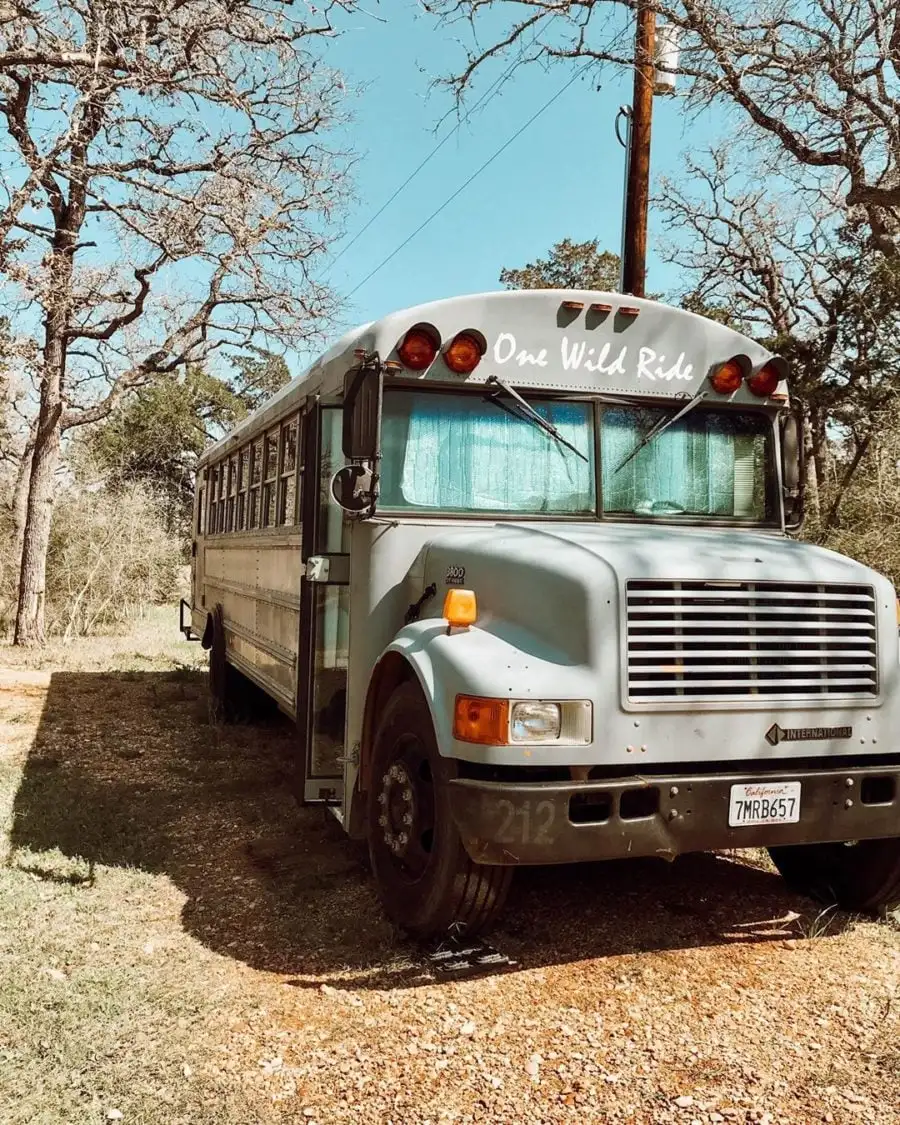
Photo: onewildridebus via Tiny House Talk
The decision started with a simple frustration. Rent in Los Angeles was eating their income, and the life around it felt repetitive. They wanted something simpler, and they wanted to experience more instead of living to pay rent.
Lexi put it plainly: “We decided to go tiny because we wanted a more simple life and to be able to experience more instead of living to pay rent in our small apartment in LA. Living tiny has definitely taught us how to live a minimalist lifestyle and to be more accepting to change.”
They had talked about living tiny for about a year. They first considered a van. Then Tyler came across the skoolie community online, and the idea clicked. A bus was big enough for a real kitchen and a living room, which a van could not offer.
They sat on the decision for about a year before acting. Looking back, they wish they had done it sooner.
2. Eight Months of Nights, Weekends and YouTube
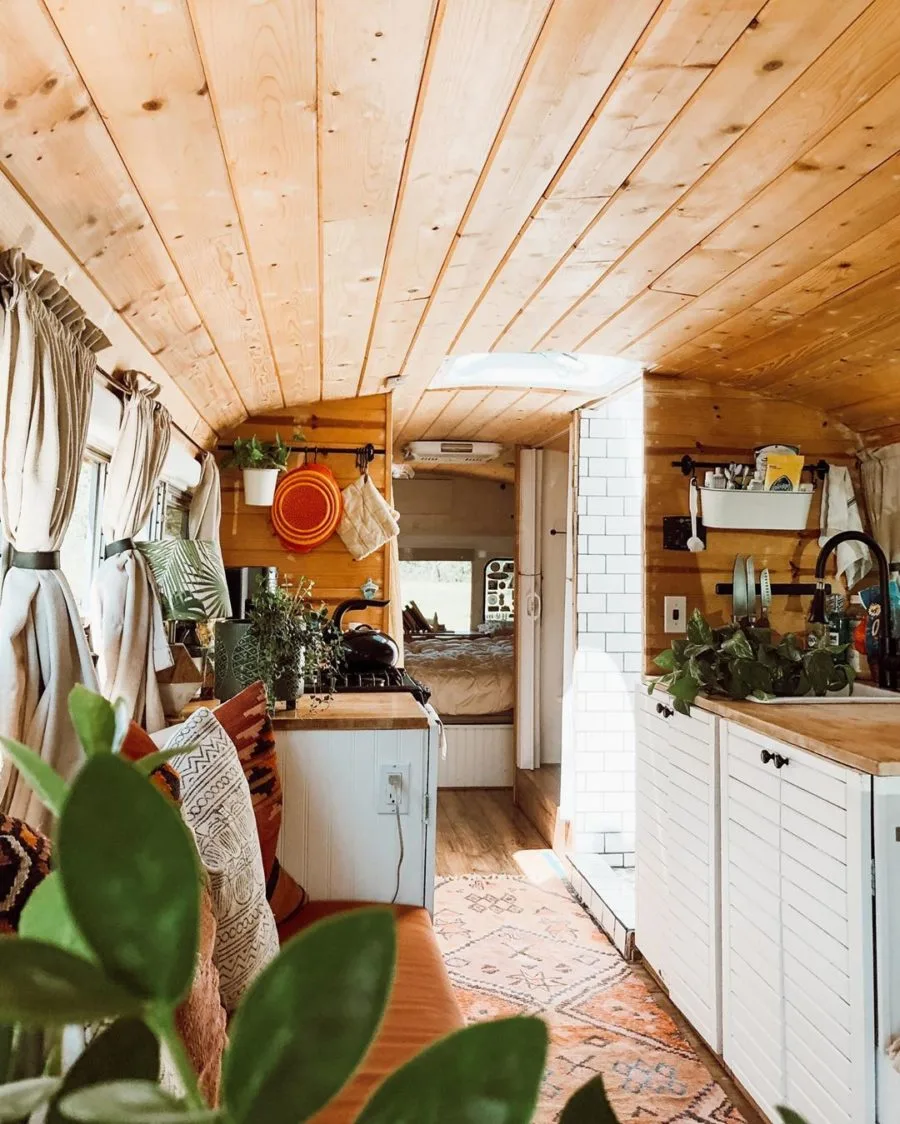
Photo: onewildridebus via Tiny House Talk
The build took just under eight months. Both of them kept their jobs and worked on the bus after work and on weekends. There was no professional crew and no shortcut.
They learned as they went. YouTube tutorials guided much of the work, friends pitched in, and plenty of it was trial and error. For the two jobs where mistakes get expensive or dangerous, they brought in help. They hired someone to wire the electrical system and to handle the plumbing.
The result is a bus that feels more like a cabin than a vehicle. Burnt orange accents warm up the white beadboard cabinetry, and a pine-paneled ceiling runs the length of the space. Butcher block countertops add to the homey feel.
They kept all of the original bus windows, which keeps the inside bright and open. A sign near the front reads “Home is Where We Park It.”
What it cost
- Bus plus full renovation: About $25,000 in total
- Old rent in Los Angeles: $1,850 a month for a one-bedroom apartment
- Old rent over a year: $22,200, nearly the whole cost of the bus build
- Put another way: The entire bus cost roughly what 13 and a half months of their old rent cost
- Not shared: The couple did not share what they paid for their Texas land, or a detailed breakdown of the build, so those numbers are not listed here
3. Inside the Bus: A Cabin That Forgets It Is a Bus
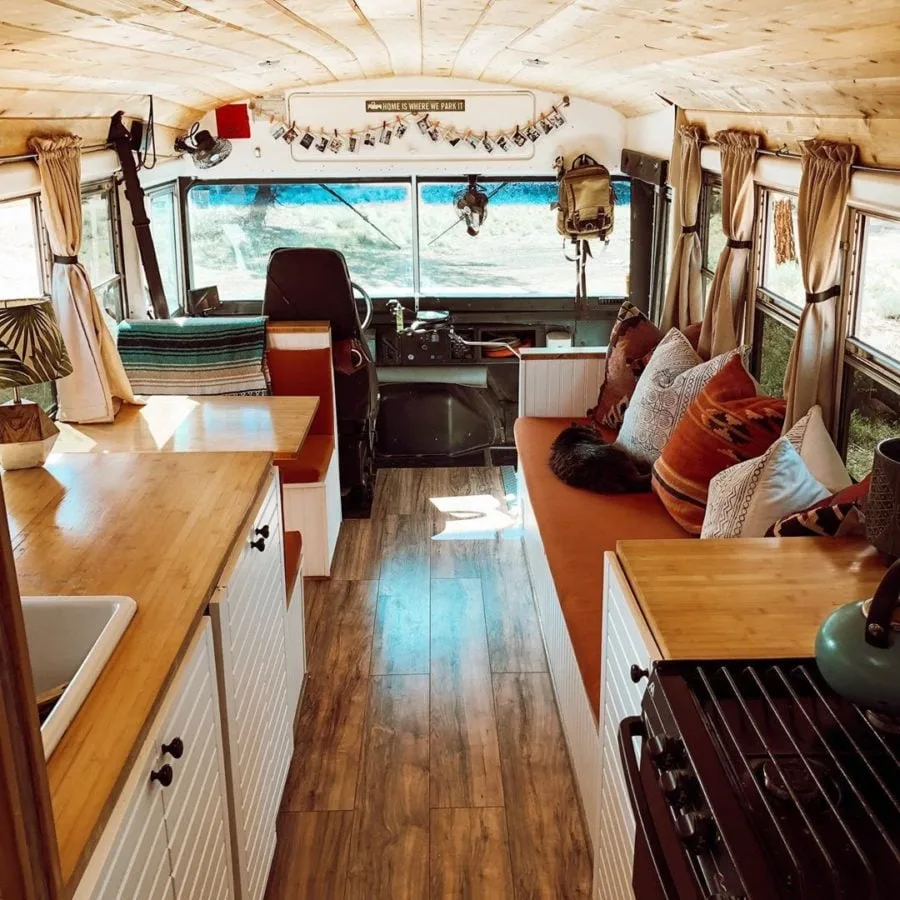
Photo: onewildridebus via Tiny House Talk
Step inside and the first thing you notice is the wood. The pine ceiling and warm tones make it easy to forget you are standing in a school bus. That was the point.
“I think the cabin/homey vibe. The wood ceiling really makes you forget that you’re living in a school bus,” Lexi said when asked what makes their bus special.
The layout is simple and open. The driving cab sits up front, with the living space stretching behind it. Orange bench seating, soft textiles and plants fill the middle of the bus. The kitchen runs along one side, with a fridge at the far end.
The bedroom sits in the far back, the quietest corner of the bus. It is small and cozy, with string lights and soft bedding. Two people and a cat fit comfortably, and the space works because everything in it earns its place.
4. A Year and a Half on the Road
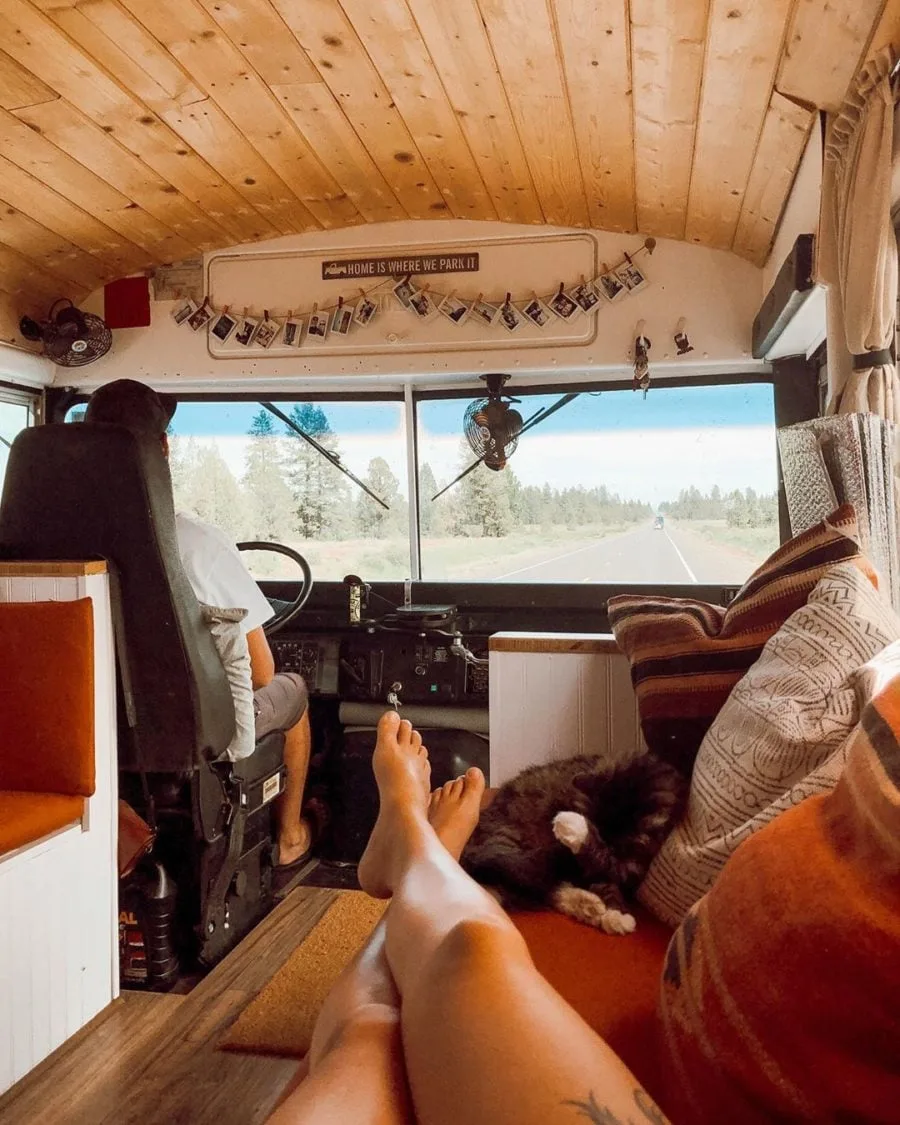
Photo: onewildridebus via Tiny House Talk
Once the build was done, they hit the road full time for about a year and a half. They camped mostly on BLM land, which is public land managed by the Bureau of Land Management, where free camping is often allowed.
Finding places to stay took planning. They used apps like Campendium and iOverlander, which list free camping spots across the country. Between those apps and word of mouth, they rarely paid to park.
Texas kept calling them back. They landed there on three separate occasions during their travels, staying for weeks at a time. They liked it enough that it eventually became the plan.
Life before the bus had felt redundant, in Lexi’s words: “Before going tiny life was a little redundant. We were stuck in the same routine, stuck paying ridiculously high rent in LA. Once we went tiny, it really opened our eyes to how little you need to be happy and live a fulfilling life.”
5. The Kitchen, the Shower and the Composting Toilet
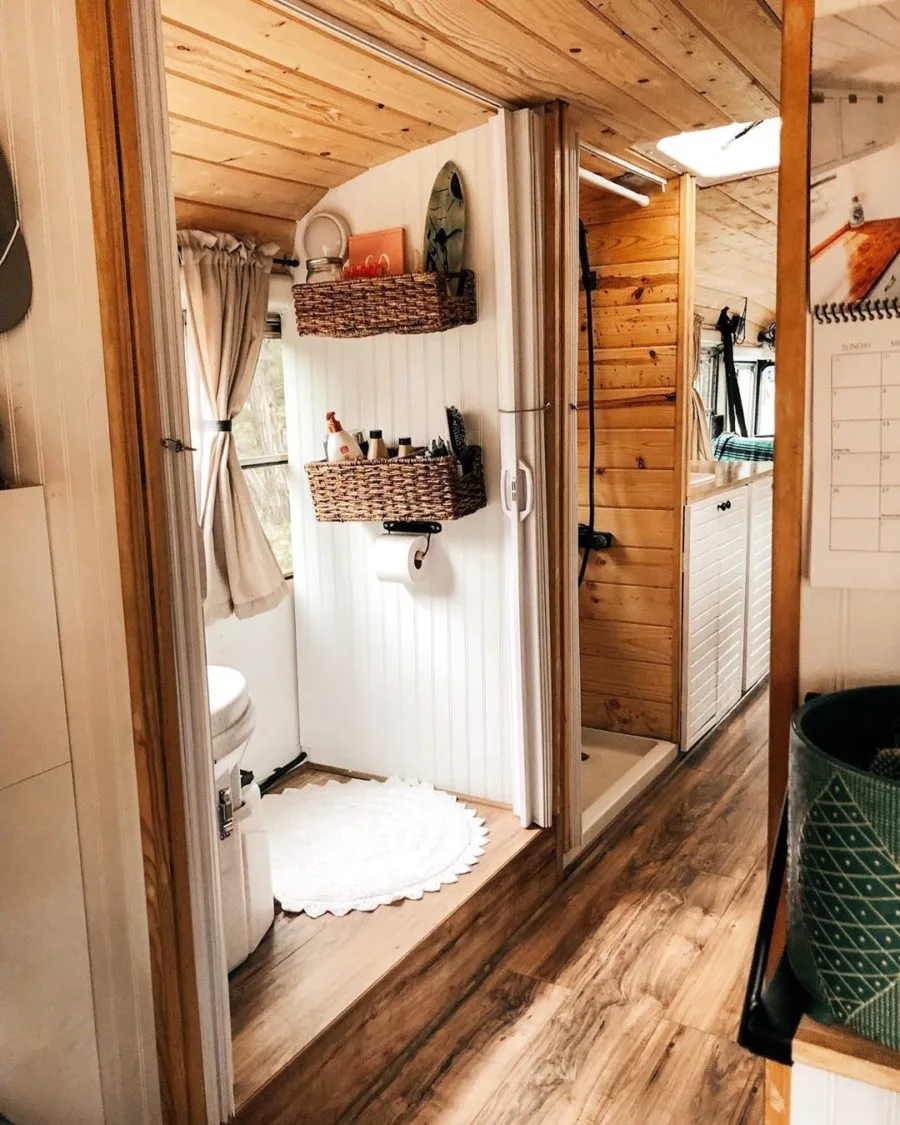
Photo: onewildridebus via Tiny House Talk
The kitchen is compact but complete. Butcher block counters, a gas stove and a full-size fridge cover everyday cooking. Since the bus became stationary, more items have started living on the countertops, a small sign of settling in.
The bathroom is surprisingly spacious for a bus conversion. It has a composting toilet and a neat sliding partition for privacy. A composting toilet uses no water and no sewer hookup, which suits off-grid life, but it is not the same as a normal toilet.
The shower was one of the first things they improved after moving in. They raised it and tiled it all the way to the ceiling, so they can finally stand straight up instead of scrunching down.
Asked what they miss from their old life, Lexi did not hesitate: “We definitely miss a real toilet. We have compost right now. We also miss bathtubs!”
6. Landing in Texas and Buying Land
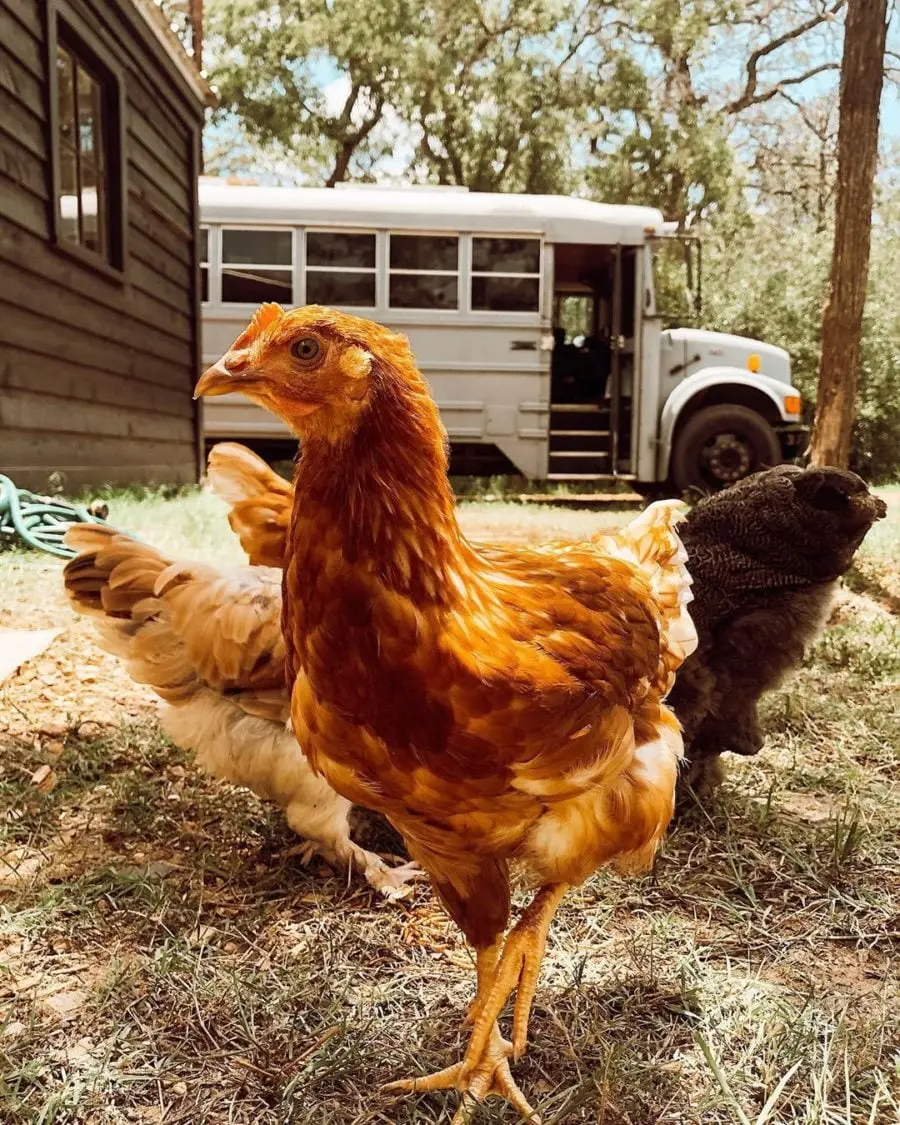
Photo: onewildridebus via Tiny House Talk
After three long stays in Texas, they stopped traveling and bought land about 45 minutes east of Austin. They bought it in September and have been stationary ever since.
Going stationary changed the bus. Travel mode is about keeping everything light and packed away. Stationary mode is about comfort. Counters fill up, routines settle in, and the bus starts to feel less like a vehicle and more like a house.
It also changed how they work. Tyler now manages a bar in Round Top, and Lexi manages a wedding venue in La Grange called The Ice Plant Bldg. Both jobs are local, which fits the slower pace of life on the land.
They have now lived tiny for a little over two years. The bus is no longer a travel experiment. It is home, parked on land they own, while they save to build something permanent.
7. Homesteading Life Now
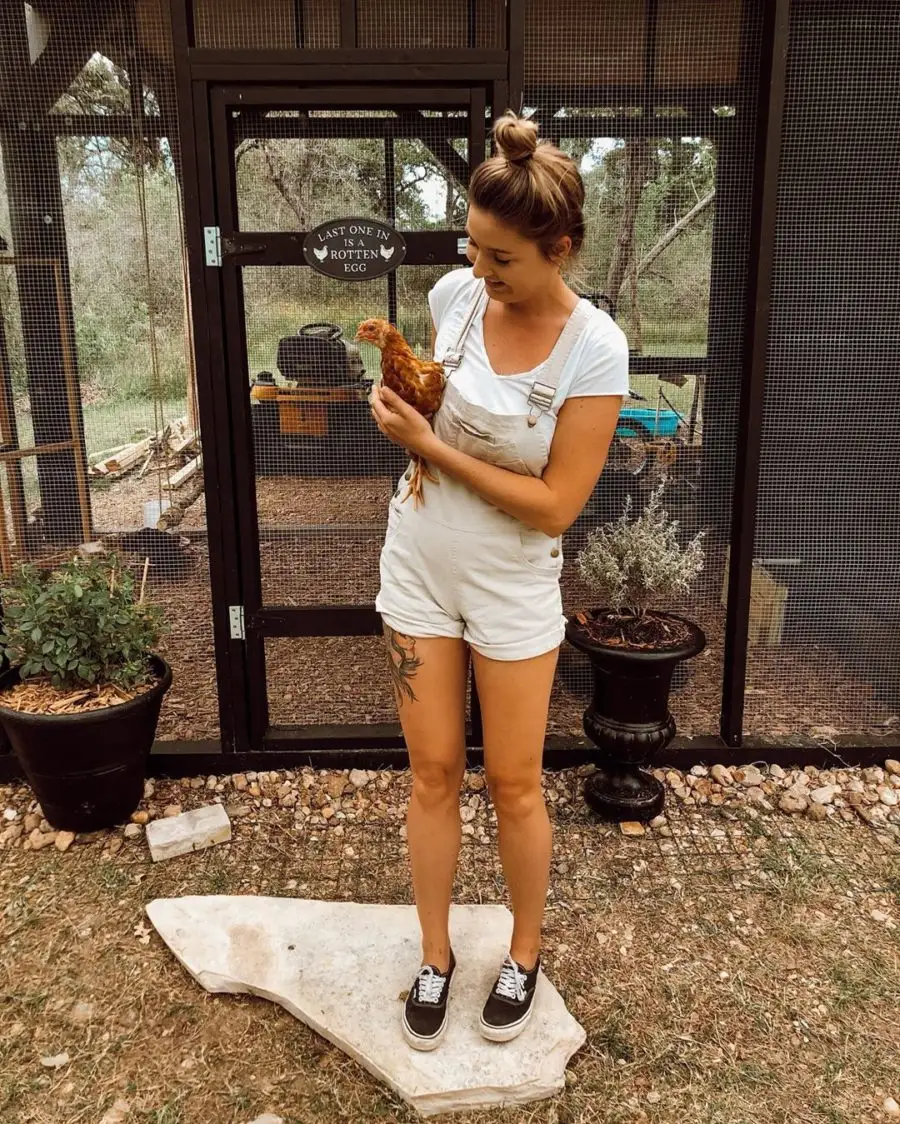
Photo: onewildridebus via Tiny House Talk
The homestead is already underway. They have chickens and a spacious chicken coop, and the birds wander the land around the bus. The plan is to keep growing from there.
Next on the list is a deck and a stock tank pool for the bus, giving them outdoor living space in the Texas heat. Longer term, they plan to build a small main house or a yurt on the land, and they are saving toward it.
The bus keeps getting small upgrades too. A mini-split unit is going in for quieter air conditioning, and a wood-burning stove from @tinywoodstove is planned for winter. If they were still traveling, they would have upgraded the battery bank so their solar panels could bring in more power.
Daily life runs at a different speed now. There are chickens to tend, land to work on, and local jobs to go to. It is the settled version of the freedom they were chasing when they left Los Angeles.
8. What Daily Life Is Really Like
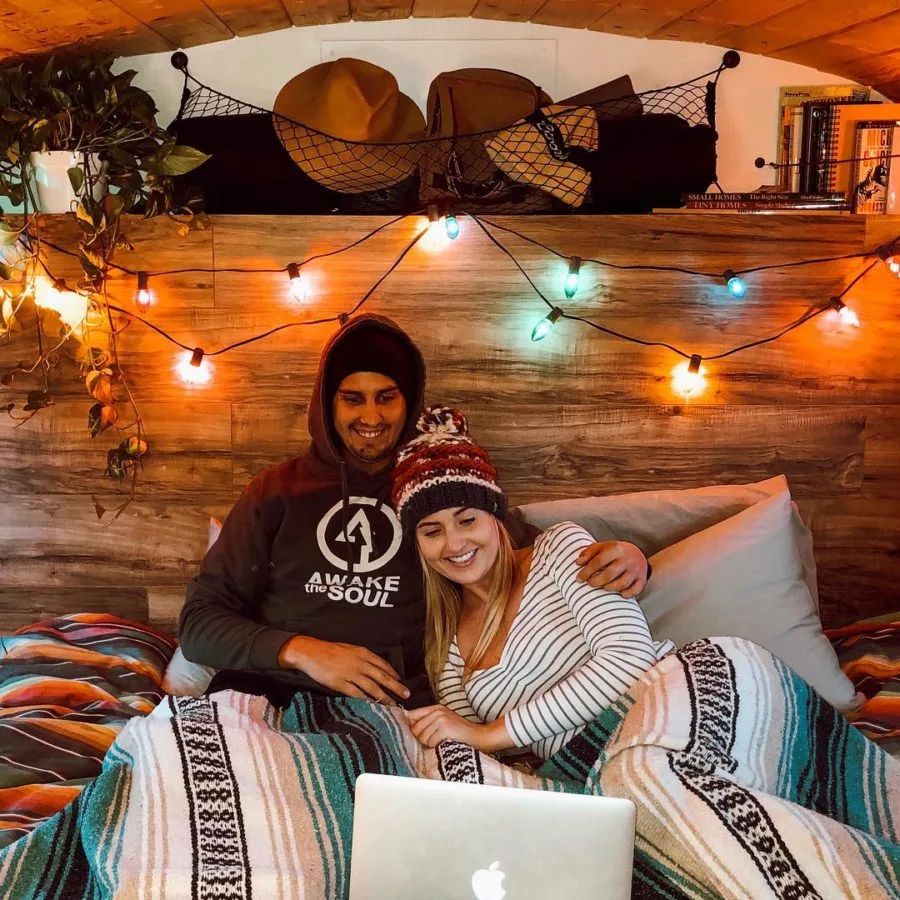
Photo: onewildridebus via Tiny House Talk
The best part, according to Lexi, is simple: “Probably less stress. The more we got rid of the less we stressed about!” Owning less means worrying less, and that trade has held up for more than two years.
Their cat Ruca is part of the household, and she has been along for the whole ride. “It’s been great having a pet along for the ride. We couldn’t imagine the bus life without her. The hardest part of having a pet while living off-grid is worrying if the bus gets too hot for her.”
They do have air conditioning, but the worry stays in the back of their mind when they leave her alone. It is one of the real, everyday tradeoffs of off-grid pet ownership, and it is worth knowing before anyone copies the lifestyle.
Evenings in the bus are quiet and close. String lights, soft blankets and a laptop on the bed say a lot about how the space gets used. It is small, but it is theirs, and it is paid for.
The honest pros and cons
Pros:
- Far less stress from owning less and owing less
- A whole bus conversion for about $25,000, against $1,850 a month in LA rent
- Freedom to travel for a year and a half, mostly camping free
- A warm, cabin-like home they built with their own hands
- Land of their own in Texas, with room to homestead and build later
Cons:
- A composting toilet instead of a real toilet, and no bathtub
- Worrying about the cat overheating in the bus when they leave her alone
- Battery and solar limits on the road, which would have needed an upgrade to keep traveling
- Ongoing upgrades even after moving in, like the shower raise, mini-split AC and wood stove
- Stationary life still needs local jobs, so the freedom comes with a fixed location
9. What to Know Before You Copy Them
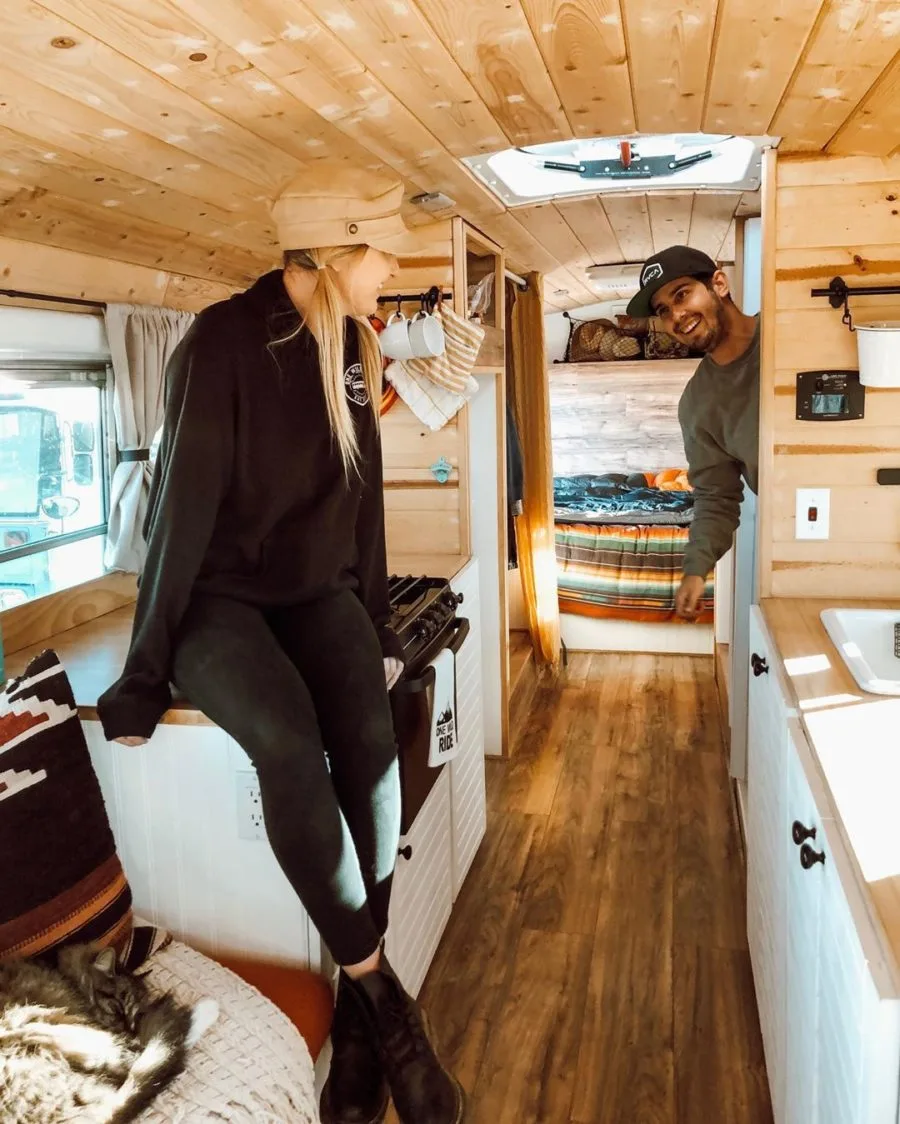
Photo: onewildridebus via Tiny House Talk
Lexi and Tyler’s advice is short and direct: “I think the best advice we could give is just to go for it! We sat on the decision to go tiny for about a year and we wish we would have done it sooner!”
But going for it still takes planning. Their build took just under eight months of evenings and weekends, and they hired professionals for the electrical wiring and plumbing.
Think about land before you think about the bus. They traveled for a year and a half using free camping spots, then bought land to settle. If you plan to stay put, check local rules on living in a vehicle, and budget for power, water and waste. A composting toilet solves one problem and creates a daily chore.
Think about pets, too. A bus heats up fast in summer, so a cat or dog left inside needs reliable cooling.
Their story is not about escaping work. It is about trading a rent bill for a build they own, and a routine they hated for a life with more room to breathe.
Follow Lexi and Tyler on Instagram at @onewildridebus to see the bus and the homestead today.
Sources: This article is based on the Tiny House Talk feature “One Wild Ride with Lexi and Tyler: From Traveling to Homesteading in their Bus Conversion” by Natalie C. McKee, with photos by onewildridebus via Tiny House Talk. All quotes are from the Q and A in that feature.