15+ Tiny House Entryway Ideas That Keep Shoes, Coats and Clutter Under Control

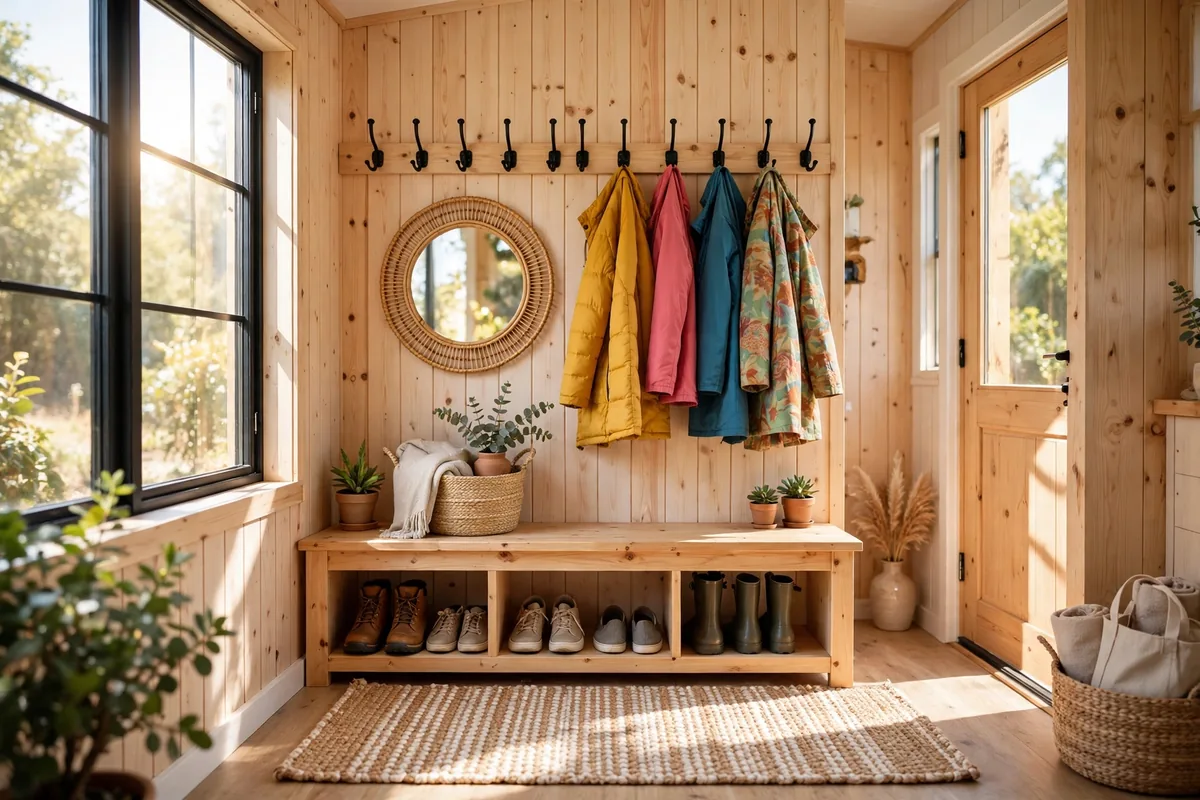
Your tiny house entryway works harder than any other spot in your home. It is the first thing you see when you walk in, and the last thing you touch before you leave. When it has no plan, shoes pile up, coats slide off hooks, and keys vanish.
The good news is that a small entry can still stay calm. You do not need a big mudroom or a full closet. You need one clear job for every item, and storage that fits the exact space you have.
These 15 ideas are made for tiny footprints. Each one uses a narrow wall, a small bench, or a hidden nook. Pick the one that matches your biggest mess, start there, and add a second idea only when the first one feels easy.
The 5 Minute Entryway Reset
Five quick habits that keep a tiny entry clear, even on busy days.
1. Slim Wall-Mounted Shoe Cabinet, No Floor Space Lost
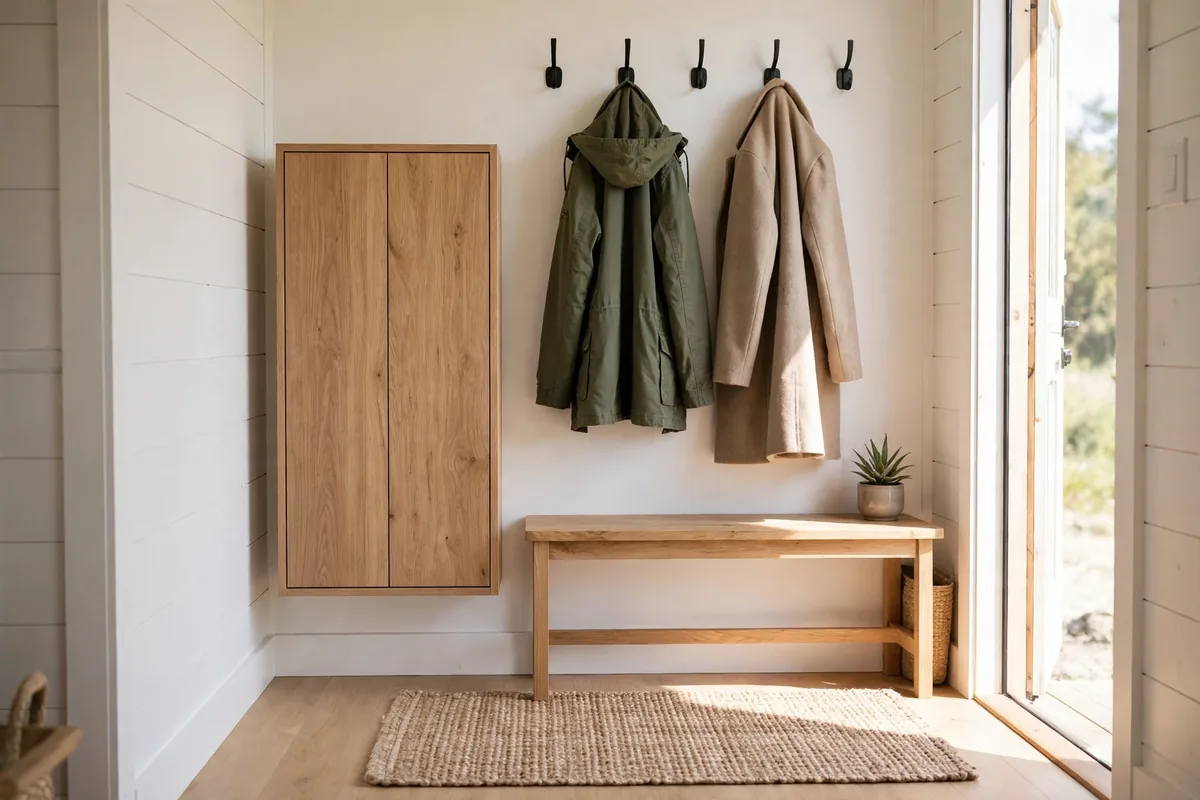
A slim shoe cabinet is the classic tiny house fix for a reason. It mounts flat on the wall, so your floor stays clear and the room still feels open. Most models are only about 15 to 20 centimetres deep, which is less than a shoe box turned sideways.
Inside, tilted shelves hold two or three pairs per compartment. Choose a cabinet with soft close doors so it never slams at night. A light wood finish keeps a narrow hall bright, while a white cabinet blends into the wall and almost disappears.
Mount it at a height that lets you open the lowest door without bending too far. Leave the top clear for keys, or add a small tray so mail does not drift onto the floor. This is the best first step if shoes are your main clutter.

Measure your wall before you buy. A cabinet that is too wide will block the door swing or crowd the walkway.
Keep only daily shoes in it. Seasonal boots and spare pairs belong in a bedroom box or under the bed, where they are out of the way but still easy to reach.
2. Bench With Hidden Shoe Storage Under the Seat

A storage bench solves two problems at once. It gives you a place to sit while you put on shoes, and it hides those shoes under the lid. In a tiny house, furniture that does two jobs is always worth the space it takes.
Look for a bench with a hinged lid and a divided interior. Dividers stop shoes from sliding into one pile. A bench about 90 centimetres wide fits two people sitting side by side, and still leaves room for a coat hook above.
Add a thin cushion for comfort, in a fabric you can wipe clean. A cushion also softens the look of a plain wooden bench. Keep a small basket beside it for hats and gloves, so the bench top stays clear.
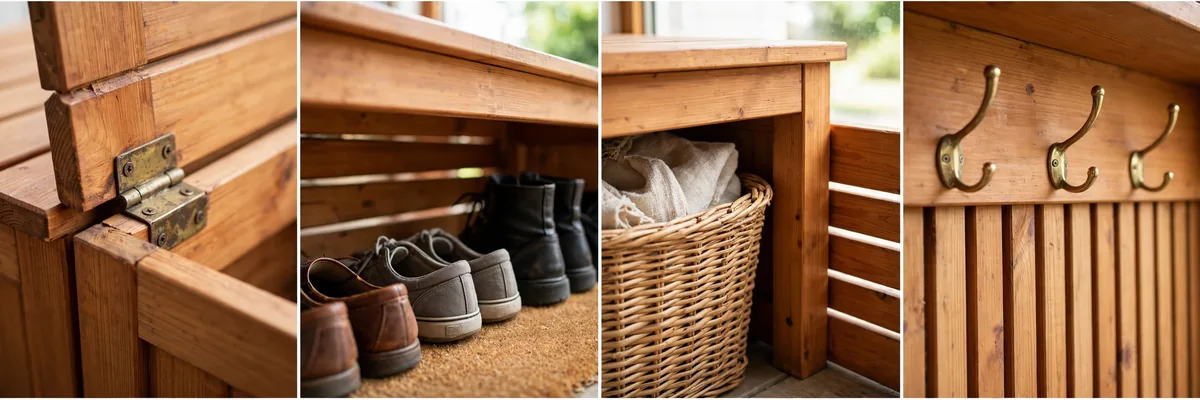
If you build your own bench, add a small finger hole or a fabric pull on the lid. It makes the lid much easier to lift when your hands are full.
Try the sit test before you commit. The seat should feel low enough to reach your shoes without strain, and high enough that standing up is easy.
3. Peg Rail and Hooks for Coats, Hats and Bags

A peg rail is one of the simplest entryway ideas, and one of the most useful. A single wooden rail with evenly spaced pegs holds coats, hats, dog leads and tote bags, all within arm’s reach of the door. It costs little, installs in an afternoon, and never needs power or plumbing.
Space the pegs about 20 centimetres apart so coats do not bunch together. Give each person one peg of their own, and keep one spare peg for guests. A small shelf above the rail holds sunglasses and sunscreen, while a shelf below can hold a basket for gloves.
Choose sturdy pegs that tilt slightly upward. Flat pegs let coats slide off. A rail in natural wood warms up a white wall, and it suits almost every tiny house style, from modern to farmhouse.
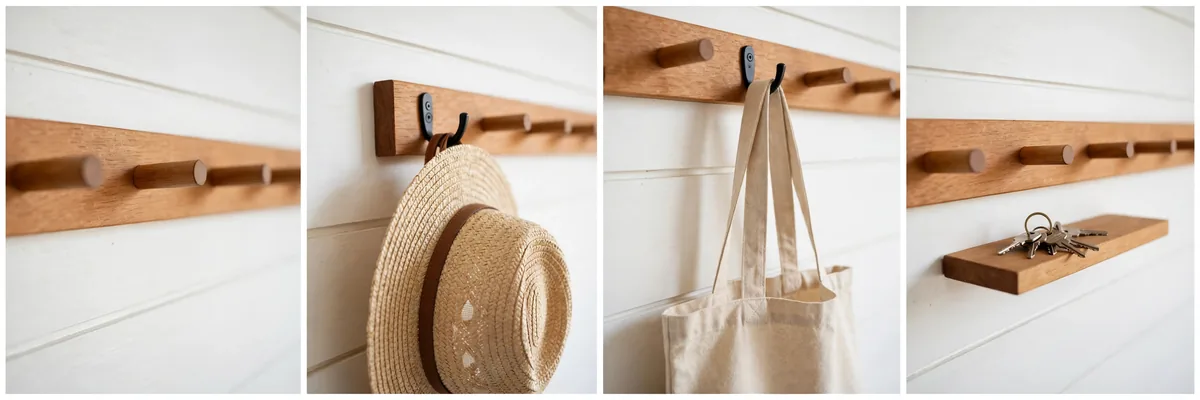
Hang the rail at shoulder height for the tallest person in the house. Coats should clear the bench or shoe rack below them.
If your wall is thin, fix the rail into wall studs, not just plasterboard. A rail full of winter coats is heavier than it looks, and studs keep it safe.
4. Floating Shelf and Mirror Combo That Opens Up the Space
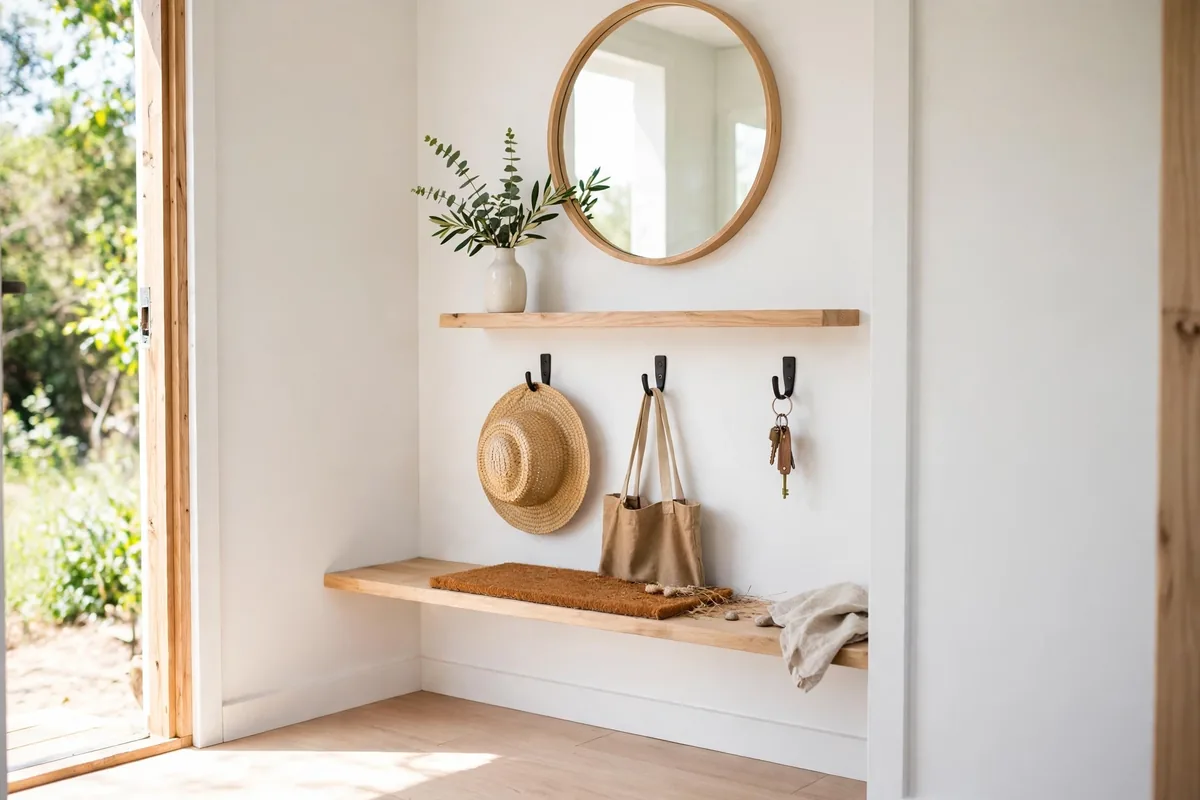
A mirror is a tiny entryway’s best friend. It bounces light around the room and makes a narrow hall feel wider. Pair it with a floating shelf, and you get a landing spot for keys and sunglasses without a bulky table taking up floor space.
Choose a round mirror for a soft look, or a tall rectangle if you want a last outfit check before you leave. Hang the mirror at eye level, then fix the shelf about 30 centimetres below it. That gap is enough for a small vase or a candle, but not so much that the pair looks disconnected.
Keep the shelf styling simple. One small plant, one tray for keys, and nothing else. A crowded shelf defeats the purpose, and it will collect dust and clutter within a week.
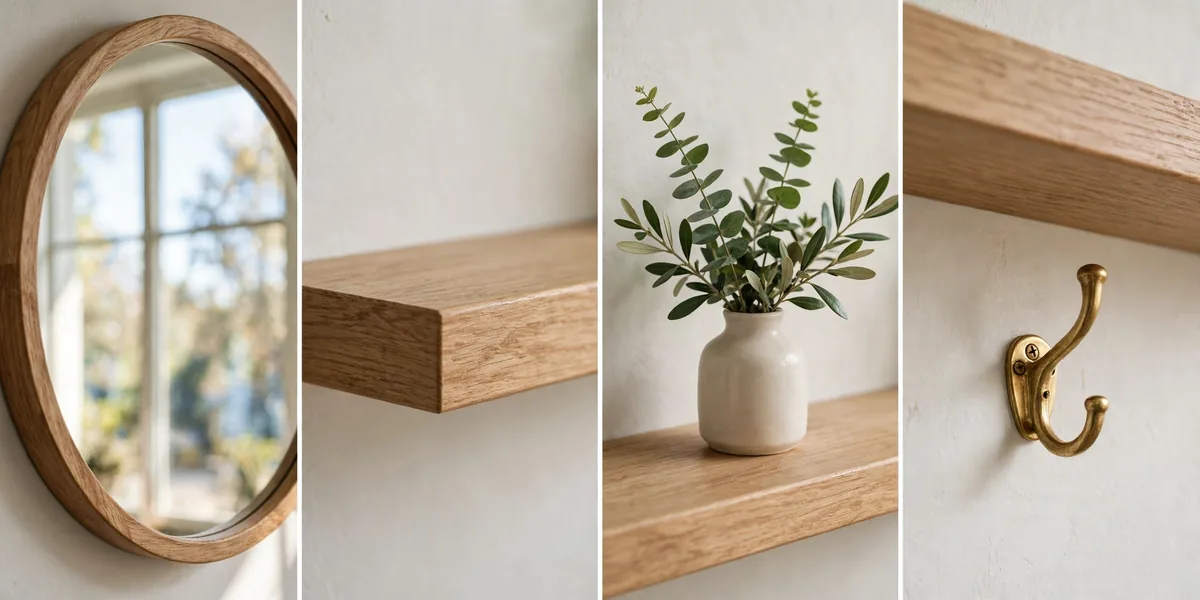
Use a mirror with a thin frame in wood or black metal. A heavy frame can overwhelm a small wall, while a frameless mirror can look unfinished.
If your entry has no window, place the mirror opposite a light source. Even a lamp across the room will reflect and brighten the space.
5. Vertical Cubby Tower for Every Pair
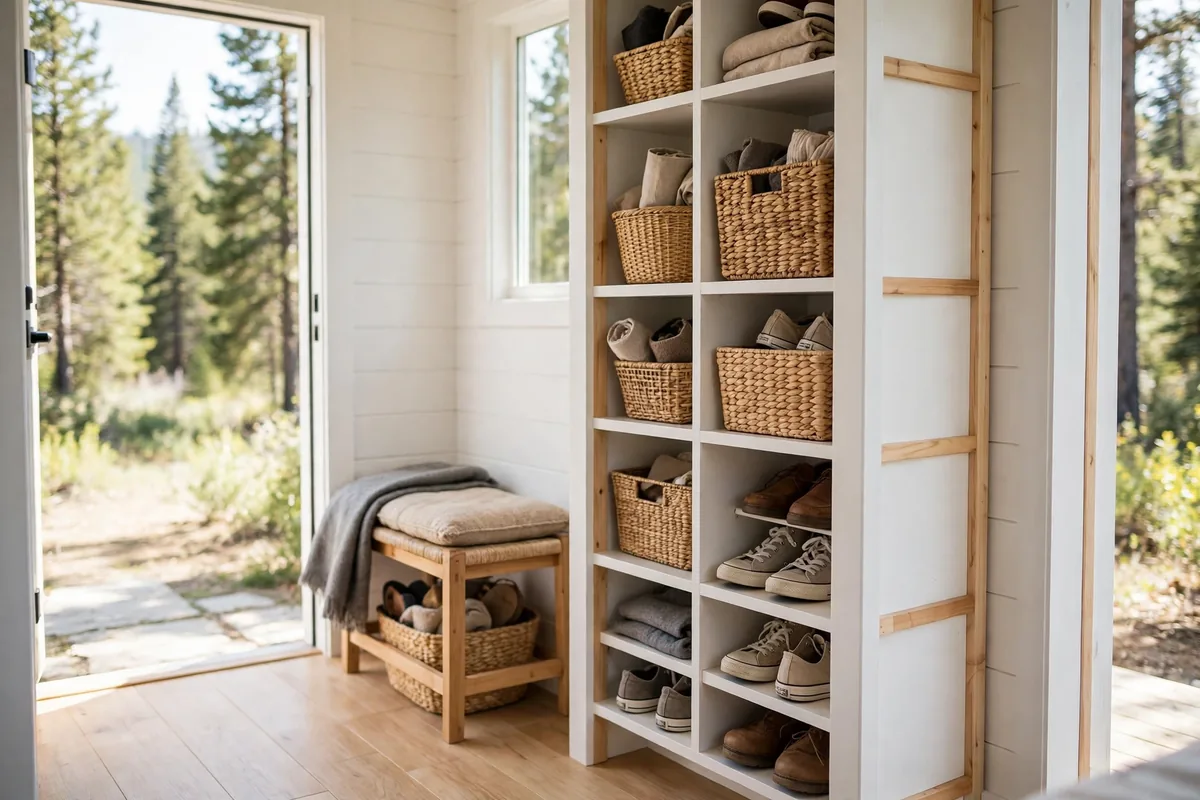
A vertical cubby tower uses height instead of floor space, which is exactly what a tiny house needs. Tall and narrow, it fits into a gap beside the door that is too small for a bench or a cabinet. Each cubby holds one pair of shoes, so nothing gets buried at the bottom of a pile.
Label each row with a small tag or a colour coded basket, one per person. Kids get the bottom rows they can reach, and adults take the higher ones. Open cubbies are easy to use, because you can see every pair at a glance and grab the right one in seconds.
Mix open cubbies with a few baskets for smaller items. Scarves, gloves and dog treats all fit neatly in a basket, and the basket keeps them from sliding out onto the floor.
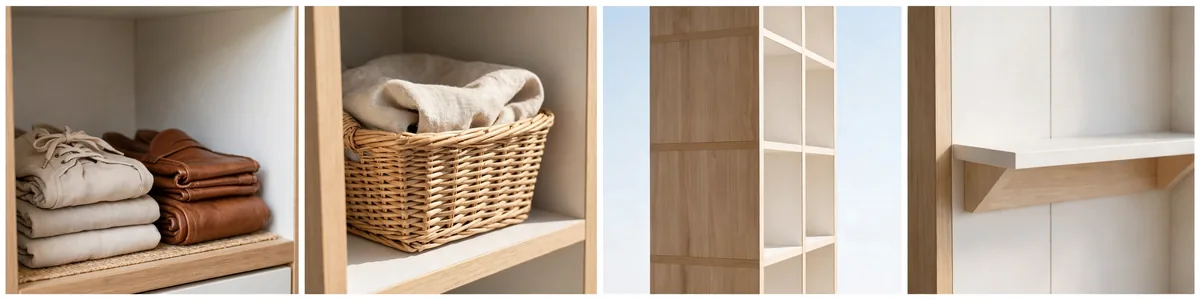
Anchor a tall tower to the wall. A tower full of shoes can tip if a child pulls on it, so a simple wall strap is a must.
Leave one cubby empty on purpose. That spare slot is for muddy shoes, wet boots, or a guest’s pair, and it stops the overflow from spreading across the floor.
6. Slim Console Table With Baskets Below
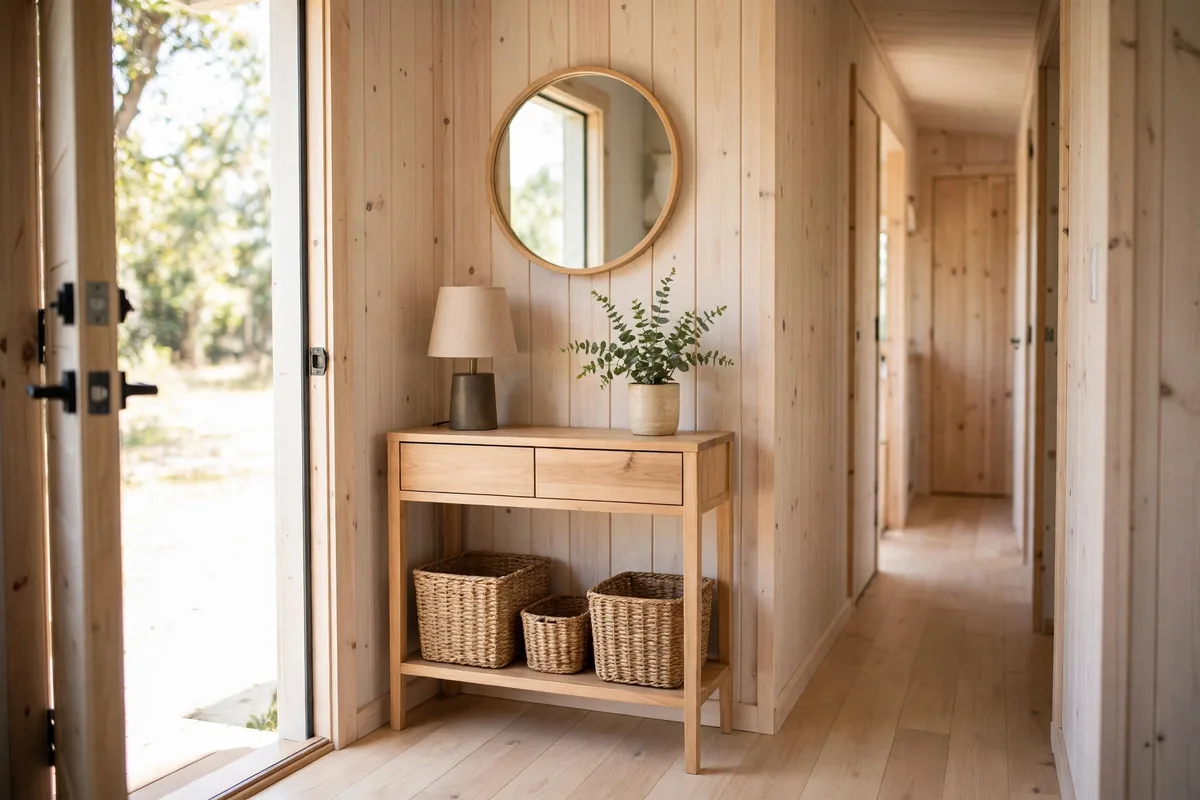
A slim console table brings a touch of style to a tiny entry, and it still earns its keep. At only 25 to 30 centimetres deep, it hugs the wall and leaves the walkway clear. The tabletop holds a lamp, a mirror, or a small bowl for keys, while baskets below hide shoes and everyday gear.
Choose baskets that fit the space exactly, with no gaps and no overhang. Woven baskets add warmth and texture, and they hide clutter better than open shelves. Pick baskets with handles, so you can pull one out like a drawer and carry it to the bedroom when you need to.
A console table works best in an entry with a little extra wall length. If your hall is very narrow, measure the walkway first. You need at least 75 centimetres of clear walking space after the table is in place.

Keep the tabletop to three items or fewer. A lamp, a plant, and a key bowl is a good set, and it leaves room to set down a bag when you walk in.
Swap the baskets by season. Light baskets suit summer sandals, while deeper baskets hold winter boots and thick scarves.
7. Over-the-Door Organizer for Shoes and Small Gear

An over-the-door organizer is the fastest entryway upgrade you can make. It hooks over the top of a door in seconds, needs no screws, and adds storage to a surface you were not using at all. Clear pockets let you see every item, from shoes to sunscreen to pet leads.
Use the lower pockets for shoes and the upper pockets for small gear. Hats, gloves, reusable bags and phone chargers all fit well. A fabric organizer looks softer than clear plastic, but clear pockets make it easier to find things in a hurry.
This idea is perfect for renters, or for anyone who does not want to drill into a wall. When you move, the organizer comes with you, and the door is left exactly as it was.

Check the door clearance before you buy. Some hooks are too thick for a tight door frame, and they can stop the door from closing properly.
Keep the weight balanced. Heavy items low down stop the organizer from swinging, while light items up high are easy to reach.
How Much Entryway Storage Do You Really Need?
Count what comes through your door every day, then plan for that number, not for a dream number.
8. Fold-Down Bench That Disappears When Not in Use
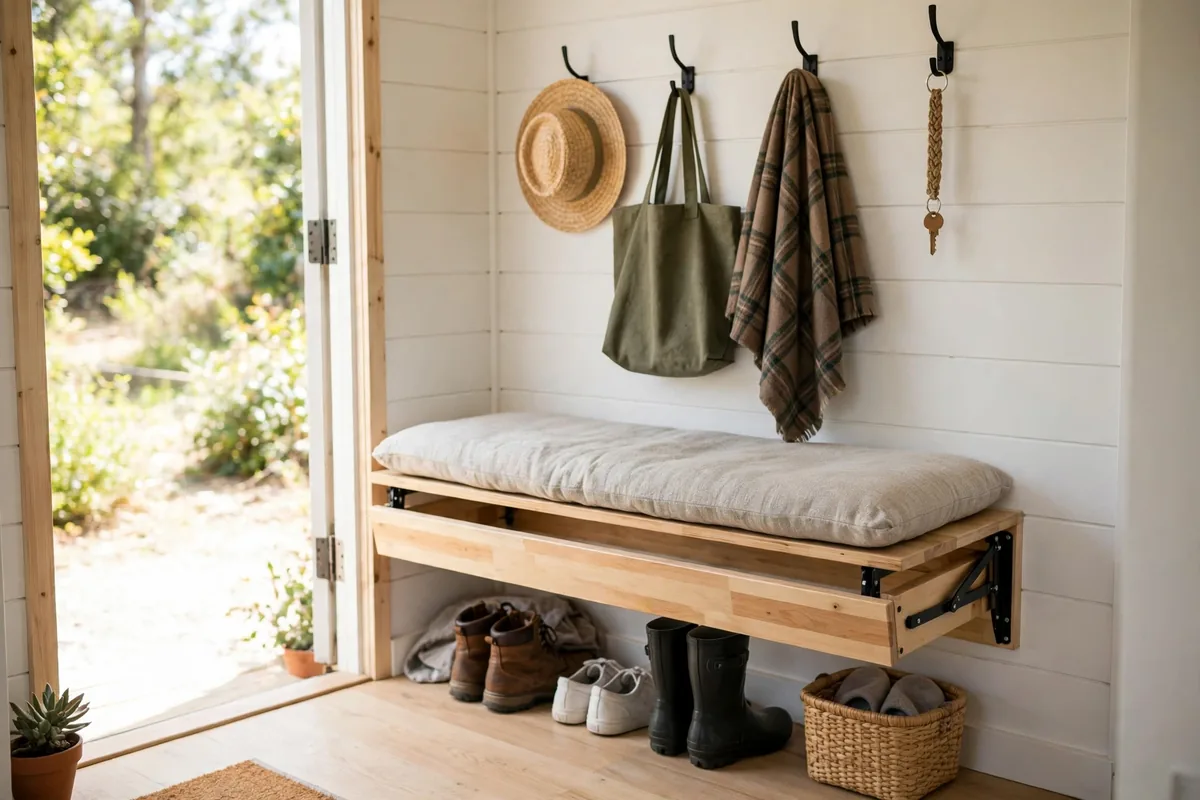
A fold-down bench is clever because it is only there when you need it. Folded down, it is a sturdy seat for putting on boots. Folded up, it is a slim panel on the wall, and your entry feels twice as wide. It is ideal for a hallway that is too narrow for a permanent bench.
Look for a wall mounted bracket rated for sitting weight, not just a shelf bracket. A good fold-down bench holds at least 100 kilograms, and it locks flat when it is up, so it cannot drop without warning. A wooden seat with a thin cushion feels warm and looks tidy when folded away.
Mount it at standard seat height, about 45 centimetres from the floor. Add a hook above it for a coat, and a small shelf nearby for shoes, so the whole routine happens in one spot.

Test the fold action a few times before you load it up. It should move smoothly with one hand, and click firmly into place in both positions.
This is a great pick for a tiny house on wheels, where every centimetre matters and a fixed bench would block the door swing on moving day.
9. Magnetic Strip and Key Station by the Door

Lost keys waste more time than almost any other tiny house problem. A key station by the door ends the search. A small magnetic strip or a row of hooks holds keys, and a tray below catches mail, sunglasses and loose change, all in one tidy spot.
Mount the station at eye level, right beside the door you use most. The habit forms fast when the spot is impossible to miss. A magnetic strip works well for keys on a metal ring, while small hooks suit lanyards and dog leads too.
Add a tiny shelf or a wall pocket for the post. Unopened mail is one of the quickest sources of entry clutter, so give it a home the moment it comes through the door. Sort it once a week, and the pile never grows.

Keep the station small. If it grows into a full shelf, it will start collecting items that belong elsewhere, like tools and chargers.
Put a spare key hook out of sight, in a drawer or a bedroom. The everyday station is for daily keys only, and a spare kept separate is safer.
10. Rolling Shoe Cart That Slides Into a Nook
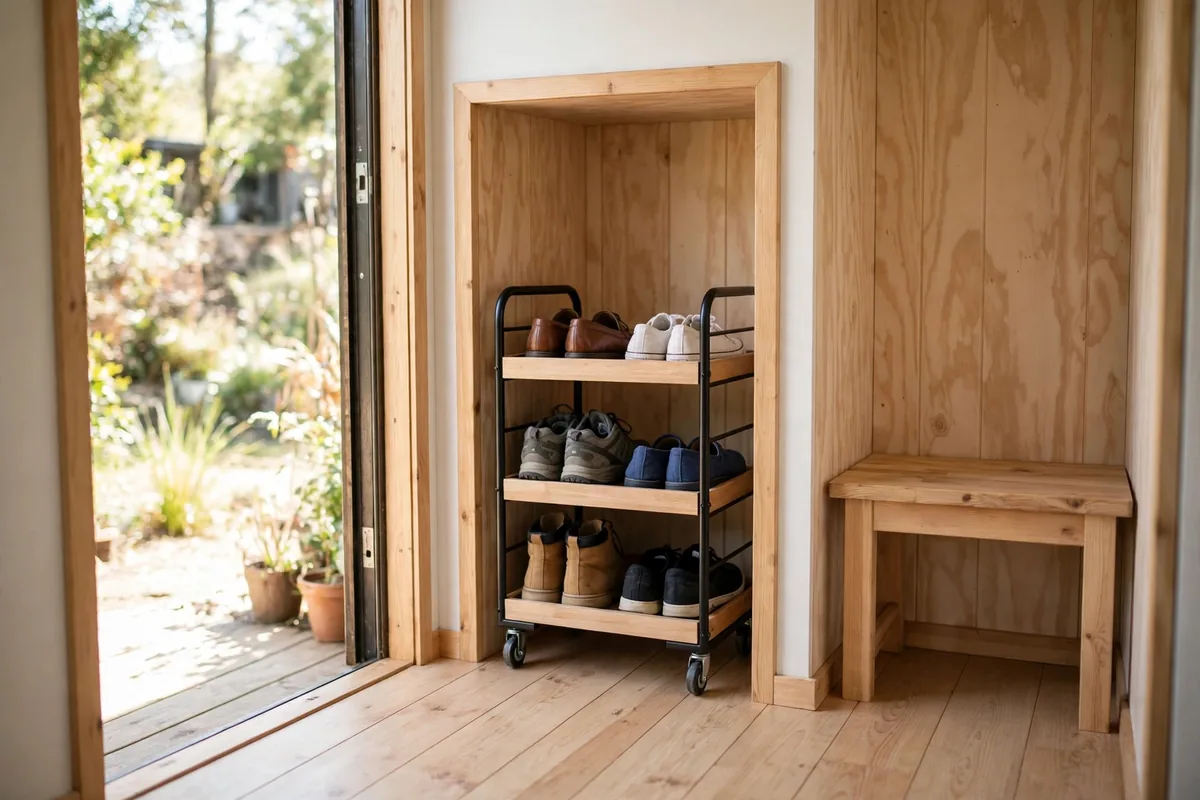
A rolling shoe cart is storage you can move. On wheels, it slides out when you need shoes and tucks into a nook when you do not. That flexibility is gold in a tiny house, where the same space might serve as an entry in the morning and a living area at night.
Choose a cart with at least three tiers and a slim frame. Open shelves let shoes air out, which matters in a small space. A cart about 60 centimetres wide fits most nooks, and it can hold six to eight pairs without looking crowded.
Use the top tier for the shoes you wear most, and the bottom tier for heavier boots. A small handle makes the cart easy to pull out, even when it is full. Locking wheels stop it from rolling when the house moves or the floor slopes.
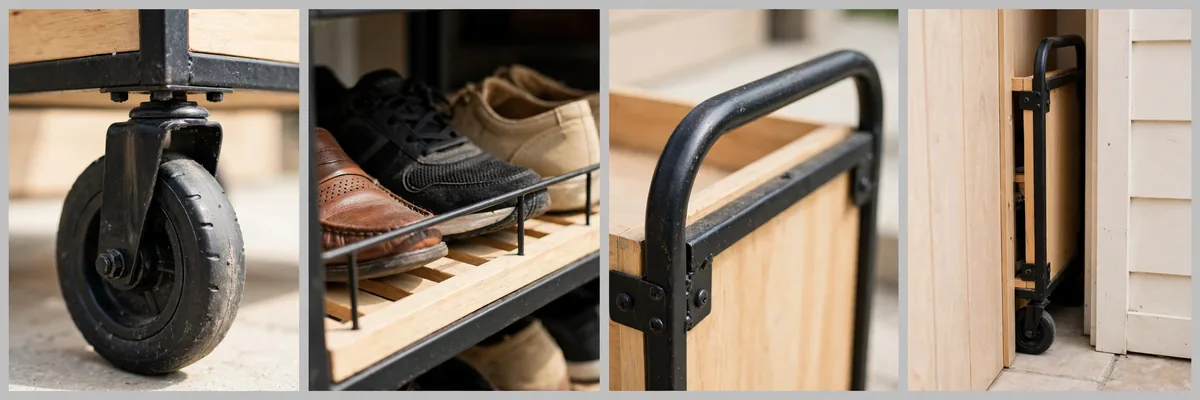
Measure your nook before you buy, including the height. A cart that is too tall will not slide under a shelf or a stair.
Keep the cart near the door, not in the middle of the room. If it takes more than a few steps to reach, you will stop using it and shoes will land on the floor instead.
11. Built-In Closet Nook With Double Hanging Rods
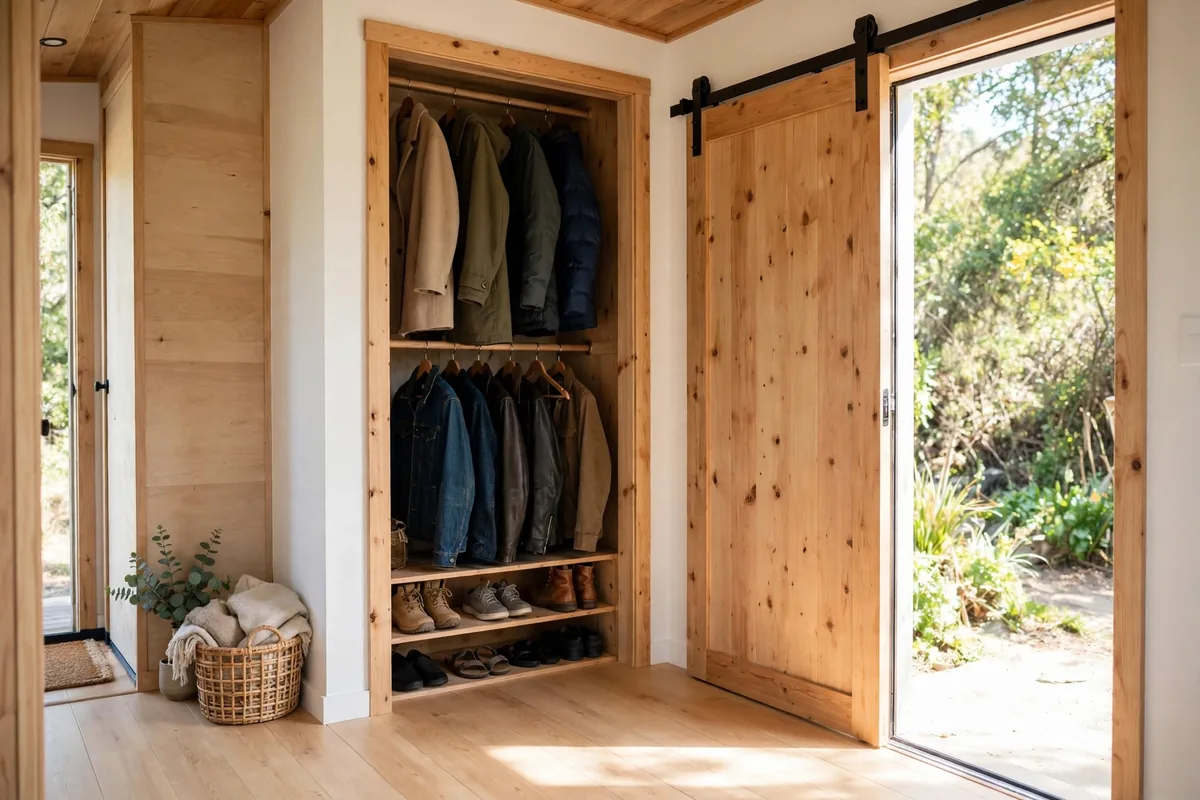
A built-in closet nook turns dead space into serious storage. Double hanging rods, one above the other, double your coat space in the same footprint. The top rod holds long coats, the lower rod holds jackets, and shoe shelves below keep footwear off the floor.
This idea works best in a nook beside the door, or under a stair. A simple curtain or a sliding door hides the contents when guests arrive, and it costs far less than a full closet door. Inside, a high shelf holds hats and seasonal gear that you only need now and then.
Plan the rod heights carefully. The lower rod needs about 90 centimetres of clear space below it for jackets, and the upper rod needs room for longer coats. A nook that is too shallow will crush sleeves against the back wall.
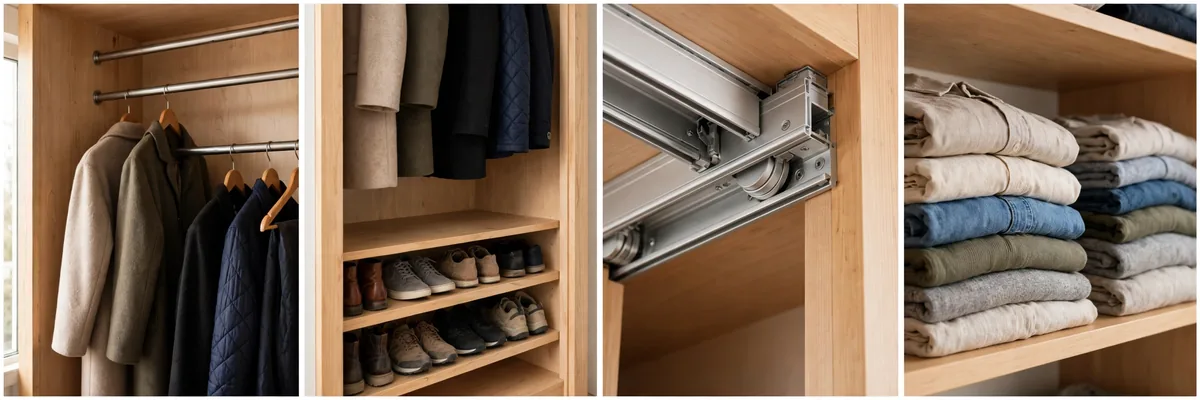
Add a battery powered light inside the nook. A dark closet hides clutter and makes it hard to find the right coat on a rushed morning.
Keep only outerwear in this nook. Everyday clothes belong in the bedroom wardrobe, or the entry closet will fill up and stop working.
12. Woven Baskets on Open Shelving for Soft Storage

Woven baskets are the soft answer to entryway clutter. They hide scarves, gloves, hats and dog toys, but they still look warm and natural on open shelves. In a tiny house, that texture matters, because it stops a wall of storage from feeling cold or plain.
Use one basket per category, not one basket per person. A scarf basket, a glove basket, and a pet basket are easier to use than a mixed basket that needs digging through. Choose baskets with lids if you want a tidier look, or open baskets if you want to grab things fast.
Natural materials like seagrass, rattan and cotton rope suit a tiny house well. They are light, they breathe, and they add a handmade feel that balances wood and white walls. Just keep them away from a wet boot area, where damp can stain the fibres.
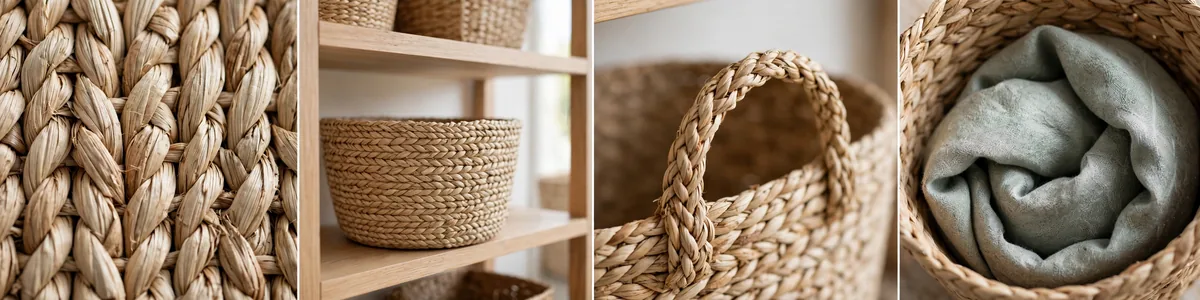
Check the basket size against the shelf before you buy. A basket that sticks out past the shelf edge will catch on coats and bags as you walk past.
Empty the baskets once a season. Single gloves, broken sunglasses and outgrown hats collect fast, and a quick sort keeps the system honest.
13. Boot Tray and Umbrella Stand for Wet Days
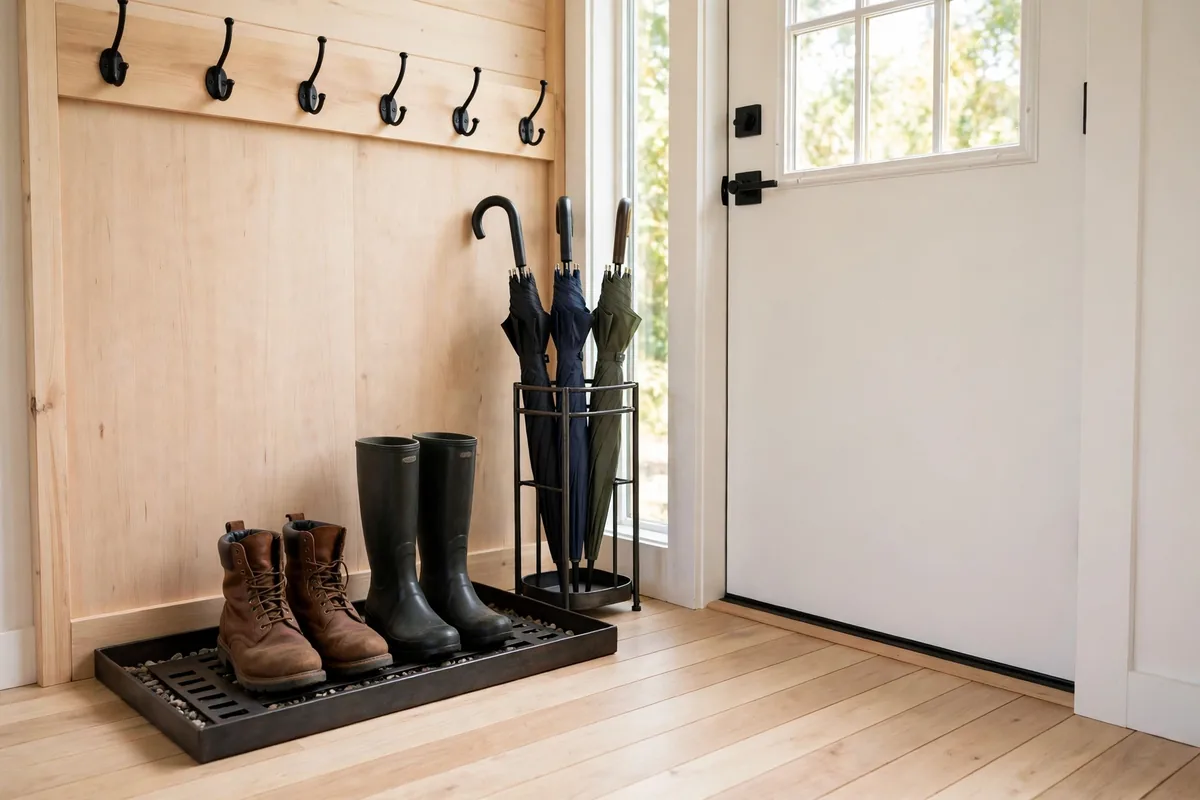
Wet days test every entryway. Muddy boots, dripping umbrellas and wet coats can soak a wood floor in minutes. A boot tray and an umbrella stand contain the mess in one small zone, so the rest of your tiny house stays dry and clean.
Choose a tray with a raised edge and a ribbed base. The edge holds water in, and the ribs lift boots off the puddle so they dry faster. A metal or rubber tray wipes clean in seconds, while a wooden tray needs sealing to survive constant damp.
Place the umbrella stand right beside the tray, close to the door. A tall stand with a heavy base will not tip when it holds three or four umbrellas. Add a hook above for wet raincoats, and the whole wet weather routine happens in one spot.
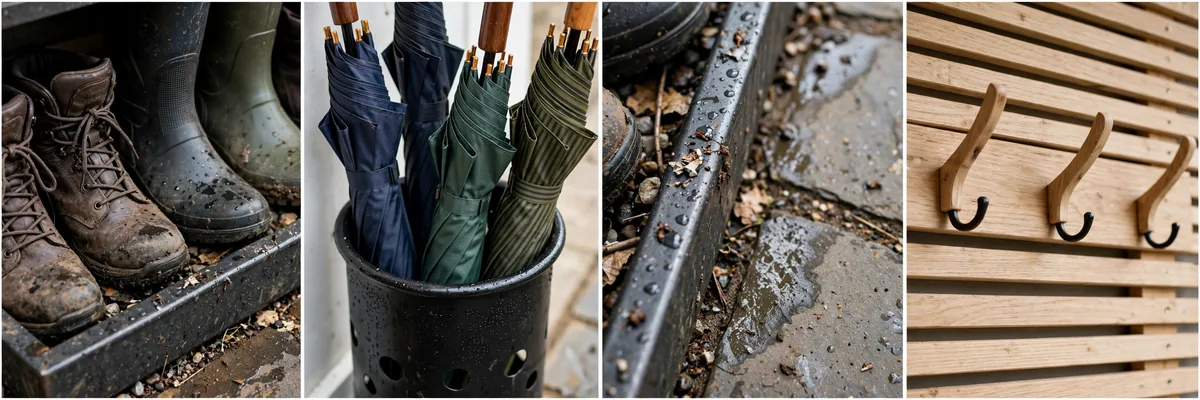
Empty the tray after rain, not the next day. Standing water stains floors and breeds smells, even in a small tray.
Keep one dry pair of indoor shoes on a shelf above the tray. Slipping into dry shoes the moment you step inside makes wet days feel much easier.
14. Chalkboard or Whiteboard Command Center for the Family

A command center turns your entry wall into the family notice board. A small chalkboard or whiteboard holds the weekly plan, a shopping list, and reminders that everyone sees on the way out. In a tiny house, where there is no spare wall for a home office, the entry is the natural place for it.
Keep the board small, about the size of a laptop screen or a little larger. A board that is too big takes over the wall and invites clutter. Below it, add two or three hooks for bags and a small shelf for pens, chalk and a cloth.
Update the board every Sunday night, and wipe it clean when the week ends. A board that never changes becomes wallpaper, and nobody reads it. Fresh notes, even short ones, keep it useful and keep the family on the same page.
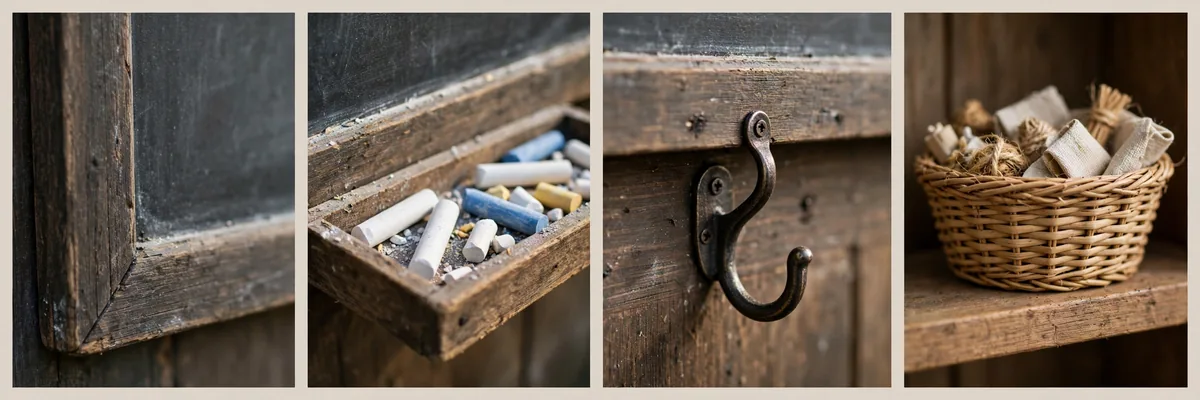
Use a board with a frame that matches your other entry pieces. A matching frame ties the command center into the room, instead of making it look like an afterthought.
Keep a small basket below for school papers and letters. Papers left on the board ledge will fall, so give them a proper home from the start.
15. Sliding Barn Door Storage Wall That Hides It All
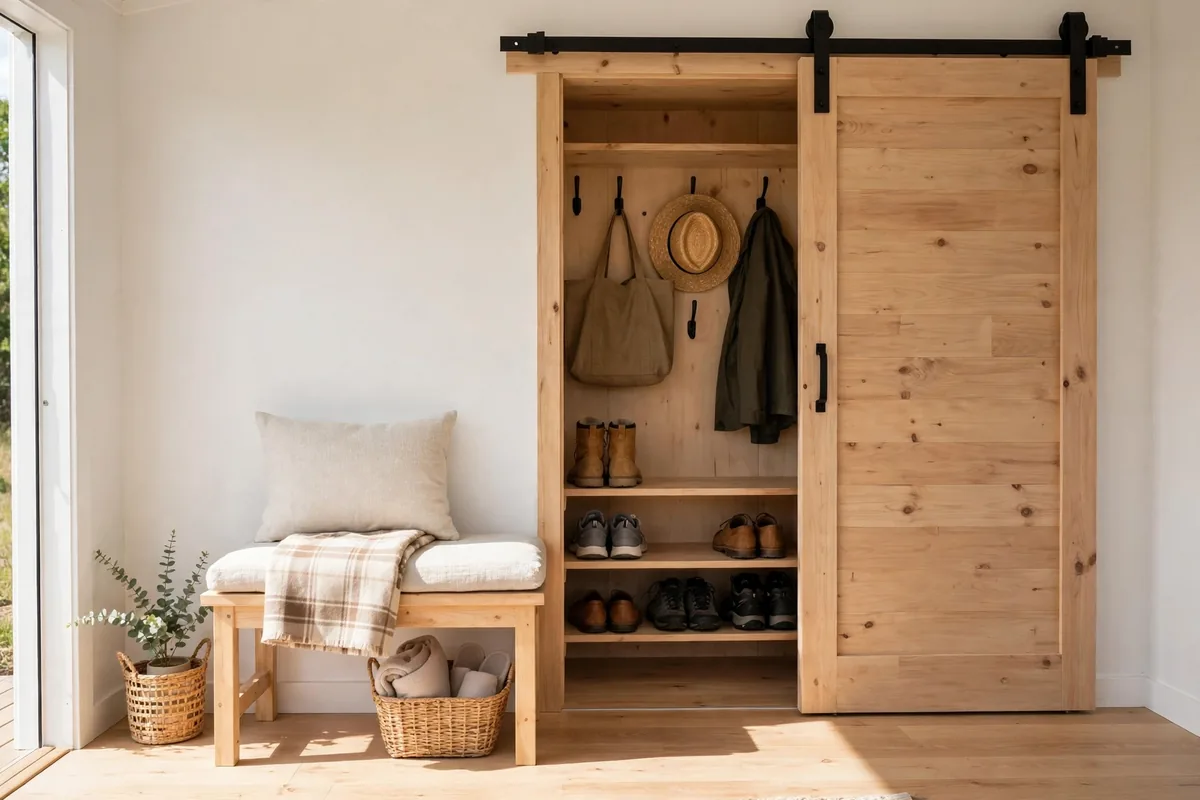
A sliding barn door storage wall is the boldest idea on this list, and it can transform a tiny entry. Behind the door, hooks, shelves and shoe racks hold everything. Slide it shut, and the clutter vanishes behind a beautiful wooden panel. Slide it open, and the whole system is ready to use.
A sliding door saves space because it never swings into the room. That matters in a narrow hall, where a normal door would block the walkway. Choose a light wood door to keep the entry bright, or paint it to match your walls for a calmer look.
Inside the storage wall, plan zones from top to bottom. High shelves hold seasonal gear, hooks at shoulder height hold coats, and shoe racks at the bottom hold daily footwear. When every zone has a job, the door can hide a lot without feeling stuffed.
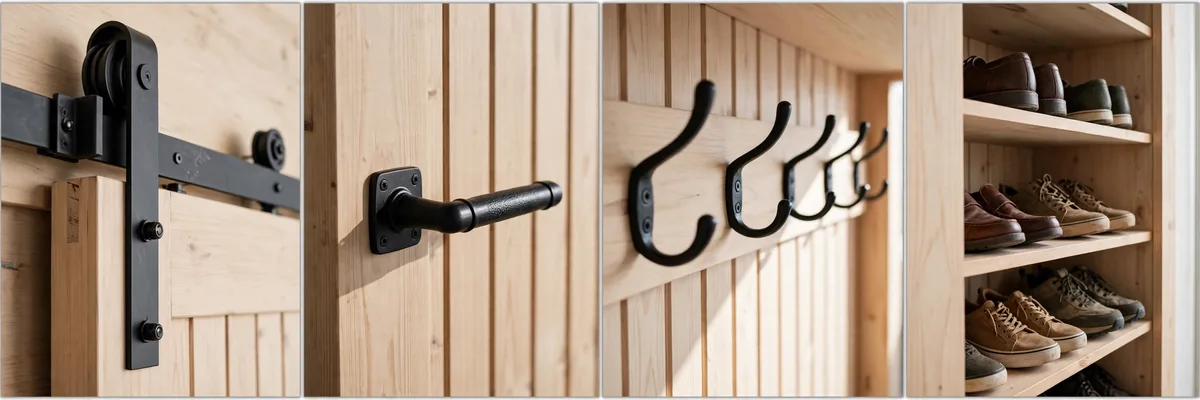
Check the wall above the door before you install the track. The track needs solid fixing, and the door needs clear space to slide fully open.
Add a soft close stop to the track. It stops the door from slamming, and it keeps little fingers safe in a family home.
Start With One Idea, Then Add a Second
The calmest entries are built in layers, not all at once.
Your tiny house entryway does not need to be perfect. It needs to work on a rainy Monday, when everyone is in a hurry and the dog needs a lead. Start with the idea that fixes your biggest daily frustration, and live with it for a week.
If it works, add one more idea from this list. If it does not, move it, swap it, or try a different one. The best entryway is the one you actually use, every single day, without thinking about it.
Which idea will you try first? Tell us in the comments, and share a photo of your entry once it is done. Your small space might be the exact inspiration another tiny house owner needs.