How to Choose the Right Tiny House Trailer (and Avoid the Ones That Fail Inspection)


A tiny house trailer is not a flatbed with a house on top. It is the foundation, the frame, and the vehicle all at once. Get it wrong and the house can sag, sway, or fail an inspection before it ever moves.
Most first-time builders shop by length and price. They measure the deck, compare the sticker, and pick the cheapest trailer that fits. Weight, axles, deck height, and the hitch matter far more, and they are much harder to fix later.
This guide walks through the choices in the order that matters. Start with weight. Then pick the deck style and hitch. Finish with a hard look underneath and a checklist an inspector would use.
At a Glance: Choosing a Tiny House Trailer
- GVWR: the maximum loaded weight, trailer plus house plus everything inside, so leave 10 to 15 percent margin, or 2,000 to 3,000 pounds
- Width: 8.5 feet (102 inches) is the legal maximum without a permit in most states, eaves and trim included
- Height: 13.5 feet from the road to the roof in most states, so the deck height eats into your headroom
- Axles: tandem is the minimum over 16 feet, and triple axle suits builds over 28 feet or 14,000 pounds
- Brakes: electric brakes on every axle, plus a breakaway system on homes over about 3,000 pounds
- Deck height: about 2 feet is typical, and every extra inch costs interior height
- Inspection: a NOAH Stage 1 inspection starts at the trailer, with the VIN label, frame, coupler, lights, and brakes
1. Start With the Weight, Not the Length
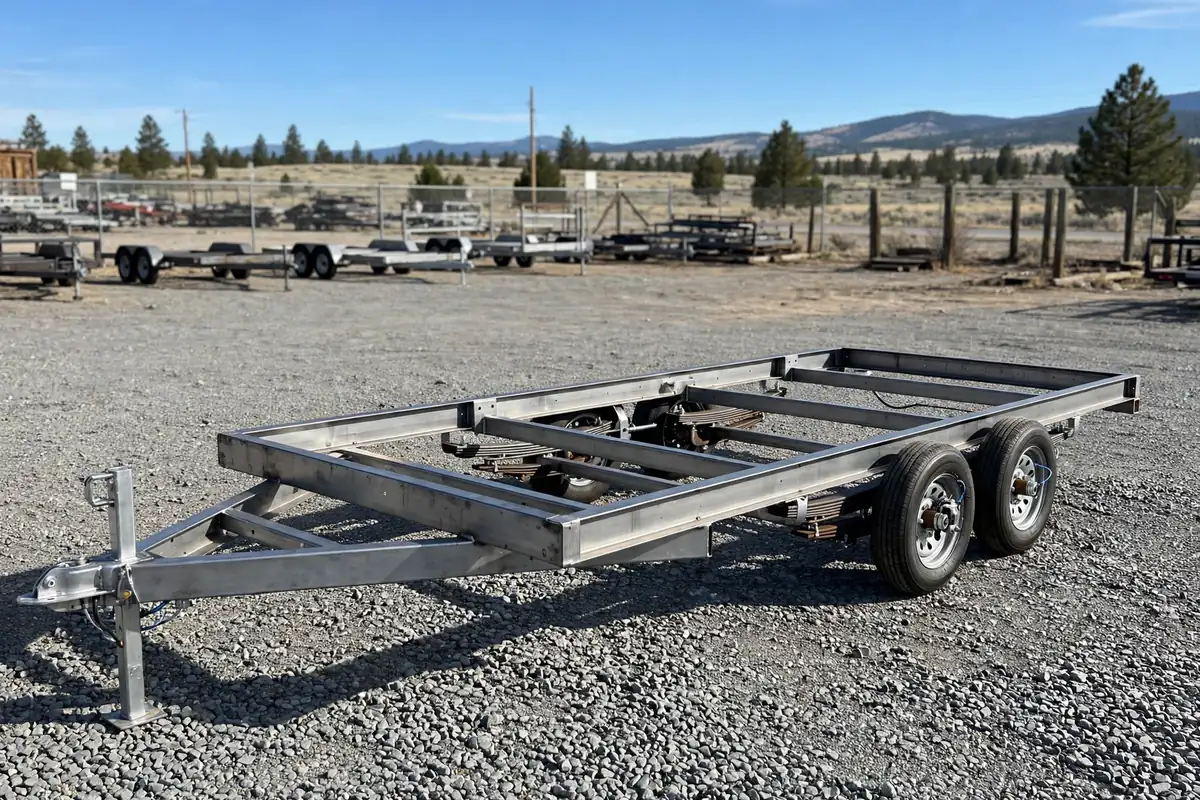
GVWR stands for Gross Vehicle Weight Rating. It is the most the trailer can safely weigh fully loaded, trailer, house, appliances, water tanks, and everything you own included. The axles, tires, frame, and hitch set it together, and you should never exceed it.
A finished tiny house on wheels usually weighs about 400 to 550 pounds per foot of trailer length once furnished. A 20 foot home often lands between 8,000 and 11,000 pounds. A 24 foot home runs about 10,000 to 13,000 pounds.
Your payload is the GVWR minus the empty trailer weight. A 14,000 pound trailer that weighs 3,000 pounds empty leaves about 11,000 pounds for the house. Leave a margin of at least 10 to 15 percent under the GVWR. Water is heavy too: a full 40 gallon tank adds about 334 pounds. The tiny house trailer size guide lists the common ratings, from 7,000 pounds for very light builds to 21,000 pounds for long triple axle trailers.
Estimate your finished weight before you buy, framing, sheathing, roofing, windows, appliances, and water included. Then add a cushion for the things you forgot. If the total sits close to the GVWR, buy the next rating up.
2. Deck-Over vs. Deck-Between: The Headroom Trade-Off
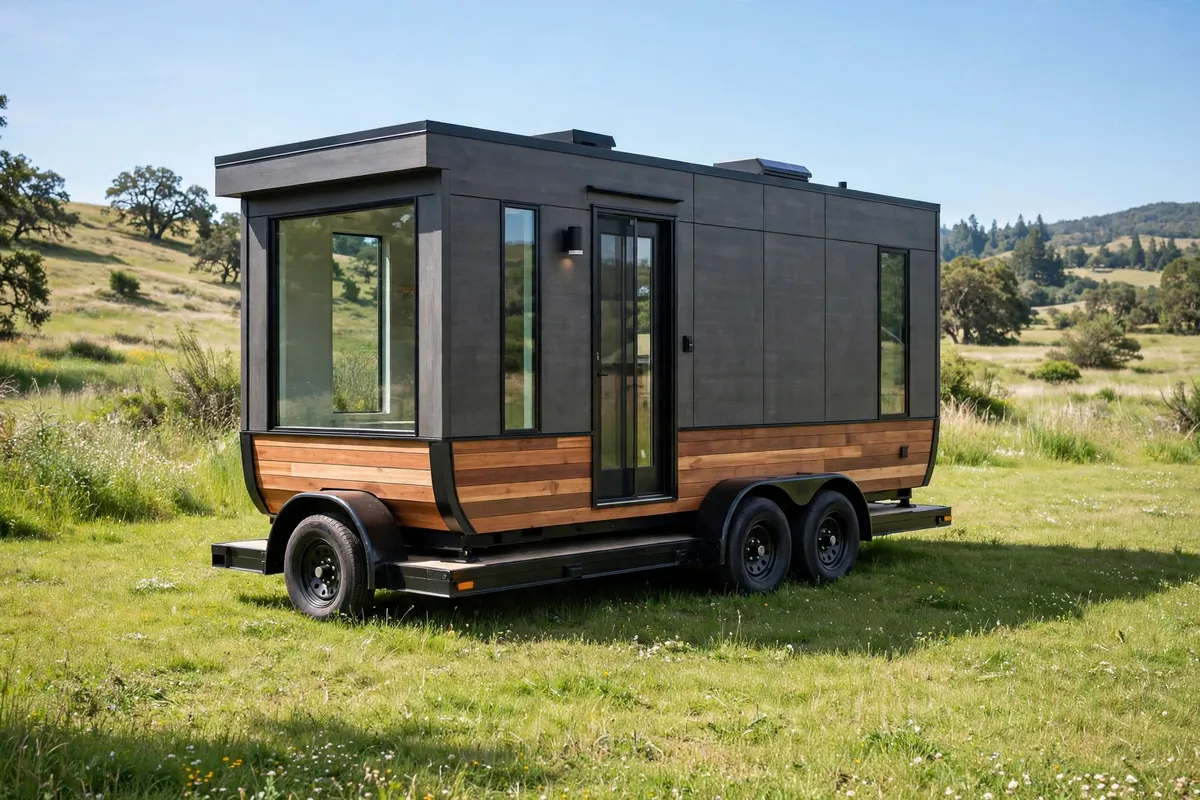
Two deck styles exist, and the choice is headroom versus width. A deck-over trailer puts the deck flat over the wheels. You get one flat surface to build on, with no wheel wells inside. The price is height: the deck sits about a foot higher, and that foot comes straight out of your interior headroom under the 13.5 foot legal cap.
A deck-between trailer, often called a utility or fendered trailer, drops the deck between the wheels. The deck is lower, so you gain headroom and your eaves can reach the full 8 foot 6 inch legal width. The trade is width inside: the wheels intrude and the interior narrows to about 6 foot 8 inches.
Custom tiny house trailers split the difference with the frame built as wide as possible, though the wheels still intrude in places. Tumbleweed’s trailer guide puts the numbers plainly: a deck-over build offers about 7 foot 7 inches inside, a utility trailer about 6 foot 8 inches, with extra headroom as the payoff.
If you plan a loft you will sleep in, headroom usually wins, so pick the lower deck. If you want a single-story layout with wide rooms, the deck-over may suit you.
3. Bumper Pull or Gooseneck: Match the Hitch to the House

Most tiny houses ride on a bumper pull trailer. A coupler at the front locks onto a ball hitch at the back of the tow vehicle. It is the most common setup and the simplest to tow with a standard truck. Up to about 24 feet, it is usually the right call.
A gooseneck moves the hitch point into a pickup bed, where the trailer’s front overhang connects to a ball mounted there. The setup tows with far less sway, turns tighter and handles heavy loads better. It is the usual choice for homes over 28 feet.
The gooseneck costs more and needs an in-bed hitch. It also takes up the truck bed, so moving day hauling gets harder. A bumper pull leaves the bed free but puts more weight on the truck’s rear axle, so a weight distribution hitch is often needed on heavier builds.
Check the tow vehicle before the trailer. Its towing capacity, hitch rating, and combined weight rating must cover the loaded trailer with margin. Tiny Home Builders lists the full feature set a proper tiny house trailer needs, from heavy duty axles to dual safety chains. Read it before you shop.
4. Axles, Brakes, and Tires: The Parts That Carry Everything

The axles carry the whole house, so their rating decides what it can hold. Common axle ratings are 3,500, 5,200, 7,000, and 8,000 pounds each. Two 7,000 pound axles give 14,000 pounds total, which suits most 20 to 26 foot homes.
For any tiny house over 16 feet long, a tandem axle is the minimum. For builds over 28 feet or 14,000 pounds, a triple axle spreads the load and steadies the ride. Axle placement matters too: the group should sit so the loaded trailer balances, with enough tongue weight to tow straight and not so much that it overloads the truck.
Electric brakes on every axle are non-negotiable. They are a legal requirement in most states for trailers of this weight, and they are what stops a 12,000 pound house safely. A breakaway system is required over about 3,000 pounds, and it applies the trailer brakes if the trailer ever separates from the truck.
Tires deserve the same attention. Use radials rated for the load, check the date code on the sidewall, and replace old tires even if the tread looks fine. Carry a spare, a jack rated for the load, and a lug wrench that fits.
Trailer Spec Comparison: Which Rating Fits Which Build
- 7,000 lb GVWR: two 3,500 lb axles, suits very light builds 16 feet and under
- 10,000 lb GVWR: two 5,200 lb axles, suits light 16 to 20 foot homes
- 14,000 lb GVWR: two 7,000 lb axles, suits most 20 to 26 foot homes
- 16,000 lb GVWR: two 8,000 lb axles, suits heavier 24 to 28 foot homes
- 21,000 lb GVWR: three 7,000 lb axles, suits 28 to 34 foot homes and gooseneck builds
- Margin rule: keep the finished, loaded weight at least 10 to 15 percent under the GVWR, or 2,000 to 3,000 pounds under it
- Source: ratings and axle setups from the tiny house trailer size guide
5. Couplers, Chains, and the Little Parts That Fail First
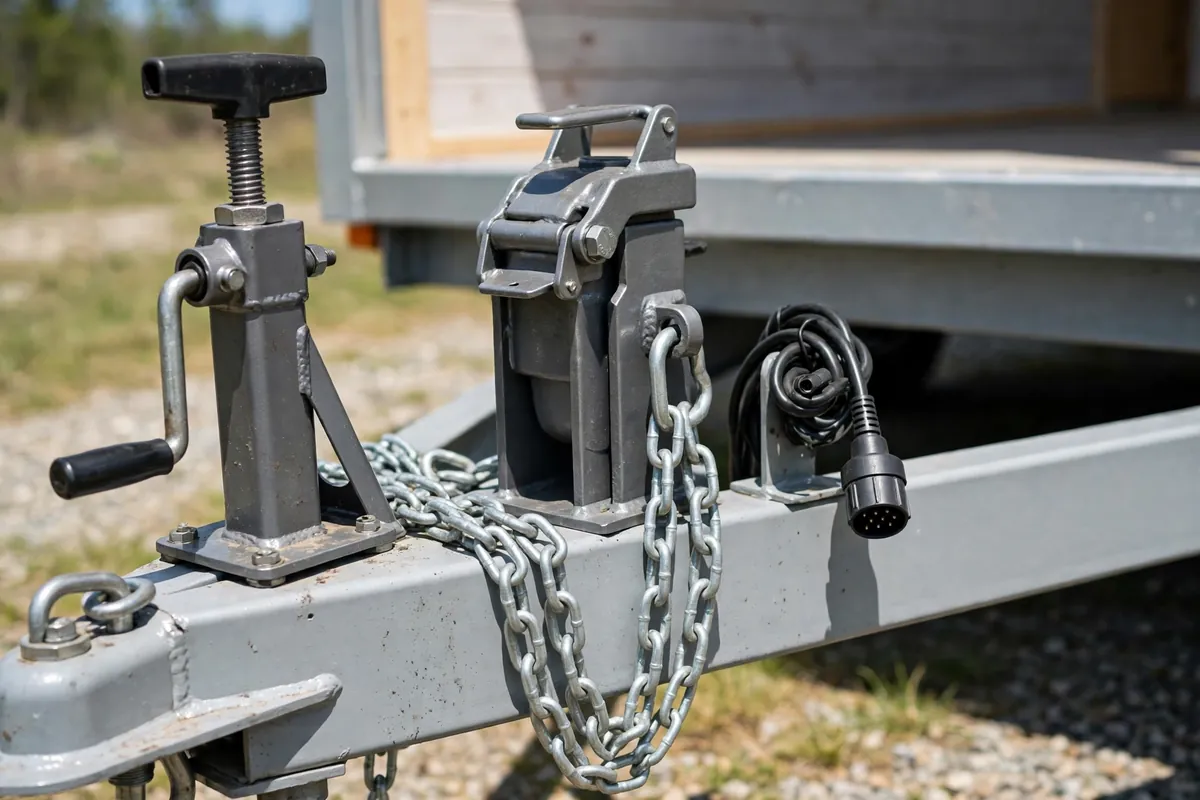
The coupler is the one part that connects your house to your truck. Most tiny house trailers use a 2 5/16 inch coupler, the size rated for heavy loads. It must be welded or bolted to the tongue strongly enough to transfer the full breaking load, with a lock that stops it popping open.
Safety chains are your backup if the coupler ever fails. Use two chains, crossed under the tongue so they cradle it and rated for the trailer weight. They should be short enough to keep the tongue off the road but long enough to turn. A seven pin connector carries the brake, light, and charging circuits, so check that every pin is clean and tight.
The jack matters more than it looks. One rated below the tongue weight will bend or slip when you unhitch on soft ground. Look for a wide foot and a rating that covers the loaded tongue weight with room to spare.
Test every part before you pay. Hitch and unhitch the trailer yourself. Lock the coupler, tug it hard, and check for play. If anything feels loose, worn, or bent, treat it as a repair bill, not a detail.
6. The Road-Legal Envelope: 8.5 Feet Wide, 13.5 Feet Tall
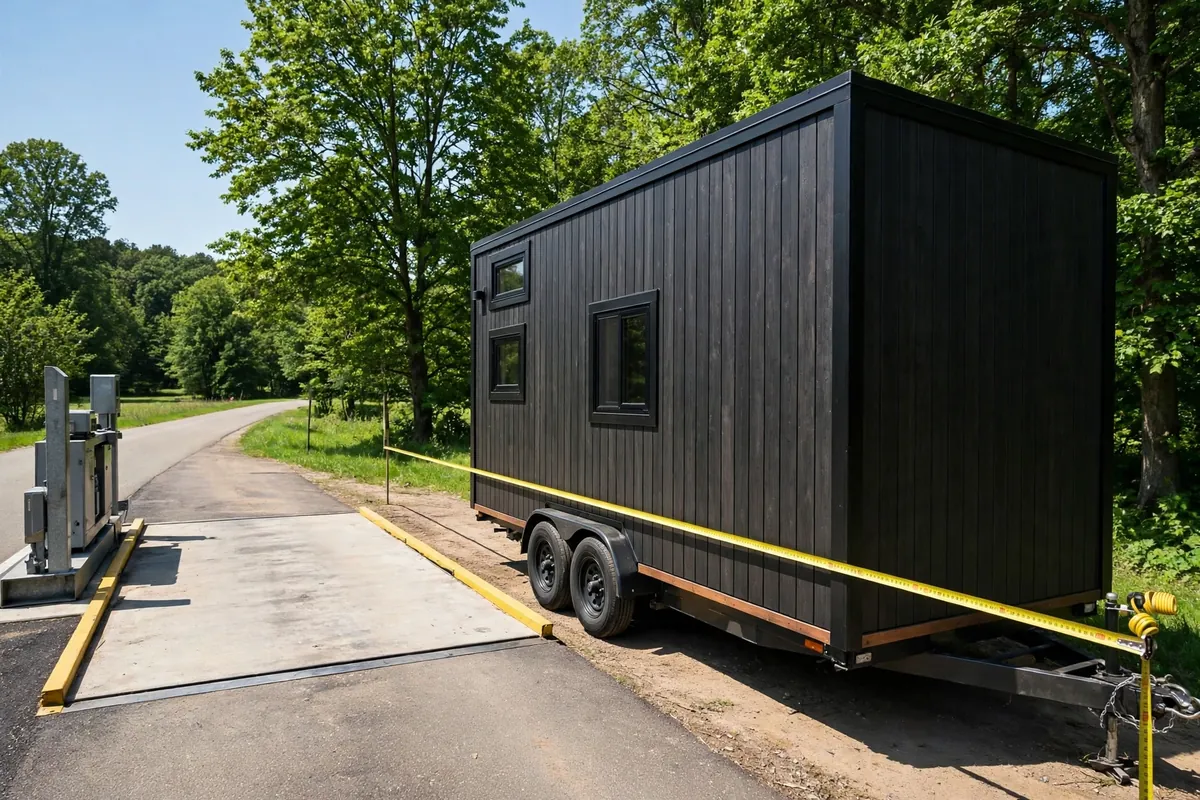
Three numbers decide if your home can move legally. Width is 8.5 feet, or 102 inches, in most states without a special permit. Height is 13.5 feet from the road to the highest point of the roof in most states, though a few allow 14 feet and a few cap it at 13. Length limits vary by state and tow vehicle.
Measure at the widest point, and count everything. Eaves, trim, window sills, lights, and vents all count toward the width. Roof vents, chimney caps, and solar panels all count toward the height. Many builders keep the exterior at 8 foot 4 inches for margin.
Going over the envelope turns every move into an oversize load: permits for each state on the route, and sometimes a pilot car. Doable, but slow and expensive, and a poor way to live if you plan to move often.
Check the rules for every state on your route, not just your home state. A standard driver’s license is usually enough if truck and trailer combined stay under 26,000 pounds and the trailer GVWR stays under 10,000 pounds, but the exact line varies, so confirm with the DMV before moving day.
7. What an Inspector Actually Checks
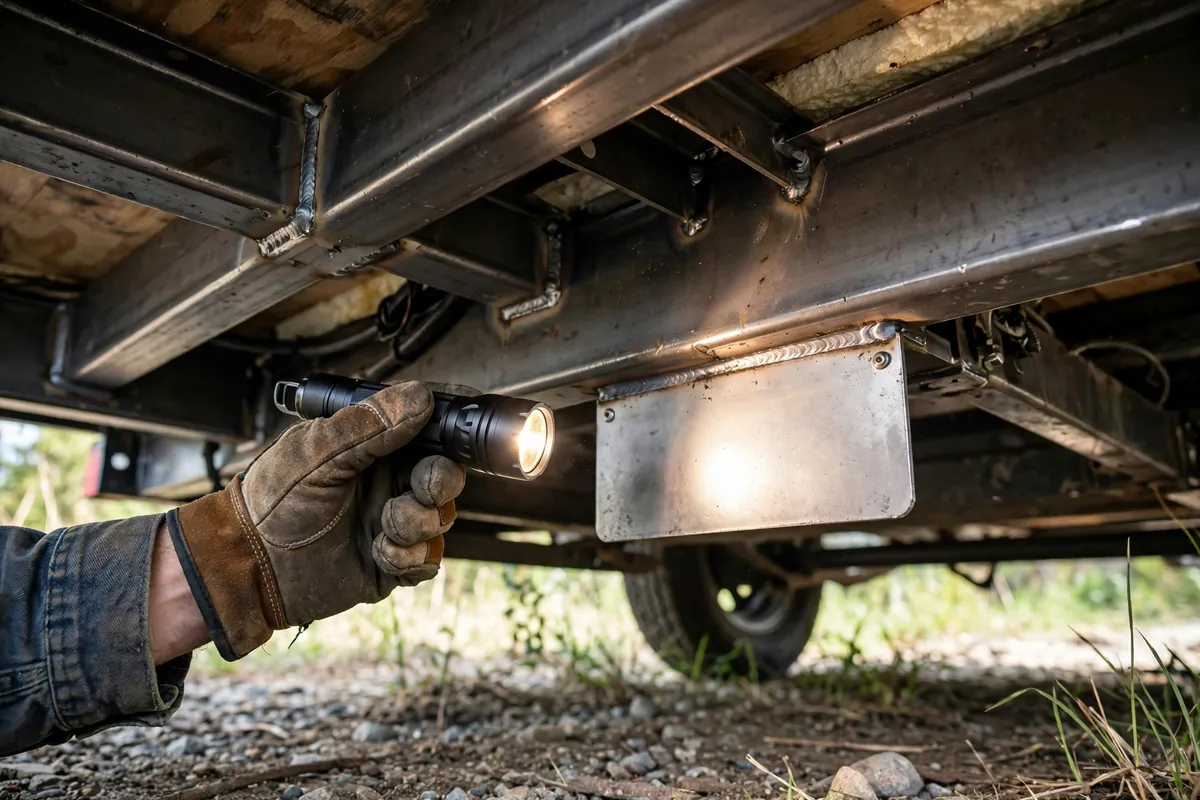
An inspection is where a weak trailer gets found out. A NOAH Stage 1 trailer inspection begins with a close-up of the VIN label. Then the inspector checks the frame and tongue against the axle ratings, the coupler attachment, and the lights, brakes, and breakaway system.
Lighting gets more attention than builders expect. The rear needs running lights, brake lights, turn signals, and a tag light, plus clearance and identification lamps mounted as high as practical. The front needs them too. If the house covers a trailer light, the builder must bring it out or fit an equal new one.
Two certifications cover tiny homes here. RVIA treats the home as a recreational vehicle and applies to homes built by approved manufacturers. NOAH is built for alternative housing and uses independent inspectors to check structure, electrical, plumbing, insulation, and safety. This RVIA vs. NOAH comparison explains which one fits which kind of build.
Ask the seller which certification it carries and to see the paperwork. A trailer with no VIN, no title, and no rating plate is a warning sign, not a bargain. The NOAH Stage 1 trailer page lists the full inspection points, coupler, wiring, and brakes included.
Inspection Checklist: Before You Pay for a Trailer
- VIN and title: the VIN plate is present and matches the title exactly
- GVWR plate: readable, and the rating covers your estimated finished weight with margin
- Frame: straight, with clean welds, no cracks, and no rust eating through the steel
- Coupler and chains: coupler locks firmly, chains are crossed and rated for the weight
- Brakes: electric brakes on every axle, plus a working breakaway system
- Lights: every DOT light works, including clearance and identification lamps front and rear
- Tires: load rating covers the weight, date codes are recent, and a spare is included
- Deck: flat, square, and level, with no soft spots or bent crossmembers
- Paperwork: title, bill of sale, and manufacturer build sheet in hand before money changes hands
8. New, Used, or Custom: Price, Paperwork, and Red Flags
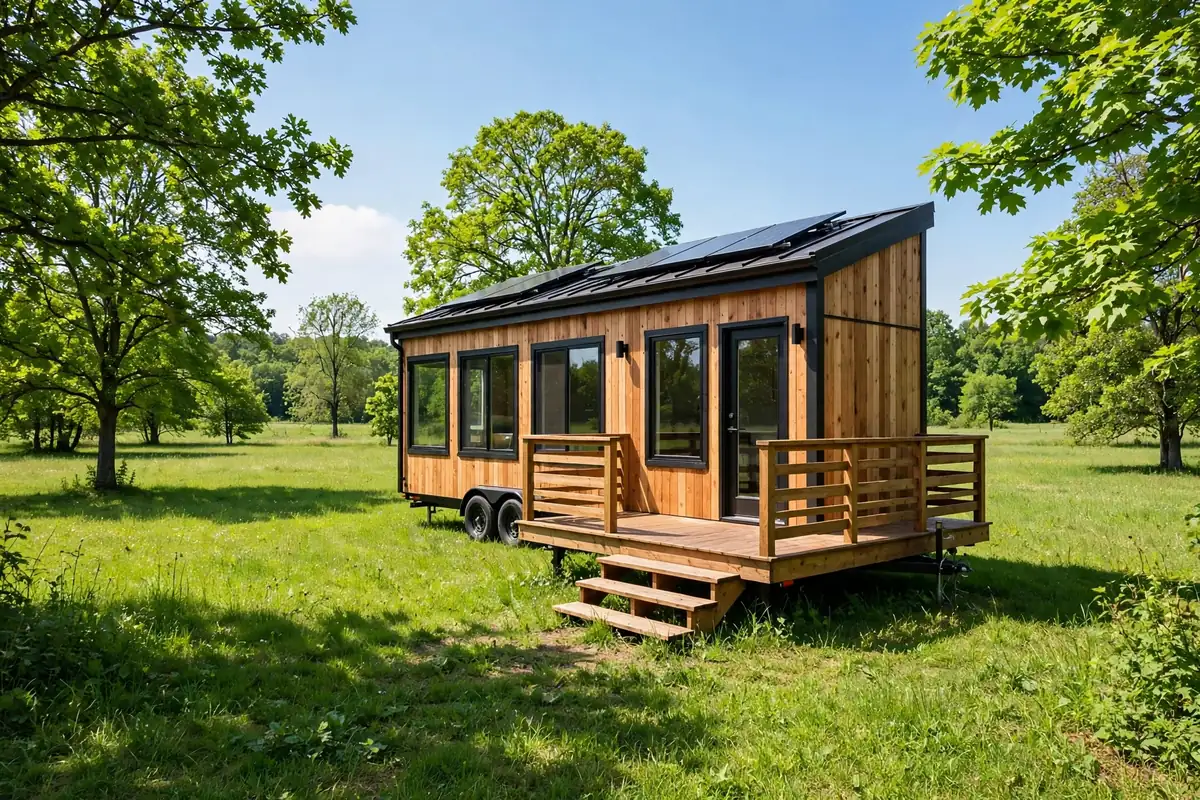
A new trailer from a known maker is the safest buy. You get a stated GVWR, a warranty, a clean title, and the length, axles, and deck style your plan needs. The cost is higher and the wait can stretch for weeks, but you know what you are building on.
A used trailer can save money if you inspect it well. Crawl underneath with a flashlight and look for rust, bent crossmembers, and cracked welds. Check tire date codes, brake wiring, and that the VIN matches the title. A used trailer with a bent frame, a missing VIN, or no title is not a deal, it is a problem you are buying.
A custom trailer is built to your plan, the frame sized for your house, with a steel flange for the floor. It costs the most, but removes the utility trailer compromises. Stacked crossmembers on top of the main beams are stronger and rust less than pierced frames with slots cut through the beams.
Whatever you buy, get the weight in writing. Weigh the finished house at a truck scale and compare it to the GVWR. If you are over, you will know before the inspector tells you.
The right trailer is boring on paper and invisible on the road. It carries the weight with room to spare, fits the legal envelope, and passes an inspection without a second visit.
Buy the trailer for the house you will actually build, not the one you sketched on day one. Leave margin in the weight, the height, and the budget, and the house will move when you need it to.