How to Heat a Tiny House in Winter Without a Big Utility Bill

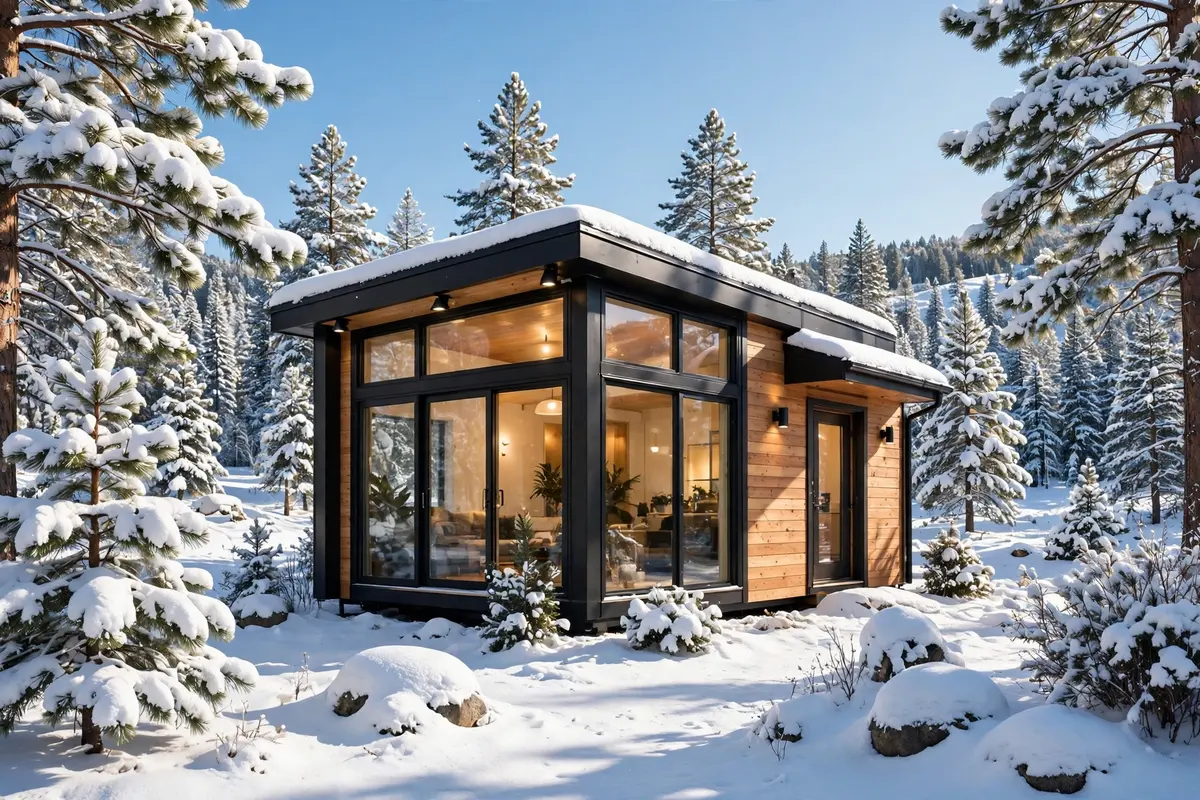
A tiny house heats up fast. That is the good news. The bad news is that it cools down just as fast.
Winter in a small space is a balancing act. You need enough heat to stay warm, but too much heat turns the place into a sauna. Add steam from cooking and showers, and you get condensation on every cold surface.
The trick is not buying the biggest heater you can find. It is matching the right heater to your home, your climate, and your power setup. This guide walks through every realistic option, what each one costs to run, and the small habits that keep the bill low.
At a Glance: Heating a Tiny House
- Typical size: 200 to 400 square feet, so a little heat goes a long way
- Heat needed: about 20 BTU per square foot in mild climates, 30 to 40 in cold ones
- Cheapest to run on the grid: a mini-split heat pump, roughly $30 to $80 a month in a moderate climate
- Best off-grid picks: a vented propane heater or a diesel air heater
- Humidity target: 35 to 50 percent indoors, to stop condensation and mold
- Golden rule: always have a backup heat source, in case your main one fails
1. Start With Insulation, Not a Bigger Heater
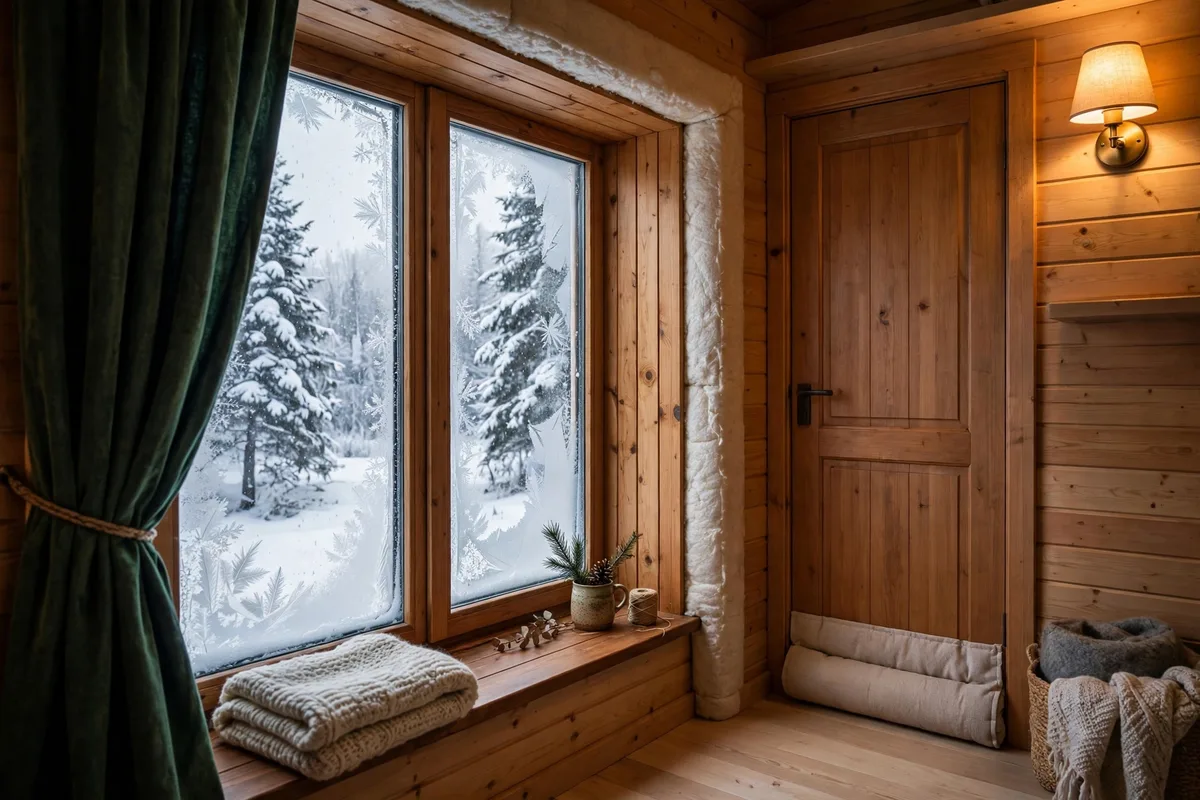
Before you shop for any heater, look at the shell of your home. A leaky tiny house will eat whatever heat you throw at it. Air leaks alone can account for 20 to 40 percent of heating loss, according to winterizing guides for small homes.
Seal drafts first. Weatherstrip the door, caulk gaps around windows, and check the skirting under the floor. A tube of caulk and a roll of weatherstripping cost almost nothing, and they pay for themselves in the first cold snap.
Then check your insulation levels. A common target is R-13 to R-21 in the walls, R-38 to R-60 in the roof, and R-19 to R-30 under the floor, adjusted for your climate zone. Spray foam is popular in tiny builds because it fills every gap and doubles as a vapor barrier. Double-glazed windows help too, since single glass turns into a cold surface where moisture collects.
Think of it this way. Insulation is the heater you only pay for once. Every dollar spent sealing the envelope lowers every heating bill that follows. For a full winterizing checklist, see the winterizing guide from Tiny House Plans.
2. Mini-Split Heat Pumps: The All-Rounder
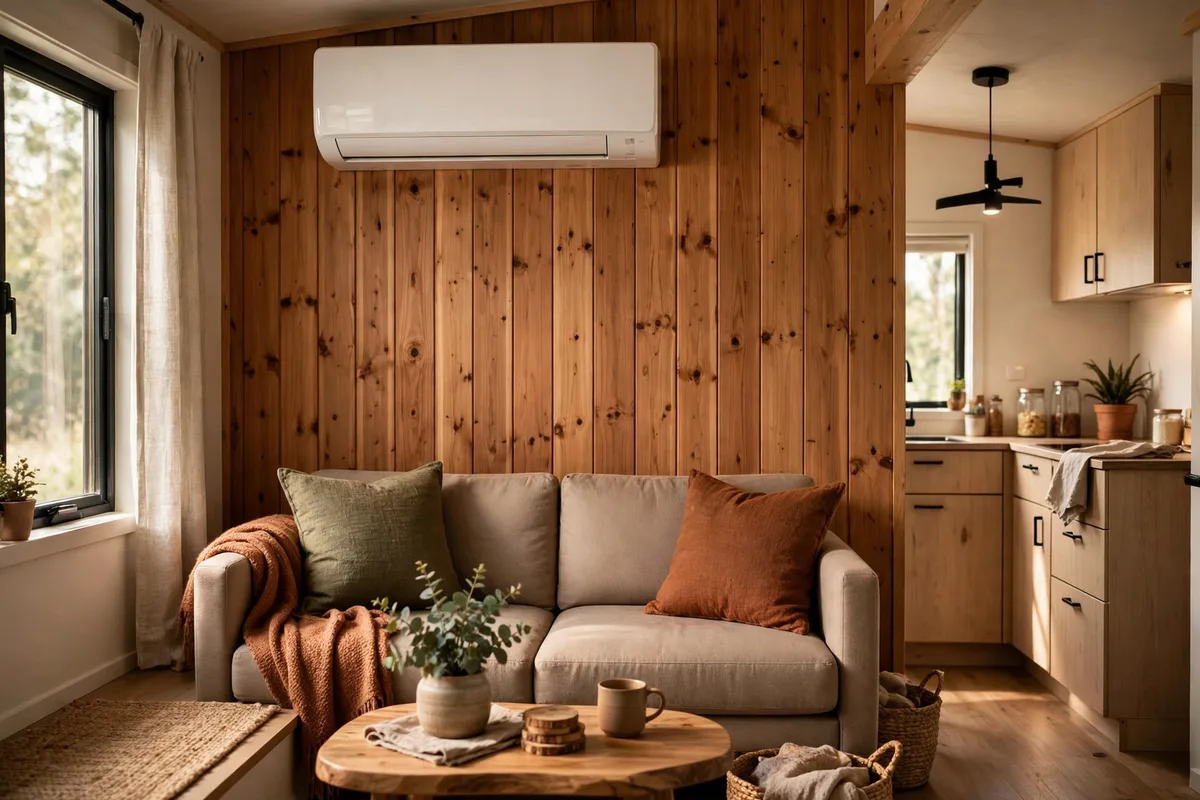
If your tiny house has grid power, a mini-split heat pump is the best overall choice for most people. It is one wall unit inside, connected to a compact compressor outside.
A heat pump does not make heat the way a space heater does. It moves heat from the outside air into your home, even in freezing weather. That is why it runs at 200 to 300 percent efficiency, delivering two to three units of heat for every unit of electricity. Cold climate models keep working down to 0 degrees Fahrenheit, and some hyper-heat models go as low as negative 15.
For a 200 square foot tiny house, a 9,000 to 12,000 BTU unit is usually enough. Installation typically runs $1,500 to $3,000, and a well insulated home in a moderate climate costs about $30 to $80 a month to heat. In a cold climate, expect $80 to $150 a month. The same unit also cools and dehumidifies in summer, so you buy one machine for the whole year. Compare the numbers in the tiny house heating and cooling guide from Little Houses For Sale.
3. Wood Stoves: Cozy Heat With Real Work Attached
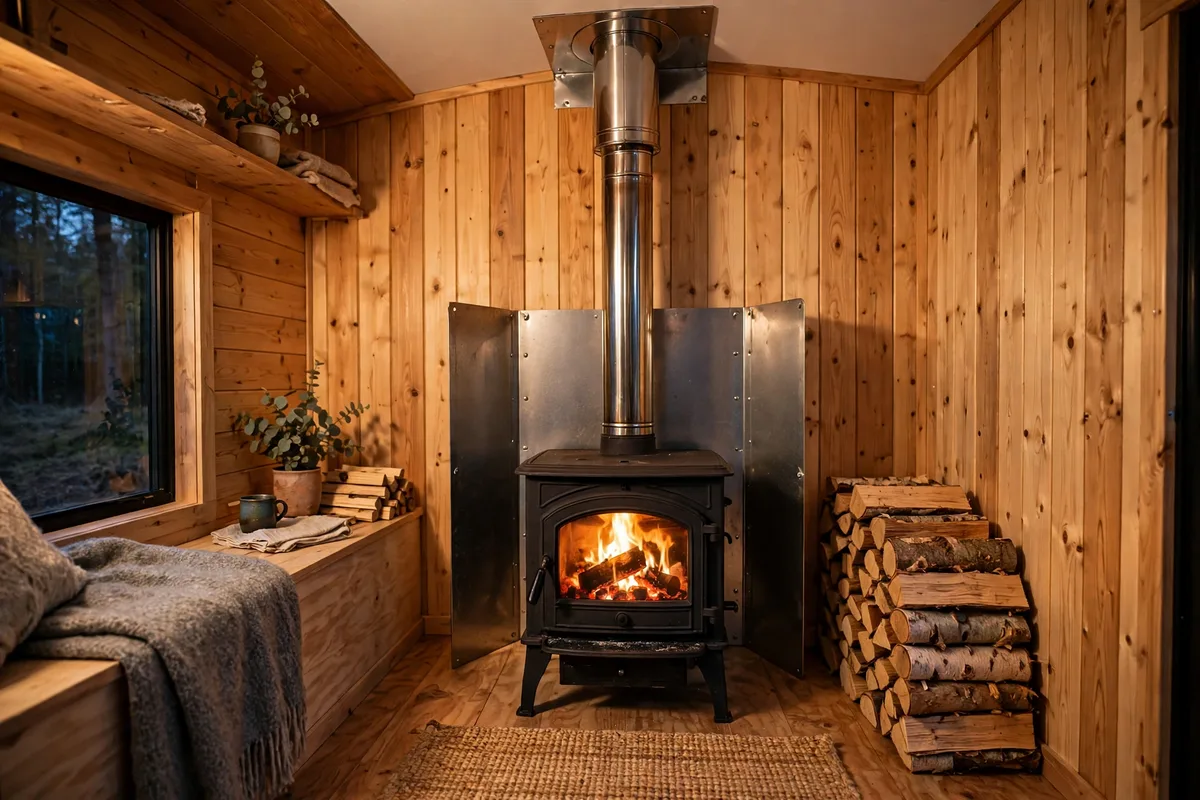
Nothing beats the feeling of a real fire on a snowy night. A small wood stove made for tiny houses or boats, like the Cubic Mini Grizzly, puts out 8,000 to 18,000 BTU of dry, radiant heat. It works with no electricity at all, which makes it a favorite for off-grid homes.
The costs are reasonable. A proper stove and installation usually runs $800 to $4,000, and most tiny houses burn one to two cords of wood per winter at $50 to $200 per cord. If you have access to free firewood, the running cost drops close to zero.
But a wood stove is not a set-and-forget heater. You will feed it, clean out ash, and store firewood somewhere dry. Clearances matter a lot in a small room, so follow the stove maker’s distances exactly and fit a proper heat shield and flue. Check your local rules too, since some areas restrict wood stoves and some insurers ask questions. A stove also heats unevenly, roasting the living room while the loft stays chilly, so a small fan helps move the warm air around.
4. Propane Heaters: Fast Heat Off the Grid
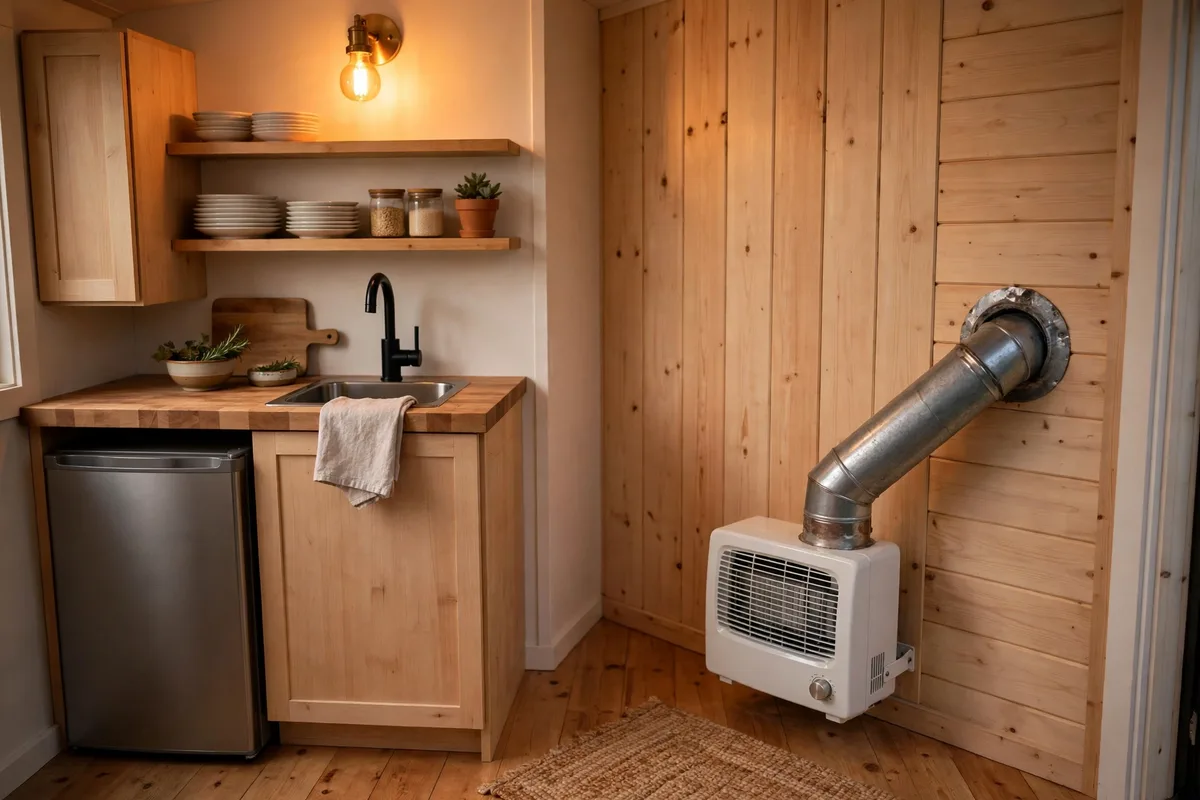
Propane is the top choice for off-grid tiny houses, and for good reason. It needs no electricity, it heats a small space quickly, and the fuel is available almost everywhere.
The simplest options are cheap. A portable propane heater costs $75 to $200, and a vent-free wall mount runs $150 to $400. A 10,000 BTU heater running eight hours a day uses about one gallon of propane. At $3 to $4 per gallon, that works out to $24 to $32 a week in cold weather, or roughly $50 to $100 a month through winter.
Choose a vented model if you can. Vented heaters send combustion gases outside through a small flue. Vent-free models release moisture and combustion gases into your living space, which means condensation on the windows and a real need for fresh air. Tiny house heating experts at Tiny Life Consulting recommend having two types of heat, so a propane heater pairs well with a wood stove or a small electric backup.
Heating Options at a Glance
| Heater | Upfront cost | Monthly running cost | Needs power? | Best for |
|---|---|---|---|---|
| Mini-split heat pump | $1,500 to $3,000 | $30 to $150 | Yes | On-grid homes, all year comfort |
| Wood stove | $800 to $4,000 | $50 to $200 per cord | No | Off-grid, free firewood nearby |
| Propane heater | $75 to $1,500 | $50 to $100 | No | Off-grid, quick heat |
| Diesel air heater | Low, often a few hundred dollars | About a gallon per 10 hours on high | 12V only | Solar setups, dry heat |
| Electric space heater | $50 to $200 | Varies, highest per unit of heat | Yes | Backup or mild climates |
Costs are typical ranges from published tiny house heating guides and vary by climate, fuel prices, and insulation.
5. Diesel Heaters: The Off-Grid Favorite
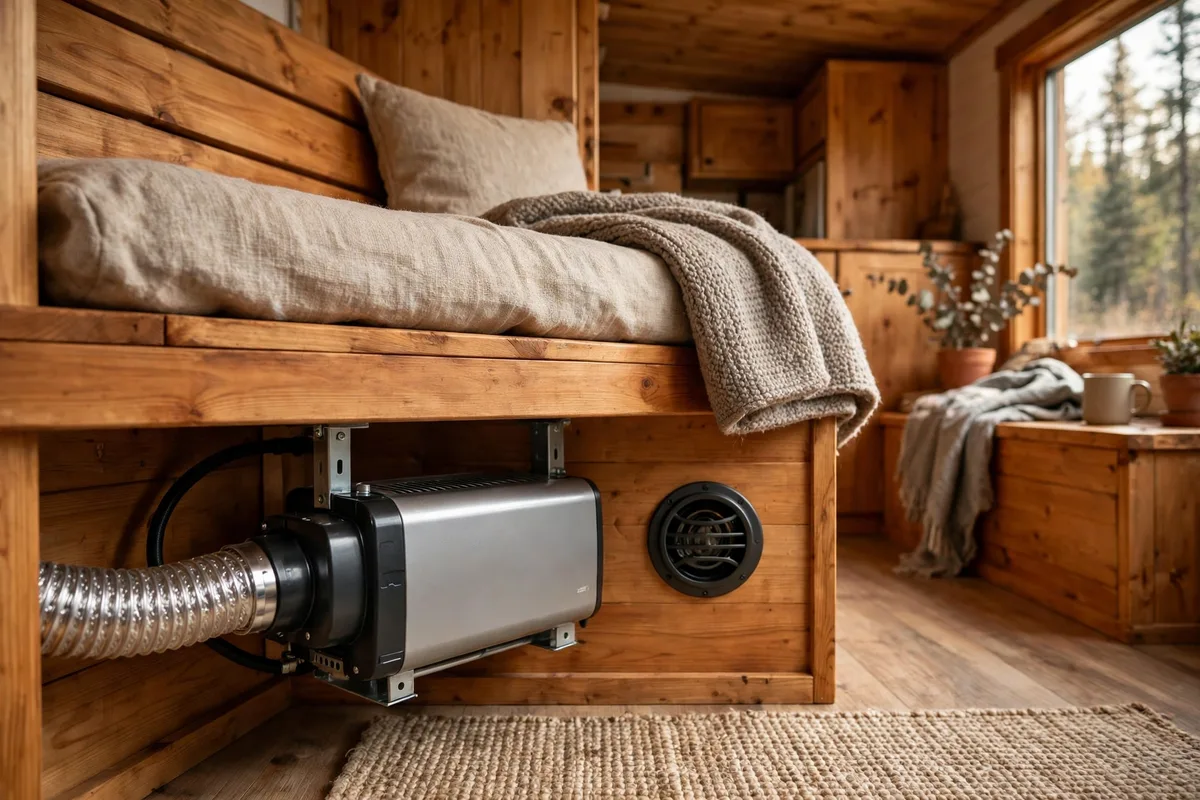
Diesel air heaters started life warming truck cabins. Now they are one of the most popular heaters in off-grid tiny homes, vans, and skoolies, and it is easy to see why.
The heater is a compact box that runs on a basic 12-volt supply, so a modest solar battery bank can power it. It burns diesel, kerosene, or home heating oil, and all the exhaust vents outside. That means the heat it makes is dry, with zero moisture added to your living space. In a small home where damp bedding and window condensation are constant worries, dry heat is a big deal.
Fuel use is tiny. A standard 5kW unit can run on high for over ten hours on a single gallon of diesel. The heaters themselves are cheap, with popular brands costing a few hundred dollars. Installation takes some DIY confidence, since you need holes through the floor or wall for the intake, exhaust, and fuel line. Get those sealed properly, keep the exhaust clear of anything flammable, and you have cheap, reliable heat that shrugs off freezing nights.
6. Simple Electric Heat and Warm Floors
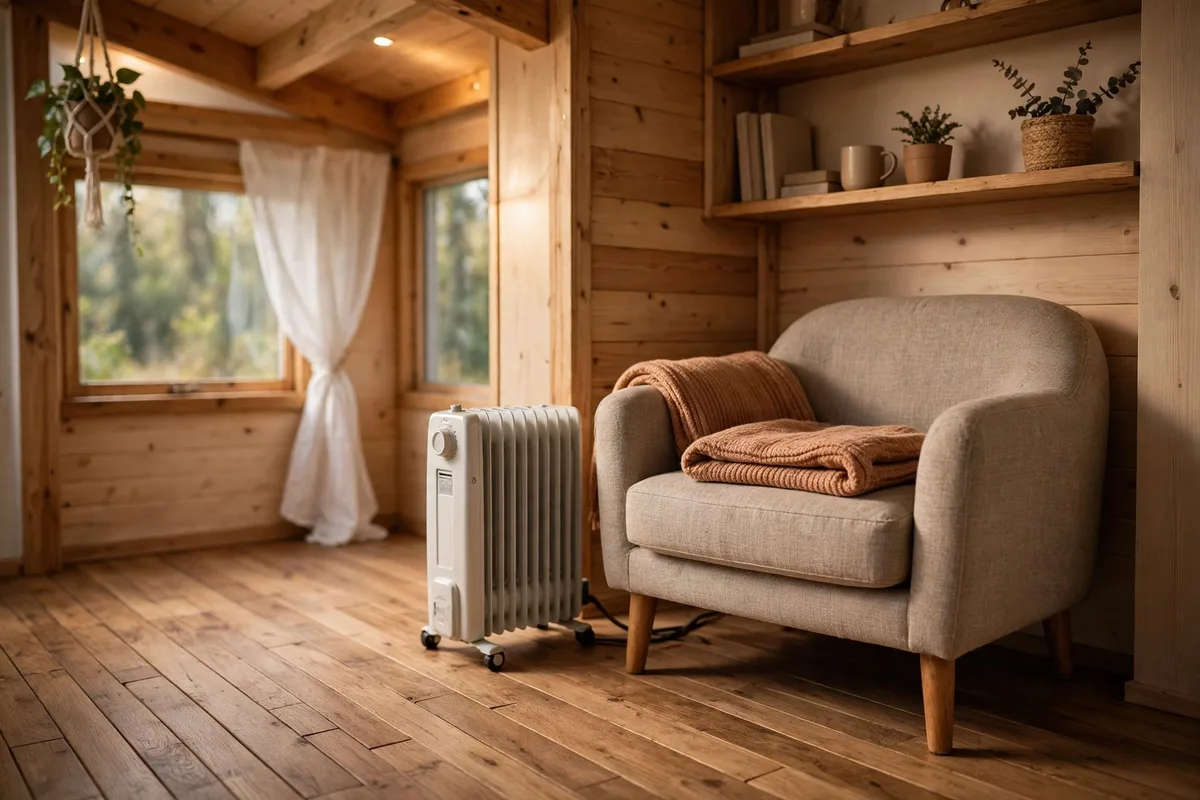
Sometimes the simplest option is the right one. Oil-filled radiators, baseboard heaters, and small ceramic space heaters cost $50 to $200, need no venting, and run almost silently.
Radiant floor heating is the luxury version. Electric mats or hydronic tubing under the floor warm the room from the ground up, so your feet stay warm and the heat spreads evenly. Electric mats run about $10 to $20 per square foot plus installation. In a 200 square foot home, that is a manageable project, and it frees up wall space that a stove or wall heater would take.
The catch is running cost. Plain electric resistance heat is the most expensive heat per unit of warmth, so it stings as a main heater in a cold climate. Use it where it shines: a small radiator in the loft, a heated mat under the bathroom floor, or a backup that kicks in if your main heater fails. Set the thermostat to 66 to 68 degrees during the day and 60 to 62 at night, and the bill stays in check.
What a Winter of Heat Really Costs
- Mini-split, moderate climate: about $30 to $60 a month
- Mini-split, cold climate: about $80 to $150 a month
- Propane: about $50 to $100 a month in winter
- Wood stove: one to two cords per winter, $50 to $200 per cord, or free if you cut your own
- Diesel heater: roughly a gallon per 10 hours on high, so a few gallons a week in deep cold
- Biggest money saver: sealing air leaks and topping up insulation, which cuts every fuel bill at once
Figures are typical ranges from published tiny house heating guides. Your climate, insulation, and local fuel prices move the numbers up or down.
7. Stay Safe, Dry, and Warm All Winter
A warm tiny house is only a good tiny house if it is also a safe one. Any fuel-burning heater needs a carbon monoxide detector, full stop. Fit one near the sleeping area and test it monthly, along with a smoke alarm.
Watch the moisture. Cooking, showering, and even breathing add water to the air, and a tight, well sealed home traps it. Aim for 35 to 50 percent indoor humidity. Run the bathroom fan during showers and put lids on pots. If the windows weep every morning, you need more ventilation, not less heat. Cracking a window with a fan running keeps the air fresh without dumping all your warmth outside.
Plan for the worst night, not the average one. Keep a backup heater ready, fuel topped up before a storm, and pipes protected with insulation and heat tape. If you leave the house empty in winter, set the heat to 50 to 55 degrees so nothing freezes. Winter in a tiny house takes a little more attention. Get the insulation, the heater, and the habits right, and the small space becomes the coziest room you have ever lived in.
A tiny house does not need a big utility bill to stay warm. It needs a tight shell, a heater sized to the space, and a backup plan for the coldest nights. Pick the option that fits your power setup and your climate, seal the drafts first, and enjoy the winter from the warm side of the window.