
Stop Overpaying: 17 Booking Mistakes That Cost Travelers $500+ Per Flight

You’re sitting at your kitchen table at 11:00 PM, staring at a flight to London. It’s $650. You think, “I’ll just sleep on it.” You wake up, grab your coffee, open the laptop, and—BAM—it’s $875. Your stomach drops. You feel like you just got mugged by an algorithm.
The aviation industry today isn’t just about flying planes; it’s about hyper-sophisticated math designed to find the absolute ceiling of what you’re willing to pay. Between the “look-to-book” ratios that are exploding thanks to AI and the $148 billion—yes, billion—airlines raked in through extra fees last year, the deck is stacked against us.
But here’s the thing: you don’t have to be the person who subsidizes everyone else’s cheap seat. Most travelers are throwing away $500 or more per flight simply because they’re playing by an old set of rules that don’t exist anymore.
I want to walk you through the 17 most expensive mistakes people make when booking. No corporate jargon, just a real look at how to stop the bleeding.
The “School Bus” Reality: Why Prices Jump
Before we dive into the mistakes, you have to understand how these prices work. Think of an airline like a school bus where the price of a seat changes based on how many kids want to get on. If the bus is empty, the driver might take a single piece of candy just to fill a spot. But if there’s only one seat left and fifty kids are screaming to get on, the driver is going to demand ten chocolate bars.
In the airline world, this is called “Dynamic Pricing”. It’s a digital price tag that updates every few minutes based on demand, your location, and even what your competitors are doing.
The 17 Mistakes Draining Your Bank Account
1. Booking Too Early (The “Peace of Mind” Tax)
It sounds counterintuitive, right? We’re taught that being prepared saves money. But Dr. Volodymyr Bilotkach, a pro at Purdue University, points out that booking more than eight weeks out is often a trap. Revenue managers usually don’t even start looking at how “popular” a flight is until six weeks before takeoff. If the seats aren’t filling up, they drop the price then. If you book six months early, you’re paying a premium just to feel organized.
2. The 21-Day Cliff
If you wait until there are only three weeks left, you’ve already lost. Most discount fares require a 21-day advance purchase. The second you hit day 20, the computer reclassifies you as a “business traveler” or a “desperate traveler”. It knows you have to be on that flight, so it jacks the price to the moon.
3. Falling for “Hub Bias”
We all do it. If you’re going to New York, you search JFK. Going to LA? You search LAX. But you’re ignoring the “nearby airport” goldmine. Melissa DaSilva, president of Trafalgar, mentions that Newark (EWR) or Philadelphia (PHL) can often be hundreds cheaper than JFK. In California, Long Beach (LGB) is usually a dream compared to the nightmare of LAX pricing.
4. The “Wrong Portland” Catastrophe
This sounds like a joke until it happens to you. People book Portland, Maine (PWM) instead of Portland, Oregon (PDX) more often than you’d think. Or Birmingham, UK (BHX) instead of Alabama (BHM). If you catch it after 24 hours, you’re usually out the entire price of the ticket. Double-check the airport codes. Always.
5. The Unbundled Fare Trap
“Basic Economy” is the siren song of the airline industry. It looks cheap, but it’s a skeleton of a fare. Once you add a bag ($35-$50), a seat ($21-$34), and maybe a carry-on ($35-$60), that “deal” is suddenly $150 more expensive than the standard ticket. Jay Sorensen, who literally wrote the book on airline fees, notes that airlines are now generating more than half their revenue from these “extras”.
6. Ignoring the “Tall Traveler” Penalty
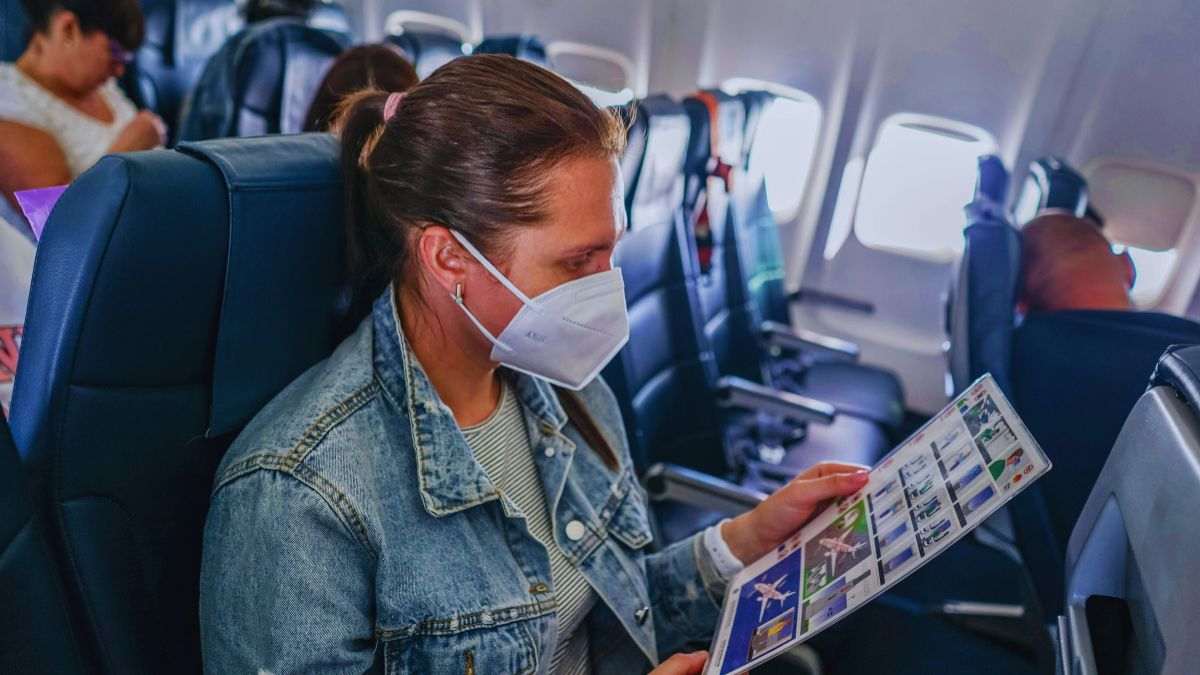
If you’re over six feet tall and you don’t check the “seat pitch” (the legroom), you’re making a mistake. You’ll get on that plane, realize your knees are in your chest, and end up paying $100 for a last-minute “even more space” upgrade just to survive the six-hour flight.
7. Blind Loyalty: Chasing Status at Any Cost

I get it—the points are addictive. We love the idea of a “free” flight. But being overly loyal can be a massive financial trap. Airlines make a staggering amount of money from their loyalty programs, mostly through co-branded credit cards.
They want you to feel “committed,” but that commitment often makes you ignore a competitor’s flight that’s $300 cheaper for the exact same route. Think about it: if you’re paying an extra $200 just to fly your “preferred” carrier to get points, you’re essentially buying those points at a massive markup. Loyalty should be a byproduct of a good deal, not a reason to overpay.
8. The “Multiple Passenger” Fare Jump

This is one of the weirdest quirks of airline software. Let’s say you’re booking for a family of four. The airline’s reservation system looks for four seats in the same fare bucket. If there’s only one seat left in the $200 bucket and the next three are in the $400 bucket, the system won’t give you one cheap seat and three expensive ones. It will simply upcharge all four tickets to the $400 level.
You just lost $200 in a heartbeat. The fix? Search for one person first. If the price is lower, book that person, and then book the other three separately. It’s a bit more legwork, but it prevents the algorithm from taking the easy “group” path at your expense.
9. The High Stakes of a Name Typo
Typing your name seems simple, but in the world of aviation security, it’s a minefield. Airlines are brutal about names matching your government ID exactly. If you realize you made a typo (like “Jon” instead of “John”) after the 24-hour cancellation window, you are at the mercy of the airline’s fee schedule. Some carriers charge up to $200 for what should be a simple administrative fix.
In the worst cases, if the ticket is non-transferable and they won’t fix it, you might have to buy a completely new ticket at last-minute prices. Always, always triple-check the spelling before you hit that final button.
10. Forgetting Your Known Traveler Number (KTN)

If you’ve paid for TSA PreCheck or Global Entry, forgetting to add your KTN is essentially throwing away money you’ve already spent. But it goes deeper than that. Failing to include it can lead to longer lines, which increases the risk of a missed flight.
If you miss a flight because you were stuck in a security line, the airline isn’t obligated to put you on the next one for free—especially if you’re on a Basic Economy ticket. You could end up paying a “re-accommodation” fee or the full fare for a new flight. It’s a domino effect of costs that starts with one missing nine-digit number.
11. The “Tuesday Booking” Myth
This is the “old wives’ tale” of travel. People still believe that if they wake up at 3:00 AM on a Tuesday, they’ll find a secret cache of cheap tickets. It’s just not true anymore. Dynamic pricing algorithms update prices every few minutes, 24/7. Data shows only a tiny 1.3% difference between booking on a Sunday and a Tuesday.
The real savings don’t come from when you buy, they come from when you fly. Flying on a Tuesday or Wednesday is consistently 13% to 20% cheaper than flying on a weekend. Stop losing sleep on Monday nights; it’s not helping your wallet.
12. The Incognito Mode Fallacy

We’ve all heard it: “Use incognito mode or the airlines will see you searching and raise the price!” It’s a popular theory, but recent studies show that prices remain identical 88% of the time, whether you’re in private mode or not. The price jumps you see are usually because a “fare bucket” just sold out or the airline’s overall demand forecasting shifted.
While using incognito doesn’t hurt, it’s not the “hack” people think it is. The real cause of price hikes is usually just bad timing and shifting market inventory, not a personal vendetta by the airline’s cookies.
13. Short Layovers at Massive Hubs

Booking a connection with only 45 or 60 minutes might seem efficient, but it’s a high-stakes gamble. Airports like Dallas/Fort Worth or London Heathrow are massive; at DFW, walking between certain gates can involve a 1.45-mile trek. If your first flight is even 15 minutes late, you’re done.
And if the delay was caused by “weather” (which airlines love to claim to avoid responsibility), they aren’t required to give you a hotel or a free meal. You’ll be stuck in the terminal, paying hundreds for a last-minute hotel and airport food while you wait for the next available seat.
14. Forgetting the “6-Month Passport Rule”
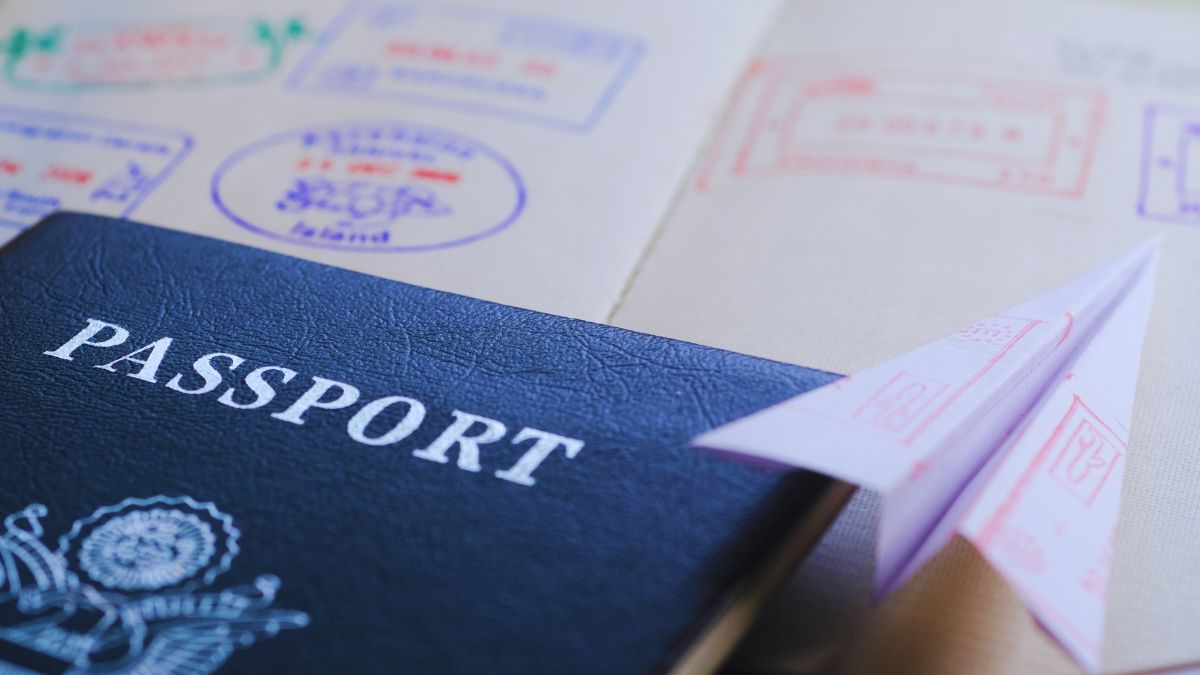
This is a silent killer for international trips. Many countries won’t let you in if your passport expires within six months of your arrival date. Imagine spending $1,500 on a flight to Italy, only to be turned away at the boarding gate because your passport expires in five months.
The airline won’t refund you because it’s “your responsibility” to have valid travel documents. You lose the flight, the non-refundable hotels, and the entire vacation in one go. Check your dates at least three months before you travel.
15. Leaving Cash on the Table (New DOT Rules)

A massive mistake is not knowing your rights. Under new Department of Transportation rules, if your flight is canceled or significantly delayed (over 3 hours for domestic, 6 for international), you are entitled to an automatic cash refund. Airlines will almost always try to give you a voucher or “credit” first because they want to keep your cash.
But by law, if you don’t take the alternative flight, they have to put that money back on your original payment card. Don’t let them “voucher” you out of your hard-earned money; if they broke the contract, get your cash back.
16. The Dynamic Currency Conversion (DCC) Trap

When you’re booking on an international airline’s website, you’ll often see a prompt: “Would you like to pay in USD instead of Euros?” It looks helpful, but it’s a trap. This is called Dynamic Currency Conversion. The merchant sets their own exchange rate, which is usually 3% to 10% worse than the market rate. Always choose to pay in the local currency of the country the airline is based in.
Let your credit card handle the conversion—most modern travel cards do it for a much better rate than the airline will ever offer you.
17. Failure to Use Price Alerts

The final mistake is trying to do everything manually. Prices fluctuate too fast for a human to keep up. If you aren’t using tools like Google Flights or specialized alert services, you are missing out on “Mistake Fares” that might only last for 30 minutes.
In the last year, there have been record-breaking numbers of these errors—like business class seats to Peru for $450 instead of $2,000. If you aren’t automated, you aren’t in the game. Let the computers do the watching so you can do the flying.
What are you actually paying?
To give you an idea of the landscape, here’s what the average fares look like across major hubs right now. These are “base” prices, so they don’t include the “mistakes” we just talked about.
The Big Picture: Why it feels like a “Competition Crisis”
I was reading some work from Bill McGee, a senior fellow at the American Economic Liberties Project. He’s been in the industry for 40 years, and he’s blunt: he calls this a “commercial aviation competition crisis.” He points out that consolidation has left us with fewer choices and “opaque pricing.” Basically, the airlines have spent millions on lobbyists to keep you from seeing the full price of your ticket until the very last second. They want the “Basic Economy” price to be the bait, and the baggage fees to be the hook.
Even the new DOT refund rules are under fire. Some airline groups actually called mandatory cash refunds “Federal overreach.” It’s a battle for your wallet, and honestly, the only way to win is to be a more informed “procurement agent” for your own life. Consumer advocates like Charlie Leocha have been screaming for years that “common sense” says prices should drop when fuel costs go down, yet we see the opposite. It’s maddening, I know.
The Future: AI is coming for your seat
We’re moving into an era of “Federated Travel AI.” Right now, the ratio of people looking at flights versus booking them is 2,000 to 1. But soon, AI agents will be scanning the web for you 24/7, potentially pushing that ratio to 200,000 to 1. This means the “perishable” nature of a seat—the fact that its value goes to zero the moment the plane takes off—is going to make pricing even more volatile. The computers are getting faster, so we have to get smarter.
My Advice?
Stop trying to “outsmart” the computer with old myths like clearing your cookies or booking on a Tuesday at midnight. It doesn’t work. Instead, focus on the “Goldilocks Window,” understand your refund rights, and for the love of everything, double-check the spelling of your name.
Need More Help For Your Next Trip? Look Into These
1. Etekcity Digital Luggage Scale

Mistake #5 was forgetting ancillary costs, and an overweight bag at the gate is the quickest way to lose $100. This tiny gadget fits in your palm and tells you exactly how much your bag weighs before you leave the hotel. It’s accurate, durable, and pays for itself the very first time you avoid a “heavy bag” fee.
2. Taygeer Underseat Carry On Backpack

If you’re flying Basic Economy on Spirit, Frontier, or United, you need a bag that fits their strict 18 x 14 x 8 inch “personal item” limit. This backpack is designed specifically for those dimensions. It maximizes every inch of space without “ballooning” out, so you won’t get pulled aside by a gate agent looking to charge you for a full carry-on.
3. Zero Grid RFID Blocking Passport Wallet

Mistake #9 and #14 involve document errors and passport checks. This slim organizer keeps your passport, boarding passes, and ID in one RFID-protected spot. It forces you to be organized, so you aren’t that person digging through a messy bag at the security line, risking a missed flight or a lost document.
4. Eagle Creek Pack-It Isolate Packing Cubes

The secret to avoiding baggage fees is packing more into a smaller bag. These “Isolate” cubes are feathery light but incredibly strong. They help you compress your clothes so you can fit a week’s worth of gear into a free personal item bag. Plus, they keep your “clean” and “dirty” clothes separate, which is a life-saver on long trips.
5. Humangear GoToob+ Silicone Travel Bottles

Don’t be the person throwing away expensive shampoo at the TSA line because the bottle was 4 ounces instead of 3.4. These are the gold standard for travel bottles—they’re leakproof, easy to squeeze, and have a wide opening for easy refills. They ensure you stay compliant with airline rules while bringing the products you actually like.