Why Most Van Life Builds Fall Apart in the First Winter

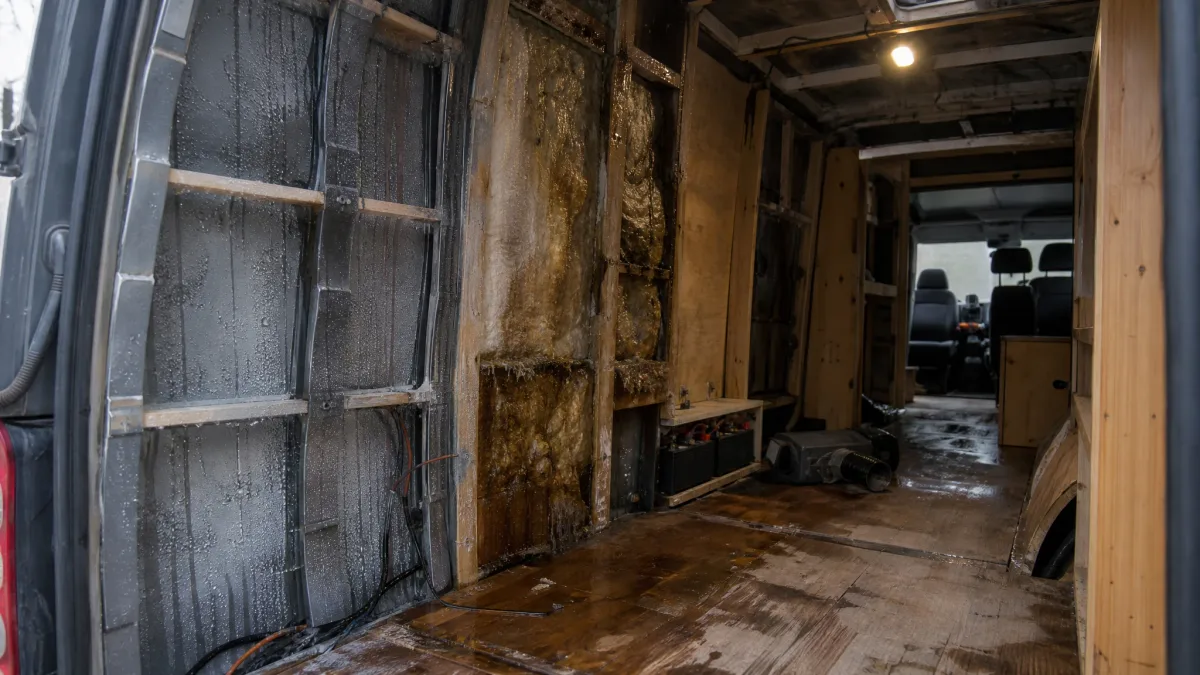
Why is water dripping down my interior walls when the heater is on, and why are my floors freezing solid? You built a gorgeous wood-paneled interior, but the first freezing night exposed a brutal reality: condensation is pooling behind your cabinets and your heater is running constantly.
Sub-zero temperatures test every single material choice in a mobile home.
Moisture finds every gap in your insulation, cold exterior metal bridges straight into your living space, and unheated storage compartments freeze vital mechanical systems.
Surviving sub-freezing winter living requires stopping thermal bridging and moisture accumulation before applying any interior decor, deciding how to properly insulate and protect structural, electrical, and plumbing systems against severe winter conditions.
Mobile dwellings collapse during freezing weather because hidden moisture and uninsulated structural ribs quietly bypass decorative finishes to ruin electrical banks and water lines.
Winter Van Build Vulnerabilities at a Glance
Unbroken metal ribs create severe interior condensation trails
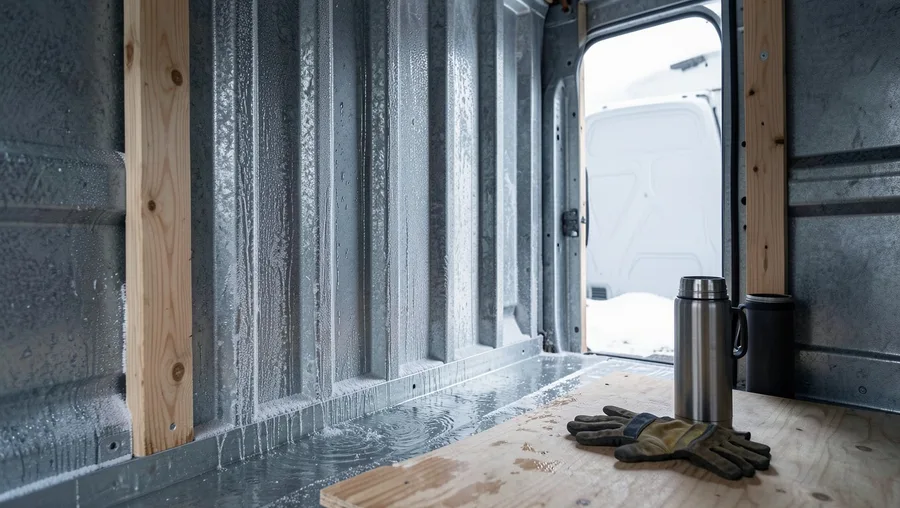
Water runs down interior wall panels and pools along the floor because uninsulated steel ribs conduct outside freezing temperatures straight through to the warm cabin skin. When you run a diesel heater on a freezing morning, the contrast between the heated air inside and the frozen exterior creates immediate condensation right over every structural member.
Steel ribs on a 148-inch wheelbase high-roof cargo van bypass interior insulation completely, creating continuous thermal bridges from the outer sheet metal directly to the living space. Because these ribs are welded directly to the exterior body, they remain ice-cold even when the interior air feels comfortable.
Warm, humid air generated inside by breathing, cooking, and sleeping meets these cold steel ribs, immediately condensing into heavy droplets that run down into hidden wall cavities. Over a single freezing week, gallons of moisture collect silently within the framing of a 148-inch wheelbase van, soaking wall panels and electrical lines before you ever notice a stain on the surface.
| Material | R-Value per Inch | Moisture Vulnerability | First Winter Failure Risk |
|---|---|---|---|
| Closed-Cell Spray Foam | R-6.5 | Impermeable vapor barrier | Low when applied correctly |
| Polyisocyanurate Board | R-6.5 to R-7 | Moderate at taped joints | Medium if gaps unsealed |
| Fiberglass Batt | R-3.0 | Extreme sponge effect | High with mold growth |
Fibrous insulation acts like a sponge for trapped moisture
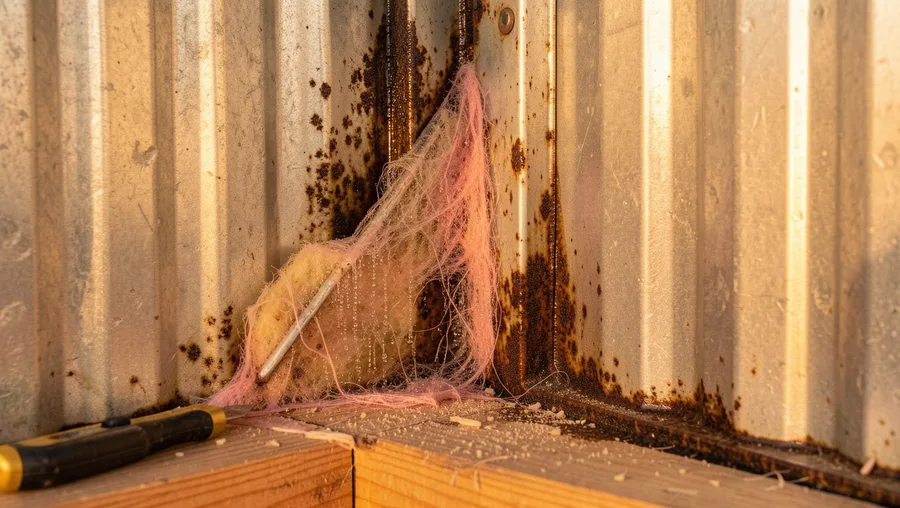
Standard fiberglass or rockwool acts like a giant sponge when moisture bridging across exposed metal framing routes liquid water directly into surrounding wall cavities. As outdoor temperatures plunge, warm interior humidity meets these fibrous batts and condenses, causing the material to slump, lose its insulating value entirely, and breed aggressive mold colonies within sixty days of sub-freezing habitation.
Unlike closed-cell spray foam that forms a rigid, impermeable barrier against the van body, fibrous batts absorb every drop of airborne humidity from cooking and breathing. Without complete, unbroken edge sealing on every vapor barrier, warm interior air bypasses protective plastic layers and saturates the core material completely.
Once standard insulation absorbs this ambient moisture, its thermal resistance rating plummets, turning your van walls into a conduit for exterior cold. You end up burning through fuel twice as fast while your living quarters remain drafty and damp.
⚠️ COMMON MISTAKE
Skipping Closed-Cell Foam
Using fibrous insulation without continuous vapor sealing turns your walls into a hidden swamp during winter.
Inadequate subfloor insulation freezes feet from below
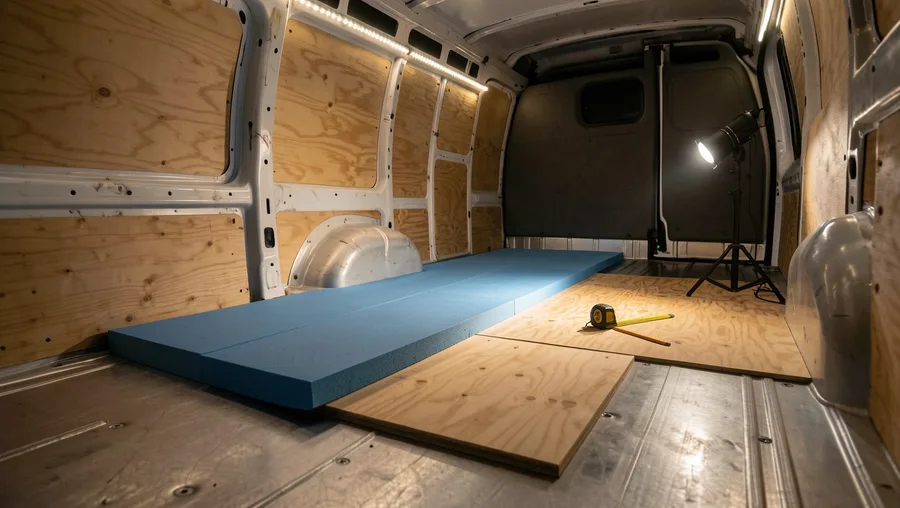
Placing plywood directly on bare metal without a thermal break conducts sub-zero floor chill straight into the cabin, leaving your feet freezing even when the air heater runs continuously. Saturated wall insulation leaves the vehicle envelope vulnerable, matching the thermal vulnerability present at the bare metal floor where cold air rapidly pools in the lowest foot-level zone of the living space.
Installing 1-inch polyisocyanurate board beneath subfloor plywood creates the required thermal break against freezing metal floors, stopping the brutal conduction of outdoor frost. Without this rigid insulation layer underneath your walking surface, the cold sheet metal acts as a giant heat sink that drags down the temperature of the entire interior.
Uninsulated wheel wells further bridge exterior frost directly into the living space, chilling the entire floor assembly around the bed and kitchen boxes. Sealing these transitions is the only way to keep the lowest inches of your cabin habitable during a hard freeze.
Unheated lithium battery banks permanently shut down or crack
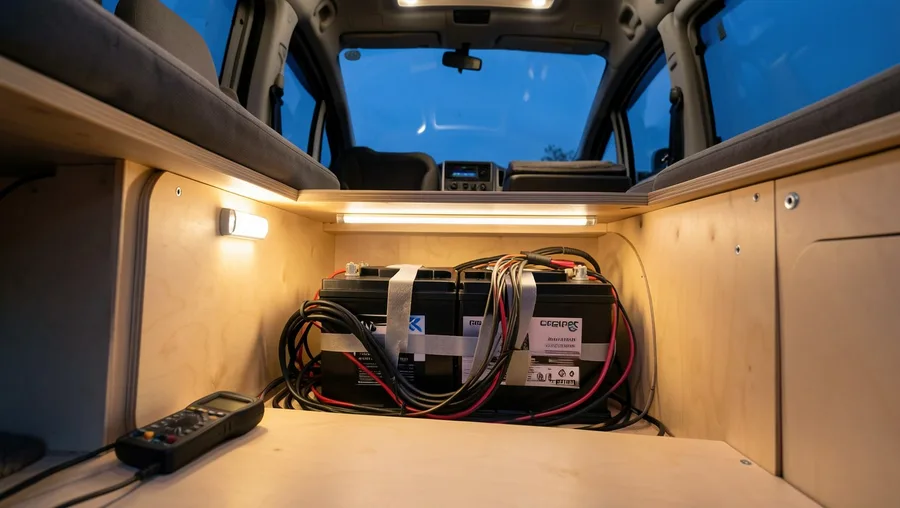
Lithium iron phosphate power systems left outside the insulated cabin perimeter freeze solid during sub-zero cold snaps, permanently destroying their internal chemical composition when energized. A 12V lithium iron phosphate battery bank housed in unheated exterior storage sustains irreversible lithium plating on the internal anodes the moment an alternator or shore charger attempts to push current into frozen cells, rendering the $900 power storage block completely useless within minutes of plugging in.
Protecting these sensitive energy reserves requires abandoning exterior chassis compartments entirely in favor of climate-controlled interior zones, or retrofitting high-output silicone heating pads directly against the metal casing. Standard BMS cutoff settings frequently fail to prevent permanent cell destruction because ambient temperature sensors misread extreme low exterior temperatures, registering safe operational ranges while internal core chemistry remains dangerously frozen below zero degrees.
Cold-weather electrical failures instantly disable cabin lighting, water pumps, and ventilation fans, leaving occupants stranded without power in freezing remote locations.
💡 PRO TIP
Relocate Batteries Indoors
Keep your lithium battery bank inside the heated cabin envelope to prevent permanent chemical damage.
Under-mount gray water tanks rupture during hard freezes
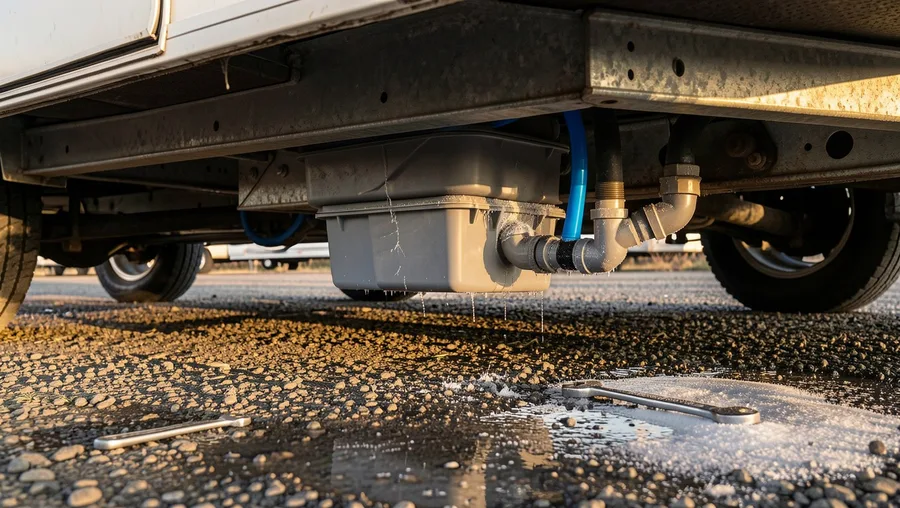
Exposed waste reservoirs hanging beneath the steel chassis freeze solid and crack fittings within the first week of sub-zero weather, destroying the entire drainage system. While a 20-gallon interior freshwater tank remains warm and functional inside the insulated living envelope, an unheated exterior gray water tank turns into a solid block of ice as frigid wind whips underneath the vehicle frame at highway speeds.
The resulting expansion of freezing wastewater exerts immense hydraulic pressure that instantly splits threaded PVC fittings, ABS couplings, and flexible PEX lines attached to exterior chassis plumbing components. Discovering a cracked drain assembly halts all onboard sanitation immediately, forcing occupants to abandon sink and shower use because wastewater has nowhere to go except straight onto the frozen ground below.
Thawing these dangling tanks requires hours of manual torch work or waiting for a costly spring thaw while living completely without running water.
Undersized diesel heaters fail to overcome air leaks
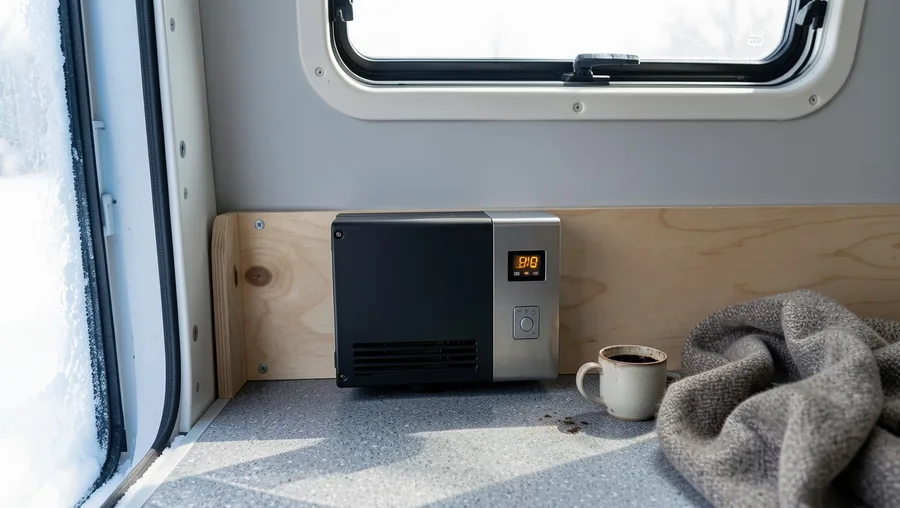
A compact diesel cabin heater cannot maintain livable temperatures if excessive draft gaps around factory door seals let heat escape faster than the mechanical unit can generate it. Unsealed sliding door gaskets and rear cargo door perimeters bleed warmed air into the freezing night environment at an alarming rate, overwhelming a standard 2kW diesel cabin heater and causing it to cycle continuously at maximum fuel consumption without raising the interior thermometer above freezing.
High-altitude winter adventures introduce an additional hazard when low atmospheric pressure and sub-freezing temperatures combine to cause diesel fuel gelling inside exposed supply lines, leading to sudden burner starvation and total thermal collapse. High-roof cargo configurations demand meticulous perimeter weatherstripping and auxiliary gap sealing to ensure that a modest 2kW heat output can successfully conquer severe sub-zero thermal infiltration.
Without a tightly sealed building envelope, occupants face relentless cold drafts that make sleeping impossible even with the heater running at full capacity.
Frequently Asked Questions
Why does condensation form on my van windows every night?
Human respiration and cooking release moisture into the air. When warm indoor air hits cold uninsulated glass, water droplets condense instantly.
Can I use cheap household pink insulation in my van?
No. Residential fiberglass absorbs moisture from humidity and condensation, losing its R-value and rotting your van body from the inside out.
How do I protect my water lines from freezing?
Run all freshwater lines inside the heated cabin envelope, insulate them with foam sleeves, and keep gray water storage inside or heated.
Is a 2kW diesel heater enough for a high-roof van?
It is sufficient only if your thermal envelope has zero air leaks, proper closed-cell foam insulation, and thermal breaks on all metal ribs.
Where should I mount my lithium batteries for winter travel?
Batteries must reside inside the heated living quarters with integrated heating pads to prevent destructive low-temperature charging.
Prioritizing Continuous Thermal Bridging Breaks and Moisture Management
Prioritize continuous thermal bridging breaks and moisture management over cosmetic wall finishes to survive sub-freezing months, keeping freezing morning condensation away from your high-roof cargo van heater-cabinet floor.
Surviving winter van life depends entirely on continuous thermal barriers and protected system placements rather than decorative interiors.
Pull off those interior decorative panels today and seal every single exposed metal rib before the next cold front hits.