17+ Camper Van Bed Designs — Fixed, Convertible and Pull-Out

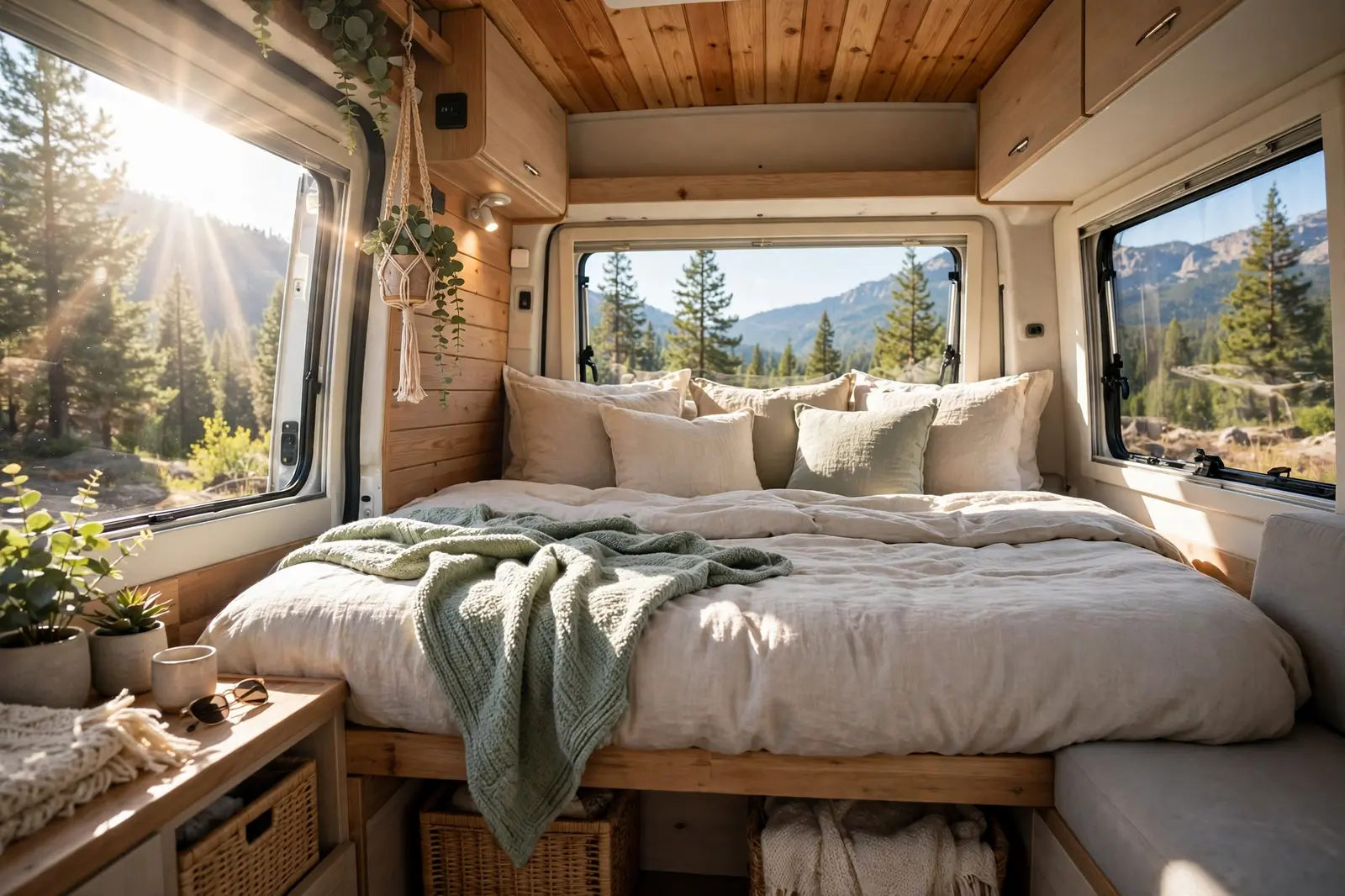
A camper van bed is not just a place to sleep. It decides how much storage you keep, how much floor space you get during the day, and how fast you can pack up and drive.
Get the bed wrong and every morning starts with a wrestling match. Get it right and the whole van feels bigger.
This roundup covers 17 bed designs for camper vans, from fixed beds you never fold away to pull-out beds that hide completely. There is a fixed layout, a convertible layout, and a pull-out layout for almost every van size and travel style.
Read through them with your own van in mind. Think about who sleeps in it, how much gear you carry, and whether you want your bed ready all the time or your living space back each morning.
1. Fixed Rear Transverse Bed
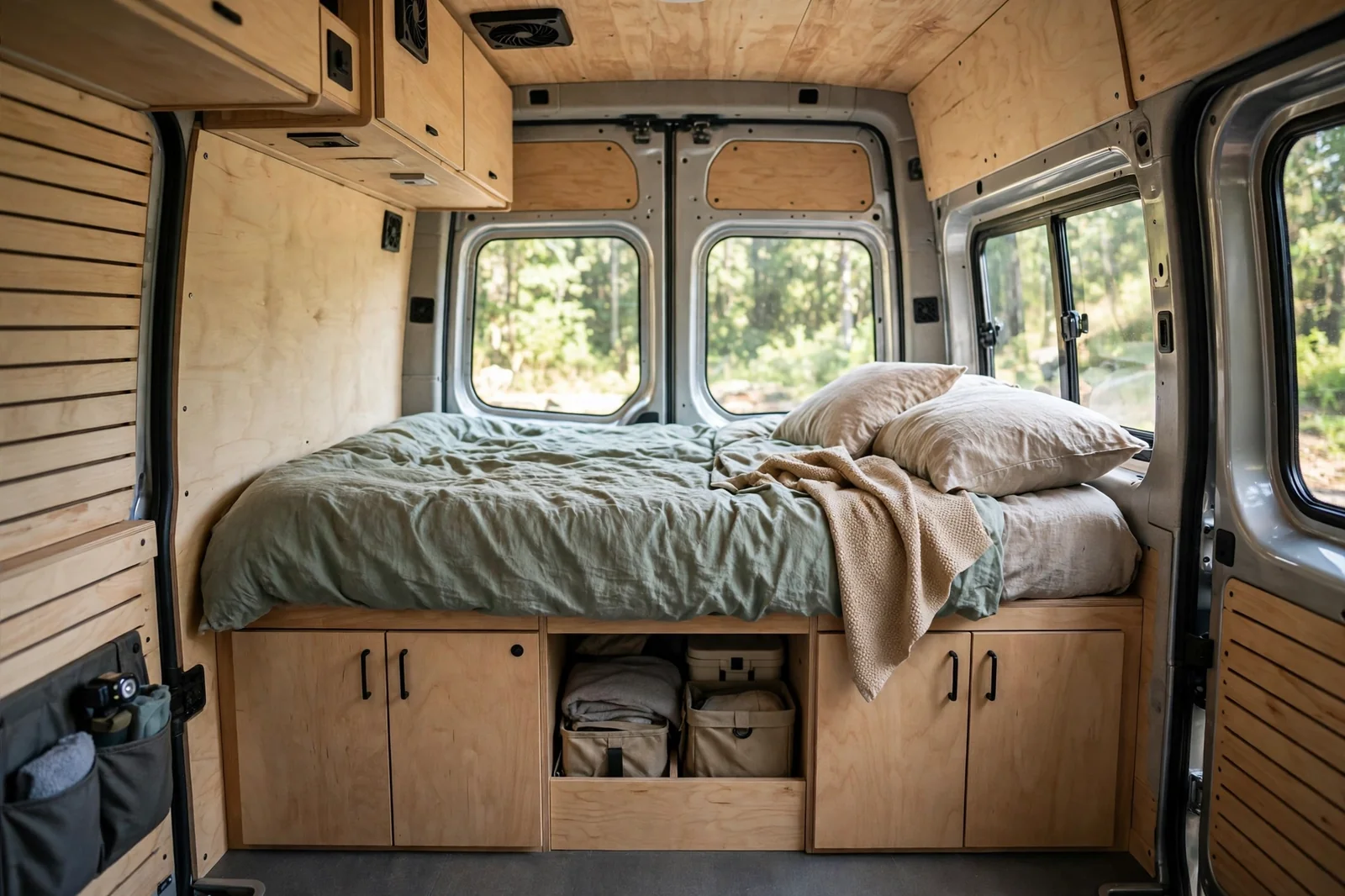
This is the classic van life bed, and it is classic for a reason. The bed runs across the width of the van at the rear, so you climb in from the foot end and sleep side by side.
It works best in a long wheelbase van, where the width allows a proper double mattress. In a narrower van it becomes a snug fit, so measure the interior width before you commit.
Underneath, you get deep cabinets or a garage space for larger gear. That storage is one of the biggest wins of this layout. Nothing needs to move at bedtime.
The trade-off is headroom at the foot end and a climb over your partner for night trips to the bathroom. No folding, no sliding, no daily setup.
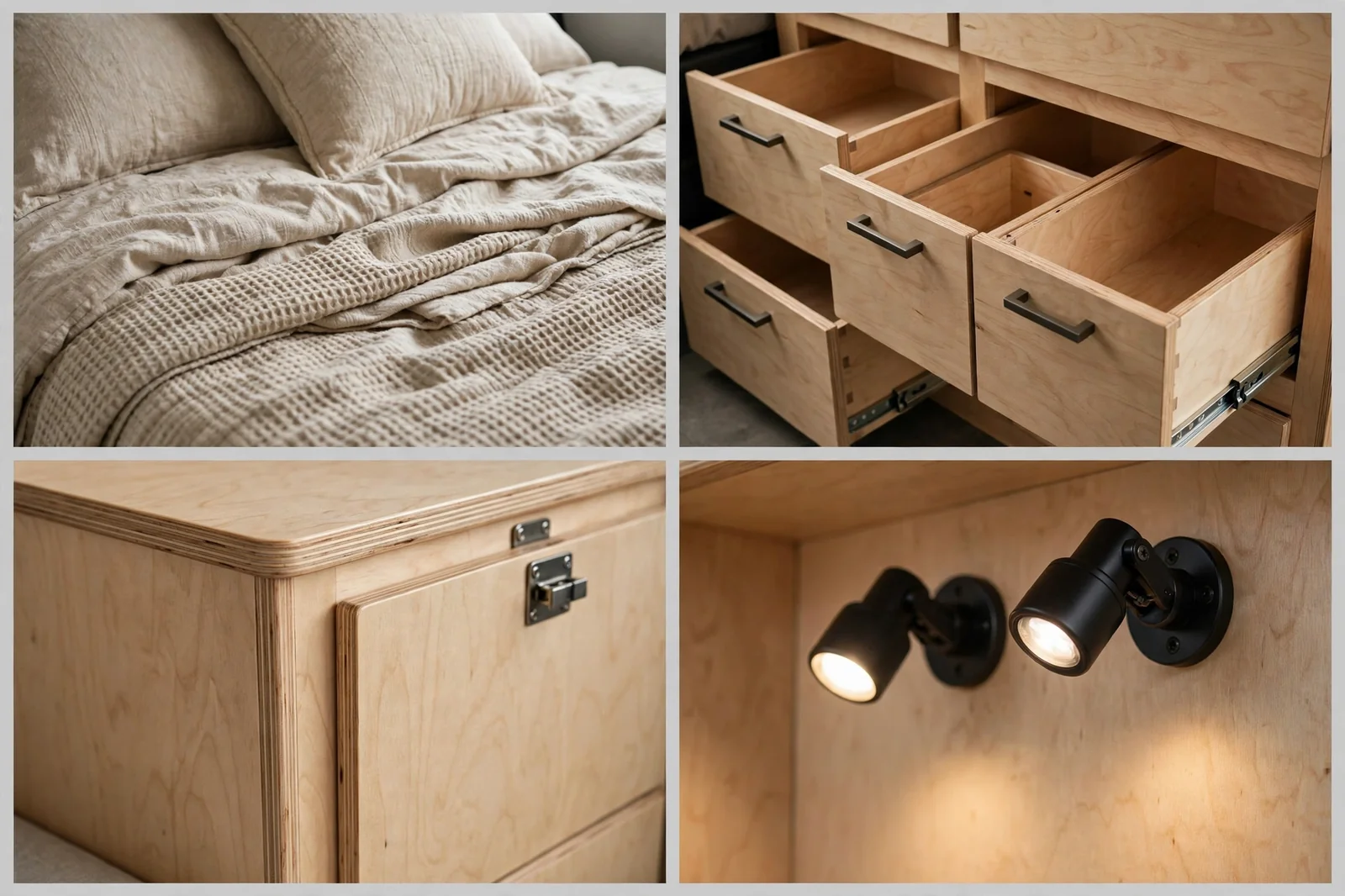
Keep bedding simple here. A fitted sheet, a duvet, and two pillows are enough. Thick toppers make the bed hard to climb into if the platform sits high.
Add reading lights on both sides. They make a big difference when one person wants to read and the other wants to sleep.
2. Fixed Longitudinal Twin Beds
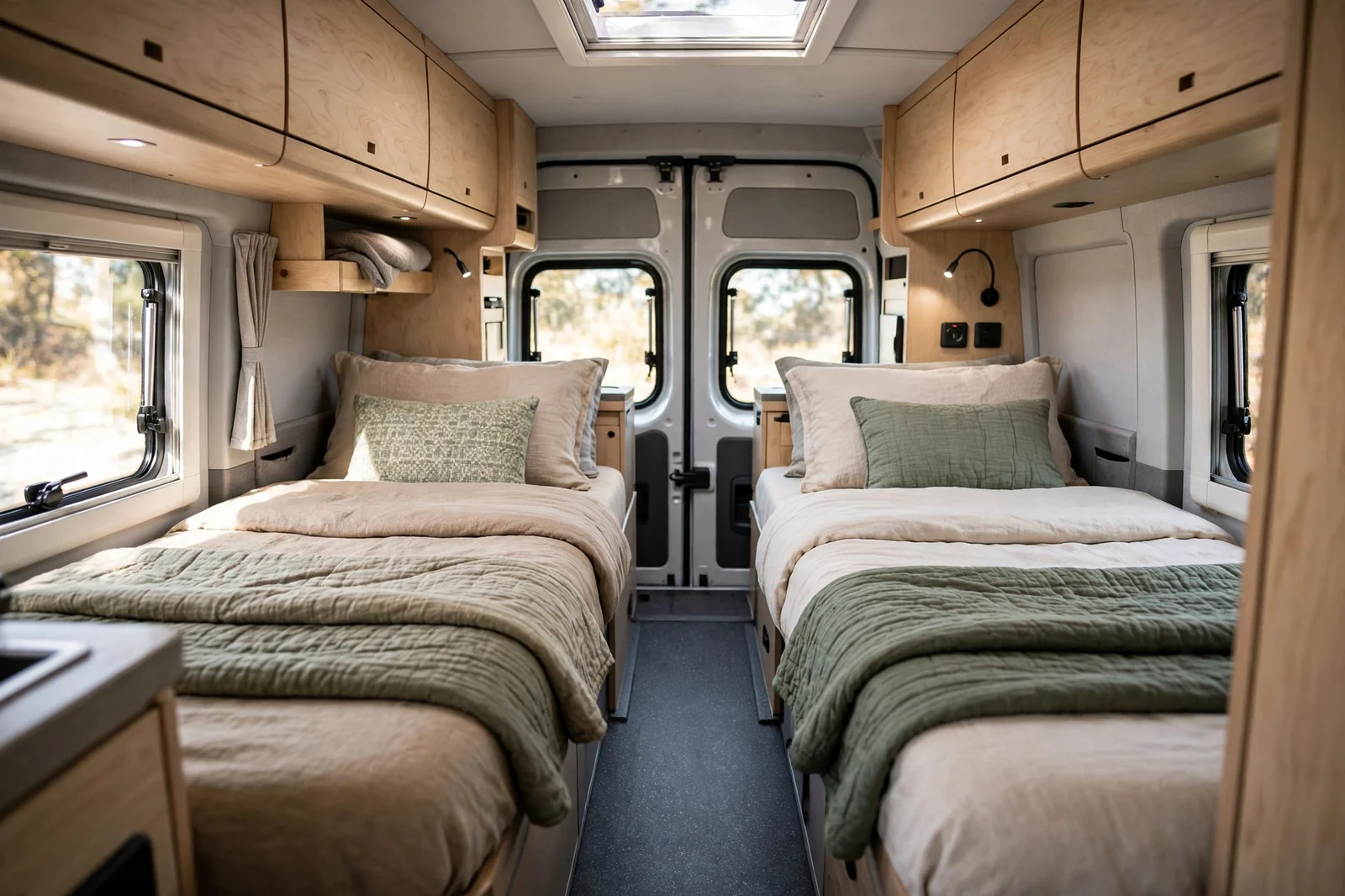
Twin beds run lengthwise down each side of the van, with a walkway down the middle. Each person gets their own bed, their own side, and no climbing over anyone at night.
This layout suits couples who sleep at different times or just like their own space. It also works well for friends travelling together. The centre aisle makes the van feel open, even when both beds are made.
The beds can join in the middle with a filler cushion to make one large bed. That flexibility is a real bonus. You get twins most nights and a double when you want it.
Storage sits under each bed. Keep daily items in the aisle-side drawers so you are not lifting mattresses to find a phone charger.
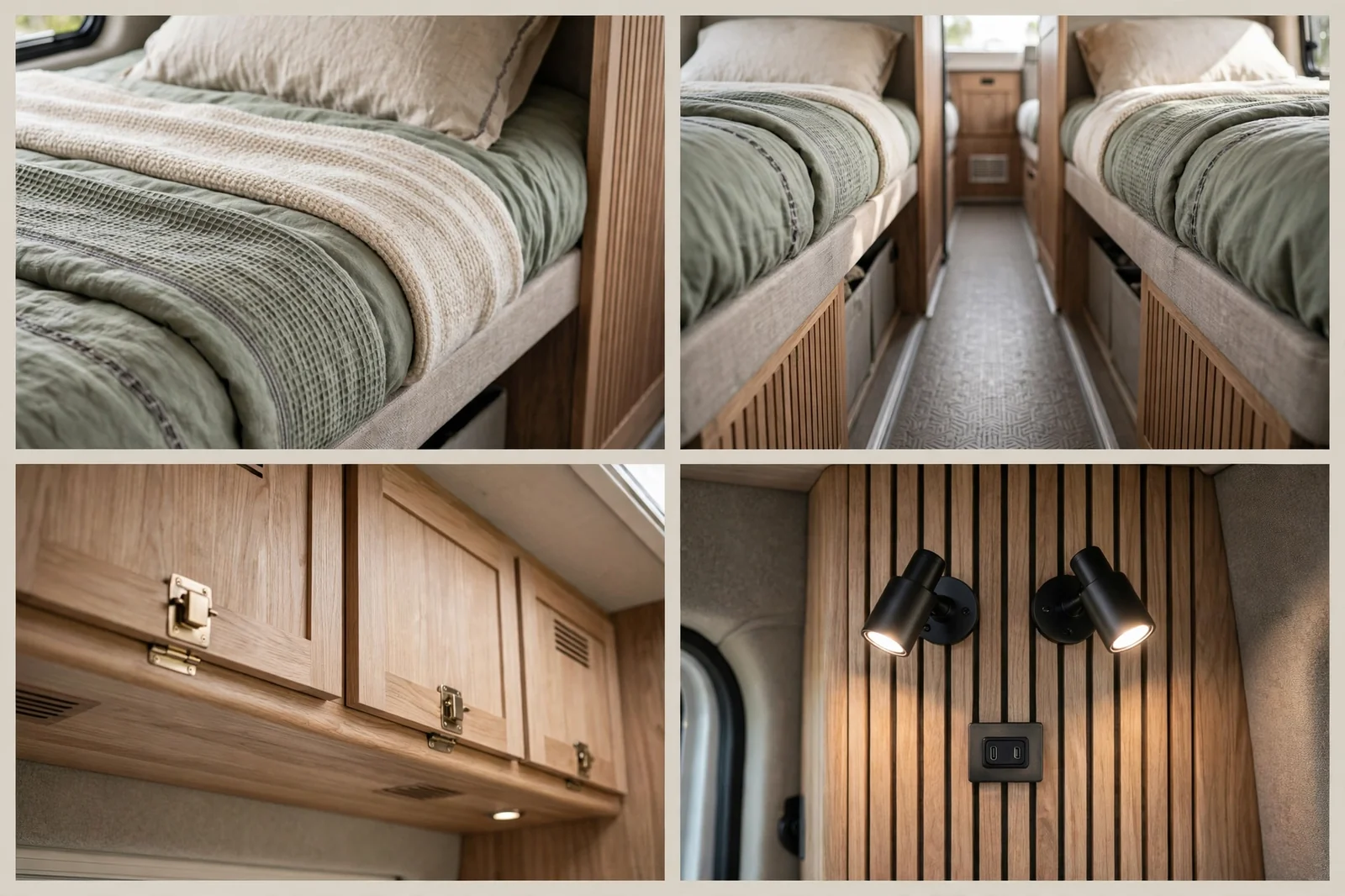
Watch the bed length. Longitudinal beds can be longer than transverse beds, which tall sleepers will appreciate. Check that the aisle still leaves room to walk past comfortably.
A small rug in the aisle warms up the space and stops cold feet on early mornings.
3. Fixed Raised Platform Bed Over Garage
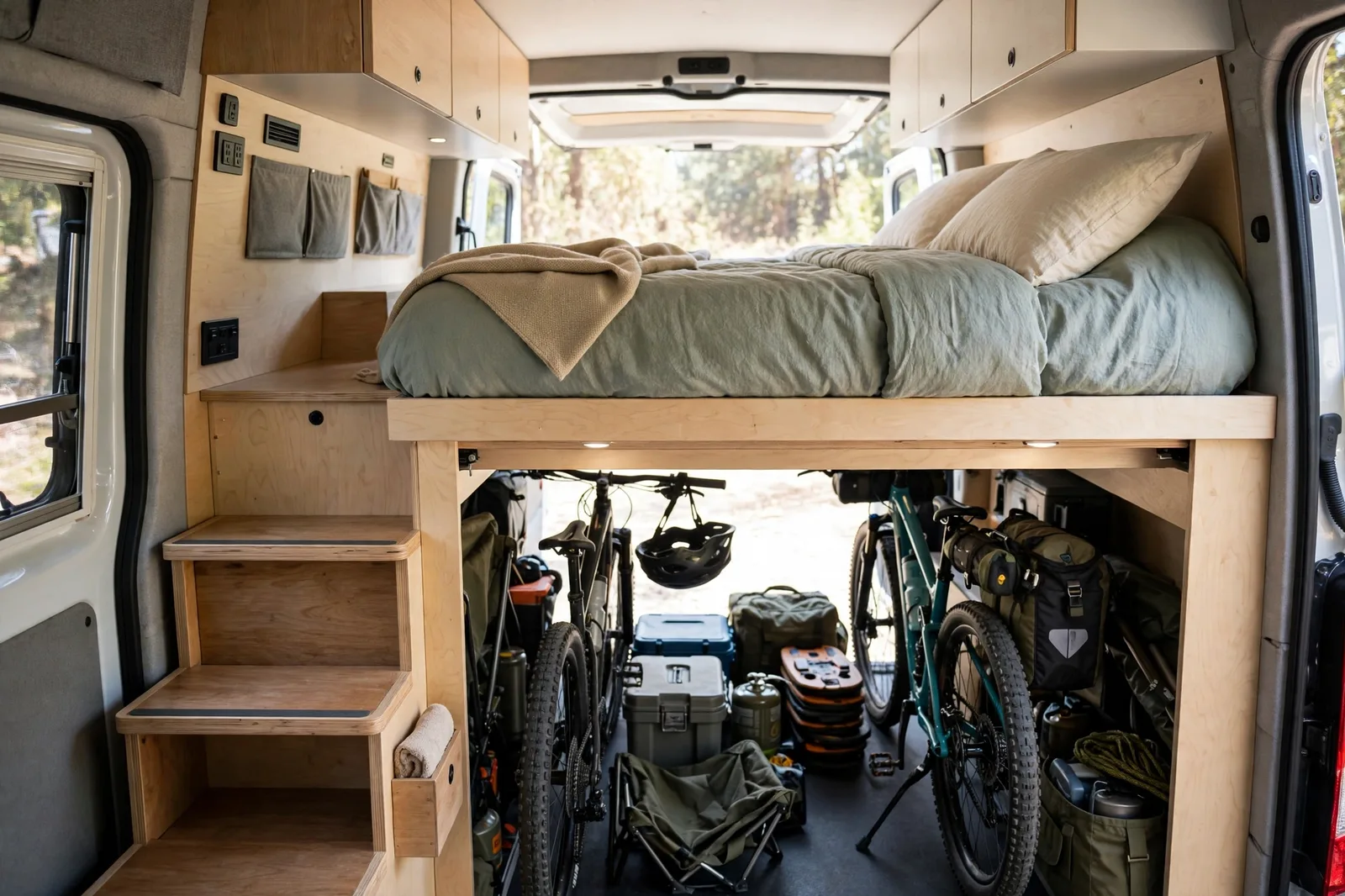
Raise the bed high and the space underneath becomes a garage. Bikes, camp chairs, tools, and bulky gear all slide in from the rear doors.
This is the layout for active travellers. If you carry bikes, surfboards, or climbing gear, a garage bed solves the storage problem in one move. The bed itself stays made and ready, day and night.
The cost is the climb. You will need steps, and sitting up in bed can feel tight in a standard roof van. A high roof van makes this layout far more comfortable.
Ventilation matters too. Warm air rises, so a roof vent above the bed keeps summer nights bearable.
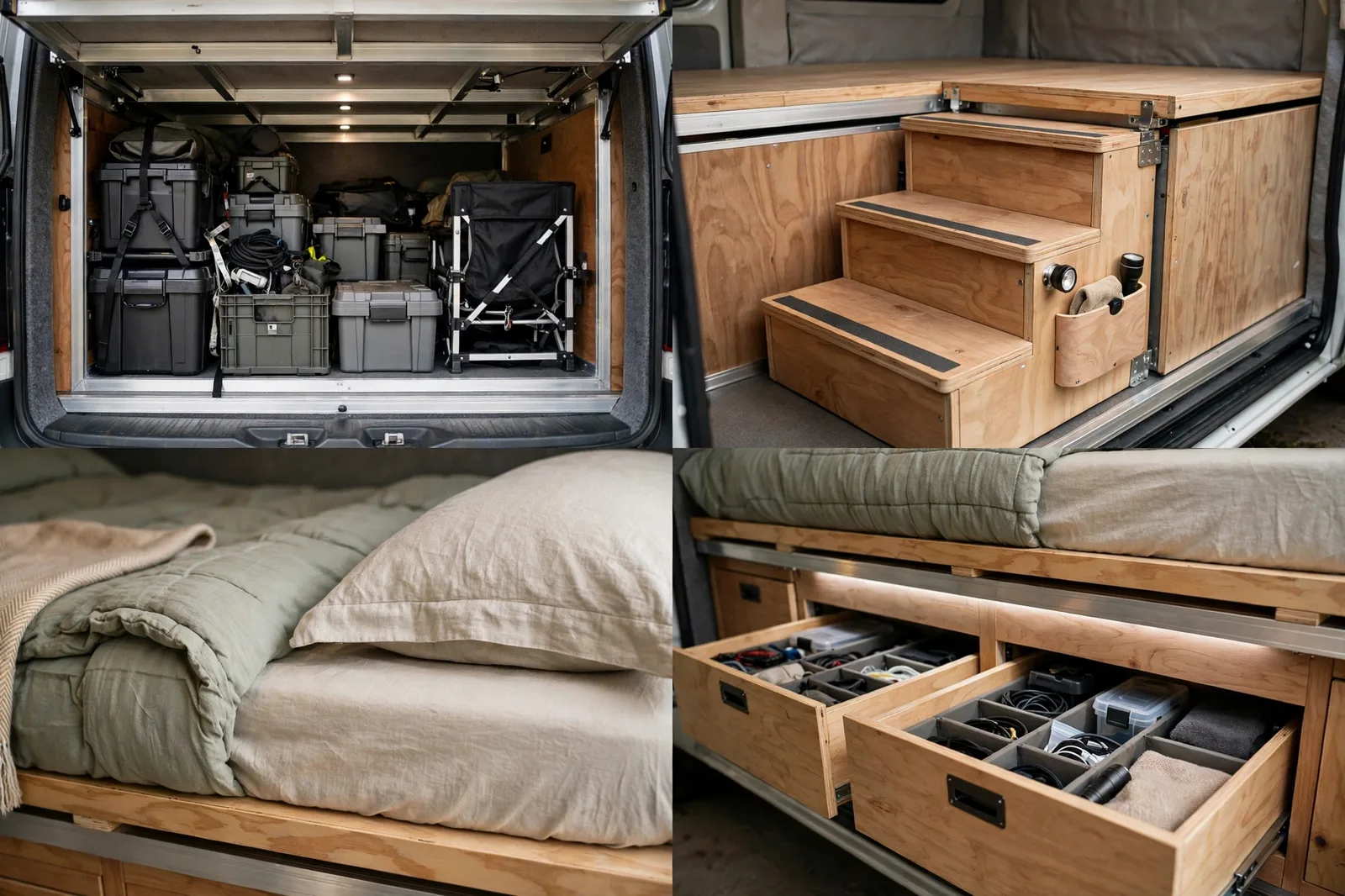
Use bins or bags in the garage, not loose piles. Loose gear slides around on rough roads and rattles all night.
Keep a small step stool by the bed if the built-in steps feel steep in the dark.
4. Fixed Corner L-Shaped Bed
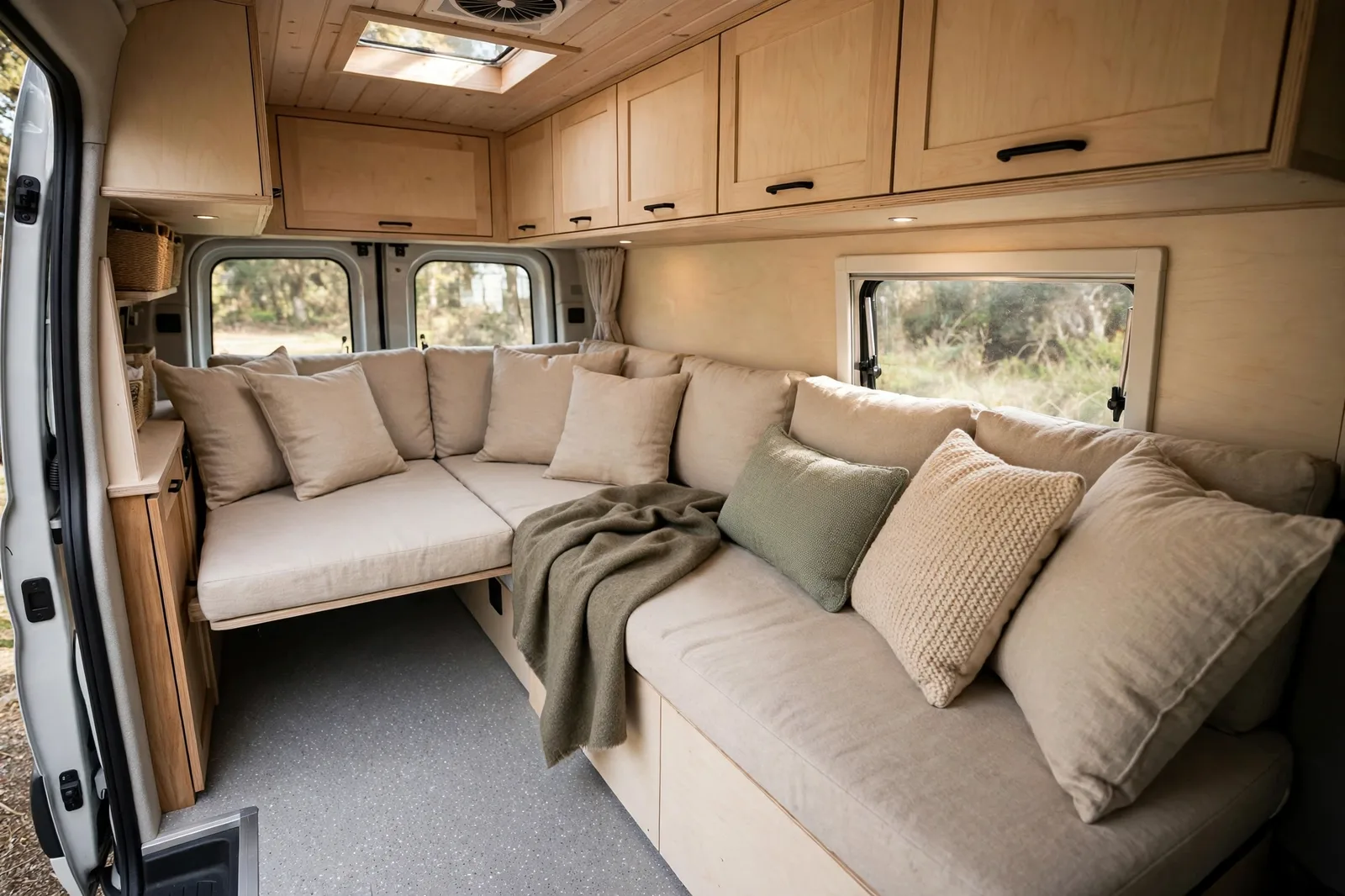
An L-shaped bed wraps around a rear corner, using the side wall and the back wall together. It turns an awkward corner into the most useful sleeping spot in the van.
The shape gives you a longer sleeping surface without taking the full width of the van. The open floor area beside it keeps the van feeling roomy. It works well in medium vans where a full transverse double would feel cramped.
One sleeper gets the long side and the other gets the short side, so it suits couples of different heights. It also leaves a natural spot for a small table or a reading nook at the foot.
Cushion joins need care. A good mattress topper smooths out the corner seam so you do not feel the join overnight.
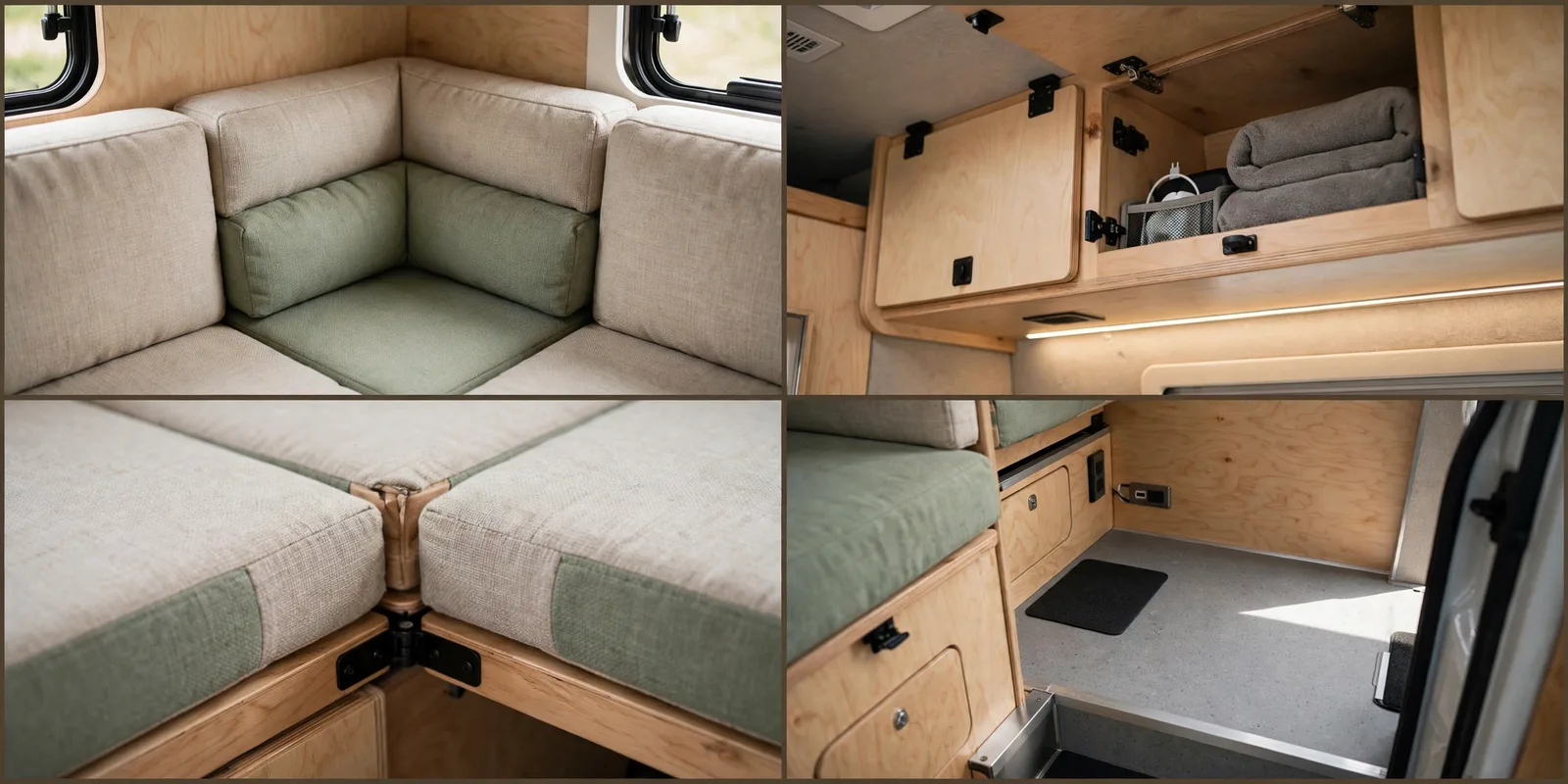
Choose washable cushion covers. Corner beds collect dust in the seam, and covers make cleaning easy.
A throw across the corner softens the shape and makes the bed look inviting during the day.
5. Fixed Rear Bed with Slide-Out Extension
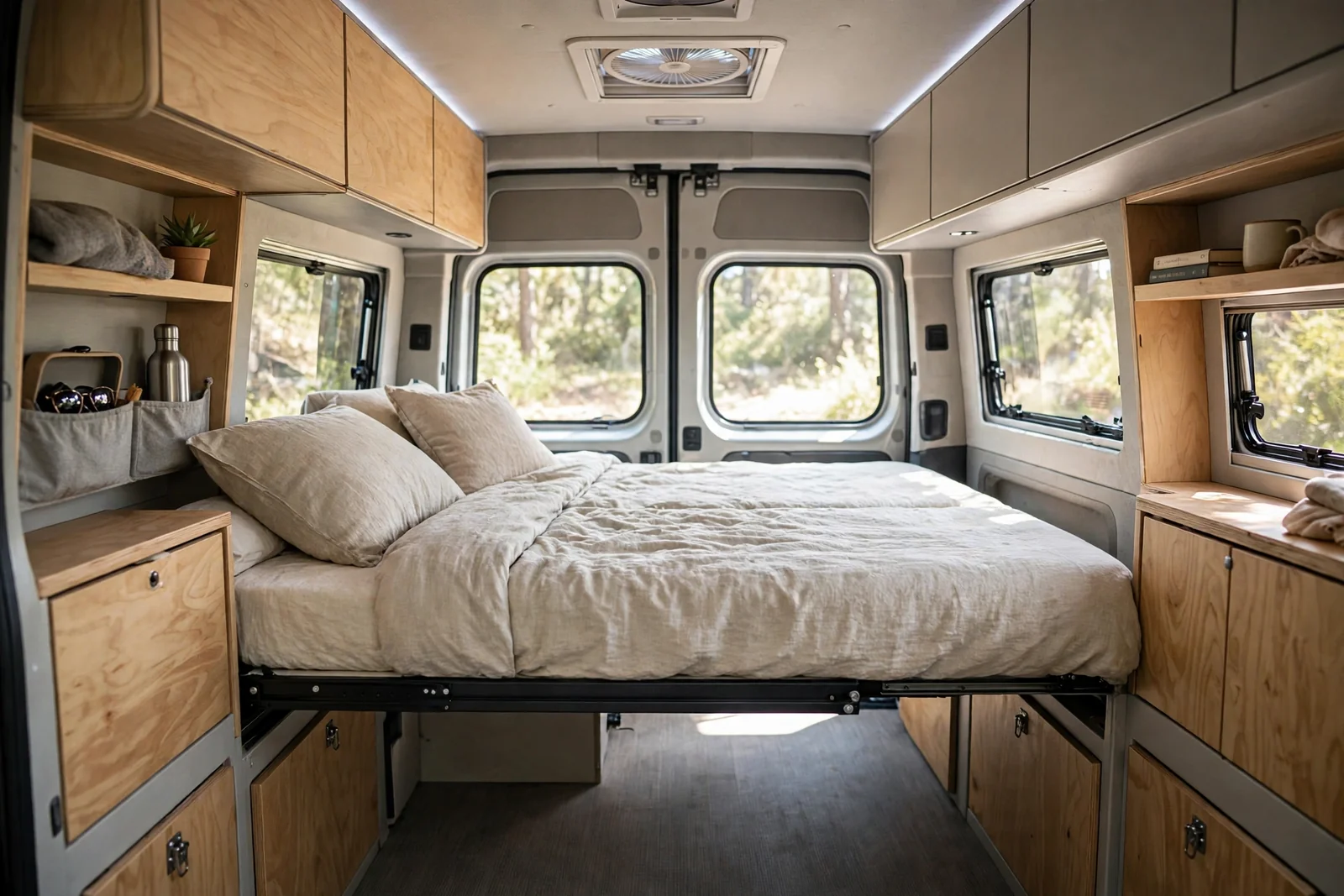
This bed looks like a normal fixed rear bed, until you slide it out. A panel pulls forward to add length, turning a short bed into a full-size one.
It is a smart fix for shorter vans. You keep a compact bed for driving and daytime use, then extend it at night. Tall sleepers finally get a bed that fits without buying a longer van.
The slide mechanism needs to be strong and simple. Cheap runners sag over time, so this is one place to spend a little more. Test the slide fully loaded before you finish the build.
When the bed is pushed in, the extra floor space is handy for changing or loading gear. That daytime bonus is easy to overlook until you live with it.
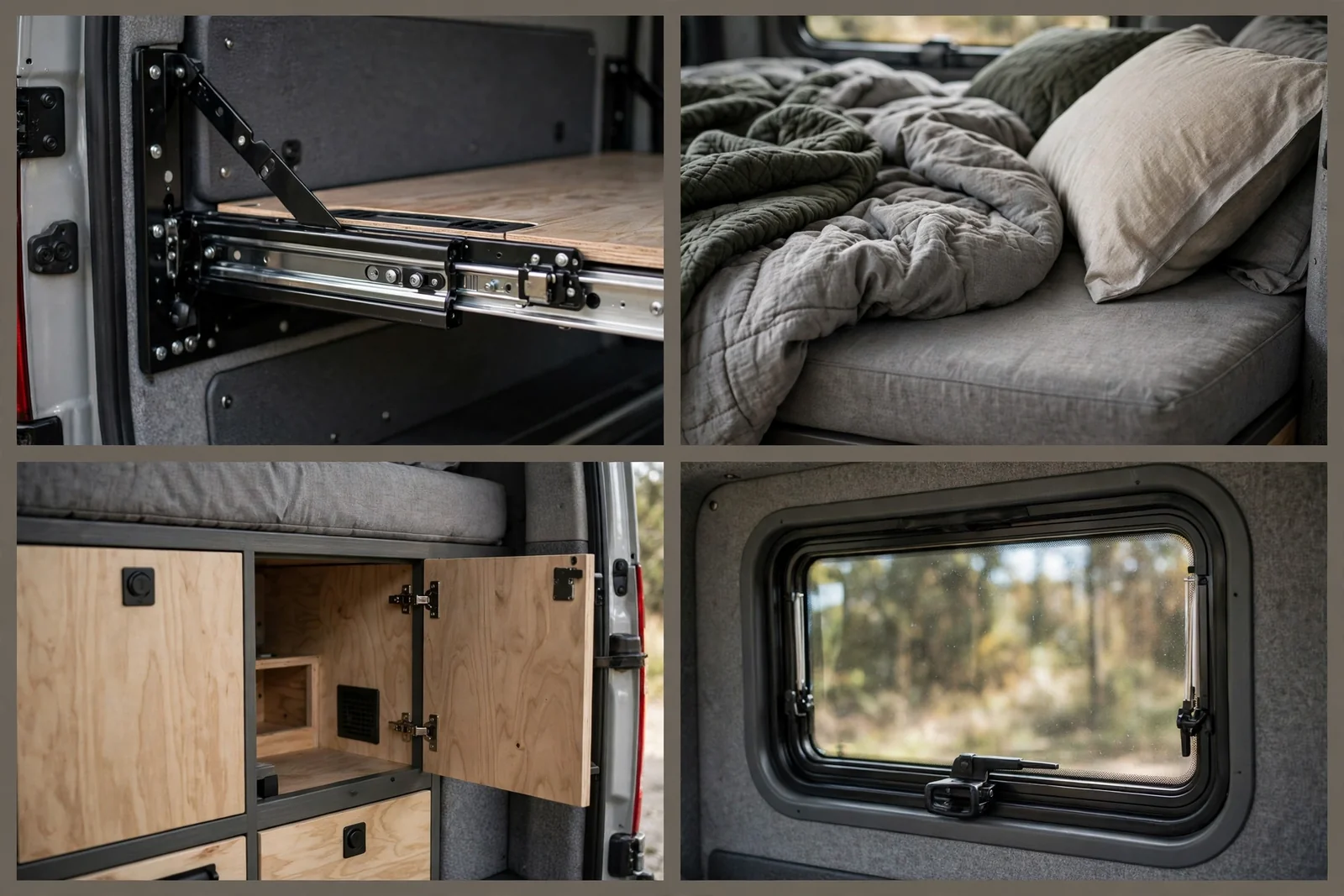
Keep the slide track clean. Dust and grit are the main cause of stiff slides, and a quick wipe keeps the action smooth.
Store the extension cushion where you can reach it without unpacking the whole van.
6. Convertible Dinette-to-Bed
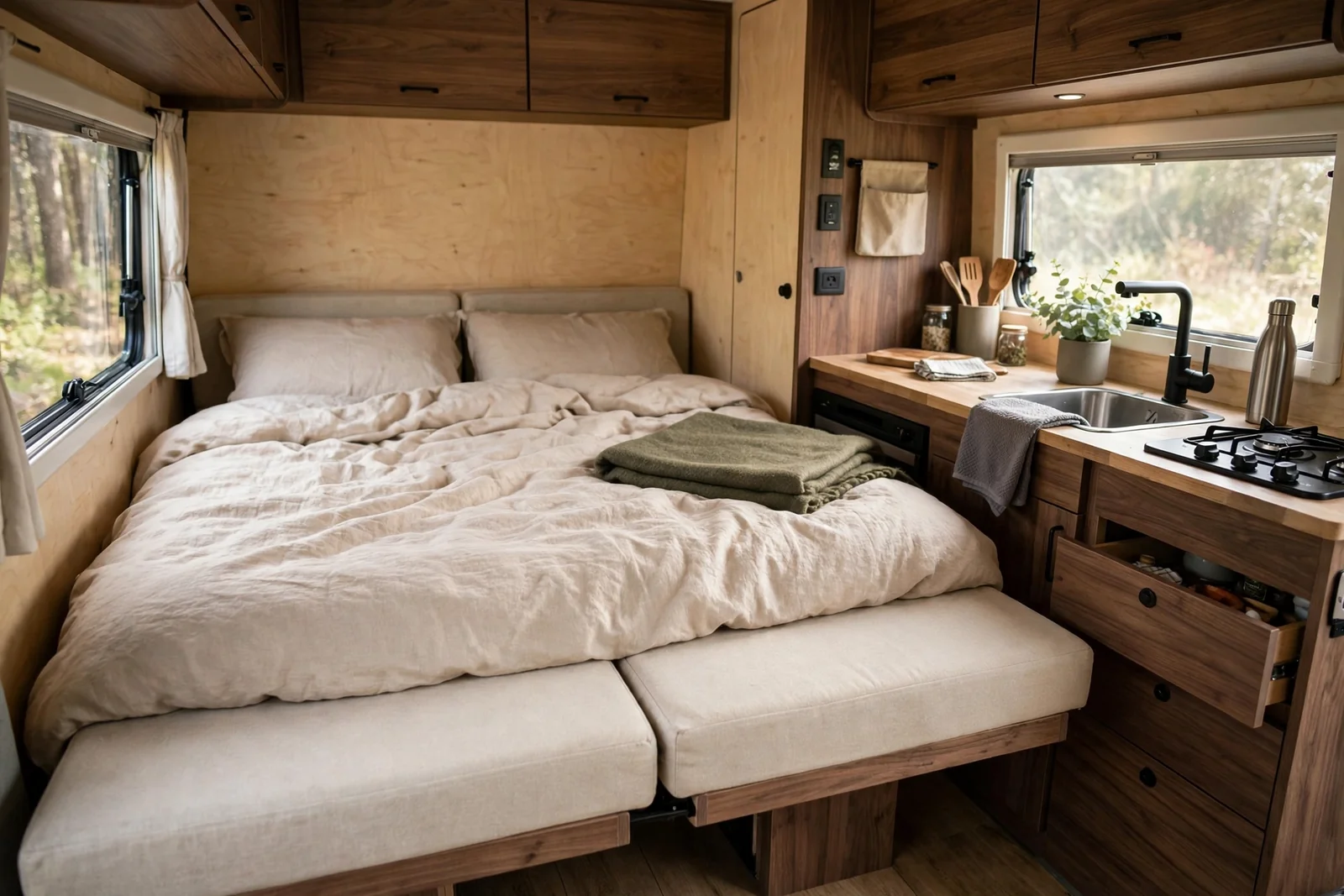
The dinette is the workhorse of small vans. By day it is a table with two bench seats, perfect for meals, work, or games. By night the table drops and the cushions join into a double bed.
This layout keeps a proper living area in a small footprint. You eat, work, and relax at the table, then convert it in a few minutes. It is popular in factory conversions for good reason.
The bed comfort depends on the cushions. Firm, well-fitted cushions sleep far better than soft, saggy ones. A thin topper hides the joins and makes a real difference.
Storage under the benches holds bedding, so the changeover stays quick. Keep the topper rolled at one end of a bench if space allows.
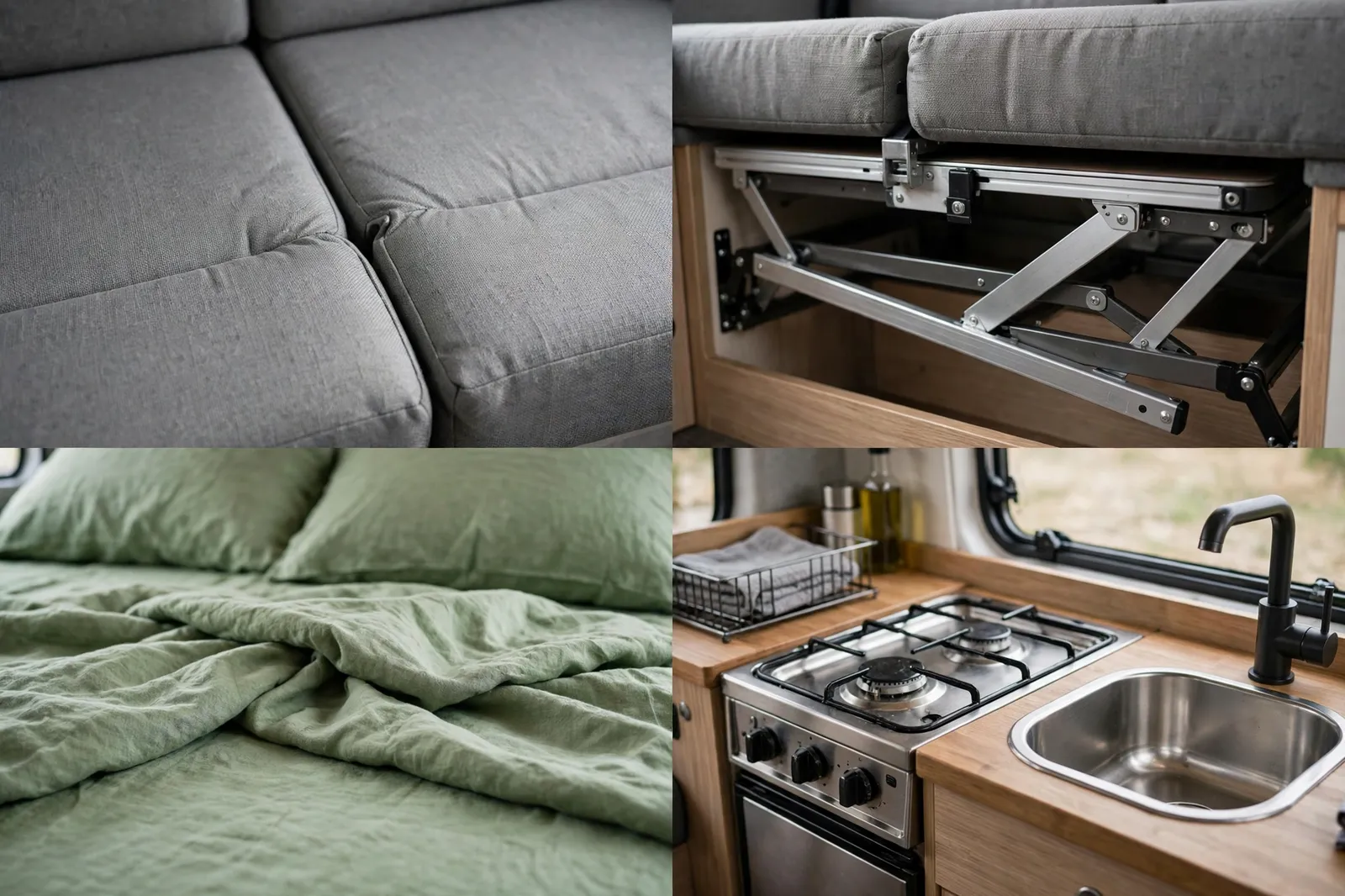
Practice the conversion a few times before your first trip. A smooth two-minute changeover beats a ten-minute struggle in the rain.
Label the cushion order if the pieces look alike. Getting them mixed up is the most common dinette bed annoyance.
7. Convertible U-Shaped Lounge Bed
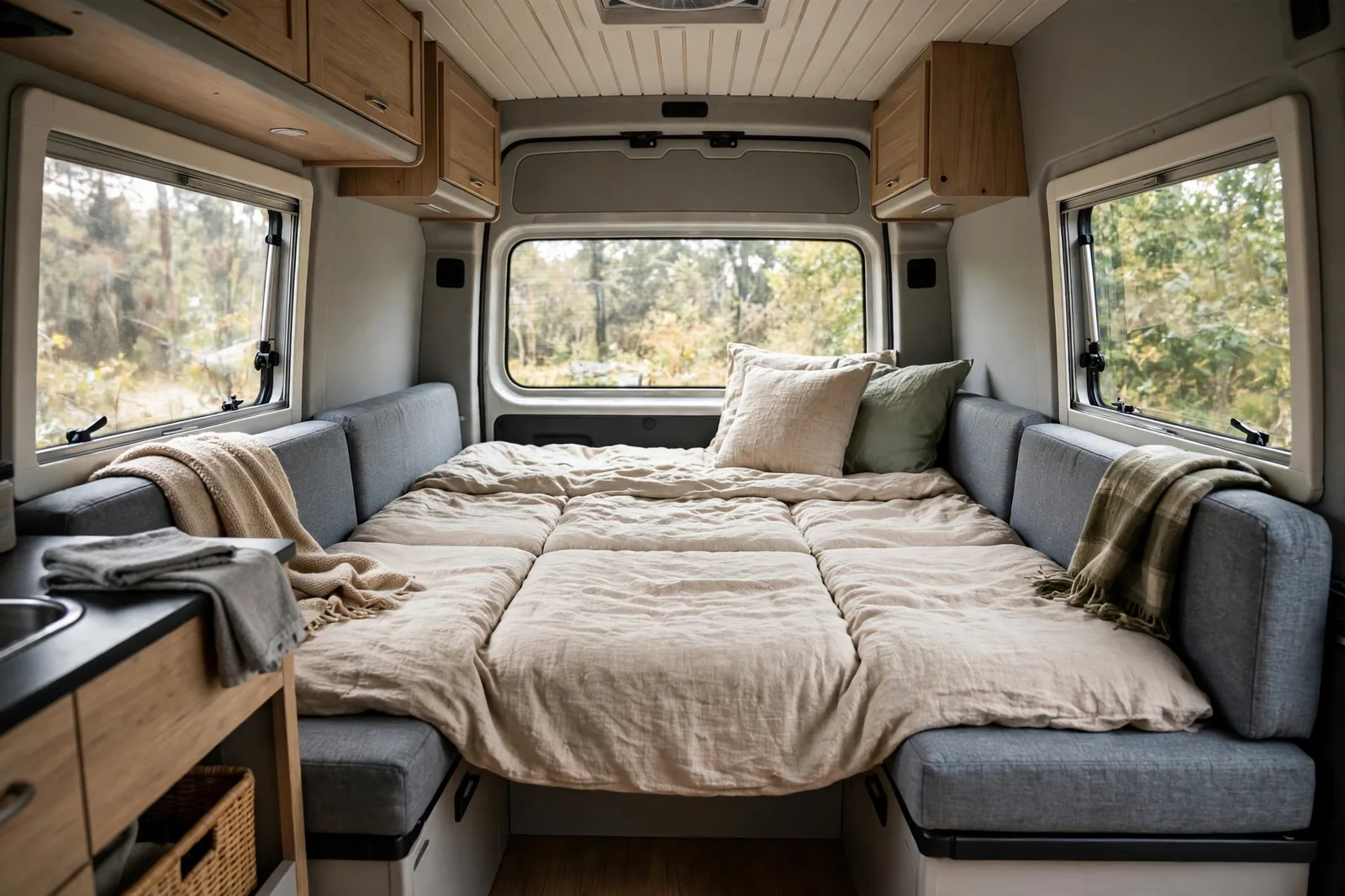
A U-shaped lounge wraps seating around three sides of the rear. It is the most sociable layout in a van, with room for several people to sit and talk.
At night the middle fills in and the whole U becomes one large bed. The result is bigger than most van beds, with space to spread out. It suits families or couples who like a generous sleeping area.
The daytime lounge is the real selling point. You get a proper seating area, not a single bench. That matters on rainy days when everyone stays inside.
The changeover takes longer than a dinette bed, since more cushions are involved. A fitted sheet over the whole area speeds it up and keeps cushions in place.
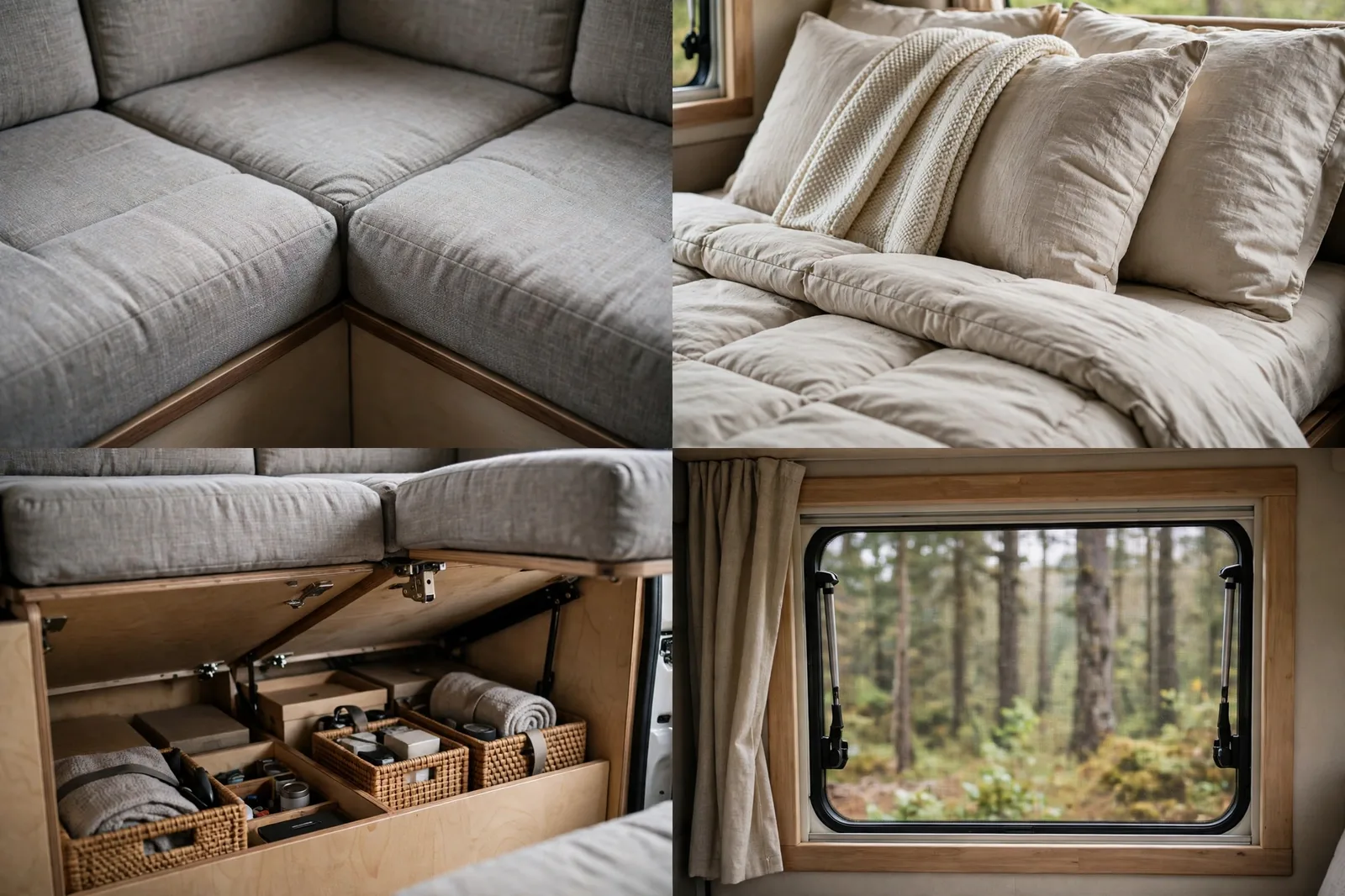
Use the under-seat storage for bedding and bulky items. Each seat base lifts, so sort items by how often you need them.
A large topper is worth it here. It turns several cushions into one even sleeping surface.
8. Convertible Rock-and-Roll Bed
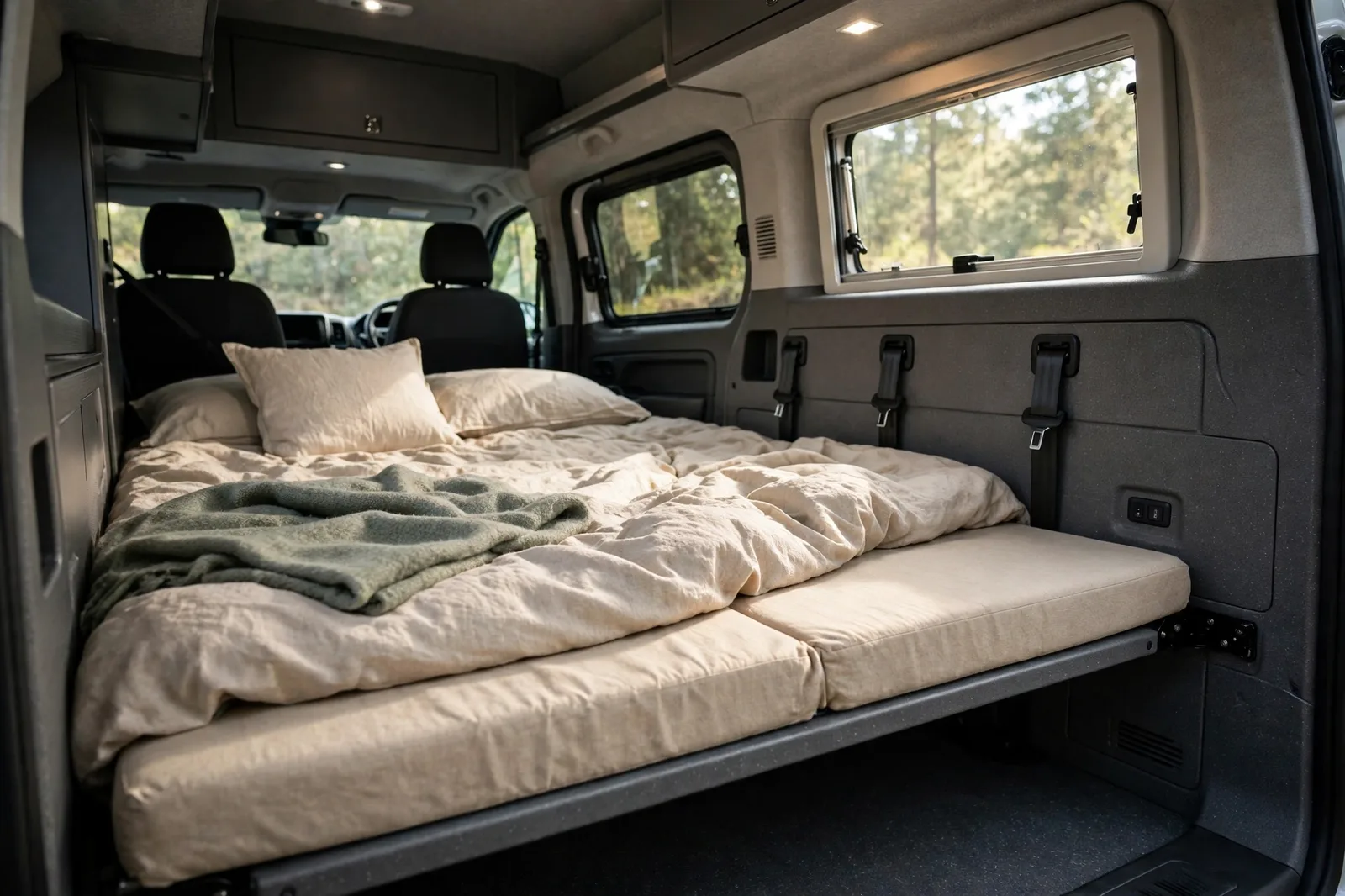
The rock-and-roll bed is a bench seat that folds flat into a bed. Pull a lever, push the back down, and the seat becomes a sleeping platform.
It is one of the fastest conversions in van life. No cushions to rearrange, no table to lower. That speed matters when you arrive late and just want to sleep.
Many rock-and-roll beds include seat belts, so passengers can ride safely in the back. That makes them popular in family vans and in vans used as daily drivers.
The sleeping surface is firmer than a mattress, so a topper is almost essential. Choose one that rolls up small, or it will eat your storage.
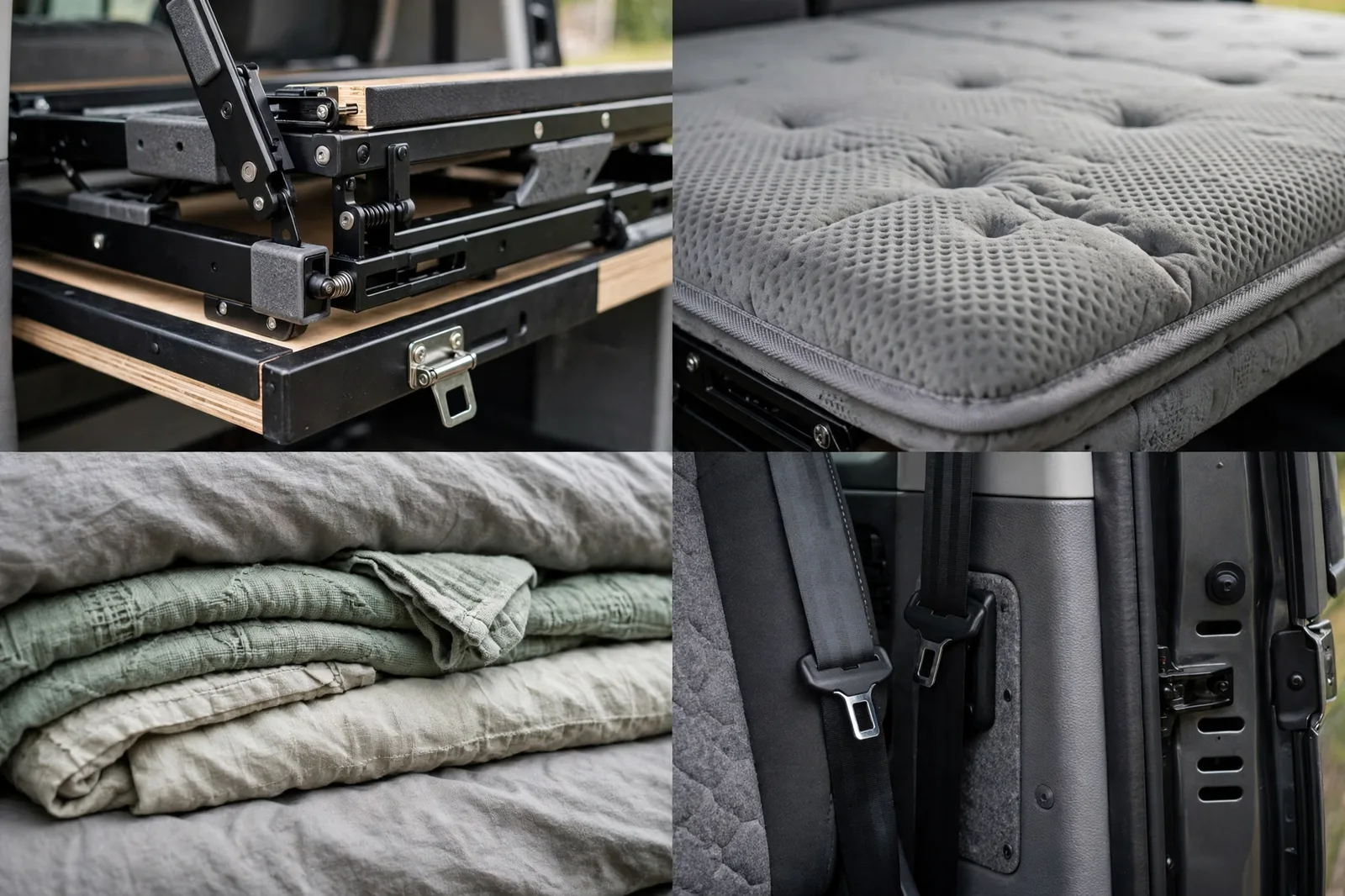
Check the bed width before buying. Some rock-and-roll beds are narrower than a standard double, which matters for two adults.
Keep the folding mechanism oiled and free of grit. A stiff hinge turns a quick conversion into a fight.
9. Convertible Sofa Bed
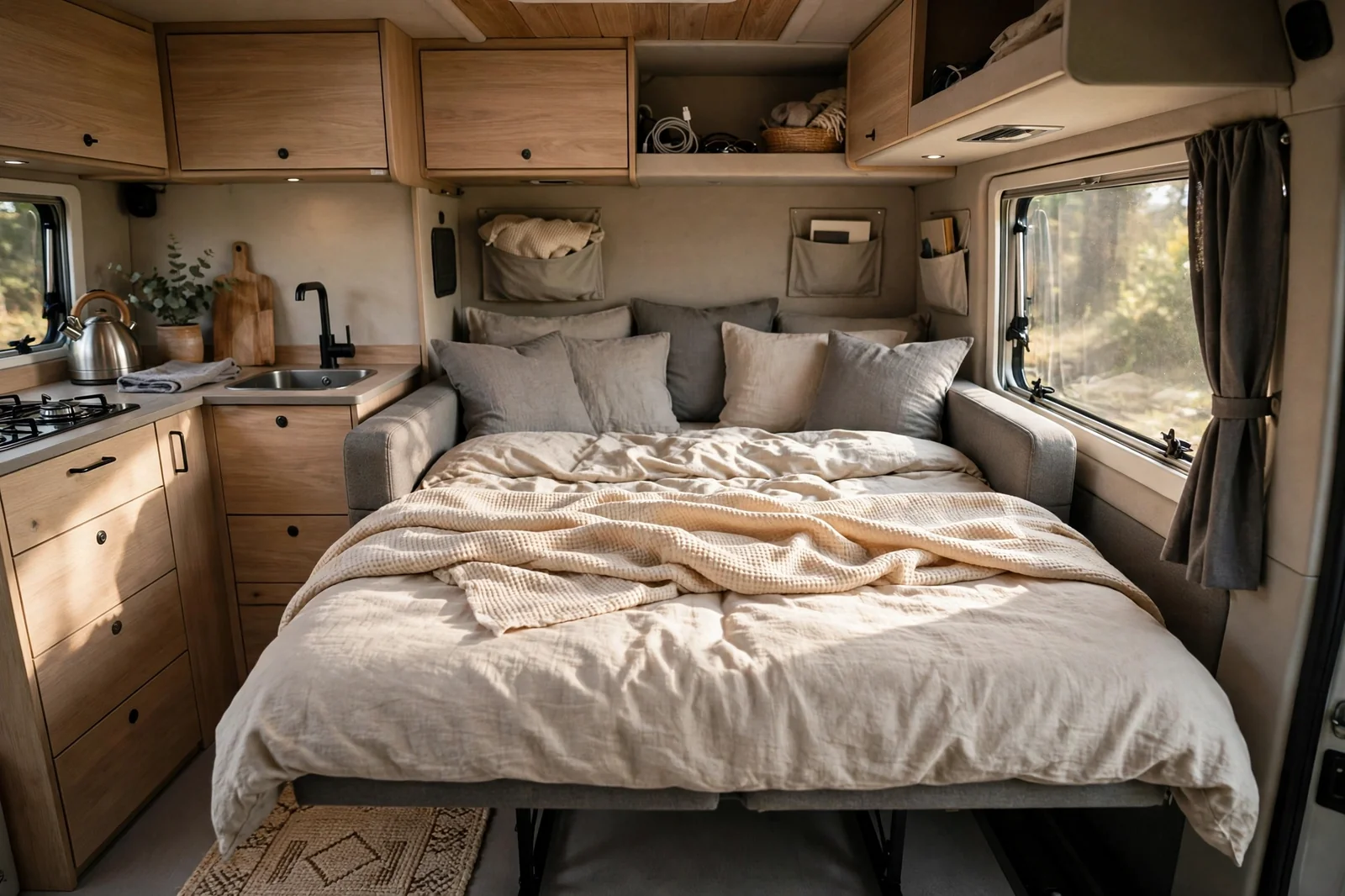
A sofa bed gives you a real sofa during the day and a double bed at night. Pull the base out, fold the back down, and the sofa becomes a sleeping platform.
It suits vans used as everyday vehicles. The sofa looks normal, passengers can sit on it, and guests never guess it converts. That everyday look is a big part of the appeal.
The bed size depends on the sofa width. Measure it like a bed, not like a sofa, before you buy. A sofa that seats three usually sleeps two comfortably.
Bedding storage is the weak point. Sofa beds rarely have room for a duvet inside, so plan a nearby cupboard for bedding.
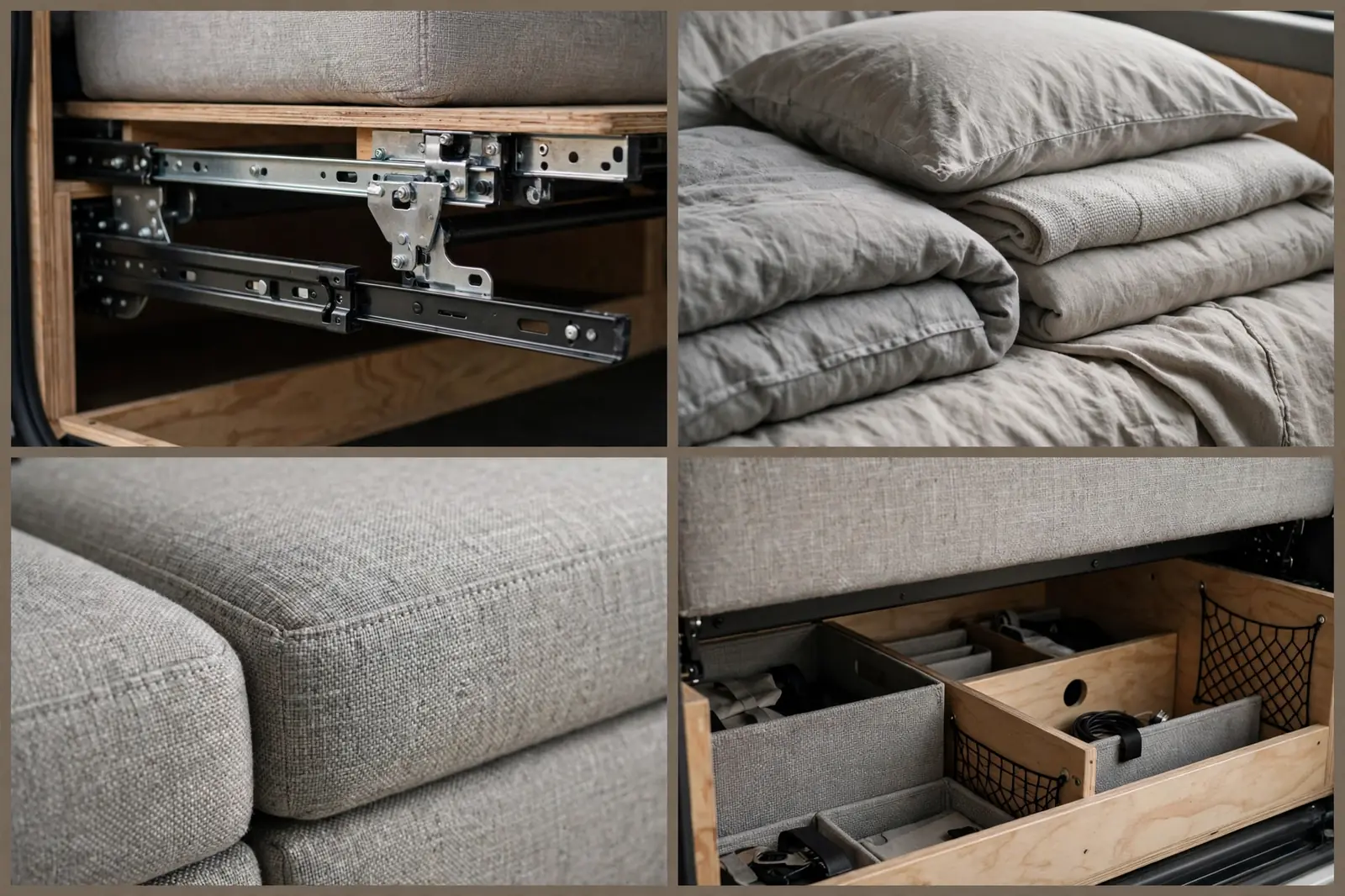
Choose a sofa fabric that wipes clean. It will double as a dining seat, a work seat, and a bed, so spills are only a matter of time.
A mattress topper stored in an overhead locker keeps the changeover quick.
10. Convertible Swivel Cab Bed
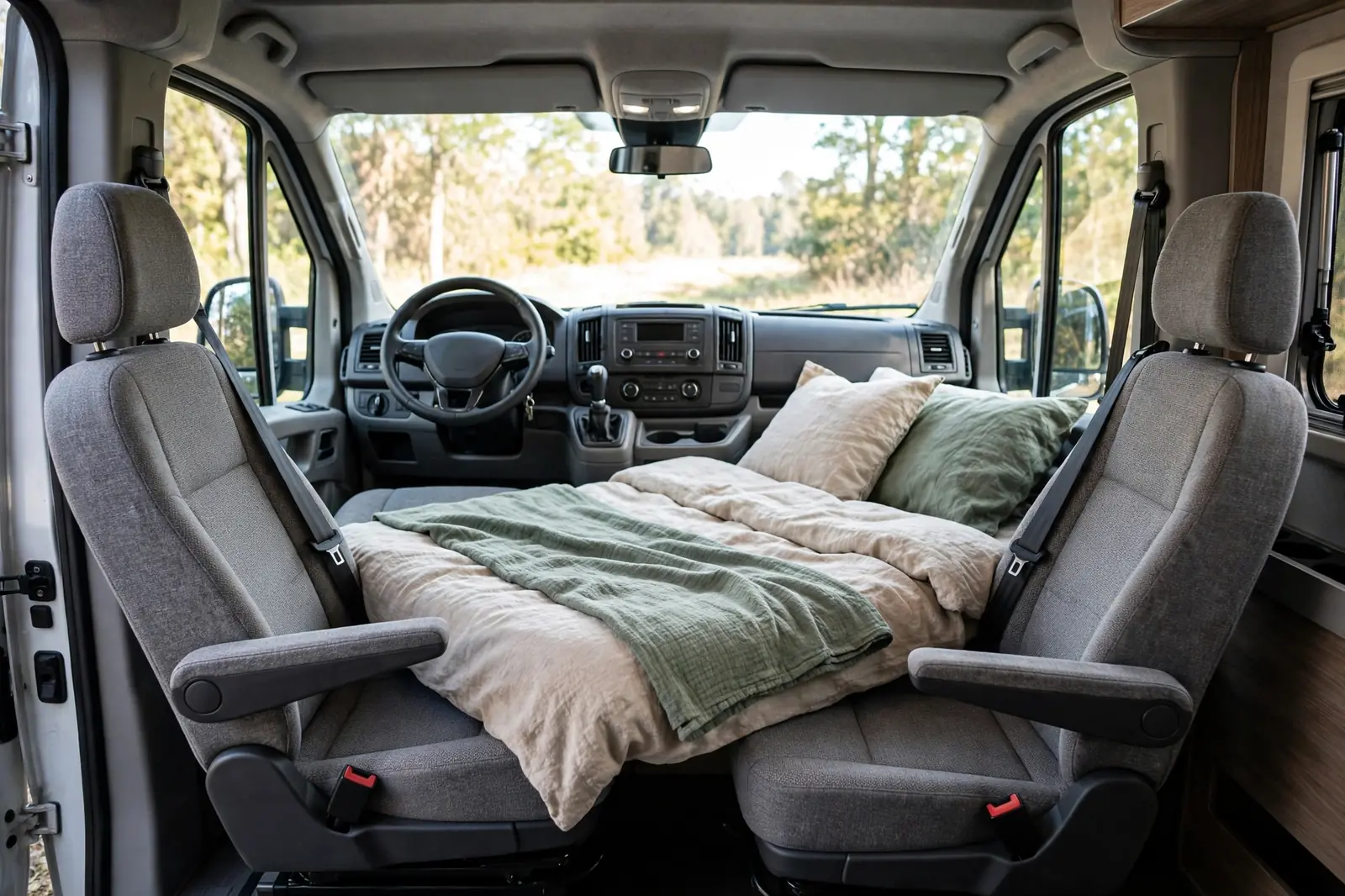
The cab bed uses the front seats. Swivel both captain chairs around, add a filler cushion between them, and you get a small single bed in the cab.
It is best as an extra bed, not the main bed. A child sleeps well here, and an adult manages for a night or two. For longer trips, pair it with a main rear bed.
The big win is that it uses space you already have. No extra furniture, no lost storage. The cab simply does double duty after dark.
Privacy takes some thought. Cab windows need covers, or the sleeper wakes with the sun and the neighbours.
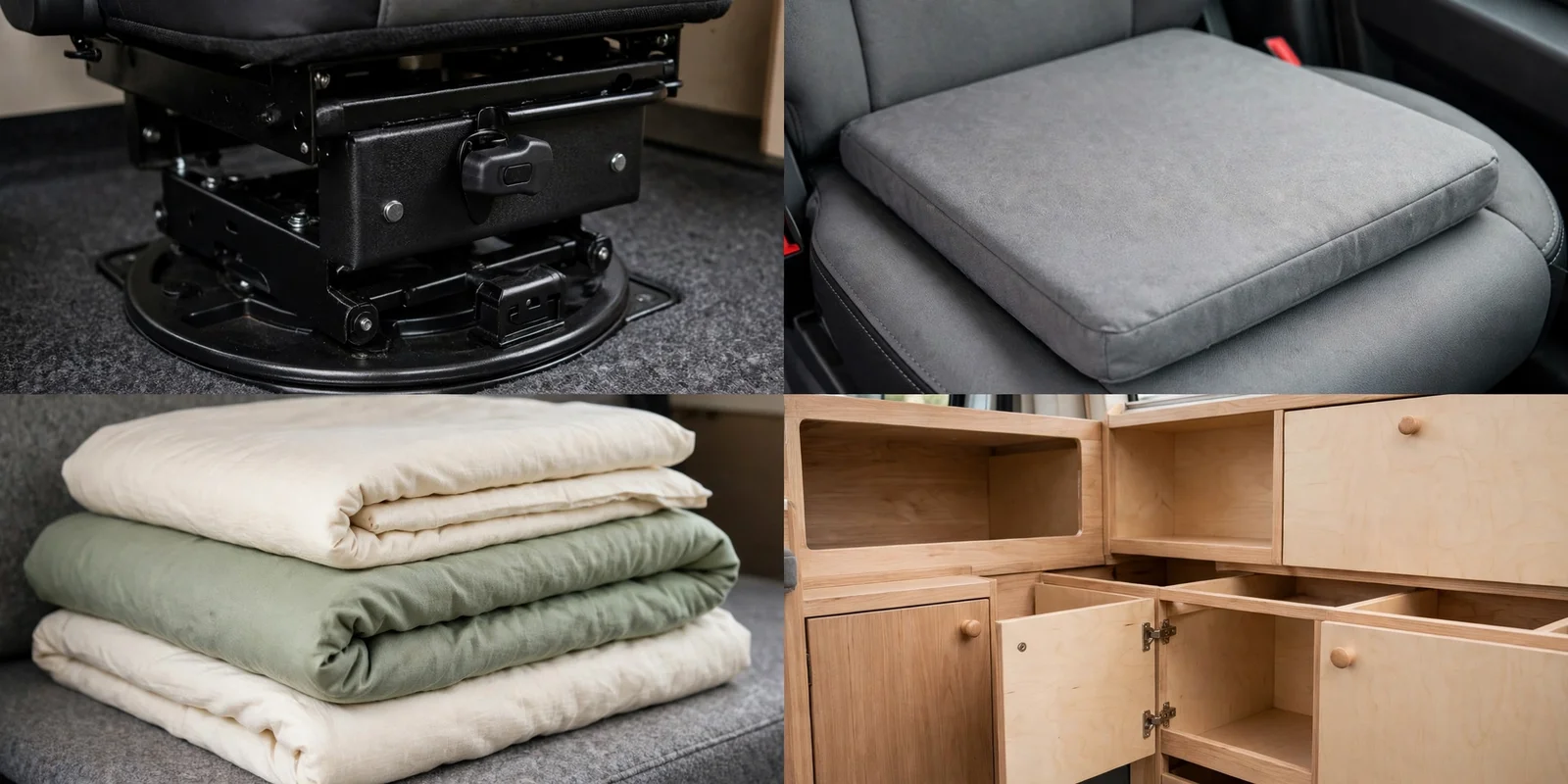
Keep the filler cushion flat and firm. A soft cushion sags between the seats and makes for a restless night.
Store cab window covers in the door pockets so they are always within reach.
11. Pull-Out Slatted Bed Frame
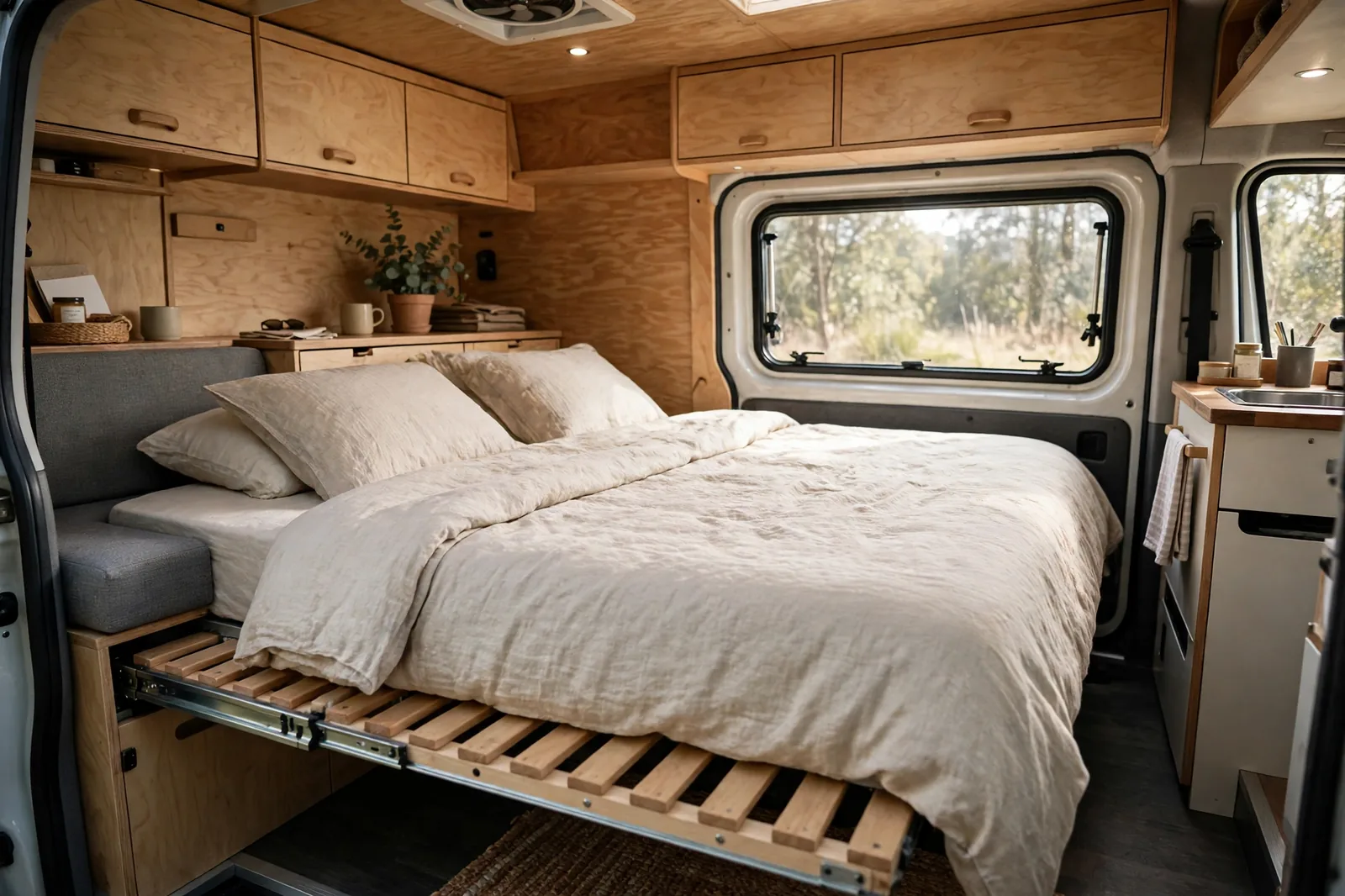
A slatted frame slides out from under a bench or cabinet, extending like a drawer to form a bed base. Drop a mattress on top and the bed is ready.
Slats keep the mattress ventilated, which helps in damp climates. Airflow under the mattress reduces condensation, a common van problem. That ventilation alone makes slats worth considering.
The frame is light and simple, with few moving parts to break. It suits do-it-yourself builders who want a reliable bed without complex hardware.
Support matters at full extension. The frame needs a leg or a strong runner at the outer end, or it will sag under two adults.
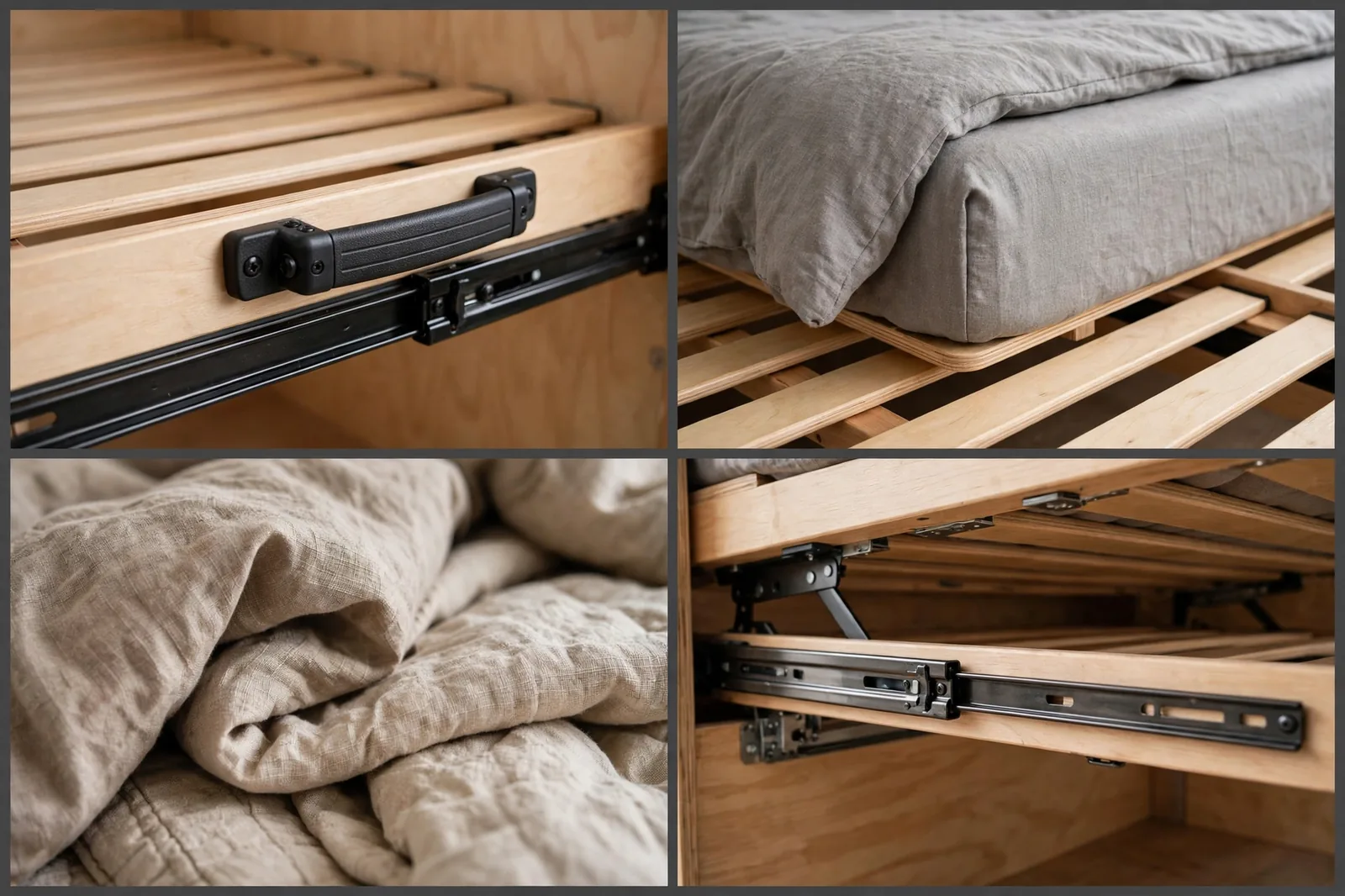
Space the slats evenly and fix them in place. Loose slats shift on rough roads and creak at night.
Use a mattress that folds or rolls, so daytime storage stays simple.
12. Pull-Out Drawer Bed Under Bench
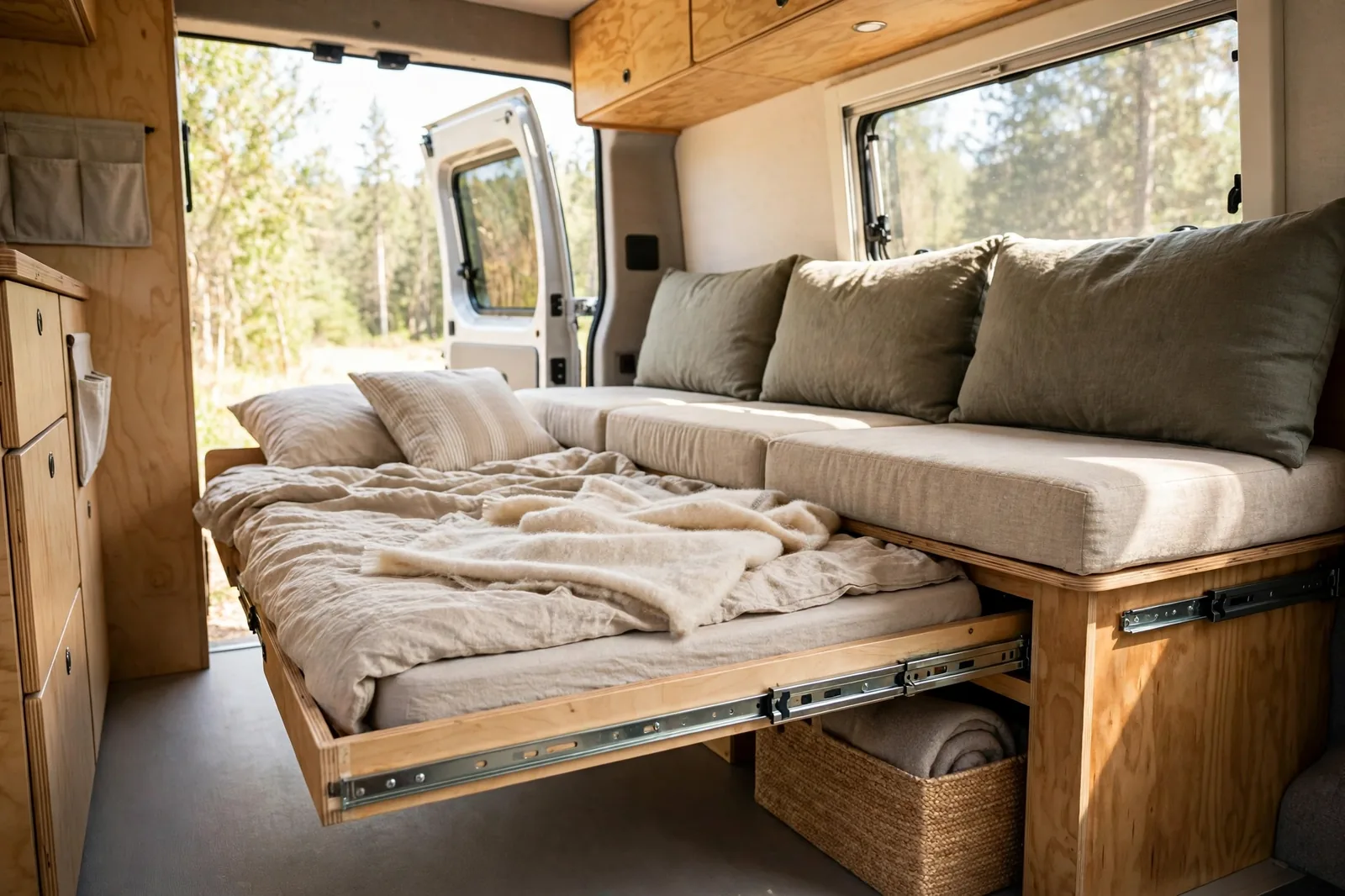
This bed hides inside a bench like a giant drawer. Pull it out at night, and a low bed rolls out on smooth runners.
It is ideal for solo travellers and kids. The bed sits low, so headroom is never an issue, and the bench above stays usable as seating during the day.
Because the bed is low, it suits vans with limited height. Short wheelbase vans and lower roof conversions benefit most from this trick.
The mattress needs to be thin to fit inside the drawer. A quality thin mattress sleeps better than a thick cheap one, so choose carefully.
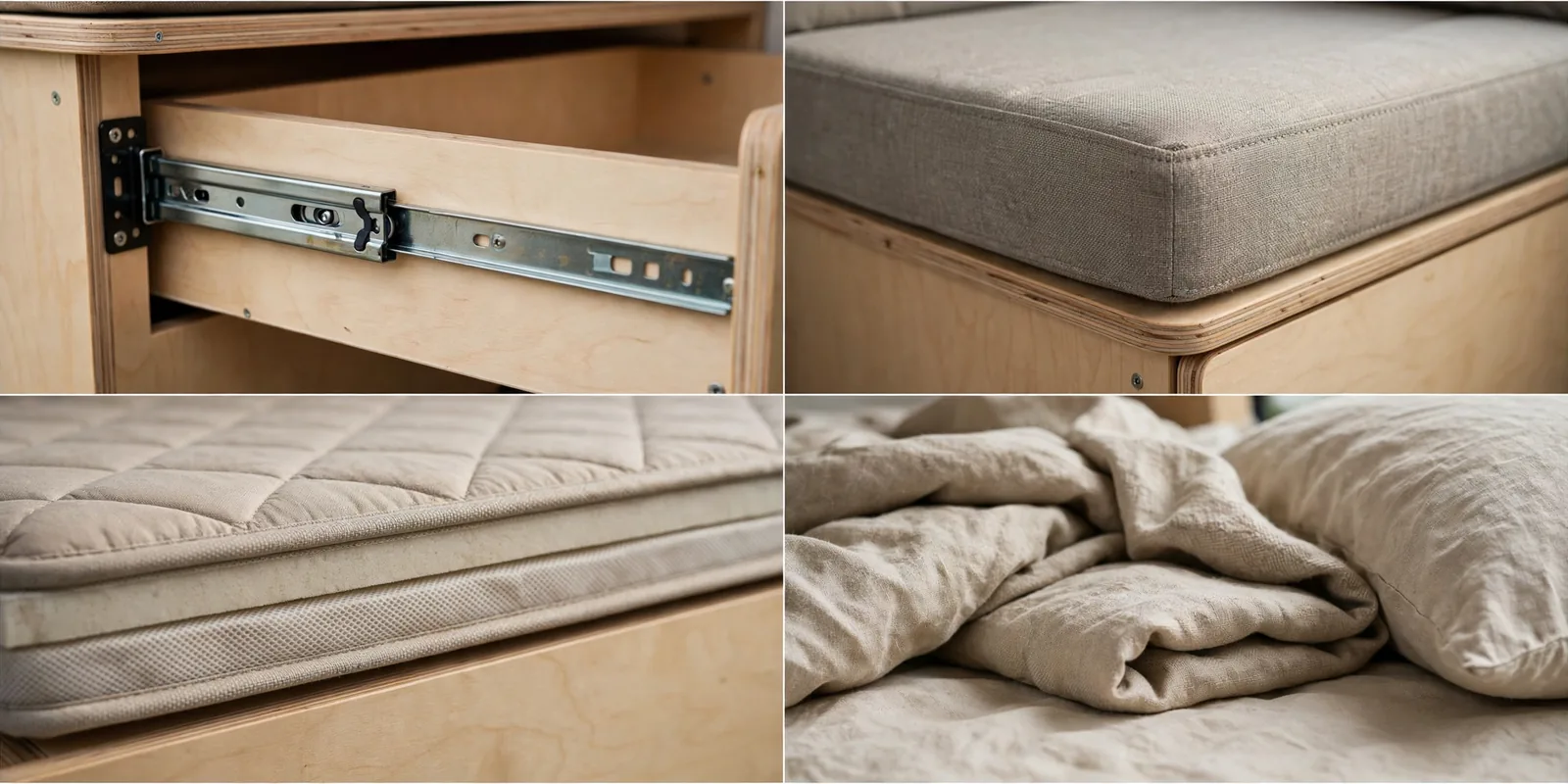
Keep the drawer runners clean and lightly oiled. A drawer bed that sticks defeats its own purpose.
Store bedding in the bench above, so setup is one pull and one unroll.
13. Pull-Out Bed from Rear Cabinet
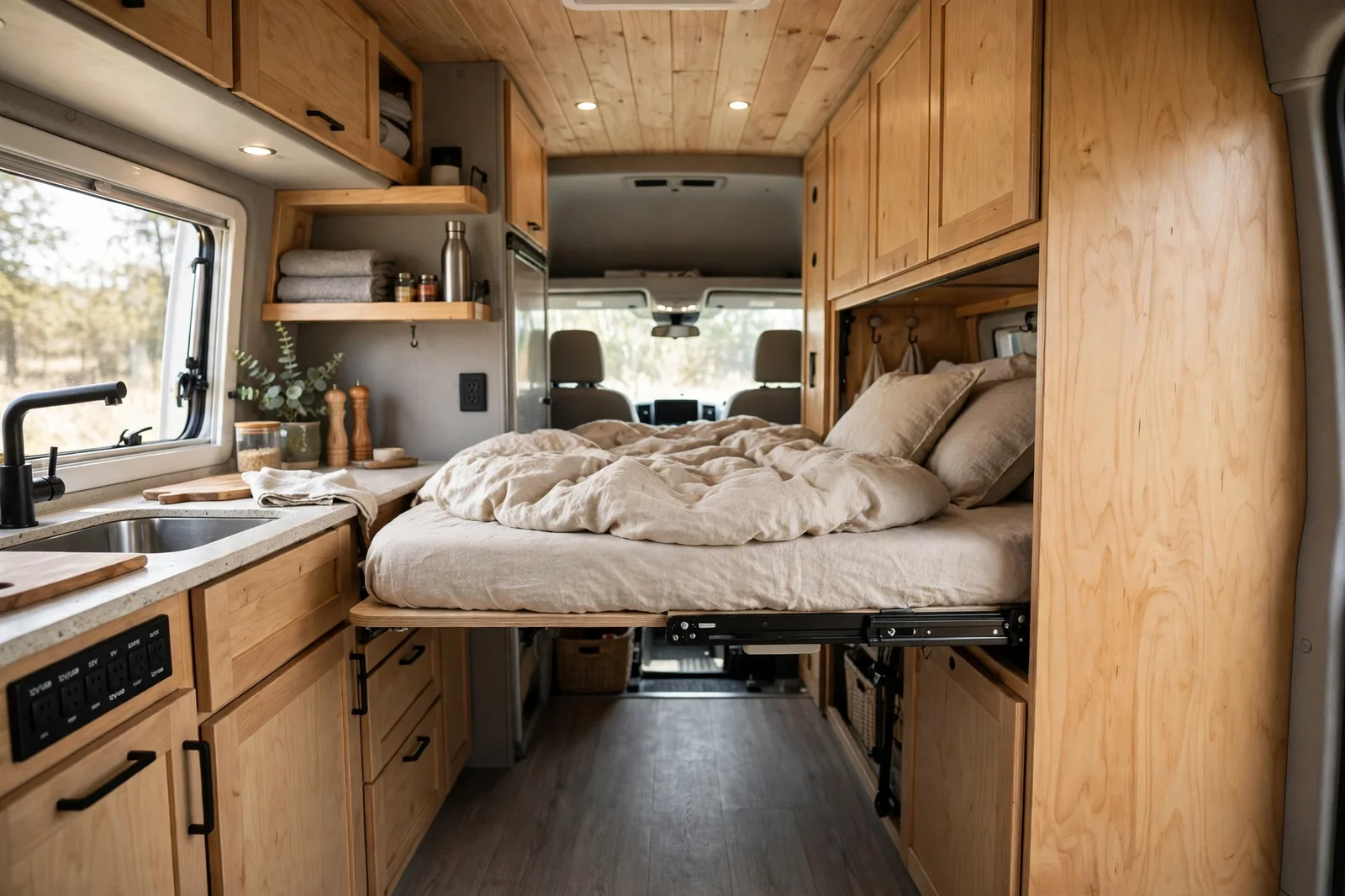
Here the bed pulls out of a tall cabinet unit at the rear. The cabinet looks like ordinary storage during the day, then reveals a full bed at night.
This design keeps the van looking tidy. Nothing about the daytime interior hints at a bed, which suits people who use their van for work or as a daily driver.
The cabinet must be built strong. A bed frame plus two adults puts real weight on the runners, so this is not a job for flimsy materials.
It works best as a single or a small double. Larger beds need wider cabinets, which eat into the rest of the layout.
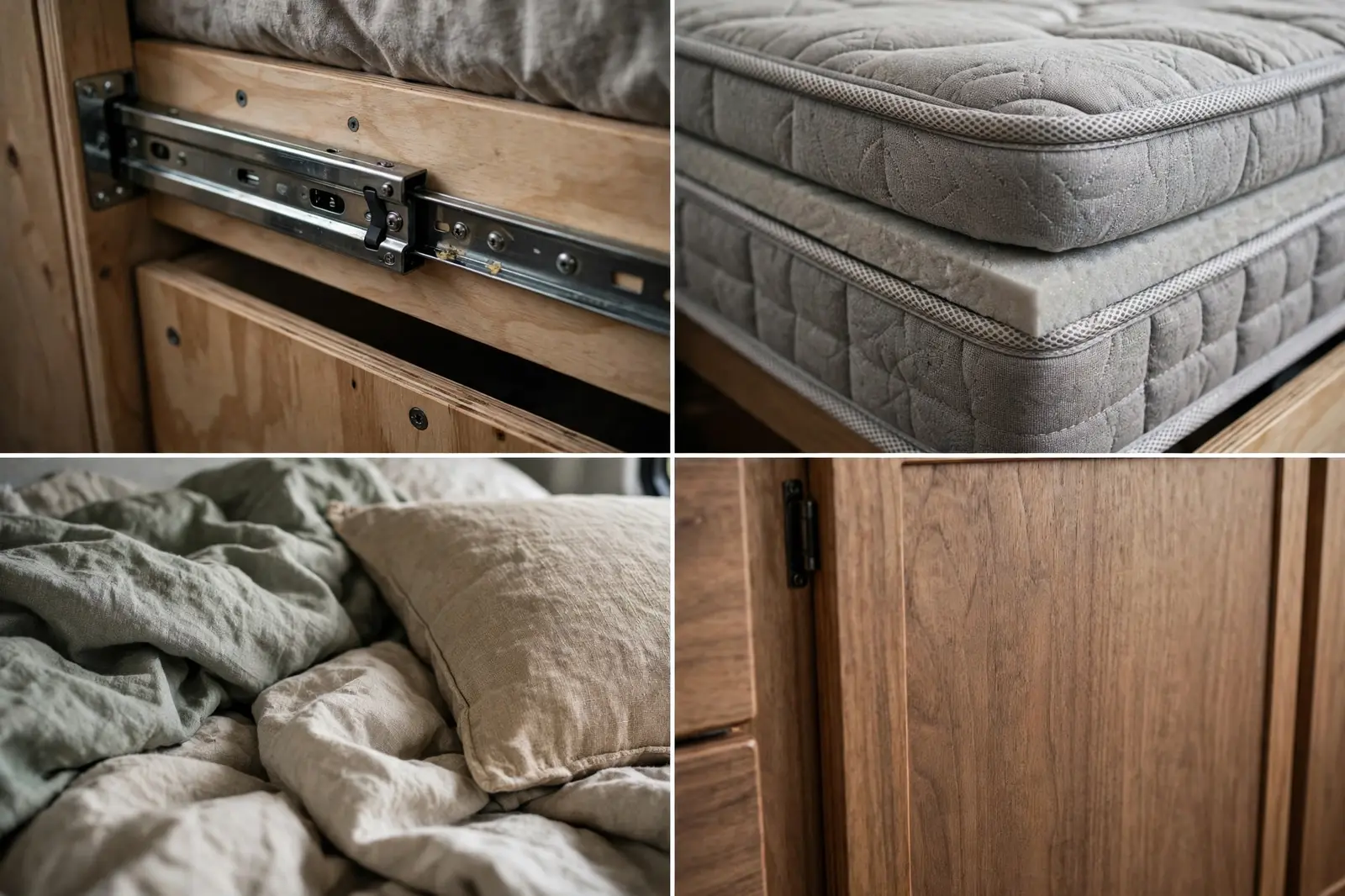
Plan the bedding storage inside the same cabinet. One unit for bed and bedding keeps the changeover to a single step.
Test the pull-out with the mattress in place. An empty frame always slides easier than a loaded one.
14. Pull-Out Bunk Beds
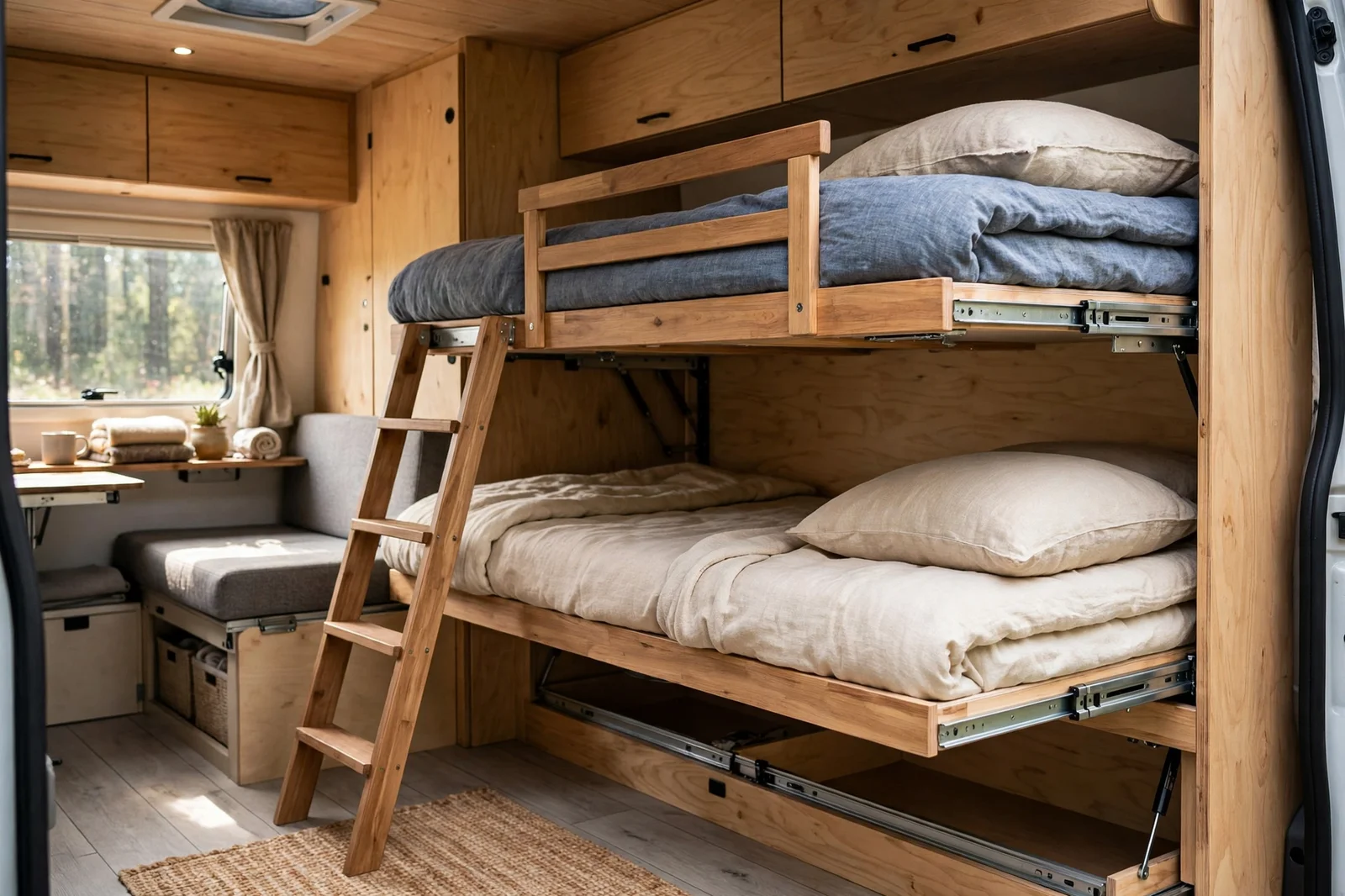
Pull-out bunks stack two beds in the space of one. Each bunk slides out from a wall unit, giving two sleepers their own bed in a tiny footprint.
Families love this layout. Kids get their own bunks, parents keep the main bed, and everyone sleeps without sharing. It turns a two-person van into a family van.
Safety rails on the top bunk are essential, especially for children. A rail that folds away during the day keeps the daytime look clean.
Headroom between bunks is tight by nature. Measure it with a pillow in place, since pillows eat several centimetres of clearance.
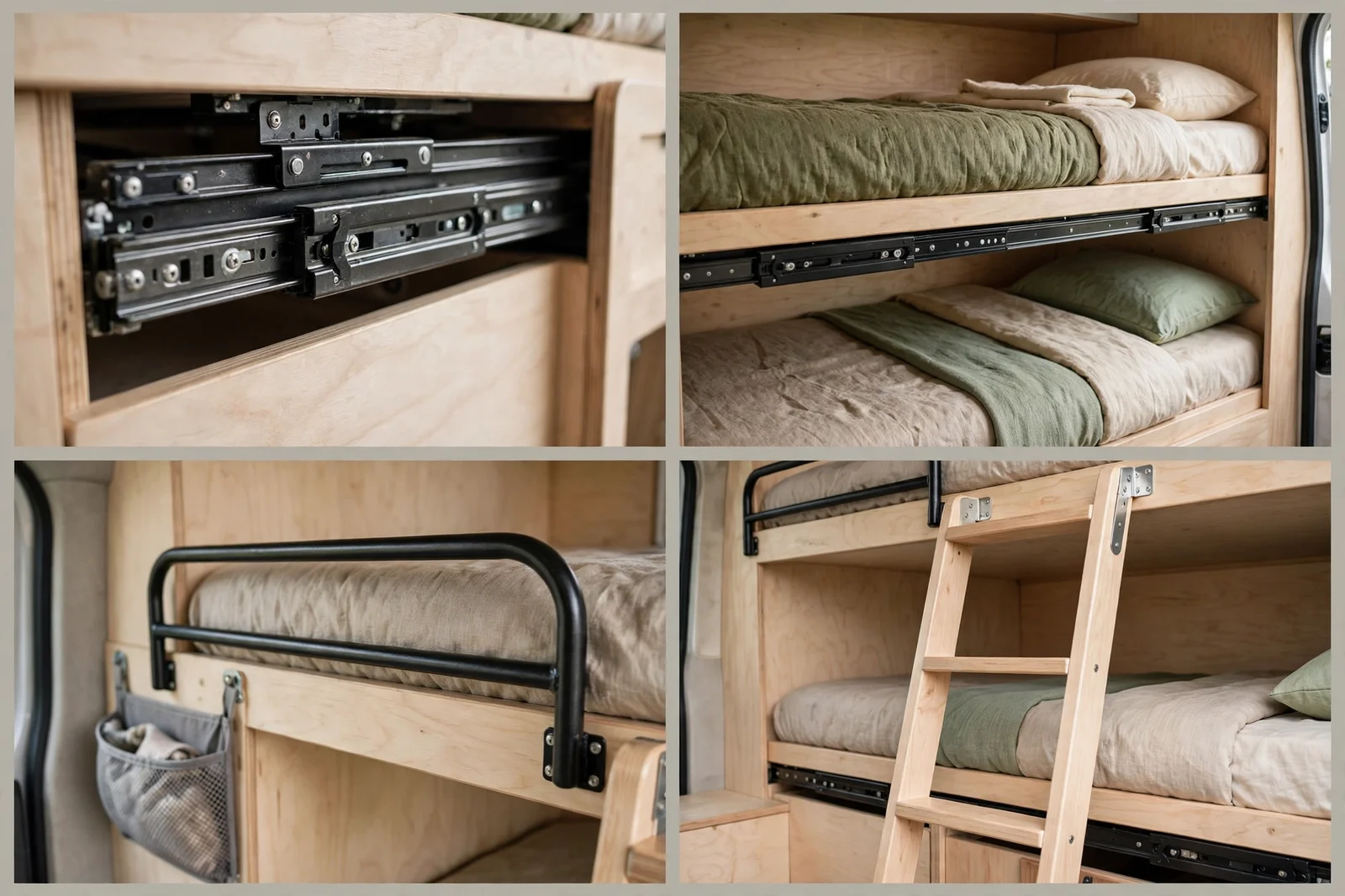
Give each bunk its own reading light. Kids read at different times, and one shared light causes arguments.
Use fitted sheets on bunks. Loose bedding falls off a top bunk and lands on the sleeper below.
15. Convertible Murphy Wall Bed

A Murphy bed folds down from the wall. By day the wall is free, with seating or open floor space in front of it. By night a full bed drops down, ready to sleep in.
It is the best of both worlds for people who want a real mattress and a real living room. The mattress stays on the bed, so sleep quality matches a fixed bed.
The wall unit needs solid fixings. A Murphy bed is heavy, and the frame must anchor into the van structure, not just into thin panelling.
Counterweight or gas struts make lifting easy. Without them, folding the bed up each morning becomes a workout.
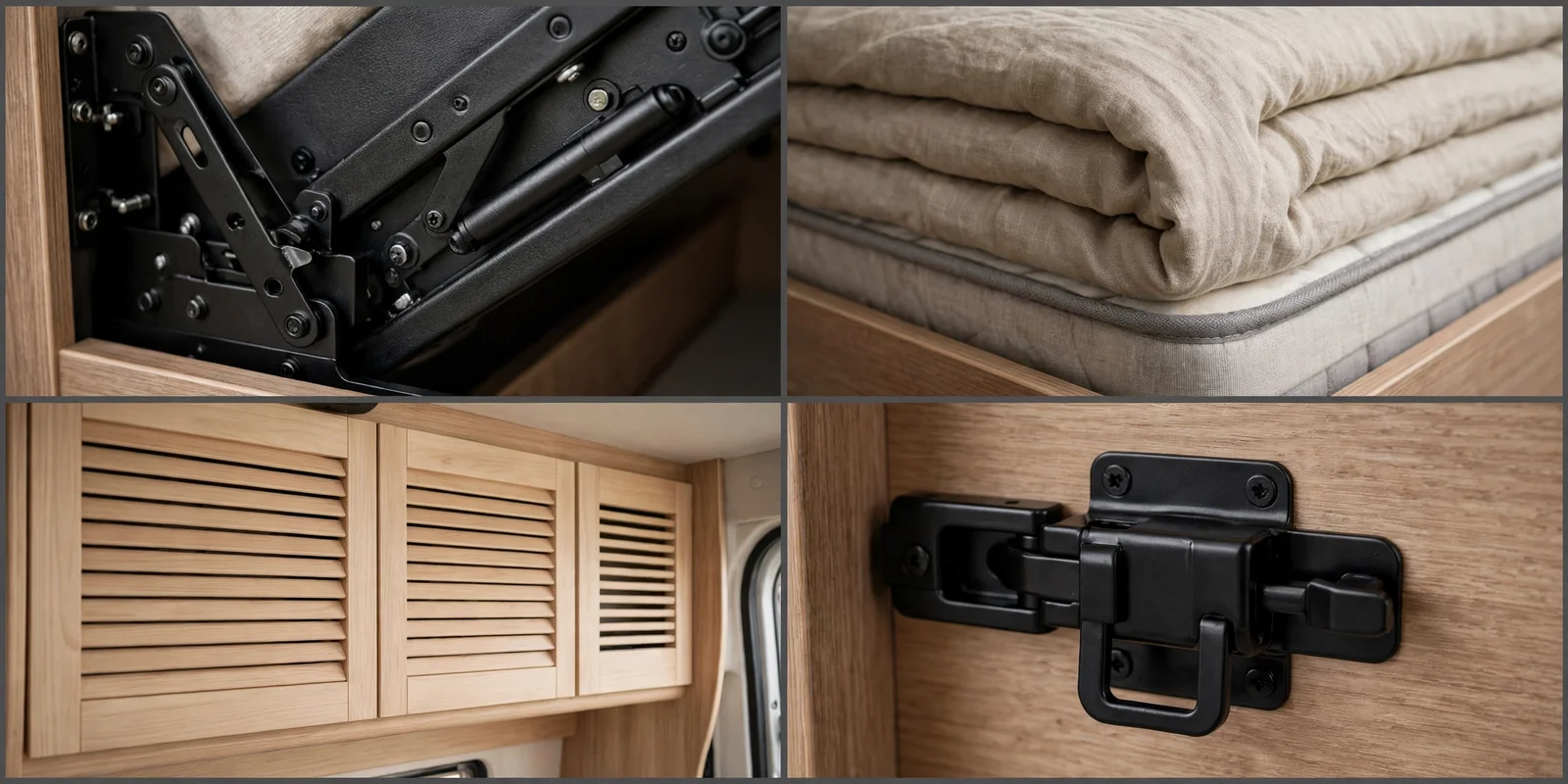
Clear the floor area before folding down. Shoes and bags under a Murphy bed get trapped, and the bed will not sit flat.
Lock the bed in the up position before driving. A Murphy bed that drops on a bumpy road is a real hazard.
16. Pop-Top Roof Bed

Raise the pop-top roof and a bed appears above the main cabin. The roof bed uses space that would otherwise sit empty, adding a sleeping spot without taking any floor area.
It is a favourite for families. Parents sleep below, kids sleep up top, and everyone has room. The canvas sides give the roof bed a tent-like feel that kids tend to love.
Roof beds suit lighter sleepers. The mattress is thinner than a main bed, and the space is cosier. Adults can sleep there, but check the weight limit and the headroom first.
Ventilation is excellent, since the canvas sides breathe. On warm nights the roof bed is often the coolest spot in the van.
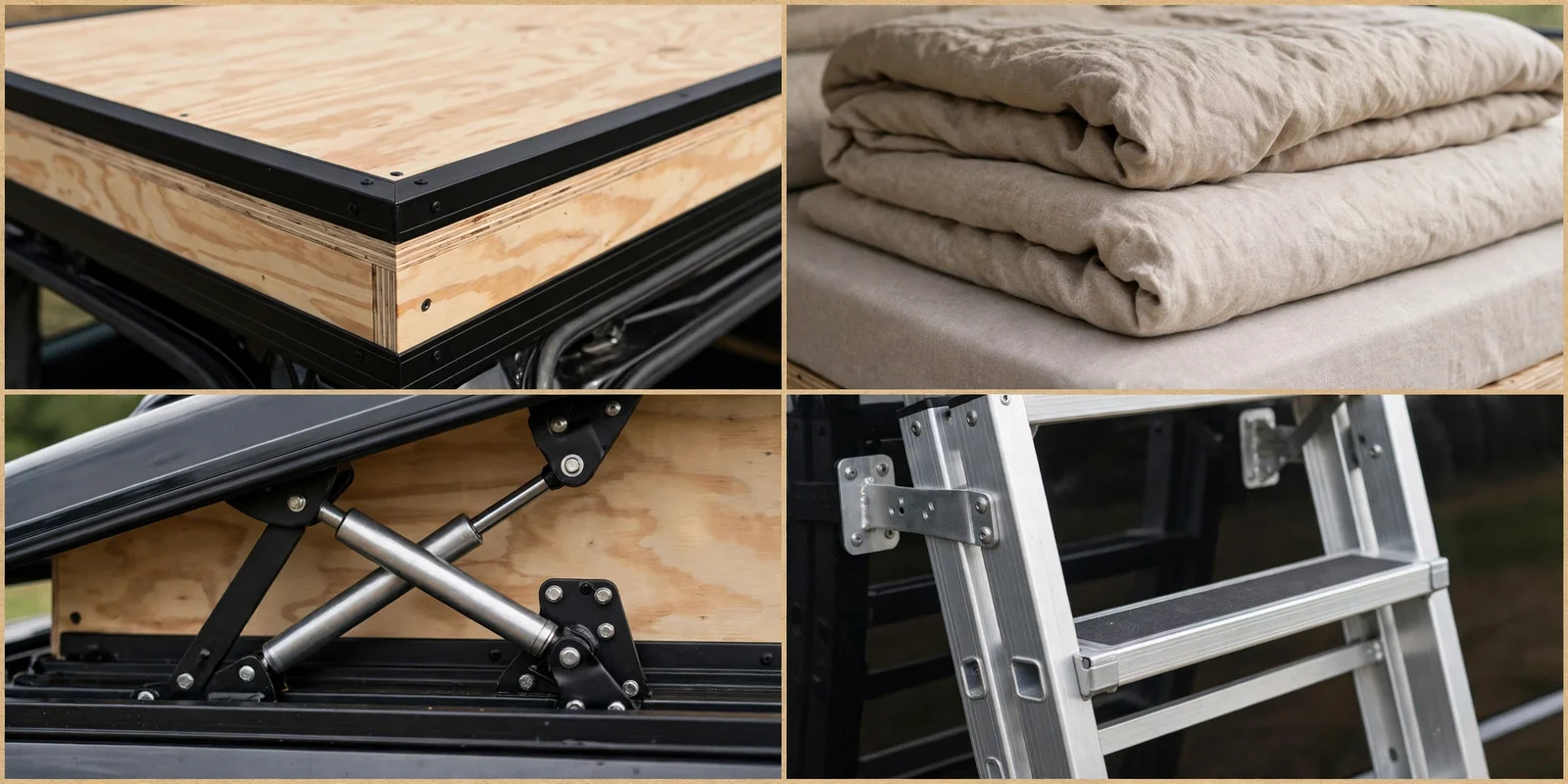
Keep the roof bed dry. Canvas sides handle rain well, but bedding left up top in a storm can still get damp.
A small ladder or step makes the climb safer, especially for kids at night.
17. Fixed Overhead Cabover Bed
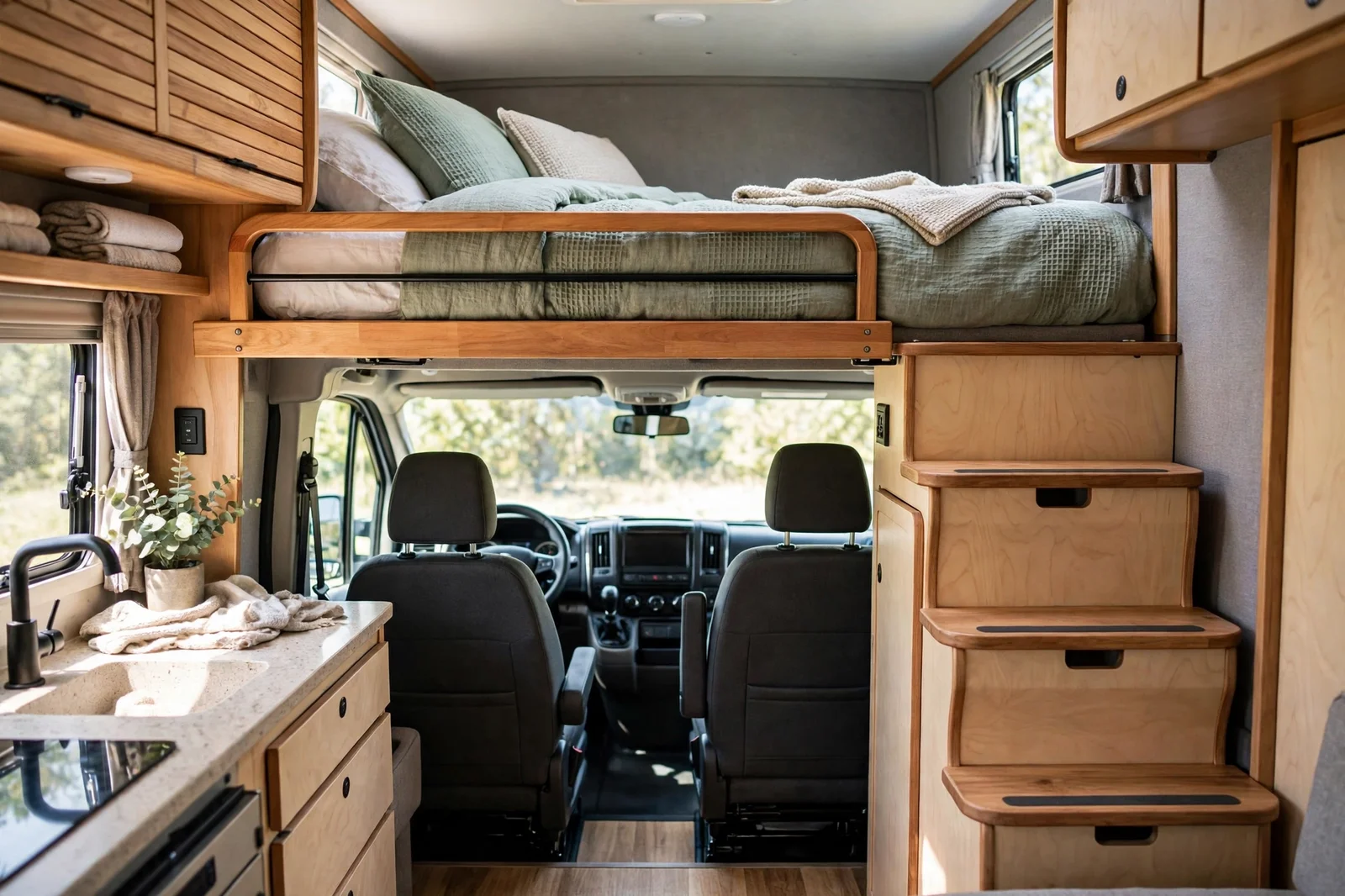
A cabover bed sits above the cab, fixed in place and always ready. It is common in larger vans and small motorhomes, where the cab roof area would otherwise go unused.
The bed is generous, often a full double, and it leaves the whole rear of the van free for living space. That separation of sleeping and living areas feels more like a small home than a van.
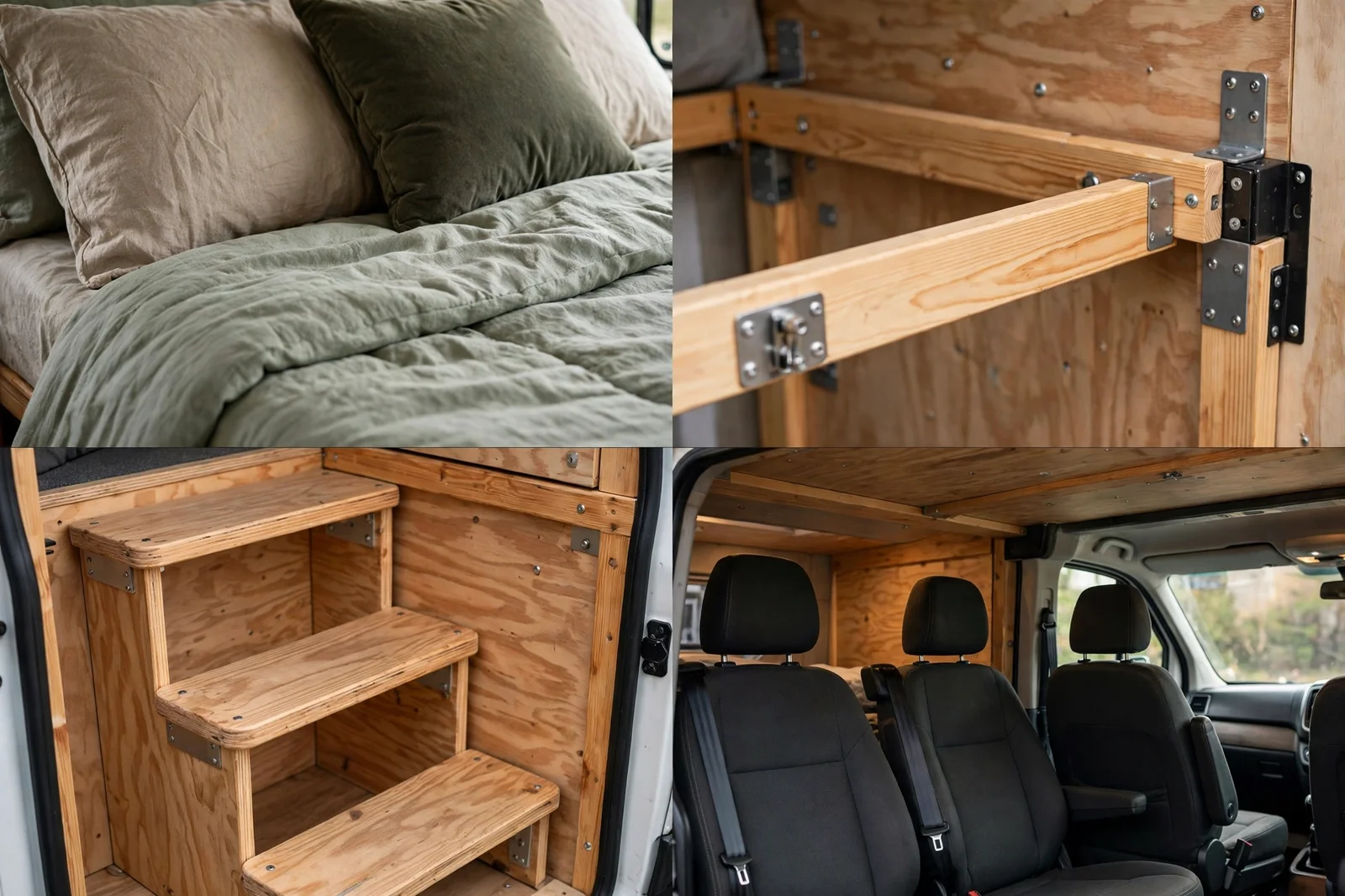
Access is by steps or a ladder. It suits agile sleepers, since the climb is steeper than a normal bed. A safety rail stops restless sleepers rolling toward the edge.
Storage below the cabover, in the cab area, stays accessible. The bed does not block the seats, so the van remains fully usable during the day.
Fit a curtain across the cabover opening. It gives the sleeper privacy and blocks cab light in the early morning.
Keep a small light up there. Climbing down in the dark without one is asking for a stubbed toe.
The best camper van bed is the one you actually enjoy sleeping in, night after night. A simple fixed bed you love beats a clever convertible bed you dread setting up.
Start with how you travel, not with how the bed looks. Solo weekends, family holidays, and full-time van life all point to different layouts.
If you can, try before you build. Lie on a similar bed, fold a similar mechanism, and climb the same steps. Ten minutes of testing saves months of regret.
Whichever design you pick, keep bedding simple, ventilation good, and setup fast. Those three habits make any bed on this list feel like home.