17+ Off-Grid Kitchen Setups That Run Without a Power Grid

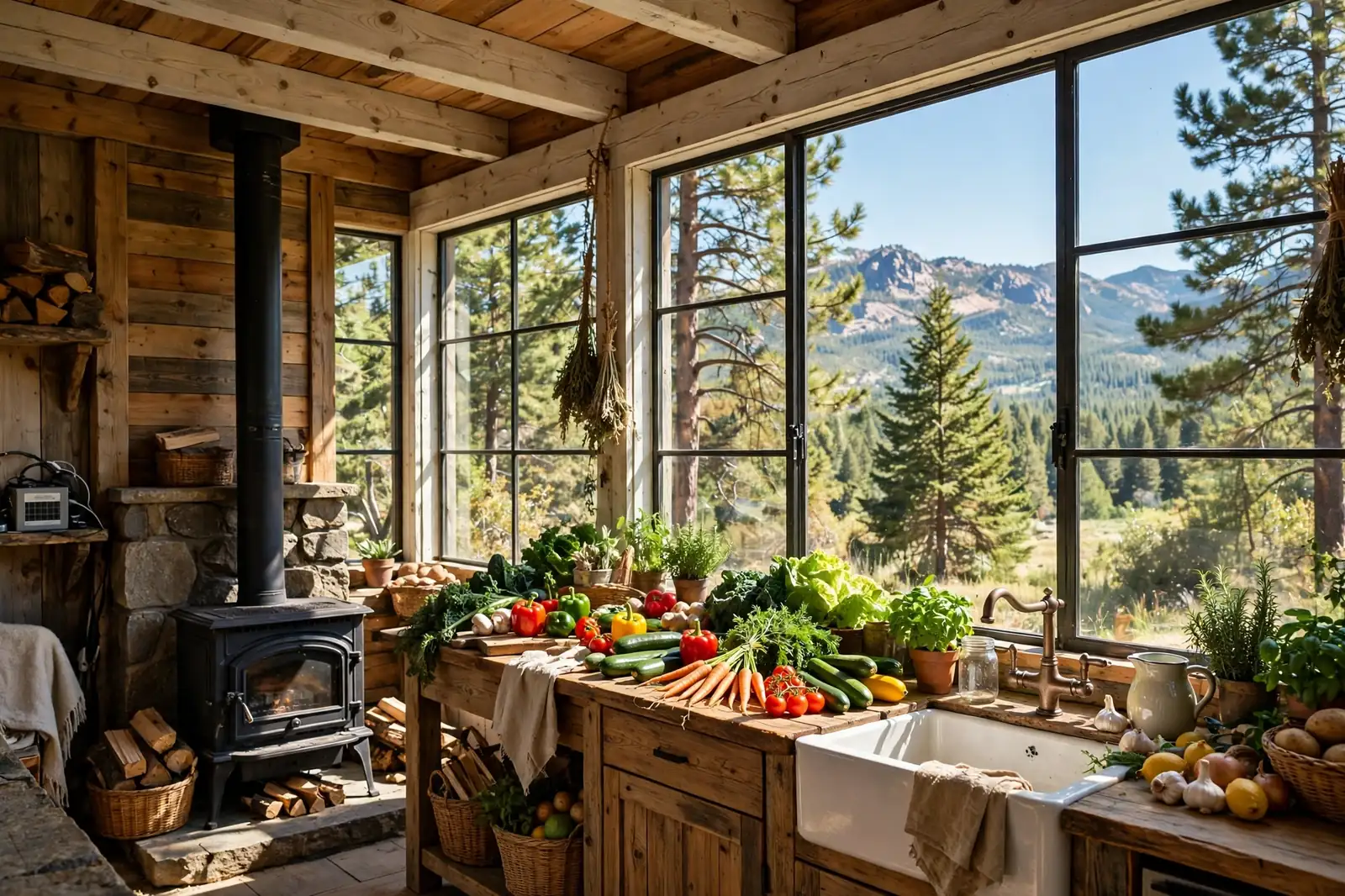
Going off the grid does not mean giving up good cooking. It means choosing a different way to power it, store food, and get water to the sink. Some setups run on sunshine. Others run on wood, propane, or pure muscle power. Each one below solves the same three problems in a different way.
Think about your climate first. A sunny desert kitchen needs shade and water storage. A cold mountain kitchen needs heat that works in a storm. A tiny kitchen needs every inch to do two jobs. The best setup is the one that fits your home, your budget, and how you actually cook.
This list covers cabins, tiny homes, vans, yurts, boats, and more. Use it to borrow ideas, mix systems, and build a kitchen that keeps working when the grid does not.
The 3 Jobs Every Off Grid Kitchen Must Do
If a design covers cooking, water, and food storage, it can work off the grid. If one leg is missing, fix that first before adding fancy gear.
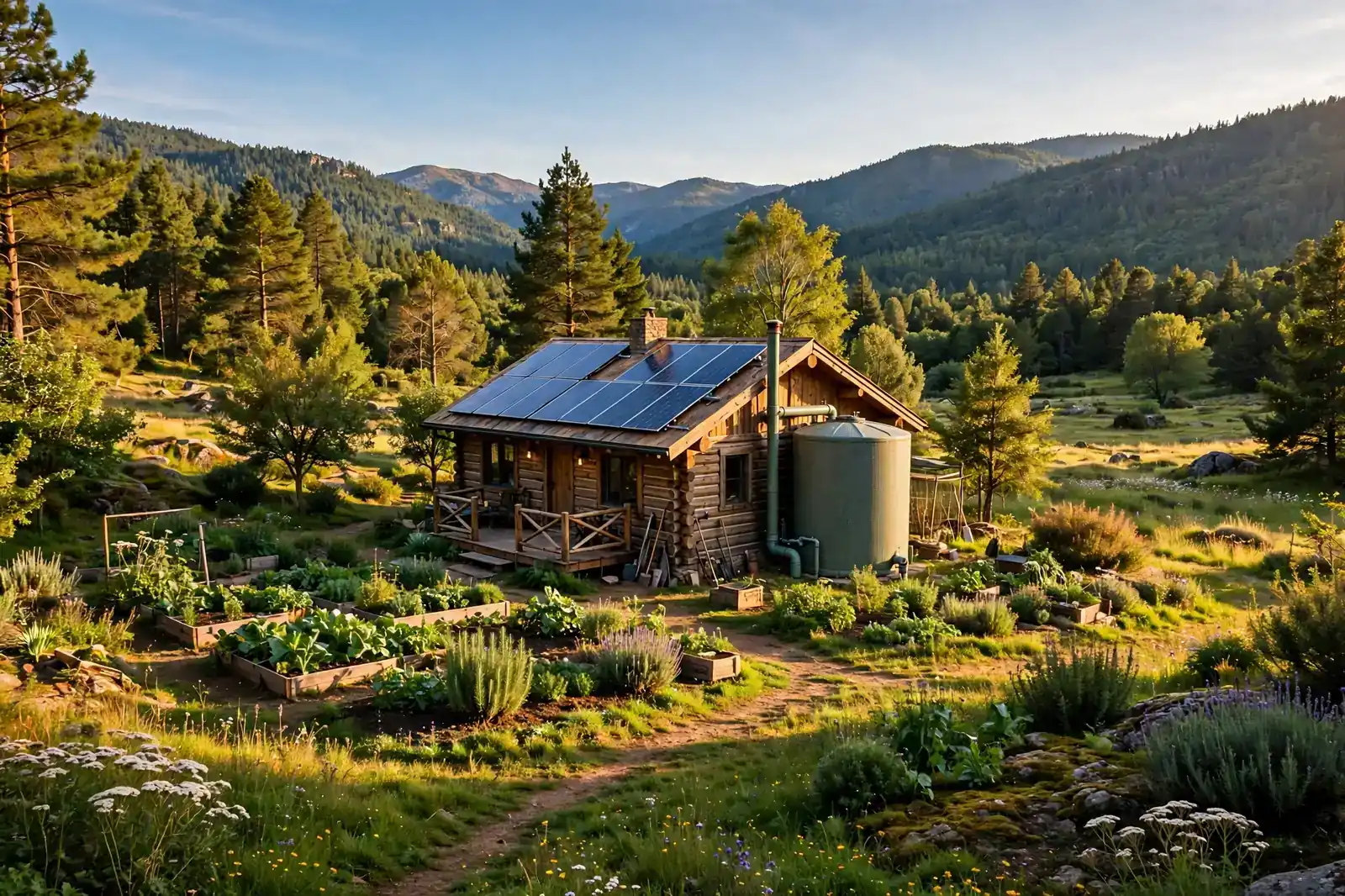
1. Solar-Powered Modern Cabin Kitchen

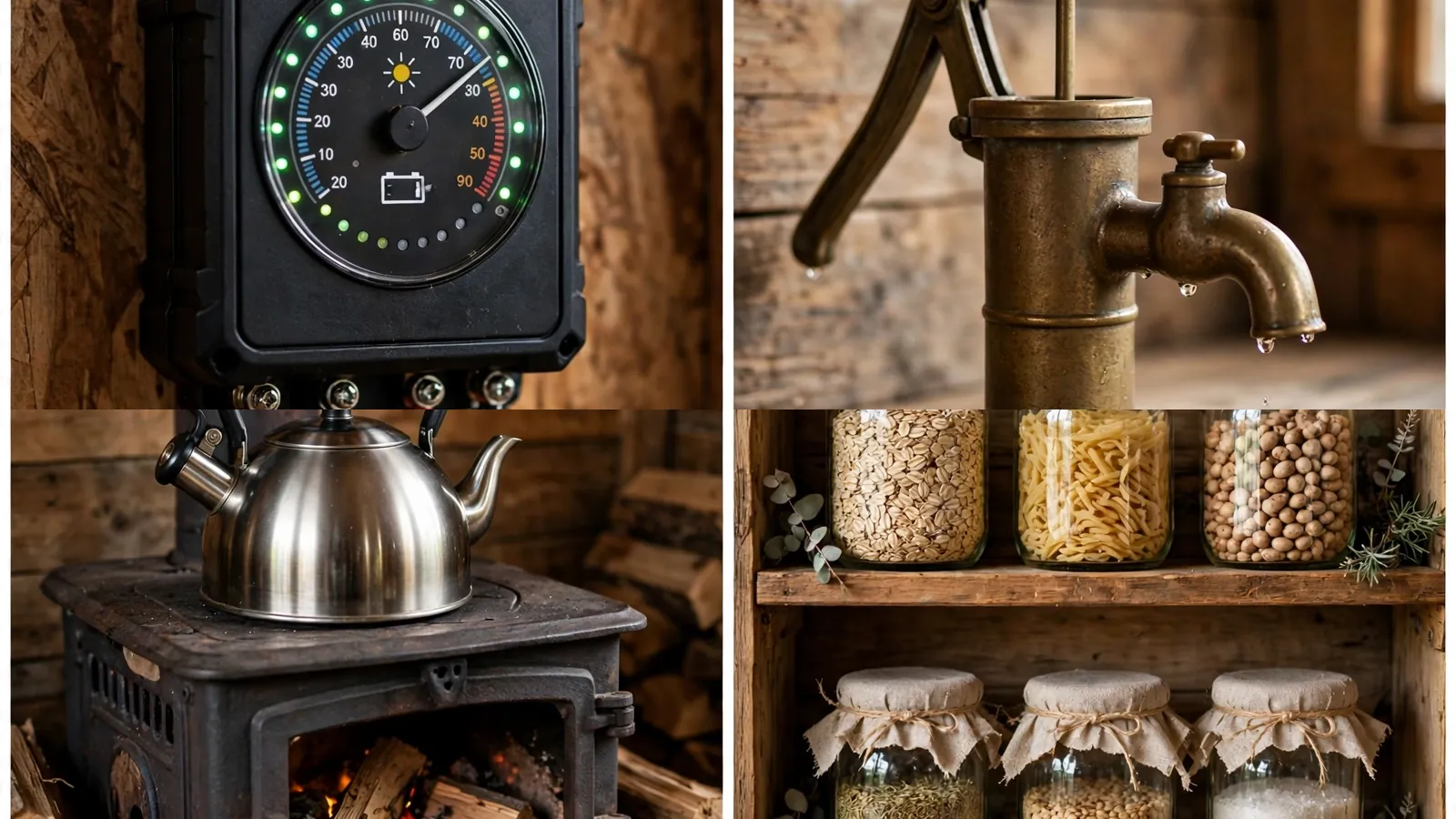
This kitchen looks normal at first glance. Wood cabinets, a farmhouse sink, and a long counter make it warm and easy to use. The difference sits behind the scenes. Solar panels on the roof charge a battery bank. That bank runs lights, a fridge, and small appliances.
Cooking still needs a plan. Many owners pair solar power with a wood stove for winter heat and backup cooking. Induction cooking works well when the sun is strong and the batteries are full. On cloudy days, a simple kettle on the stove saves power.
Storage matters here. Open shelves hold jars, grains, and canned goods where you can see them. A deep pantry keeps bulk food cool and dry. Label everything. You will cook faster when you can find it in seconds.
Start small if you are new to solar. A modest system can run a fridge and lights. Add panels later as you learn your real daily use.
Keep a manual backup for water too. A hand pump or gravity filter means a power dip never stops dinner.
2. Wood-Stove Homestead Kitchen

A wood cook stove is the heart of this kitchen. It heats the room, boils water, bakes bread, and simmers soup all at once. It asks for work in return. You split wood, tend the fire, and learn its hot spots.
Homesteaders love this setup because it is steady. Storms do not stop it. Fuel can come from your own land. A warming oven on top keeps plates hot while you finish the rest of the meal.
Pair the stove with a big butcher block counter. You need space to chop, knead, and set down hot pots safely. Hanging pots keep cast iron close and counters clear. A farmhouse sink handles big pots with ease.

Ventilation is not optional. A proper chimney and fresh air intake keep smoke out and heat in. Ask a stove installer to check clearances before your first big fire.
Keep firewood dry and close, but never stacked against the stove. A covered porch box is a safer daily supply.
3. Propane and Solar Hybrid Kitchen

This is a practical middle path. Solar handles lights, fridge, and small loads. Propane handles the heavy job of cooking. A gas range gives instant heat and fine control, just like a city kitchen.
Hybrids suit families who want reliability without a huge battery bank. Propane stores for months. It works in winter when solar output drops. You can cook a full holiday meal without watching a battery meter.
Safety comes first with gas. Fit a leak detector, keep tanks outside, and check hoses each season. Vent the range well. A bright, airy kitchen makes gas cooking feel easy, not risky.

Track propane use for a month. You will learn how long a tank really lasts for your cooking style.
Keep one backup tank full. Running out mid roast is a lesson you only need once.
4. Rainwater and Rocket Stove Outdoor Kitchen

Some of the best off grid cooking happens outside. A covered patio kitchen keeps heat and smoke out of the house. A rocket stove burns small sticks with very little smoke. It boils water fast.
Rainwater feeds the outdoor sink through a barrel and filter. That simple loop saves trips with buckets. A stone counter stands up to weather and hot pots. Open shelves keep tools dry under the roof.
This setup shines in warm climates. You can grill, can, and cook big batches without heating the whole house. In cold weather, it becomes a fair weather bonus rather than the main kitchen.

Filter rainwater before drinking or cooking with it. A basic filter plus boiling covers most home uses.
Cover the stove when it rains. Dry fuel lights fast and burns clean.
5. Tiny House Off-Grid Kitchen

Small does not mean cramped. A good tiny kitchen uses every inch twice. A fold down table becomes extra counter space. A small stove still bakes, roasts, and simmers. Drawers hide tools until you need them.
Power usually comes from a small solar array and a compact battery. That means cooking choices matter. A kettle, a single pot meal, and a small oven can cover most days. Save power hungry gadgets for sunny afternoons.
Water is precious in a tiny home. A small sink, a foot pump, and a filtered jug can be enough. Store food in clear jars so nothing hides at the back of a cupboard.

Cook one pot meals often. Less washing up saves water, time, and counter space.
Hang tools on the wall. In a tiny kitchen, vertical storage is free real estate.
6. Container Home Kitchen

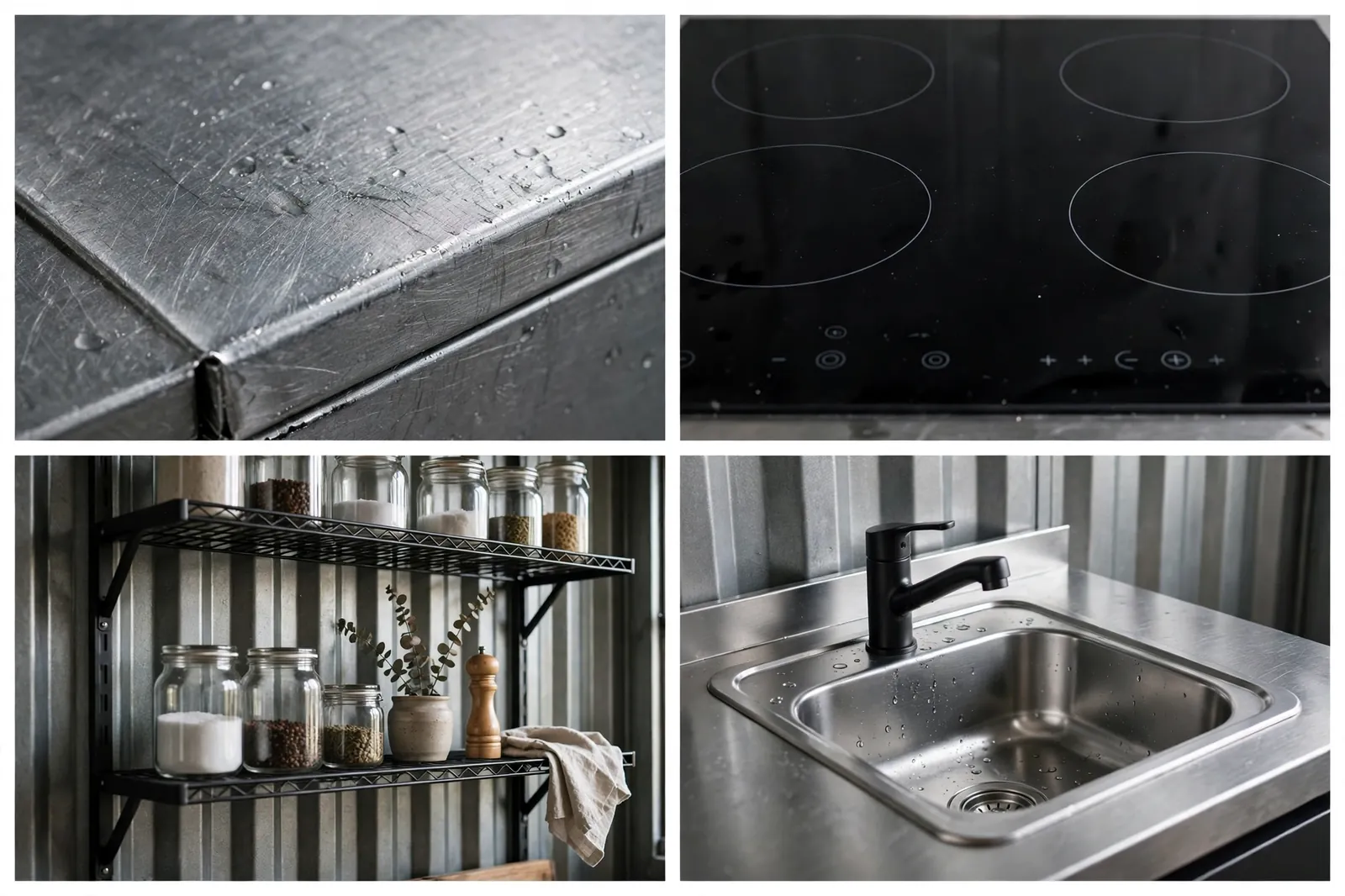
A shipping container gives you a strong, weather tight box. Inside, this kitchen feels modern and clean. Steel and wood finishes balance the industrial shell. A long counter runs the length of the space.
Insulation is the secret here. Without it, steel sweats and heats up fast. With good insulation and ventilation, the kitchen stays comfortable year round. Battery power runs an induction cooktop and a compact fridge.
Storage runs along the walls to keep the narrow floor clear. Pull out drawers beat deep cabinets in a slim kitchen. You can reach everything without crouching into a dark corner. A magnetic knife strip and a hanging rail free up even more counter space.
Plan the layout before cutting walls. Plumbing and wiring are easier when they share one service wall.
Add a window over the sink. Daylight makes a narrow kitchen feel twice as wide.
7. Amish-Style No-Electric Kitchen

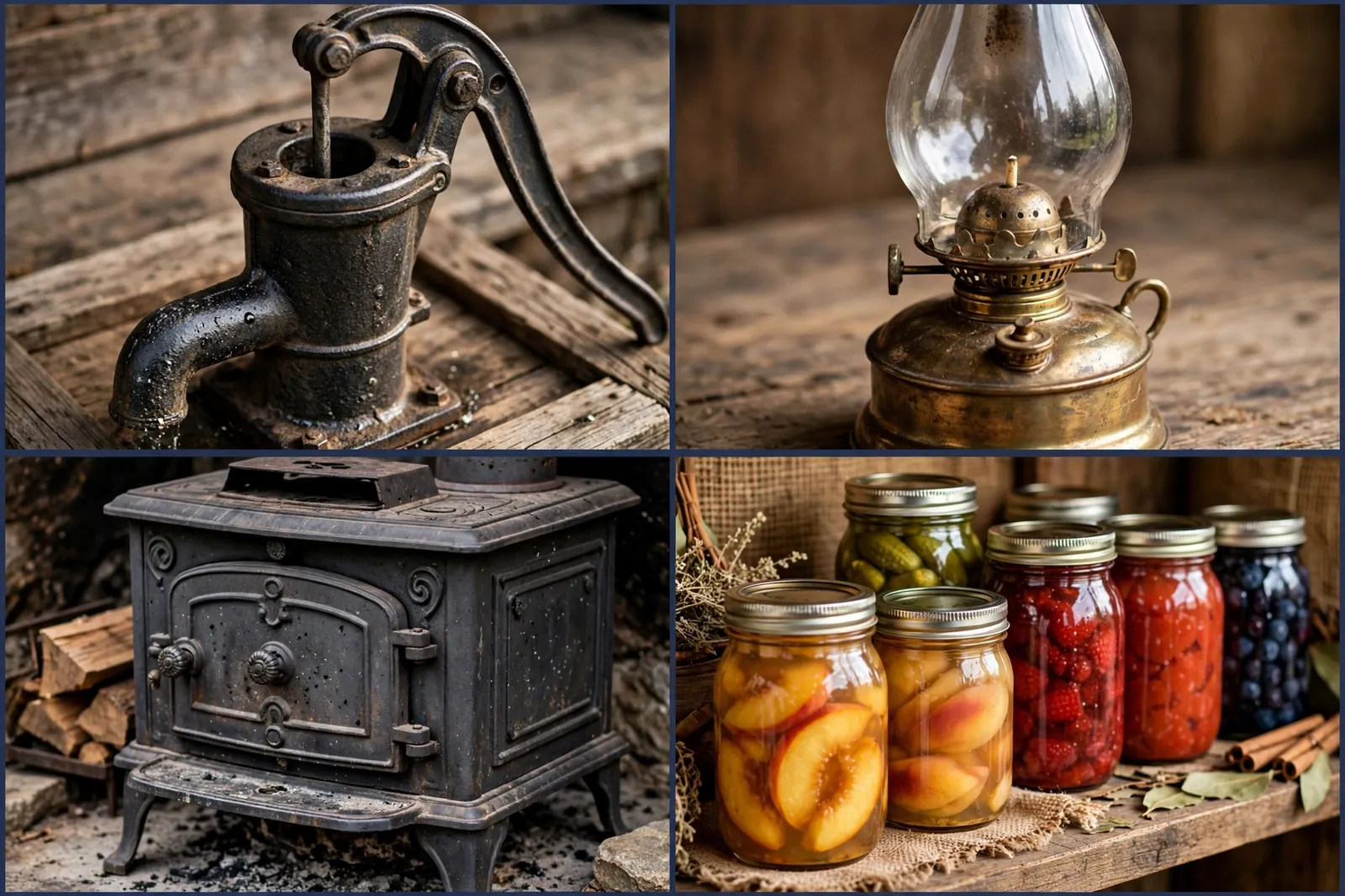
This kitchen proves you can cook well with no electricity at all. A wood stove does the cooking and heating. A hand pump brings water to the sink. Oil lamps light the evening meal.
Food storage relies on old skills. Canning, drying, root cellaring, and salting keep food safe without a fridge. A cool pantry and a root cellar act as a natural cold store through winter.
The pace is slower, and that is part of the charm. Bread rises while soup simmers. Chores happen in rhythm with the fire. Many families find this kitchen calmer than a gadget filled one.
You do not need to go fully no electric to borrow ideas here. A hand pump backup is useful in any off grid home.
Learn one preserving skill at a time. Canning tomatoes is a great first project.
Match the Fuel to Your Climate
The cheapest fuel is usually the one your land already gives you: sun, wood, or rain. Build around that first.
8. Earthship Kitchen

An Earthship kitchen is built from the earth itself. Thick plaster walls hold heat in winter and cool air in summer. Bottle walls add colour and light. Plants grow right beside the sink.
Water gets used twice here. Grey water from the sink feeds an indoor planter. That planter grows herbs and greens steps from the stove. It is a neat loop that cuts waste and adds fresh flavour.
Solar ovens and wood heat often share the cooking load. A simple counter, a sink, and open storage keep the space calm. The glass wall pours in daylight, so the kitchen rarely needs lamps by day.
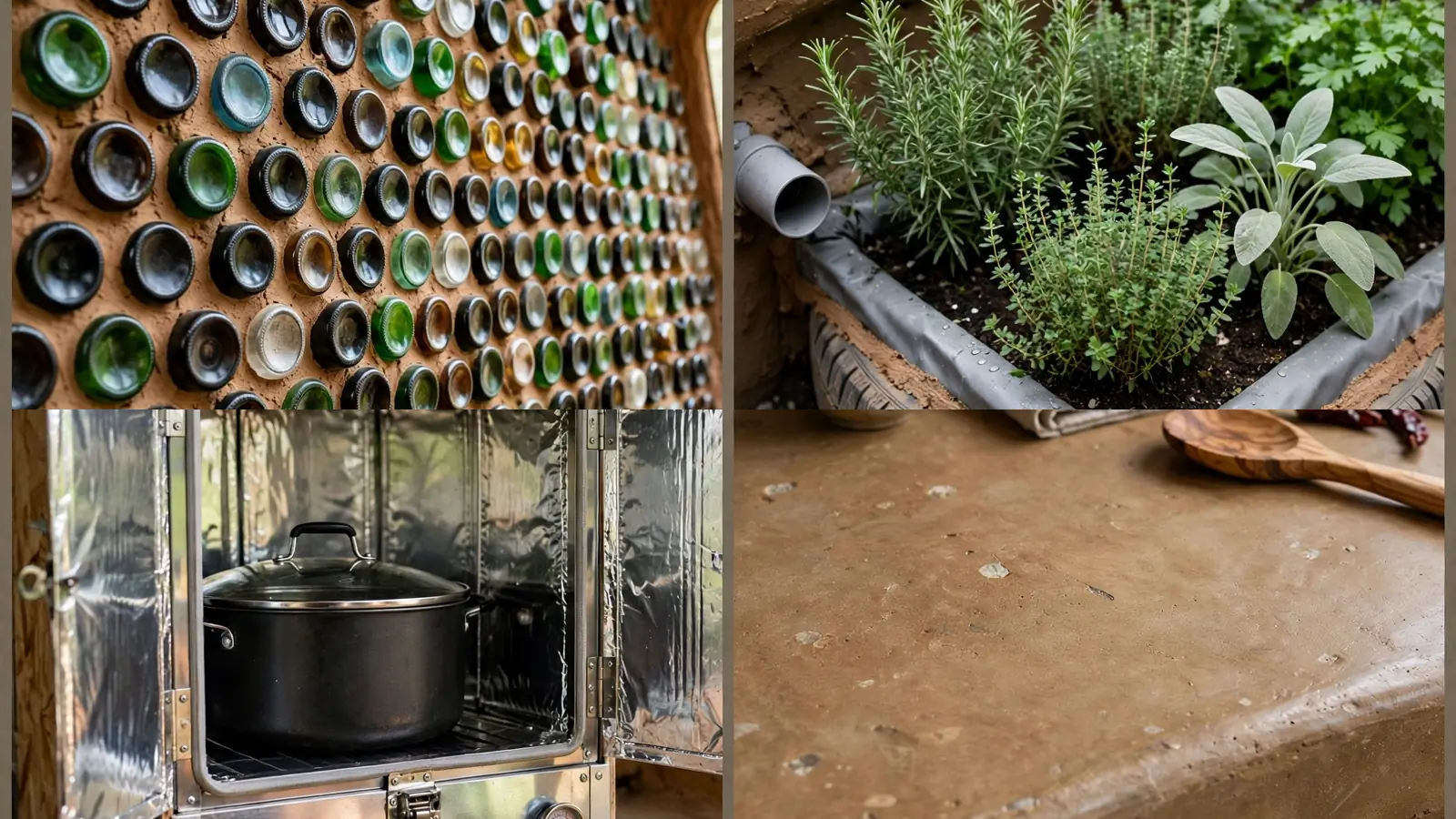
Earthship building suits hands on owners. The materials are simple, but the detailing takes care and patience.
Start with herbs in the planter. Basil, mint, and parsley forgive beginners and reward cooks daily.
9. Van Life Camper Kitchen

A van galley is a masterclass in small design. Two burners, a small sink, and a slide out counter cover most meals. Overhead cabinets hold food without rattling loose on rough roads.
Power comes from a leisure battery charged by solar or driving. That budget shapes cooking. Kettle meals, sandwiches, and one pot dinners win. A small fridge keeps perishables safe for a few days.
Water lives in tanks under the floor or bench. A foot pump saves power and gives fine control. Every tool needs a fixed home, or it will slide at the first sharp turn. A small spice rack on the door keeps flavour close without taking a drawer.

Prep food before you drive. Chopped veg in sealed boxes turns a roadside stop into a fast dinner.
Keep a lidded bin for scraps. A tidy van kitchen is a happy van kitchen.
10. Yurt Kitchen

A yurt kitchen feels round, warm, and open. The wood stove sits near the centre and heats the whole space. Counters curve along the canvas wall. A skylight at the top brings in daylight and steam out.
Storage must be light and flexible. Open shelves, hanging baskets, and rolling carts work better than heavy fitted units. You can rearrange the kitchen as seasons and needs change.
Water often comes from jugs or a gravity tank. A simple sink with a drain bucket works well. Keep cooking tools near the stove so winter cooking stays quick and warm. A folding stool tucked by the door gives extra seating without cluttering the floor.

Insulate the yurt well if you plan winter stays. A warm kitchen starts with a warm shell.
Dry canvas fully after rain. A dry yurt smells fresh and lasts far longer.
11. Log Cabin Cast-Iron Kitchen

Log walls and cast iron belong together. This kitchen is built for hearty cooking. A cast iron range holds heat for hours. A farmhouse sink handles stock pots and baking trays with ease.
Thick wood counters give you room to roll pastry, chop veg, and rest hot pans. Open shelving shows off iron pans and pottery. The room smells of wood smoke and fresh bread on baking days.
Cast iron needs simple care. Dry it after washing, oil it lightly, and it will outlast most modern pans. Keep a trivet handy for hot pots on wood counters. A kettle on the range means hot water is always ready for tea or washing up.

Season new cast iron slowly. A few rounds of cooking with oil build a non stick surface naturally.
Store lids separately so pans dry fully and never rust in a stack.
12. Greenhouse-Attached Kitchen

Step from the stove into the greenhouse and dinner gets fresher. Herbs, salad leaves, and tomatoes grow steps away. You snip what you need and cook it minutes later.
The glass wall floods the kitchen with light and warmth. That helps in spring and autumn, but summer needs shade and vents. Open windows and a roof vent keep the space comfortable.
A sink near the greenhouse door makes washing harvest easy. A counter for potting and prep keeps soil out of the cooking zone. Keep tools for garden and kitchen in separate spots. A basket by the door holds the day’s picking until it is washed and cooked.

Grow what you cook with most. Herbs and salad give fast rewards for little space.
Wash hands and harvest baskets well. Garden soil and food prep do not mix.
13. Coastal Island Off-Grid Kitchen

Island life means salt air, bright light, and limited deliveries. This kitchen is built to be simple and tough. A gas stove cooks without a big power draw. A solar fridge keeps food cold on sunny days.
Open shelves dry fast in sea air. Stainless and sealed wood resist rust and damp better than raw steel. A long counter gives room for fish prep, bread, and big family meals.
Water often comes from rain tanks or a desalination unit. Store it well and filter it before cooking. A sea view window makes even washing up feel like a treat. A sturdy drying rack near the window dries dishes fast in the sea breeze.

Rinse salt spray off fittings often. A quick wipe stops rust before it starts.
Stock pantry staples in bulk. Boat deliveries can be delayed by weather for days.
14. Desert Adobe Kitchen

Adobe walls keep this kitchen cool by day and warm at night. Thick clay holds steady temperatures without power. A clay oven bakes bread with stored heat and very little fuel.
Terracotta counters and clay pots suit the dry climate. They breathe, they look beautiful, and they handle heat well. Wooden storage keeps dry goods safe from dust and pests.
Water is the main challenge in the desert. Large tanks, careful filtering, and low water cooking methods help. One pot meals and steaming use less water than boiling big pots. A covered water jar on the counter keeps drinking water cool through the afternoon.

Shade the kitchen in summer. A covered porch or shade cloth cuts heat more than any gadget.
Seal dry goods in jars. Desert pests find open bags fast.
15. Mountain A-Frame Kitchen
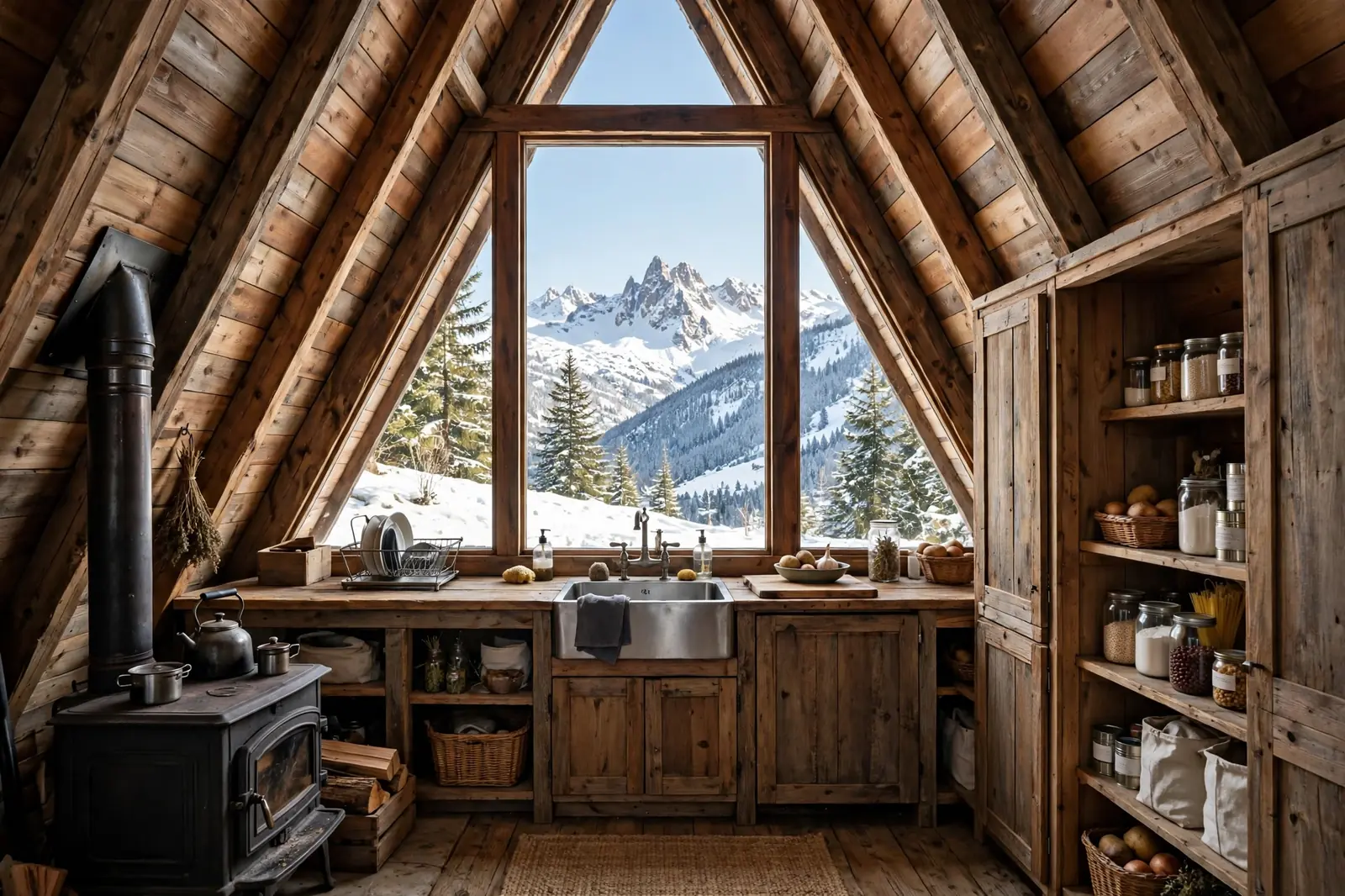
An A-frame kitchen is all about height and light. Tall windows frame the mountains and pour in sun. A wood stove anchors the room and heats the steep space.
The layout is simple. A long counter runs along one wall. The sink sits under a window with a view. Pantry shelves use the taller wall so storage stays easy to reach.
Snow and cold shape the details. Keep water pipes inside warm walls. Store extra fuel under cover near the door. A boot tray by the entrance keeps meltwater off the floor. A drying rack near the stove dries gloves and hats overnight.

Clear snow from vents and chimneys after storms. A clear flue is a safe flue.
Cook warming meals in winter. Soups and stews suit a wood stove perfectly.
16. Farmhouse Root-Cellar Kitchen
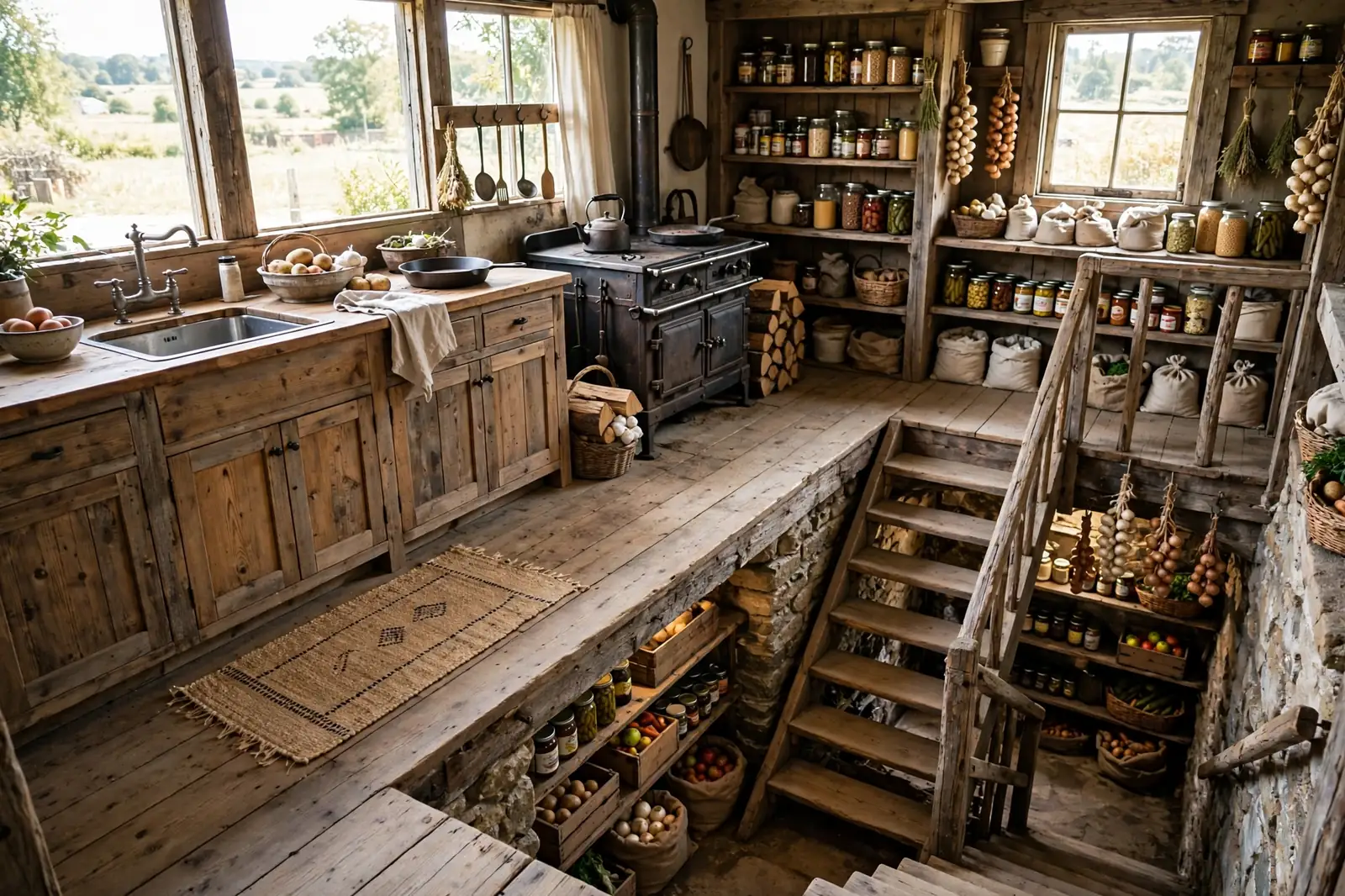
This farmhouse kitchen pairs a warm cook space with a cool store below. A wood range handles daily cooking. A root cellar under the floor keeps potatoes, carrots, apples, and jars cool for months.
The pantry bridges the two worlds. Daily jars live upstairs. Bulk harvest lives downstairs. A simple stair or trapdoor connects them, so fetching supper is a short trip, not a chore.
Large counters suit preserving days. You need room for washing, chopping, and filling jars. A deep sink and a drying rack keep the workflow moving when the harvest comes in fast. A notebook on the counter tracks each batch, so next year starts from notes, not memory.
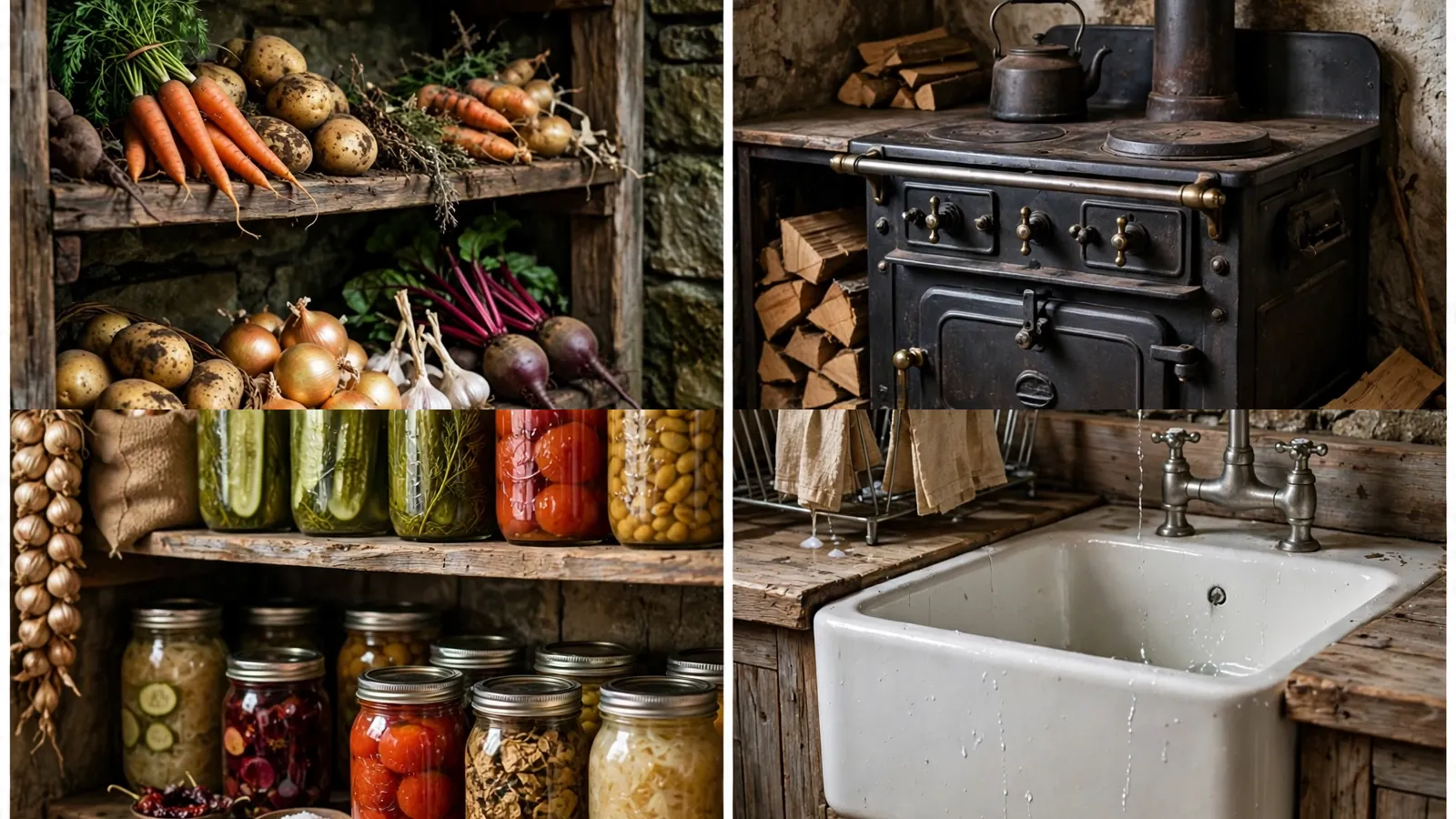
Check cellar stores weekly. Remove any soft veg before it spoils the rest.
Label jars with contents and date. A clear pantry saves guesswork in winter.
Your First Off Grid Kitchen Checklist
Work through this list in order. A kitchen that passes all four steps is ready for real off grid life.
17. Houseboat Galley Kitchen
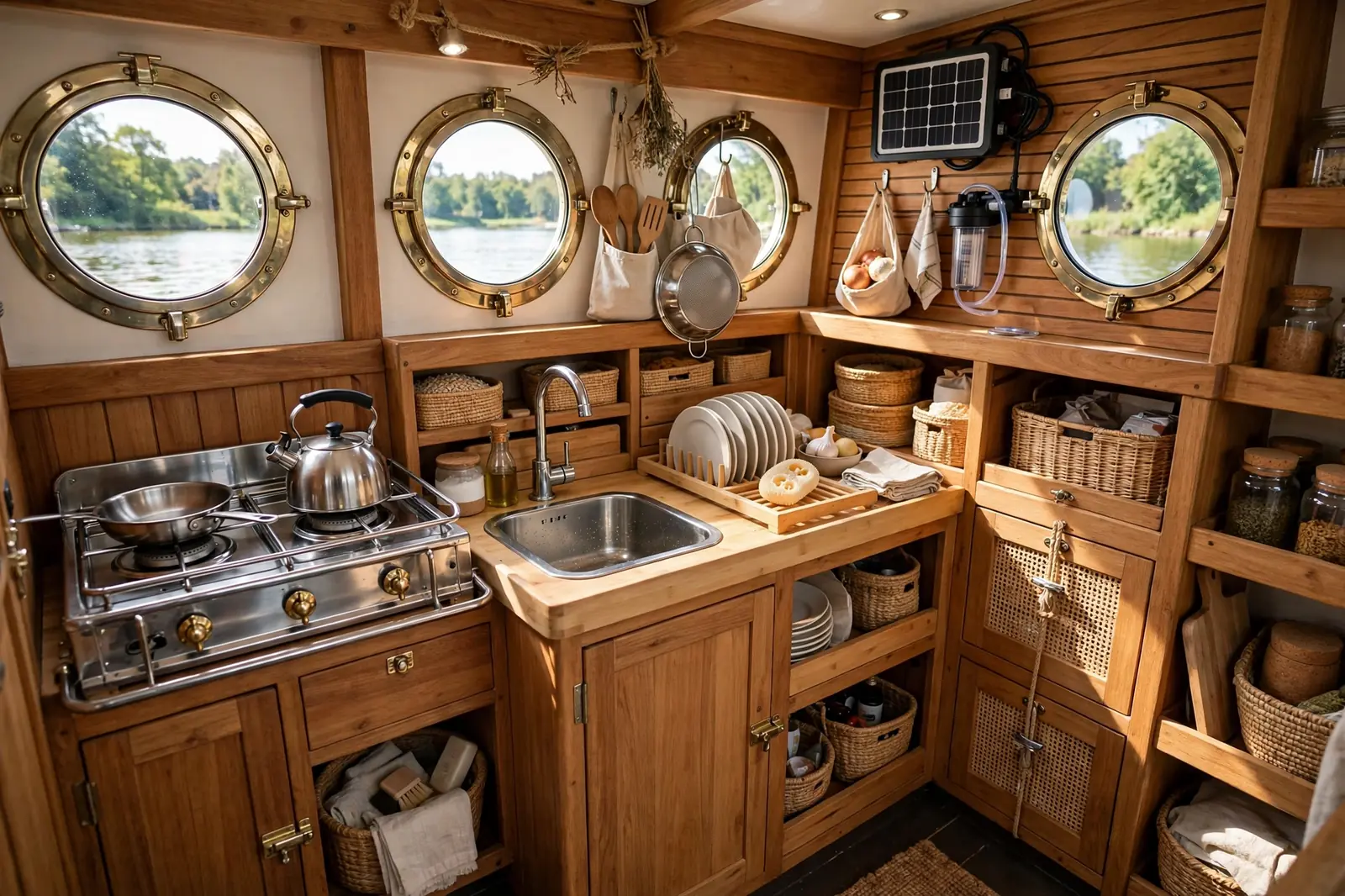
A houseboat galley turns a narrow space into a working kitchen. A marine stove is made for movement and small spaces. A compact sink, a slim counter, and clever lockers hold everything in place.
Power often comes from solar panels on the roof plus a boat battery. Water comes from onboard tanks. Both need watching. A gauge check each morning prevents surprises at dinner time.
Storage must lock shut. Latches, rails, and non slip mats stop jars sliding when the boat rocks. Porthole windows bring light without taking wall space from cabinets. A galley rail along the counter stops plates sliding when the water gets choppy.
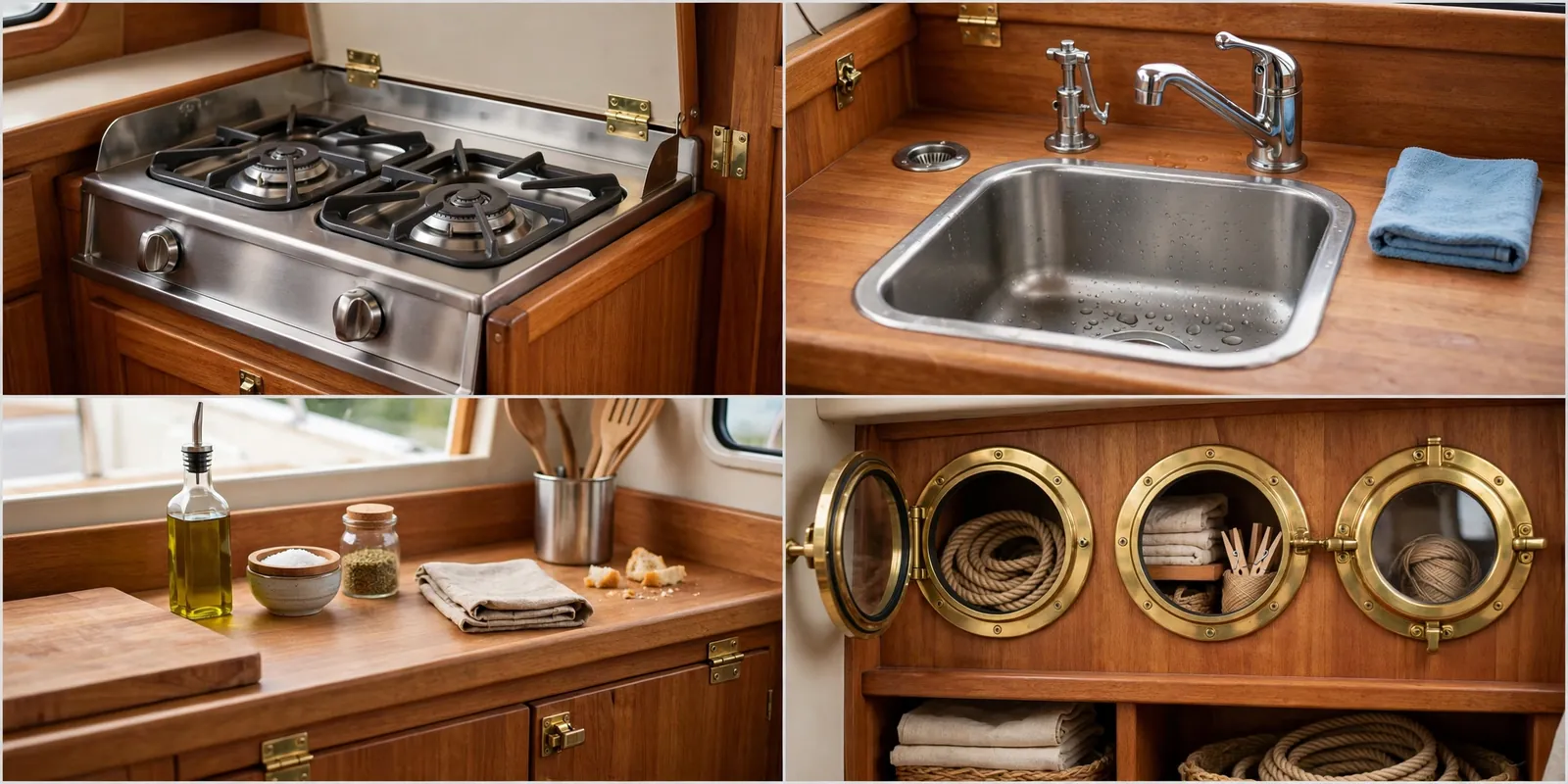
Keep a manual water pump as backup. Boat electrics can fail, but dinner should not.
Store heavy items low. A low centre of gravity keeps the boat steady and the kitchen safe.
Off grid kitchens come in many shapes, but they share one idea. Good design beats big power bills. Choose a fuel you trust, secure your water, and store food with care.
Start with one change. Add a hand pump, a wood stove, or a solar fridge. Learn how it feels to cook with it for a month. Then build out the rest of your dream kitchen, one steady step at a time.