Living in Switzerland | The Truth Behind the World’s “Perfect” Country

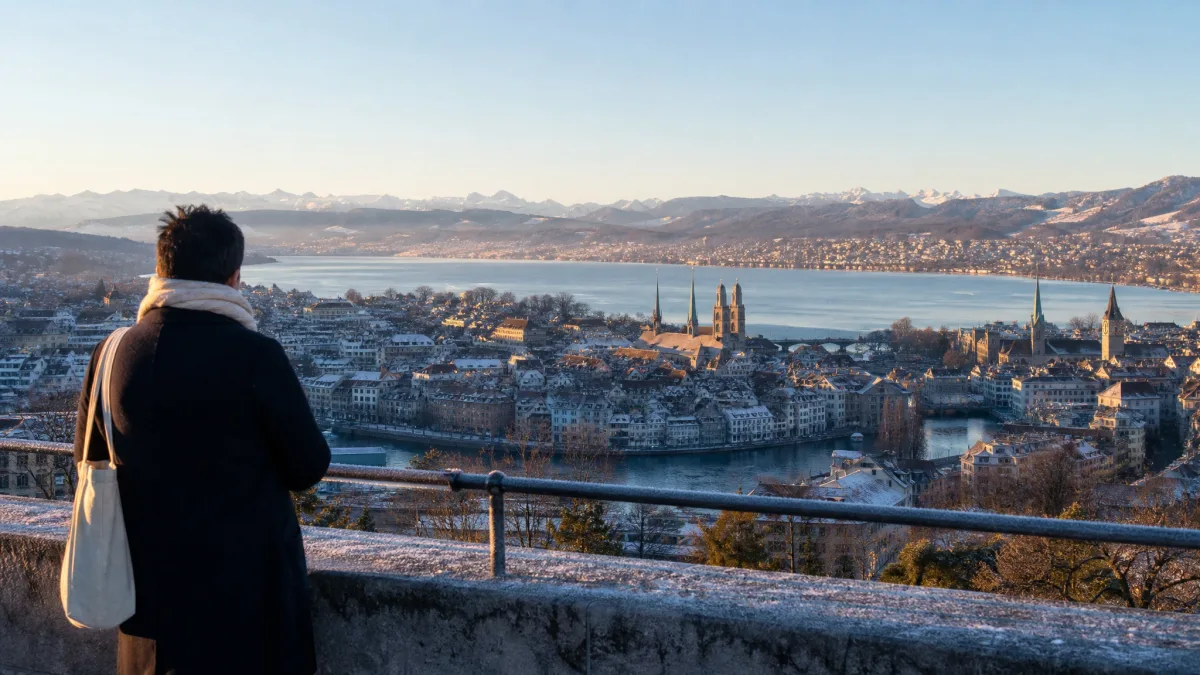
The Migros on Birmensdorferstrasse is shuttered on a Sunday morning, the Coop across the street is equally shuttered, and I am standing on the pavement with an empty fridge and the specific, slow-dawning embarrassment of someone who has lived here long enough to know better.
I moved to Zurich on an employer-sponsored B permit for a two-year software engineering contract, rented a one-bedroom in Wiedikon for CHF 2,400 a month, and spent most weekends on a single transit pass crossing twelve of Switzerland’s twenty-six cantons. I arrived at Zurich Hauptbahnhof with two suitcases and the quiet confidence of someone who had read the World Happiness Report, scrolled through Mercer quality-of-life rankings, and assumed that getting here was the hard part.
It was not the hard part.
The country is not a disappointment. But it is a negotiation – one where Switzerland sets every term, and you decide whether you can afford them in francs, in patience, and in the willingness to remain a foreigner for longer than feels comfortable. What follows is what two years on a B permit in Wiedikon actually cost, what they actually delivered, and what the math and the mood look like from the other side.
By the end you will know whether your temperament and your bank account fit the life Switzerland is actually offering – and exactly what to check before you sign anything.
Rent Alone Will Consume a Third of Your Salary
The arithmetic is unambiguous, and it does not flatter the situation: CHF 110,000 gross minus Zurich’s roughly 22% effective income-tax rate leaves about CHF 85,800 to live on – call it CHF 7,150 a month – and the apartment in Wiedikon costs CHF 2,400 of that before the first trip to Migros.
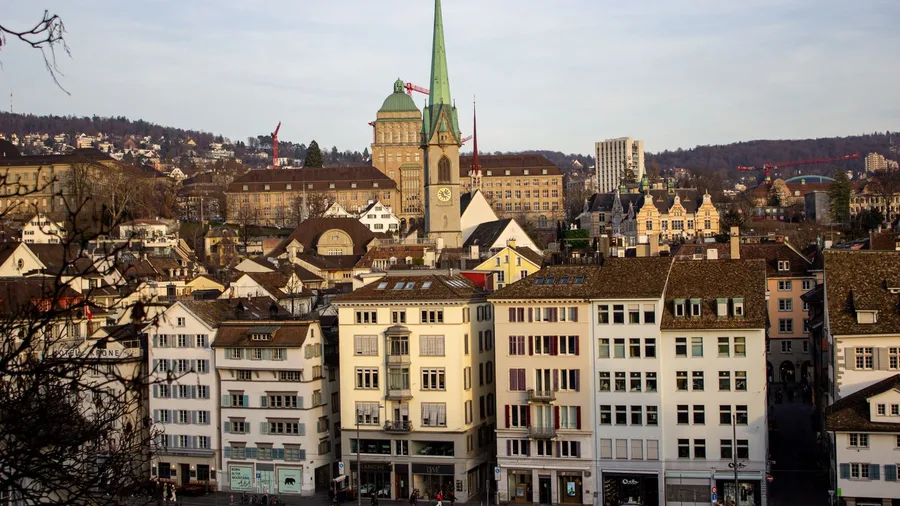
That is 33.5% of net pay gone to a single line item, and Wiedikon is not a fashionable address. It is a residential district of tram lines and bakeries, twenty minutes from the Hauptbahnhof, priced squarely in the middle of the Zurich rental market. The CHF 2,400 figure is not a premium – it is what a standard one-bedroom costs in an ordinary part of the city.
The cooperative housing alternative exists – Genossenschaftswohnungen are genuinely larger and cheaper – but the waiting lists run for years, and a newly arrived non-EU resident with no Swiss rental history is not even on them. That option is real for people who have already decided to stay; it does nothing for the first year.
Commuting outward helps on paper. A comparable apartment in Winterthur or Baden runs CHF 1,600-1,800 a month, a saving of several hundred francs. But the annual GA transit pass costs CHF 3,860, and a thirty-minute commute each way every working day is a real exchange of time for money that not everyone prices the same way.
Housing is the variable that determines whether every other number in this calculation works. There is no clever first-year workaround – the market is what it is, and the salary needs to be high enough that CHF 2,400 does not feel like the whole paycheck.
⚠️ COMMON MISTAKE
Do Not Conflate Gross and Net When Planning Your Move
The 22% effective tax rate in Zurich is before AHV, IV, and ALV social-security deductions, which reduce take-home further. Run the full net calculation — tax plus contributions — before deciding whether the salary offer clears the rent-plus-insurance baseline.
Groceries Cost Roughly Twice the US Equivalent

With rent settled, the next daily pressure lands at the checkout. The first full weekly shop at Migros – the cheaper of Zurich’s two main supermarket chains – ran to CHF 148 for one person. Nothing extravagant: milk, bread, chicken, a bottle of wine, the usual week’s worth.
The individual prices are each plausible in isolation. A litre of whole milk is around CHF 1.60. A standard loaf of bread runs CHF 2.50-3.50. A 500g pack of chicken breast costs CHF 8-10. A drinkable bottle of wine sits at CHF 10-14. Add them together across a week and the total is roughly double what the same items would cost in a mid-size American city – not Manhattan, but somewhere like Columbus or Denver – where the same basket lands closer to $70-80.
The psychological shift is harder to prepare for than the financial one. By week three the numbers stop looking like a data point and start feeling like a tax on eating normally.
Long-term Zurich residents deal with this through cross-border runs to Konstanz or the German side of Basel – a habit common enough that the car parks near those border crossings fill with Swiss-registered vehicles on Saturday mornings. Meat, dairy, and wine are where the German side saves the most: 30-40% off the Swiss price is a real figure, not an optimistic estimate.
Lidl and Aldi both operate Swiss stores and take a slice off the total, but the Swiss branches carry a noticeably narrower range than their German counterparts. The savings are genuine but partial – useful, not transformative.
Swiss Cost Pressures — From Manageable to Wallet-Defining
Based on a CHF 110,000 Zurich salary, net ~CHF 7,150/month
- Income Tax (22% effective): Lower than most of Western Europe — the one number that works in your favour.
- Mandatory Health Insurance (CHF 450/mo): Fixed cost from day one, fully self-paid — equivalent to a second utility bill.
- Groceries (CHF 130–160/week): Roughly double US equivalent; cross-border runs to Germany reduce this meaningfully.
- Rent — Wiedikon 1BR (CHF 2,400/mo): 33.5% of net salary before any other expense. The dominant financial variable.
Health Insurance Is Mandatory and Paid Entirely by You
Unlike groceries, health insurance does not announce itself at the checkout. It arrives as a fixed monthly debit – CHF 450 – and it is entirely yours, because Swiss employers carry no legal obligation to contribute a single franc toward it.
Every resident must buy basic cover, called Krankenkasse, from a government-approved insurer. The CHF 300 annual Franchise – the deductible – means the insurer pays nothing for routine care until you have spent that amount yourself in a given calendar year. A GP visit in January, a prescription in February: both come out of your pocket first. The insurer steps in after the threshold is crossed.
The premiums are not fixed across the board. They vary by insurer and by the canton where you are registered, sometimes by CHF 50-100 a month for equivalent basic cover. The government runs a comparison tool called Priminfo specifically for this – spending thirty minutes there before you register can recover real money every month for the duration of your stay.
Past the deductible, the system works well. Specialists are genuinely accessible without the multi-month waits that are routine in the UK or Canada, and there is none of the claim-fighting dynamic that Americans learn to expect from US insurers.
That last point does not make the CHF 450 feel smaller, at least not immediately. Americans who have never seen the premium on their payslip – because an employer absorbed it – register the Swiss cost as a loss even when the care on the other side is better. The feeling fades. The line item stays.
Swiss Monthly Cost Snapshot — Zurich, 1-Bedroom
🏠 Rent (Wiedikon 1BR)
CHF 2,400/mo
🏥 Health Insurance
CHF 450/mo
🛒 Weekly Groceries (Migros)
CHF 130–160
🚆 Annual GA Transit Pass
CHF 3,860/yr
🍽️ Dinner for Two (mid-range)
CHF 90–110
Net Monthly Take-Home
On CHF 110,000 gross at ~22% effective tax, net lands at approximately CHF 7,150/month — before any of the above.
Income Tax Is Lower Than Most Europeans Pay
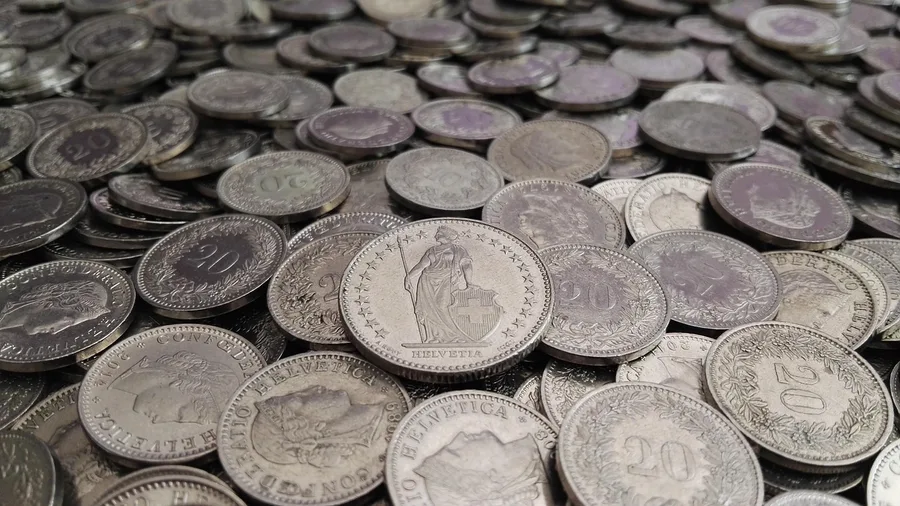
After housing, groceries, and insurance have each taken their share, income tax is the one line item that actually lands lower than you expected – and lower than almost anywhere in Western Europe.
On CHF 110,000 gross in Zurich, the effective combined federal and cantonal rate comes to roughly 22%. For an American conditioned to assume that expensive countries run expensive governments, that number is a genuine surprise. Germany would take closer to 35% on the same figure. France would take more.
The cantonal piece matters more than most arriving professionals realise. Zug’s effective rate on that same salary sits several percentage points below Zurich’s – which is precisely why multinational holding companies are incorporated there in numbers that seem disproportionate to the canton’s size. Where you register is a financial decision, not merely a question of which views you prefer from your kitchen window.
One thing that trips people up early: AHV, IV, and ALV contributions – old-age insurance, disability, and unemployment – are deducted from your gross before the net figure on your payslip appears. They are not income tax. Conflating them in a back-of-envelope calculation inflates the apparent burden and produces the wrong conclusion. Separate them and the picture is clearer.
The result: take-home pay on a CHF 110,000 package is competitive in nominal terms with a comparable salary at a US tech hub. The cost-of-living offsets hit hard in year one, before cross-border grocery habits form and Krankenkasse comparison shopping cuts the insurance bill. But the tax rate itself is not the problem. It is the one number in the whole Swiss cost equation that is working for you.
The Permit System Is Slow but Predictable for Non-EU Workers

Knowing what the money looks like is preparation; actually earning it legally requires clearing a permit process built for patience rather than speed.
The first constraint is hard: you cannot arrive as a non-EU national, set up in a flat, and then look for work. The job must exist, be confirmed in writing, and be sponsored by the employer before the B permit application starts. The employer carries most of the administrative load – filing with cantonal immigration authorities, providing the contract documentation – but the timeline is theirs and the system’s, not yours.
The B permit arrives valid for one year and is renewed annually. Permanent residency – the C permit – becomes available after ten years of uninterrupted residence under ordinary conditions. That is a long runway, and it is not negotiable.
One deadline that is entirely in your control: registration at the local Kreisbüro within fourteen days of arrival. For Wiedikon, that means the relevant district registration office for Kreis 3. Missing the window does not end the process, but it creates friction that a single calendar reminder prevents completely.
The system is not hostile – it simply has no mechanism for urgency. Every form is a test of whether you read the instructions, and the correct posture is to treat every deadline as fixed and every document request as literal. Two years in, the permit cycle felt less like a bureaucratic obstacle and more like a recurring filing task – time-consuming, occasionally tedious, and entirely legible once you accepted that flexibility was not on offer.
Swiss German Is Not the German You Studied
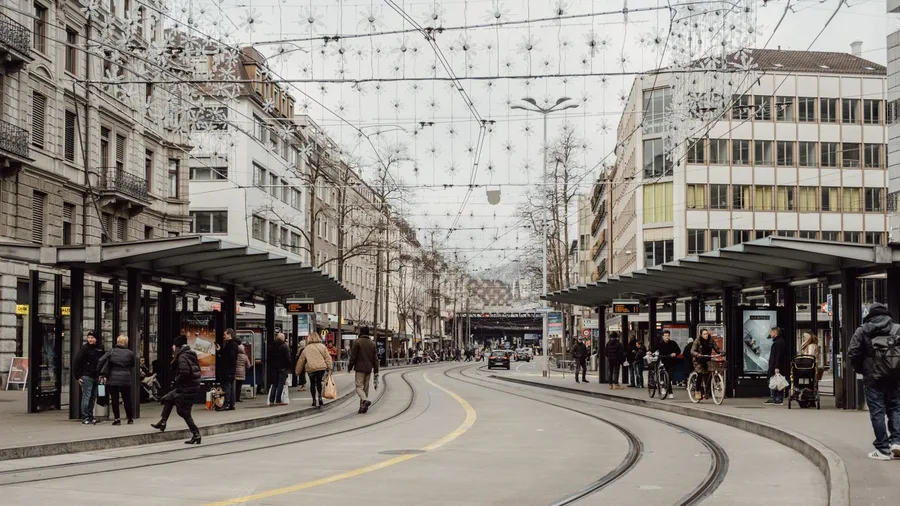
The paperwork settles and then the real daily friction starts – and it comes from a language you did not study.
Züritüütsch, what Zurich residents speak to each other in the street, at the Beiz, in the stairwell, is not an accent sitting on top of High German. It is its own spoken language, with different vowel sounds, different vocabulary, and a rhythm that makes German-classroom Hochdeutsch feel like a tool that was built for somewhere else. The first time a neighbour in Wiedikon spoke to me in dialect, I caught maybe one word in five and had to ask them to switch.
High German works fine in pharmacies, doctor’s offices, and official counters. But use it in a casual conversation and something small shifts – locals move into it with you, patient and accommodating, and that accommodation is also a wall. English in the tech office is an even weaker signal: it functions there so smoothly that you can go months without noticing how little of the actual city you are reaching.
Take the GA pass to Appenzell for a weekend and the buffer evaporates. Outside the urban centres, English earns blank looks rather than polite pivots, and the most rewarding cantons to travel through on that pass are exactly the ones where gesturing and smiling gets you about as far as the train station.
The realistic target is not fluency. It is enough High German to parse a letter from the Krankenkasse without running it through a translator, and enough Züritüütsch greetings that neighbours register you are trying. That gap – between accommodation and recognition – closes faster on effort than on correctness.
Two Ways to Arrive in Switzerland
Arrive Prepared
- Employer-sponsored B permit secured before departure
- Priminfo comparison run to find cheapest equivalent Krankenkasse
- Kreisbüro registration calendared for within 14 days of arrival
- Basic High German at reading level before landing
- First 6 months budget includes full rent + insurance + groceries shortfall
Arrive Guessing
- Planning to job-hunt on a tourist visa after arrival
- Signing the first Krankenkasse offer without comparing providers
- Missing the 14-day registration window at Kreisbüro
- Assuming Hochdeutsch covers daily Swiss conversations
- Underbudgeting the first year before salary-vs-cost settles
Locals Are Polite but Not Immediately Open
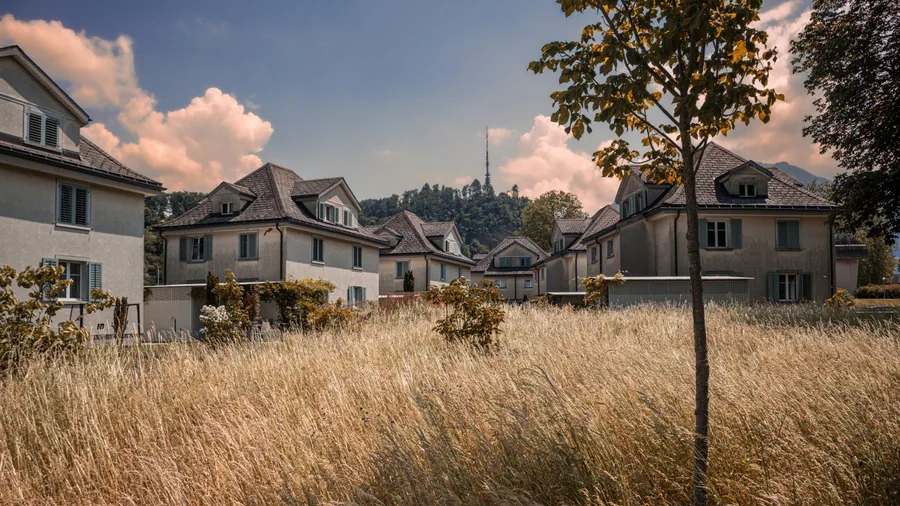
The social world in Switzerland operates by rules that no one writes down, and the first thing to understand is that Swiss reserve is not unfriendliness wearing a polite mask – it is a genuinely different idea of what knowing someone means.
My neighbour in the Wiedikon building helped me carry a wardrobe up two flights of stairs within a week of my arrival, left a handwritten note when my laptop fan was audible through the wall after 10 pm, and remembered my name reliably for the full two years I lived there. He never once suggested we get coffee. That is not a failed relationship – it is a complete one by local standards.
The distinction that matters here is between friendliness and openness. Friendliness in Zurich is consistent and real. Openness – the kind where someone invites you into their actual life – runs on a much longer clock and does not accelerate because you are warm, funny, or persistent. Pushing for closeness faster than the relationship has earned it is read as slightly off, not charming.
Most expats who stay long enough stop missing the performative warmth and start appreciating its absence. There is no social obligation to perform enthusiasm, and after a year of quiet nods in the stairwell, that nod carries more weight than it looks like it does.
The fastest route to real connection is the multinational office. Colleagues who have worked across multiple countries arrive with a looser social register – they have been internationally socialised and the professional context gives a relationship somewhere to go. That is where the first genuine friendships started for me, and they started noticeably faster than anything that came from neighbourhood proximity.
Making Swiss Friends Requires Joining Something

Knowing why Swiss reserve exists does not tell you how to get past it – and the answer is structural, not social: you join something.
The Verein is the load-bearing institution of Swiss civic life. Every imaginable activity has one: running clubs, choirs, rifle associations, card-game evenings at a neighbourhood Beiz. These are not casual meetups – they are formal organisations with annual membership fees, scheduled fixtures, and the social expectation that you show up every week, not just when the mood strikes. Locals build their closest friendships through these structures over years, not months, and the consistency of attendance is what earns you a seat at the table.
Zurich’s international community is large, welcoming, and entirely too easy to stay inside. You can fill a calendar with English-language events, meet interesting people, and never once enter the Switzerland that exists outside the expat circuit. It is comfortable the way a waiting room is comfortable – you are there, but you are not really in the building.
The Verein routes that produced actual results for me: a Laufverein on the south side of the city, where showing up to Thursday-evening intervals for an entire season mattered far more than any single conversation; and a Jass evening at a local bar, where the card game gave everyone something to look at besides each other. Being charismatic at one event buys you nothing. Being reliably present for six months buys you a lot.
One more thing that costs nothing and signals more than it should: learn ten phrases of Züritüütsch. Greetings, numbers, a basic pleasantry or two. Locals respond to the attempt in a way they do not respond to fluent High German or confident English – it reads as choosing to enter rather than waiting to be accommodated. My first genuine Swiss friendship, made through the running club, took eleven months to form. It has also been the one that has required the least maintenance.
💡 PRO TIP
One Lunch Beats a Week of Internet Research
Find a local Swiss colleague who has lived in the same city their whole life and buy them lunch in month one. One conversation covers Hausordnung norms, waste separation, Sunday rules, and neighbourhood expectations faster than any expat forum. Ask specifically about the unwritten rules — those are the ones that cost you socially.
Unwritten Rules Will Trip You Up Before Written Ones Do
Integration is not only about joining the right club – it is about not making enemies before you have had a chance to make friends.
Quiet hours in a Zurich apartment building are an enforceable social contract, not a polite suggestion. After 10 pm on weekdays, and for the entirety of Sunday, the building machines are off, the drill stays in the box, and the music goes to headphones. The consequence for forgetting is a note slipped under your door – handwritten, courteous in tone, and in a Swiss building treated with roughly the seriousness of a formal written warning. I received one in month two, for running the communal washing machine at 10:15 on a Tuesday. The note was perfectly civil. The social debt it created was not.
Rubbish is the other one. Zurich operates a colour-coded separation system across paper, cardboard, glass sorted by colour, PET, aluminium, organic waste, and general rubbish – and that last category must go into a specific cantonal bag, the Züri-Sack, sold at supermarkets for around CHF 2 each. Tossing general waste into the wrong bin is not a bureaucratic infraction; it is the kind of thing neighbours notice and remember.
None of this is secret. The building’s Hausordnung document – the house rules handed over at key collection – covers the main points, and reading it on arrival day takes about ten minutes. Most people do not read it on arrival day.
The fastest single orientation resource is a Swiss colleague who grew up here and has never had to think about these norms consciously. One lunch conversation, with the right questions, surfaces more than a week of reading forums. The underlying logic is always the same: the system functions because everyone participates in it, and the friction you create by opting out lands on the people around you, not on the system.
Your First Week in Zurich — What to Do and When
The Infrastructure Lives Up to the Legend
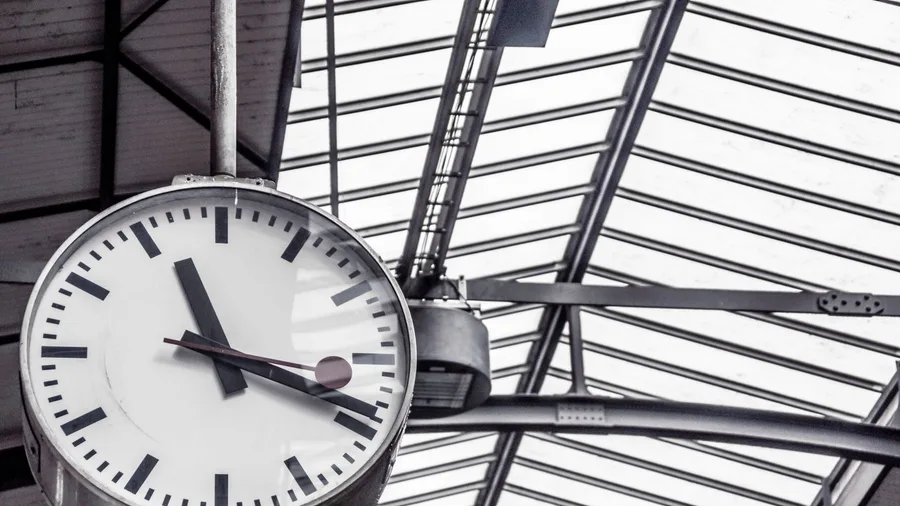
That same discipline – the one that produces recycling protocols enforced by colour-coded bins and noise complaints filed in polite handwriting – is also what puts a train on the platform at 07:14 and not 07:15.
The CHF 3,860 annual GA pass is the physical proof. One card, loaded onto your phone, covers every SBB train between Geneva and St. Gallen, every tram in Zurich, every PostBus winding up into the Graubunden valleys, and most of the lake boats – not a regional zone, not a curated selection, but the entire national network. I used it on forty-odd weekends across twelve cantons, and the departure board was never a source of anxiety. You stop noticing that the trains are on time the way you stop noticing that the lights work.
That normalisation is actually the most revealing thing about Swiss infrastructure. When I flew back through Heathrow in month fourteen and the Tube ran eleven minutes late with no announcement, the irritation felt disproportionate – until I realised the baseline had shifted. You do not appreciate the system until you leave it.
Safety works the same way. Langstrasse at 2 am – Zurich’s closest approximation to a rough neighbourhood, where the city’s bars and a few late-night clubs cluster – is a quiet street with some litter and a handful of people heading home. Walking it alone felt entirely unremarkable, which is exactly the point.
The honest counterpoint is this: the reliability is inseparable from the rigidity. The infrastructure runs on a schedule, and the schedule is the whole system. Nothing opens at 11 pm because someone decided it would be convenient. Late-night grocery runs, last-minute errand flexibility, the kind of spontaneous urban texture that makes a city feel alive at midnight – Switzerland has collectively traded those away, and the transit network is what it got in return. That is not a flaw in the design. It is the design.
Sundays Shut the Country Down, and You Will Adapt
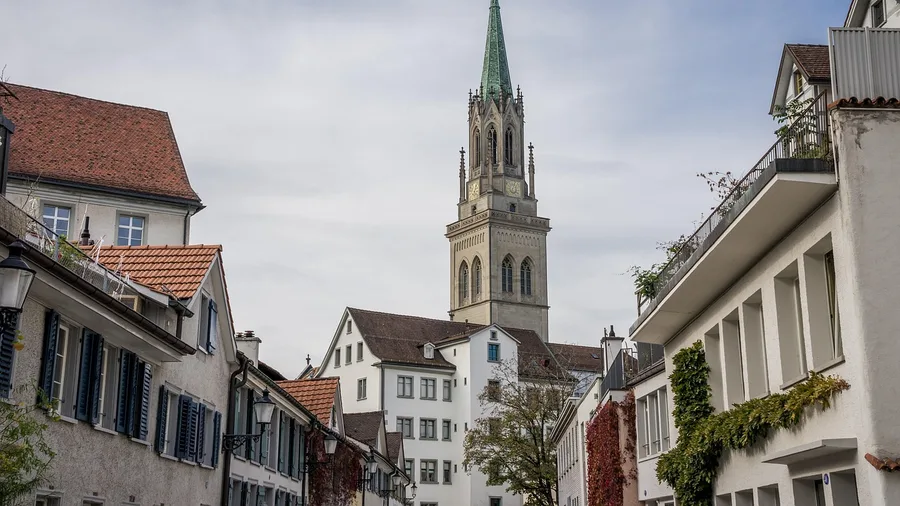
The collective rhythm Switzerland enforces most visibly is not the transit timetable – it is the complete civic shutdown every Sunday, and almost no one is actually prepared for it regardless of what they read beforehand.
Every shop closes. Migros, Coop, the pharmacy, the hardware store – shuttered. The GA pass still works and the trains run on schedule, but the errands simply cannot happen. Switzerland has opted out of seven-day retail as a society, and your personal preferences on the matter were not consulted.
My first real encounter with this was forgetting the Saturday grocery run in Wiedikon. Both supermarkets within walking distance were dark by mid-morning Sunday. The mild crisis – half an empty fridge, no plan – resolved into a walk along the Sihl river that lasted two hours and cost nothing. That is the mechanism: the inconvenience is real, and so is what replaces it.
The practical exceptions are petrol stations and the shops inside major SBB train stations, including Zurich Hauptbahnhof. They stay open and they charge accordingly. The inventory covers genuine emergencies – a forgotten item, a meal in a pinch – but not a week of cooking.
By month six, Saturday afternoon shopping had become automatic. Sunday had stopped feeling like a restriction and started feeling like a protected block that no one could fill with obligation.
Most long-term expats I met described Sunday closure as the thing they missed most after leaving Switzerland. It takes about six months to understand why.
🗓️ The Arc of a Swiss Relocation — Year by Year
Pre-Arrival
Secure the employer-sponsored job offer and begin B permit paperwork before touching down — no permit, no legal start date.
Month 1
Register at the Kreisbüro, sign a Krankenkasse provider (after comparing on Priminfo), and read the building Hausordnung.
Months 2–3
First real bill shock — rent, insurance, groceries, and the GA pass all hit together before salary fully normalises.
Months 4–6
Cross-border grocery runs established, Sunday rhythm adapted, first Verein attendance — costs begin to feel managed rather than alarming.
Year 1 Close
B permit renewed for a second year; first genuine Swiss friendship forming through consistent Verein attendance.
Year 2
Infrastructure and safety reset your baseline for every other city; the move becomes something you evaluate with full information.
Switzerland Rewards Patience More Than Personality
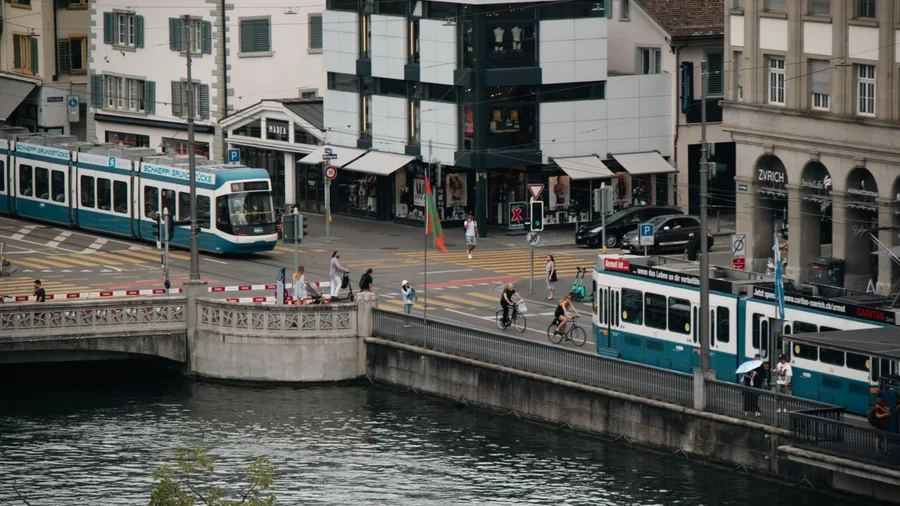
Switzerland works best for the person who can surrender to its tempo – and that is also the most honest summary of who should actually make this move.
The profile of someone who lasts and eventually thrives: financially cushioned enough to absorb six months of bill shock before the optimisations kick in – the cheaper Krankenkasse you find on Priminfo, the cross-border grocery run you start making monthly, the GA economics that only make sense once you are actually using the weekends. Someone who genuinely wants the mountains and the trails, not as compensation for what the city lacks, but as the main event. Someone who finds a slow, deliberate friendship more satisfying than a wide social surface – because that is the only kind Switzerland reliably offers.
The profile of someone who quietly burns out by month ten: someone who needs a city to be available and improvised, who reads a 10 pm noise restriction as a small indignity rather than a shared agreement, who arrived with three months of runway expecting the salary to normalise the costs immediately.
Month eight in Wiedikon was the low point. The permit renewal was pending, my German was still barely functional for anything beyond a supermarket, and the social world felt like a room I was standing outside of. Leaving then would have produced a verdict the full two years do not support.
What the two years actually produced: a transit network that made every other city I visited feel poorly managed. One friendship, formed through a running club, that took eleven months to develop and has not needed tending since. A recalibrated sense of what it feels like to live somewhere that largely functions as advertised.
Switzerland is not the world’s best country in any universal sense. It is a country that made a specific, coherent set of choices – about rest, about rules, about the pace of human connection – and it rewards the person who already wanted those things.
Frequently Asked Questions
Can I live comfortably in Switzerland on a CHF 80,000 salary?
In Zurich, it is tight. After tax and social contributions, net take-home on CHF 80,000 is roughly CHF 5,600–5,800 a month. Rent for a one-bedroom in Wiedikon or comparable neighbourhoods takes around 40% of that, and mandatory health insurance adds another CHF 450. You can make it work with discipline — cross-border grocery runs, no car, a lower-cost canton — but the margin in the first year is thin and the stress is real.
Is it hard to get a work permit in Switzerland as a non-EU citizen?
It is not impossible, but the employer does the heavy lifting. Switzerland operates a quota system for non-EU workers, and your employer must demonstrate that no suitable EU or Swiss candidate was available. The process takes weeks and cannot begin until a firm offer exists. Job-hunting on a tourist visa is not a legal path. If you have a specialised skill in tech, finance, or pharma, the quota is more accessible than the rules make it sound.
Is Swiss German really that different from standard German?
Yes. Züritüütsch is a distinct spoken language with different phonology, vocabulary, and a grammatical structure that diverges meaningfully from High German. You cannot learn your way to fluency in it from a classroom — it is acquired through immersion over years. High German (Hochdeutsch) is universally understood in formal and business contexts across German-speaking Switzerland, and it is the language Swiss schools teach in. For daily expat life, High German plus English covers most situations in Zurich.
What is the best canton to live in for lower taxes?
Zug is the most cited answer, and it is accurate at a structural level — its cantonal tax rate on the same income is several percentage points below Zurich’s, and the savings on a CHF 110,000 salary can be CHF 2,000–4,000 per year. Schwyz and Nidwalden also rank low. The catch is that proximity to Zurich as an employment centre adds a commute, and the social and cultural infrastructure of smaller cantons is different from a major city. Run the full numbers including housing costs in each canton, not just the tax rate in isolation.
How long does it take to get permanent residency in Switzerland as a non-EU citizen?
Ten years of continuous, ordinary residence on a B permit. There is no shortcut for non-EU nationals under the standard path. The C permit (permanent residency) becomes available at that point, and Swiss citizenship requires an additional period of residence after that, with cantonal variation. The path is long but clearly defined — every renewal is predictable, and the system does not manufacture obstacles if you stay compliant with registration and permit renewals.
Is Switzerland worth the cost compared to other European countries?
It depends entirely on your salary. If your employer is paying Swiss-market rates, the 22% effective tax rate and high absolute salary mean take-home is competitive with major European hubs despite the cost of living. If you are being paid a home-country salary while living in Zurich — a common expat arrangement in some sectors — the arithmetic rarely works. The country does not discount its costs for people earning less than the market rate for their role.
The Temperament Test That Matters More Than the Salary
Switzerland suits a specific person: someone financially cushioned enough to absorb a first year where the costs arrive faster than the paycheck feels adequate, someone who reads rules as a framework rather than an imposition, and someone whose idea of a good weekend involves a mountain trail or a train that leaves on the advertised second rather than a bar that is still open at midnight. If that profile fits, the country will quietly deliver more than the rankings promised. If it does not, no salary adjustment makes the daily friction disappear.
Before you commit to the move, do one thing: find an actual person currently renting in the specific canton you are considering and ask for their real monthly CHF figures – rent, insurance, groceries, transit, the line items. Not a cost-of-living index, not an expat forum thread from three years ago, but a current human being’s actual spreadsheet. The gap between Switzerland’s abstract reputation and its concrete arithmetic is precisely where most moves go wrong.
I stood on that pavement on Birmensdorferstrasse with nothing open and nowhere to be, and the honest answer to whether I would do it again is yes – but only because I eventually understood what the terms were. Make sure you understand them before you pack.