The Hidden Cost of “Free” Cancellation Policies


Most travelers click the refundable rate and walk away feeling covered – without noticing that the cost of canceling freely was already added to the room price before they touched anything.
The booking page is showing two rates for the same room, same dates, same bed: $120 and $148. The only visible difference is a green label on the higher one that reads ‘free cancellation.’ That label is not telling you cancellation is without cost. It is telling you the cost has already been collected – nightly, in advance, whether you cancel or not.
The $28 gap is a purchase.
Every element of that booking – the rate difference, the form the refund takes, the fees that survive any policy, the weeks before the money moves – is a financial decision being made at the moment of clicking, usually without the numbers in front of you. This article puts those numbers on the table: what the option costs before anything goes wrong, what ‘refunded’ actually means in practice, and the three situations where paying for flexibility is the right call and the one where a separate insurance policy beats it outright.
Refundable Rates Carry a Built-In Daily Surcharge

That $28 gap between the $120 and $148 room rates is not a fee the hotel has agreed to waive – it is the price you are paying right now, tonight, for the right to cancel later.
The room is identical. The dates are identical. The only thing the higher rate purchases is an option: the ability to walk away without a penalty charge. That option has a cost, and the hotel has already collected it at the point of booking, before any travel plans change or don’t change.
Across five nights, $28 per night compounds to $140 on top of what the room itself costs. A traveler who books the refundable rate and never cancels has spent $140 for a possibility that never materialized. The hotel, meanwhile, has transferred its risk of an empty room onto you in the form of that price differential. You are not a guest who got a flexible deal – you are the insurer, and the hotel is your client.
That reframe changes the question entirely. The booking page frames it as ‘free cancellation versus no cancellation,’ which makes the $148 rate look like it carries an extra feature for a small surcharge. The real question is whether a $140 option is worth buying given how likely you actually are to use it. On a trip with a confirmed date and no plausible reason to cancel, that $140 is a surcharge on a decision you have already made.
⚠️ COMMON MISTAKE
The Label Does Not Disclose the Cost
The headline 'free cancellation' on a search results page never shows the rate premium built into the refundable option. To find the actual cost difference, open both the refundable and non-refundable rate details side by side on the same search — the gap is the option price, not a saving.
The Cancellation Deadline Is Closer Than It Looks

The option that just cost $140 has an expiry time – and it arrives sooner than the booking confirmation makes it feel.
Standard free-cancellation policies close the window 48 to 72 hours before check-in, but the clock runs to midnight at the property’s local time, not wherever you are sitting when you pick up the phone. A Friday check-in at a hotel on the U.S. East Coast means the deadline hits at midnight Wednesday night, Eastern time. If you are three time zones west, Wednesday night at your location is still technically Wednesday – but the hotel’s Wednesday ended three hours ago.
The practical consequence is sharp. A traveler who calls on Thursday afternoon to cancel a Friday arrival is almost certainly already inside the penalty window, regardless of how the booking was labeled. The full nightly charge applies. The rate that cost $28 extra per night, for five nights, has now delivered nothing.
Missing the window by a few hours does not produce a partial charge or a negotiated outcome in most cases – it produces the full penalty on what was marketed as a refundable booking. That turns the refundable rate into something worse than the non-refundable one: you paid the higher nightly price and lost the only thing that justified it.
Before you rely on a free-cancellation policy, find the deadline expressed as a specific local date and time at the property’s location – not a number of hours from now, which is easy to miscalculate across time zones. That number is in the rate details, not the headline label.
How Much Flexibility Costs — Across Booking Types
- Hotel refundable rate premium: $28/night extra — $140 over 5 nights
- OTA platform credit vs. cash refund: Credit locked to one platform, expires in 12 months
- Vacation rental non-refundable service fee: $80–$130 kept on a $900 booking regardless of cancellation
- Flexible airfare premium (standard conditions): 40–100% above the same standard economy fare
- Flexible airfare booked last-minute: Two simultaneous premiums: late booking plus flexible fare
Flexible Fares Spike Hardest When You Need Them Most

Booking a flexible fare close to departure costs more than booking the same flexible fare three months out – and the base fare is already higher by then too, so you are absorbing two separate premiums at once. When you book flights and hotels affects base prices significantly, not just availability.
On a standard economy route, a refundable fare runs 40 to 100 percent above a non-refundable ticket under ordinary conditions. Inside two weeks of departure, dynamic pricing compresses available inventory and drives both fares up. The non-refundable option is more expensive at that point. The flexible option is more expensive. The gap between them, which is what you are actually paying for the flexibility, also tends to widen. There is no discount for needing the option urgently.
This lands hardest on the travelers with the most legitimate need for flexibility: someone whose work schedule is unpredictable, whose family situation can shift without warning, whose plans depend on another person’s health or availability. Those travelers often cannot book months ahead to lock in a lower base fare. They book when the situation becomes clear – which is exactly when the flexibility premium is steepest.
Real insurance gets cheaper when risk is lower and more expensive when risk is higher, but the pricing tracks the risk. Flexible airfare pricing runs the opposite direction: the travelers with the highest genuine probability of needing to cancel are the ones paying the most for the option, at the moment they can least absorb the extra cost. That is worth naming plainly before treating a refundable fare as a straightforward safety net.
Many Refunds Come Back as Credits, Not Cash

Approving the cancellation is not the same as returning your money – and on many bookings, what comes back is not cash at all.
Online travel agencies handle cancellations by issuing platform credit rather than reversing the original charge to your card. The amount sits in your account on their platform, available to spend on a future booking through the same site. That sounds reasonable until you realize the credit typically expires within 12 months and cannot be moved anywhere else. If you booked your flights separately, or you simply have no near-term reason to use that platform again, you are holding something that loses value by the day.
Booking directly with the hotel removes that intermediary entirely. Because the property controls its own payment system, a qualifying cancellation is processed as a straightforward charge reversal to your original payment method – no voucher, no expiry date, no platform lock-in.
The part that catches most people: the booking page never says any of this. The green label on the search results screen reads ‘free cancellation’ and stops there. It says nothing about what form any refund takes. The actual language – whether the return is cash or credit – is one link deeper, inside the ‘rate details’ section of that specific listing. That distinction is not a minor footnote. A $148-per-night room over five nights is $740. The difference between a charge reversal to your card and an expiring voucher you may never spend is the difference between recovering that money and quietly losing it.
Hotel Refund — What to Expect
💳 Credit card refund
5–10 business days
🏢 OTA platform refund
Up to 30 calendar days
🎟️ OTA credit expiry
Typically 12 months
🔒 OTA credit restriction
Same platform only
🏨 Direct hotel booking
Original payment method reversed
Cash-flow gap
If you need to rebook immediately after canceling, the refund will not arrive in time — you may carry both charges simultaneously for up to four weeks.
Your Money Is Frozen for Weeks Even After Approval
Even when the refund comes back as cash, it does not come back quickly.
A standard credit card refund takes 5 to 10 business days after the cancellation is approved – not after you request it, but after the approval clears. OTA platforms can take up to 30 calendar days by their own stated terms, which is over four weeks from the moment you cancel to the moment the money reappears.
That gap creates a specific problem when you cancel because your plans changed and you need to rebook immediately. A replacement trip costing $1,000 or more has to be paid now. The refund is not there yet. You either put both charges on the card at once, pull from savings to bridge the gap, or delay the new booking and risk losing availability or a lower fare while you wait.
This is a real financial cost even when the eventual refund is perfectly full. Carrying two charges simultaneously means carrying credit card debt if the balance is not paid off in the same cycle. That has an interest cost. Delaying the rebook has an opportunity cost. Neither shows up in the headline rate, and neither is canceled out by the eventual return.
The stated timeline is in your booking confirmation – not the search page, not the cancellation screen, but the confirmation email or the ‘booking details’ section of your account. Check it before you assume the money will be back in a few days. On some platforms, it will not be.
Service Fees Survive the Cancellation Policy

Even a full refund of the nightly rate is rarely a full refund of what you paid.
A hotel booking confirmation lists the nightly rate as one line item and resort fees as another. The refundable policy attaches to the rate line. Resort fees – which at mid-range U.S. properties typically run $25 to $40 per night – are treated as a separate charge, and they are not returned when the nightly rate is cancelled.
On a five-night stay at $148 per night, that resort fee adds between $125 and $200 to the total bill. Cancel the booking, receive a full nightly-rate refund, and the resort fee stays with the hotel. The traveler who expected to recover $740 may receive somewhere between $540 and $615 back. The gap is $125 to $200, paid for a stay that never happened.
That number has to be calculated. It is not displayed anywhere on the booking summary or the cancellation confirmation screen. The terms governing which fees are and are not included in the refund are in the ‘rate details’ or ‘taxes and fees’ breakdown – a section most travelers skip during checkout because the headline label already says ‘free cancellation’ and implies the total is covered.
Before confirming any refundable booking, open that breakdown and add up the non-refundable line items. The net recovery figure is the only number that matters if the cancellation ever happens.
💡 PRO TIP
Calculate Net Recovery Before You Book
Open the 'taxes and fees' breakdown on the booking page and subtract any resort fees, platform service fees, or cleaning fees from the total. That net figure is the actual amount that comes back if you cancel — not the headline nightly total.
Vacation Rental Free Cancellation Covers the Least

Vacation rental platforms embed a fee that hotel resort charges don’t come close to matching – and unlike those hotel fees, it survives the cancellation policy completely.
On a $900 vacation rental booking, the platform service fee runs $80-$130. Cancel the stay, and that amount stays with the platform. The nightly rate comes back; the service fee does not. The ‘free cancellation’ label applies to one portion of what you paid, not to the total you handed over at checkout.
Cleaning fees add another layer. Depending on how far out the cancellation falls, the cleaning charge may also be non-refundable – the exact terms vary by listing and platform policy. A traveler expecting to recover $900 could realistically get back $700 to $820, depending on timing and how the fees break down on that specific booking.
Compare that to a hotel booked directly. A refundable rate at a hotel that controls its own reservation system typically reverses the full nightly charge to the original payment method, with no platform standing between you and the refund. There is no service fee taken at booking that the cancellation policy cannot touch.
Before booking any vacation rental, open the price breakdown and find the service fee line. That number is gone the moment you confirm – regardless of when or why you cancel. The headline nightly rate and the actual money at risk are two different figures.
What 'Free Cancellation' Actually Reverses — and What It Doesn't
Hotel Booked Direct
- Full nightly charge reversed — no fee survives the cancellation
- Deadline is property-local midnight, 48–72 hours out
- Dispute path is direct: hotel reservation desk, no platform in between
- Refundable rate premium: around $28/night on a $120 base rate
- No expiry clock on your money — it goes back to your card
OTA Vacation Rental
- $80–$130 service fee locked at checkout — cancellation policy cannot touch it
- Cleaning fee refundability depends on timing and the individual listing — check before booking
- Platform credit refunds expire within 12 months and cannot leave that platform
- Cash refund can take up to 30 calendar days — longer than most hotel direct refunds
- On a $900 booking, realistic recovery is $700–$820, not $900
The Premium Pays Off Only When Cancellation Risk Is Real

The arithmetic is straightforward. Five nights at $28 extra per night costs $140 before anything goes wrong. Losing a $600 non-refundable booking costs $600. The refundable rate wins only when the realistic chance of canceling is high enough that $140 feels like a fair price against $600.
Cancellation risk is genuinely elevated in specific situations: waiting on medical test results, a work trip that hasn’t cleared final approval, or a stay that depends on another person’s health or availability. In those cases the uncertainty is real, the timeline is short, and the $140 is buying protection against a concrete possibility.
It is waste in different situations. Confirmed annual leave on fixed dates. A wedding, race, or event with an immovable start time. A traveler who books trips regularly and can honestly say plans almost never fall through. Paying $140 extra in those scenarios is a surcharge on something that was already certain.
The honest test: is there a specific, plausible reason this trip might not happen? Not a vague sense that anything could go wrong – a real, named reason. If the answer is yes, the premium is doing its job. If the answer is no, it is not insurance; it is just a more expensive rate.
Travel Insurance Often Costs Less Than the Rate Premium

When the trip is long or expensive enough that the nightly surcharge has compounded to $140 or more, a travel insurance policy on the same trip typically costs $80-$160 – and covers far more than a hotel’s cancellation policy ever will.
That $80-$160 figure covers medical evacuation and baggage loss in addition to trip cancellation. The refundable hotel rate covers none of that.
More importantly, insurance covers the scenario the refundable rate explicitly cannot: an illness or emergency that arrives inside the 48-72 hour penalty window. At that point, the free-cancellation option has already expired. The full nightly charge applies, and the rate premium you paid for flexibility buys nothing. A qualifying insurance claim, filed at the same moment, pays out regardless of how close to check-in the emergency occurs. Knowing which policies actually cover emergency cancellations helps you avoid coverage gaps in travel insurance before you need to file.
The trade-off between the two products is real, though. A refundable rate requires no documentation and no qualifying event – change your mind for any reason and the money comes back. Insurance requires a covered reason and supporting paperwork to trigger a payout. They are not the same product priced differently; they protect against different things.
For a short, cheap trip, the refundable rate may be the simpler tool – the premium is small and the process is easy. For a longer or more expensive trip where the cumulative nightly surcharge hits $140 or more, the insurance policy costs the same or less and handles emergencies the hotel policy cannot reach. Which one to buy depends on the trip, not the habit.
✅ Three Checks Before You Click Refundable
Check the deadline in local time
Find the cancellation deadline expressed as a specific date and time at the property's time zone — not a number of hours from your current moment.
Check the refund form and timeline
Confirm whether the refund returns to your original payment method or as platform credit, and note the processing window in business days or calendar days.
Calculate net cash recovery
Open the 'taxes and fees' breakdown and subtract service fees, resort fees, and cleaning fees to find the actual dollar amount that comes back.
Three Things to Check Before Clicking Refundable
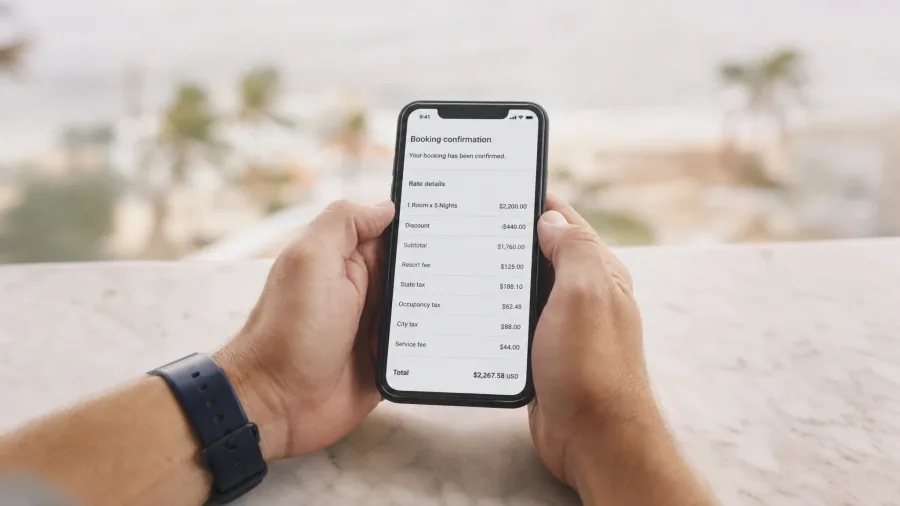
Two minutes before clicking ‘Book’ is all it takes to convert the headline label into an actual number.
The first thing to find is the cancellation deadline expressed as a specific local date and time at the property – not a countdown of hours from your current location. The booking details page will show something like ‘cancel by 11:59 PM Eastern Time on Wednesday, June 4.’ That is the number that matters. A traveler on the West Coast reading ‘cancel by midnight’ may be working with a deadline that already passed two hours ago in the hotel’s time zone.
The second check is the refund form and its timeline. Look in the rate details or the booking confirmation for two things: whether any refund returns to your original payment method or as platform credit, and how many days the platform states for processing. Five to ten business days to a credit card is standard; some OTA platforms state up to 30 calendar days. If it says ‘credit,’ and you have no plans to rebook on that platform within 12 months, the refund is not cash – it is a depreciating voucher.
The third check is the net recovery figure. Open the ‘taxes and fees’ breakdown and identify every line item the cancellation policy does not cover – service fee, resort fee, cleaning fee. Subtract those from the total charge. That remainder is the real refund. On a five-night stay at $148, a $30-per-night resort fee alone cuts the return by $150, which means the ‘full refund’ is $150 short before processing even begins.
Those three numbers – the true deadline, the refund form, and the net recovery – are what the word ‘free’ replaces on the search results screen.
Frequently Asked Questions
Is free cancellation actually free, or is there always a cost?
There is always a cost — it is built into the rate. The refundable room is priced higher than the non-refundable room for the same dates and room type; that difference is the price of the cancellation option. If you never cancel, you have paid for something you did not use.
How late can you cancel a hotel and still get a full refund?
The standard window closes 48–72 hours before check-in, measured to midnight at the property’s local time. If you are in a different time zone, that deadline can arrive earlier than you expect. Check the exact local date and time in your booking confirmation — not a countdown in hours.
Will an OTA give me actual cash back, or just credit?
It depends on the OTA and the booking. Many platforms return a cancellation as platform credit rather than a charge reversal, and that credit typically expires within 12 months and is locked to the same platform. The refund form is disclosed in the rate details — check it before booking, not after canceling.
Are the service fee and resort fee refunded when I cancel a hotel?
Usually not. Platform service fees and resort fees are typically excluded from the refund even when the nightly rate is fully returned. On a five-night stay, that can mean $125–$200 in fees are kept regardless of cancellation. Calculate the net recovery from the ‘taxes and fees’ breakdown before booking.
Is it better to buy travel insurance or pay for a refundable rate?
For a trip over $2,000, travel insurance is usually the better instrument. A policy with trip-cancellation coverage costs $80–$160 and also covers medical emergencies and baggage loss — and it protects inside the penalty window where a refundable rate no longer applies. For a short, low-cost trip, the refundable rate is simpler.
Does free cancellation on Airbnb or Vrbo cover the whole booking?
No. On short-term rental platforms, free cancellation applies only to the nightly rate. The platform service fee — typically $80–$130 on a $900 booking — is kept in full regardless of when you cancel. Cleaning fees may also be non-refundable depending on how far out the cancellation falls.
Firm Date, Uncertain Plans, or Long Trip — Three Situations, One Decision Rule
The decision rule has three positions. Travel date firm, cancellation unlikely: book the $120 rate and keep the $140 – the premium buys nothing on a trip you are not canceling. Plans genuinely uncertain: the refundable rate earns its cost, but only after you have confirmed the exact deadline in the property’s local time, the refund form, and the net recovery once non-refundable fees are removed. Trip long or expensive enough that the nightly surcharge compounds to $140 or more: price a travel insurance policy first. At $80-$160 on a $2,000 trip, it is cheaper than or equal to the cumulative premium, covers scenarios no hotel policy touches, and is the only product that protects you when an emergency lands inside the penalty window.
That booking page is still on screen. The green label is still there. The $28 gap between $120 and $148 is now a price with terms attached – not a promise. Decide whether those specific terms, on this specific trip, are worth paying for.
Run the Three Checks on Your Next Booking
Before you confirm a refundable rate, open the rate details and find the exact local deadline, the refund form, and the net cash recovery after fees. Those three numbers tell you what the option actually costs — and whether it is worth buying.