Living in Singapore | The Truth About the World’s Most Controlled City

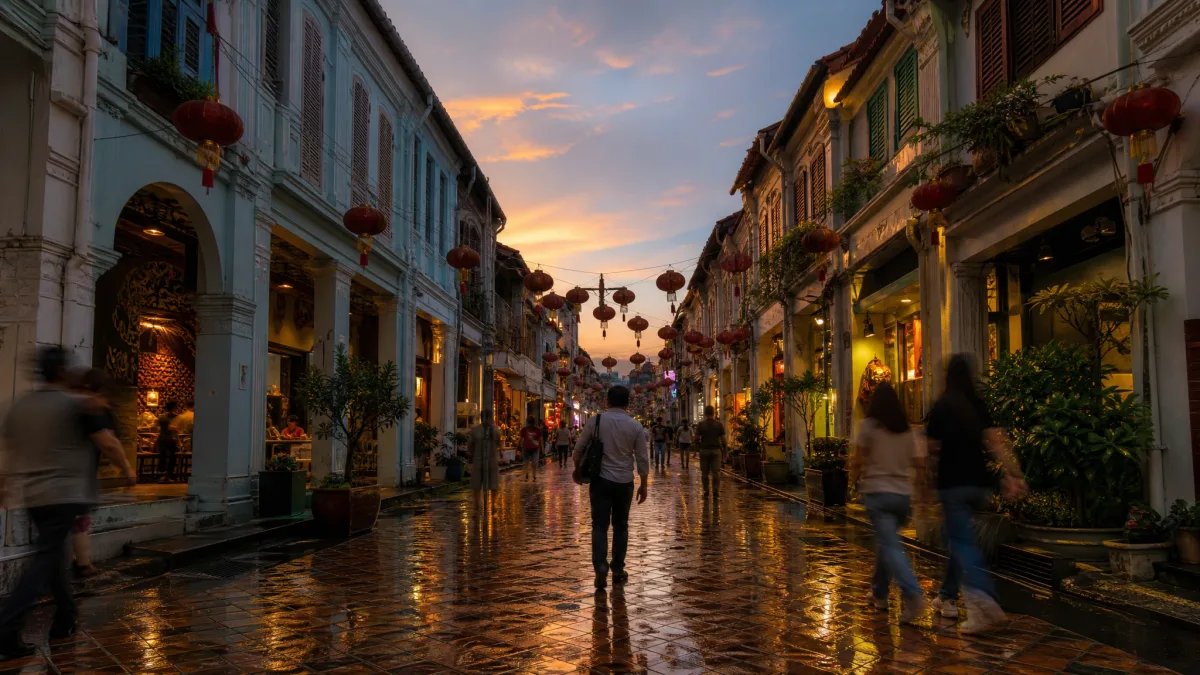
728 square kilometres. That is the entire footprint of Singapore – smaller than the city of Los Angeles – and inside it, a set of rules precise enough to cover chewing gum, the angle of a satellite dish, and the correct way to flush a public toilet.
The fines list is the first thing anyone mentions, and it lands as a portrait of petty surveillance: no gum, no jaywalking, no durian on the MRT. That picture is accurate, consistently enforced, and almost entirely the wrong thing to spend your research time on.
What residents actually find is more specific and more consequential. The rules that touch ordinary behaviour are narrow enough that years can pass without a single enforcement moment. What genuinely reshapes daily life is the SGD 4,000 monthly rent for a one-bedroom condo in the centre, the 30 to 32 degrees Celsius heat at 80 to 90 percent humidity that does not vary by season, and the background awareness that the public sphere is managed in ways that are structural rather than incidental.
This article maps what each of those trade-offs actually costs a resident – financially, physically, civically – and what the city returns in exchange. The controls are real but narrower in daily footprint than their reputation suggests; the harder questions are about rent, heat, and whether a deliberately ordered city matches the specific life you are trying to build before you sign a lease.
| Expense | Budget option (SGD) | Mid-range option (SGD) |
|---|---|---|
| 1-bedroom rental | 2,500 (HDB resale flat) | 4,000 (central condo) |
| Food — all meals | ~300 (hawker centres daily) | ~700 (mix of hawker + restaurant) |
| Transport | ~130 (MRT + bus pass) | ~400 (MRT + regular Grab rides) |
| Car ownership | Not required | COE alone has exceeded 100,000 + car cost |
| Restaurant dinner for two | — | 80–120 per outing |
| Airport-to-city MRT | 2.50 per trip | 2.50 per trip |
Most Rules Target a Narrow Band of Behaviour
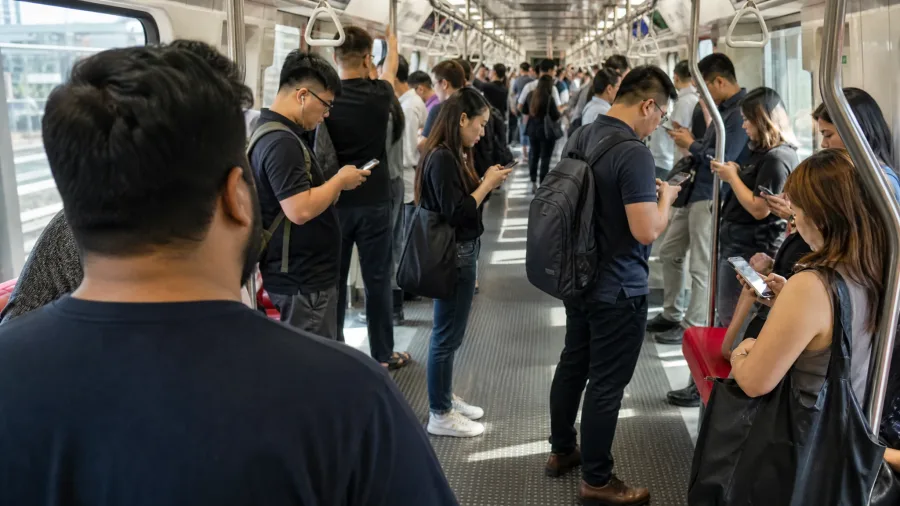
The rules will not consume your mental energy – but you do need to know them once, clearly, before you arrive.
Singapore enforces a specific and well-publicised set of prohibitions: dropping litter, eating or drinking on the train, and crossing a signalised junction against the signal are the acts that generate the fines residents occasionally hear about. The government publishes current fine amounts through its official guidelines, and looking them up before your first week takes about ten minutes. After that, for a resident whose baseline behaviour is already unremarkable in any other orderly city, enforcement ceases to be a daily thought.
The gap between what alarms someone reading the Wikipedia list of Singapore regulations and what those rules actually demand of an ordinary resident is large. Most of the theoretically prohibited acts sit so far outside normal daily behaviour that they never surface. The prohibitions that do apply are consistent and predictable – the same consequence regardless of whether you are a tourist on day two or a citizen of thirty years – and that consistency is exactly what long-term residents point to when they say the system feels fair rather than arbitrary.
What the rules ask for is awareness, not anxiety. Learning what they cover once is genuinely sufficient. Nobody is weighing each decision against a mental rulebook; they just do not litter, they finish their coffee before boarding the train, and they cross where the light says to cross. Years can pass without a single enforcement encounter.
Drug Laws Carry No Exceptions for Foreigners
There is one area where the reassuring predictability of Singapore’s rules does not translate into reassurance – and that is drugs.
Your passport, your corporate relocation package, and the laws of wherever you flew in from carry exactly zero weight here. Singapore’s drug statutes treat a tourist on a two-day layover identically to a citizen. The Central Narcotics Bureau publishes the current penalties on its official website, and reading that page before you travel is not optional caution – it is the minimum due diligence this particular jurisdiction requires. The consequences attached to certain thresholds are severe in a way that is not comparable to most jurisdictions, and they are not negotiated down.
Historical cases have repeatedly demonstrated that claiming ignorance of the law has made no difference to outcomes. This is the single rule in Singapore where common-sense compliance – the approach that works fine for the littering and jaywalking rules – is not enough. It requires a deliberate, informed decision made in advance.
The strange quality of this law is its asymmetry. For the vast majority of residents it is entirely absent from daily life – never triggered, never felt, as invisible as any law can be. That invisibility is precisely what makes treating it as background noise dangerous. No other rule here pairs that level of ordinary irrelevance with consequences of that magnitude. The gap between ‘this will never apply to me’ and ‘this could apply to me catastrophically’ is narrower than it feels.
⚠️ COMMON MISTAKE
Do Not Assume Your Home Country's Rules Travel With You
What is decriminalised or legal in your country of origin is legally irrelevant in Singapore. Research the Singapore CNB website before arrival, not when the question becomes urgent.
Political Speech Has Real and Enforced Limits
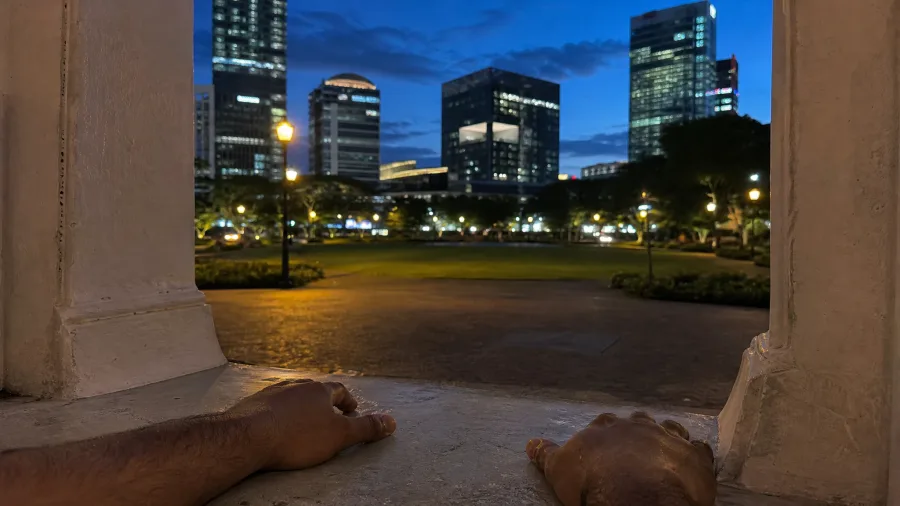
The limits that brush against more expats more regularly than anything involving personal conduct concern what gets said – and specifically what gets said publicly.
The lines are specific and enforced. Any kind of public assembly – including a solo demonstration – requires a permit from the authorities; showing up without one is not a grey area. Online content that stirs racial or religious hostility is prosecutable under laws that are applied, not dormant. And criticism directed at the judiciary crosses a line that has been tested and enforced in documented cases. These are not theoretical prohibitions.
Who actually encounters them depends almost entirely on what you do for a living. A software engineer, a cardiologist, or a logistics manager at a multinational can work in Singapore for a decade without approaching any of these limits. A journalist, a researcher studying governance, or anyone whose work involves public commentary on political institutions will meet them quickly and directly.
For everyone else, the daily texture is something more like a background calibration – an awareness of what should not go into a public post or a speech at a community event – rather than a felt pressure on private thought or private conversation. And a number of long-term residents describe the managed public sphere not as a cost they absorb but as a quality-of-life feature: the same structure that restricts certain speech also removes the grinding political polarisation and civic unpredictability that residents arriving from adversarial democracies often find genuinely draining.
That framing will strike some readers as rationalisation and others as accurate. The point is that this is a structural feature of the city, not a footnote, and it is the kind of thing that belongs in your thinking before you sign a lease rather than after.
How Much Each Rule Actually Compresses Daily Life
For a typical well-intentioned expat resident — low end is barely felt, high end is genuinely life-altering
- Littering, MRT eating, jaywalking fines: Easy to avoid by default; most residents never pay a fine
- Political speech limits: Felt as background self-calibration; rarely triggered in corporate or technical roles
- Drug laws: Irrelevant to most residents daily — catastrophic if triggered; demands deliberate research
Rent in the Centre Rivals New York Prices
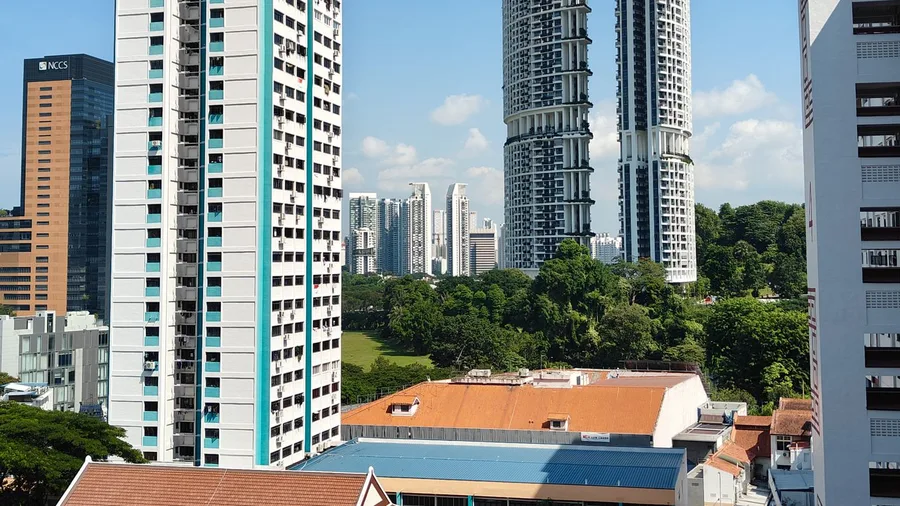
The financial shock that reorients most new arrivals is not a rule or a permit – it is the first rent quote.
A one-bedroom condo in the central districts runs SGD 4,000 a month, which works out to roughly USD 3,000. That number sits at the same level as Manhattan or central London, and it lands at the top of the monthly budget with nothing close to it in second place. Every other spending decision in Singapore – food, transport, travel – gets made once that figure is either covered or quietly weighing on everything.
There is a genuine alternative. HDB flats – built and managed by the Housing Development Board – account for around 80% of Singapore’s residential housing stock. A 3-room resale flat rents for SGD 2,500 a month (approximately USD 1,850), and these are not spartan backup options: they are well-maintained, well-located relative to MRT stations, and entirely ordinary for Singaporeans at every income level. No social stigma attaches to the address.
The divide that actually matters is whether your employment package includes a housing allowance. Corporate expat packages frequently do, and for those residents the rent question is largely administrative. Come in on a locally benchmarked salary without that cushion, and SGD 4,000 does not just affect your housing – it compresses every other choice on the spreadsheet.
Hawker Centres Make Eating Out Cheaper Than Cooking
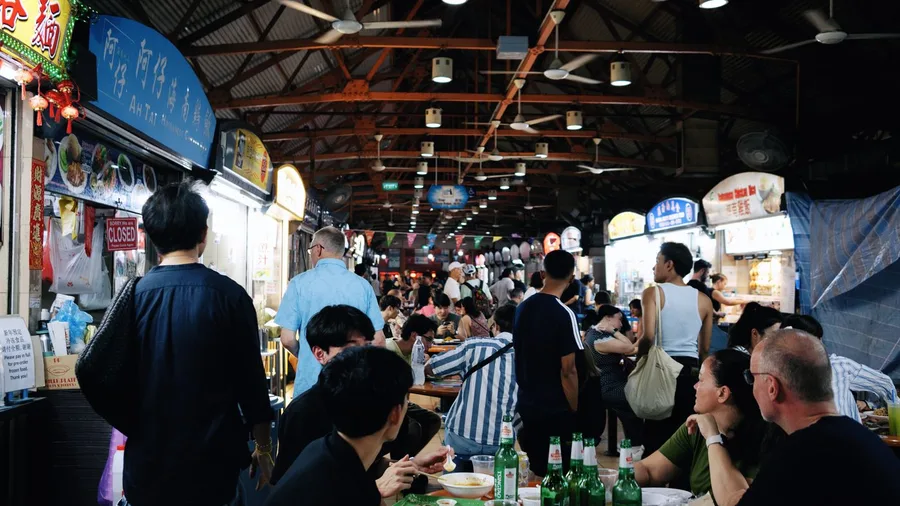
Food is where Singapore’s cost structure runs directly against the rent problem.
Sit down at a hawker centre and a full plate – chicken rice, laksa, char kway teow – costs SGD 4 to 6, which is roughly USD 3 to 4.50. That is not a stripped-back version of the meal; it is what Singaporeans at every income bracket eat, at the same plastic tables, for the same price. Hawker centres are neighbourhood institutions, not budget fallbacks, and the food is the real thing.
The practical household consequence is that many residents never build out a proper kitchen. A kettle and a rice cooker cover most of what a full setup would handle, and skipping the rest is financially rational rather than a compromise. In most major cities, cooking at home is the obvious way to control food costs. In Singapore, the hawker centre undercuts that logic entirely.
The trap sits one step up. Air-conditioned food courts and mall restaurants occupy the middle ground – SGD 15 to 25 a head, air-conditioning included, slightly longer menus. It feels like a small upgrade on a Tuesday evening. Use them daily instead of the hawker centre, and the gap between Singapore’s food costs and any other major city quietly closes. The food cost advantage is real, but it requires choosing the hawker centre rather than drifting into the mall.
Singapore Transport — At a Glance
🚇 MRT stations
130+
🗺️ Island area served
728 sq km
💵 Monthly commuter cost
~SGD 130
✈️ Airport to city centre
SGD 2.50 / 30 min
🚗 Car COE premium (recent rounds)
Exceeded SGD 100,000
The bottom line
Most residents — including many who could easily afford a car — live without one, and the city is designed so this is functionally complete rather than a sacrifice.
Owning a Car Costs More Than the Car Itself
Driving in Singapore is a deliberate policy choice by the government, and the price structure makes that intention impossible to miss.
Before you pay for the car itself, you must win a Certificate of Entitlement – a quota licence issued by the government and purchased at open auction. At recent bidding rounds, that COE alone has exceeded SGD 100,000. The vehicle price is separate. You are paying six figures for the legal right to own a car, before the dealer’s invoice enters the conversation.
Most residents never reach that point. The MRT runs across more than 130 stations on a 728 sq km island, operates from early morning until midnight, and costs around SGD 130 a month for a regular commuter. The airport to the city centre takes roughly 30 minutes and costs SGD 2.50. That last number is worth holding onto – it makes the quality of the network concrete in a way that station counts do not.
The result is what the policy was designed to produce: a majority of residents, including plenty who could write the cheque for a COE, simply choose not to. The city functions completely without one.
The exception worth naming: families with young children, and residents based in outer districts where the MRT spine thins out, face a meaningfully different calculation. For them, the convenience arithmetic shifts enough that the COE cost becomes something to budget for rather than rule out. Where you live and who you live with changes the answer.
Four Numbers That Size Up Singapore Before You Move
The Heat Is a Year-Round Condition, Not a Season

Budget line captures the climate – and unlike rent, you cannot negotiate it down or move to a cheaper neighbourhood to escape it.
The numbers are simple and do not vary: 30 to 32 degrees Celsius, relative humidity sitting between 80 and 90 percent, every single day of the year. There is no cool month to aim for, no October that feels like relief, no week on the calendar that gives your body a reset. That constancy is the thing most people underestimate before arriving.
Every indoor space runs aggressively cold to compensate. You will carry a light jacket for the office and the MRT and pull it off the moment you step through any exit. The shock runs the wrong direction – cold interior to hot exterior – and your body never quite reads it as normal. A minute outside is enough to start sweating, regardless of how long you have lived there.
Most expats find partial adjustment within three to six months. Full acclimatisation – meaning the heat stops registering as a thing – is rarely what happens. What does happen is behavioural: outdoor runs, cycling, any sustained exercise migrates permanently to before 8 a.m. or after 7 p.m. That is not a temporary concession. It is a structural change to daily life.
The honest counterweight: for people arriving from cold, dark northern cities, the absence of winter is not a trivial benefit. No heating bills, no seasonal mood dip, no six months of grey. A genuine number of long-term residents name the warmth as a daily positive rather than a cost – and that is worth taking seriously before you assume the heat will wear you down.
The Heat: Who Adjusts and Who Does Not
More likely to settle in
- Can shift workouts to before 8 a.m. without it disrupting the rest of the day
- Comfortable layering for 19°C offices and stripping back for 32°C streets within the same commute
- Does not need a seasonal anchor — a fixed holiday, a first frost — to mark the year
- Finds the guaranteed sun a mood stabiliser rather than a monotony
- Arrived expecting permanent behavioural adjustment, not a temporary one
More likely to find it grinding
- Needs midday or lunchtime outdoor time to decompress — that window is functionally gone
- Finds the three-to-six month partial adjustment plateau, rather than a stepping stone to full relief
- Tracks the calendar for a cooler stretch that never arrives, which compounds the flatness
- Sensitive to the cold-to-hot shock specifically — not just the heat, but the daily repetition of it
- Moved expecting acclimatisation to feel like progress; discovers it feels more like management
The MRT Removes the Practical Case for a Car
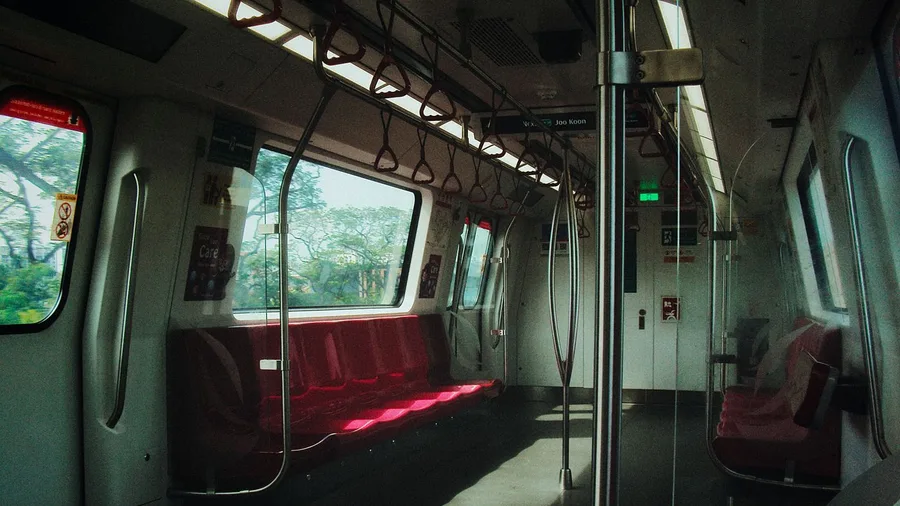
The infrastructure has a specific answer to how much unshaded outdoor time you actually need: almost none.
More than 130 stations cover a 728 sq km island, with trains running from early morning to midnight. For a regular commuter, monthly fares run around SGD 130 – roughly USD 96. Most residential areas sit within a walkable distance of a station, and the system is clean, reliable, and air-conditioned from platform to carriage.
The one real gap is the last stretch between station exit and front door, particularly in outer districts where blocks sit further from the network. Grab fills it without friction – a typical trip of that length costs SGD 5 to 10, and most residents treat it as an extension of the MRT rather than a separate decision.
Singapore is one of the few cities where not owning a car reads as neutral, not as a trade-off. The majority of residents live without one by straightforward choice, not necessity, because the alternative is genuinely complete.
The clearest demonstration of what the network delivers: SGD 2.50 and 30 minutes from Changi Airport to the city centre. That single figure tells you more about the system’s quality than any general description.
Expat Social Life Can Stay Entirely in a Bubble
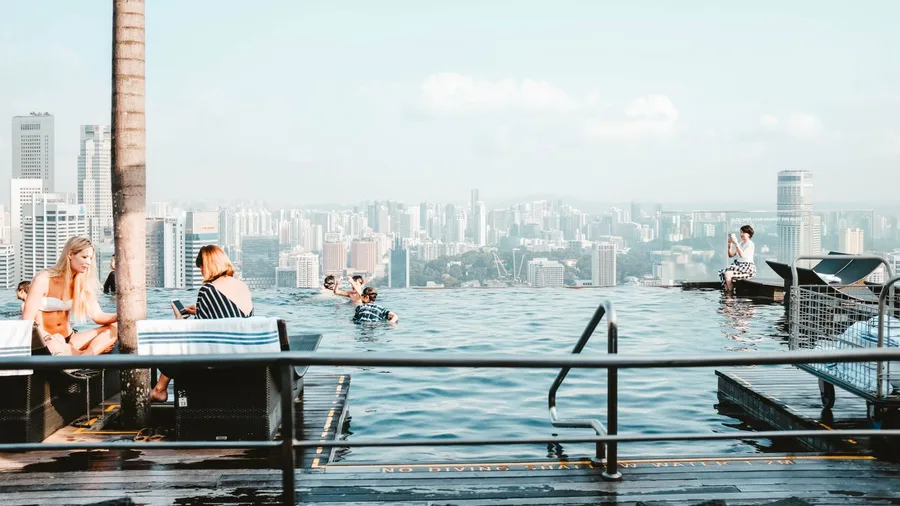
Getting around Singapore is easy. Actually inhabiting it – knowing it, having friends who are from it – is a different and more demanding question.
The bubble is structurally complete and entirely comfortable. International schools, expat-dense condo developments, and the full circuit of international clubs and associations provide a social world that asks nothing of you locally. It is possible to live well inside that world for three or five years without noticing where its edges are. Many people do.
Singaporean friendship-building follows different rhythms than the pub-and-party entry points that feel instinctive to many Western arrivals. Home life tends to be private, warmth takes longer to surface, and the channels are different – community rather than spontaneous. None of that is unfriendliness. It is a different social architecture, and arriving with the wrong template is the most common early mistake.
The alternative is available and genuinely rewarding, but it requires active choice. Residents who eat at hawker centres regularly, join a local football or running league, and pick up even basic Singlish consistently describe a richer experience of the city – not an exotic one, just a fuller one.
The regret worth naming before it becomes yours: people who leave after three to five years often say they never really knew Singapore. They knew the expat version – functional, comfortable, real in its own way – but narrow. That is a particular kind of loss, and it is avoidable if you decide early that it matters to you.
🛬 How Most Expats Actually Settle Into Singapore
Months 1–2: Orientation shock
Heat, humidity, and the sheer efficiency of the city hit at the same time — most people feel both impressed and slightly unsettled.
Months 3–6: Practical anchoring
You find your hawker centre, map your MRT route, and stop noticing the rules — the daily rhythm establishes itself.
Year 1: The bubble or the city
The fork appears: stay inside the expat circuit or start making deliberate choices to engage with the local texture.
Years 2–3: The honest reckoning
The heat with no off-season, the property situation, and the political atmosphere are now felt rather than assessed — reactions diverge sharply here.
Year 4–5: Stay or go
The decision is rarely dramatic — lifers extend quietly, leavers quietly realise the claustrophobia has accumulated; the question resolves itself.
Safety and Order Are Delivered, Not Just Marketed
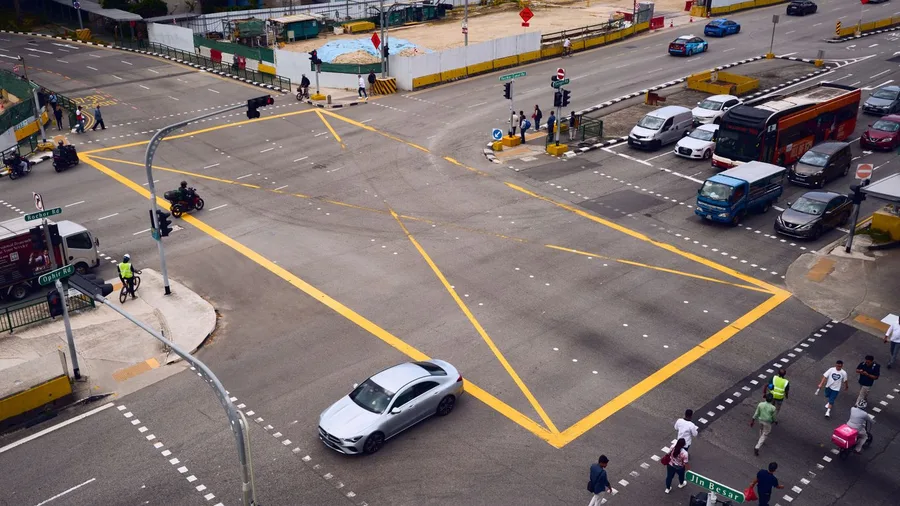
What Singapore delivers most completely – and what only becomes visible once you have lived somewhere else afterward – is a level of public safety that residents stop noticing until it is gone.
The evidence is not a statistic. It is the bag left on a hawker centre chair to hold a table while the owner queues for chicken rice. It is the phone face-up and unattended on a cafe table for twenty minutes. It is women walking home alone at midnight without the low-level calculation that those walks require in most cities. Unlocked bicycles at MRT stations. These are not remarkable behaviours in Singapore; they are just how things work, and residents treat them that way.
The cameras-everywhere reputation is overstated by people who have not lived there. The source of the safety is not surveillance – it is social trust so deeply set that violations feel genuinely aberrant rather than merely risky.
The reentry cost is real and almost nobody warns you about it. Residents who move to London, Sydney, or New York after three or four years in Singapore find ordinary urban friction – a phone snatched, an aggressive stranger, the low-grade alertness any unfamiliar city demands – genuinely shocking. Singapore recalibrates what normal feels like, and that recalibration does not reverse quickly.
The mechanism behind all of this belongs on the table, though. Public order at this level is maintained partly through aggressive enforcement and a deliberately managed public culture. The safety is real; so is the system that produces it. Whether that system aligns with your values is a question only you can answer, and it matters more for long-term contentment than most people weigh it before they arrive.
Long-Term Residents Either Stay Forever or Leave Quietly
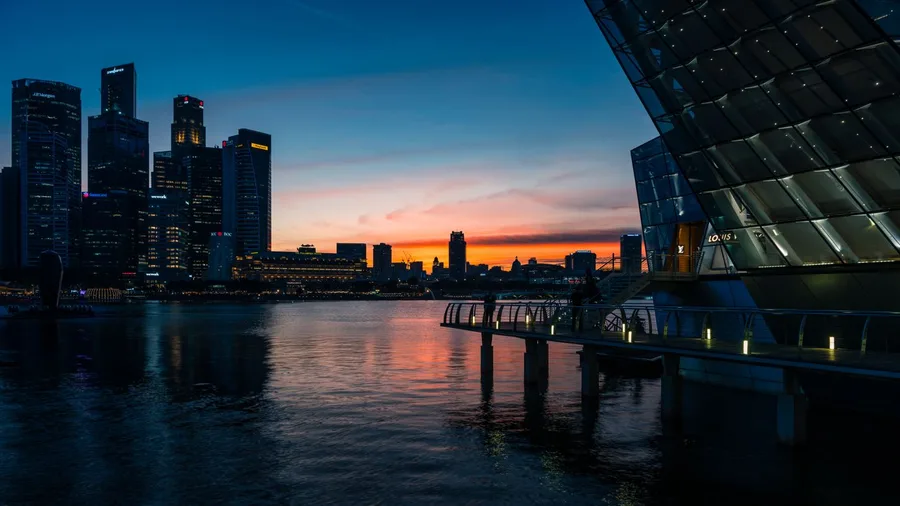
The full package – cost, heat, political climate, social texture, and all of that safety – produces a clear pattern after three to five years: people either commit and stay indefinitely, or they leave, and the split is rarely dramatic.
The people who stay share a recognisable profile. They value efficiency, high public trust, and a personal tax structure that rewards high earners – current rates are on the Inland Revenue Authority of Singapore’s website and are worth reviewing before you do any salary negotiation. They treat a weekend in Bali or a long weekend in Tokyo as normal logistics, not an event. On a 728 sq km island, the region becomes the backyard, and that keeps life feeling large.
That regional access is the retention mechanism that surprises people. Chiang Mai is two hours away. The island itself stops feeling small when you are regularly moving across Southeast Asia. It is not an abstract benefit – it is a practical counterweight to the lack of physical variation within Singapore itself.
The people who leave usually do not leave unhappy. They leave after two or three functional, stimulating years, then notice that the heat has never let up, that genuine local friendships proved harder to build than expected, and that renting indefinitely has removed one of the usual ways people root themselves somewhere. That combination produces a specific restlessness – not misery, just a growing sense that the city is not somewhere they are building toward.
After year four or five, the fork is obvious. The question to answer now, before you sign the lease, is which of those two profiles actually fits the life you are trying to make.
Frequently Asked Questions
Is Singapore actually worth the high cost of living compared to other Asian cities?
For a specific profile — high earner, housing covered, values safety and efficiency — yes, decisively. For someone on a locally benchmarked salary without a housing allowance, the SGD 4,000 central rent figure makes the numbers tight and the answer depends on what else the city is delivering for them personally.
Can you really get fined for chewing gum in Singapore?
Importing gum for sale is banned; possession for personal use is not a criminal offence. The gum story has taken on a life entirely disproportionate to its practical relevance. Focus your research time on the drug laws, not the confectionery rules.
Is Singapore safe for solo female travellers and residents?
By the metrics that matter — solo late-night walking, public transport after midnight, street harassment — Singapore is among the safest cities in the world for women. The social norms that support public order here are specifically visible in this area. Long-term female residents consistently describe it as one of the top practical benefits of living there.
Do you need to speak Mandarin or Malay to live well in Singapore?
No. English is one of Singapore’s four official languages and the primary language of business, government, and most daily interaction. Picking up basic Singlish phrases helps with social connection and is welcomed by locals, but linguistic barriers are not a practical obstacle to daily life for English speakers.
How does Singapore compare to Hong Kong for expats?
Both cities offer strong salaries and dense infrastructure, but Singapore’s political environment has been notably more stable in recent years, and the quality of life in terms of cleanliness, transport reliability, and personal safety is generally rated higher by long-term residents. Hong Kong offers a different urban energy and a closer-knit expat culture in some sectors; the trade-offs are real but Singapore has attracted more regional headquarters in the past five years.
Is it hard to make Singaporean friends as an expat?
Not hard, but it requires deliberate effort rather than accidental proximity. Singaporeans tend to socialise through established networks and are private about home life. Eating at hawker centres regularly, joining community sports, and showing genuine curiosity about local culture are the most consistently effective entry points reported by long-term residents who made it work.
The Person Who Thrives Here, and the Person Who Does Not
The person who thrives here long-term values safety, efficiency, and access to the wider region above seasonal variety, political voice, and a path to homeownership – and earns, or is packaged, at a level where SGD 4,000 rent does not compress every other choice on the spreadsheet. For that combination of priorities and income, Singapore functions at a level most cities cannot match.
The person who finds it quietly suffocating within two years needs something the city was never designed to provide: spontaneous social integration outside a pre-formed expat circuit, temperature that changes with the calendar, the ability to speak critically in public without structural consequence, or a realistic route to owning the place they sleep. Singapore is not hostile to those needs. It simply does not deliver them.
The fines turn out to be the least of it. The question to answer before you sign anything is not whether you can live with the rules – most people can, easily – but whether the life Singapore actually makes possible, safe, ordered, expensive, and controlled, is the life you came here to live.