
Why I Never Get Tired on Long Trails (Japanese Technique)

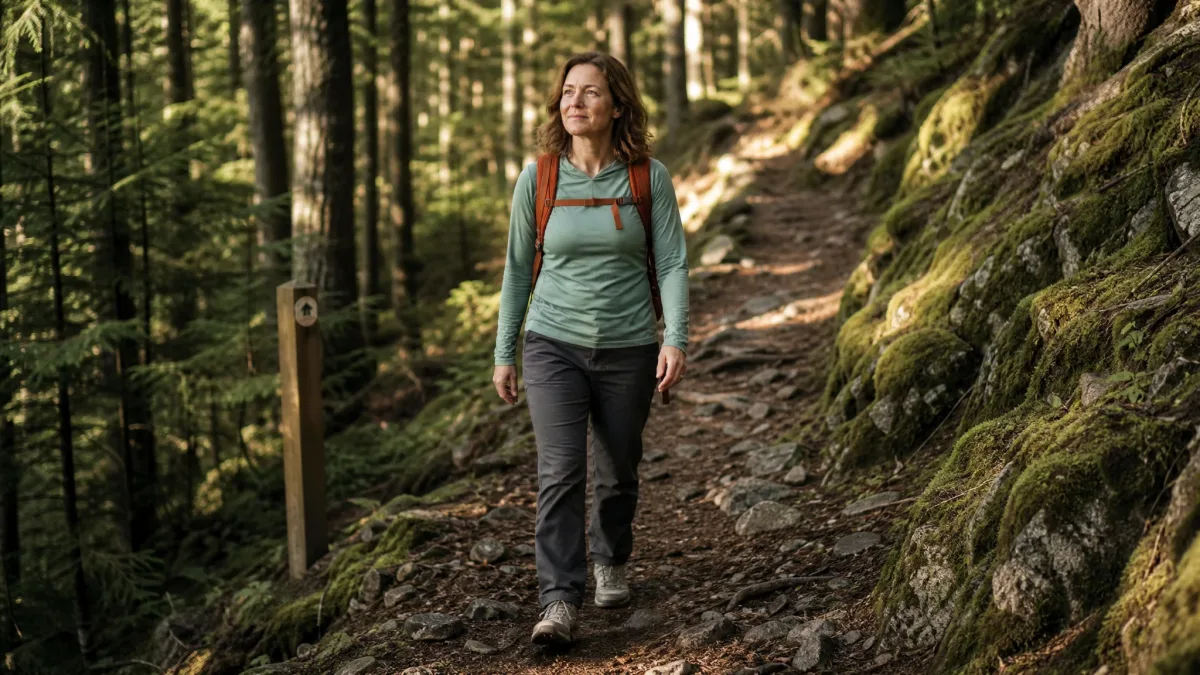
Slowing down sounds like the last thing you want to do when you are trying to get farther on a trail — and yet that is exactly what changed everything for me.
For years I watched the same pattern play out on hikes: strong start, hard breathing twenty minutes in, a stop to recover, another push, another stop. I did it myself. I watched fit, motivated hikers do it. And I kept assuming the answer was more training, more miles, more toughness.
It took a Japanese concept about jogging to show me the real problem. The fix is not harder effort. It is the right effort — and once you feel the difference, long trails stop being ordeals.
Here is what I have learned about moving through the mountains in a way that actually lasts.
Burning Out Has Nothing to Do With Fitness
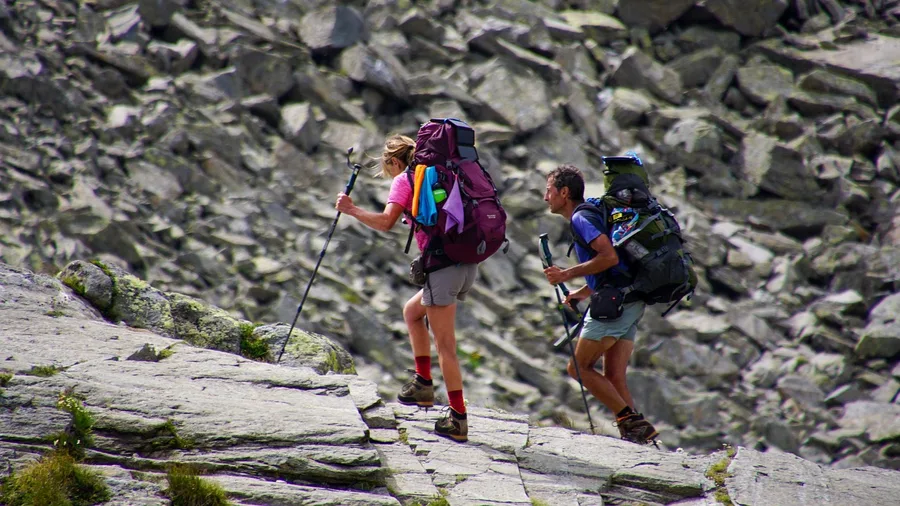
The reason you keep running out of energy on trail probably has nothing to do with how fit you are.
The pattern surfaces the same way almost every time. Twenty minutes in, your legs feel heavy, your breathing has gone sideways, and the trail feels harder than it has any right to. If you hike regularly, that does not add up – until you stop blaming your lungs and start looking at your pace.
the culprit is effort level, not aerobic capacity. Those two things sound similar, but they point to completely different fixes. Fitness framing sends you to the gym for months of training before your next hike. Effort framing sends you to make one small adjustment on the climb you are already on, today, in the next thirty seconds.
Only one of those works right now.
I spent years watching this same burnout play out in other hikers on the trail – and plenty of times in myself – before I could actually name what I was seeing. Someone would start strong, push into the first big climb, and be stopped and leaning on their poles ten minutes later. Not because they were unfit. Because they were hiking just slightly above the effort level their body could hold for hours at a time.
Once you can see it as a pacing problem rather than a weakness problem, the whole thing looks completely different. And the fix is a lot closer than you think.
Feeling Good at the Start Is the Trap
Fresh legs at the trailhead create an illusion – this pace feels easy, so it must be sustainable. It is not, and the trail will prove it.
What follows is a cycle most hikers know in their bones even if they have never named it. You push hard up the first climb, stop to recover, push again, stop again. You do that all day. It feels like hiking. It is actually a series of small crashes, each one leaving you a little more depleted than the last.
Every hard stop carries a recovery debt your body has to pay before you can move well again. Those debts stack up. By early afternoon, you are not just tired – you are tired from the cumulative cost of every frantic restart.
Social pressure makes the trap worse than it needs to be. Not wanting to look slow in your group is one of the most reliable ways to blow up a hike before the first switchback. You attack the opening hill, take big powerful steps, and tell yourself the labored breathing is just part of the effort. It is not just part of the effort. It is the first warning sign, arriving right on schedule.
The trick is that you can survive this cycle for a while, which makes it easy to miss. You finish the hike wrecked and chalk it up to difficulty or fitness, never quite connecting the dots back to those first fifteen minutes at the trailhead when everything felt so good.
Trail Burnout — What People Say vs. What Is Actually Happening
Exhaustion Is a Skill Problem, Not a Character Flaw
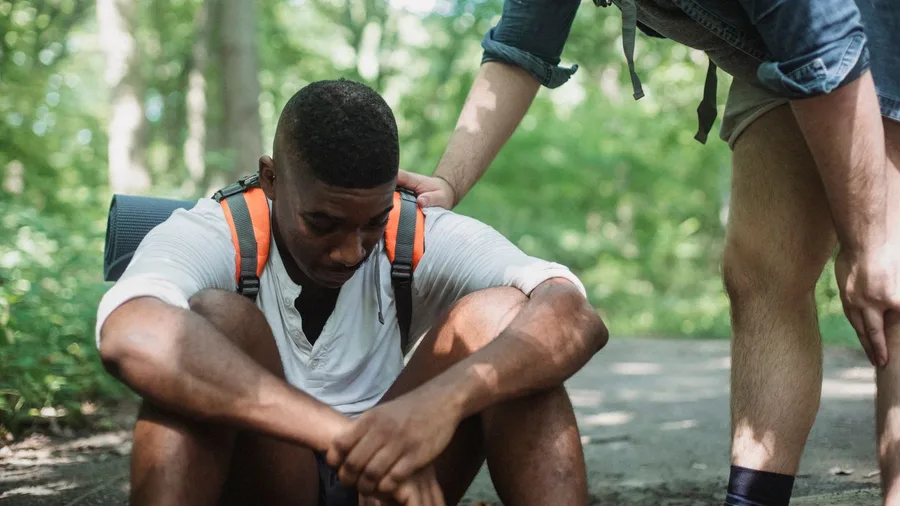
Framing trail exhaustion as a toughness problem is the wrong diagnosis, and wrong diagnoses produce useless prescriptions.
When you tell yourself you need to be tougher, or that you are holding everyone back, the only thing that produces is shame. It does not tell you what to do differently on the next switchback. It just makes you feel bad about something that was never actually the issue.
Flip the frame, and a practical action appears. If exhaustion is an effort problem, the fix is to adjust pace before the body forces a stop. That is a decision you can make in the next five minutes, on the trail you are already on, with no training block and no extra gear.
That is the good news, and I mean it sincerely.
The bottleneck was never fitness or mental toughness. It was the timing of one simple adjustment – making it early, before breathing starts to run away from you, rather than late, when you are already standing still with your hands on your knees. I have done that plenty of times, and it always costs more than it needed to.
A skill can be learned. You can get noticeably better at this on your very next hike, not after months of conditioning. That is a completely different problem than not being tough enough, and it is a much more solvable one.
💡 PRO TIP
Reframe the Problem Right Now
Next time you feel wrecked on a climb, ask yourself: did I start too fast, or am I actually unfit? Almost always it is the former. That question alone shifts you from self-blame into problem-solving — and problem-solving leads somewhere useful.
Move at a Pace Your Body Can Sustain
A sustainable pace means reducing your speed proactively, while your breathing is still under control — not scrambling to recover once you’re already gasping, but making that conscious adjustment a few steps ahead of when you’d need to.
The same principle applies to your legs. Shorten your steps before they start to burn, not after they are already shot and demanding a stop. The difference in timing sounds small. In practice it is enormous, because once you are in the red you are managing a crisis instead of preventing one.
Let the steepness of the hill vote on how fast you move. This one took me a while to really accept. There is a strong pull to maintain flat-trail speed onto every climb – it feels like slowing down is giving up. But the hill is not an obstacle to overpower. It is information. It is telling you exactly what pace makes sense right now, and the hikers who listen to it keep moving while everyone else stops.
None of this makes the climb easy. Tough climbs are still tough. The goal is simply to stay on the right side of that sustainable line for the whole day, not blow past it in the first hour and spend the rest of the hike paying for it.
Experienced hikers often figured this out without ever putting a name to it. They do not always look fast. But they are still moving at three in the afternoon when others are sitting on a rock wondering what went wrong.
The First Fifteen Minutes Should Feel Too Easy
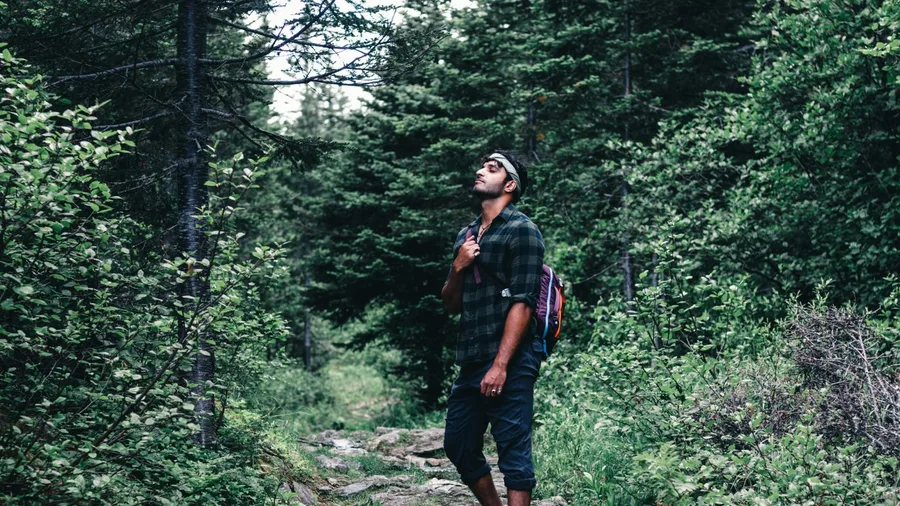
Those first ten to fifteen minutes of a hike should feel almost embarrassingly easy – and that feeling is the signal that you are doing it right, not a sign that you need to pick up the pace.
That opening window is doing real work even when it does not feel like it. Your breathing is finding its rhythm, your legs are waking up properly, and the trail is quietly telling you what kind of day it will be. A gentle start is not wasted time. It is the foundation the rest of the hike sits on.
The temptation to go harder is highest right at the beginning. Fresh legs, open trail, maybe someone ahead setting a quick pace – everything in the moment is pushing you to prove something on that first climb. That is exactly when it is cheapest to hold back, and most expensive to give in.
I have felt that pull hundreds of times. The voice that says the slow pace is too cautious, that you are wasting good energy, that the hard part comes later so you might as well move now. That voice is wrong every single time.
Use the first climb to settle in rather than to set a tone you cannot maintain. The miles after it will feel like a completely different hike – and that is the whole point.
🥾 How a Well-Paced Hike Actually Flows
Minutes 0–15: Settle In
Start slower than feels necessary — let breathing find a rhythm and legs warm up before any real climbing.
First Climb: Let the Grade Set Your Speed
As the trail steepens, consciously slow down and shorten your stride before your breathing changes.
Mid-Climb: Run the Talk Test
Ask yourself whether you could say a short sentence right now — if not, ease back a gear.
Sustained Effort: Adjust Early, Stay Moving
Tweak pace at the first sign of strain so you keep moving steadily instead of stopping to recover.
Late Miles: Collect the Compound Interest
Steady effort across hours adds up to more distance than the push-stop-recover cycle ever could.
A Steep Hill Signals Adjustment, Not a Toughness Test
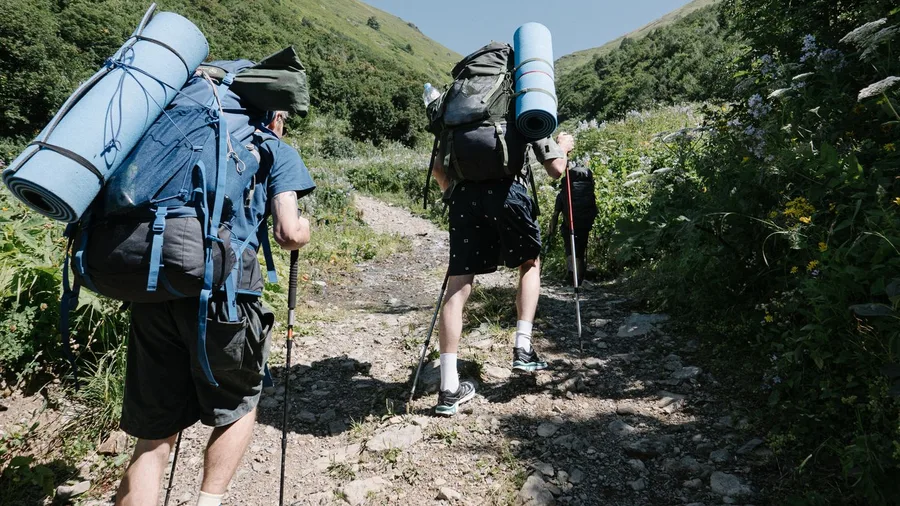
You should not try to hold your flat-trail pace when the grade kicks up – and that instinct to push through is exactly what leaves hikers cooked halfway up a climb.
Most hikers walk at one speed. Flat ground, a gentle incline, a real climb – same pace throughout. Then they stand there at the switchback, gasping, genuinely confused about why a trail that looked manageable on the map has destroyed them inside twenty minutes.
The hill is not asking you to prove anything. It is asking you to adjust. That is the whole trail application of the Japanese slow-jogging idea: let the grade decide your effort level, not your ego or the fact that your hiking partner is still moving fast beside you.
Think of it like driving. You do not floor a steep road in fourth gear and hope the engine keeps up – you shift down. Same principle. The terrain changed, so the response changes. Slowing on a climb is not a failure of willpower; it is the correct technical move.
The experienced hikers I have spent time around over the years do this without any fuss. They hit a steep section and they quietly dial back. No drama, no announcement. They just keep moving at whatever pace the hill actually calls for – while everyone around them ends up bent over their poles, waiting for their lungs to catch up.
That steadiness is not a personality trait. It is a habit they built by treating each climb as a cue to adjust, not a test to pass.
Short Steps on Climbs Outlast Big Powerful Strides
Going uphill, your steps should be noticeably shorter than they are on flat ground – smaller than feels natural, probably smaller than looks impressive.
Big strides feel powerful in the moment. On any real ascent, though, they drain your legs faster than almost anything else you can do with your body. Each large step requires a bigger push from the same muscles, over and over, until those muscles simply run out of steam well before the top.
Short steps look unimpressive. I know that. But they spread the load across more movement, keep your heart rate from spiking, and let you keep walking for hours longer than a strong-looking stride will allow.
Stride length and pace work together on a climb – both shrink as the grade rises, and that is the correct response, not a compromise. Trying to hold a long stride while also slowing down is a bit like keeping your gears set for flat road and just pedalling slower. It is not the right tool for the terrain.
The goal on a climb is continued forward movement, not conservation for its own sake. Shorter steps are simply the mechanism that keeps pace sustainable when the trail tilts up.
Try it on your next real ascent. Cut your stride to roughly half of what feels natural, keep moving steadily without stopping, and pay attention to how your legs feel when you reach the top. The difference is usually enough to make shorter steps a permanent habit.
Two Ways Up the Same Hill
The Push-Stop Approach
- Stride length stays long regardless of grade
- Each big push recruits maximum muscle force per step
- Legs and lungs blow up within the first 10-15 minutes
- Stop-start cycle repeats all the way to the top
- A 30-40 lb pack turns this into a full shutdown by mid-climb
The Sustainable Approach
- Stride drops to roughly half of flat-ground length the moment grade rises
- Smaller steps spread force across more total movement cycles
- Talk test runs every few minutes — one easy sentence, no pause for breath
- If the sentence strains, shorten stride further before stopping becomes necessary
- Arrive able to hold the niko niko smile, not hunting for a place to sit
One Question Checks If You Are Going Too Hard
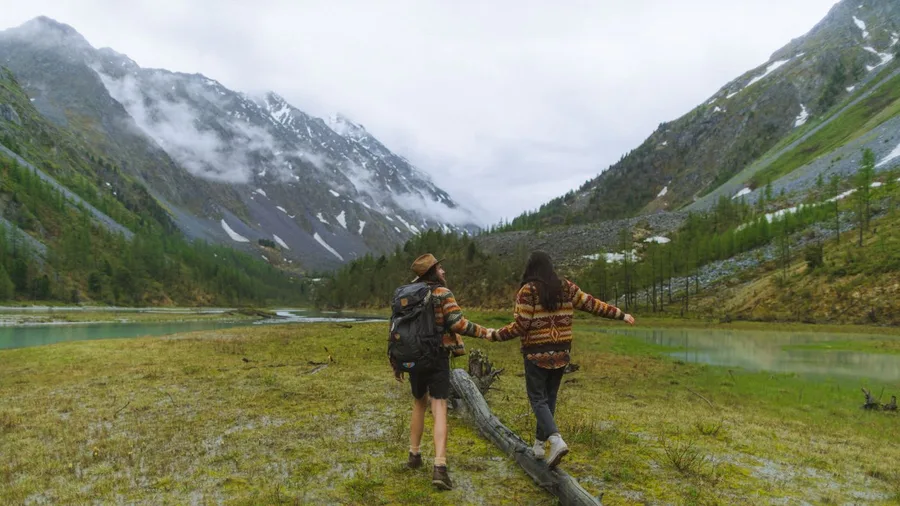
If the answer is yes, you are in a sustainable range. If you would have to gasp through it, or the idea of forming a sentence feels genuinely difficult, you are above a pace your body can hold for long. That is the talk test, and it needs no gear, no data, no math.
It gives you something concrete to check against instead of the vague, easy-to-ignore feeling of maybe pushing a little too hard. That vague feeling is easy to dismiss. A clear yes or no is harder to argue with.
Breathing hard on one tough, steep section is completely normal – I have hit plenty of pitches where anyone would labour a bit. But if you are breathing that hard for the entire hike, that is a pacing signal worth taking seriously, not pushing through.
You do not need to run the test constantly. A brief check on each climb, or whenever you notice your breathing has shifted, is plenty. The point is just to catch the drift early, while a small adjustment is still enough to fix it.
One honest answer to one question, a slight easing of pace, and you stay on the right side of sustainable for the rest of the day. That is all it takes.
⚠️ COMMON MISTAKE
The Trap of Feeling Fine
Hard breathing that disappears after a short rest feels like proof the pace was fine. It is not. Each stop-and-recover costs cumulative energy that is gone for the rest of the day. If you are stopping every twenty minutes on a three-hour hike, the pace was never sustainable — even if each individual climb felt manageable.
Adjusting Early Means You Keep Moving Instead of Stopping
Hiking at a sustainable pace gets you farther in a day – not despite going slower, but because of it.
Here is the arithmetic that holds this whole approach together. Catch the drift early, dial back before your body hits the red, and you can usually keep moving – maybe a bit slower, but steadily. Wait until you are already wrecked and you need a full stop, sometimes a long one, before your legs will carry you again.
Those stops cost more than they look like they do. It is not just the minutes you spend standing still. It is the disrupted rhythm, the cooling muscles, the mental hit of feeling like you are falling apart. Add several of those across a day and the push-hard-and-stop cycle covers less ground than a quieter, steadier pace would have.
Steady movement over hours compounds quietly. There is no dramatic surge, no heroic final push to the summit. Just consistent forward progress that adds up to real miles by the time you reach camp.
Slower and moving beats faster and stopped. Every single time.
I remember the first full day I hiked where I never once had to stop because my legs gave out. I got to the end with miles covered, decent energy left, and none of the low-grade misery I used to accept as just part of a big day on trail. That is the payoff the push-stop cycle never delivers.
The Same Hiker, Two Different Approaches
The Real Goal Is Hiking Again Next Year
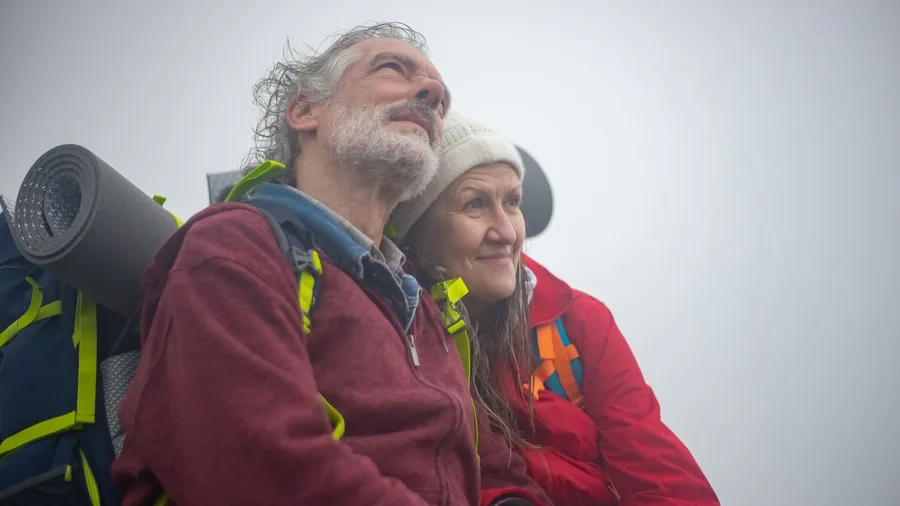
Hiking slower is not a sign of weakness – it is how hikers who are still out on trail in their fifties, sixties, and beyond actually got there.
At some point the goal shifts. Early on, a hard summit day is about proving something – to yourself, maybe to whoever is hiking with you. That is fine. But somewhere along the way, if you keep at this long enough, the thing that starts to matter more is whether you still want to come back out next weekend, and the season after that.
Experienced hikers may not look fast or dramatic on the trail. What they do is keep moving. Over a full day, over a full season, that quiet consistency adds up to far more trail than the push-hard-and-suffer approach ever builds – and it does not grind away at the desire to keep going.
I stopped treating every climb as a challenge to conquer somewhere in my third or fourth year of backpacking. I wish I had done it sooner. Once I made that shift, I covered more miles, felt genuinely good at the end of long days, and started actually looking forward to steep sections instead of bracing for them.
Slower is not giving up. It is the long game – and the long game is the one worth playing.
Sustainable Hiking — At a Glance
⏱️ Warm-up Window
First 10–15 min
🗣️ Talk Test
One short sentence
👣 Uphill Stride
Shorter than feels natural
🎒 Heavy Pack Threshold
30–40 lb shifts pace lower
⏩ When to Adjust
Before breathing changes
Core Rule
Slow down before you have to stop — not after your body is already in the red.
Where the Japanese Slow-Jogging Idea Comes From
The concept behind this whole approach has a real name, and knowing where it comes from makes it easier to trust.
It is called niko niko pace. Niko niko means ‘smile’ in Japanese, and that is the actual definition of the effort level – the pace at which you can smile while you move. Not grin through gritted teeth. Genuinely smile, because the effort feels manageable.
It was developed by Hiroaki Tanaka, a sports scientist at Fukuoka University, as a framework for sustainable running. The core finding is straightforward: effort you can sustain over time gets you further than hard effort followed by collapse. That principle transfers directly to a mountain trail, even though Tanaka was working with runners on flat ground.
What I find most useful about the smile test is how honest it is. On a climb, most of us are terrible at judging our own effort – we feel fine, we push, and then ten minutes later we are stopped on the side of the trail wondering what happened. But asking ‘can I smile right now?’ cuts through all of that. If the answer is no, you already know what to do.
If you want to go deeper into the science, search Hiroaki Tanaka or ‘niko niko pace’ – there is genuine research behind this, not just a catchy phrase. The hiking application in this article follows the same core logic, and it holds up across every kind of terrain I have tested it on.
A Heavy Pack Shifts Your Sustainable Pace Down
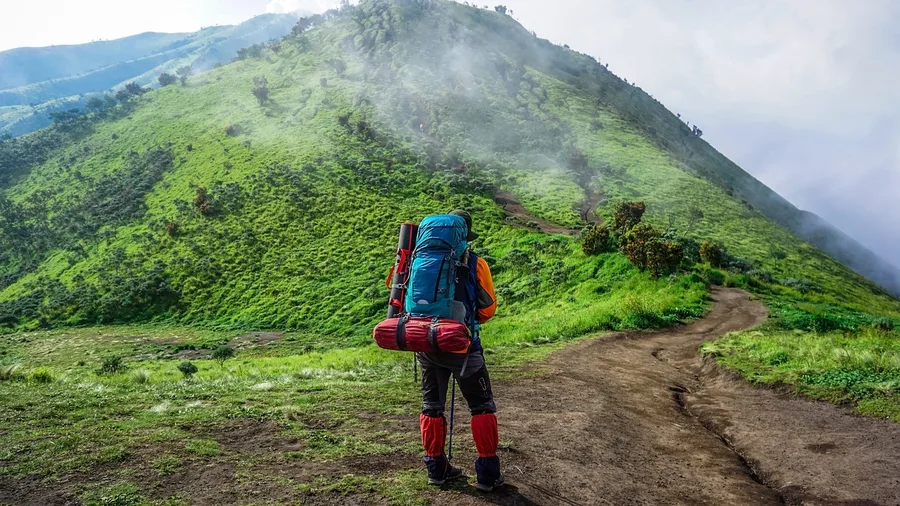
Everything covered so far still applies when you are carrying a full backpack – but the thresholds arrive sooner, and the margin for error is smaller.
A pack in the 30 to 40 lb range raises the effort cost of every climb well above what the same hiker feels on a day hike with a light bag. Your legs are doing more work before the trail even tilts upward. That means the talk test, the short steps, the slow opening fifteen minutes – all of it still works exactly the same way, but you will hit the ‘no, I cannot say a sentence right now’ point at a noticeably lower absolute pace than you expect.
This catches a lot of hikers on their first overnight.
They have paced well on day hikes, they feel confident, and then they bonk badly on mile three of a backpacking trip and cannot figure out why. The pack is why. It does not feel dramatically heavy at the trailhead, but it compounds every climb in a way that only shows up once you are already in trouble.
On any trip with a loaded pack, assume your sustainable pace under that weight is slower than anything you have tested without it. Be extra conservative in those first fifteen minutes. The pack is not going to feel lighter as the day goes on – but your body will adapt to the load if you give it a chance to warm up at a pace it can actually handle.
How to Keep Your Own Pace With Faster Friends
Hiking with faster people is one of the most reliable ways to throw out every good intention you had at the trailhead.
It happens without a decision. Someone sets a brisk pace, you fall in behind them, and within five minutes you are working well above your sustainable effort because stopping to let them go ahead feels awkward. By the time the first real climb arrives, you are already in a hole.
The fix is simple, and it works best when you say it out loud before the hike starts: ‘I hike my own pace on ascents.’ That one sentence removes the silent pressure before it builds. Then agree on a meeting point – the next switchback, the top of the climb, a named landmark on the map – so the faster hikers can push while you pace sustainably. Everyone ends up at the same place.
What happens over a full day is worth paying attention to.
The hiker who paced well often arrives at rest stops fresher, recovers faster, and is ready to move again while the hard pushers are still eating and stretching. I have watched that play out plenty of times, including on myself in the years before I understood what was happening. The social dynamic shifts quickly when the ‘slow’ hiker is the one ready to go first.
The group gets where it is going either way. The only real question is how everyone feels when they get there.
Frequently Asked Questions
How do I hike without getting tired on long trails?
Start the first ten to fifteen minutes at a pace that feels almost too easy. Let every climb reduce both your speed and your stride length before your breathing changes. Run the talk test periodically — if you cannot say a short sentence, ease back. Consistent forward movement at a sustainable effort level covers far more distance than the push-stop-recover cycle.
What is niko niko pace and how does it apply to hiking?
Niko niko is Japanese for ‘smile.’ Sports scientist Hiroaki Tanaka defined it as the effort level at which you can smile while moving — comfortably aerobic, never gasping. Applied to hiking it means keeping pace slow enough that breathing stays controlled, legs never hit the wall, and you could hold a short conversation. That effort level, sustained over hours, produces more distance than bursts of hard effort followed by stops.
Does the talk test actually work on the trail?
Yes, and it is more reliable than most hikers expect. Ask yourself whether you could say a short sentence right now without gasping. If the answer is no, you are above a pace your body can sustain for long. It is not a precise science, but it is a concrete anchor you can use on every climb without any equipment. Brief periodic checks — not obsessive monitoring — are all you need.
Does carrying a heavy backpack change how I should pace myself?
Significantly. A 30 to 40 lb pack raises the effort cost of every ascent, so your sustainable threshold arrives at a lower pace than it would on a day hike. The same techniques apply — short steps, talk test, letting the grade reduce your speed — but apply them earlier and more conservatively. On your first backpacking trip, assume your loaded pace is slower than anything you have tested without a pack.
Is hiking slower a sign that I am getting weaker as I age?
No. The hikers who stay out the longest over years and decades are rarely the fastest ones on any given day — they are the ones who know how to keep moving. Sustainable effort protects the habit of hiking, which is worth far more than a fast time on one climb. Slowing intentionally on hard terrain is a technique, not a retreat.
What should I do when the rest of my group hikes faster than me?
Say it before the first climb: ‘I hike at my own pace on ascents.’ Then agree on a meeting point — top of the climb, next switchback, or a named landmark — so faster hikers can push while you pace sustainably. Everyone reaches the same destination. The hiker who paces well often arrives fresher and ready to move again faster than those who pushed hard and now need a long rest.
The Hike That Proves Sustainable Effort Is a Skill Is One Climb Away
On your next hike, run the sequence deliberately. Start the first fifteen minutes at a pace that feels too slow. When the trail tilts up, reduce speed and shorten your stride before your breathing changes — not after. Ask yourself the talk test question on every significant climb.
That is the whole technique. Three adjustments, all of them available on the trail you are already on, none of them requiring a training block or a fitness overhaul.
Sustainable effort is the skill. It is not a consolation prize for hikers who are not fit enough to push harder. It is what experienced hikers figured out, often without a name for it, and it is what lets them keep coming back year after year.
The next climb is where you test it. Start slow, let the grade set your pace, check your breathing, keep moving. See how you feel at the top.
Try the Talk Test on Your Next Climb
On your next ascent, ask yourself mid-climb: 'Could I say a short sentence right now?' That single question — answered honestly — is the on-trail check that makes the whole pacing technique real.