17+ Container Home Designs With Green Roofs and Living Walls

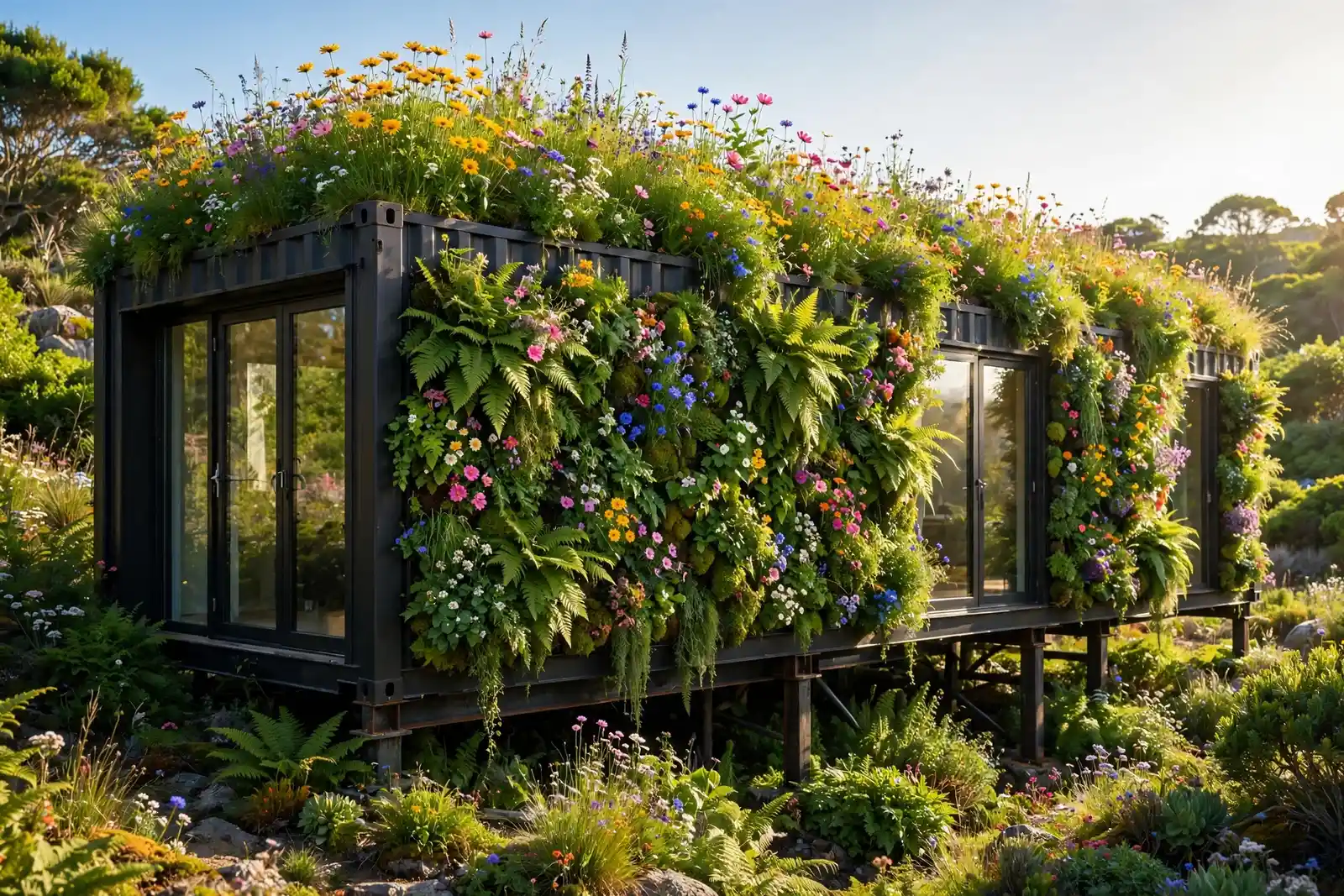
A steel box does not have to look like a steel box. Add soil, roots and water, and a container home starts to breathe.
Green roofs and living walls are the two oldest tricks in the eco builder playbook. One puts a garden overhead. The other grows one up the side.
Both do real work. Plants cool the steel in summer and hush the rain drumming on the roof. They soften the boxy look. They give bees somewhere to land. And on a container, which is basically a giant metal can, that extra insulation matters.
There is one catch. Wet soil is heavy, and constant water will rust bare steel. Every design below shows the dream and the bones: how the planting is held, drained and kept away from the metal.
These are 17 container homes that get living architecture right.
Anatomy of a Green Roof
Seven layers sit between the sky and the steel. Each one has a job.
1. The Sedum Blanket Cottage
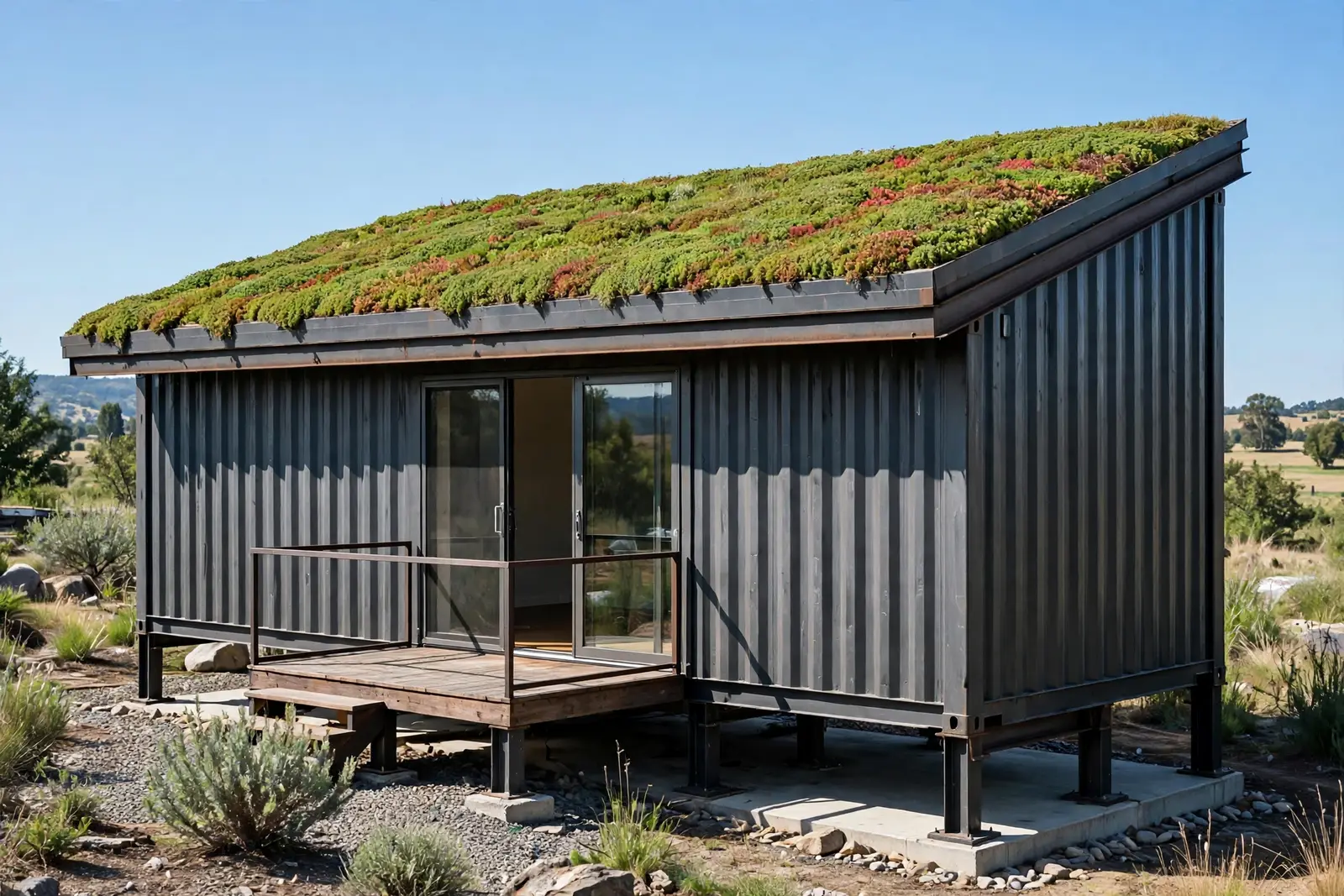
Sedum is the gateway plant of the green roof world. It stores water in its leaves. It shrugs off heat. It asks for almost nothing.
This cottage rolls out the simplest version. A shallow tray system carries just a few inches of lightweight soil. The sedum carpet spreads over it like a living rug.
The payoff shows up on power bills. A planted roof keeps the steel below cooler in July. In winter it adds one more blanket over the bedroom. This home sits on steel piers, so air moves under the floor too. Cool from above and below.
The trays themselves are the unsung hero. Recycled plastic, light as a feather, they lock together and carry the whole system without a single screw through the roof membrane.
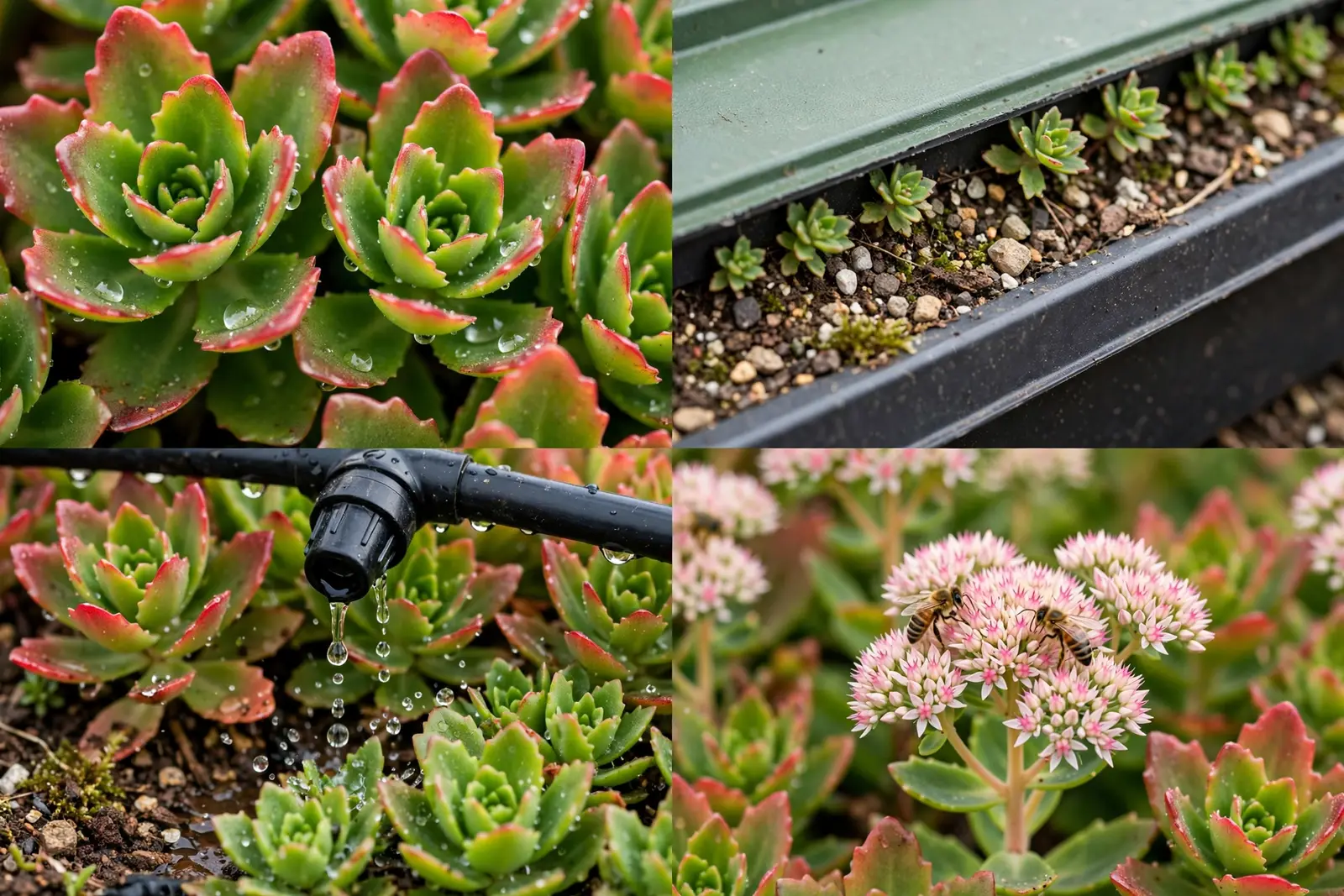
Up close you can see how simple the build is. Trays, soil, plants. A thin drip line runs through for dry spells.
Bees find the flowers by midsummer. The owners barely touch a thing. That is the whole point of sedum: a roof that gardens itself.
2. The Wildflower Meadow Loft
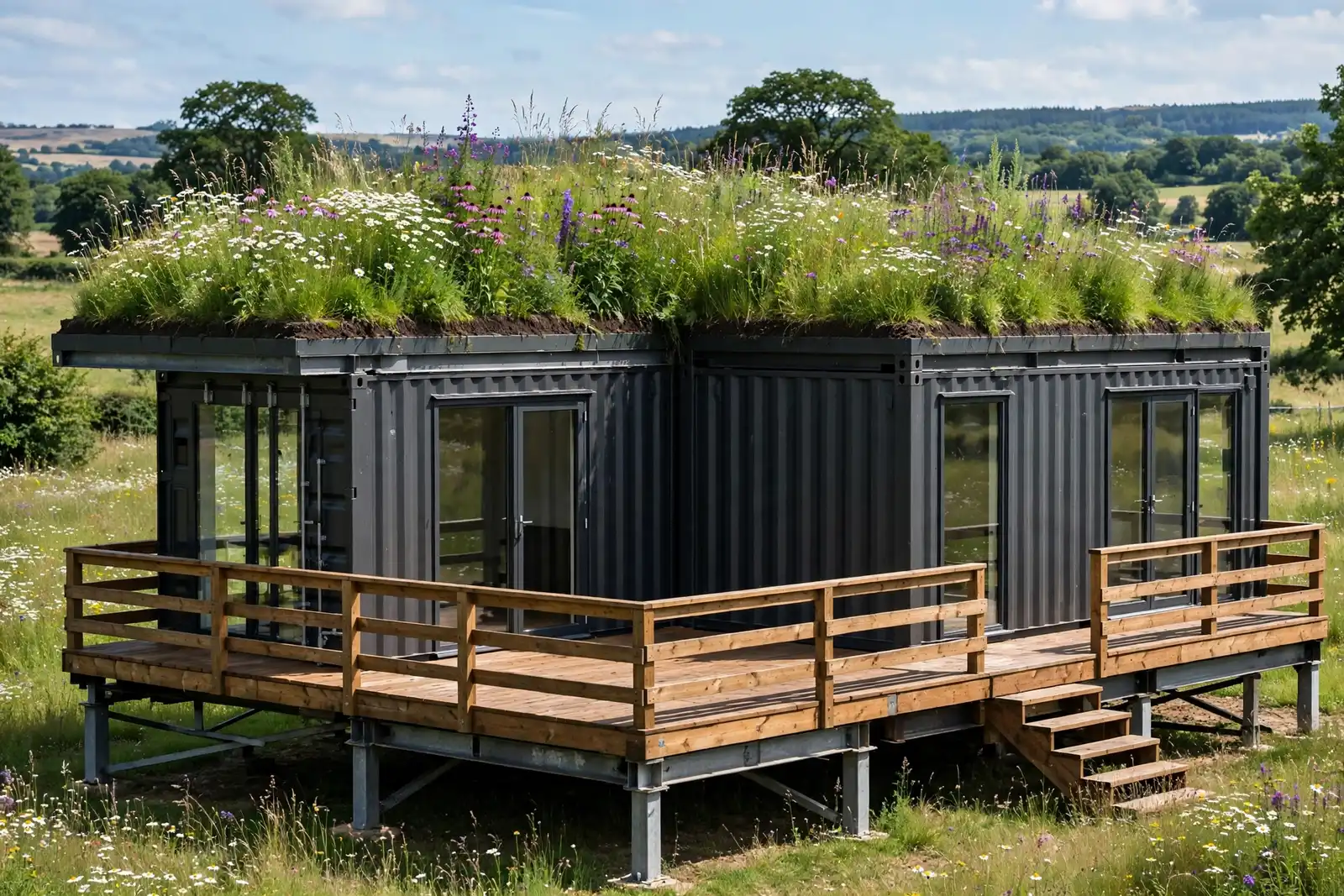
Why settle for green when you can have a meadow. This double container wears a full wildflower roof. Daisies, coneflowers, grasses.
A meadow roof is the deep end of green roofing. The soil runs deeper than a sedum mat. That means more weight, so the roof framing gets beefed up from the start.
The reward is a private nature reserve. Butterflies work the flowers all summer. The deck below stays cool in the shade of the blooms.
This is the roof that changes its mind every month. Green in May, a riot of color in July, gold seed heads by September. The house below never looks the same twice.

The detail shots show the sandwich that makes it possible: membrane, drainage, deep soil.
Come fall, the seed heads feed finches. You never mow it. You just watch.
3. The Greenhouse Roof House
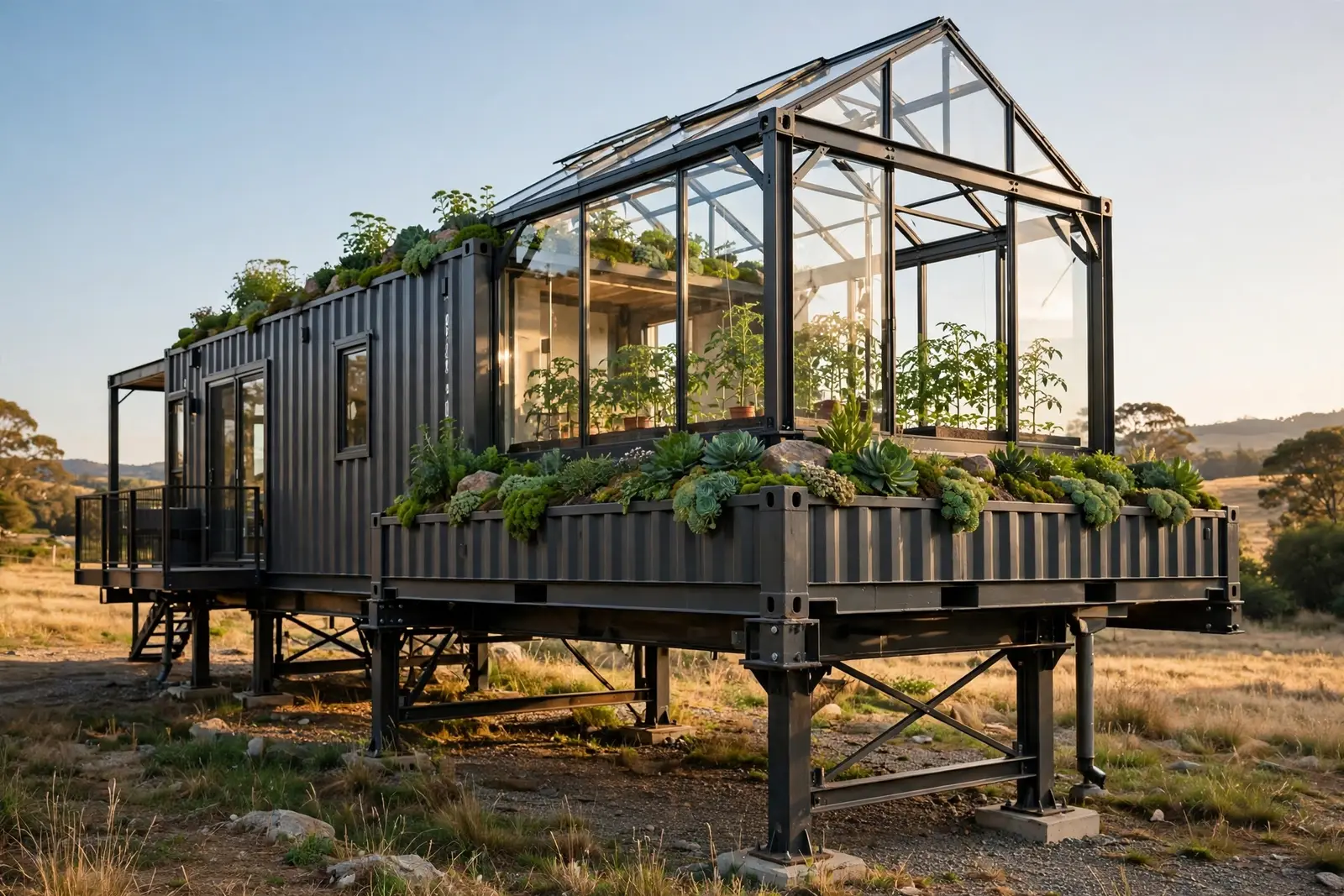
This is the container home for people who like their food local. As in, twelve steps local.
A glass greenhouse sits right on the planted roof. Seedlings start in spring while snow might still be on the ground. Tomatoes ripen where a bare metal roof would be.
The trick is load. A greenhouse full of wet soil is no joke. This build spreads the weight across the container corner posts, which are the strongest points of the box. The steel frame underneath does the real work.
The glass box also preheats air for the house. On sunny winter days the owners crack the hatch and let warm air drift down into the living room. Free heat, courtesy of the roof.
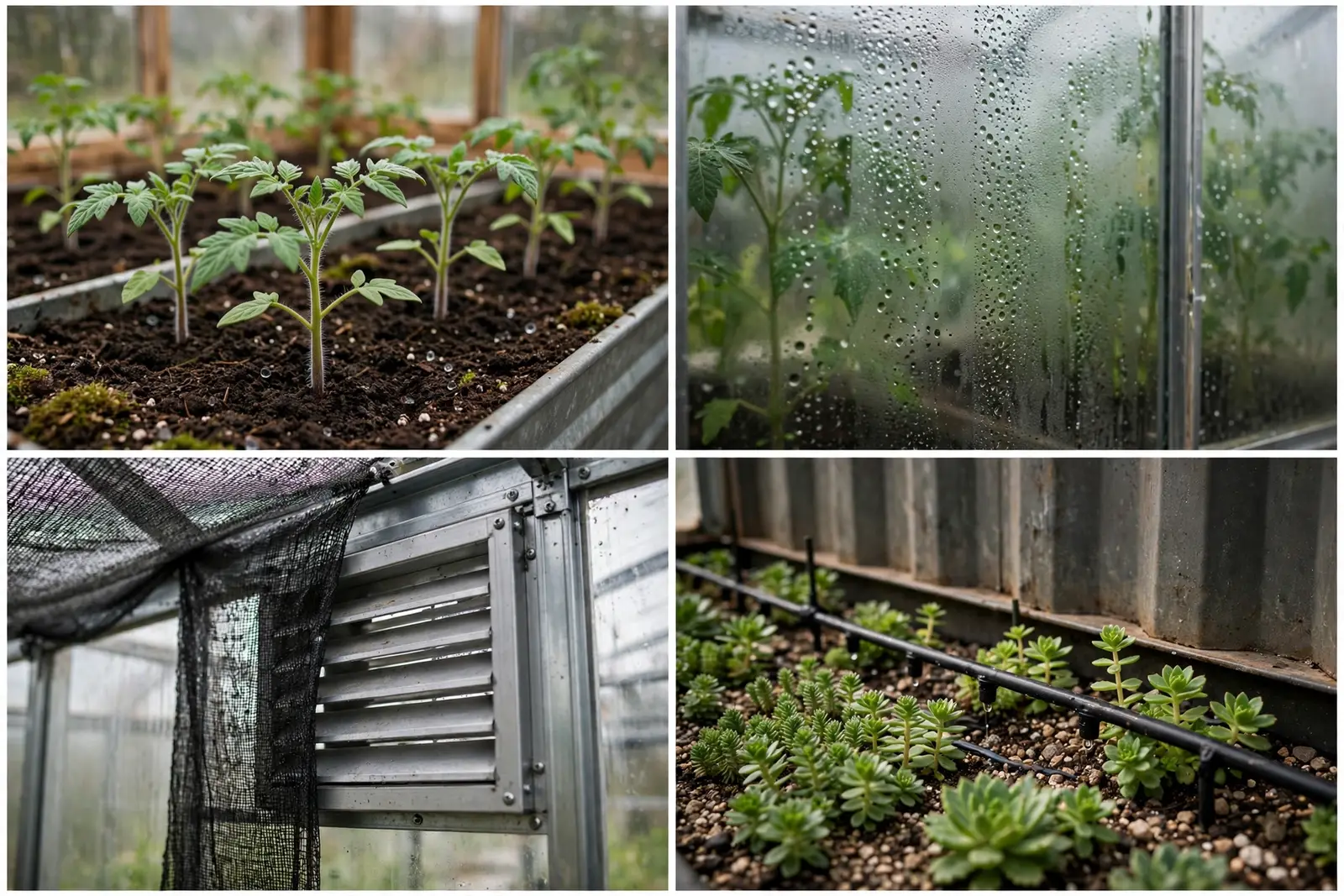
Ventilation matters as much as structure. Louvers and a shade cloth keep the glass box from cooking the plants.
Drip lines handle watering at the base. The roof plants and the greenhouse share one water system. Smart.
4. The Moss Panel Retreat

Not every wall wants sun. This forest retreat faces the shady side of the woods, so it wears moss.
Moss panels are one of the simplest living walls. No soil needed. The moss grips a backing board and drinks from mist and rain.
The panels hang on a frame held off the steel wall. That air gap is everything. It lets the wall dry between waterings, so the container never stays damp.
Moss needs no fertilizer and almost no pruning. The panels you see are the same ones from three years ago. They just get softer and greener with time.
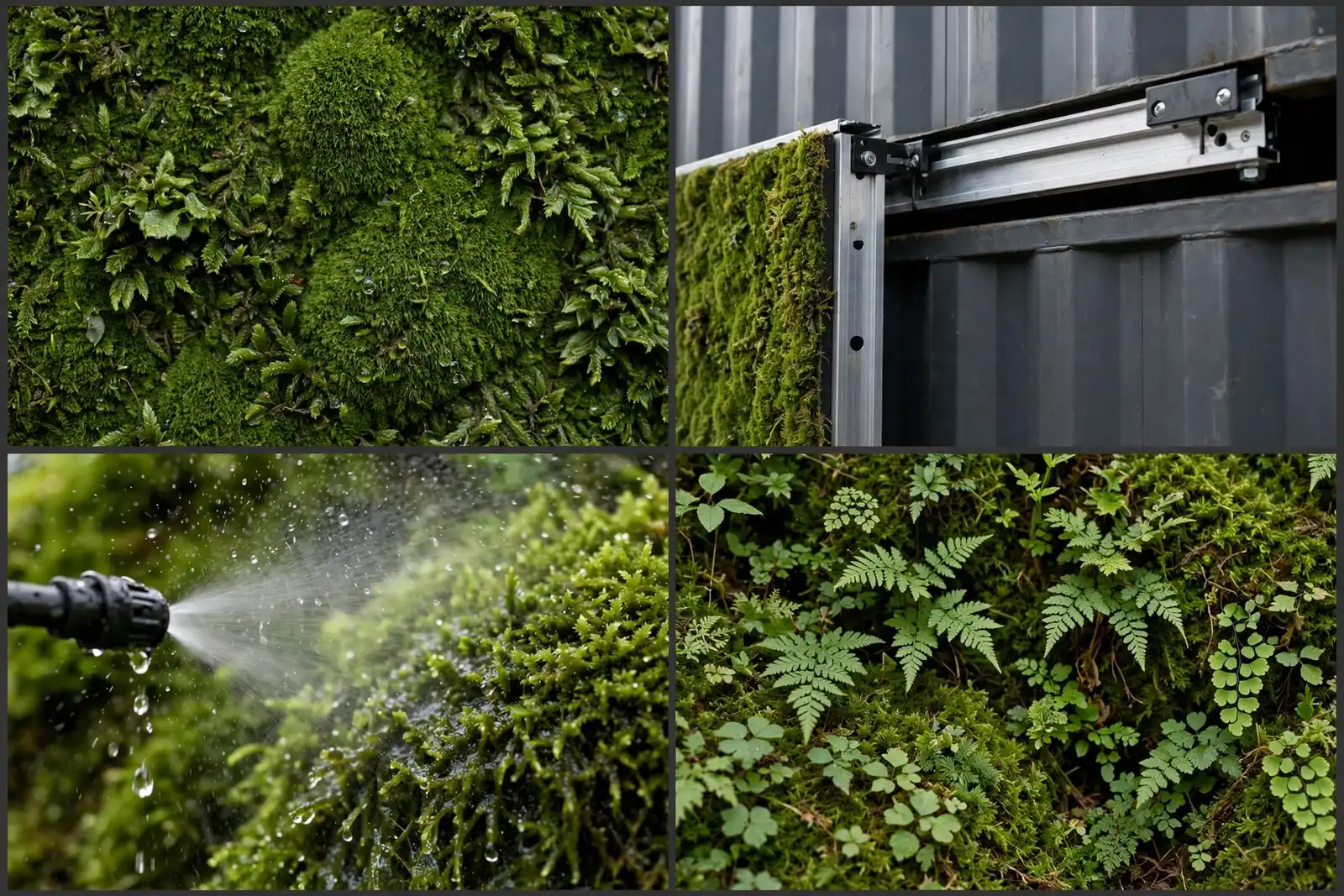
A small misting nozzle keeps things lush in dry weeks. Ferns tuck themselves into the moss on their own.
The whole wall hums green even in November. Moss does not care about seasons.
5. The Hydroponic Wall Studio

This is the lab-coat version of a living wall. No soil at all. Plants grow in felt pockets fed by drip lines.
The system recirculates water from a tank at the base. Emitters at the top drip nutrient water down through the felt. Roots drink as it passes.
The panels mount on a frame with a real gap off the container. A drainage trough catches every drop at the bottom. Nothing touches the steel.
A timer runs the whole show. Four short watering cycles a day, and the pump rests at night. The electric bill for the system is smaller than a porch light.
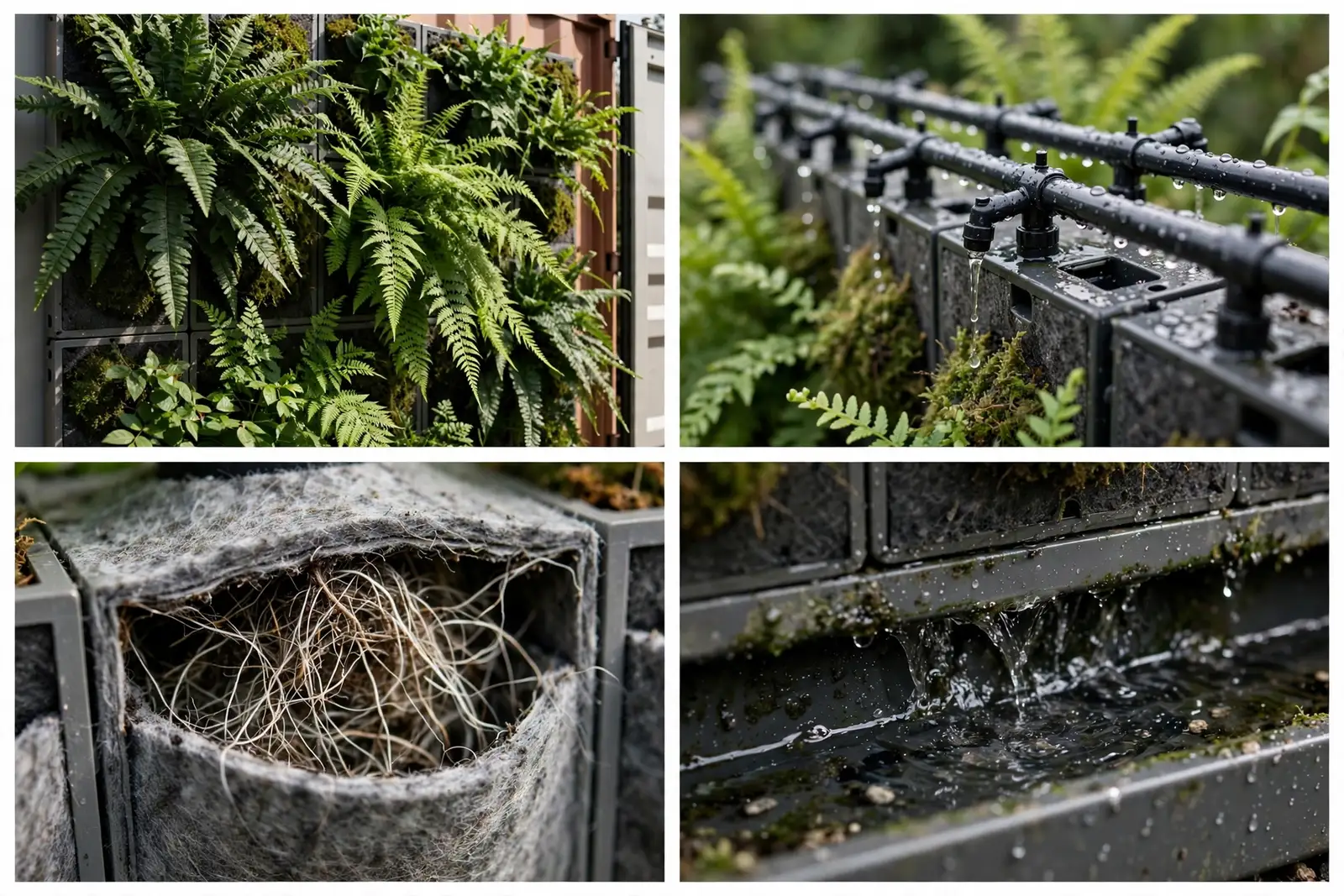
Up close you can see the felt, the roots and the plumbing. It looks technical because it is.
The studio stays cooler behind its green curtain. Ferns love the constant moisture. So will you, on a hot afternoon.
6. The Culinary Herb Wall Home
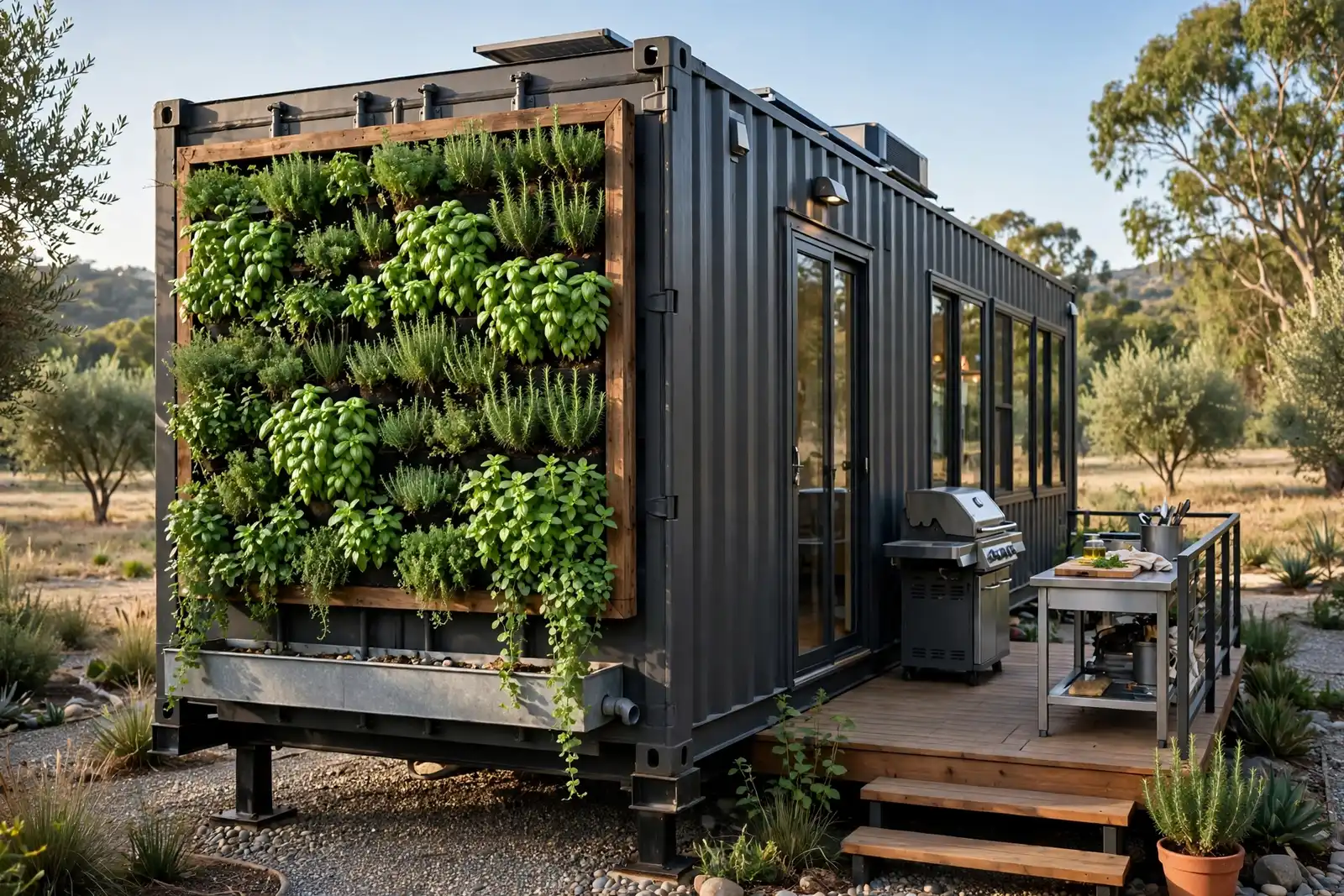
This wall earns its keep at dinner time. Basil, rosemary, thyme, mint. All within arm’s reach of the grill.
The herbs grow in pockets set in a cedar frame. Cedar shrugs off weather. The pockets drain into a metal trough at the base, which doubles as a planter.
Putting the wall next to the outdoor kitchen was the smart move. You snip while you cook. No trip to the store for a sprig of rosemary.
The frame faces south to catch full sun. Herbs are sun worshippers. The cedar will silver with age, which only makes the green pop harder.
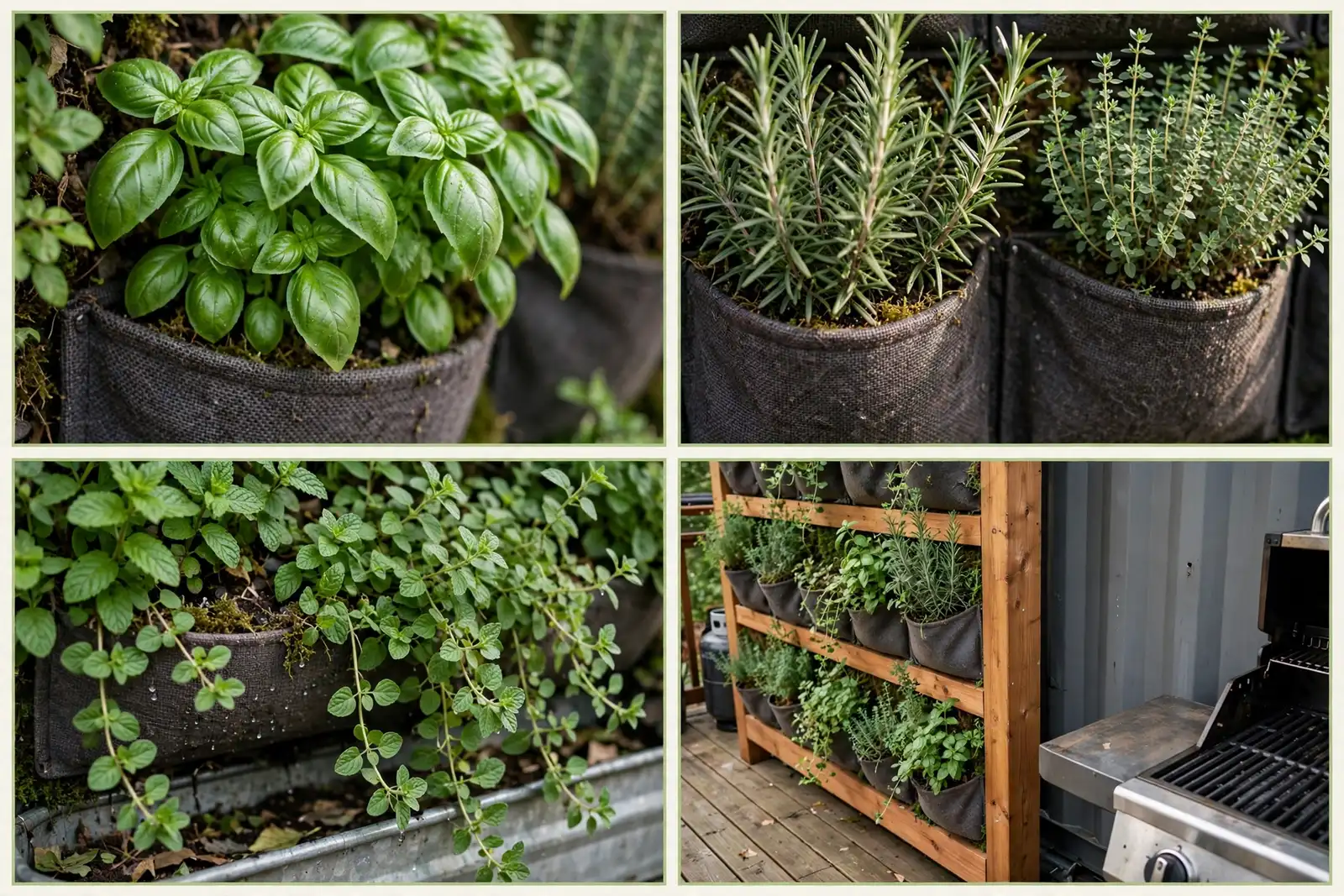
Mint goes in the lowest pockets for a reason. It is a bully and will take over anything it touches.
The grill deck sits right beside the wall. Dinner has never been fresher.
7. The Pocket-Plant Facade
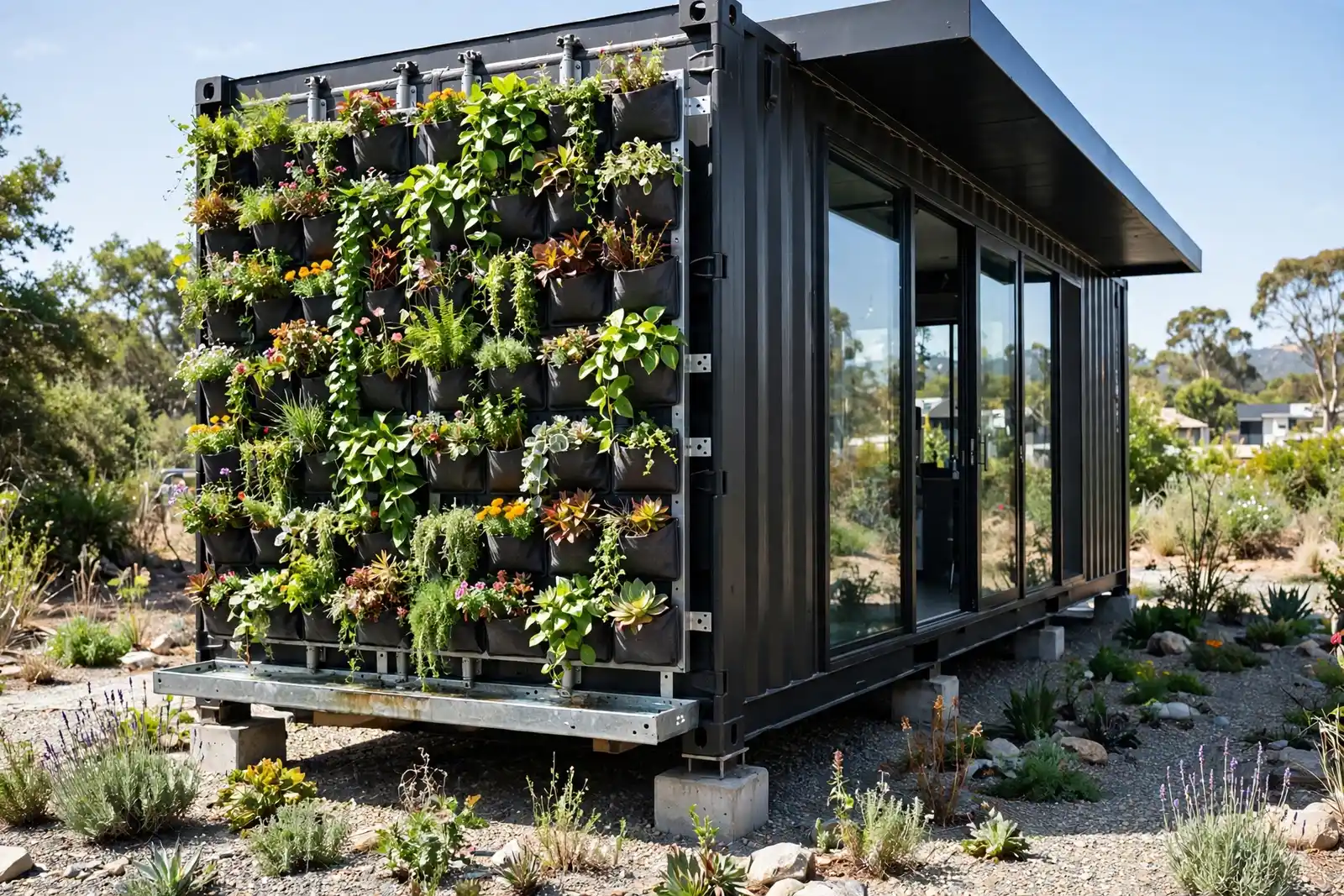
Fabric pocket planters turn a blank container wall into a vertical garden in a weekend. This facade uses a full grid of them.
Each pocket holds a small plant with its own soil. A manifold at the top feeds drip lines down every column. Excess water lands in a tray at the base.
The panels bolt to the container through standoff brackets. The gap behind keeps air moving and the steel dry. The whole thing can come down for repainting the container.
New gardeners love this system because mistakes are cheap. A dead pocket gets replanted in minutes. The wall is a sketchbook you can erase.
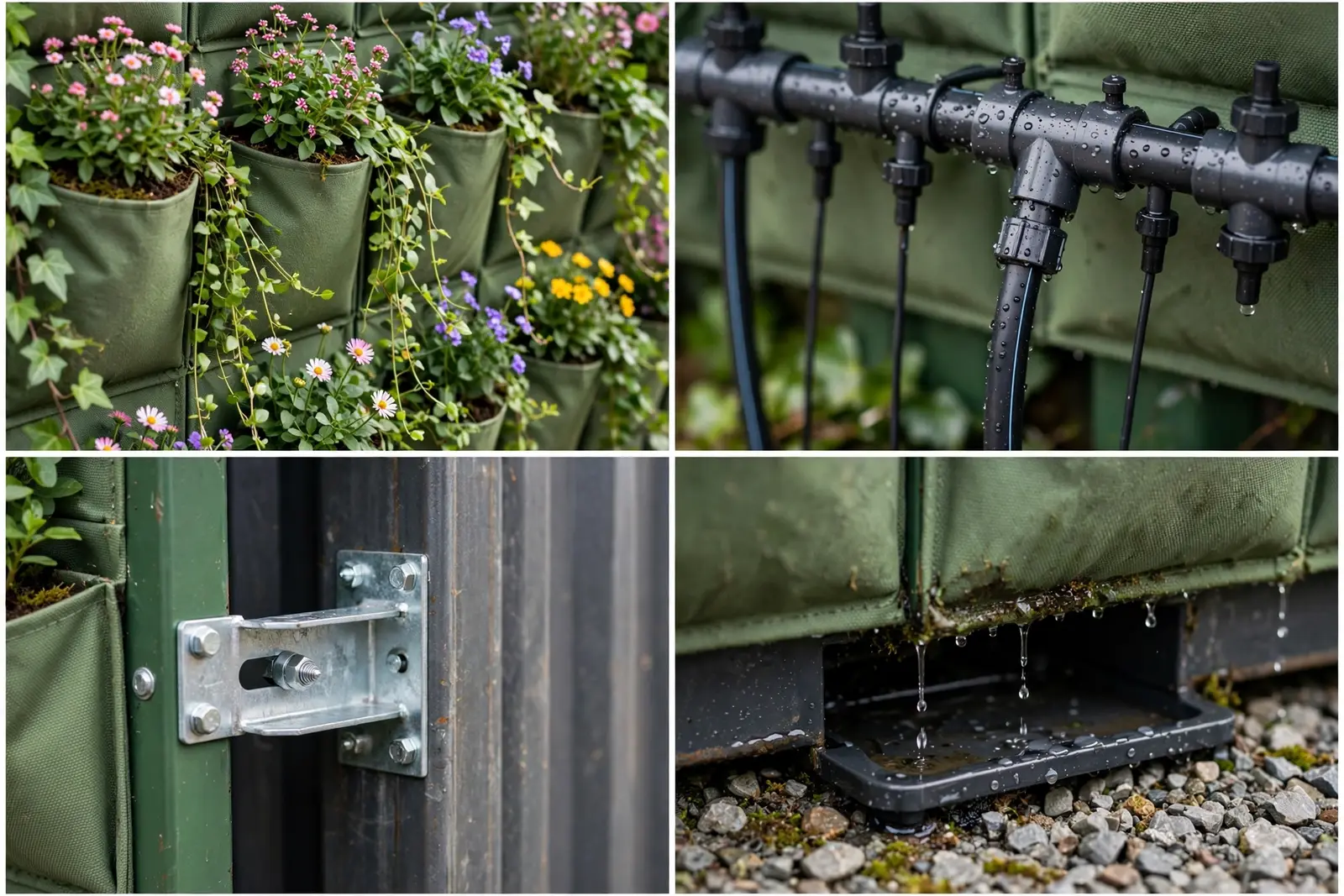
Flowers and trailing vines share the pockets. The mix changes with the seasons.
It is the fastest living wall on this list. Unbolt it and the container is untouched.
8. The Cascading Planter House
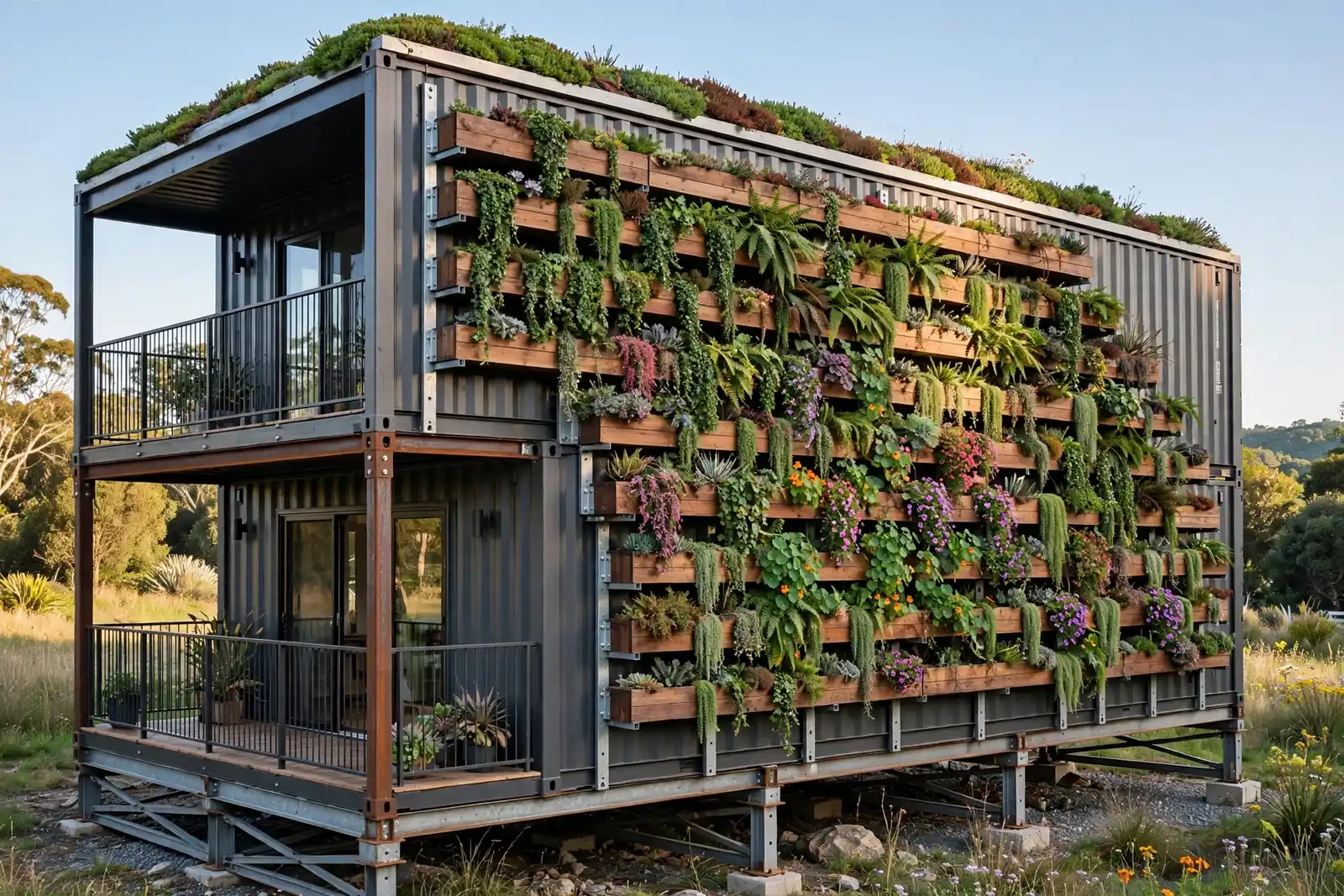
Two stories of containers call for a two-story garden. This home answers with tiers of wooden planter boxes running down the long wall.
Each tier is bolted through the container corner posts, the strongest part of the box. The brackets are overbuilt on purpose. Wet soil plus wood plus plants gets heavy fast.
Trailing plants spill from tier to tier. From the street it looks like a green waterfall. The sedum roof caps the whole thing.
The boxes are lined before planting. A simple pond liner keeps the wood dry from the inside, which is why these tiers will outlast the paint on the house.
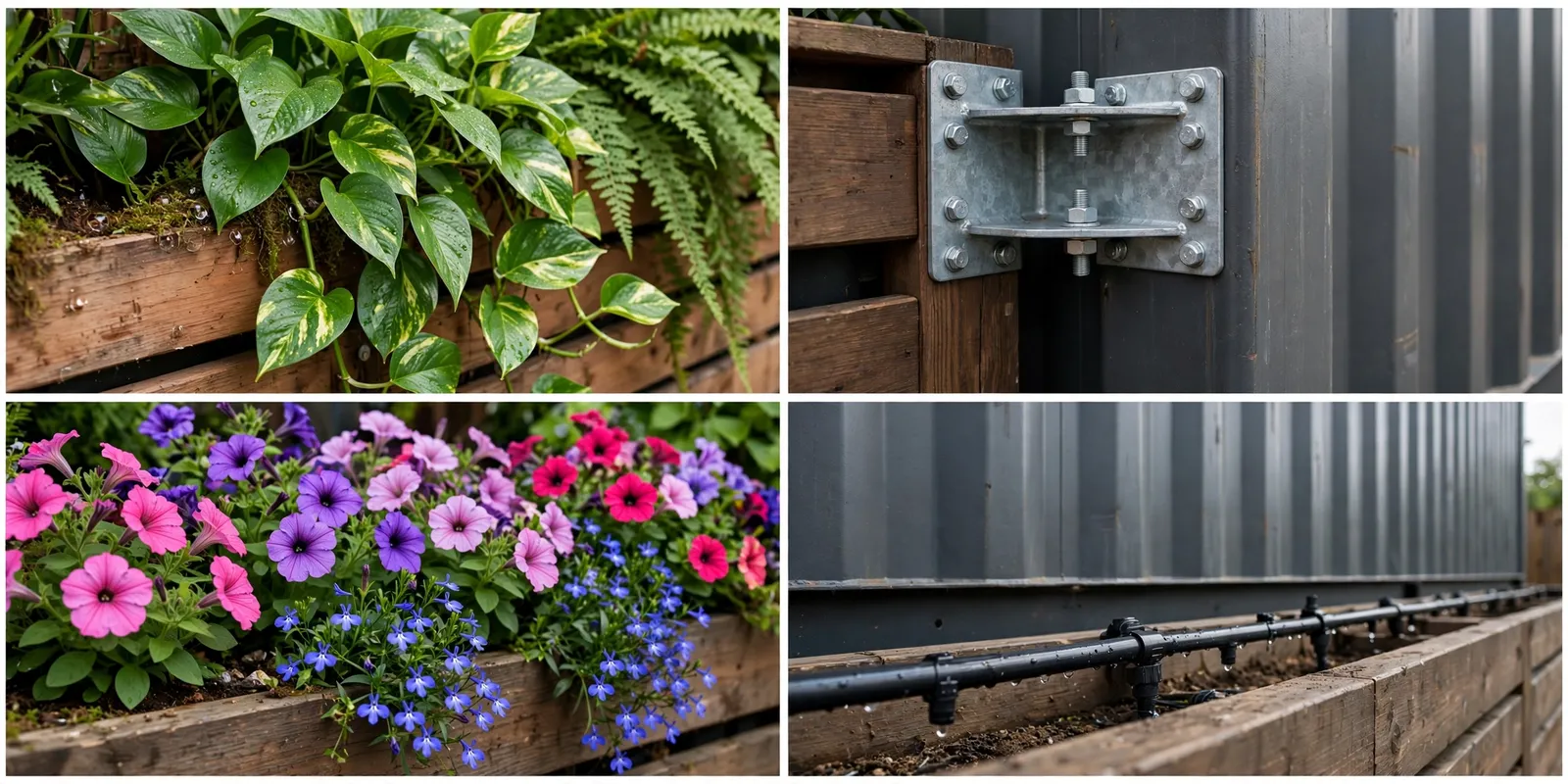
Petunias and lobelia fill the middle tiers with color. Pothos handles the shady lower boxes.
A drip line along the top tier waters everything below by gravity. Simple and clever.
Living Wall Systems, Compared
Five ways to grow up the side of a container. Pick the one that matches your water, weight and patience.
Water: mist only. Weight: light. Best for shady, damp walls that never see harsh sun.
Water: recirculating drip. Weight: medium. Best for big, lush, high-impact walls.
Water: drip lines. Weight: medium. Best for fast color you can swap each season.
Water: gravity drip. Weight: heavy. Best for bold cascading looks on strong frames.
Water: soil at the base. Weight: almost none on the house. Best for shade with zero moisture risk.
Golden rule for all five: never let wet planting sit directly on bare steel. A gap, a frame or a freestanding structure keeps the metal dry.
9. The Trellis Screen Cabin

Sometimes the smartest living wall is not on the wall at all. This cabin grows its green a few feet out.
A freestanding trellis carries climbing roses and jasmine. It shades the deck and the sunny side of the container. The steel stays completely dry behind it.
The trellis stands on its own concrete footings. It never touches the house. That separation is the whole trick: all of the shade, none of the moisture risk.
The trellis doubles as a privacy screen. From the road you see flowers. From the deck you see the garden. Everybody gets the view they want.
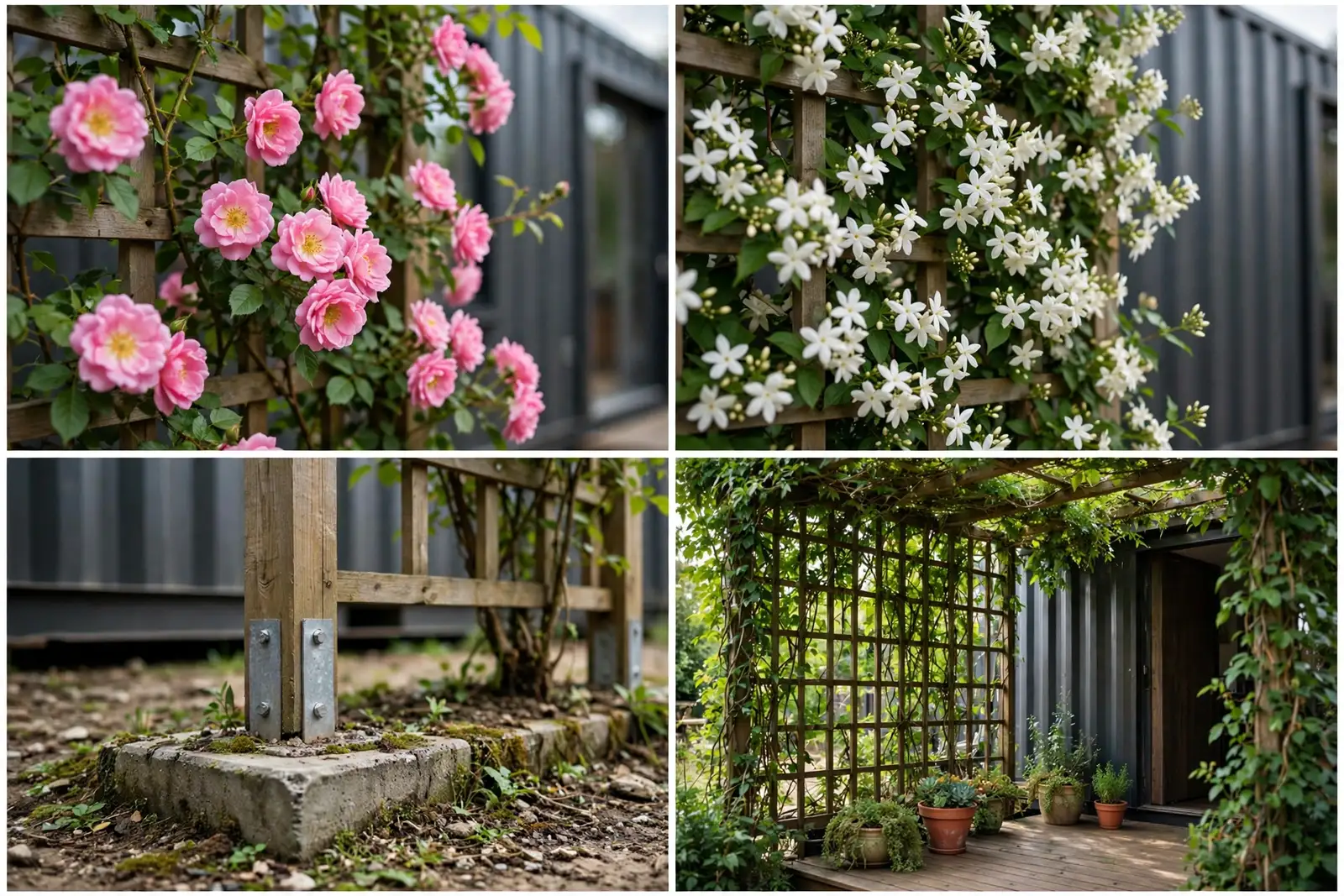
Roses bloom on one side, jasmine perfumes the other. The deck behind stays noticeably cooler.
In winter the vines go bare and the low sun reaches the windows. Nature’s thermostat.
10. The Ivy Stack House

Two stacked containers, one green blanket. Ivy covers this whole house from foundation to roof terrace.
The ivy does not touch the steel directly. It climbs stainless mesh panels held off the walls. Air flows behind, water drains away, and the siding stays dry.
The payoff is dramatic. The house disappears into the garden. Summer cooling is serious: a living shade layer beats any paint color.
English ivy on mesh beats ivy on brick. The mesh takes the grip, the wall takes none of the damage, and a panel can be lifted away for inspection any time.

The rooftop terrace keeps the green going with sedum and succulents behind the ivy parapet.
Ivy is slow to start and then unstoppable. Prune the windows twice a year. That is the whole maintenance plan.
11. The Courtyard Fern House

Three containers in a U-shape make a private courtyard. Then the courtyard walls go green.
Ferns and moss cover the inner walls in a dripping tapestry. A stone pond sits in the middle. A bench waits beside it.
The wall panels sit on waterproofed backing with drainage at the base. Constant moisture is fine for ferns, but the structure underneath stays dry and sound.
The U-shape was deliberate. It traps humidity and blocks wind, making a microclimate two zones warmer than the open garden outside. Ferns that would sulk in the open garden thrive here with almost no help.

The water feature keeps humidity high. Ferns repay the favor by staying lush.
It is the quietest spot on this list. Just water on stone and green on green.
12. The Succulent Mosaic Home
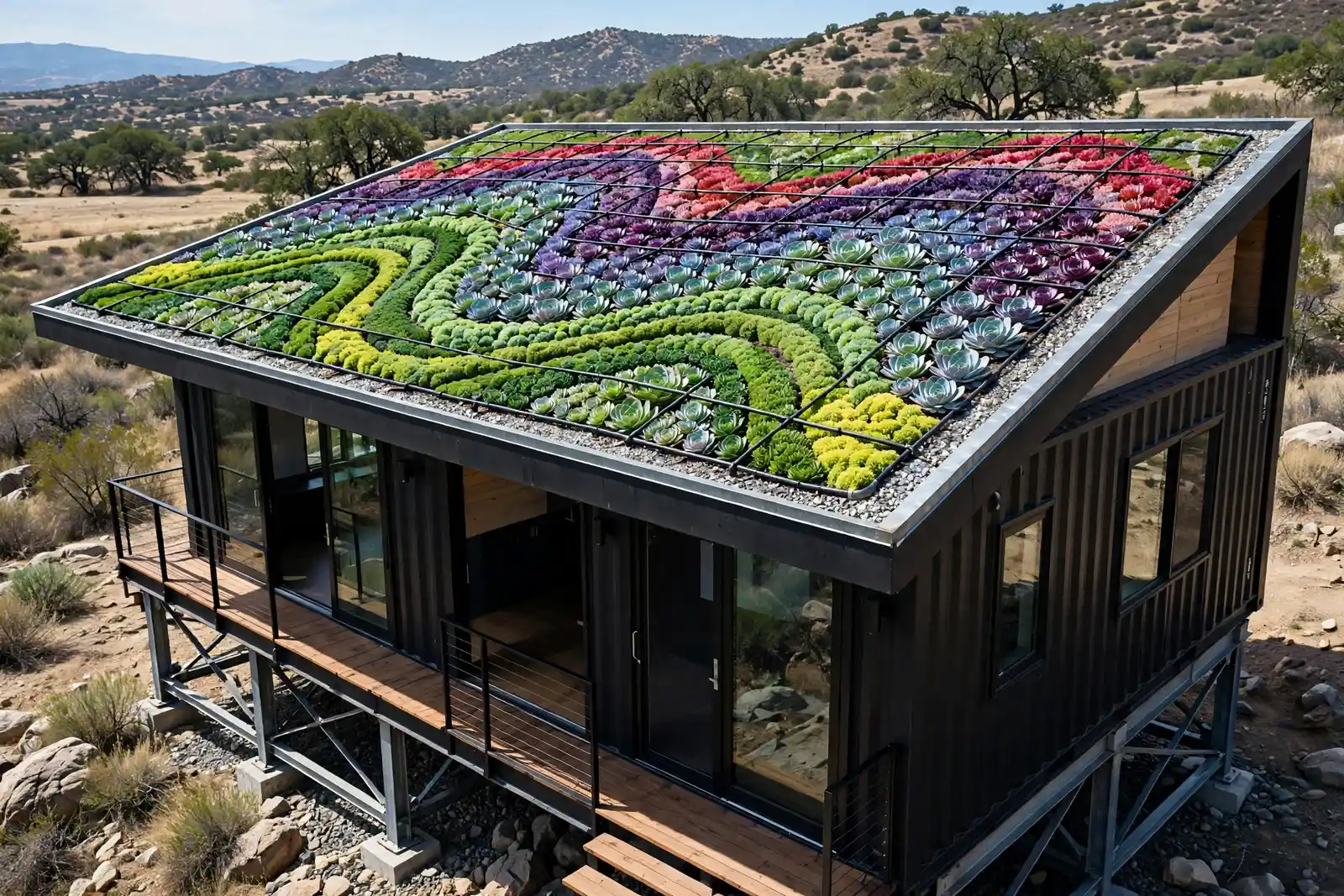
This roof is art you can see from the hill. Echeveria, sedum and sempervivum planted in swirling waves of green, blue, purple and red.
Succulents are the camels of the plant world. They store water and wait out droughts. A mosaic roof like this can go weeks without a drink.
The plants sit in shallow trays with gravel mulch. A drip grid snakes between the rows for the hottest weeks. Weight stays low because the soil stays shallow.
Each color band is a different species with its own water rhythm. The design looks random. It is actually a planting plan drawn like a paint chart.
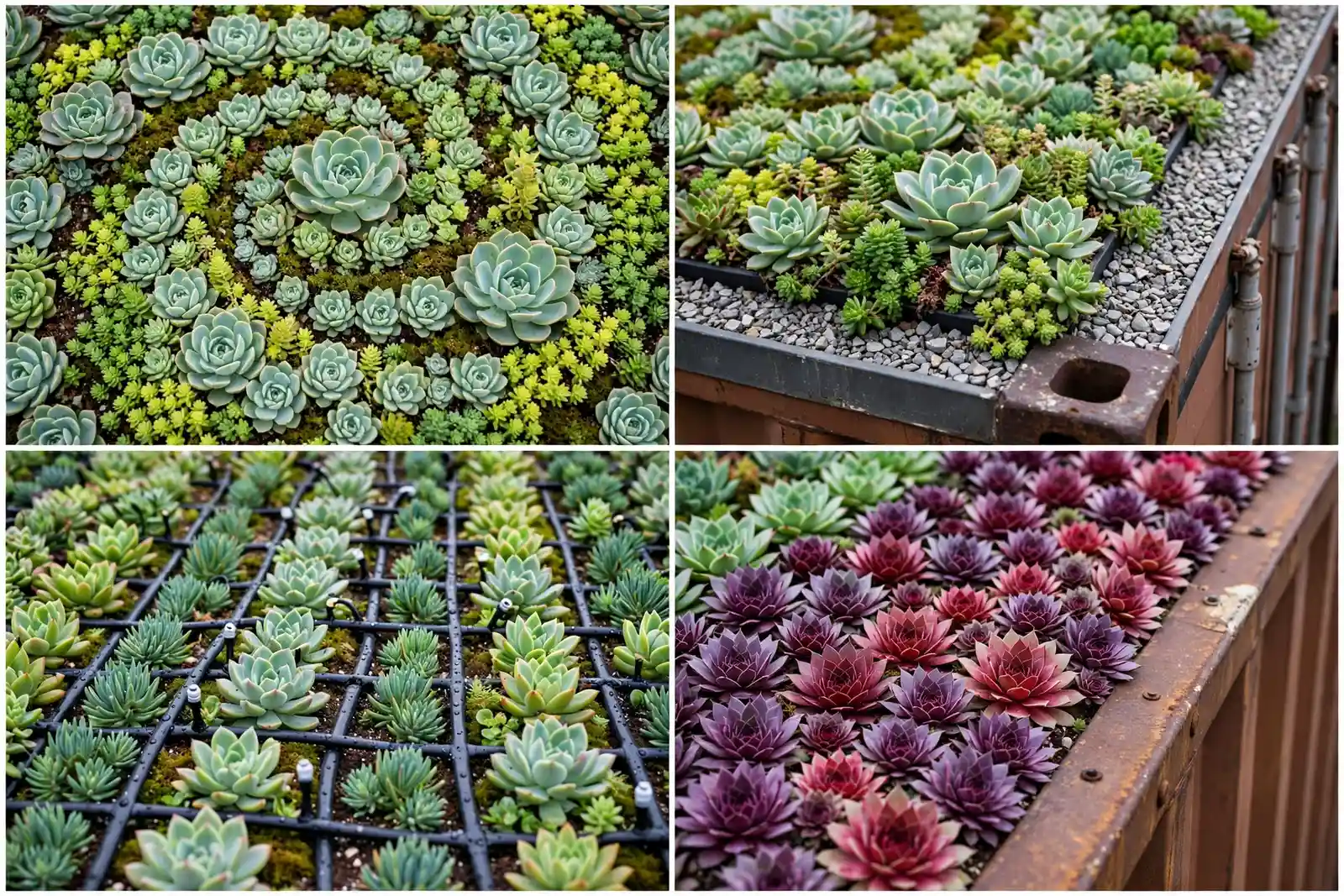
The colors shift with the seasons and the stress of summer. Purple deepens. Red flares.
From above it reads like a quilt. From the deck it is just a very pretty roof.
13. The Intensive Rooftop Garden

Most green roofs are decoration. This one is a farm.
The roof carries deep raised beds full of vegetables, with wooden walkways between them and a seating area at one end. You climb the stairs with a basket and come down with dinner.
This is the heavyweight of the list. Deep soil plus water plus people means serious load. The roof deck is a reinforced steel frame, and the railing is built to code. Nothing here is an afterthought.
The stairs to the roof are wide enough for a wheelbarrow. That detail tells you this garden was planned by someone who actually gardens.
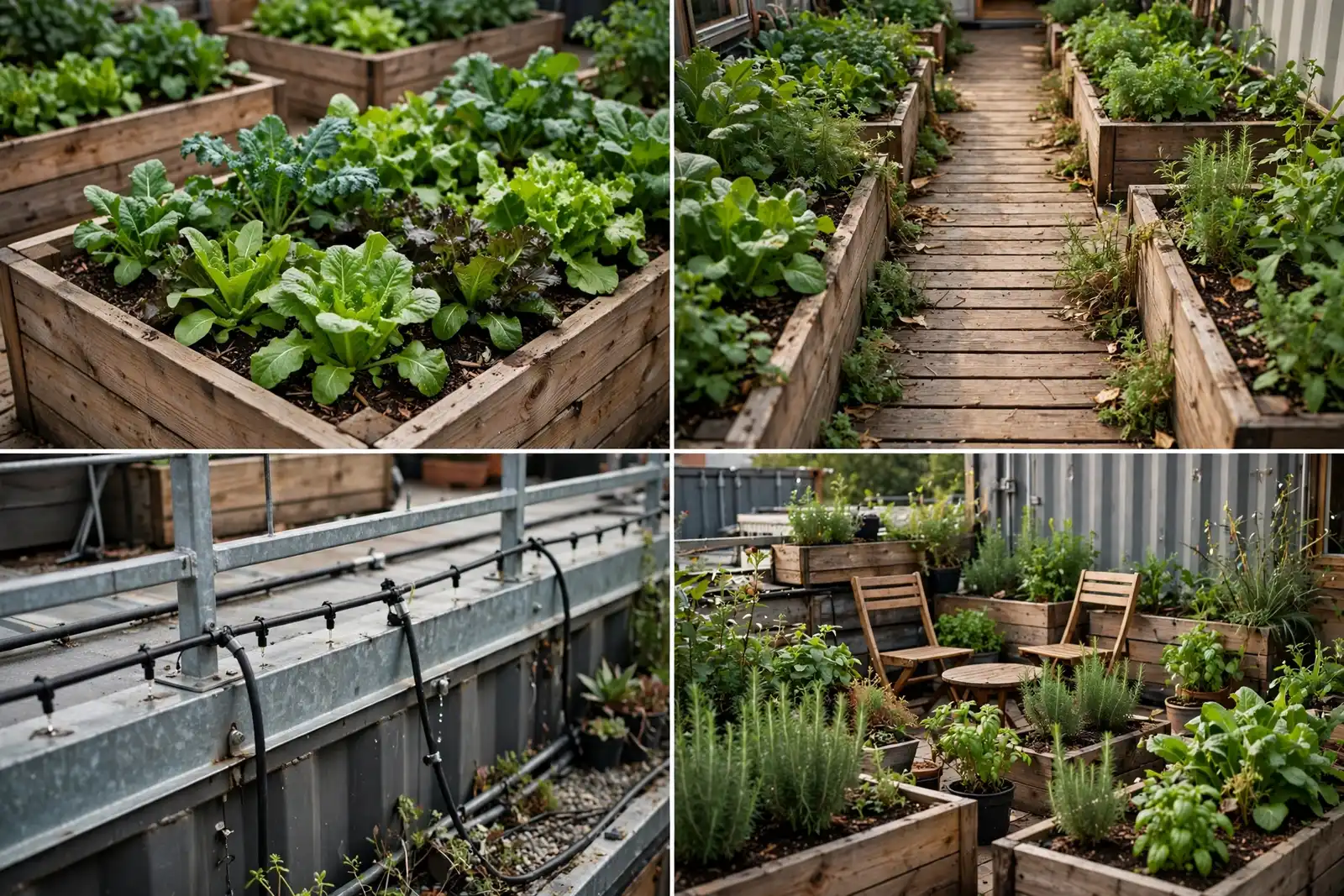
Drip lines run along the railing to every bed. The paths keep feet off the planting.
Two chairs, a small table, and salad growing at your elbows. Rooftop living at its best.
14. The Planted Pergola Patio
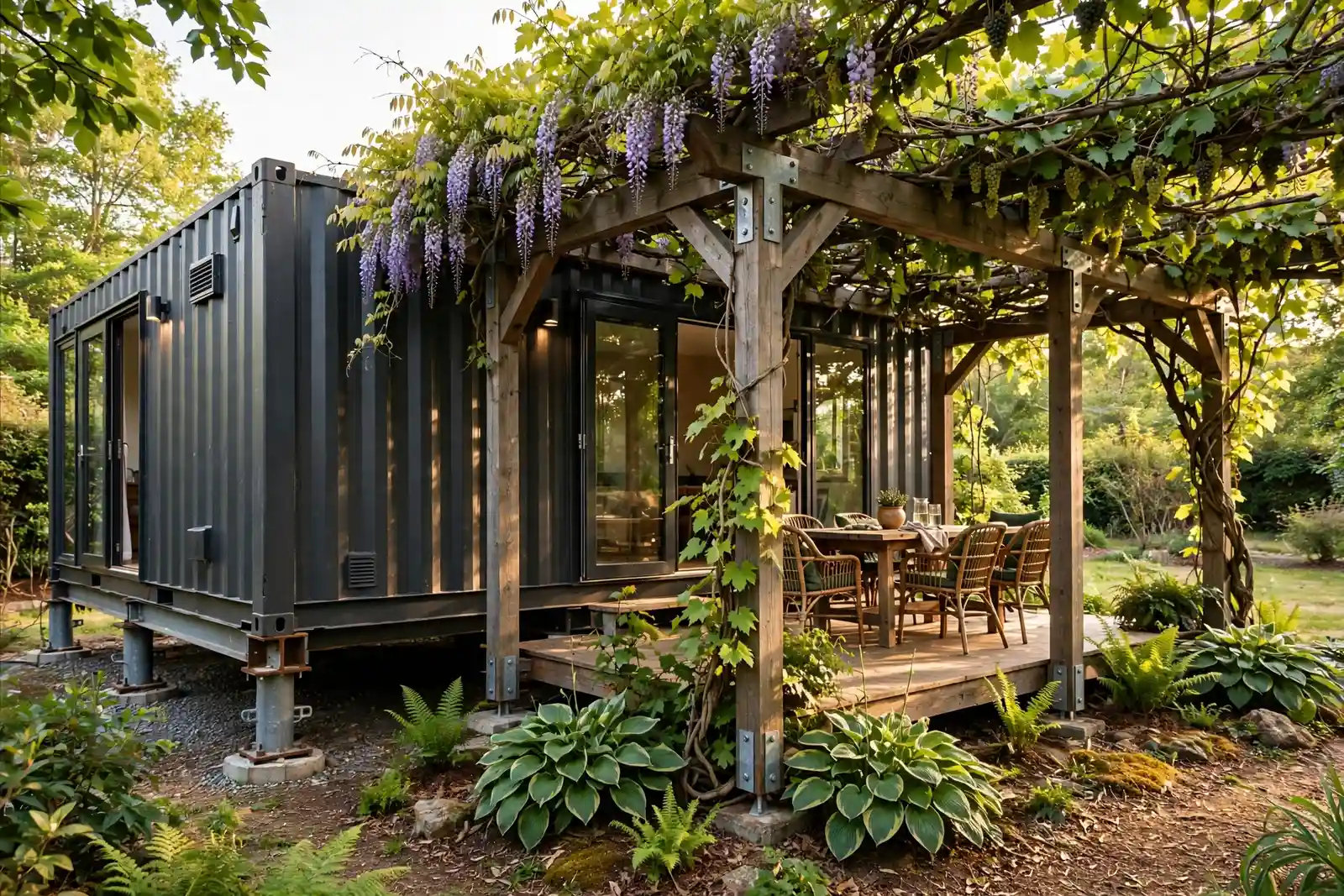
A pergola does two jobs here: it holds up the vines and holds up the party.
Wisteria and grapevines cover the timber frame, throwing deep shade over the patio. Underneath, hostas and ferns fill the beds around each post. The container wall behind stays cool and dry.
The posts are bolted to ground footings and tied to the container corner posts. Mature vines get heavy, and a wisteria in a storm is no joke. This frame is built for it.
The timber is oversized on purpose. A mature wisteria trunk can twist like a rope and crush a flimsy post. These posts will still be standing in thirty years.
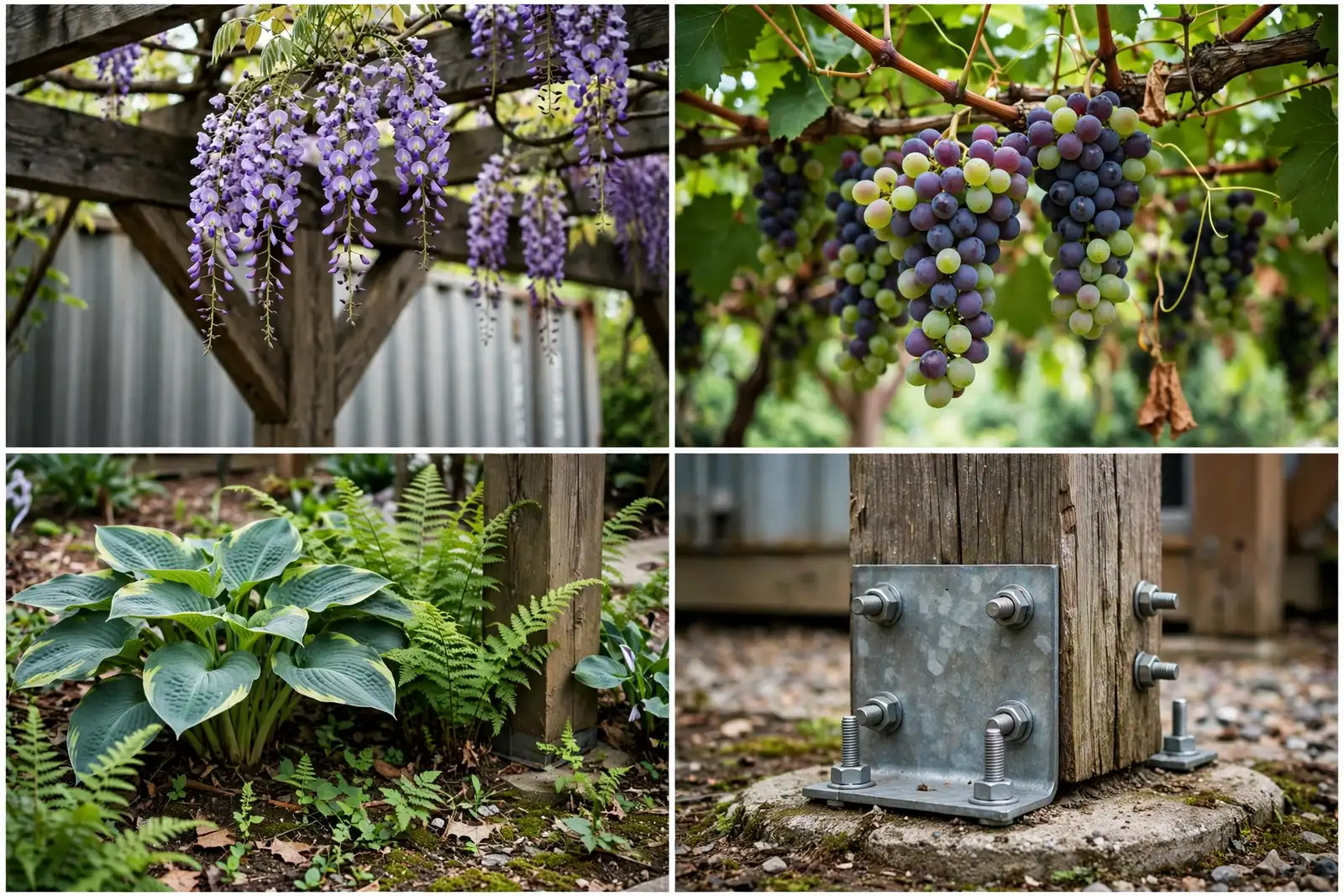
In spring the wisteria hangs in purple curtains. By late summer you are picking grapes over the table.
The patio becomes the coolest room of the house. It just has no walls.
15. The Bark-and-Stone Fence Homestead

The greenest thing here is not on the house. It is around it.
A rustic fence of stacked stone pillars and bark-covered timber rails rings the property. Moss and tiny wildflowers have moved into every crevice. The fence is gardening itself.
The stone pillars sit on proper footings. The bark rails are pinned between them and easy to replace. Nothing fancy, just honest materials aging beautifully.
The fence cost less than the deck. Stone was local, bark was milled on site, and the plants arrived free on the wind. Ten years on, it looks better than the day it was built.
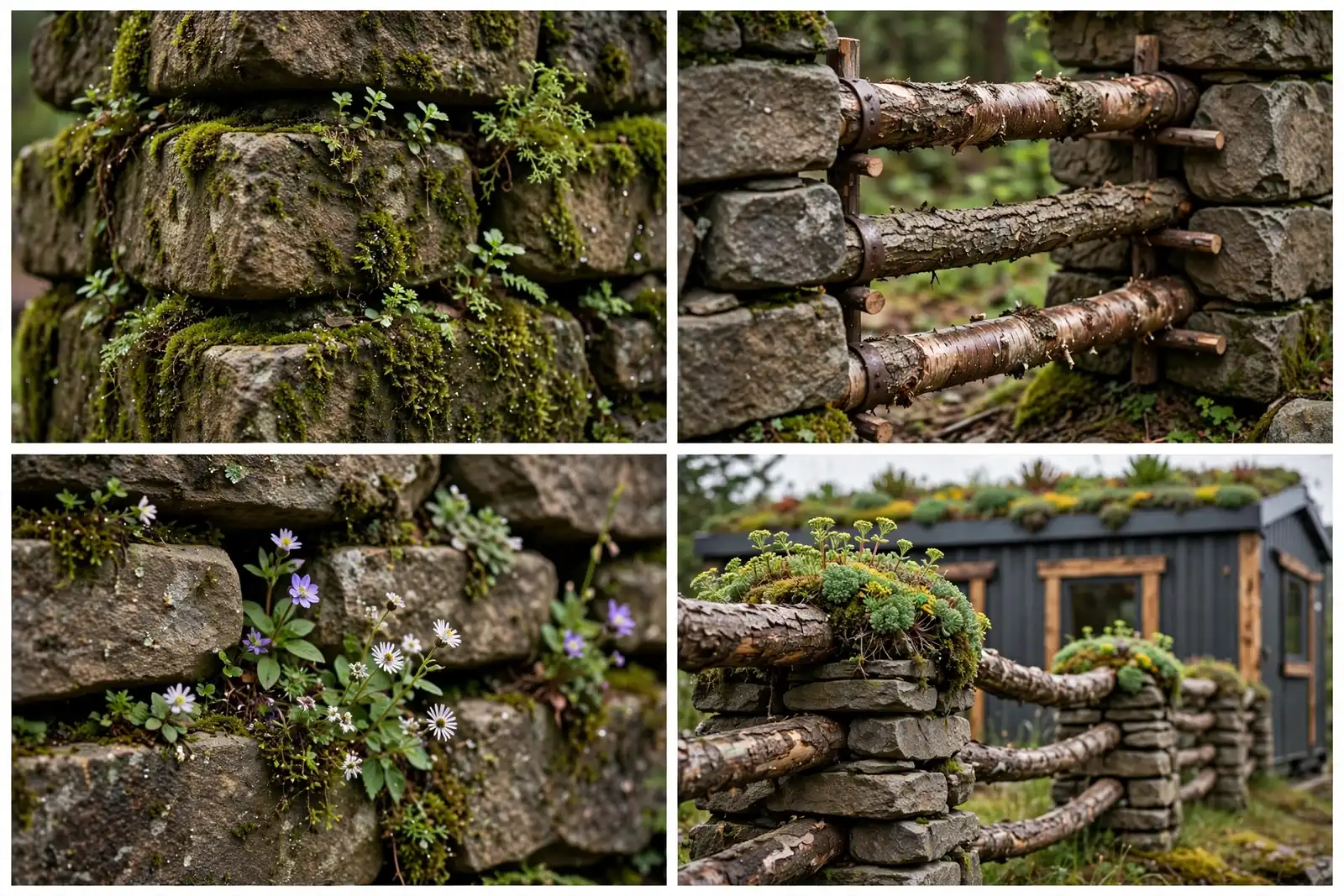
The container behind wears a simple sedum roof. The fence steals the show anyway.
It is proof you do not need a high-tech system. Stone, wood, time, and a little neglect.
16. The Solar Meadow Home
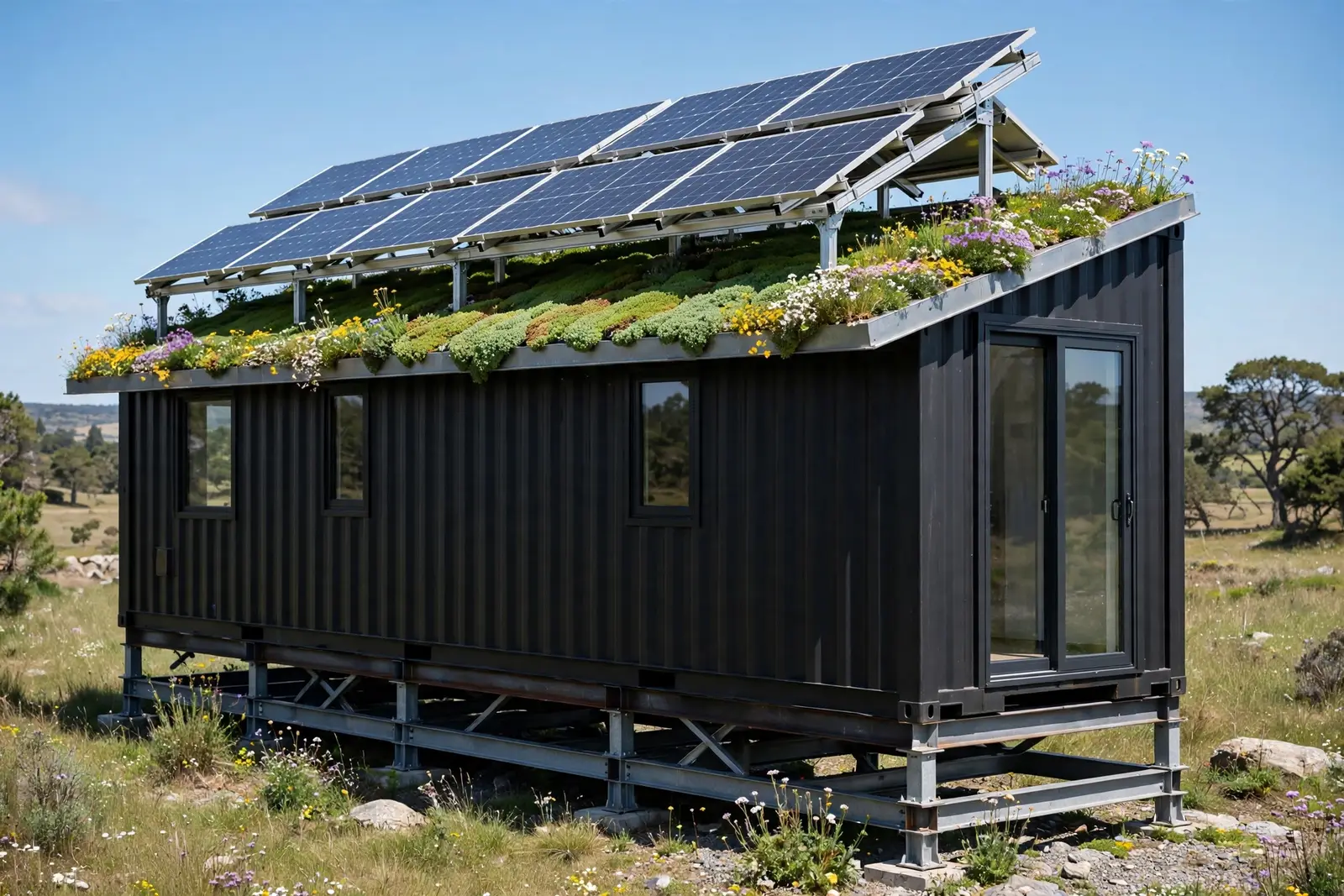
Roofs are valuable real estate. This one grows food for bees and power for the house at the same time.
Solar panels mount on aluminum rails above the sedum and wildflower roof. The planting cools the air under the panels, and cooler panels make more power. Each side helps the other.
The rails bolt through the reinforced roof tray. The planting stays shallow and light. Everybody gets along.
The panels tilt at the local latitude angle. Rain washes them, the plants cool them, and the gap underneath stays dry enough for storage. Monitoring shows the panels run cooler than a bare roof array nearby.
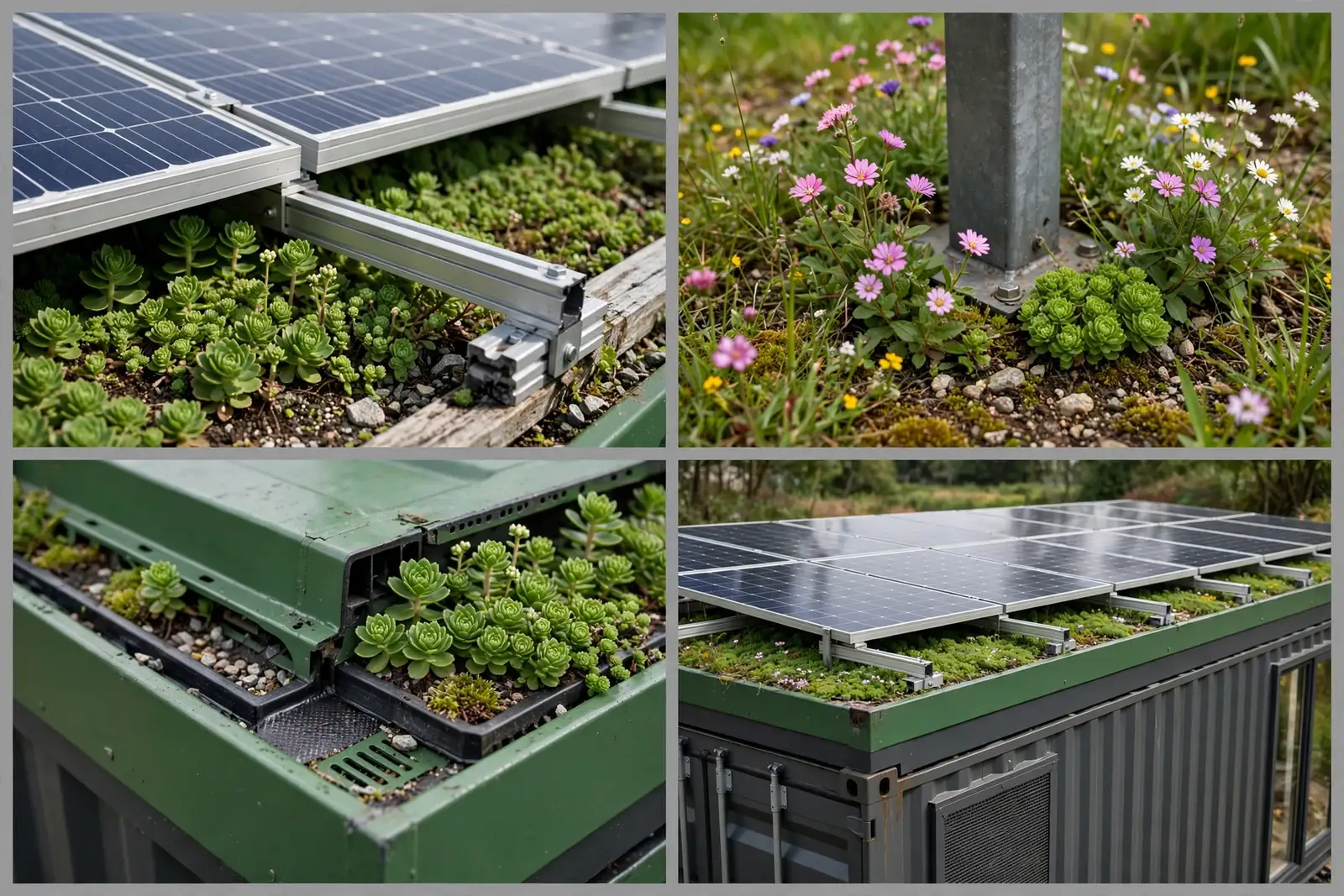
Wildflowers bloom right up to the panel posts. The bees do not mind the shade.
It is the most practical roof on this list. Pretty, productive, and it pays the electric bill.
17. The Rain-Garden Wrap

Every roof sheds water. This home puts that water to work.
Planted swales wrap the base of the raised container. Iris, rushes, grasses and ferns drink the runoff from the roof. Stone channels guide the flow. A little footbridge crosses the widest swale.
The grading is the quiet hero. Everything slopes away from the foundation, so the steel piers stay high and dry while the garden drinks.
The swales are planted, not dug and left. Roots hold the banks in storms, and the whole system gets prettier every year instead of eroding. A rain barrel at the downspout tops up the swales in dry spells.
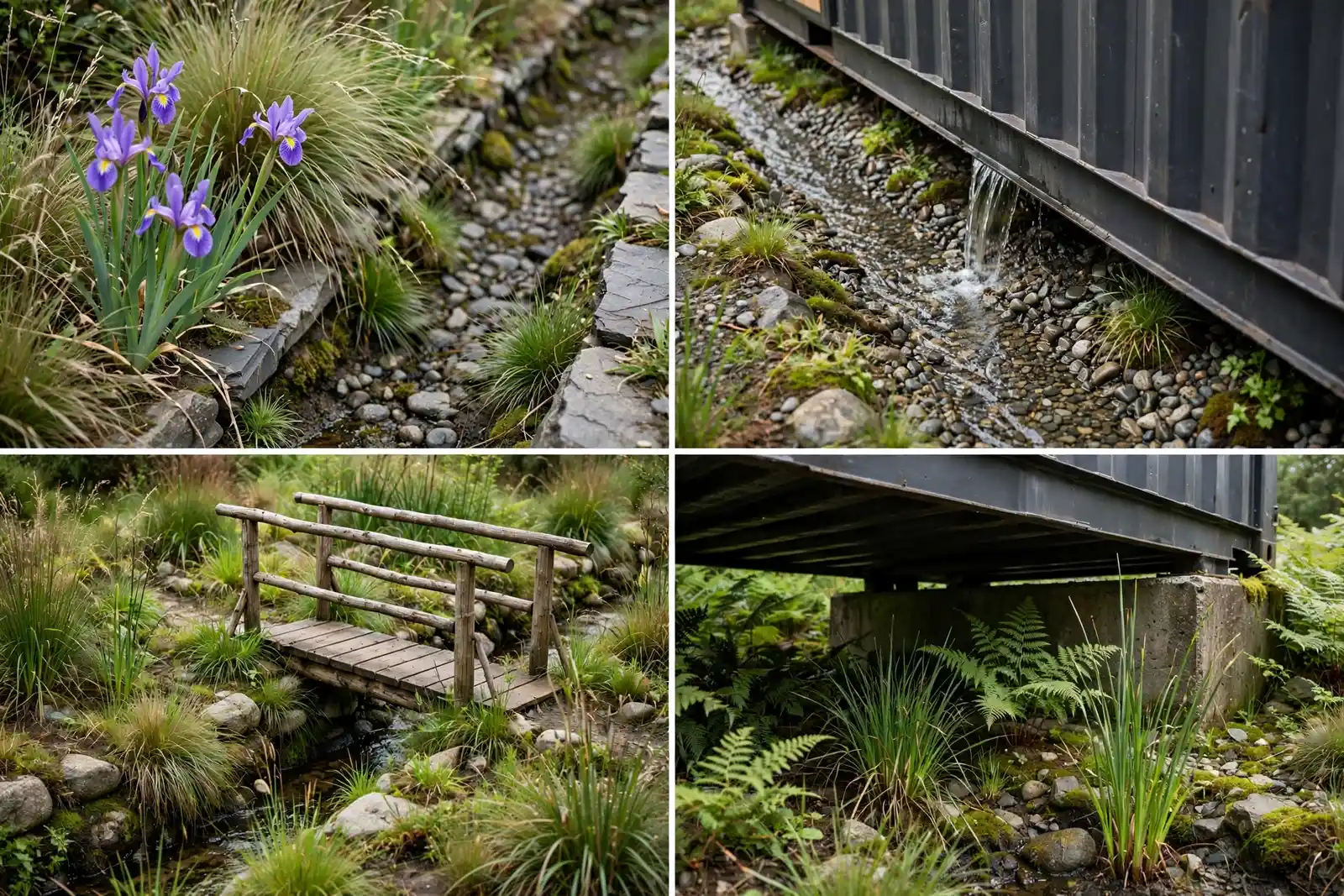
In a storm the swales fill and drain slowly. No puddles against the house.
It is landscaping that works like plumbing. And it looks like a watercolor.
Keep It Alive: The 5-Minute Routine
Living architecture is low maintenance, not no maintenance. Five small habits keep it thriving.
Seventeen homes, one lesson. Plants and steel get along fine as long as water has somewhere to go and weight has something to sit on.
Start small if you are tempted. A sedum mat or a pocket planter wall teaches you the rhythms: how fast things dry, what the drains do in a storm.
Then go bigger. A meadow, a greenhouse, a whole courtyard of ferns. The box is strong. Give it good bones and it will hold a garden as happily as it held cargo.