15+ Camper Van Lighting Ideas That Make Small Spaces Feel Warm


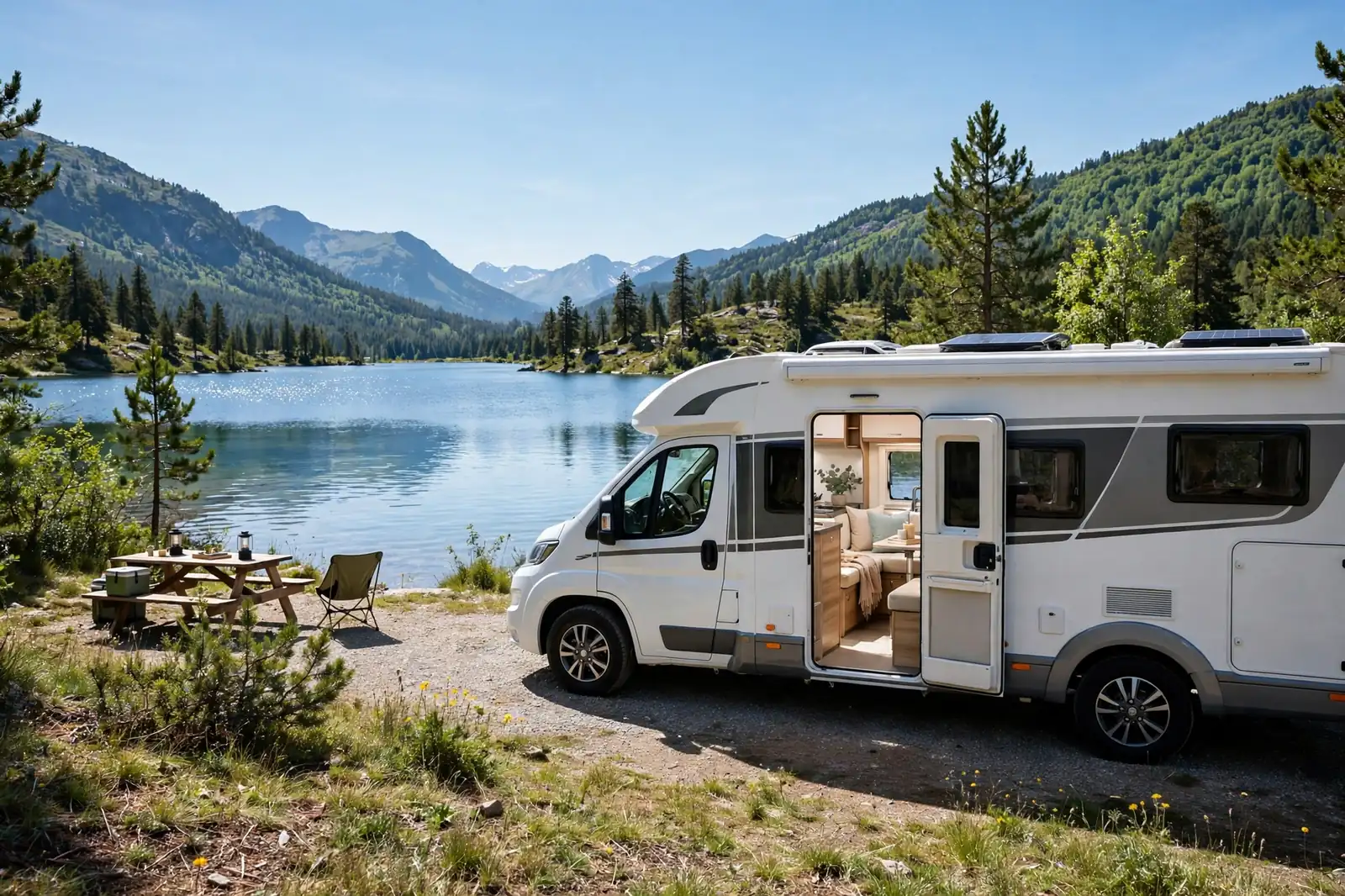
A camper van is small. That is the whole charm, and also the whole lighting problem. One harsh ceiling light can make the space feel like a storage box. A few warm lights in the right places can make the same van feel like a tiny cabin.
Warm light is the key. Look for bulbs and strips marked warm white, usually around 2700K to 3000K on the box. That number is called color temperature. Lower numbers look warm and golden. Higher numbers look cool and blue, which is great for a workshop and terrible for a cozy evening.
This roundup covers 15 lighting ideas that work in real vans. Some are wired into the 12 volt system, which is the low voltage power most vans already use. Others are battery powered or rechargeable, so you can try them with no wiring at all.
Read through with your own van in mind. Start with one or two ideas, live with them for a trip, then add more. Warm light layers better than one bright light ever will.
1. Warm White LED Strips Under Cabinets
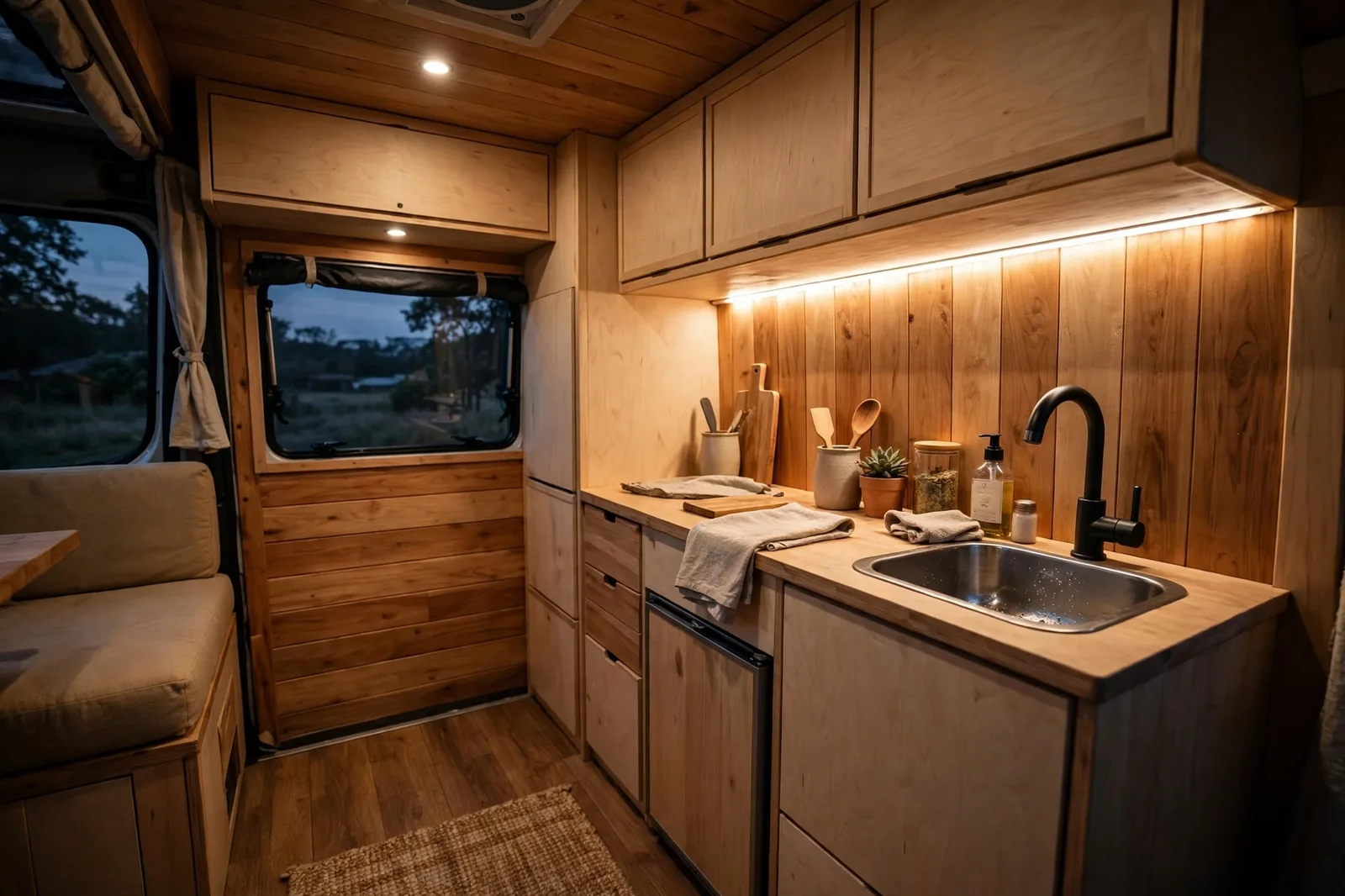
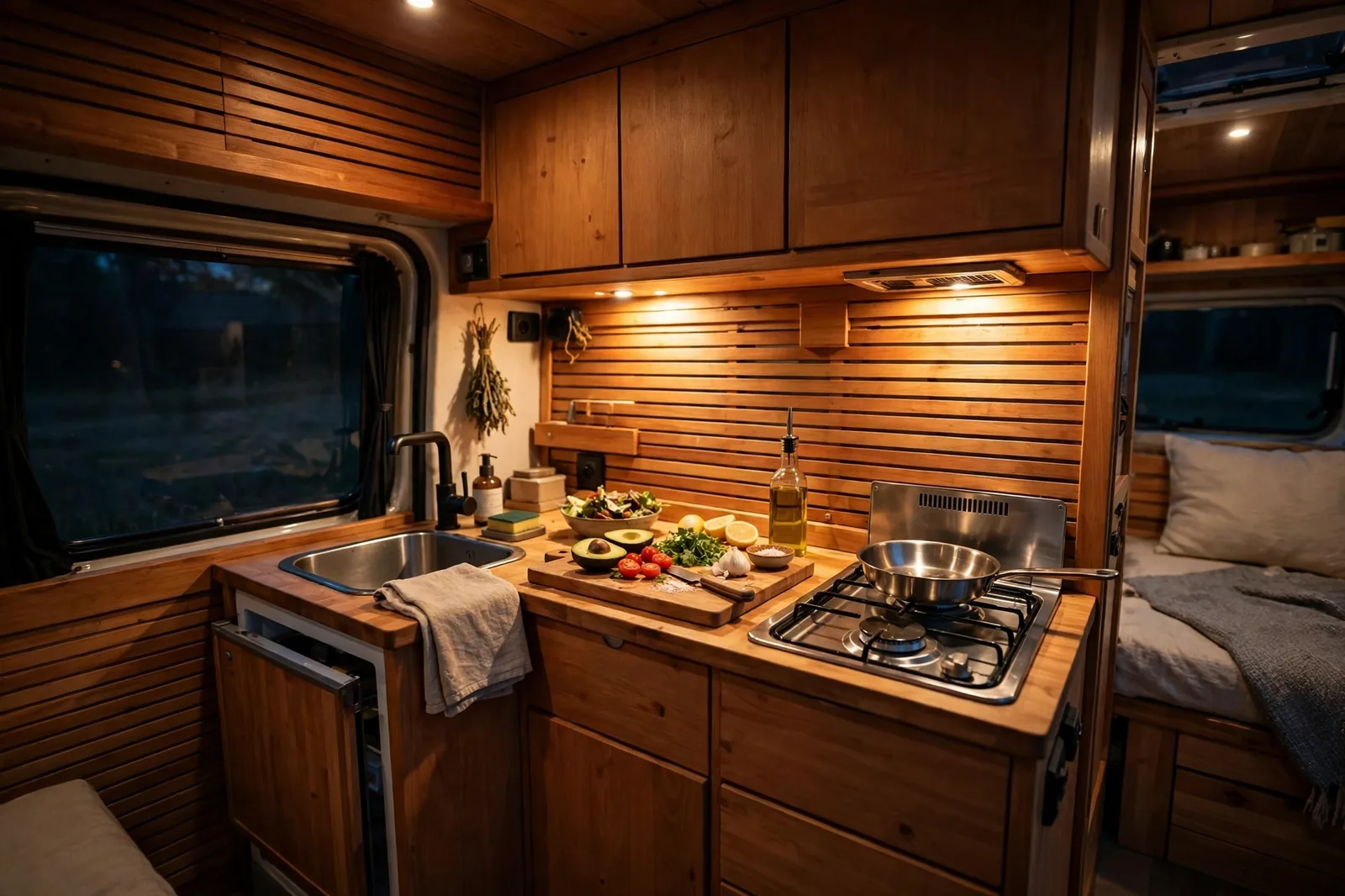
Under cabinet strips are the single biggest upgrade for most vans. They throw light down onto the counter, not into your eyes. Cooking, making coffee, and finding things at night all get easier at once.
LED stands for light emitting diode. In plain terms, it is a tiny light source that uses very little power and barely gets hot. A strip is a flexible ribbon of these lights that sticks to the underside of a cabinet.
Choose warm white, not daylight white. Mount the strip toward the back of the cabinet so the strip itself stays hidden and only the glow shows. A simple dimmer lets you turn it down for evenings.
This is also one of the cheapest wired projects in a van. One strip, a fuse for safety, and a switch are often all you need.
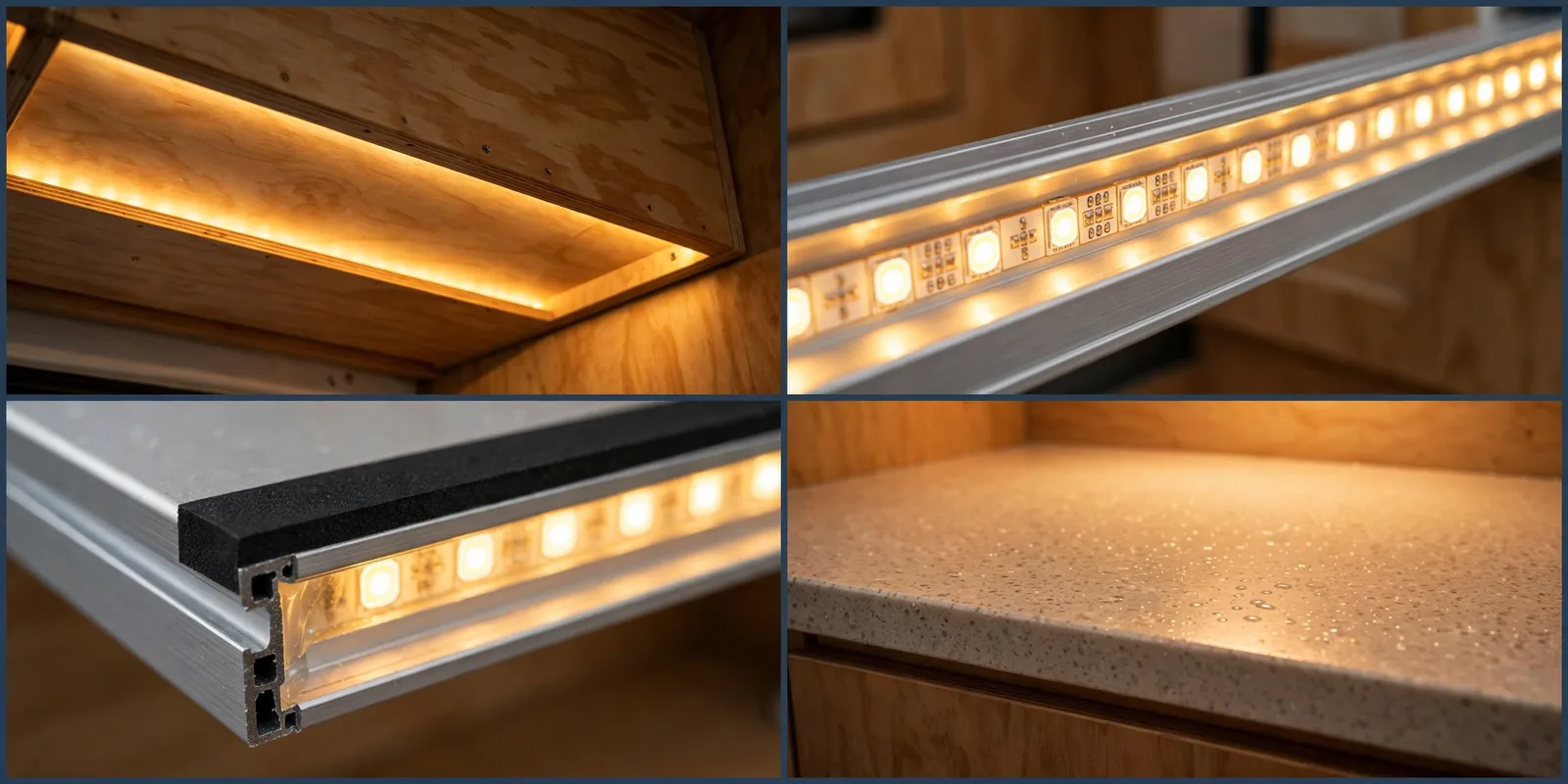
Keep the strip out of sight and the counter in light. That one rule makes the whole kitchen look finished.
If the glow looks spotty, add a thin diffuser channel. It is a plastic cover that spreads the light into one smooth line.
2. Festoon String Lights Across the Ceiling
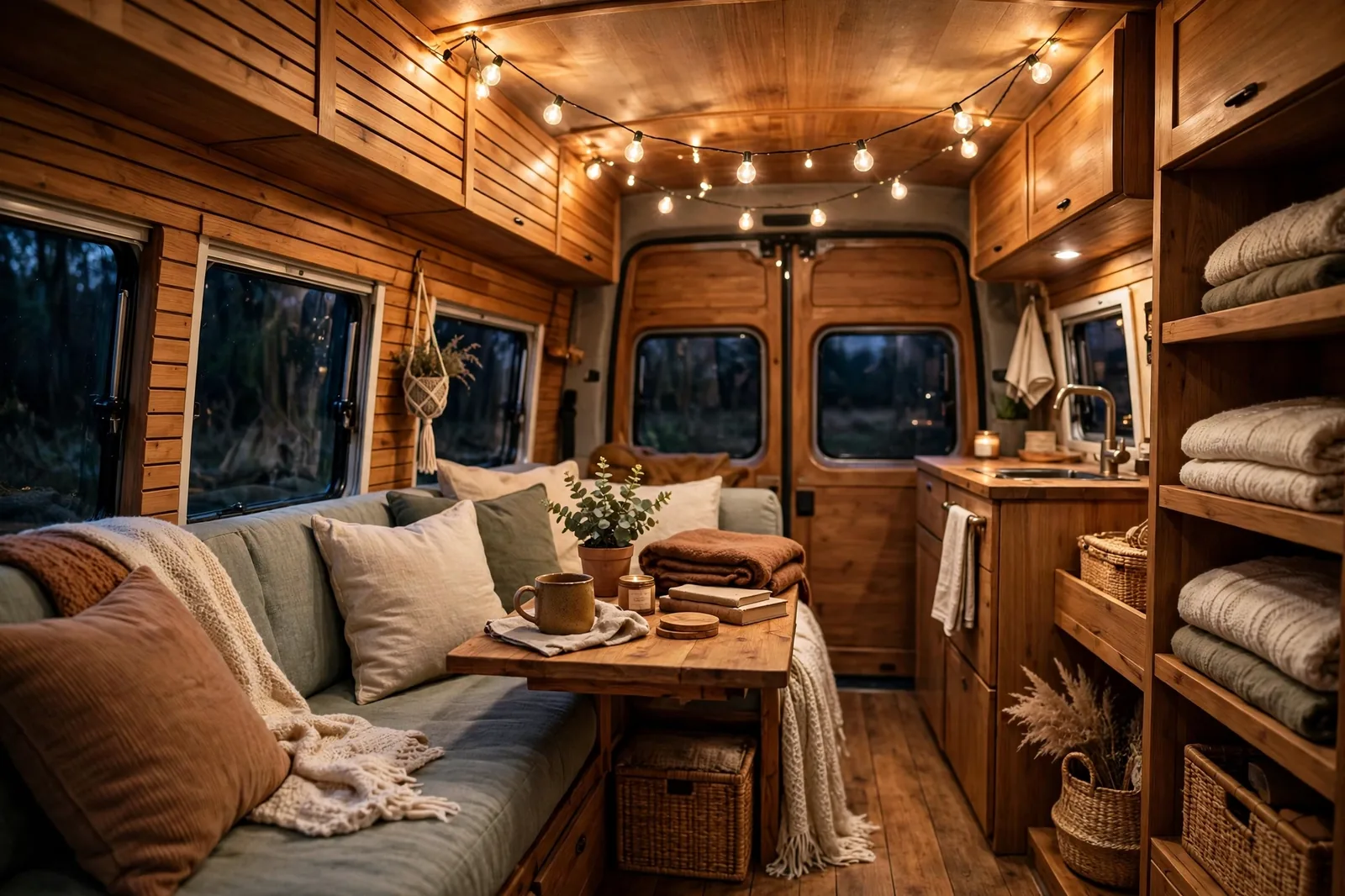
Festoon lights are the chunky outdoor style string lights with round bulbs. Draped across a van ceiling, they turn a plain roof into a warm canopy. The effect is instant and hard to beat for the price.
Hang them with small hooks or clips, not nails that could split thin ceiling panels. Run them in gentle swags, not tight straight lines. A little sag looks relaxed and lets the bulbs spread their light evenly.
Pick warm white bulbs and a dimmer if you can. Full brightness is great for packing up. Dimmed light is what you want for dinner and conversation.
Battery and USB versions exist if you do not want to wire anything. Plug in versions that run on the van 12 volt system avoid dead batteries on longer trips.
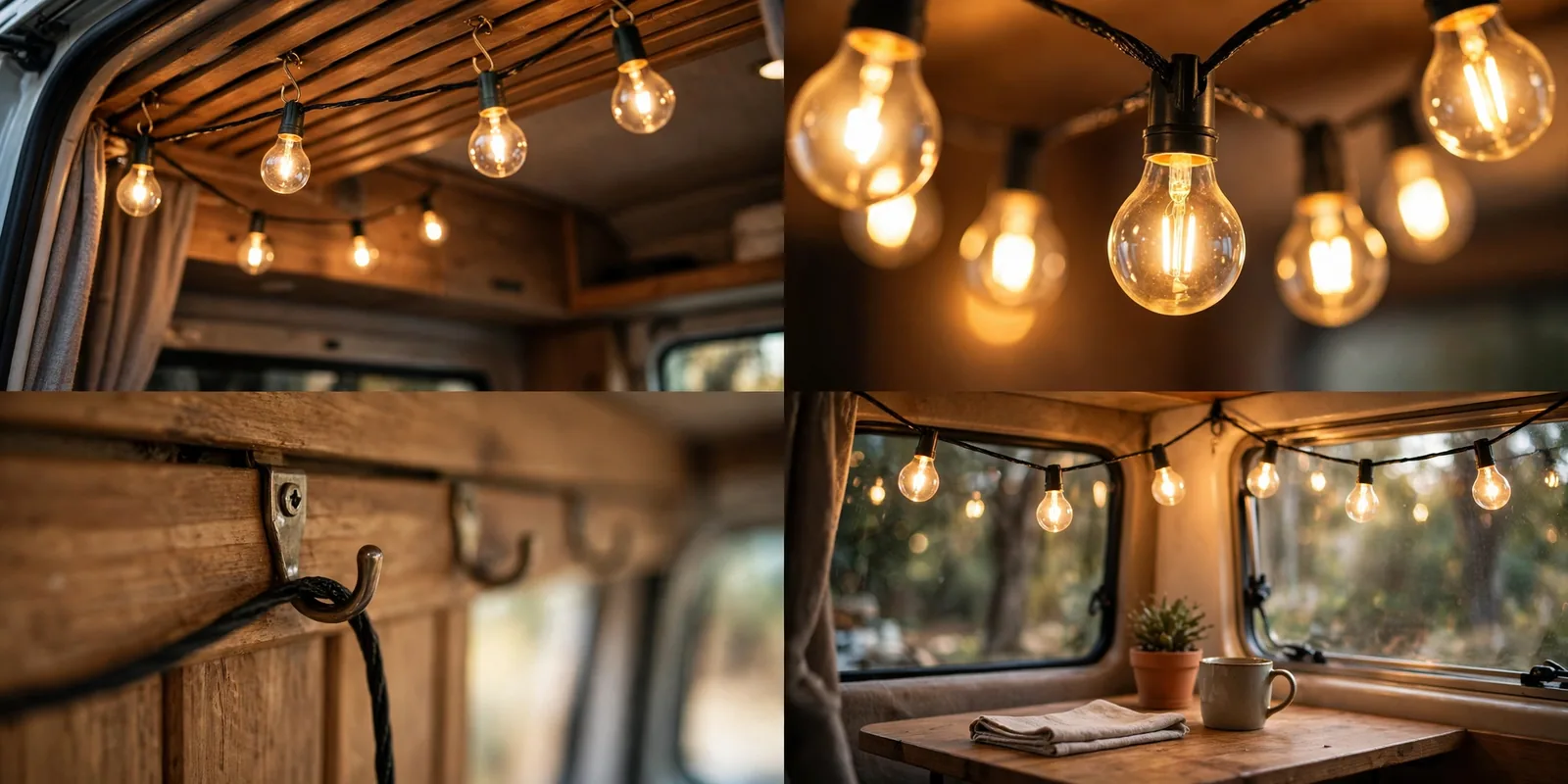
Keep the wire tidy at the ends. A loose tail of wire is the difference between charming and messy.
Festoon lights also work well over the bed or the seating area alone, if a full ceiling run feels like too much.
3. Paper Lantern Cluster Over the Bed
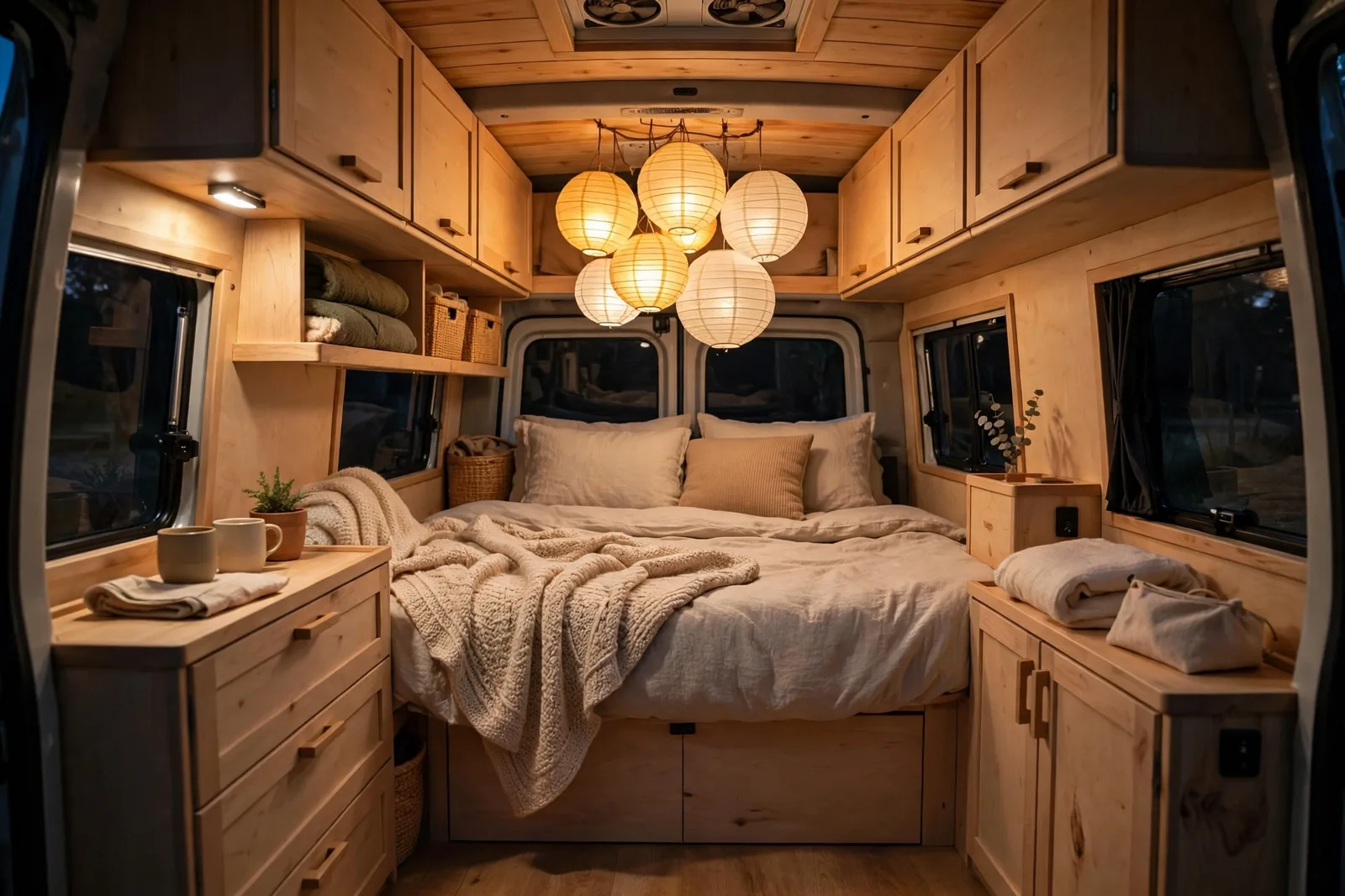
Paper lanterns soften light in a way bare bulbs never do. The paper spreads the glow in every direction, so the bed area feels gentle instead of glaring. A cluster of three at different heights looks intentional and cozy.
Use LED bulbs inside them, never real candles or hot incandescent bulbs. Paper and heat do not mix, and a van moves. LED bulbs stay cool enough to be safe near paper.
Hang them where nobody will bump their head getting into bed. Test the height by sitting up in bed before you fix the cords for good.
Flat pack lanterns fold down for travel days. That makes them a good choice if you also use the bed area for storage or hauling gear.
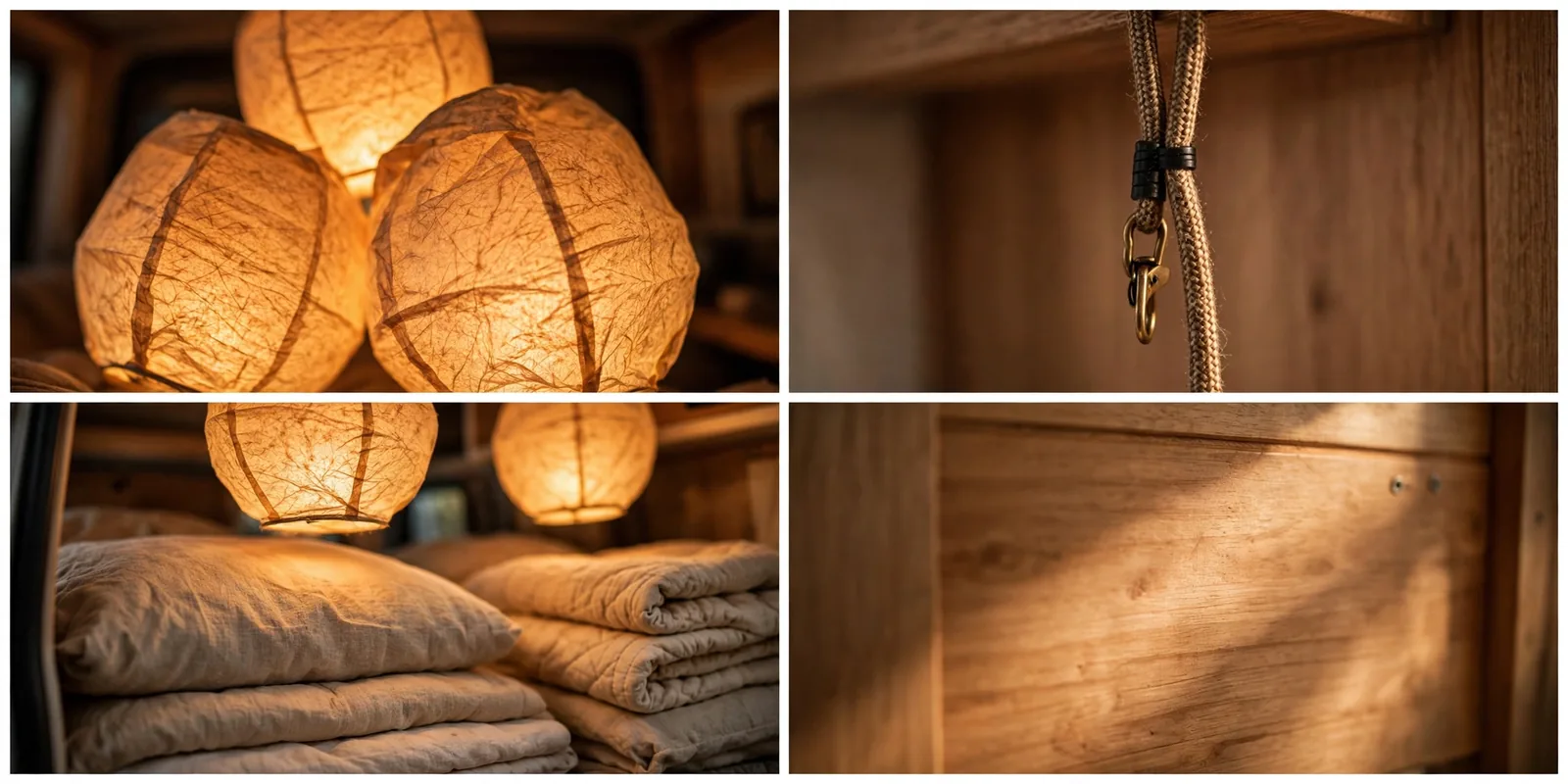
Keep the cords short and tidy. Long dangling cords tangle and pull the lanterns crooked on bumpy roads.
White lanterns give the cleanest glow. Colored lanterns tint the light, which can look fun but also strange on skin tones at night.
4. Dimmable Puck Lights in the Ceiling
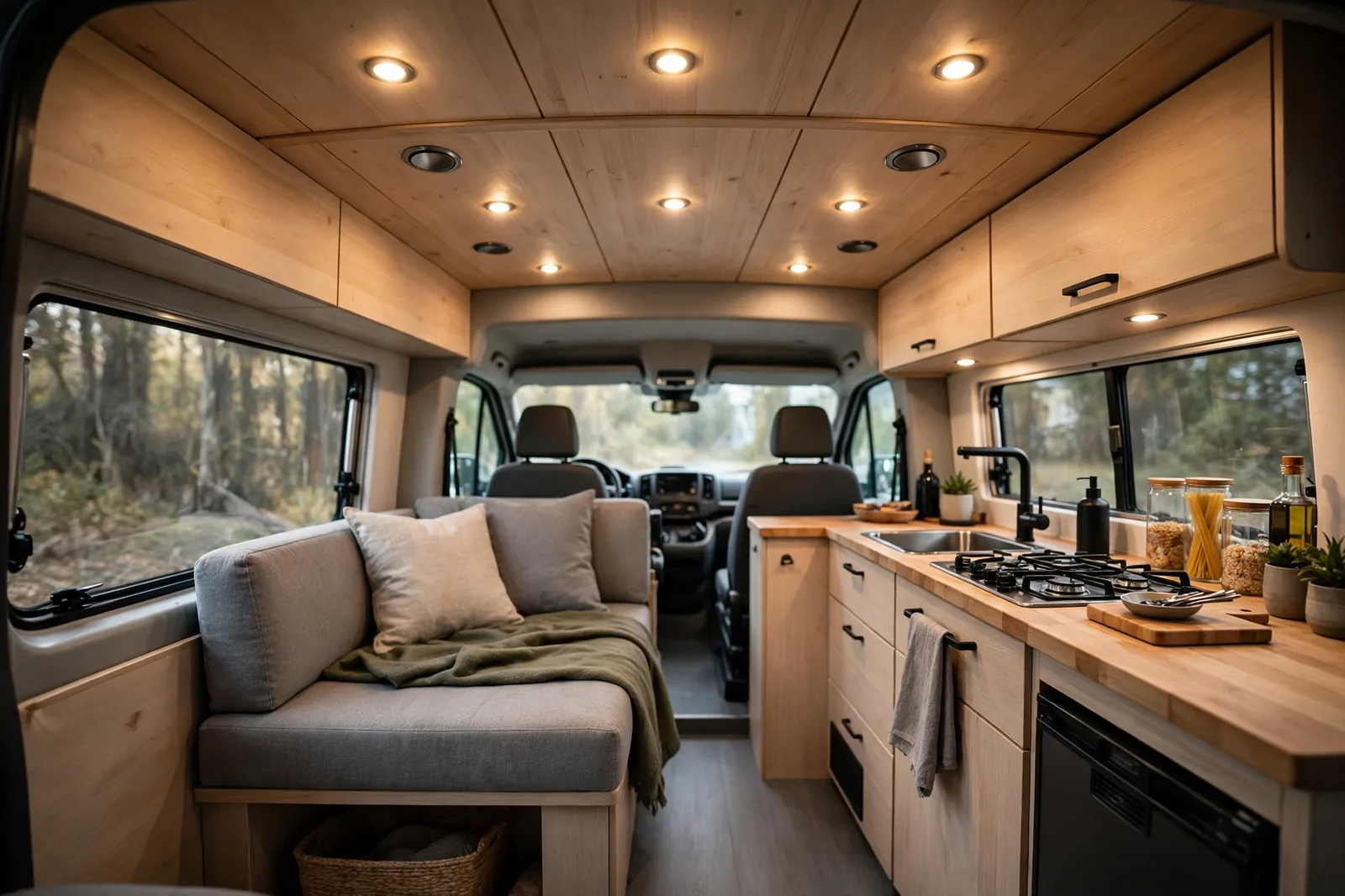
Puck lights are small round lights, about the size of a hockey puck. Set into ceiling panels, they give a clean finished look with no hanging fixtures to bump into. That matters in a low van roof.
Dimming is the whole point here. At full power, puck lights are bright enough to clean and cook by. Dimmed down, they become soft evening light that does not flatten the room.
Space them evenly and keep them away from roof ribs and wiring runs. A paper template on the ceiling helps you get the spacing right before you cut anything.
Surface mount pucks exist if you do not want to cut holes. They stick out a little more, but they install in minutes and move easily later.
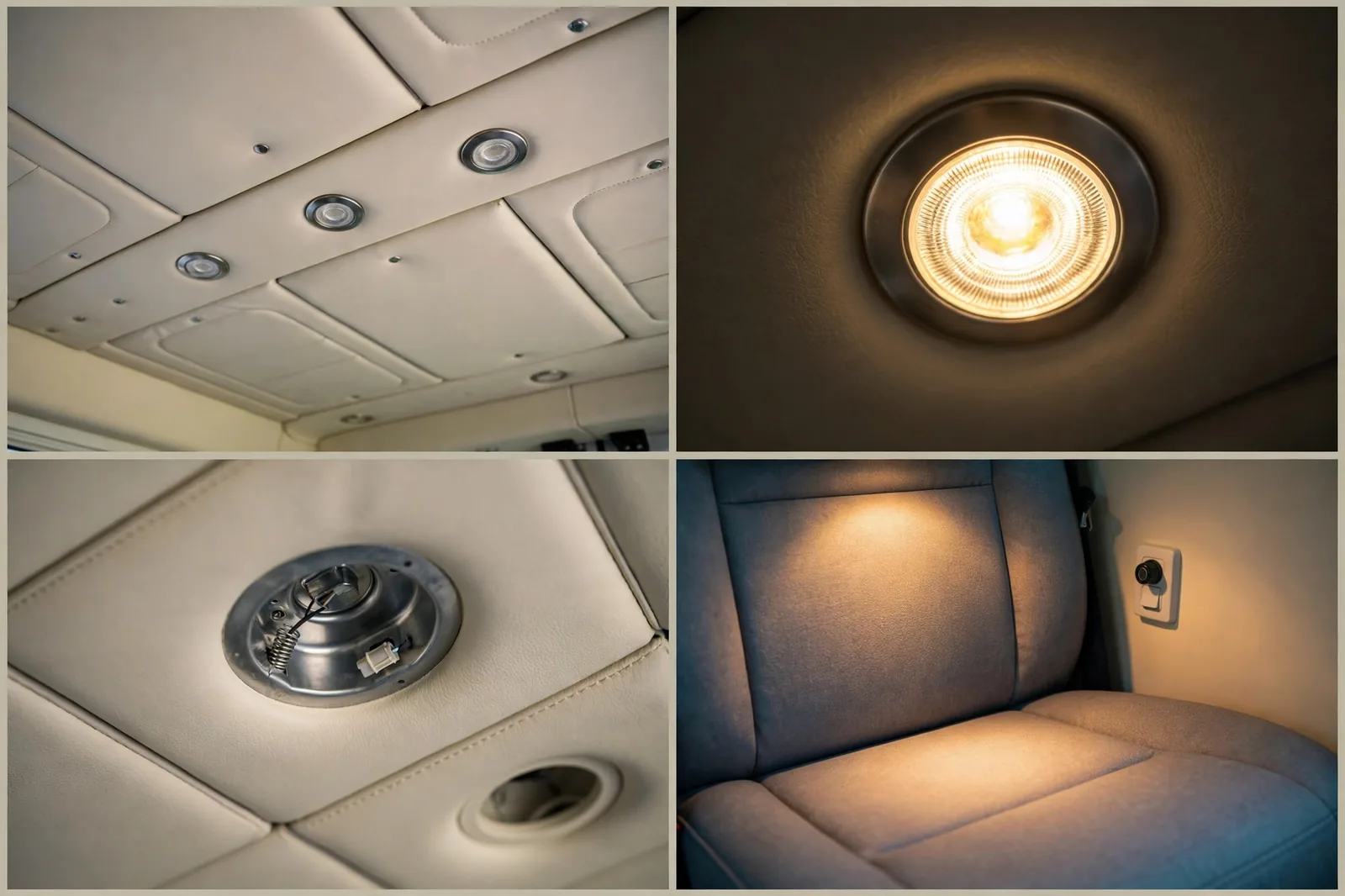
Warm white pucks beat cool white pucks in a van every time. Cool white can make wood paneling look gray and cold.
Wire them in zones if you can. Bed zone and kitchen zone on separate switches gives you far more control than one switch for all.
5. Warm Reading Sconces Beside the Bed
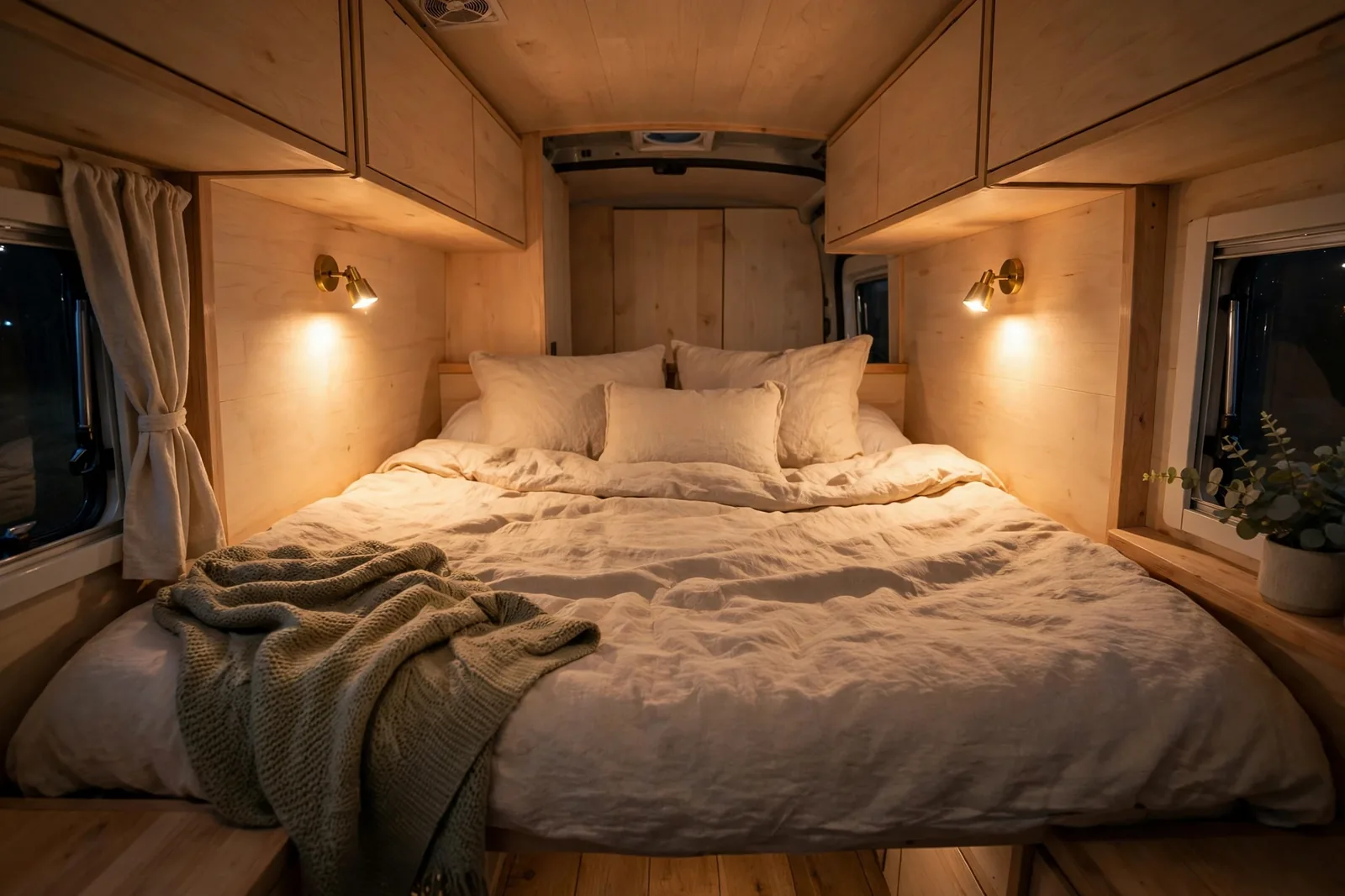
A sconce is a small light fixed to a wall. Beside a bed, it puts light exactly where a book is, without lighting the whole van. That is a gift if one person reads late and the other sleeps.
Look for sconces with an adjustable arm or a swivel head. Being able to aim the light down at the page, and away from a partner, is worth more than a fancy design.
Mount them just above pillow height and slightly behind where you sit. Too low and the light glares in your eyes. Too high and it washes the wall instead of the book.
Many van sconces run on 12 volts and have a small switch on the base. A USB port built into the base is a handy bonus for charging a phone overnight.
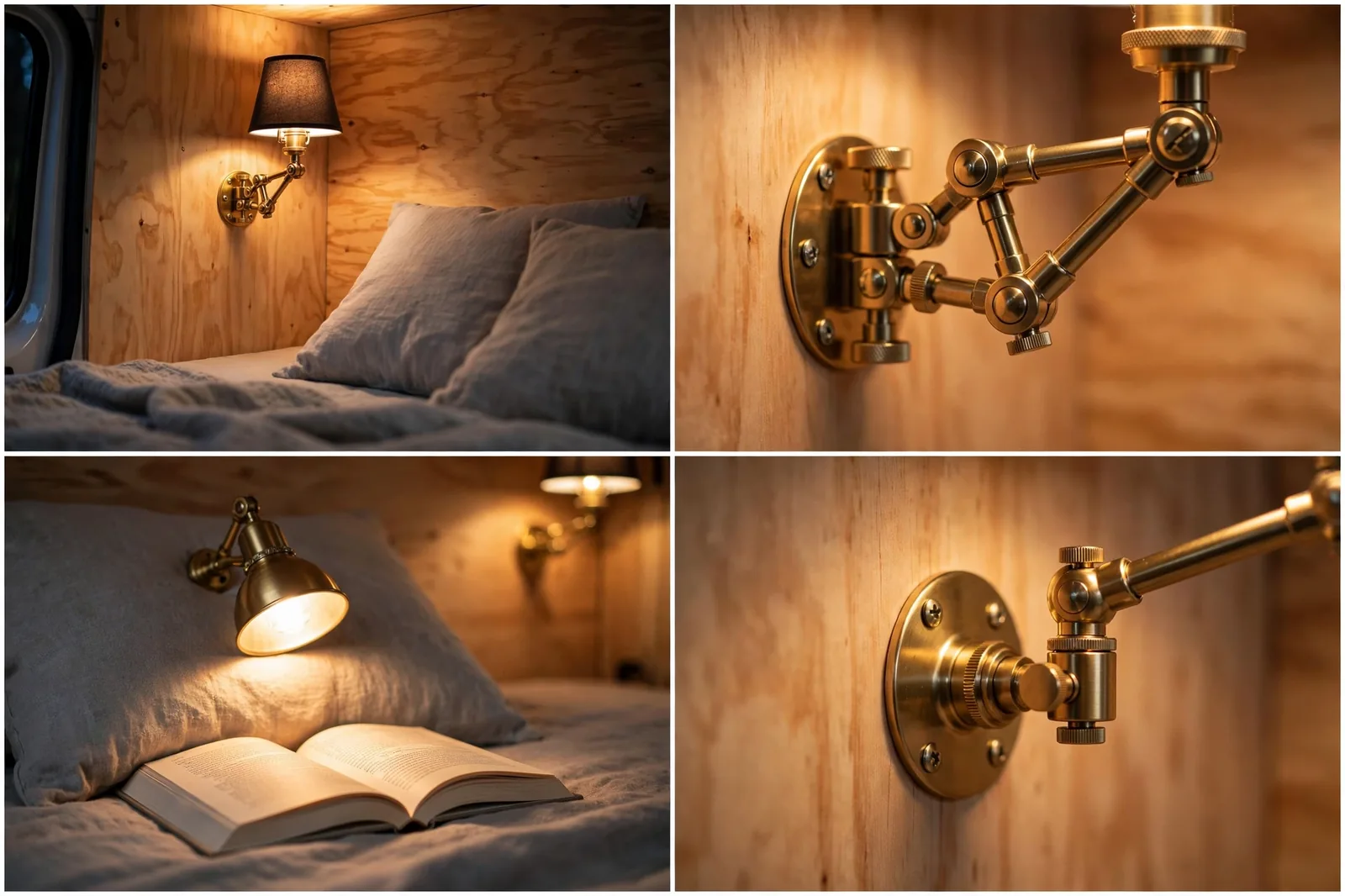
One sconce per sleeper is the rule for couples. Sharing one light in the middle always leaves one person in shadow.
Warm bulbs only here. A cool reading light at midnight feels like an office, and it makes falling asleep harder.
6. Backlit Headboard Glow Panel
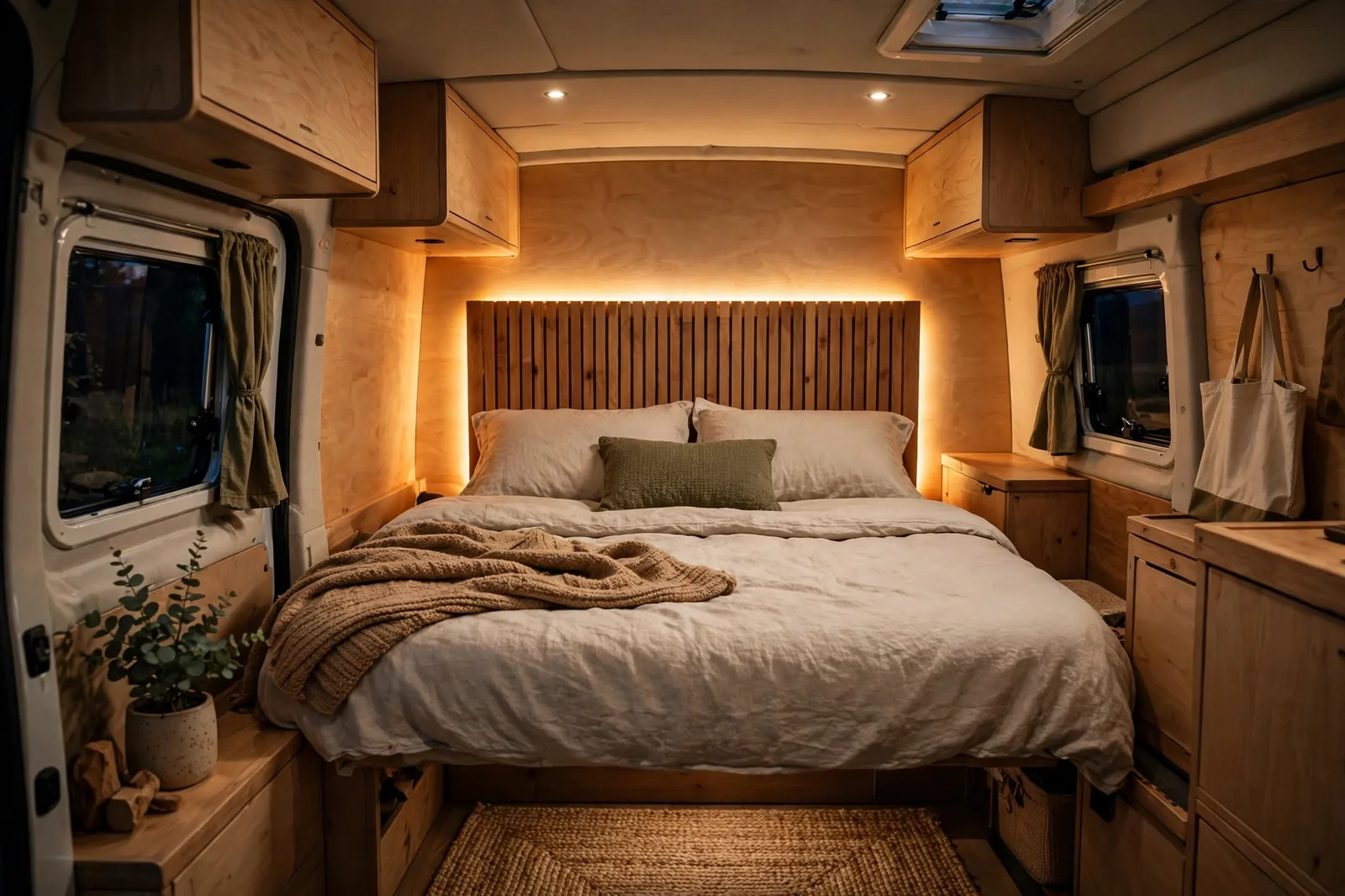
A backlit headboard hides a light strip behind a wooden panel. The light spills around the edges and onto the wall, creating a soft halo. There is no visible bulb, just glow.
This works because the eye reads the halo as a feature, not a fixture. The bed becomes the focal point of the van, even in a tiny space. It photographs beautifully too.
Leave a small gap between the panel and the wall, about the width of two fingers. Too tight and the light chokes. Too wide and you can see the strip from the side.
Use a warm strip and a dimmer. A backlit panel at full brightness can be too much right behind your head when you are trying to sleep.
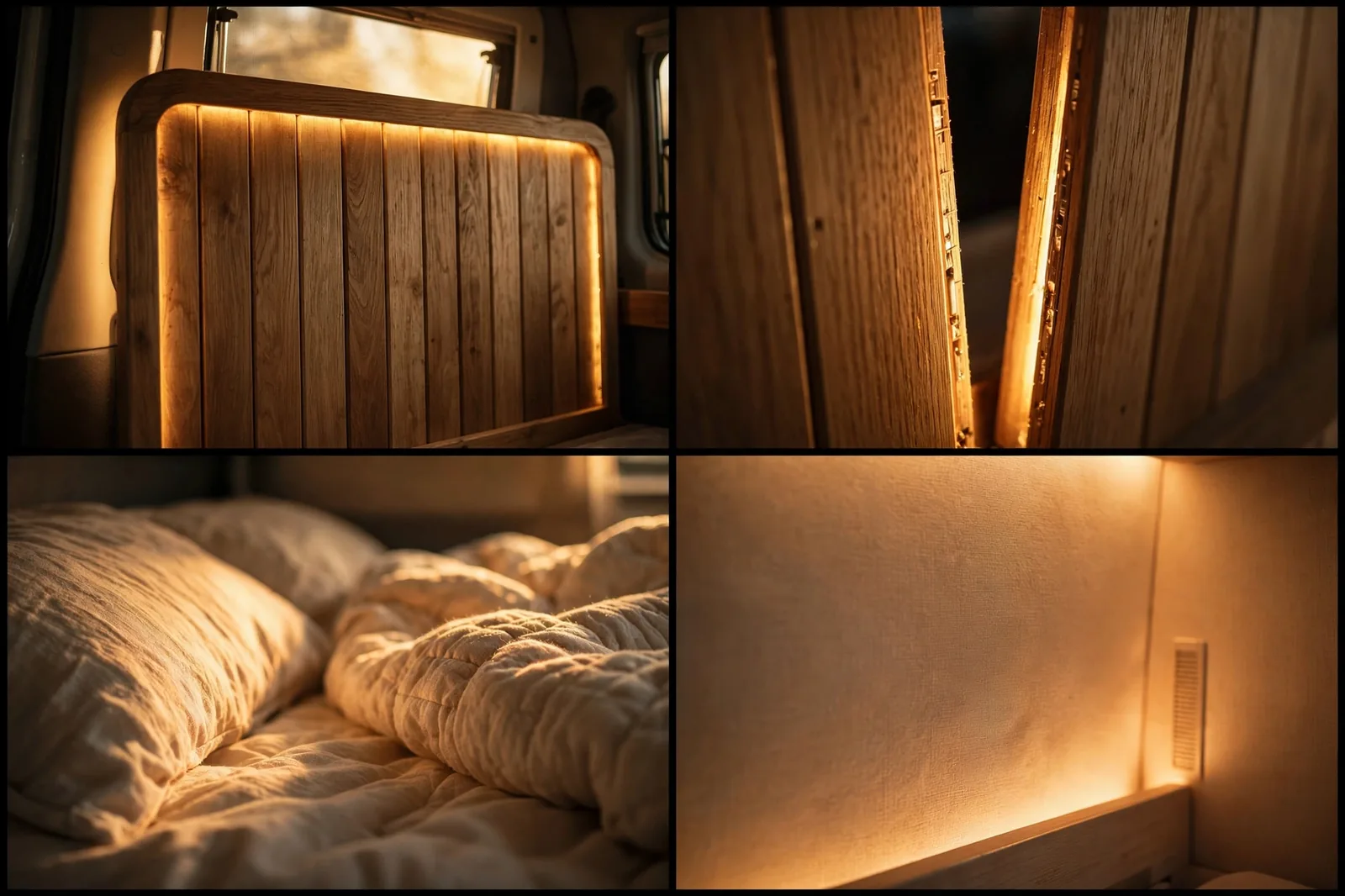
Keep the panel simple. Slats or plain boards show the glow best. Busy carving or dark paint swallows it.
This idea pairs well with reading sconces. The headboard gives the mood, the sconces give the task light.
7. Toe-Kick LED Floor Wash
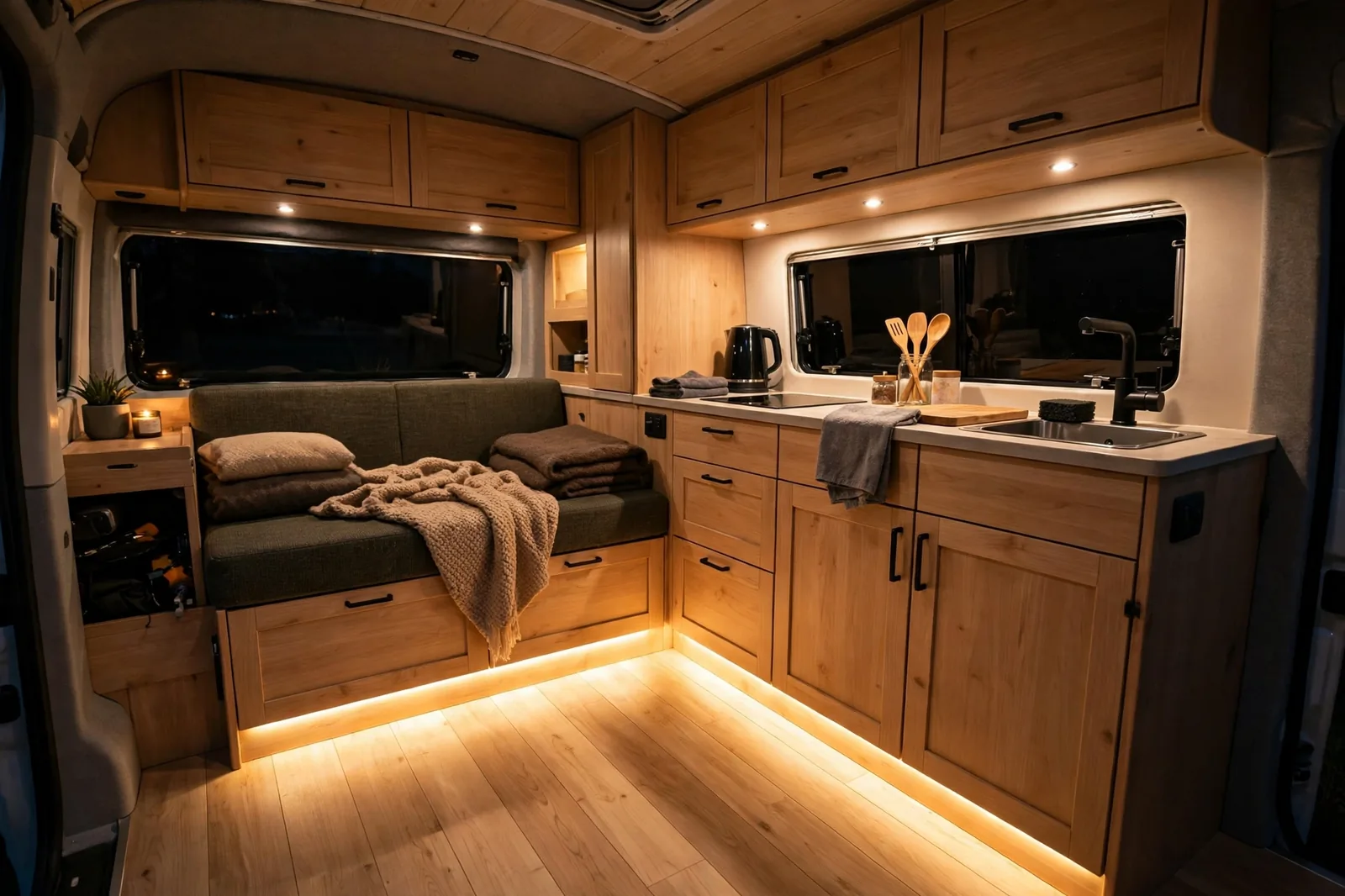
A toe-kick is the recessed space at the bottom of a cabinet, where your toes go when you stand close. A strip of light hidden there washes the floor with a soft glow. It looks like the cabinets are floating.
The real benefit is practical. At night, a low floor wash lets you find the bathroom or the door without switching on a bright ceiling light. Sleepy eyes stay sleepy.
Warm white is essential here. A cool floor wash looks like a shop floor, not a home. Keep the brightness low, just enough to see the floor clearly.
Put this strip on its own switch or a motion sensor. A sensor that turns it on when you step down at night feels almost magical, and it uses almost no power.
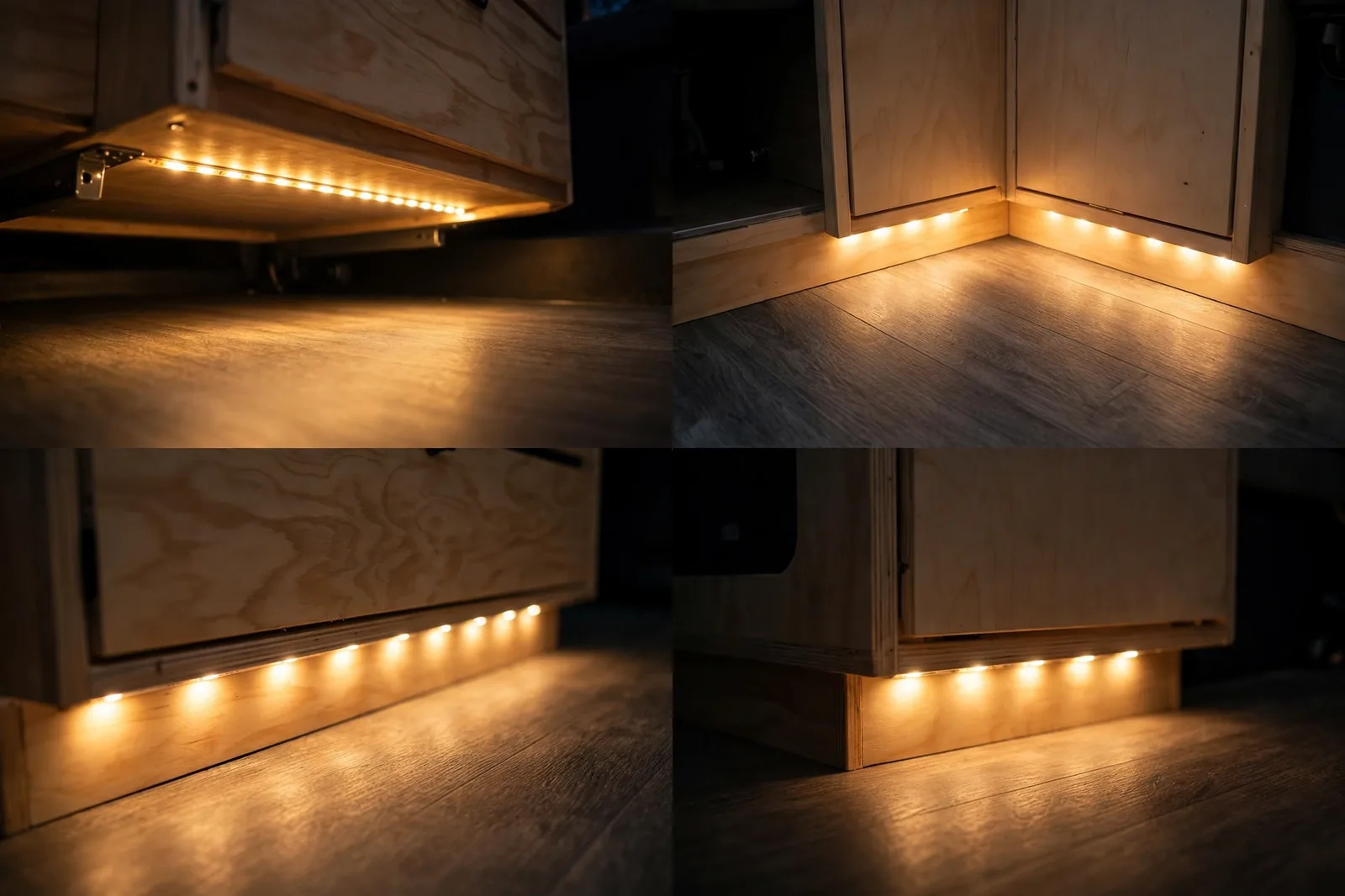
Hide the strip so you see glow, not bulbs. If you can see the individual dots from standing height, push the strip further back.
Clean the floor wash strip now and then. Dust on a low strip dulls the glow faster than you would expect.
8. Mason Jar Fairy Lights
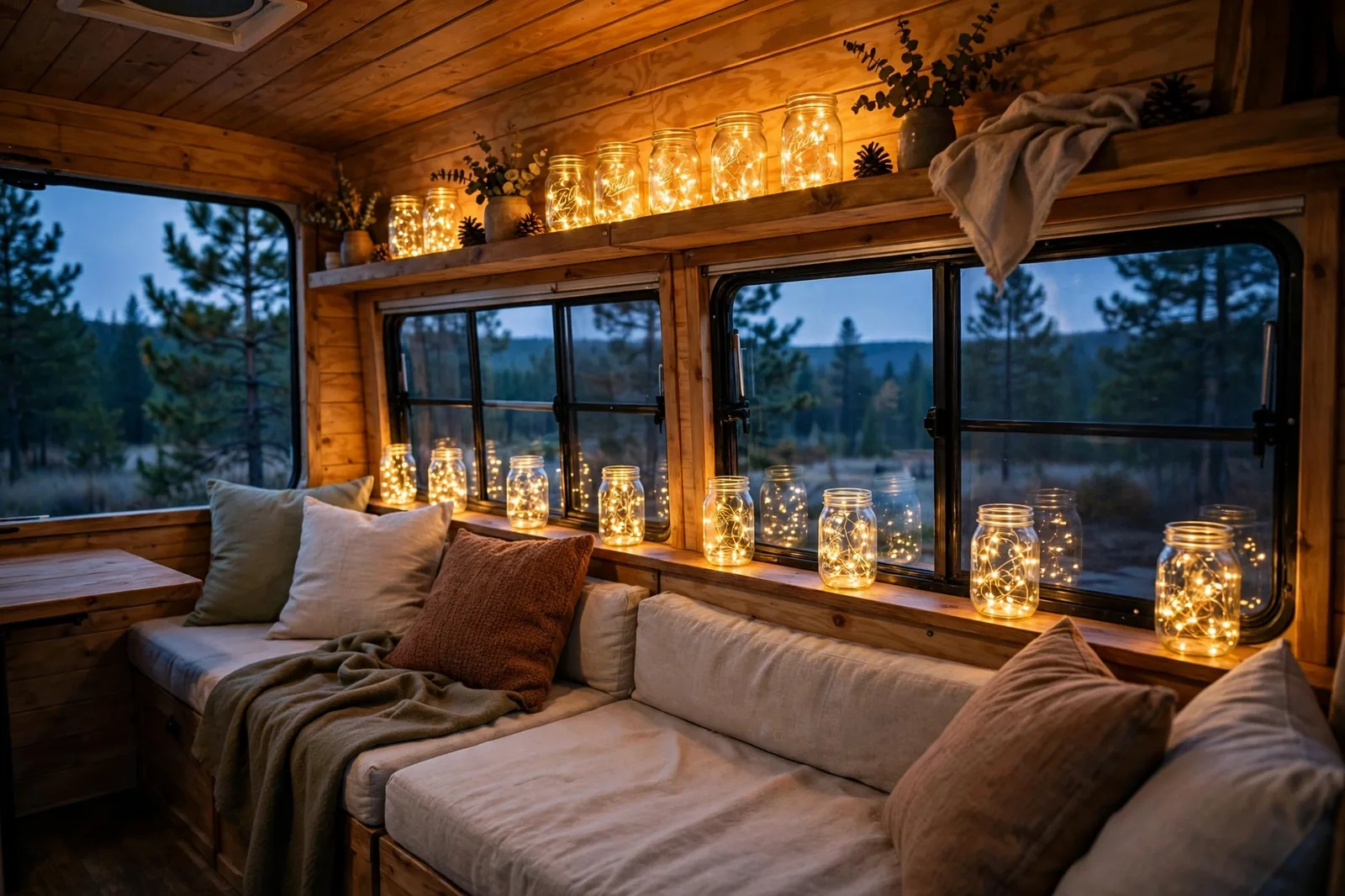
Mason jars filled with fairy lights are the van life classic for a reason. They are cheap, they need no wiring, and they give a sparkly warm glow that suits wood interiors perfectly.
Fairy lights are tiny LED lights on a thin wire. The wire bends easily, so you can coil it inside a jar or drape it along a shelf. Battery packs hide behind the jar or under a cushion.
Use jars with lids that let the wire pass through, or drill a small hole in a spare lid. Keep the battery pack where you can reach it. Changing batteries in a jar wedged behind a cushion gets old fast.
Mix jar sizes for a collected look. A few large jars with many lights beat a dozen tiny jars that all need separate batteries.
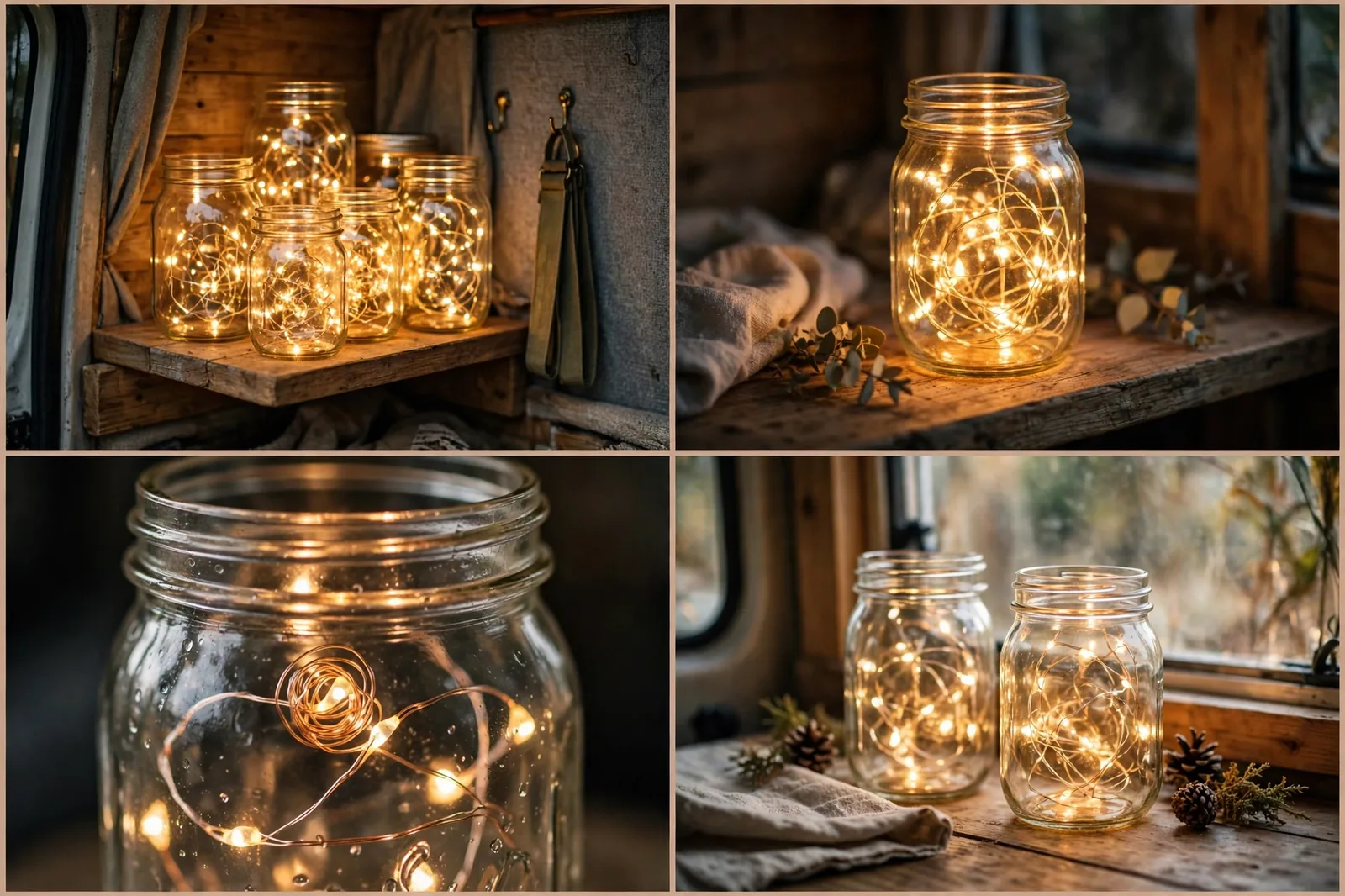
Warm white fairy lights look like candlelight. Multicolor fairy lights look like a party, which is fun once and tiring every night.
Rechargeable fairy lights with a USB plug save money and waste over a long trip. Charge them while you drive.
9. Vintage Edison Bulb Pendant
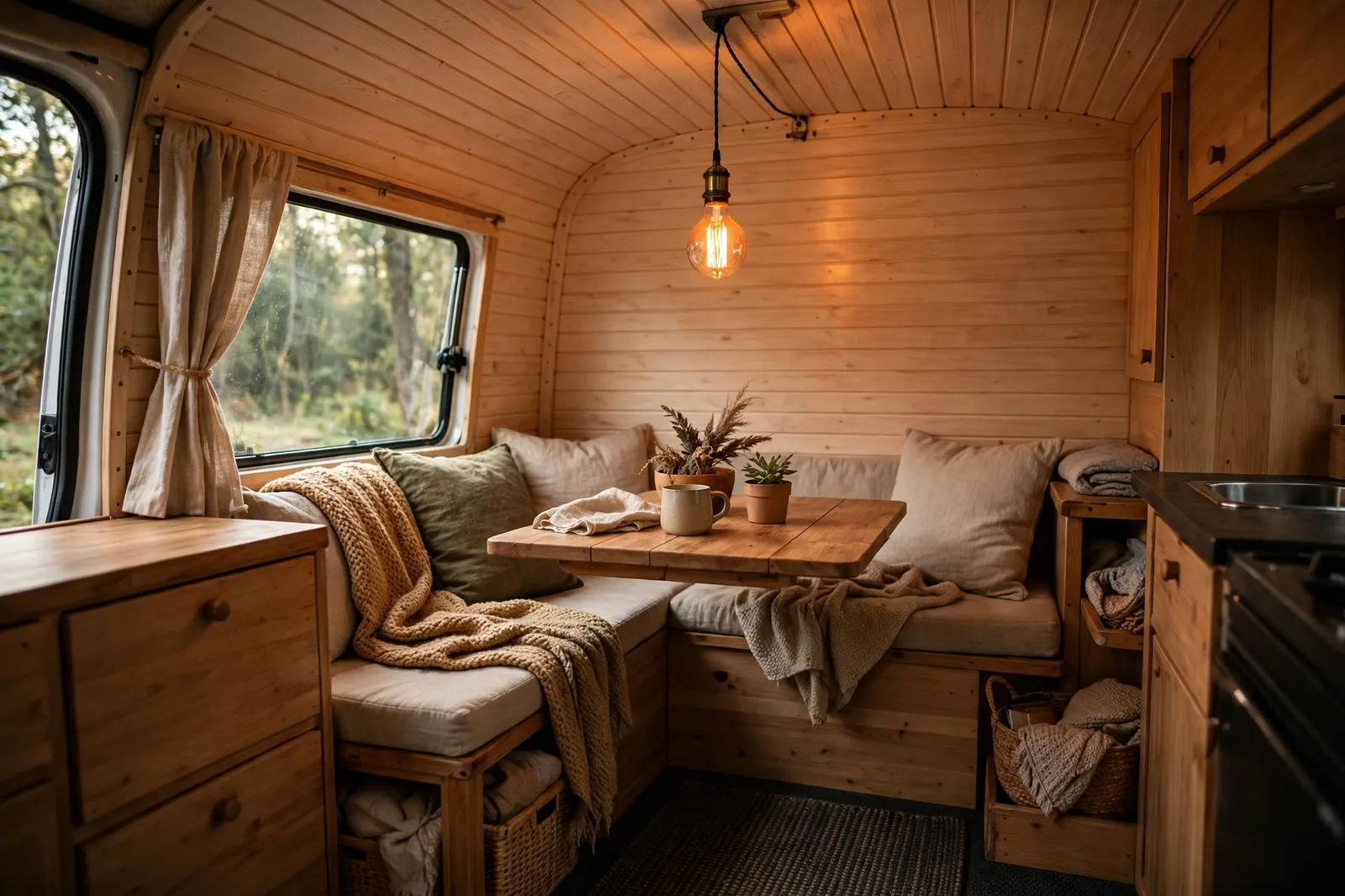
An Edison bulb is a bulb with a visible filament, the glowing wire inside that makes the light. It looks old fashioned in the best way, and it gives a deep amber glow that suits wood and leather interiors.
Hang one pendant low over a dining table, not high at the ceiling. Low light pools on the table and leaves the rest of the van in soft shadow. That pool of light is what makes a meal feel special.
Choose LED Edison bulbs, not the original filament style. Real filament bulbs use a lot of power and get very hot, which is a bad mix in a small moving space. LED versions look the same and sip power.
Secure the pendant so it cannot swing wildly on rough roads. A short cord and a firm ceiling mount keep it safe and steady.
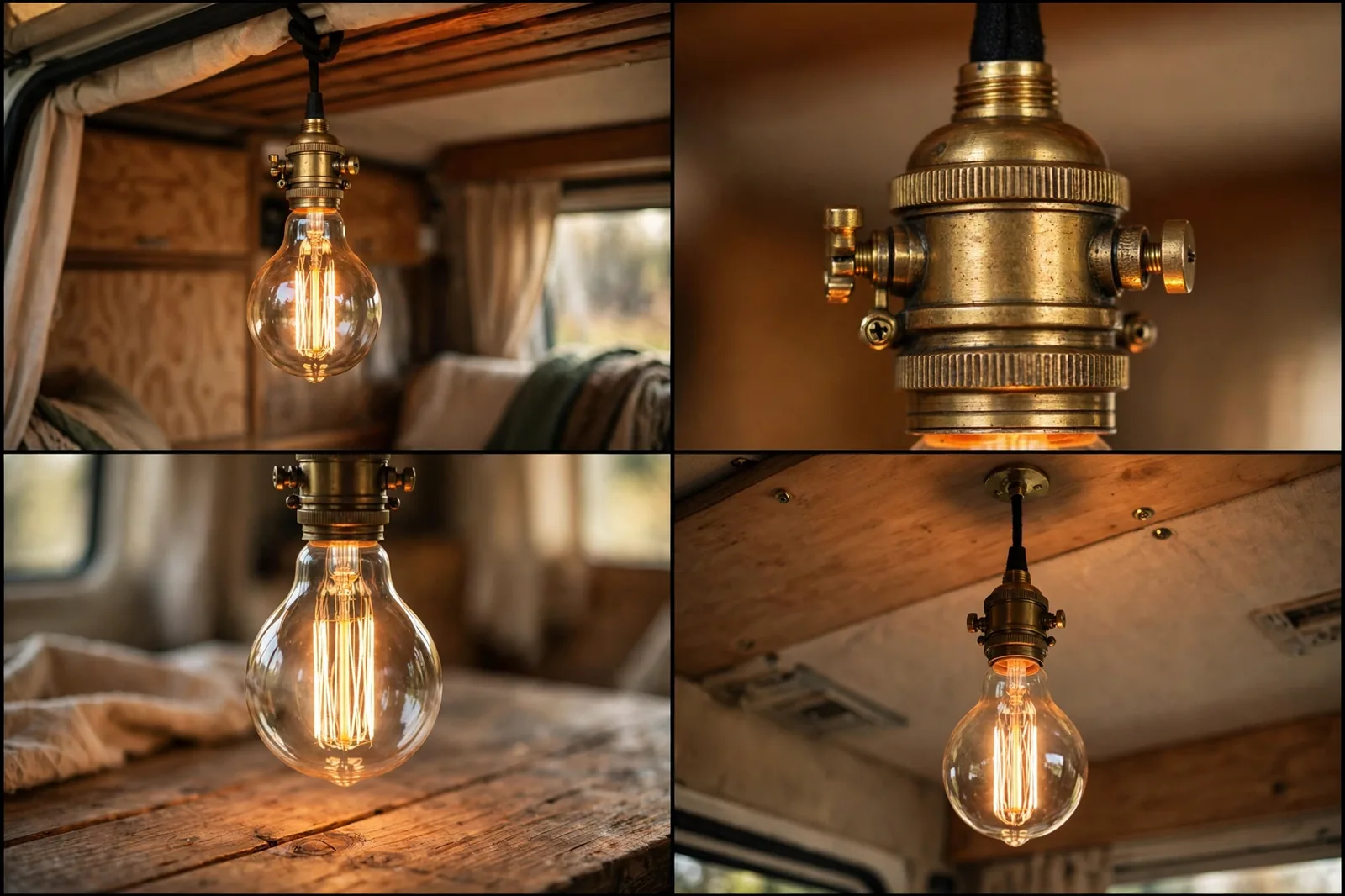
One pendant is enough in a van. Two or three over one small table quickly becomes glare instead of charm.
Put the pendant on a dimmer. Full amber glow for dinner, low glow for a late night drink.
10. Warm Amber Strip Behind the Bed
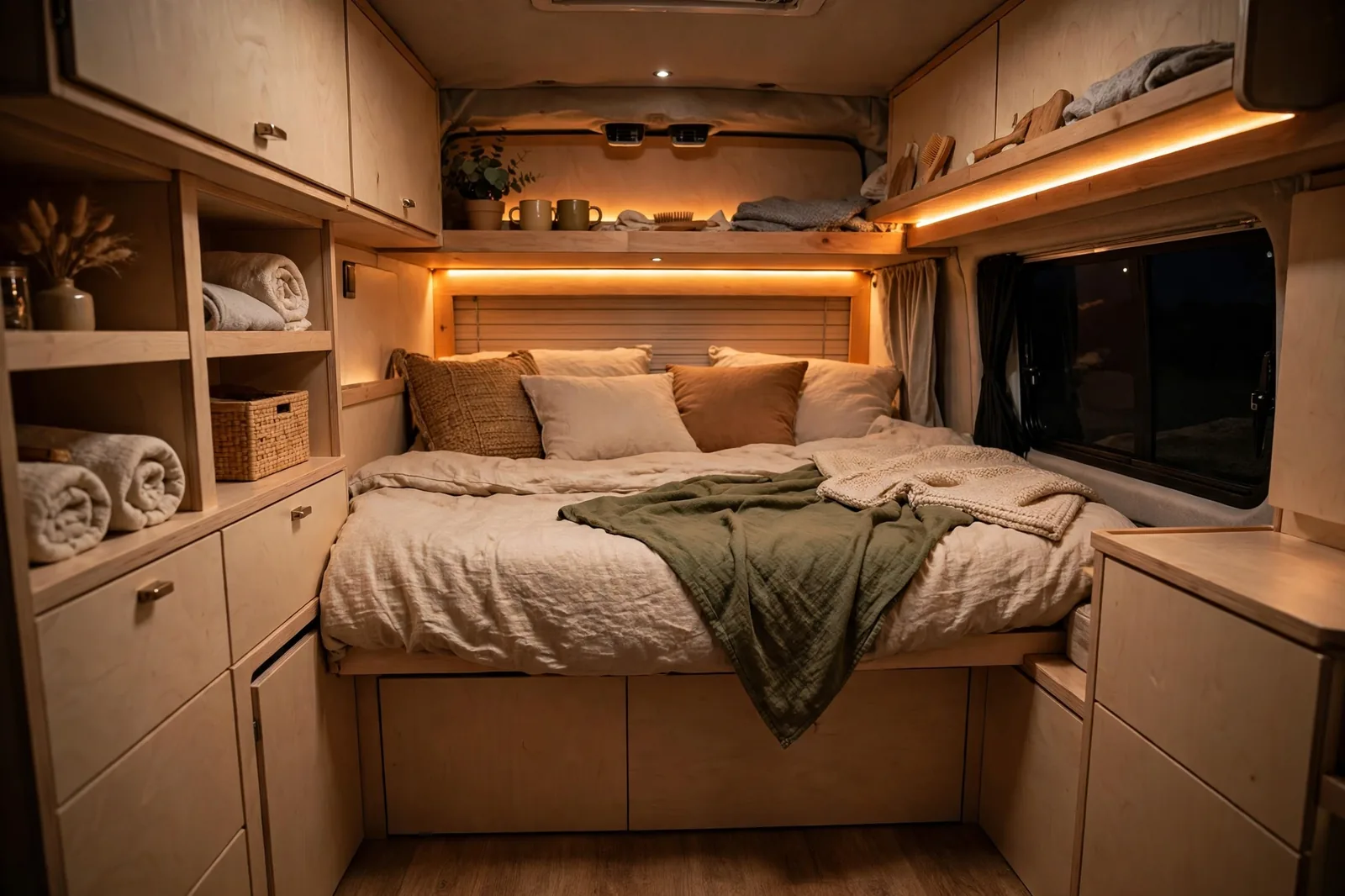
This is the simpler cousin of the backlit headboard. Instead of a full panel, a single amber strip runs behind the bed or along a shelf above it. The effect is similar, the work is far less.
Amber is warmer than warm white. It reads almost like candlelight, which is perfect for winding down. It is not great for reading, so pair it with a sconce if you read in bed.
Many strips come with a small remote. That sounds like a gimmick, but in a van it matters. Changing color and brightness without getting out of bed is a real comfort on cold nights.
Stick the strip to a clean, dry surface and press it firmly along its length. A strip that peels at one end will droop into view and spoil the hidden light effect.
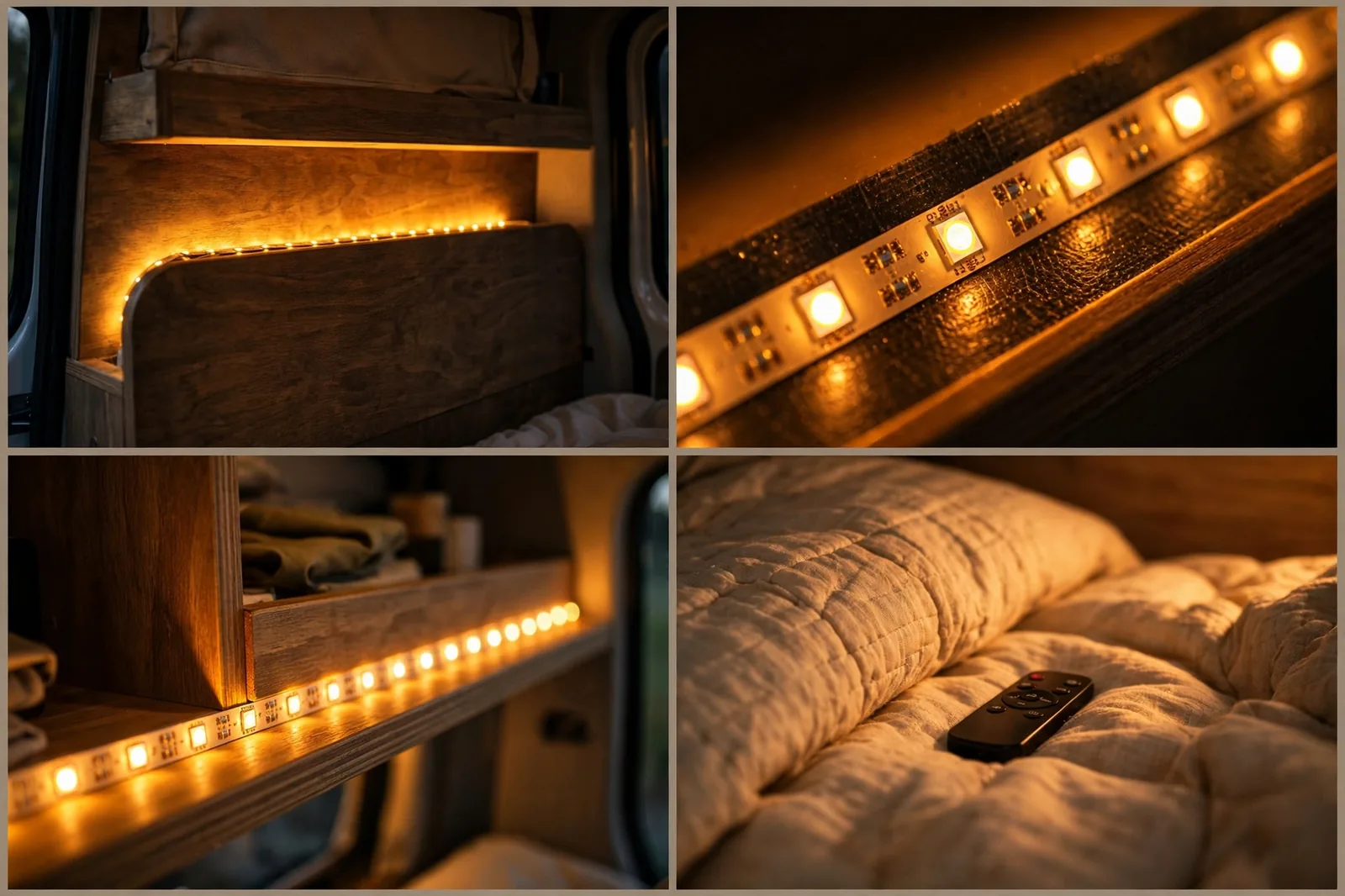
Keep the remote in one fixed spot, like a small dish by the bed. Remotes in vans vanish into cushions and never return.
If the amber looks too orange on your wood, switch to a warm white strip. Wood tones change how light reads, so trust your eyes over the box label.
11. Portable Lantern on the Counter
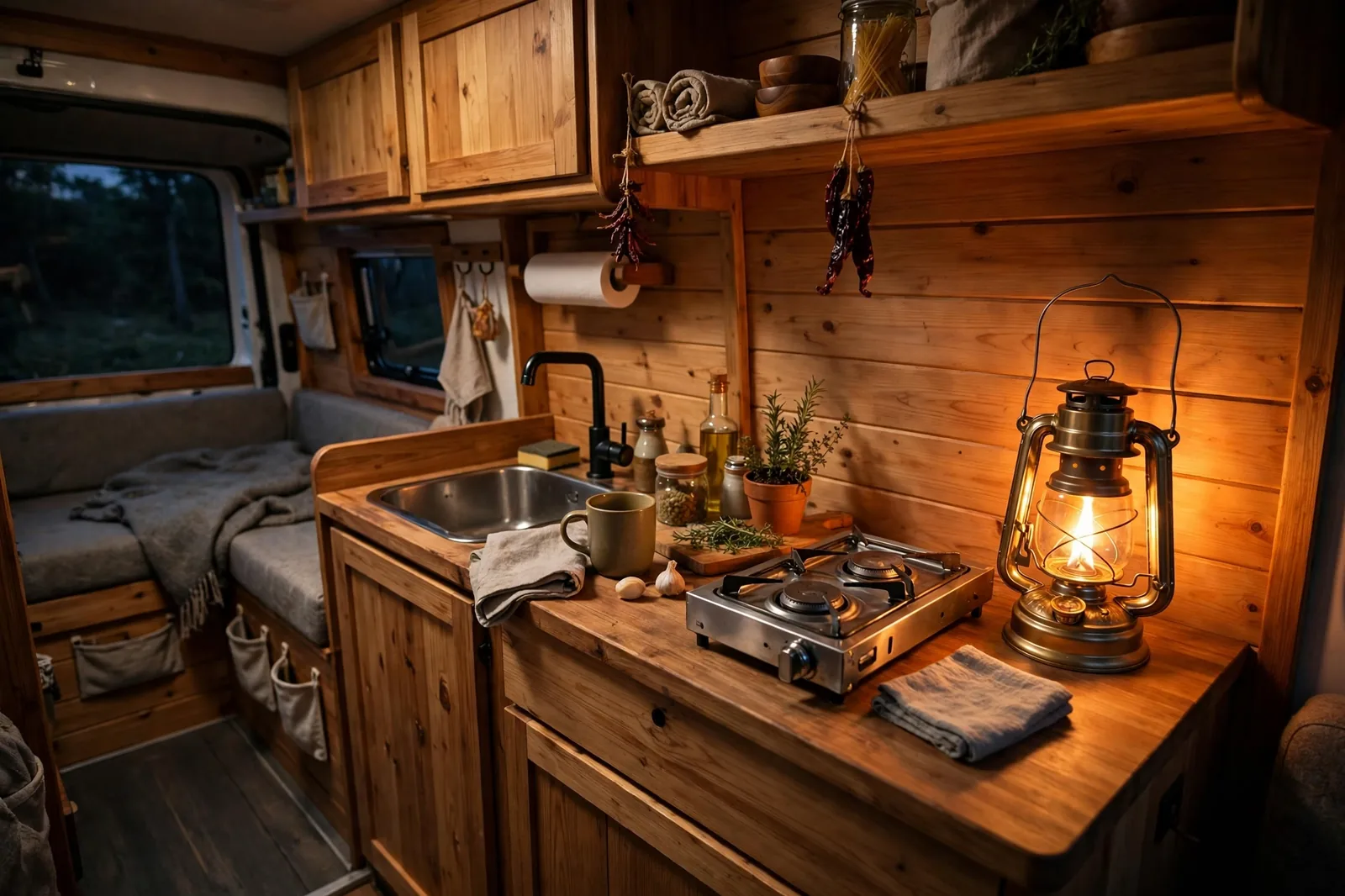
A portable lantern is the easiest warm light of all. Set it on the counter, switch it on, and the kitchen glows. Move it to the table for dinner, then to the bed for reading.
Modern camping lanterns run on rechargeable batteries and offer warm white modes. Older gas lanterns are not for van interiors. They need ventilation and produce heat and fumes.
Choose a lantern with a dimmer and a stable base. A top heavy lantern tips on a bumpy road or a tilted campsite. A low, wide lantern stays put.
One lantern can also be your backup light. If the van electrics ever fail, a charged lantern keeps the evening going while you sort the problem.
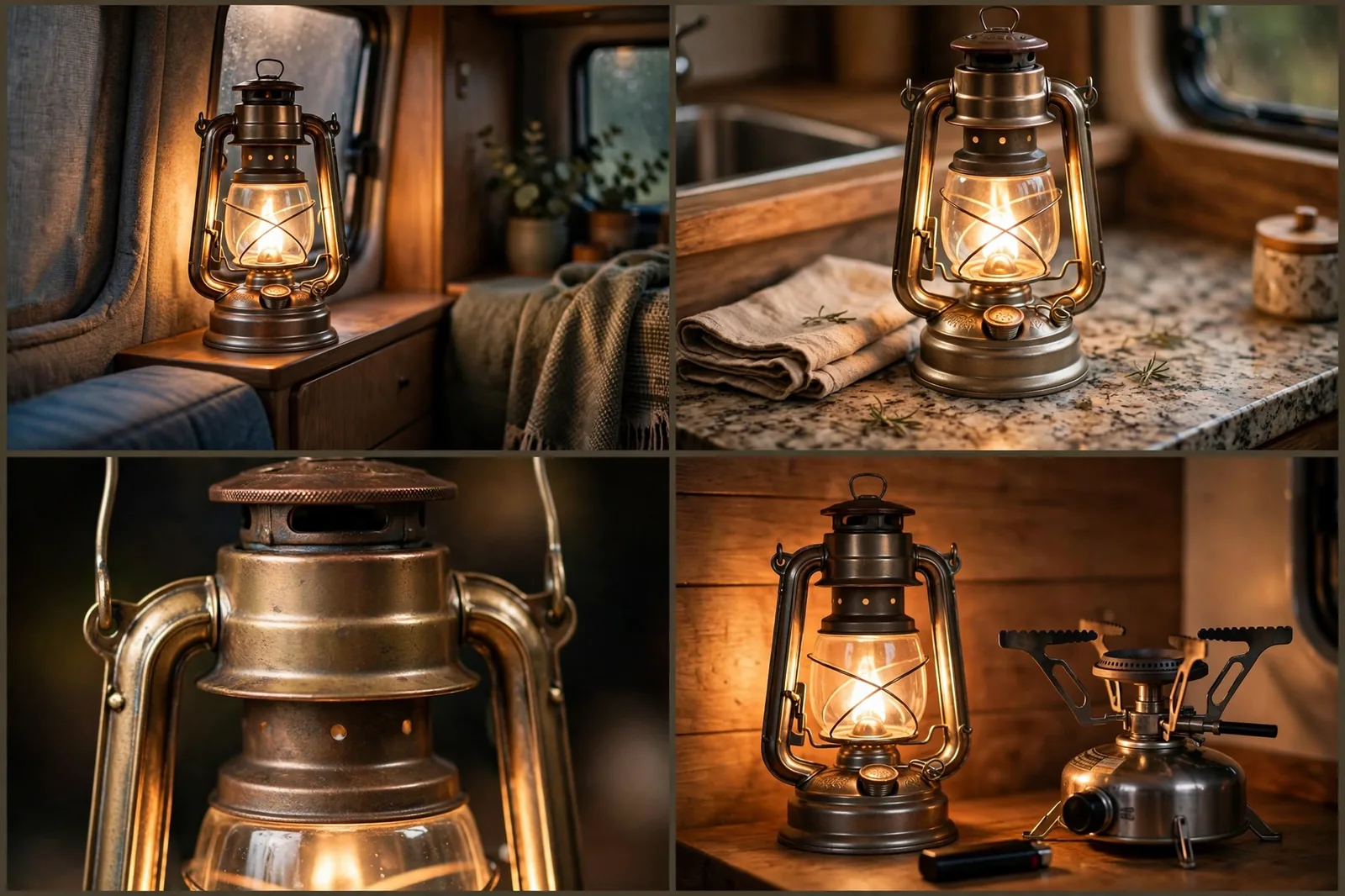
Keep the lantern off the stove and away from curtains. Warm light should never sit next to something that can scorch.
Charge the lantern whenever you drive. A dead backup light is just a decoration.
12. Under-Bed Ambient Glow
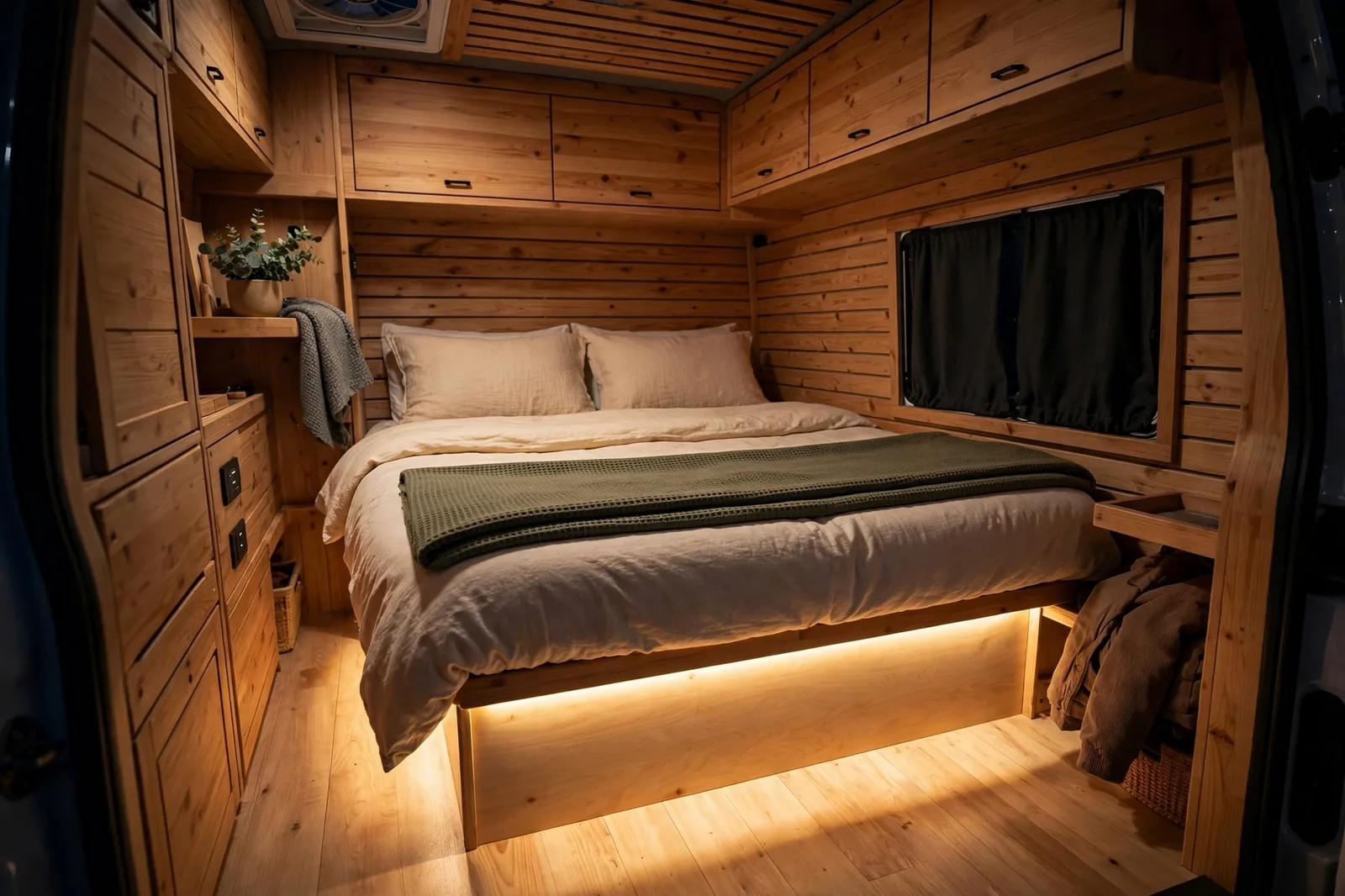
Under bed glow is like the toe-kick idea, but for the sleeping area. A strip under the bed frame casts a soft pool of light on the floor around the bed. At night, it looks like the bed is floating.
This is mostly a night light, and a very good one. It is bright enough to find shoes and slippers, dim enough not to wake a sleeping partner. It also makes a small bedroom feel larger, because the floor edges stay visible.
Use a warm strip on a dimmer or a low fixed brightness. Under bed light at full power bounces off the floor and can feel surprisingly bright in a dark van.
Route the wire where it will not snag on storage boxes sliding in and out. A wire caught by a box is a wire that gets ripped out sooner or later.
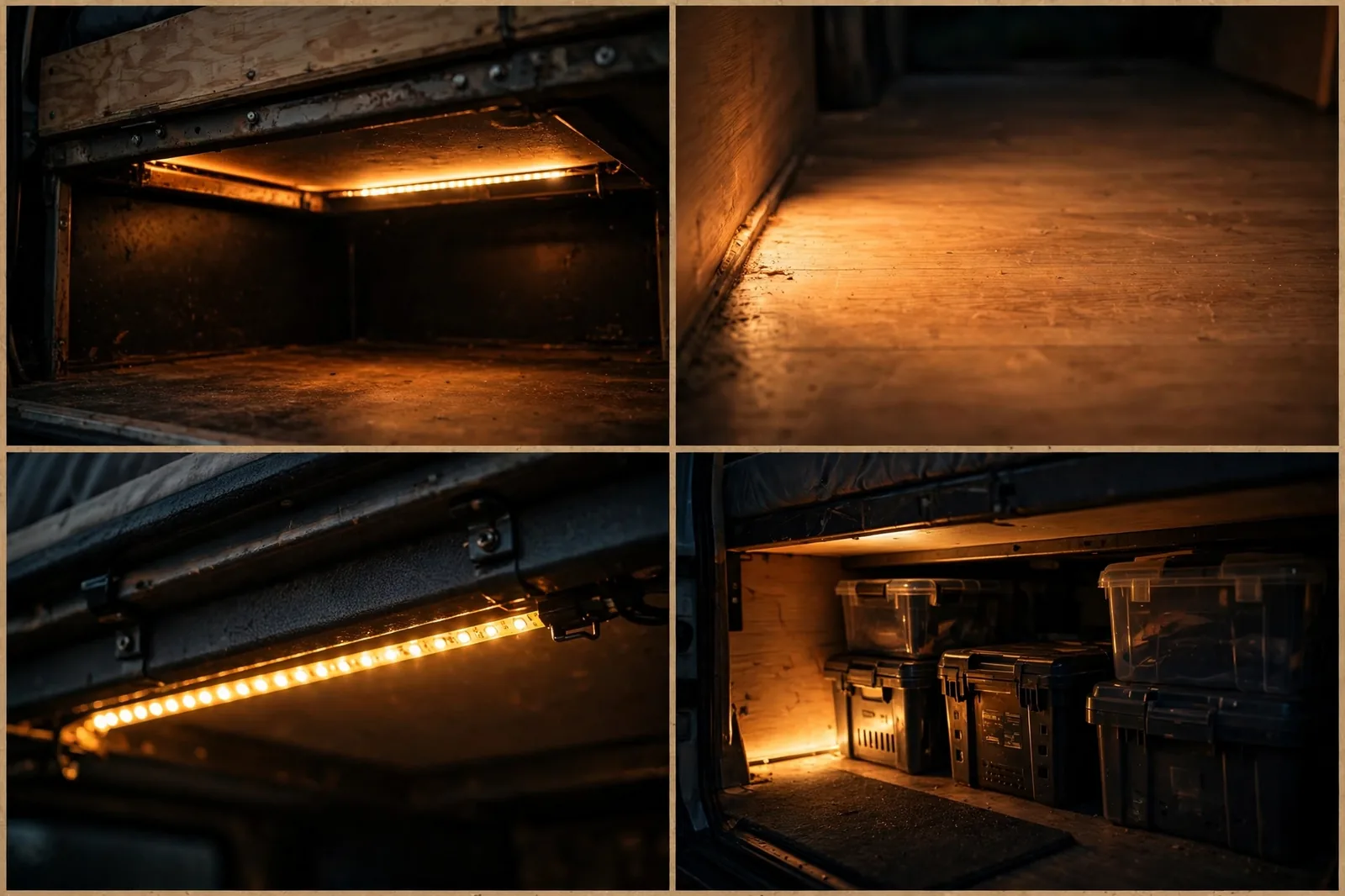
Pair under bed glow with a toe-kick strip and the whole van floor glows gently at night. It is the closest thing to a night light system a van can have.
Turn it off when you leave the van for the day. Even low power adds up if it runs for hours unattended.
13. Warm Kitchen Task Lighting
Task lighting is light aimed at a job, in this case cooking. A dedicated bar or strip over the counter gives bright, even light exactly where knives and hot pans are. That is a safety issue, not just a style choice.
Warm does not mean dim here. You can have warm and bright at the same time. Look for a warm white bar with enough output to read a recipe and see food colors clearly.
Mount the light close to the front edge of the upper cabinet, so it shines down and slightly forward onto the work surface. Mounted too far back, it lights the wall and leaves the counter in shadow.
A separate switch for task light is worth the extra wiring. You want it on for cooking and off for relaxing, without affecting the rest of the van.
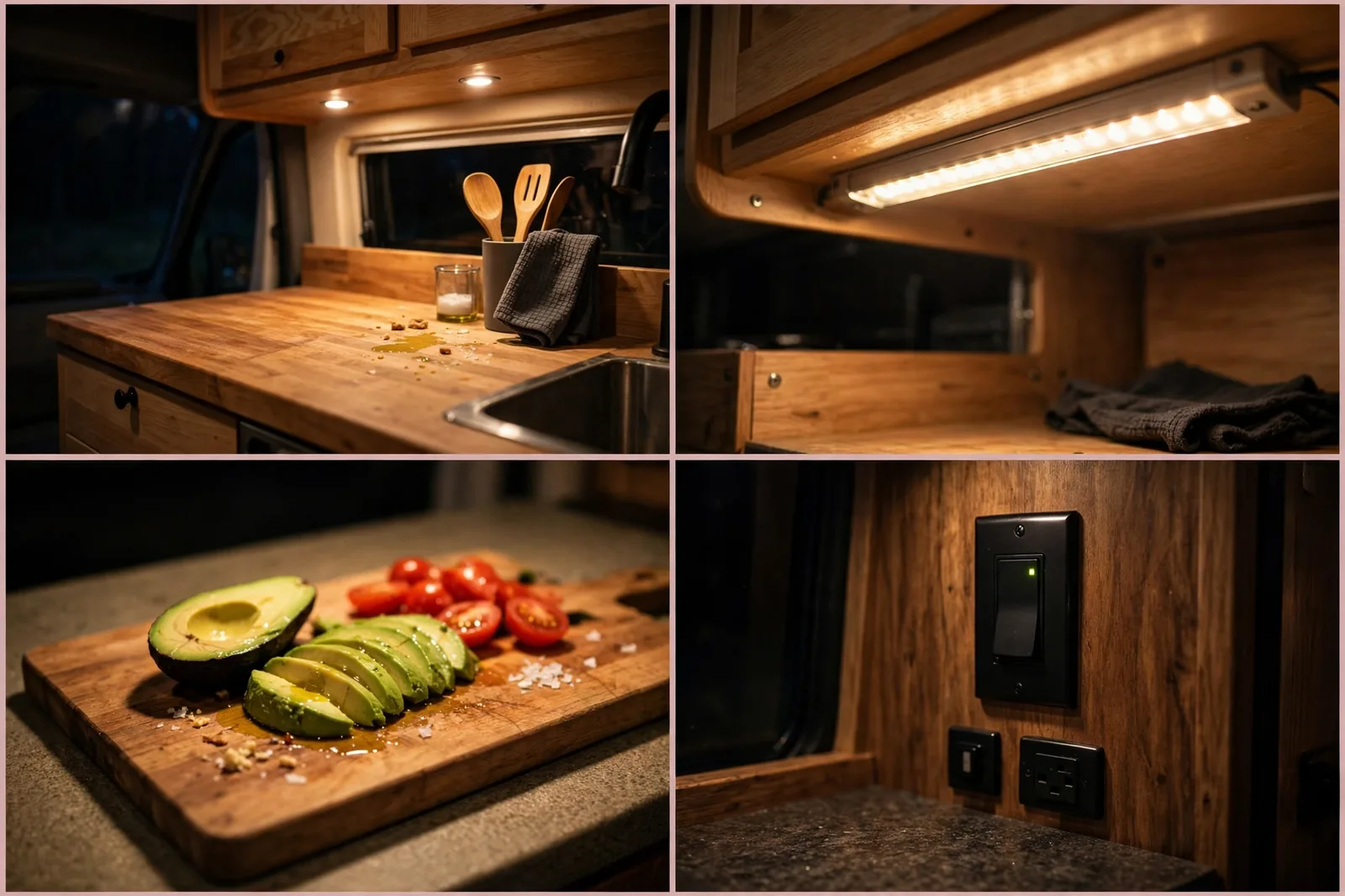
Test the light with real food before you fix it for good. Tomatoes and greens should look like themselves, not gray or orange.
Wipe the light cover when you clean the kitchen. Cooking grease films over it and dims the output over time.
14. Skylight Halo Ring Light
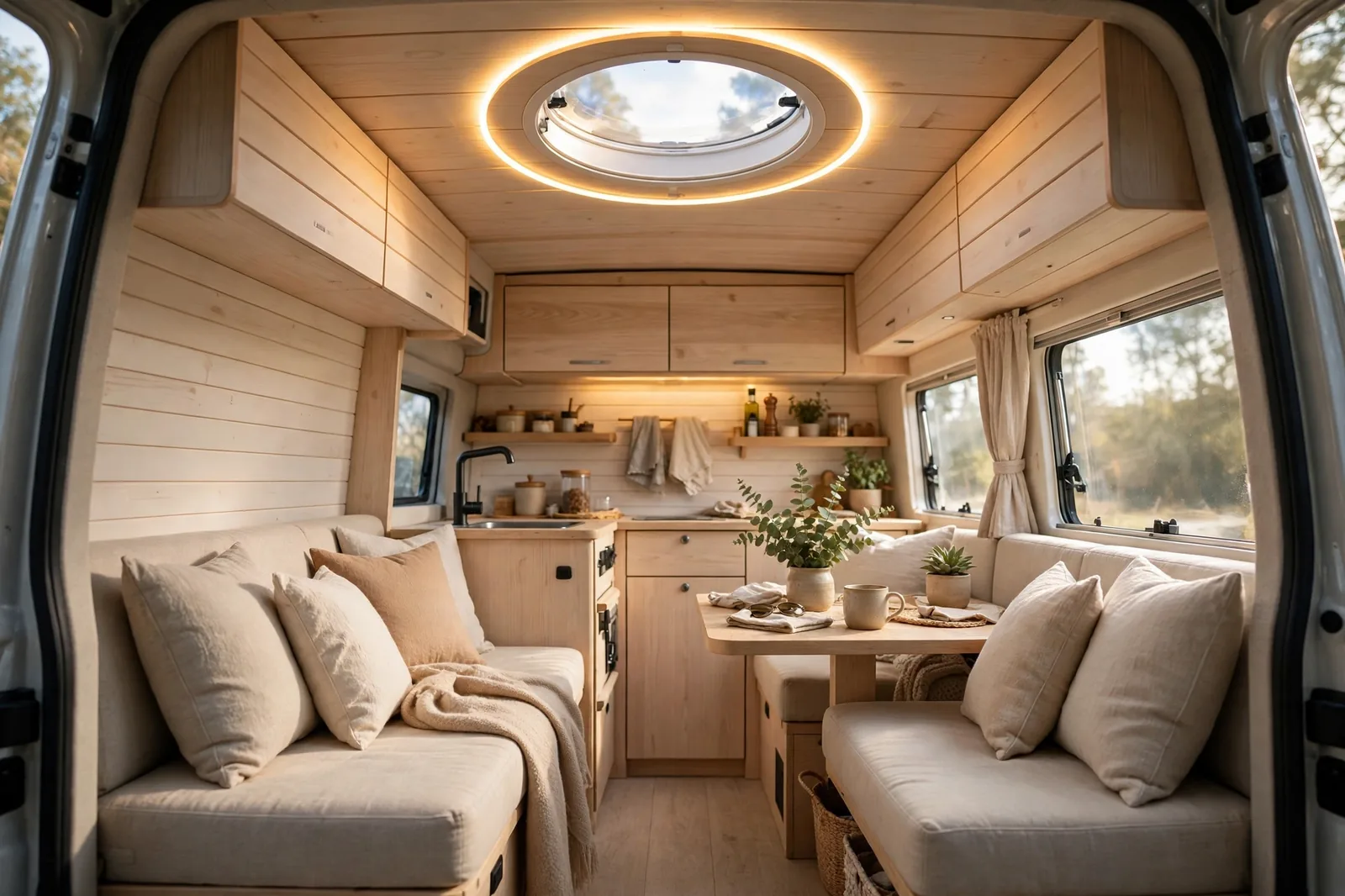
Many vans have a roof skylight, a window in the roof that lets in daylight and air. A ring light fitted around it turns that skylight into a glowing circle at night. It looks modern and it spreads light evenly down into the van.
The ring shape matters. Light from a circle has no harsh corners or hot spots, so the whole seating area gets a gentle wash. It is one of the most flattering ceiling lights you can fit in a van.
Choose a warm ring, not a cool one. A cool ring around a skylight can look like a hospital light, which is the opposite of cozy.
Check that the ring does not block the skylight opening or the vent handle. You still want fresh air and an escape route through the roof if your van design relies on it.
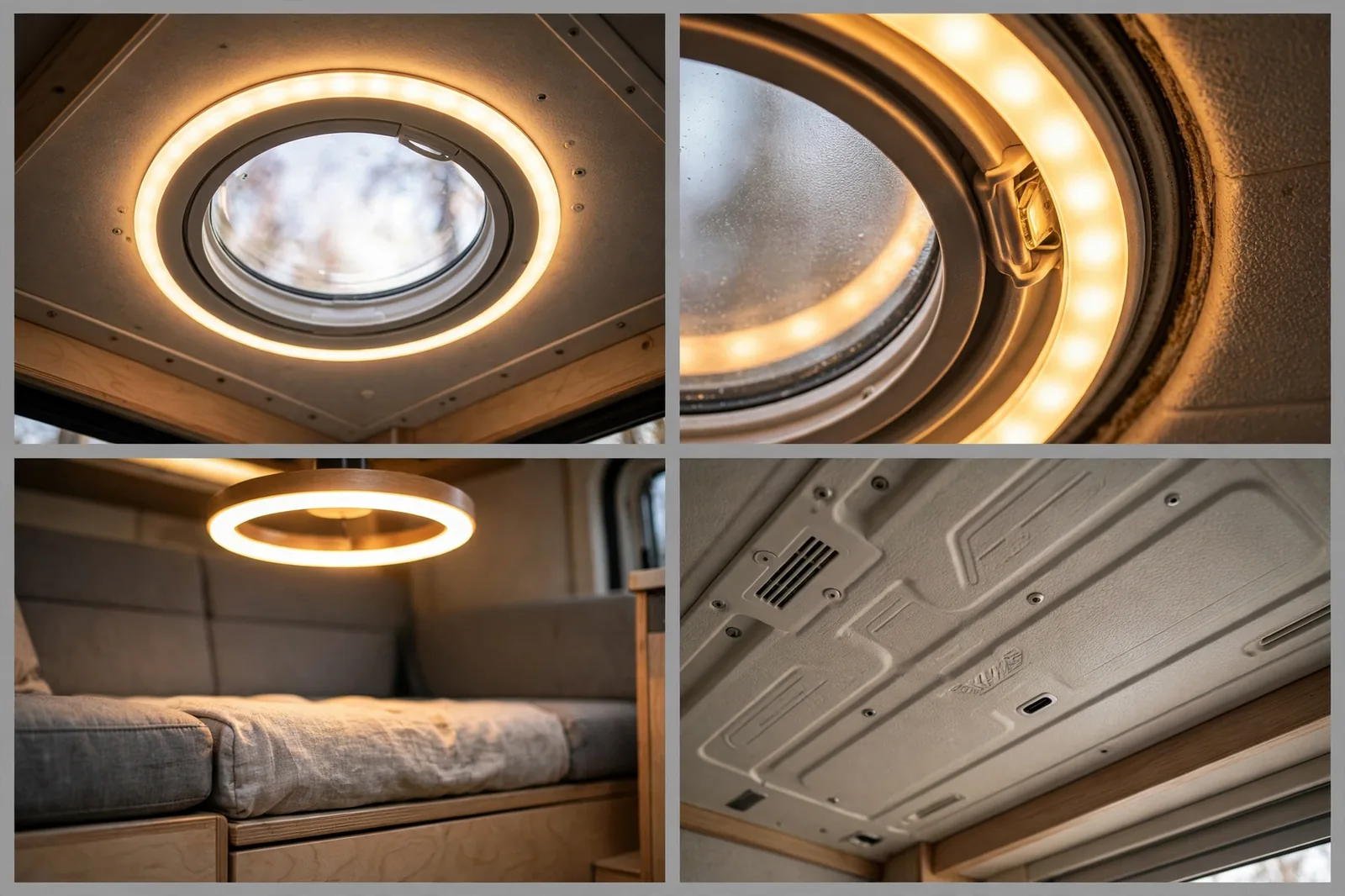
A dimmable ring is ideal. Full ring for daytime tasks, low ring for evening lounging under the stars.
Keep the ring clean. Dust on a ceiling ring shows up as a dull patch in the glow.
15. Warm Entry Step Light
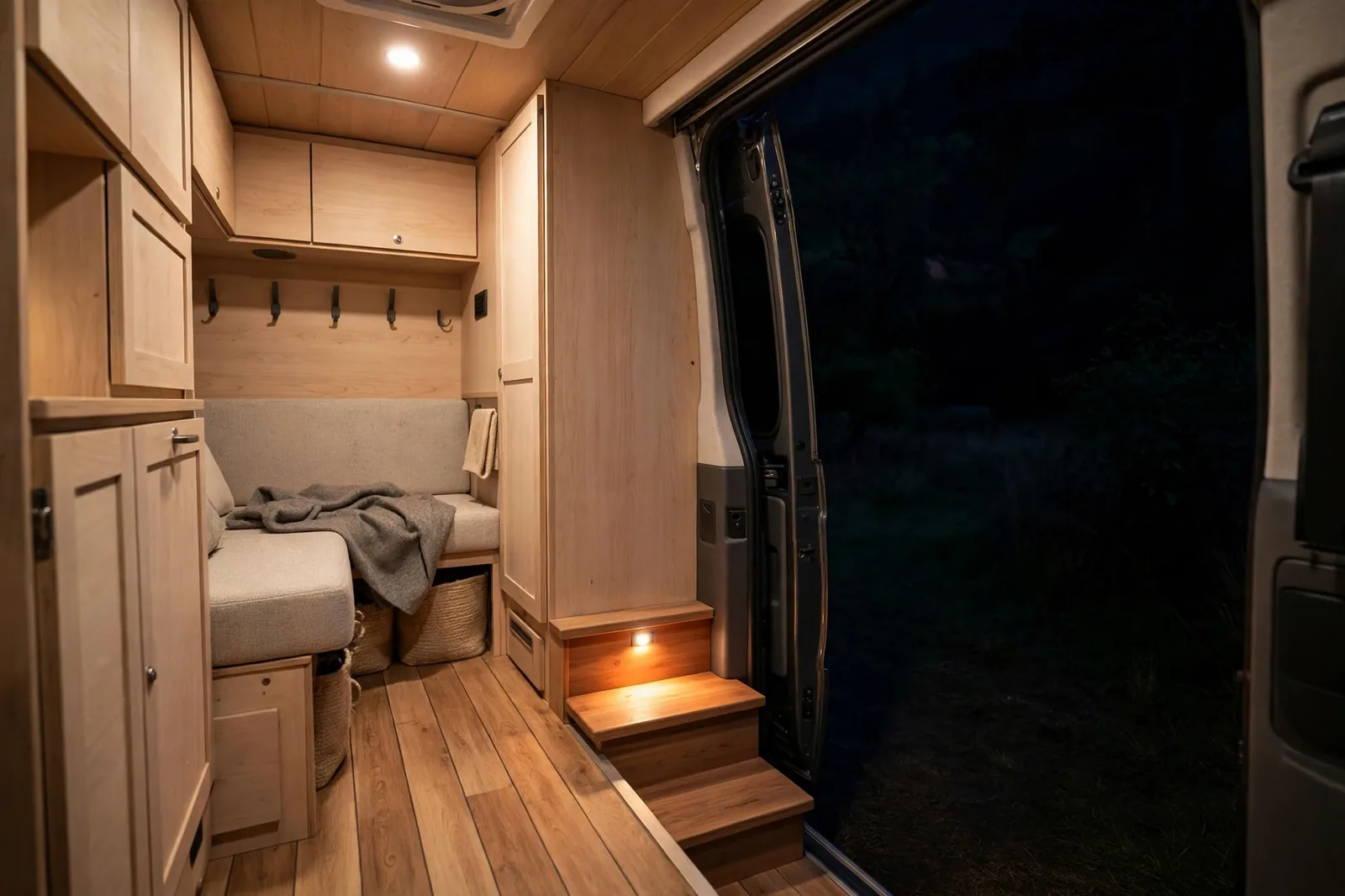
The entry step is where trips and stumbles happen. A small warm light beside the sliding door steps makes that first step in and last step out safe after dark. It also makes arriving back at the van feel welcoming.
Step lights are tiny and tough. They are made to be stepped near and splashed, so they suit a doorway far better than a delicate decorative light.
Wire it to the door or to a switch by the entrance, so it comes on when you need it and off when you do not. A light that stays on all night by the door attracts insects and drains power.
Warm white again, not blue white. A blue step light makes the whole entrance look like a loading dock instead of a home.
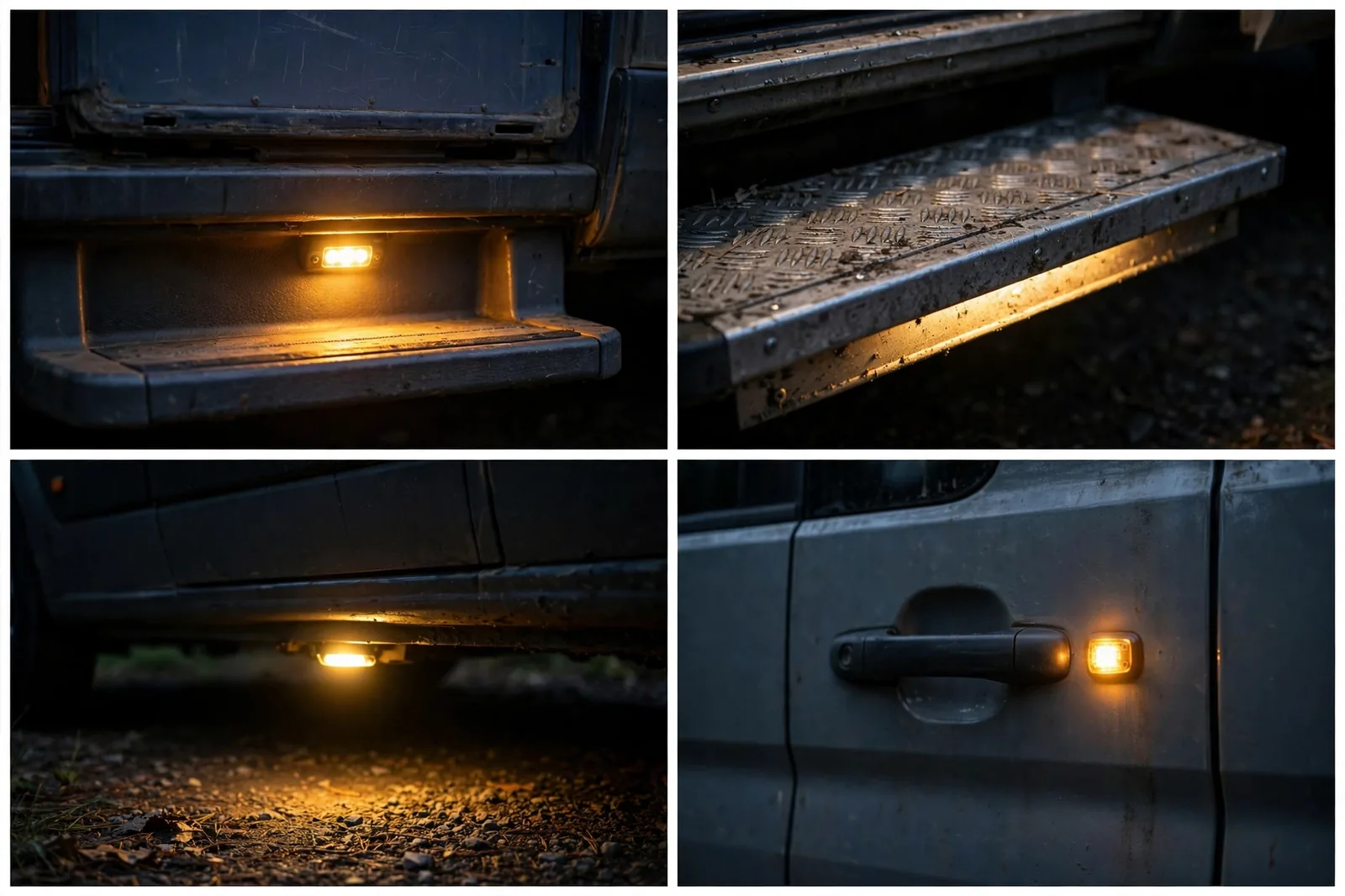
Keep the step light low and shielded. Light should fall on the step, not into the eyes of someone climbing in.
One step light is usually enough. Two can help if your van has a high floor and a double step, but more than that is overkill.
Warm van lighting is not about buying the most lights. It is about layering a few warm sources at different heights. A low glow, a mid level task light, and a soft ceiling light together beat one bright bulb every time.
Start with the idea that solves your biggest annoyance. If cooking in the dark frustrates you, start with under cabinet strips. If bedtime feels harsh, start with a bed strip or sconces.
Then live with it for a trip or two before adding more. The best lit vans are built one warm layer at a time.