I Compared a $20K Van Build to a $90K One — The Gap Surprised Me

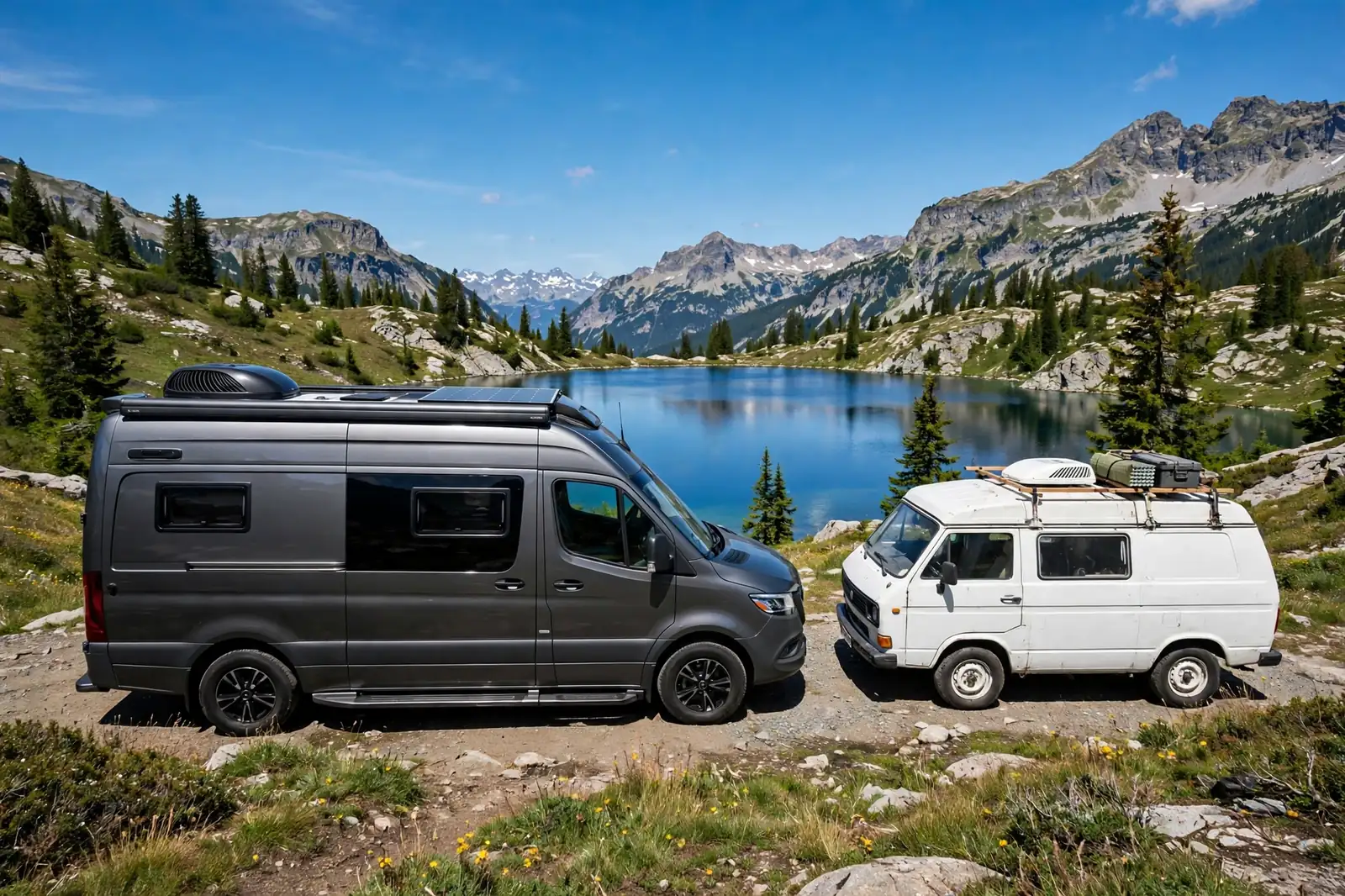
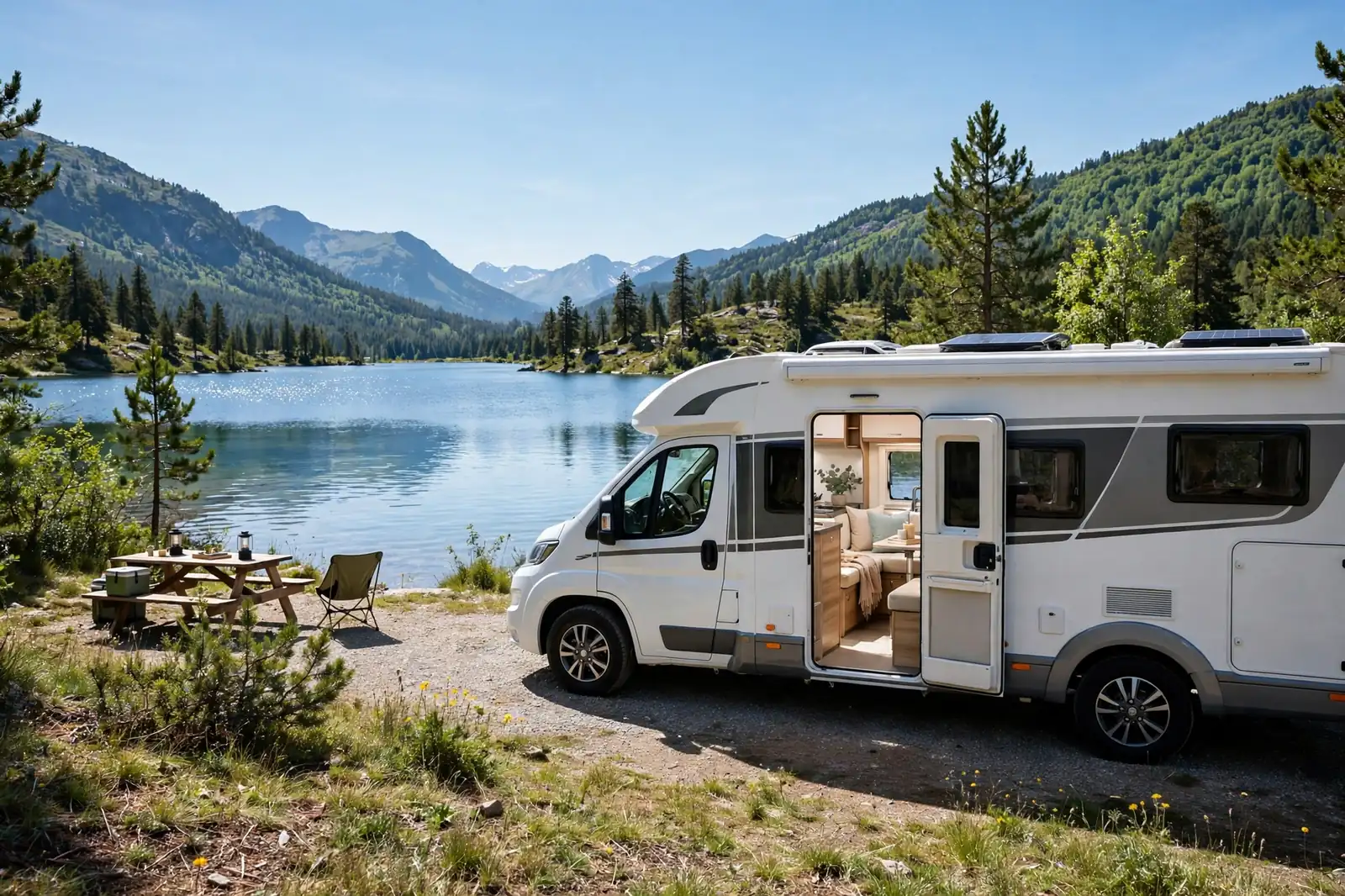
Park two camper vans side by side and the difference hits you before anyone opens a door. One looks like a work van that learned to camp. The other looks like a small apartment that learned to drive.
That is the gap I wanted to understand. Not the sticker shock. The real question is what the extra money actually changes once you are living in the thing, cooking in it, sleeping in it, and trying to charge a phone on a cloudy Tuesday.
So let us compare two conversion budgets, not two vans. In both cases below, the van itself is a separate cost. The $20,000 figure is what goes into turning a used van into a camper. The $90,000 figure is a full professional conversion. Industry guides put DIY conversions roughly in the $5,000 to $20,000 range and professional builds roughly in the $30,000 to $100,000 range, so both of our examples sit inside real world numbers (see Infinity Vans and Van Build Cost).
The surprise was not that the expensive van is nicer. Of course it is. The surprise was how much of daily van life the budget build already covers, and how narrow the list of things is that truly need the bigger budget.
Where the money goes: $20,000 versus $90,000
Illustrative conversion splits. Totals are the comparison budgets in this article. Real quotes vary by van size, region, and spec.
The professional build does not just buy nicer things. It buys labor, warranties, and systems that are designed as one package.
The $20K Starting Point: A Van That Works Hard
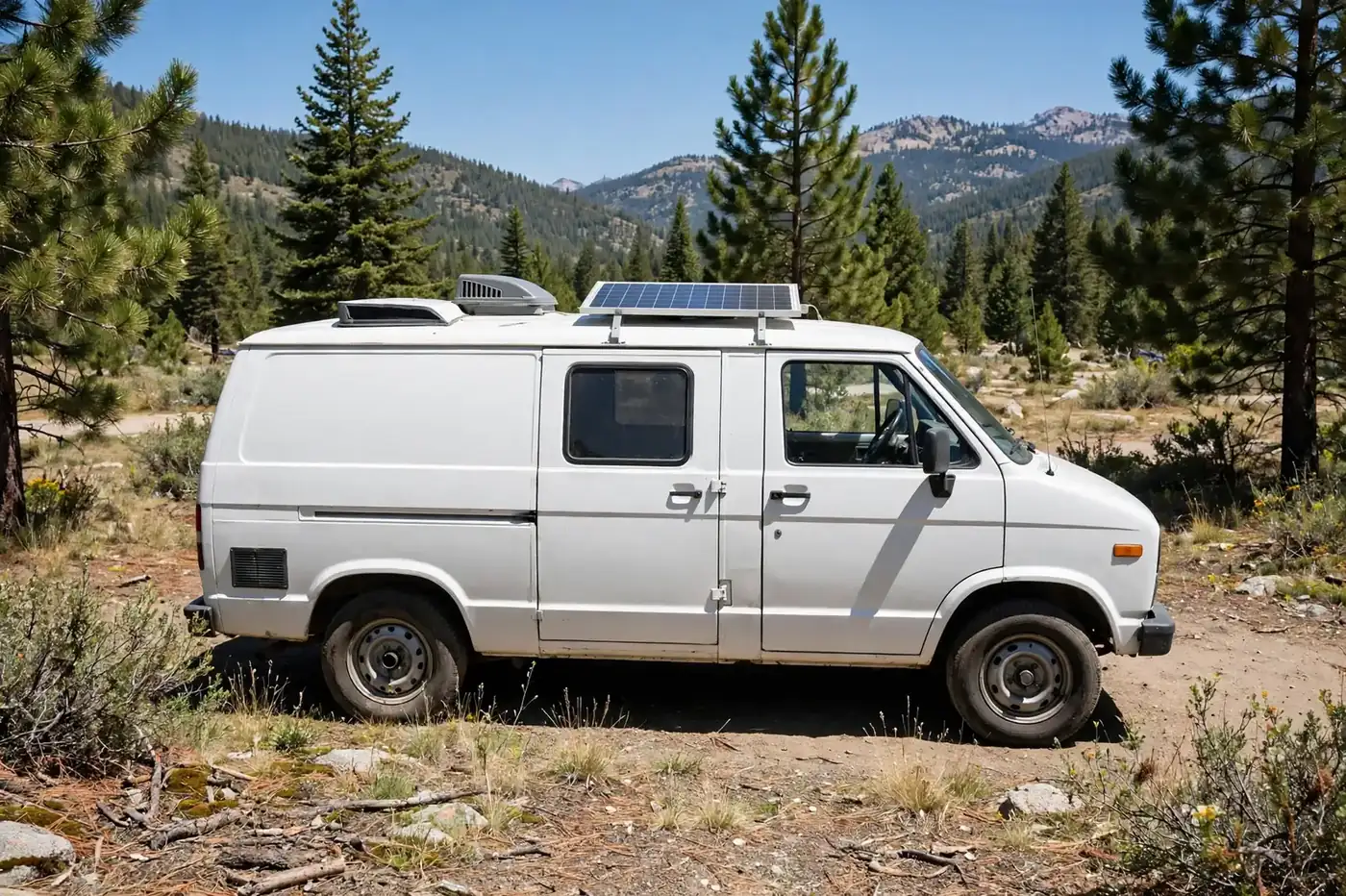
The budget build usually starts with an older, higher mileage van. That is not a flaw. It is the whole strategy.
Money goes to the essentials first. Insulation keeps the van livable. A roof vent moves stale air out. A plywood platform bed creates storage underneath. A simple kitchen lets you cook a real meal. Nothing here is fancy. Everything here earns its place.
The trade is time and tolerance. A DIY builder often spends weekends over three to six months finishing a van, according to community figures cited by Infinity Vans. You will hear rattles you caused. You will know exactly which cabinet sticks in damp weather. You will also know how to fix it, because you built it.
For weekend trips and shorter tours, this van is not a compromise. It is the whole trip, at a price that leaves money for fuel, campsites, and actually going places.
The $90K Starting Point: A Van That Feels Finished
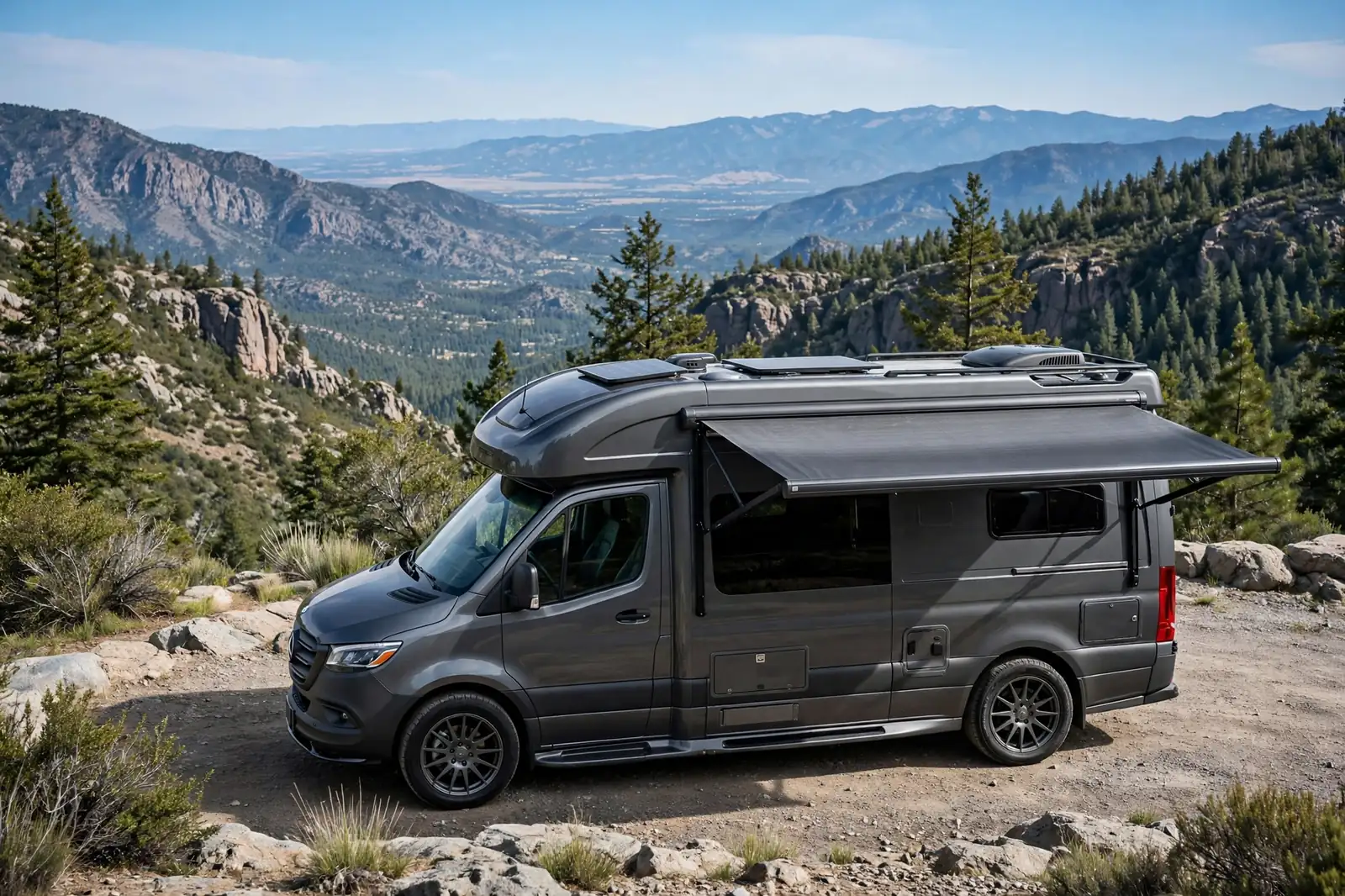
The professional build starts from a different brief. It is not “make this van campable.” It is “make this van feel like home, every day, without thinking about it.”
That means custom cabinets that fit the curves of the van wall. It means a layout drawn before a single panel is cut. It means heating, cooling, water, and power planned as one system instead of added one gadget at a time.
Professional mid range conversions commonly land in the $50,000 to $90,000 range, with luxury builds going well beyond that, as The Vansmith notes. At $90,000 you are paying for skilled labor, tested systems, and a finish that should still look good after years of washboard roads.
Step inside and the difference is immediate. Doors close with a soft click. Nothing flexes when you lean on it. The van feels quiet, solid, and considered. That feeling is expensive because it takes many careful hours to create.
The $20K Kitchen: Simple, Honest, and Workable
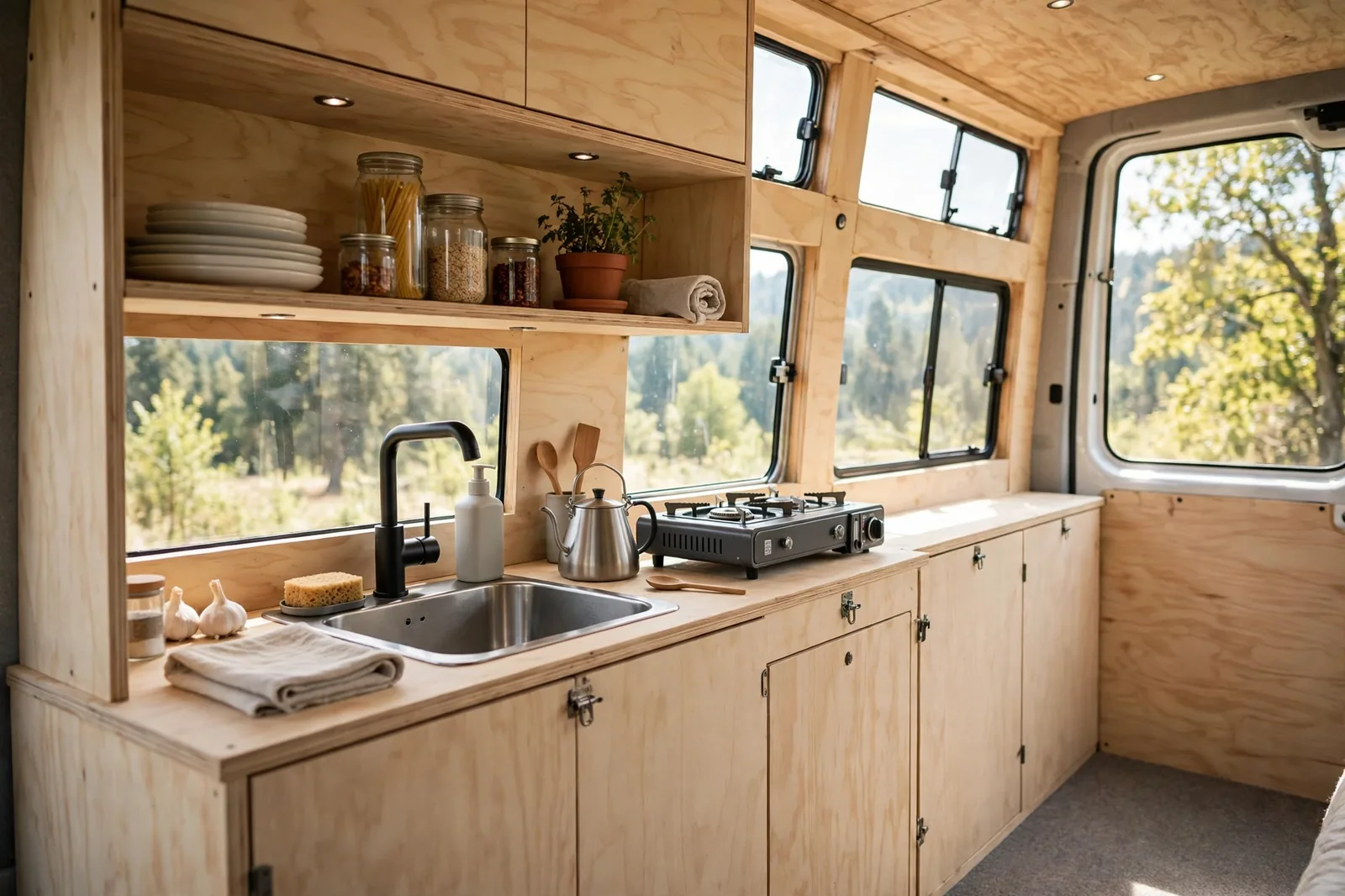
A budget kitchen is a study in good enough. Plywood cabinets. A small sink with a hand pump or a simple electric pump. A portable stove that sits on the counter when you need it and stows away when you do not.
Cooking works fine. You can boil pasta, fry eggs, and make coffee before sunrise. Storage is open shelves, crates, and a cooler or a small 12 volt fridge. A 12 volt fridge is simply a fridge that runs off the van battery system rather than household power.
The limits show up in small daily frictions. Counter space disappears fast. Washing up means juggling a small sink and a drying towel. Food storage is a puzzle, especially on a hot week.
Still, for many travelers this kitchen cooks 90 percent of the meals the expensive kitchen cooks. It just asks you to be tidier, slower, and a bit more inventive.
The $90K Kitchen: A Small Apartment Kitchen
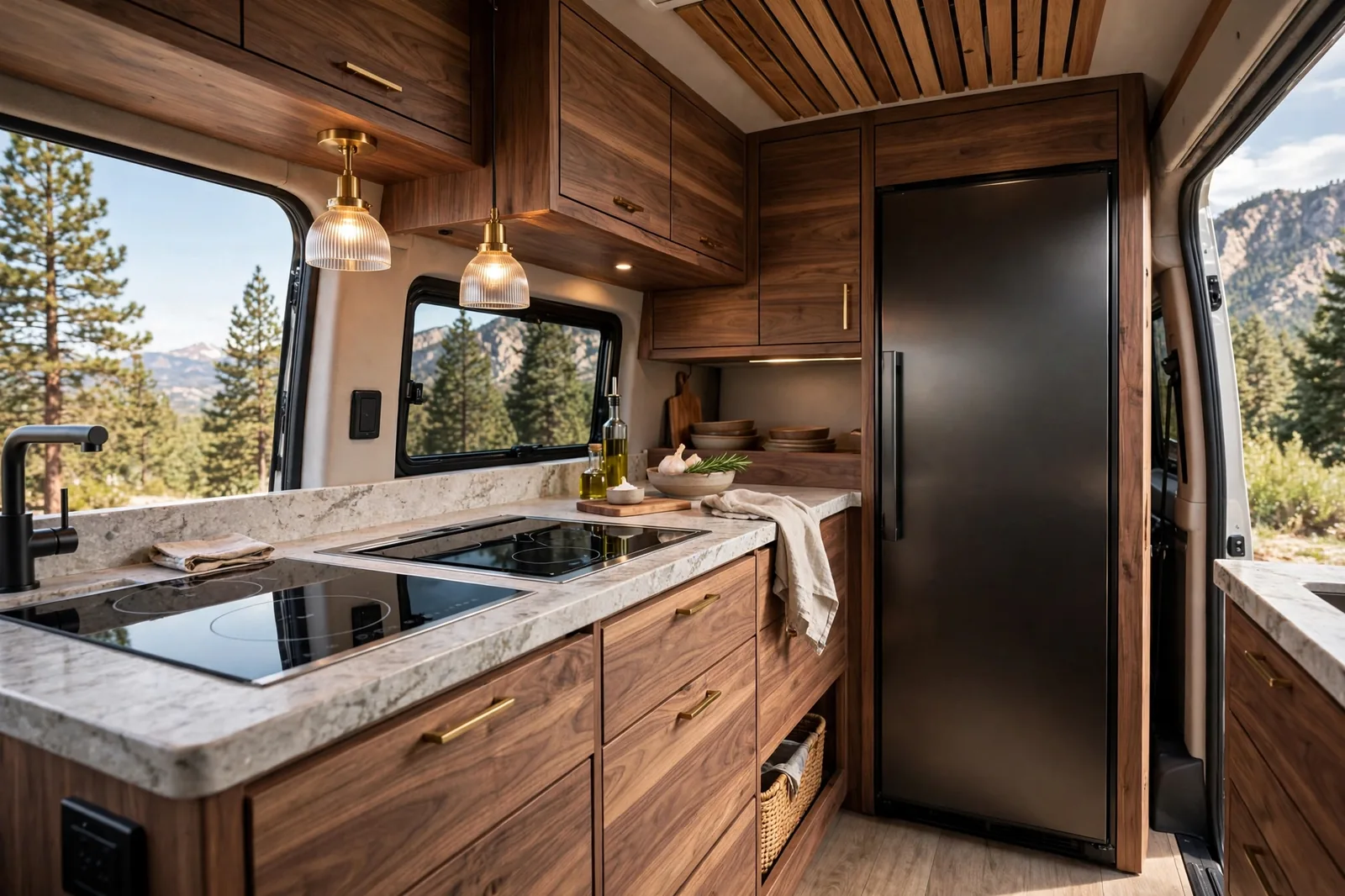
Now step up to the professional kitchen. Real cabinetry, built to the van, not squeezed into it. A proper countertop you can actually chop on. An induction cooktop, which heats a pan with magnets rather than a flame, so there is no gas bottle to refill.
A larger fridge holds a week of groceries. A proper sink has room for a pan. Drawers glide instead of rattling. Everything has a latched home, so nothing slides across the floor on the first bend.
This is where the extra money starts to feel like daily comfort rather than luxury. Cooking is faster. Cleaning is easier. You can host a friend for dinner without apologizing for the layout.
Is it essential? No. Is it noticeably nicer on day 40 of a trip, when you are tired and hungry and it is raining? Yes, and that is exactly the kind of day the $90,000 build is designed for.
Power in plain English
Battery size is measured in amp hours. More amp hours means more stored power. Solar watts tell you how fast sunshine tops the battery back up.
Power: A Simple Setup Versus a Full Off Grid System
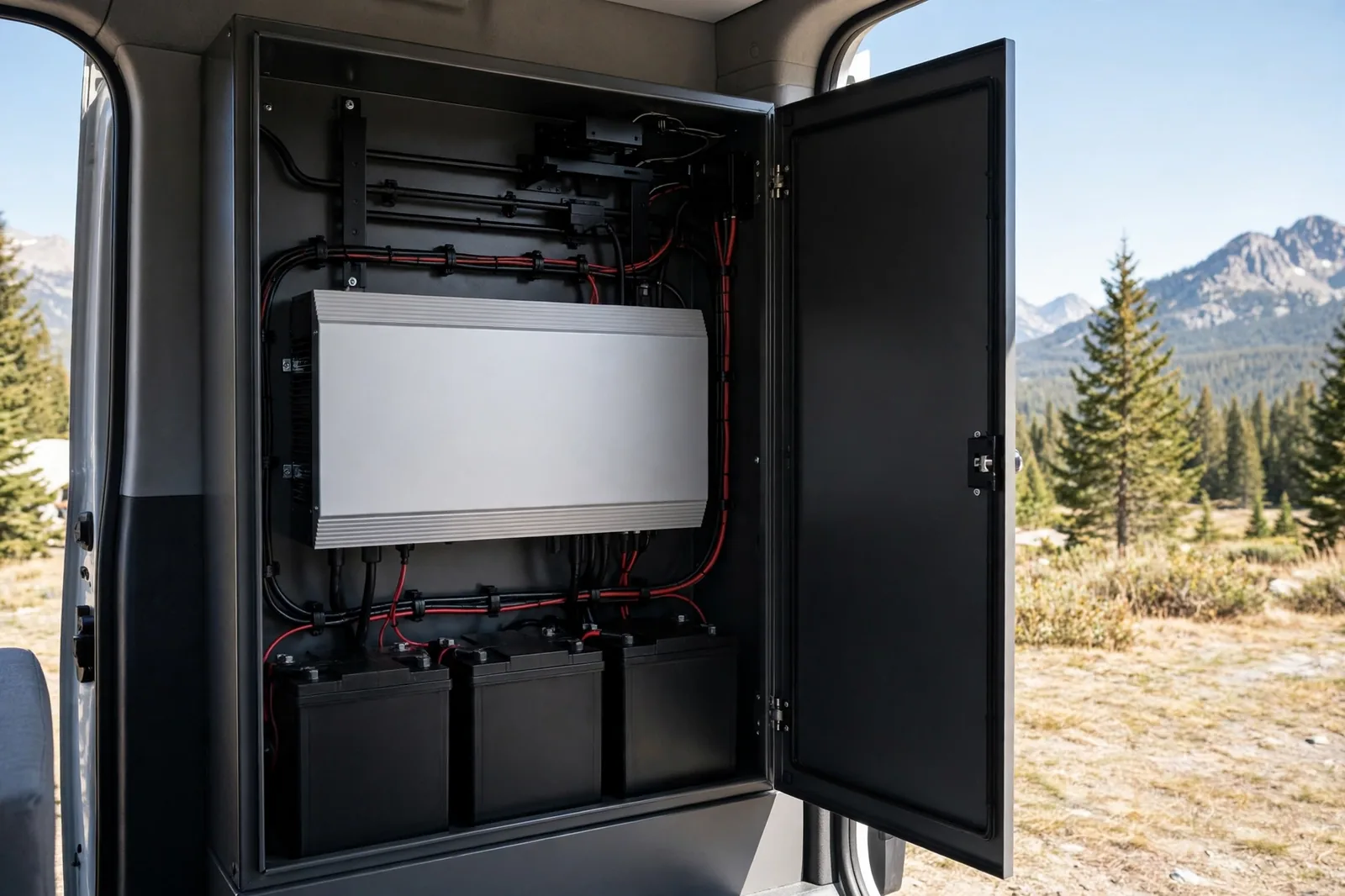
Power is the biggest practical gap between these builds. Off grid simply means living without plugging into a campsite power post.
A budget system might pair one lithium battery with a small solar panel and a basic inverter. An inverter turns battery power into the kind of power that runs a laptop charger or a household plug. That setup handles lights, a small fridge, phones, and a fan. It struggles with anything that heats, like a kettle or an induction hob.
A professional system is a different animal. A bigger battery bank, more solar on the roof, a powerful inverter, and a proper charger that tops up while you drive. It can run induction cooking, a water heater, and a work laptop for days without a plug.
Guides put a basic electrical setup roughly in the $1,000 to $3,000 range for DIY, and $5,000 to $10,000 professionally, with full solar and lithium systems higher still (see Infinity Vans). If you work remotely from the van, that gap alone can justify the upgrade. If you mostly drive, park, sleep, and cook simply, it may not.
Sleep and Storage: The Budget Build Holds Up Well
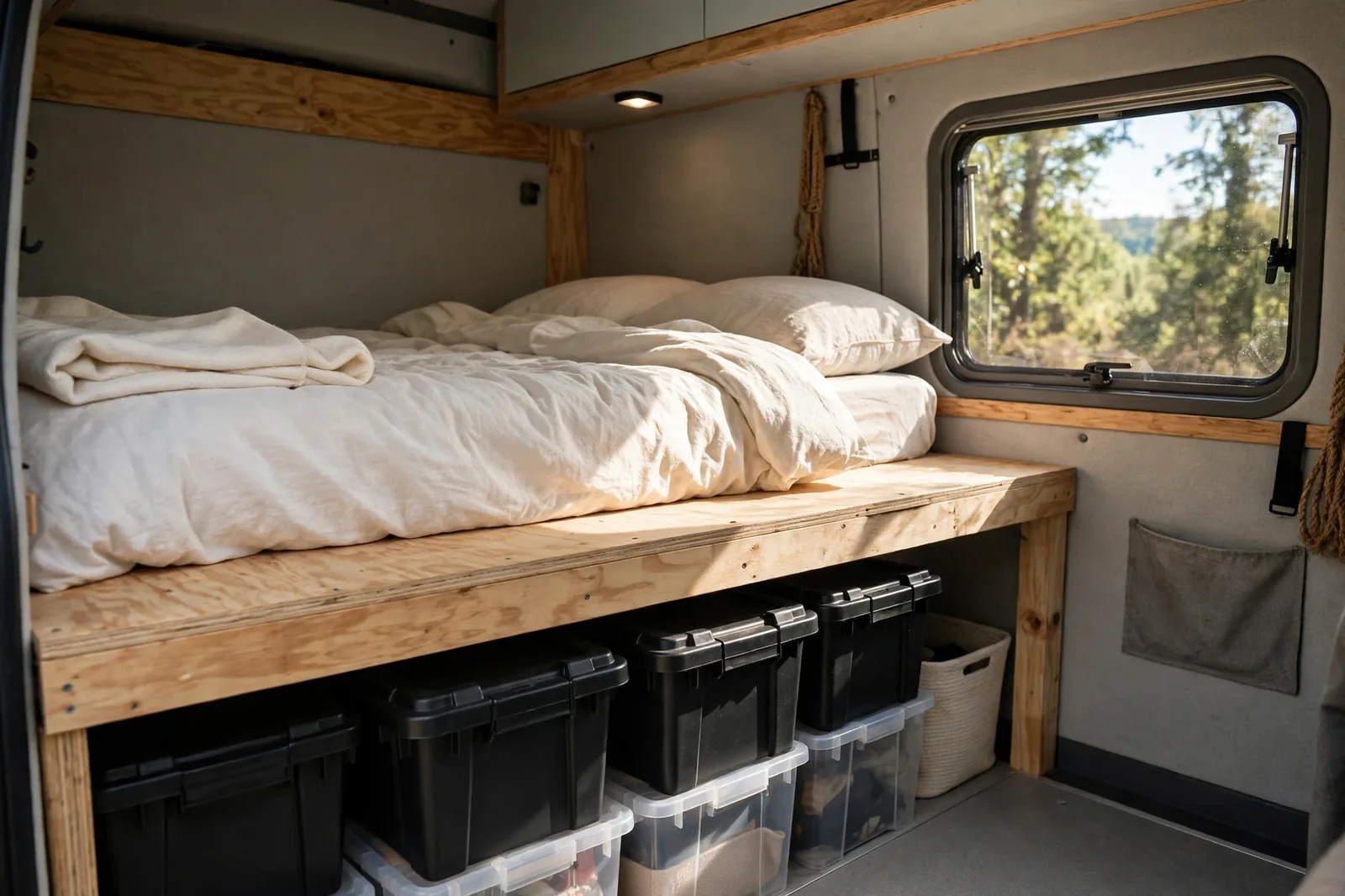
Here is where the budget build punches above its price. A bed is a flat platform, a decent mattress, and bedding you actually like. The $20,000 van does that just as well as the $90,000 van.
Storage underneath the bed swallows crates, tools, and outdoor gear. The trick is access. Budget builds often rely on sliding boxes you pull out from the back. Professional builds add drawers, gas struts, and a garage area you can reach without unpacking half the van.
Where the expensive build wins is in the daytime. A fixed bed eats floor space all day. A professional layout may use a bed that converts, lifts, or slides, so the same space becomes a lounge by morning. In a small van, that daily transformation matters more than it sounds.
Still, sleep quality is mostly about the mattress, ventilation, and a quiet parking spot. None of those require $70,000 extra. If your main test is “did I sleep well,” the gap narrows fast.
Water, Heating, and the Bathroom Question
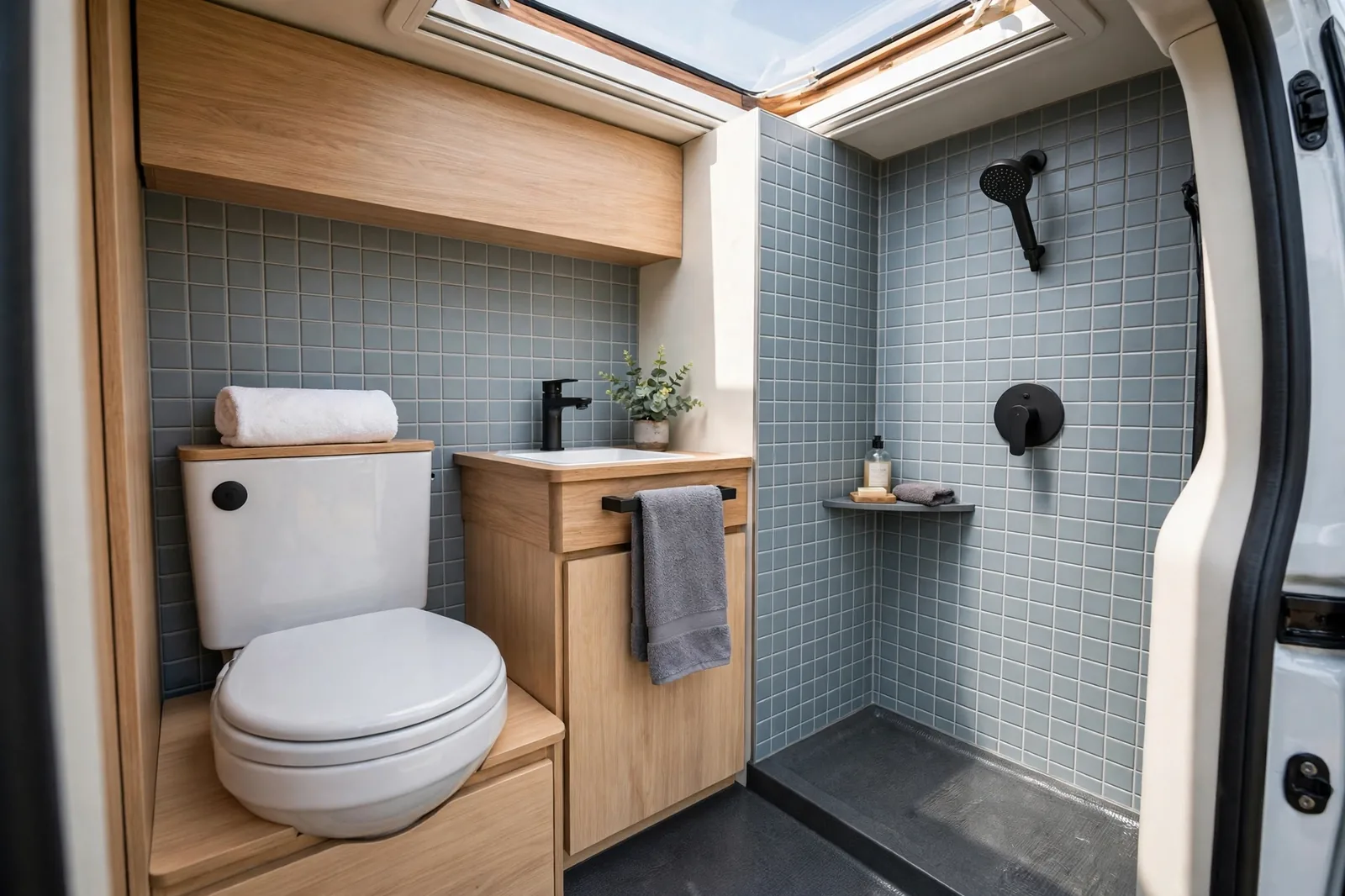
Water is where budget honesty meets real limits. A budget van often carries a portable water container, a small sink tank, and a portable toilet or a gym and campsite plan. It works. It is just manual. You fill, you carry, you empty.
A professional build hides all of that. Fixed fresh and grey water tanks, a proper pump, a hot water heater, and a sealed wet bath where the shower, toilet, and sink share one waterproof room. You shower standing up, inside, in winter, without a second thought.
Heating follows the same pattern. A budget diesel heater, which burns a little diesel fuel to blow warm air, can keep a van cozy for a modest price. A professional install adds thermostats, ducting, insulation, and hot water in one tidy package.
Ask yourself one blunt question. How often will you genuinely need an indoor shower? For full time living, often. For weekend trips near facilities, rarely. That answer moves thousands of dollars.
The hidden costs checklist
Budget for these on either build. Guides warn that tools, fasteners, wiring, and scope creep typically add 15 to 20 percent (see Van Build Cost).
What the Extra $70K Really Buys
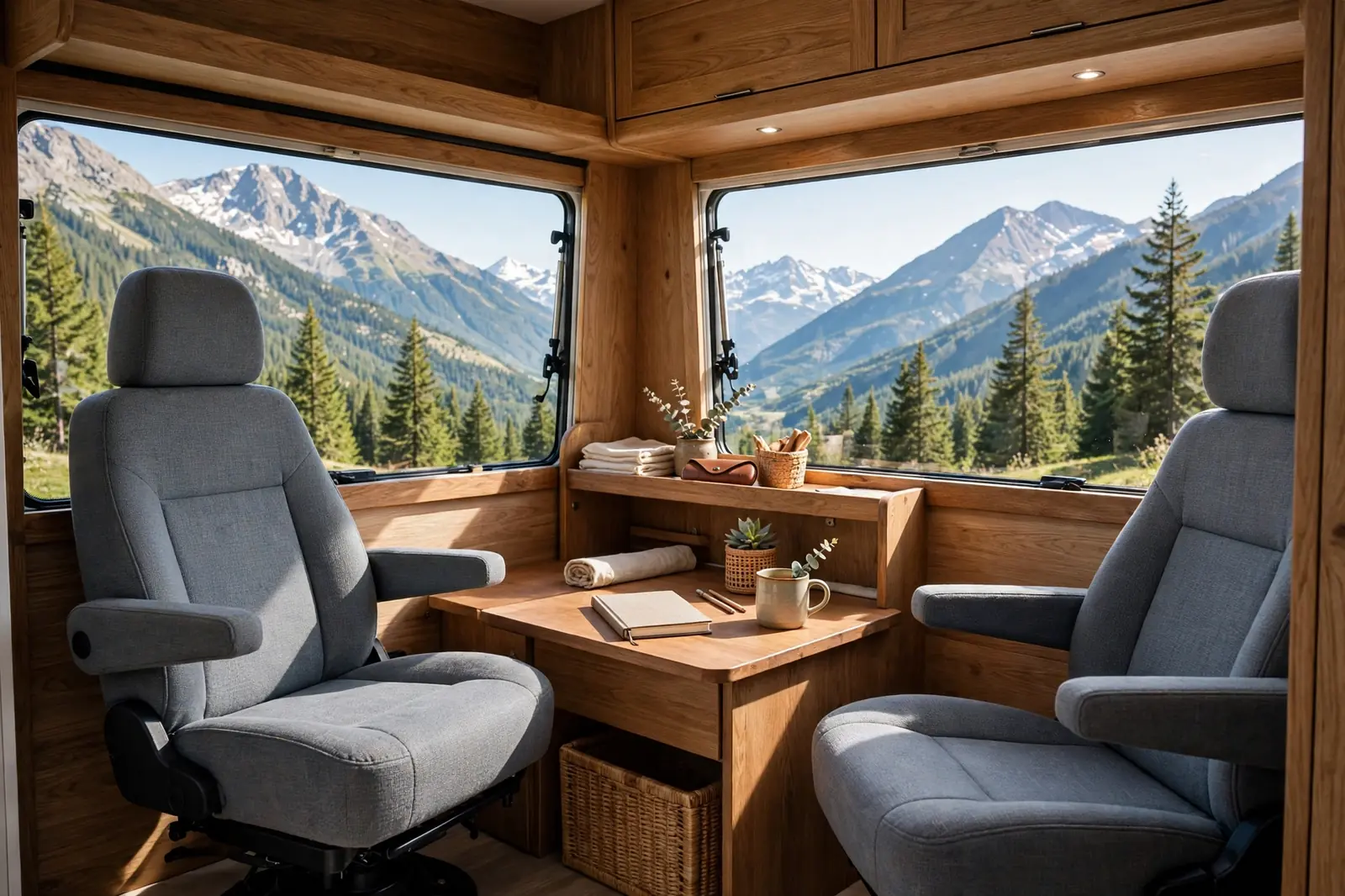
Strip away the nice cabinets and the real purchase list is shorter than most people expect. It buys time, because a shop builds in weeks what takes a DIY builder months. It buys integration, because power, water, heat, and layout are designed together. It buys durability, because joints, wiring, and seals are built for vibration and temperature swings.
What it does not buy is a better sunset. Both vans park at the same lake and wake up to the same light. The expensive van simply lets you stay longer, work more easily, and shower before dinner without planning around it. So start with your travel pattern, not the price tag. Weekend travelers who enjoy building things will find the $20,000 van is a finished answer. Full time remote workers will find the $90,000 build removes daily friction when there is no house to fall back on.