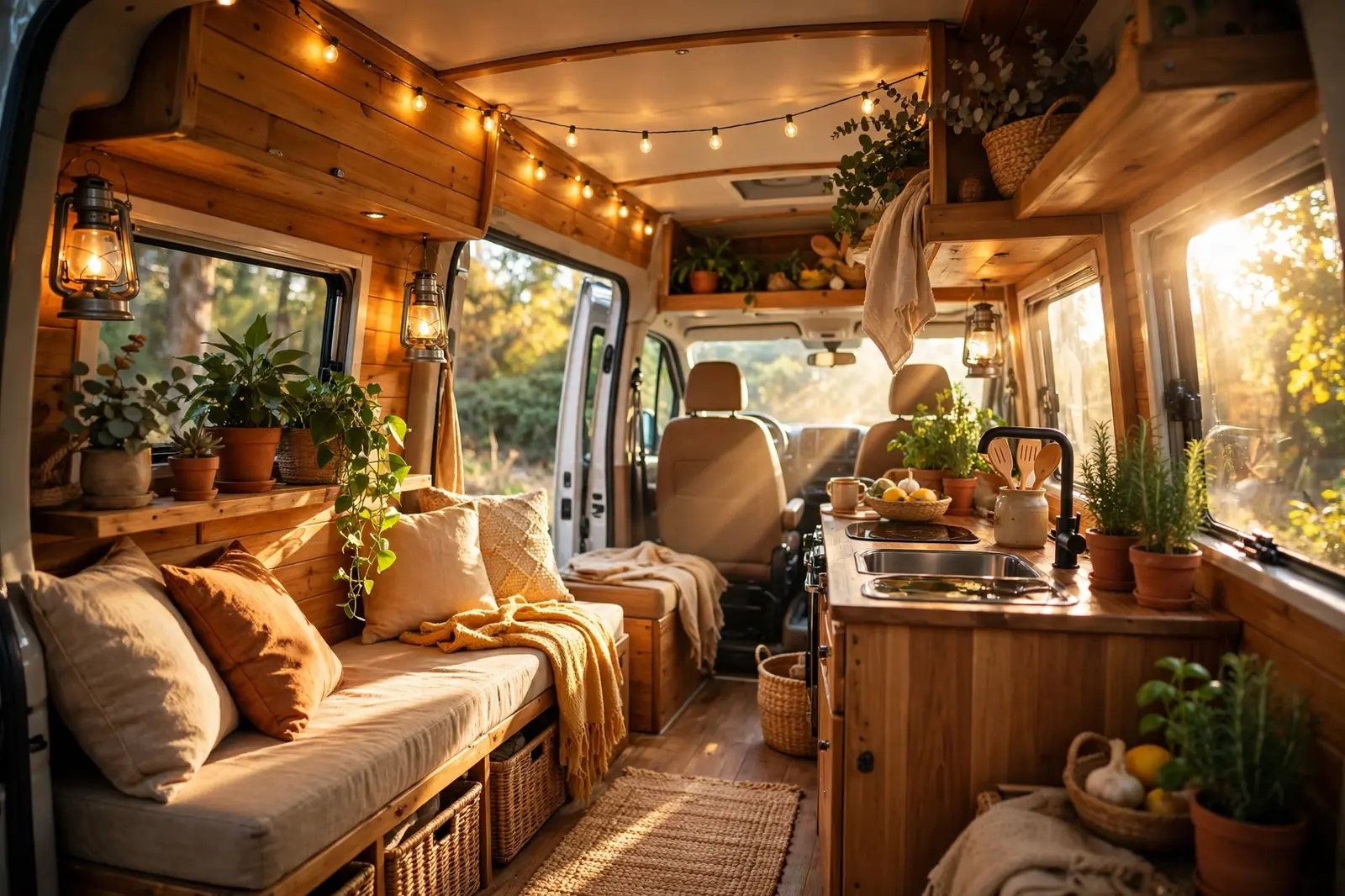
The One Motorhome Layout Mistake That Ruins Long Trips

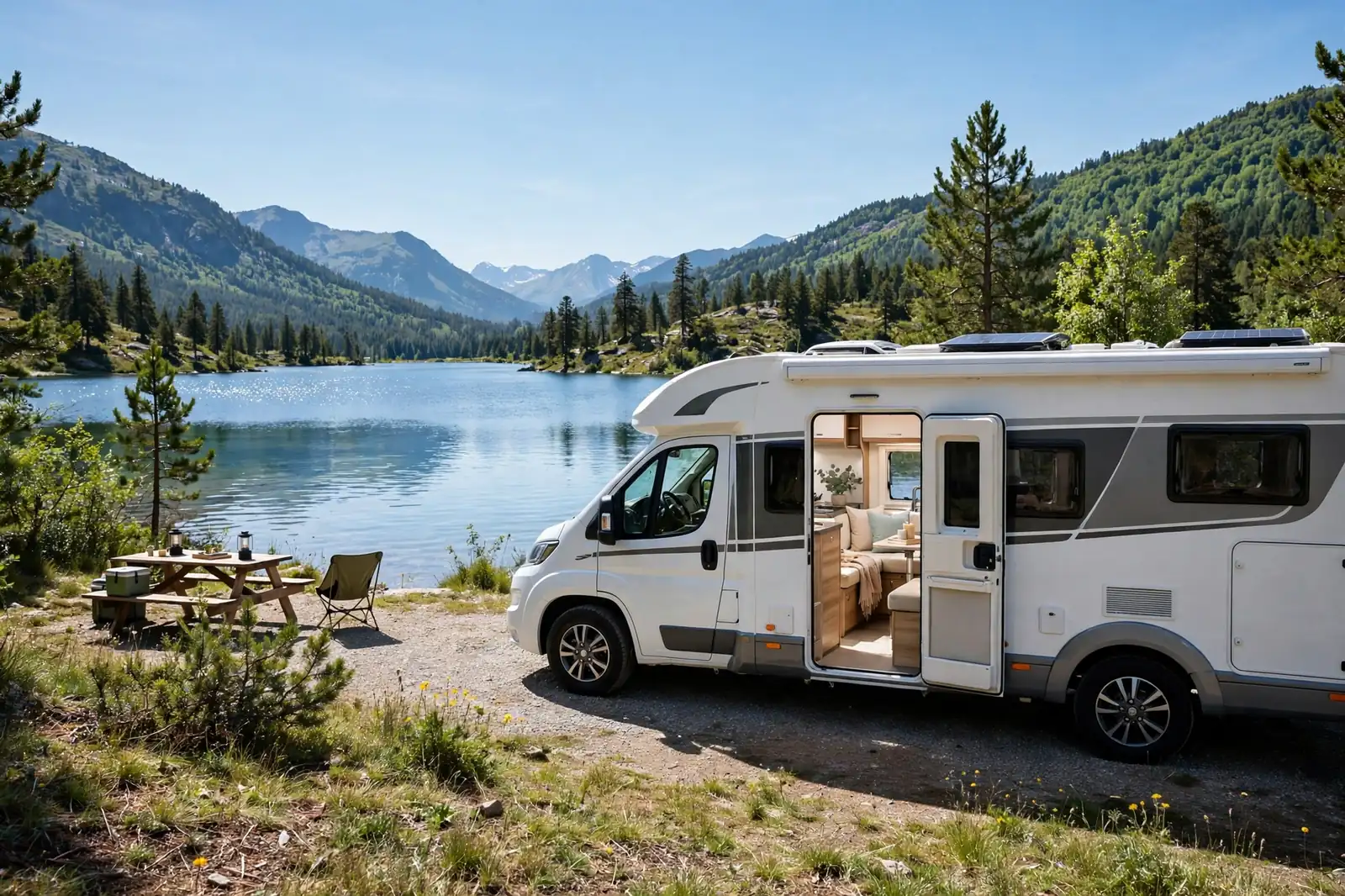
Picture this. You have been on the road for nine days. It is raining. One of you is trying to cook dinner. The other is trying to get to the bathroom. Neither of you can move without the other one standing up first.
That is the layout mistake. It is not a small annoyance. On a long trip, it becomes your whole day, every day.
Here is the mistake in one sentence: buyers pick a motorhome that looks amazing in the showroom but only works when it is parked, level, with the slide-outs open and the beds already made. A slide-out is a section of wall that pushes outward when you park, giving you extra floor space. In the showroom, every slide is out. On the road, life is very different.
This guide shows you how to spot that trap before you sign anything. You will learn the slides in test, the bed test, the privacy test, and the storage test. Run all four and you will dodge the one mistake that ruins long trips.
A Bad Layout Day, Hour by Hour
If a layout forces this routine, it is not a home on wheels. It is a chore on wheels.
1. The Mistake: You Bought the Showroom, Not the Trip
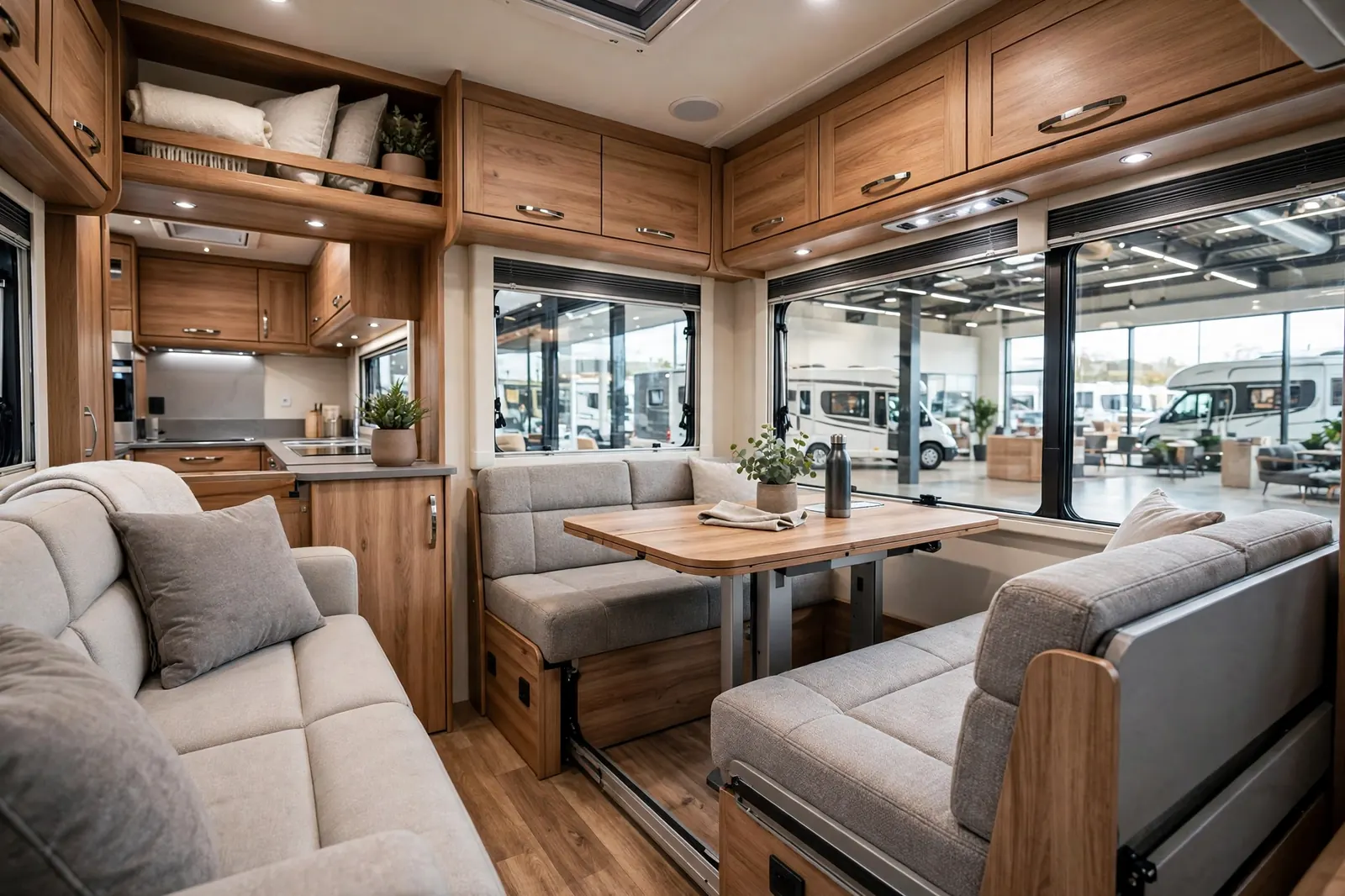
In a showroom, everything is staged. The bed is made. The table is clear. The slide-outs are open and the sun is shining through big windows. It feels like a small apartment.
Real travel is messier. You stop at a highway rest area for lunch. You park on a narrow street overnight. You wake up early while your partner sleeps in. A layout that only feels good in perfect conditions will fail you in normal ones.
Experienced owners say the same thing again and again: a floor plan that looks great on a quick tour can turn frustrating after a few days, when a tight bathroom, an awkward bed, or a tiny kitchen starts to grate. The fix is simple in theory. Judge a motorhome by its worst day, not its best one.
Ask this question before anything else: can we live in this rig when it is raining, parked tight, and half asleep? If the answer is no, walk away, no matter how pretty it looks.
2. The Slides In Test
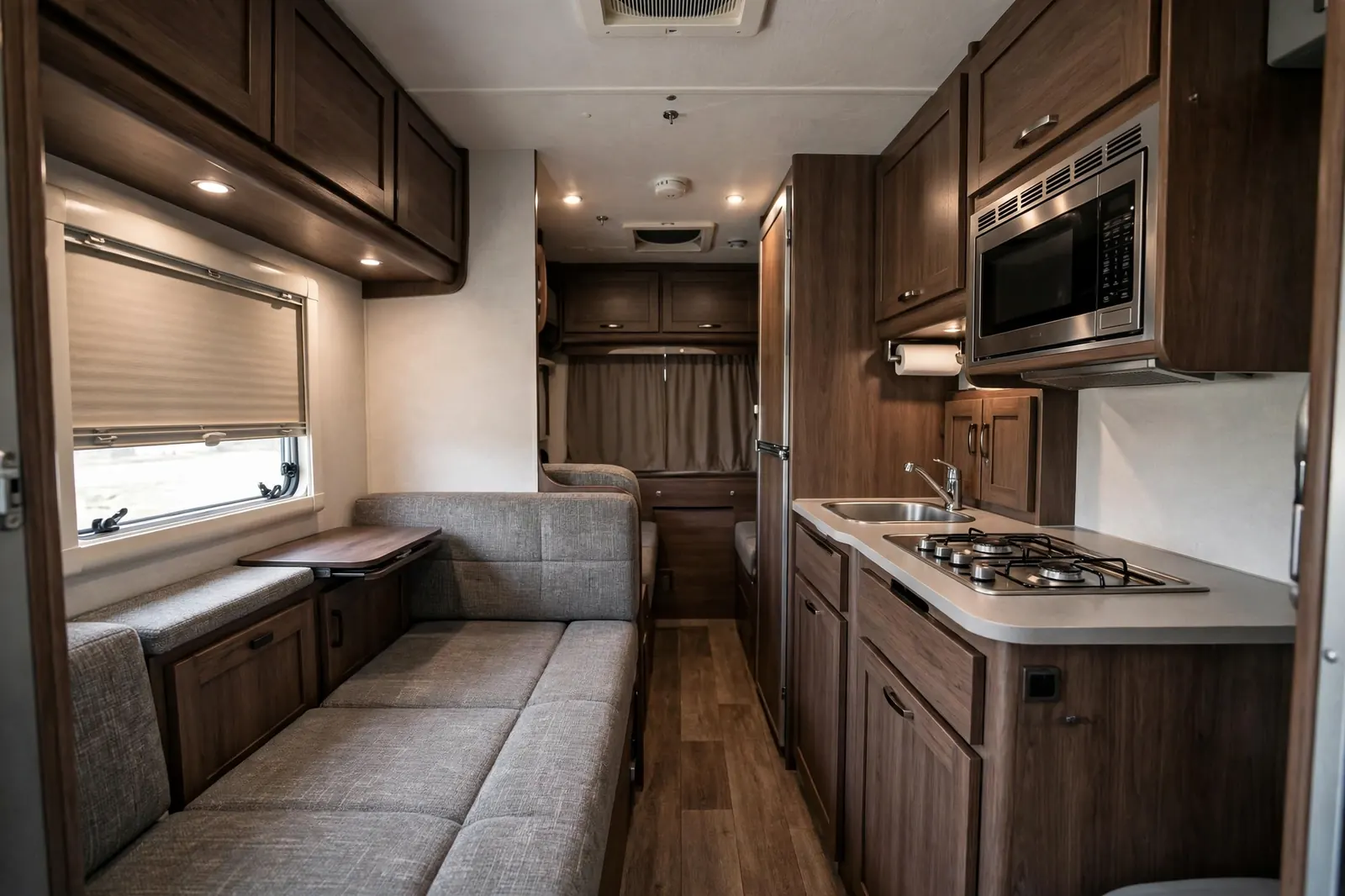
Start here, because this test alone kills more bad layouts than any other. Ask the dealer to pull every slide-out in. Then try to live in the motorhome.
Can you reach the fridge? Can you get to the bathroom? Can you walk from the cab to the bed without climbing over furniture? Owners have reported rigs where a retracted slide blocks the fridge, the bathroom, or even the path to the driver seat. That is not a quirk. That is a design failure.
Think about how often you travel with slides in. Every driving day. Every quick lunch stop. Every overnight stop where you do not want to set up fully. If you cannot make a sandwich, use the toilet, or lie down for a nap with the slides in, you will resent the rig within a week.
A good layout stays usable with slides in. It may feel snug, but nothing essential is trapped behind a wall. Test it yourself, in person, before you buy. Do not take the brochure’s word for it.
3. The Bed You Have to Build Every Night
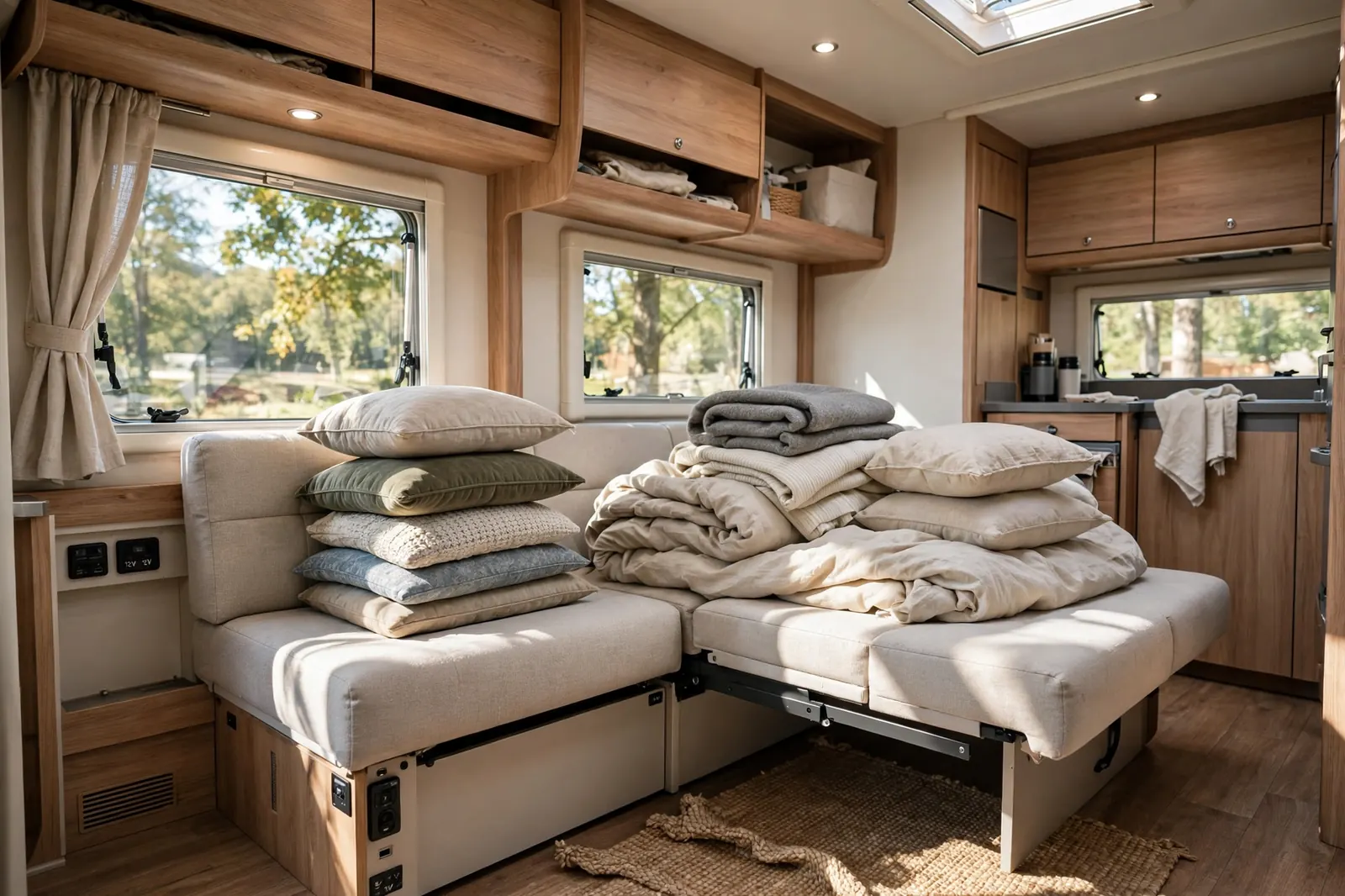
Next, look hard at the main bed. Is it a real bed, always ready? Or is it a sofa, a dinette, or a lounge that converts into a bed each night? A dinette is the table and bench seats where you eat. A jackknife sofa is a couch that folds flat into a bed.
Convertible beds sound clever. On a long trip, they are a nightly chore. You clear the table. You move the cushions. You find somewhere to put the bedding in the morning. Then you do it all again at night.
Owners who bought a rear lounge layout for the space have described exactly this trap: the bed was made from cushions, there was nowhere to store gear, and the bedding and barbecue gear ended up living outside the rig at every stop. They sold within months.
A fixed bed costs floor space, but it pays you back every single night. You fall into it tired, and you get up without rebuilding your living room. For trips longer than a weekend, a fixed bed is not a luxury. It is the difference between rest and resentment.
4. One Room for Everyone, All Day Long
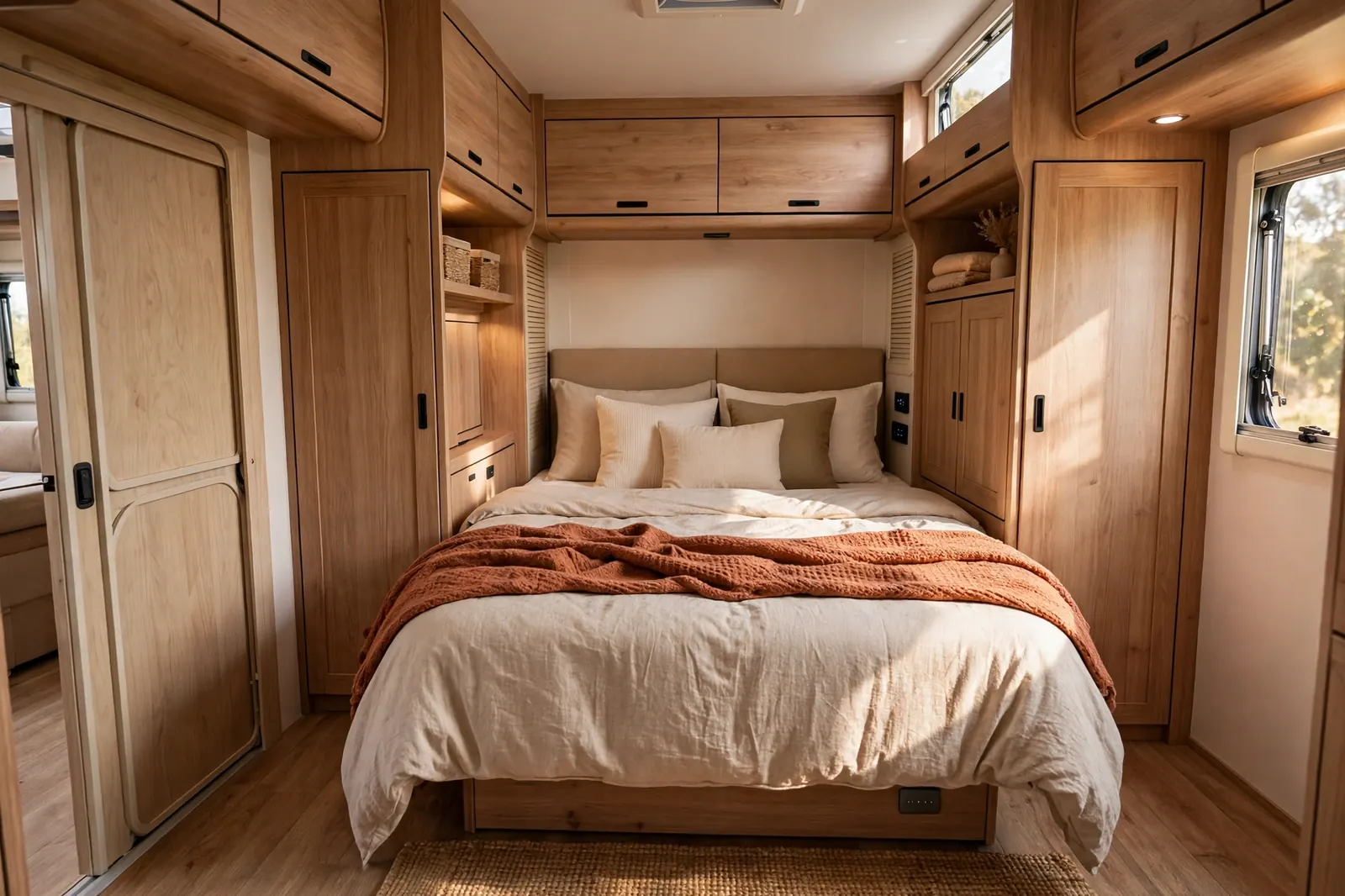
Now picture a rainy day. Everyone is inside. One person wants to read. Another wants to take a work call. Someone else wants to watch a show. In a one room layout, all of that happens in the same space, at the same volume.
That is why experienced buyers recommend at least two distinct zones: a living and cooking area, and a bedroom separated by a door. A bathroom between the two zones works even better, because it blocks sound. A pocket door, which slides into the wall instead of swinging open, saves space while giving you real privacy.
This matters most on long trips, when you cannot just step outside to get some air. Cold weather, rain, and late nights all push everyone indoors. Without a door to close, small frictions grow. Sleep suffers. Patience wears thin.
When you tour a rig, close the bedroom door. Stand in the living area and imagine a phone call happening on the other side. If you can picture peace and quiet, the layout passes. If not, keep looking.
5. The Kitchen That Fights You
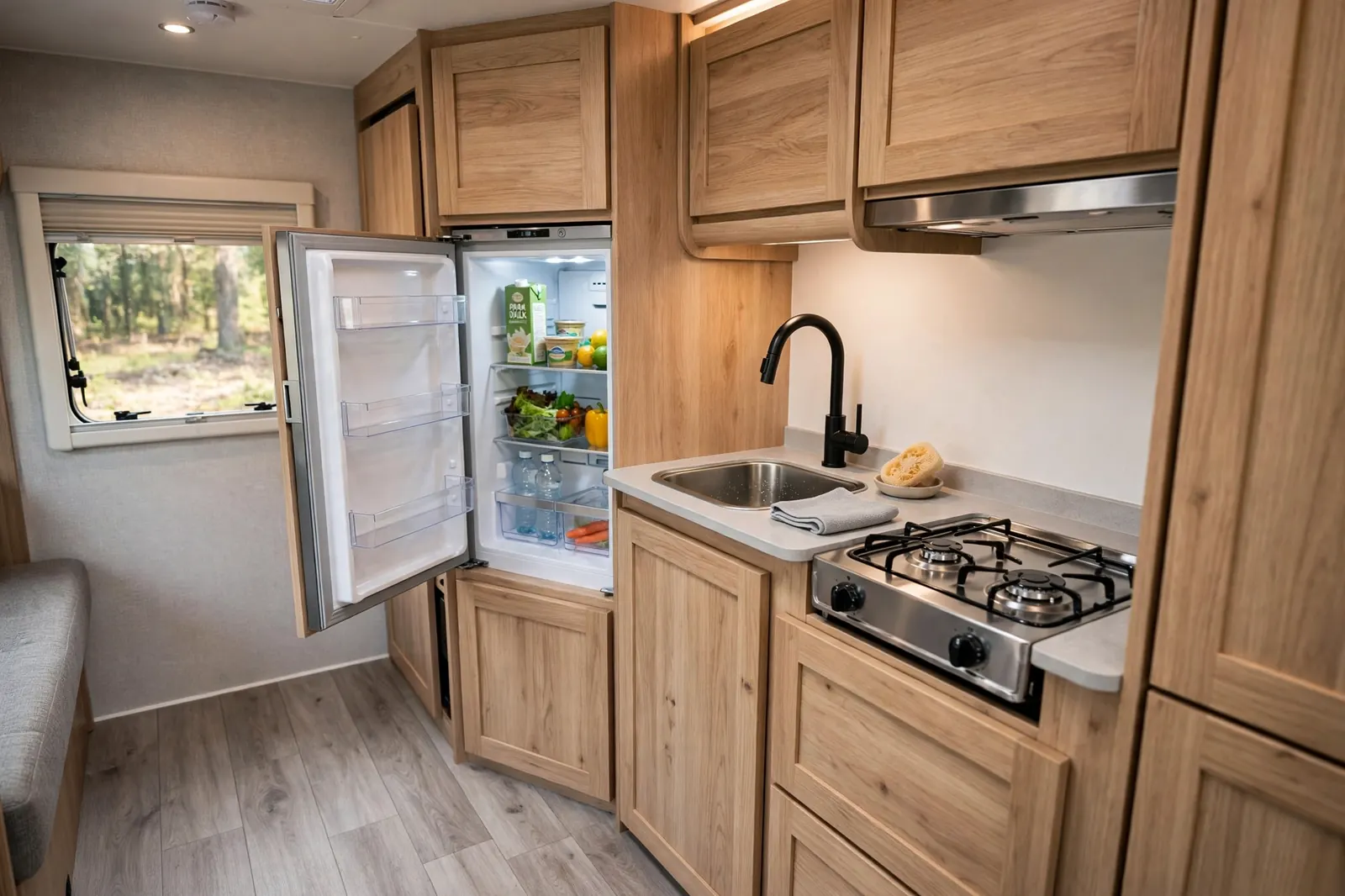
A motorhome kitchen is called a galley. On a short trip, almost any galley will do. On a long trip, you will cook most of your meals in it, and its flaws will show up three times a day.
Check the counter space first. Is there room to chop vegetables while something is already on the stove? Can you open the fridge fully and still have somewhere to stand? A fridge door that swings into a wall or blocks the aisle turns every meal into a puzzle.
Storage matters just as much. A proper pantry, even a tall narrow one, beats a row of shallow cupboards. If you love cooking, look for a larger fridge and real counter space, and compare kitchens across models before you decide.
Cook one imaginary meal in the rig. Walk the steps: fridge, counter, stove, sink, bin. If you bump into furniture or have to put things on the bed, the kitchen is fighting you. On a long trip, the kitchen wins that fight far too often.
The 5 Minute Slides In Checklist
Any box you cannot tick is a daily frustration waiting to happen. Two or more failed boxes means the layout fails the test.
6. The Bathroom You Will Avoid Using
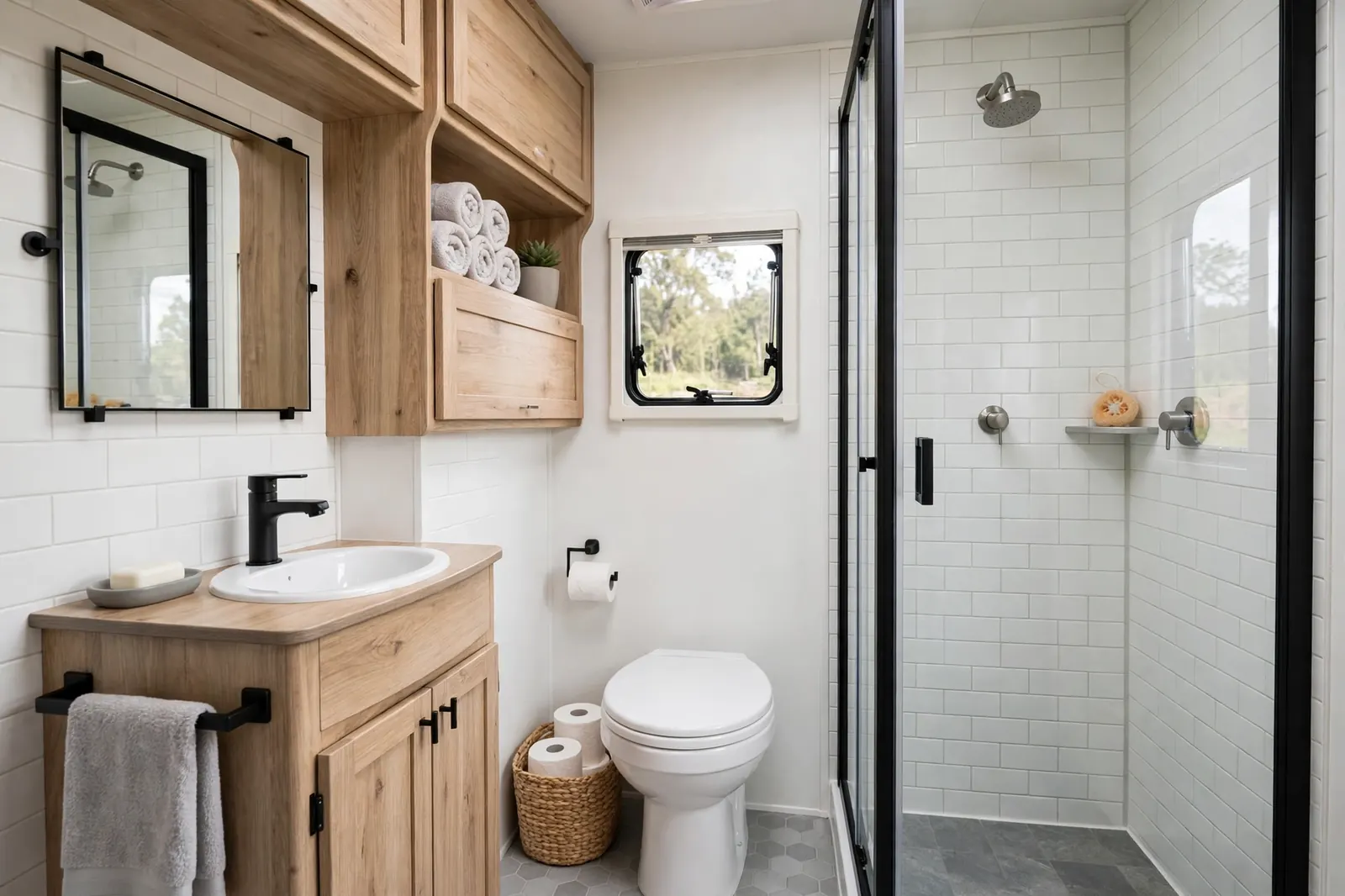
Motorhome bathrooms come in two main types, and the difference matters more than most buyers expect. A dry bath has a separate shower stall, like a small bathroom at home. A wet bath combines the toilet, sink, and shower in one waterproof room.
Wet baths save a lot of space. They also mean everything gets wet when you shower. The toilet paper needs protecting. The floor needs drying. On a long trip, that daily faff adds up, and some travelers start avoiding their own shower.
Size matters too. Sit on the toilet with the door closed. Stand in the shower and mime washing your hair. Can you turn around? Can you get dressed without stepping into the hallway? If you feel cramped on a five minute tour, imagine that feeling on day forty.
Buyers are often told to be honest about their bathroom tolerance before they buy, and that advice is spot on. A bathroom you dread using will push you toward costly campground facilities and cut short the freedom a motorhome is supposed to give you.
7. Where Does All the Gear Go
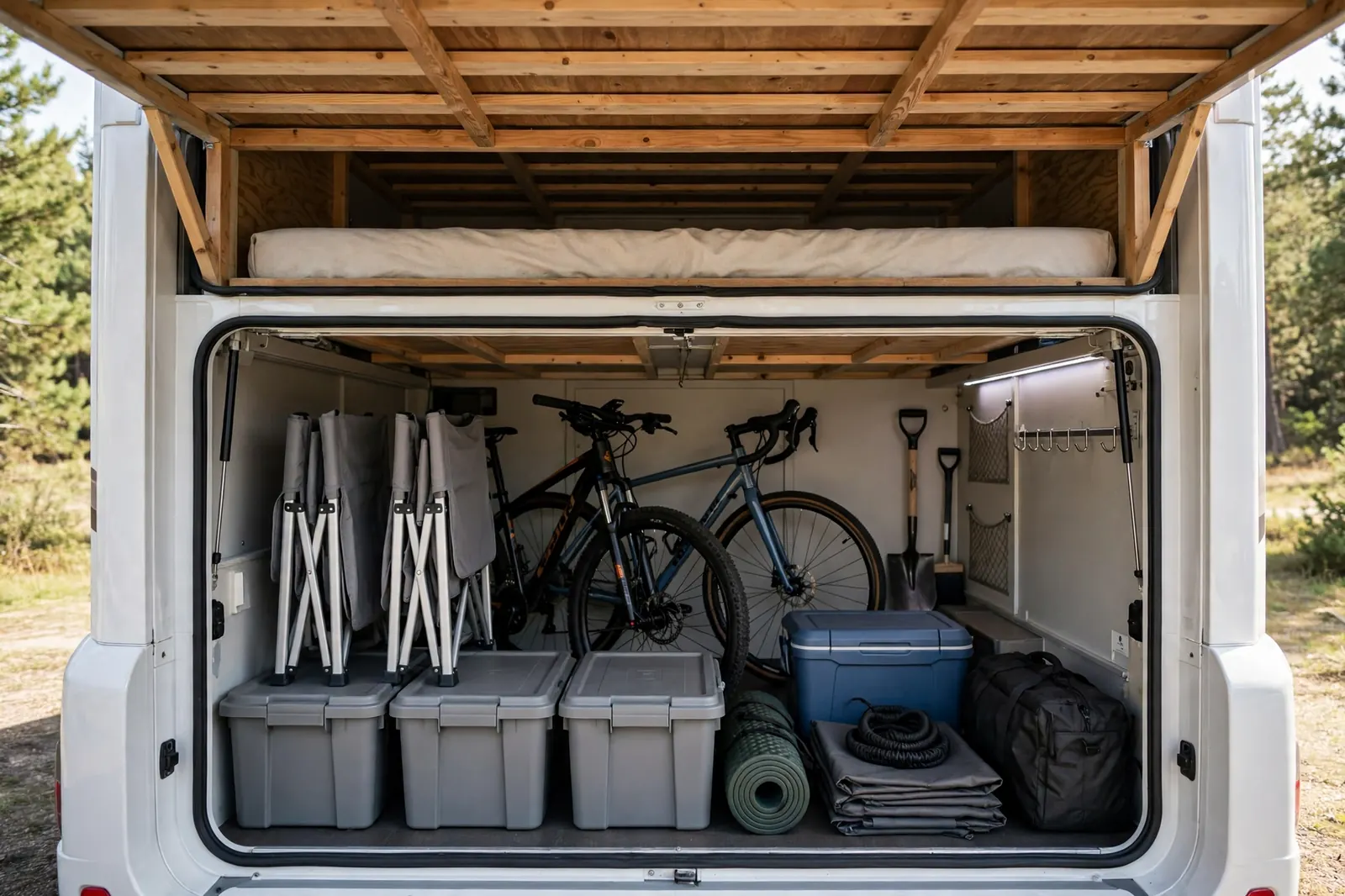
Finally, follow your gear. Chairs, bikes, tools, bedding, food, clothes, and outdoor kit all need a home. In a bad layout, they end up on the bed, on the table, or in the aisle, and you move them every time you want to sit, sleep, or cook.
Look for a garage: a large rear storage compartment, often under a raised fixed bed, big enough for bulky gear. Check under bed storage, overhead lockers, wardrobes, and full height pantry space. Then ask the awkward question: can I reach it all without unpacking something else first?
Storage you cannot reach does not count. A deep locker behind the barbecue, under three other boxes, will stay shut. Gear that lives in the living area will slowly take over the living area.
Do a packing rehearsal in your head. List everything you would take for a month on the road. Point to where each item lives. If you run out of homes before you run out of gear, the layout is too small for your trip, no matter how spacious it felt empty.
Fixed Bed vs Convertible Bed at a Glance
The right choice depends on trip length. For long trips, the fixed bed almost always wins.
8. How to Test a Layout Before You Buy
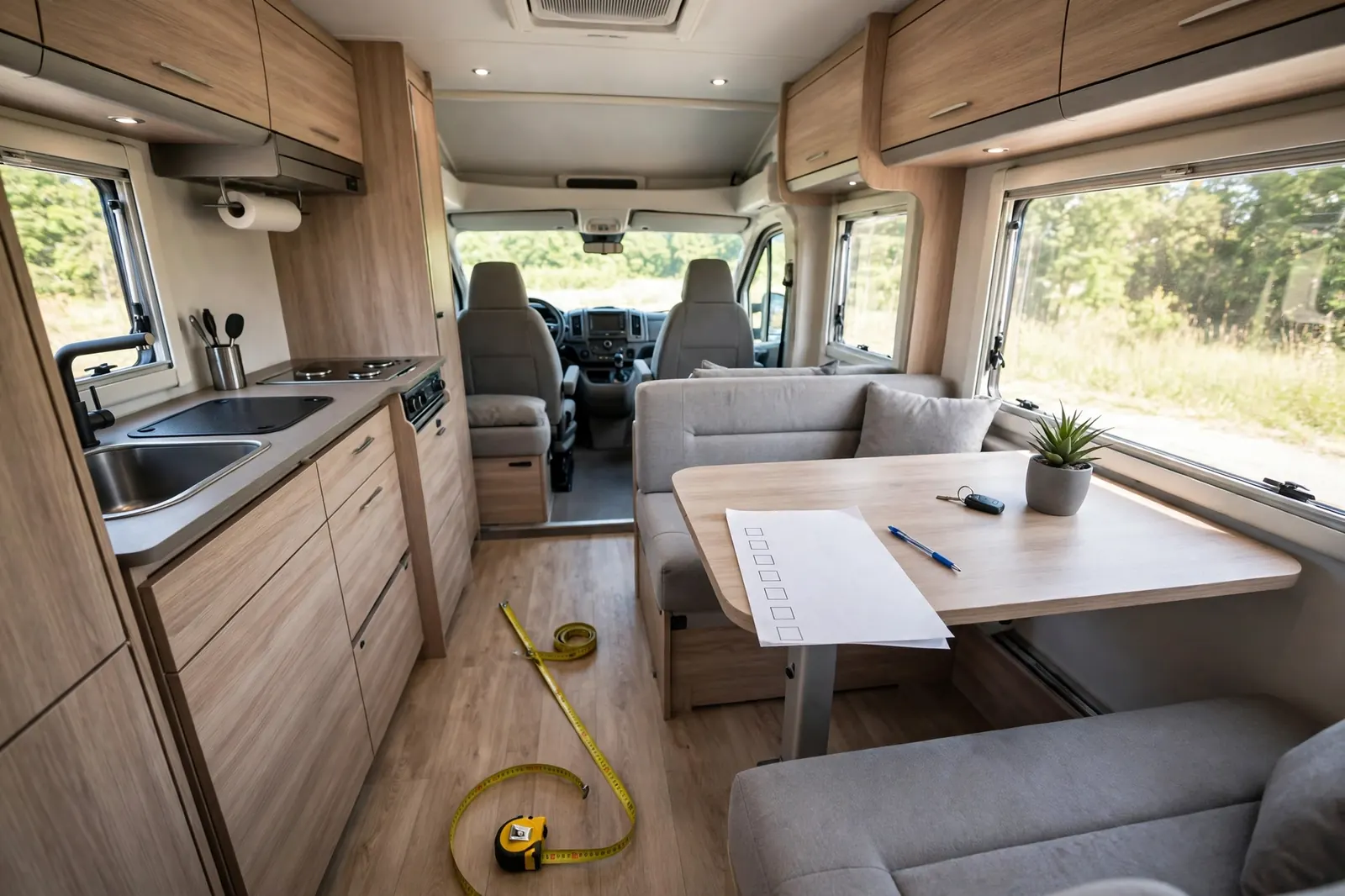
Here is your pre purchase routine. It takes an hour and can save years of regret. First, tour with slides in, then with slides out, and compare honestly.
Second, act out a full day: a pretend meal, a lie on the bed, a sit on the toilet with the door shut, a shower, and a seat at the table while someone walks past.
Third, rent before you buy if you can. A weekend rental in the same layout will reveal truths no tour can. Test it in real use before committing: a layout that looks right on paper can feel wrong by night two.
Fourth, match the layout to your real travel style, not your fantasy one. Solo weekenders, couples on month long tours, and families with kids need very different rigs.
For a deeper checklist, see this RV floor plan guide, Motorhome Matt on layout mistakes, Jayco’s first time buyer advice, and owners on layouts that fail with slides in.
The one mistake is buying the showroom. The fix is buying the Tuesday morning, the rainy afternoon, and the tired bedtime. Get those three moments right, and the long trip takes care of itself.