
Balance Training Just Beat Every Other Workout for Sleep After 60: 7 Moves to Try Tonight


Sleep gets harder after 60. You fall asleep fine, then you wake at 3 a.m. and the ceiling becomes very interesting. If that sounds familiar, a pair of brand new reviews has an unexpected suggestion. Skip the extra workout. Practice your balance instead.
The first review appeared in the Journal of Physical Activity and Health in early November 2026. Researchers pooled 39 studies with 3,198 adults aged 60 and over. They compared five kinds of exercise on one standard questionnaire, the Pittsburgh Sleep Quality Index, where people rate their own sleep. Balance training came out first.
The numbers tell the story. Balance training improved sleep scores by an average of 2.58 points. Aerobic exercise improved them by 1.47 points. Mixed programs scored 1.30 and strength training 1.17. Every one of those beat doing nothing. Flexibility work landed near the top too, but only two studies tested it, so that result could easily be chance.
Before you throw out your walking shoes, here is the honest part. A second review published the same week in European Geriatric Medicine looked at 32 trials and picked a different winner. Combined programs, which mix more than one kind of exercise, came first there, with aerobic and strength training next. That review had no separate balance category at all. Its authors call their own ranking provisional, and they warn the order could change with session length, frequency, program length, intensity, and who takes part.
Both reviews measured sleep the same way, by asking people how they slept. Nobody hooked anyone up to lab equipment for the main result. One small 2026 study did both, and it found the same split. After three months of balance training, 36 adults aged 64 to 81 rated their sleep better, while their lab-measured sleep did not change. So treat this as a promising lead about how sleep feels, not proof that balance training rewires your nights.
What is balance training, exactly? It is slow, controlled practice at staying steady, like standing on one foot or walking heel to toe. No gym, no equipment, no sweat. The moves below take about 10 minutes, need only a sturdy chair or a kitchen counter, and are built for evenings. Do them most nights, keep your hands near support, and stop if you feel dizzy. Check with your doctor first if you have a balance disorder, low blood pressure, or a history of falls.
What the November 2026 reviews found
Two reviews, published the same week, ranked exercise types for sleep in adults aged 60 and over. Sleep was rated by the people themselves on the Pittsburgh Sleep Quality Index, where a lower score means better sleep.
Balance training showed the largest average gain in the first review. In the second review, combined programs ranked first and there was no separate balance category. Rankings like these are fragile. They depend on which trials exist and how the authors group them.
Sources: J Phys Act Health, 2026, doi 10.1123/jpah.2026-0106; Wen et al., Eur Geriatr Med, 2026.
1. Slow Weight Shifts at the Counter
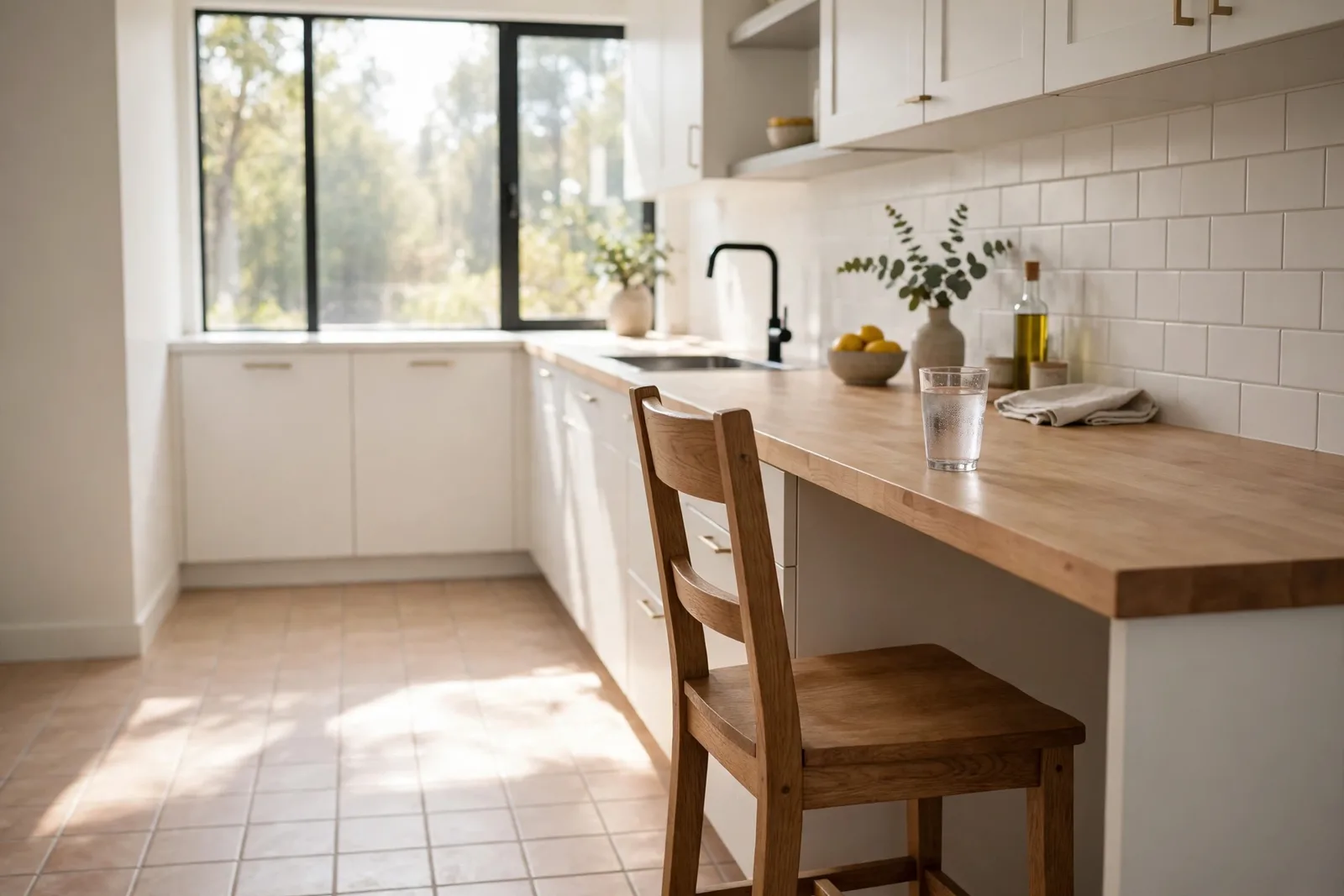
This is the easiest move in the whole list, and it is the best place to start. Stand beside your kitchen counter with your feet a comfortable width apart. Rest your fingertips lightly on the counter. Now let your weight drift slowly toward your heels, then slowly toward the front of your feet.
Go so slowly you can feel the floor change under you. That is the whole exercise. Ten slow shifts, back and forth, takes about a minute. Breathe normally and keep your jaw loose. People tense up when they work on balance, almost as if someone were grading them. Nobody is.
Why start here? Your ankles make tiny corrections all day without you noticing. Slow weight shifts wake that system up gently. There is no wobble to catch and no fall to fear, because your hands are already on the counter. Tie it to something you already do. The kettle boiling is a perfect cue.
2. Heel-to-Toe Walk Down the Hall
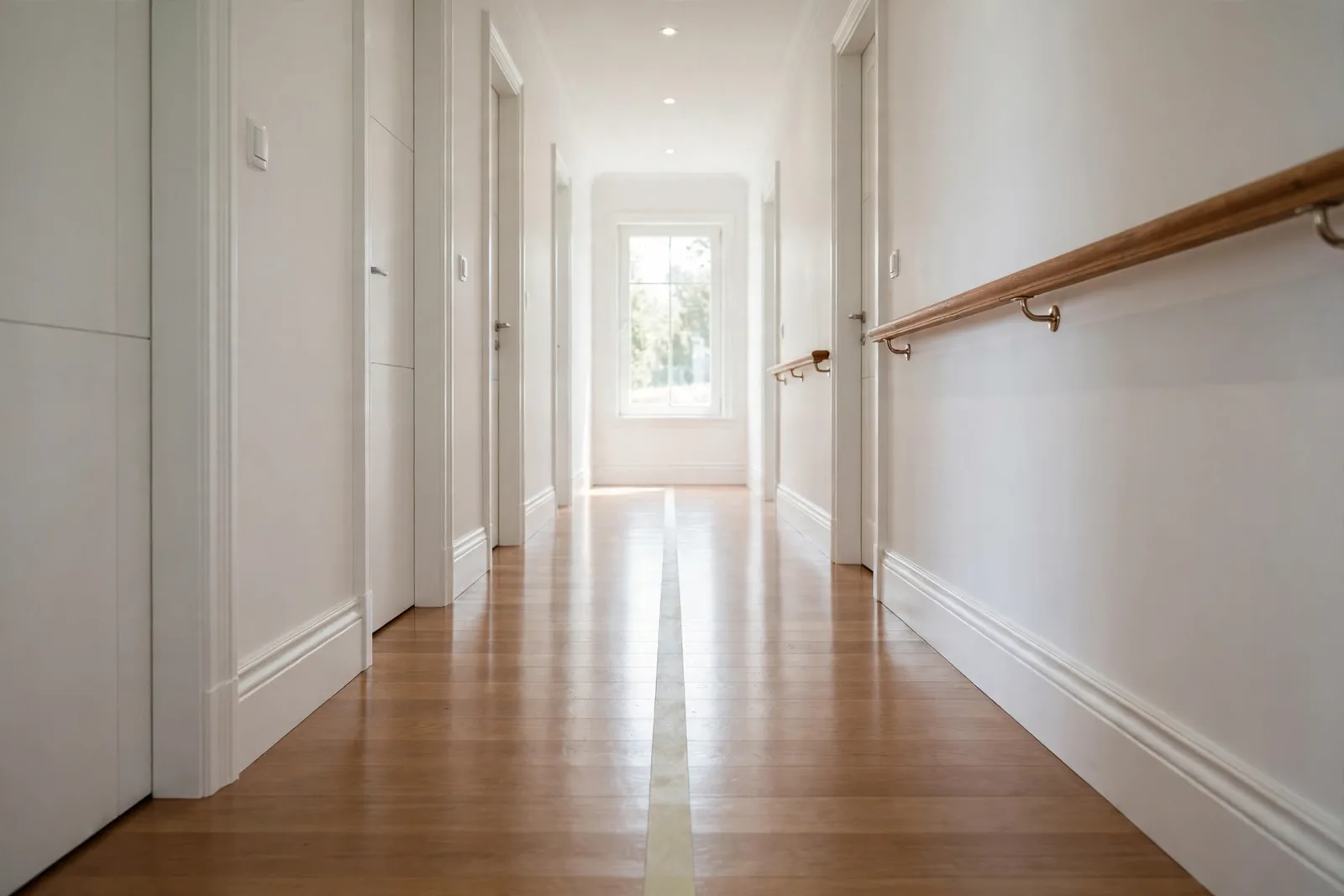
Stand at one end of a hallway, near a wall or handrail. Place one foot directly in front of the other so the heel of the front foot touches the toes of the back foot. Look straight ahead, not at your feet. Take 10 slow steps forward in that straight line, then turn carefully and walk back.
This is the move clinicians use to test balance, and the reason is simple. A narrow base makes your body work harder to stay steady. That is the training. If you wobble, touch the wall with your fingertips and keep going. A fingertip on the wall is not cheating. It is how you practice safely.
Keep the hallway clear before you start. Shoes off the floor, no loose rugs, no cords. Pick a time when the hall is empty and the light is good. Ten steps each way is enough for the first week. Add a second round when the first one starts to feel easy.
3. Single-Leg Stand Behind a Chair
Stand behind a sturdy chair and hold the back with both hands. Lift one foot a few inches off the floor and hold for 10 seconds. Put it down, switch feet, and repeat. Three rounds on each side takes about two minutes.
This is the classic balance drill, and the National Institute on Aging lists standing on one foot among its recommended balance exercises for older adults. The chair is not a crutch. It is the safety system that lets you practice without fear. Keep your standing knee soft, not locked. Stare at one fixed spot on the wall to help you stay steady.
When 10 seconds feels easy, try one fingertip on the chair instead of a full grip. When that feels easy, try no hands at all, with the chair still right in front of you. Never force the next step. If you wobble, you have found your level. Practice there for a week and try again.
4. Slow Chair Stands
Sit in a firm chair with your arms folded across your chest. Stand up slowly, without using your hands, then sit back down under control. Do 5 to 10 slow stands. This is the one move in the list that also builds leg strength, and stronger legs catch you faster when you stumble.
Speed is not the goal here. Control is. Take a full two seconds to rise and a full two seconds to sit. If you cannot stand without pushing off, use your hands on the chair arms. That still counts. The National Institute on Aging lists standing up from a seated position as a balance exercise in its own right.
Pick a chair that does not slide, roll, or tip. A heavy dining chair on a rug works well. A wheeled office chair does not. If your knees hurt, place a firm cushion on the seat to raise it a few inches. Less depth means less strain, and you can lower the seat again as your legs get stronger.
Your 10-minute evening routine
All seven moves, back to back, about an hour before bed. Keep a sturdy chair or counter within reach the whole time.
Short on time? Do the first three moves only. Two minutes of balance practice beats zero minutes, every night.
5. Stepping-Stone Walk in the Garden
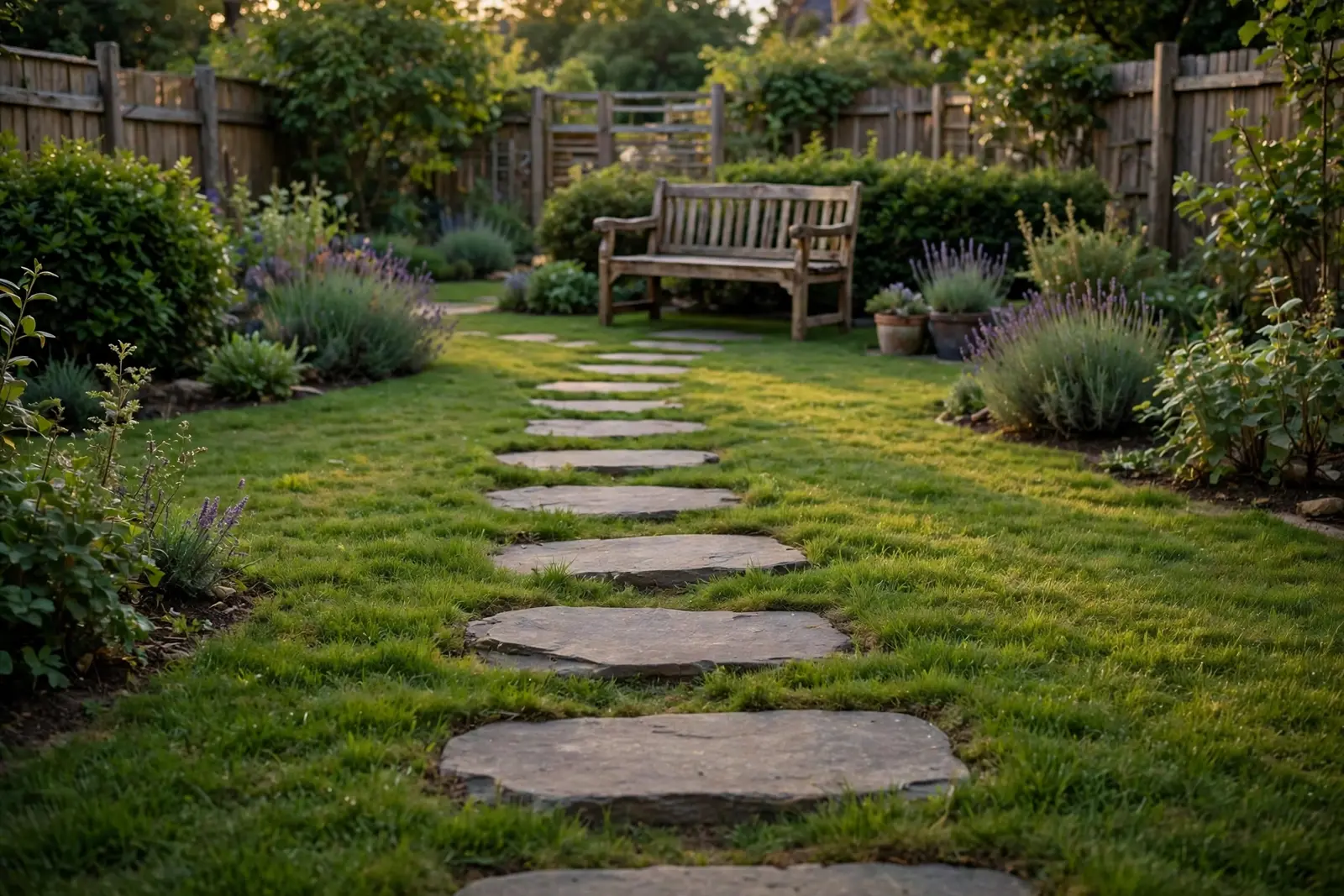
If you have a garden path, use it. Walk slowly from one flat stepping stone to the next, pausing for a beat on each stone before moving on. Let your arms hang loose, or hold them out slightly if that helps you feel steady. Uneven ground trains your ankles in a way a flat floor never will.
Only do this in daylight, on dry stones, in flat shoes with good grip. Skip it in rain, after dark, or on wet leaves. Safety comes before training, every time. If your garden is not suitable, do the indoor version instead. Lay a rolled towel on the floor and step over it slowly, one foot at a time, ten times.
There is a bonus here that has nothing to do with balance. An evening walk in the garden gives you daylight, fresh air, and a change of scene before bed. The reviews did not test gardens. But a routine you enjoy is a routine you keep, and keeping it is what the research actually rewards.
6. Ankle Circles and Toe Raises on the Mat
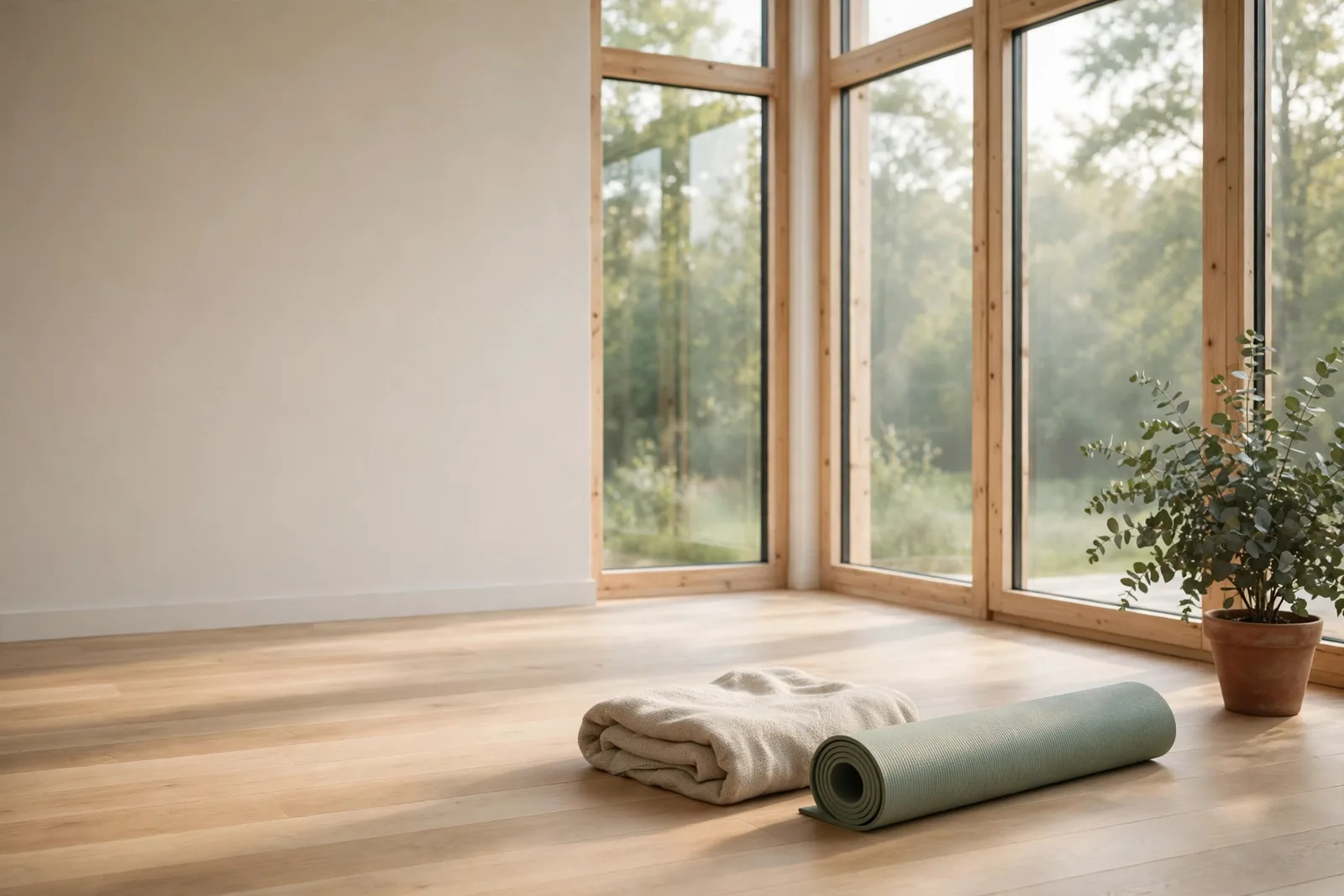
Your ankles are the first line of defense when you start to wobble. This move trains them directly. Stand behind your chair with a light grip, or sit down if standing feels like too much. Lift one foot slightly and draw 10 slow circles with your toes, then circle 10 times the other way. Switch feet and repeat.
Follow the circles with toe raises. Keeping your heels on the floor, lift your toes toward your shins, hold for two seconds, and lower them slowly. Ten raises is enough. You will feel the front of your shins working. That is the muscle group that catches you when you trip forward.
Do this one seated if you like. Seated ankle work still counts, and it is the right call on a tired evening. The point is to keep the joints moving and the muscles awake, not to prove anything. Small, slow, and regular beats big, fast, and rare.
7. The 10-Minute Evening Wind-Down
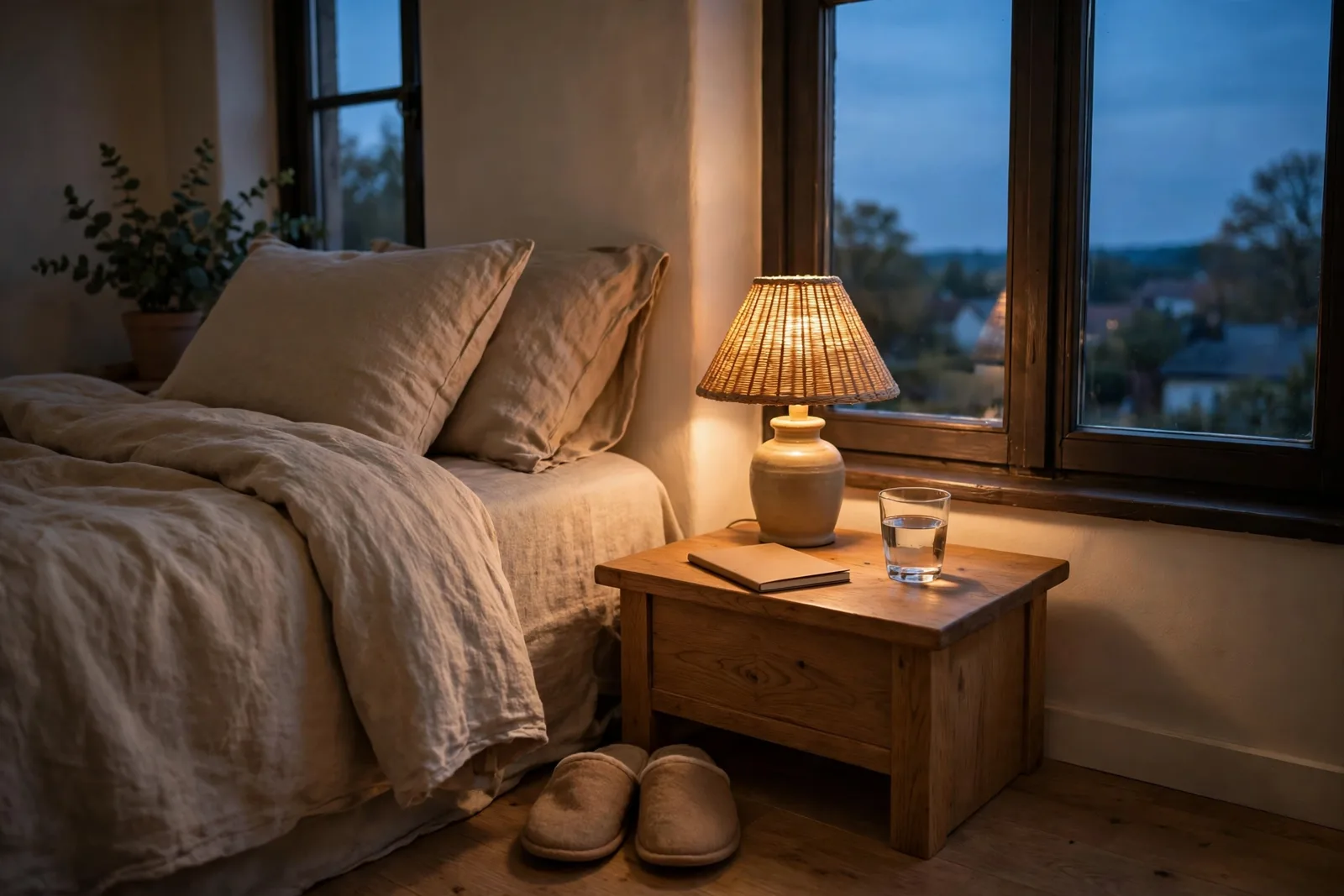
The last move is not a move at all. It is the habit that holds the other six together. About an hour before bed, dim the lights, put your phone down, and run through the routine in order. Weight shifts, heel to toe, one leg, chair stands, garden walk, ankle circles. Ten quiet minutes, then bed.
Done at the same time each night, the routine itself becomes a sleep cue. Your body starts to learn that these slow movements mean the day is ending. Researchers who study sleep call this kind of regular wind-down a behavioral cue. You can just call it a habit that tells your brain it is time to rest.
Keep a simple sleep note by the bed. Each morning, write down the time you went to bed, a score from 1 to 10 for how you slept, and whether you did the routine. Patterns show up fast. If your scores climb over three or four weeks, you have your answer. If they do not, you have still spent 10 minutes a night getting steadier on your feet, and that is worth having on its own.
Safety checklist: read before your first night
- Check with your doctor first if you have a balance disorder, low blood pressure, or a history of falls
- Keep a sturdy chair, counter, or wall within reach for every standing move
- Wear flat, non-slip shoes or go barefoot on a clean floor, never socks on tile
- Clear the floor first: no loose rugs, cords, shoes, or clutter in your path
- Stop right away if you feel dizzy, short of breath, or in pain, and sit down
- Never practice balance moves alone in the dark, in the rain, or on wet ground
Balance training is gentle, but a fall is not. Support first, then practice.
Balance training will not fix every sleep problem. Poor sleep that lasts for months, loud snoring, gasping at night, or heavy daytime sleepiness all deserve a doctor visit, not a new exercise. But for the ordinary tossing that comes with age, 10 quiet minutes by the kitchen counter is a small bet with real evidence behind it.
Start tonight. Pick the first three moves, keep a hand near the counter, and notice how steady you feel by the end of the week. Then add the rest. Your nights may not change in a day. Give it a few weeks, the way the studies did, and judge it by how you feel in the morning.
This article is general education, not medical advice. It does not replace guidance from your own clinician. Check with your doctor before starting a new exercise routine, especially if you have a balance disorder, a heart condition, or a history of falls. Stop any move that causes dizziness or pain.