How Hiking Transforms Your Body

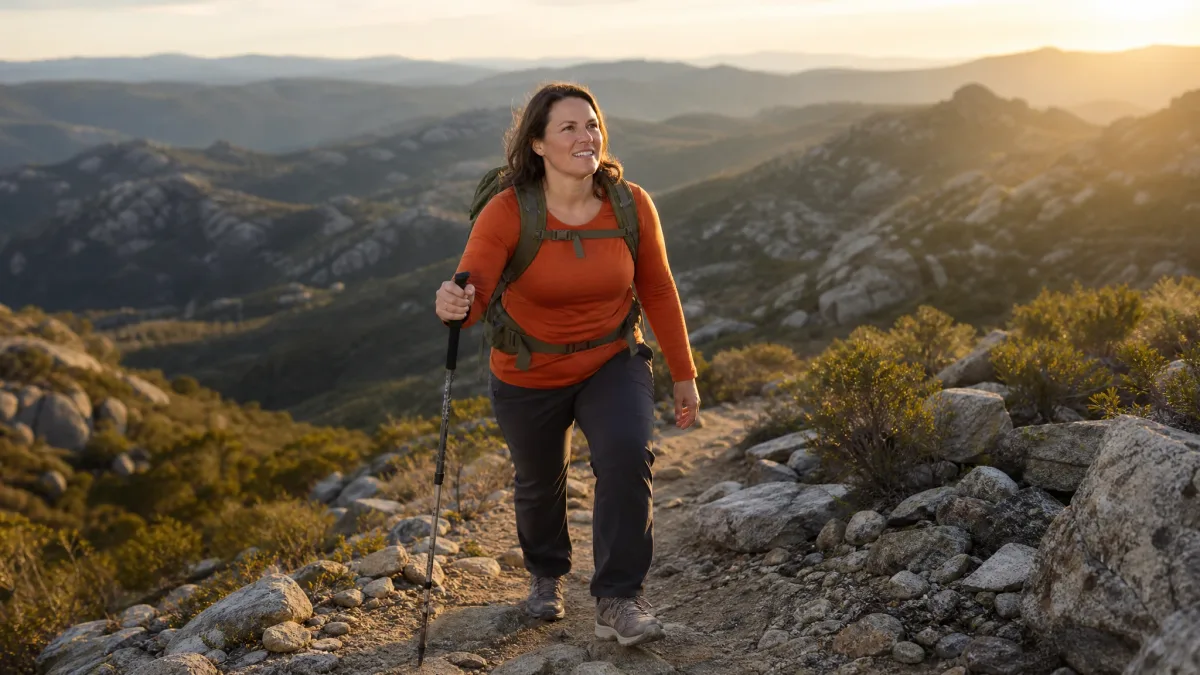
What if the most rigorous health experiment you could run on yourself was also a five-month walk through the wilderness? That is essentially what two researchers decided to find out — independently, on the same trail, years apart — by treating their own bodies as the lab.
The Pacific Crest Trail is 2,650 miles of mountains, desert, and relentless daily effort. Both men measured blood markers, bone density, and muscle mass before they left and again after they finished. What they found was not what most people expect.
Thru-hiking can make your heart and lungs genuinely stronger in ways that take years of gym work to replicate. It can also strip your bones faster than two decades of normal aging. Those two things are both true at the same time, and which one dominates depends almost entirely on two variables you actually control.
This article walks through every major finding from those studies — the good, the alarming, and the genuinely surprising — so you can decide whether a thru-hike is right for you and how to do it in a way that tips the balance toward the benefits.
🥾 What Happens to Your Body Across a Thru-Hike
Weeks 1–3: Adaptation Begins
Caloric deficit deepens as daily burn hits ~5,000 calories; the body starts triaging energy away from bone remodeling and reproductive function.
Weeks 4–8: Cardiovascular Gains Kick In
Heart stroke volume increases, arteries begin adapting, and capillary density starts to rise as sustained aerobic effort accumulates.
Months 2–4: Peak Physical Stress
Bone mineral density loss accelerates; muscle mass drops; injury risk rises as depleted bones and tired muscles absorb maximum daily load.
Month 5: Finish Line
Cardiovascular system is at its most adapted; bone density and muscle mass are at their lowest — the body needs food, rest, and time.
Months 1–8 Post-Hike: Recovery
Body weight, bone density, and muscle mass begin returning to baseline as energy balance normalizes and bone remodeling restarts.
12 Months Post-Hike: Baseline Restored
Ted's data showed full return to pre-hike bone density, muscle mass, and body composition by the one-year mark.
The Best Data Comes From Researchers Who Hiked the PCT Themselves
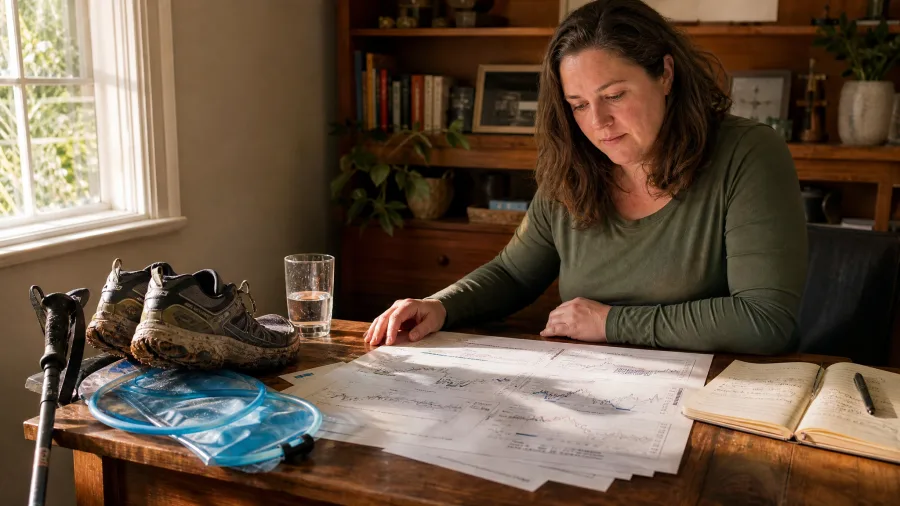
The most detailed picture of what thru-hiking does to the body comes from two self-studies, and neither one started in a conventional lab.
Professor Dr. Edward (Ted) Weiss collected physiological data three days before stepping onto the Pacific Crest Trail and again ten days after finishing it, tracking cholesterol levels, bone mineral density, and muscle mass. His findings were published in 2023. Thomas Heinbachle ran a nearly identical self-study on the same trail in 2019, monitoring comparable markers across a similar before-and-after window.
Two independent researchers, the same trail, similar methods – that alignment matters.
To be honest about what this science actually is: these are case studies with tiny sample sizes, complicated by five months of changing sleep, shifting diet, altitude swings, and extreme weather. You cannot draw universal laws from two data points. But these are also the most granular measurements anyone has taken of a human body moving through sustained, extreme daily effort – and that makes them the most useful window available on the question most hikers are quietly asking.
Does months of this kind of hiking leave you healthier than when you started, or does it quietly damage systems you were not watching? The data from Ted and Thomas does not give a simple yes or no – it gives something more interesting than that, which is why the numbers are worth understanding properly.
A 5,000-Calorie Daily Burn Triggers a Ruthless Survival Logic
Burning roughly 5,000 calories a day on trail – and rarely replacing all of them – puts the body into a prolonged, deepening energy deficit that forces a kind of brutal internal triage.
The heart keeps pumping. The lungs keep moving air. Those are non-negotiable. But the body is quietly running a different calculation underneath all of that: what can it shut down and still survive? Reproductive function is one answer. Menstrual cycles can stop in women. Sperm count can drop in men.
Bone remodeling and muscle maintenance end up on the same cut list.
This is not a fitness failure – it is actually a logical survival response. The body redirects scarce resources toward systems it cannot afford to lose and starves the ones it can afford to pause. The problem is that a ‘temporary pause’ on bone and muscle maintenance, stretched across five months, adds up to something measurable and significant, not a minor blip that disappears the moment you eat a burger at the next town stop.
Understanding this triage logic is the key to everything the research shows. The bone losses, the injury rates, the cardiovascular gains – all of it flows from this one mechanism. The trail is not the enemy; the deficit is.
⚠️ COMMON MISTAKE
Undereating on Trail Is Not a Minor Issue
A sustained caloric deficit is the engine behind bone loss, muscle wasting, and hormonal disruption. Prioritizing food quantity — not just food weight — is one of the most consequential decisions you make before leaving the trailhead.
Spine Bone Density Can Fall as Much as 20 Years of Normal Aging
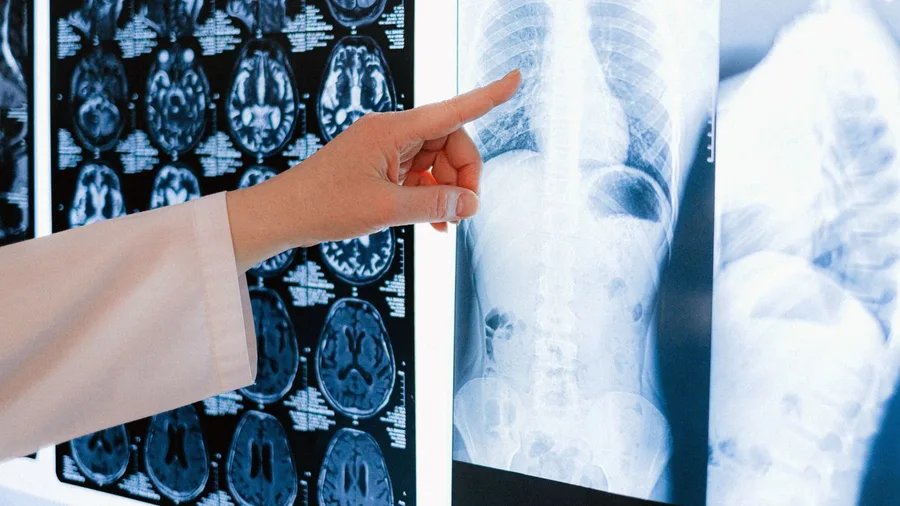
Ted’s spine bone mineral density dropped 8.5% over the course of his PCT hike – and the number that made him call it ‘very concerning’ is this: normal age-related bone loss runs around 0.5% per year.
Do the arithmetic and his five-month hike aged his spine roughly 20 years by that measure. That is not a rounding error or a quirk of methodology; it is a physiologically significant change in a short window of time.
The spaceflight comparison is where it gets genuinely unsettling. Two to four weeks aboard the International Space Station causes comparable bone damage. In a study of 17 astronauts, nine never fully recovered their baseline bone density – even with structured rehabilitation programs and the full resources of a space agency behind them. More than half, permanently changed.
And Ted is not a single outlier. Thomas Heinbachle lost 5% of his spine bone mineral density on the same trail. A separate case study showed 3.8%. Different people, same pattern.
At those levels, bone mineral density starts to approach the threshold where fracture risk rises substantially – and that matters not just after the hike, when recovery can begin, but during it, when the bones are at their most depleted and the daily physical demands are at their most extreme.
How Bone Density Losses Stack Up
From most severe to everyday baseline, thru-hiking sits surprisingly high
Heavy Daily Mileage Does Not Protect Bones When Energy Runs Out
Weight-bearing exercise does build bone – but only when the body has the energy to act on the signal it is receiving, and that condition fails completely on a thru-hike.
Bone remodeling is an ongoing maintenance process where old, weaker tissue is broken down and replaced with new, denser tissue. It is how your skeleton responds positively to physical stress under normal conditions. But it is metabolically expensive, and when energy runs critically short, the body stops doing it.
Once remodeling shuts down, bone loss outpaces formation regardless of how many miles are being logged. The stimulus is there. The resources to respond to it are not.
Muscle mass follows exactly the same logic. Without adequate protein and calories, the body begins to cannibalize lean tissue for fuel – producing what hikers call ‘T-Rex syndrome,’ where legs stay relatively strong from all that daily mileage but the upper body wastes away noticeably. Arms thin out. Shoulders shrink. The miles themselves are not the problem; the sustained deficit driving the triage response is.
Flip the assumption clearly: more hiking does not mean stronger bones when the body is running on empty. The exercise stimulus only works when there is something to work with.
Bone and Muscle Loss Appear to Fully Reverse Within a Year

the losses came back.
Ted tracked his bone density at eight months post-hike and again at twelve. By that twelve-month mark, it was back to baseline. Body weight had recovered. Muscle mass returned. Body composition was where it had been before he ever stepped onto the trail. His own word for his reaction was ‘astounded’ – he had not expected the recovery to happen that quickly, and given how severe the losses were, that surprise is entirely warranted.
The astronaut contrast makes the recovery look even more striking. More than half the astronauts studied never recovered their bone density, despite structured rehab and every resource a major space program could offer. Hikers returning to normal eating and gravity-loaded daily life appear to fare better, which is not a result most people would have predicted.
The honest caveat is worth stating plainly, though. This is one person’s data. The sample size is tiny, individual variation is real, and the science cannot yet promise every thru-hiker the same outcome. Age, baseline bone density, how hard the deficit ran, and what recovery nutrition looks like will all affect how the trajectory goes.
Treat the recovery data as genuinely encouraging – not as a guarantee.
Depleted Bones and Tired Muscles Make Injury Nearly a Coin Flip

Getting injured on a thru-hike is less a question of if and more a question of when – and the numbers back that up more starkly than most people expect.
A 2018-2019 survey by the Appalachian Trail Conservancy, covering more than 1,200 thru-hikers, found that 28% had developed chronic overuse injuries and 18% had suffered acute injuries like falls and ankle sprains. That already sounds high. Then a 2024 survey from The Trek of nearly 400 AT thru-hikers put the overall injury rate at 54%, with more than 60% of those injuries cutting into the hiker’s ability to keep moving. Roughly one-in-two odds of a meaningful injury.
Compare that to marathon runners, where training injury rates hover around 30%. Still significant – but marathon running is not considered unusually dangerous. Thru-hiking is in a different tier entirely.
The injury types that keep showing up are stress fractures, ankle sprains, tendinitis, and pronounced knee swelling. These are not random bad-luck events. They are exactly what you would predict when bones are operating at reduced density and muscles have shed mass, while the daily mechanical load stays relentless. The structural capacity goes down; the demand stays the same or increases.
That mismatch is the real problem. Your body is being asked to do more with less, mile after mile, and eventually something gives.
Where Thru-Hike Injuries Come From — The Mechanics
🦵 Top recurring injury types
Stress fractures, tendinitis, knee swelling, ankle sprains
🦴 Why stress fractures spike
Bone density can drop 5–8.5% mid-hike while daily load stays constant
🔥 Daily caloric deficit pressure
~5,000 cal burned/day — muscle mass loss accelerates structural fatigue
📉 Bone loss speed on trail
Equivalent to ~20 years of normal aging across a single thru-hike
🔄 Recovery outlook
Bone density, muscle mass, and body composition returned to baseline within 12 months
⚠️ Highest-risk window
Mid-to-late hike: density lowest, cumulative load highest, nutrition most depleted
The controlling variable
Caloric intake is the lever you can actually pull — fueling aggressively slows muscle loss, which keeps the mechanical load your depleted bones have to absorb from climbing further.
Poor Trail Sleep Compounds Every Other Physical Risk
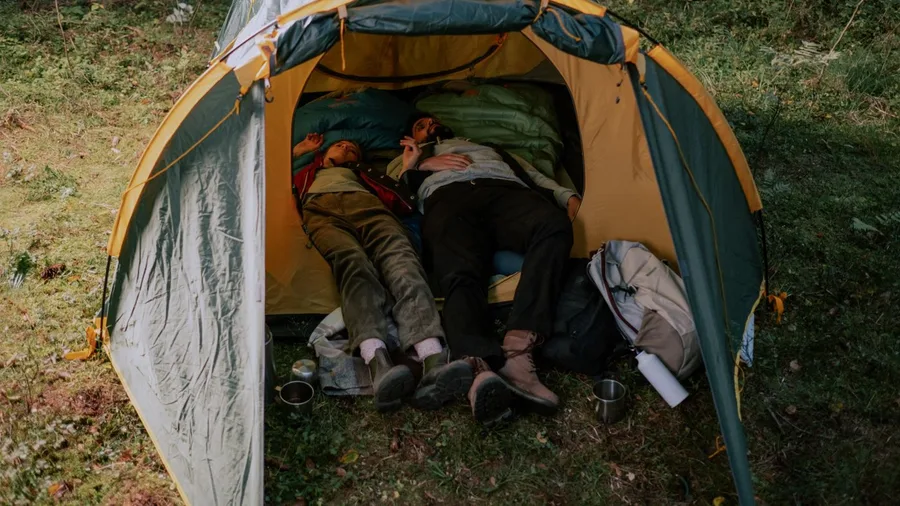
The injury gap between thru-hikers and marathon runners is not simply about how many miles are in the legs – it is about what happens after those miles end.
A marathon runner finishes a long training effort and goes home. Hot meal, real mattress, rest day. The body gets the window it needs to rebuild. A thru-hiker finishes the same distance and climbs into a sleeping bag on uneven ground, probably cold, possibly sneezing from trail dust and pollen, listening to the temperature drop 30 degrees by 2 a.m. Many hikers report that poor sleep is a constant companion on long trails, not an occasional bad night.
That matters more than it sounds. Sleep is when the body actually does its repair work – and when it is consistently shortchanged, that work simply does not happen.
Research on military basic training, which puts bodies under a similar kind of prolonged, relentless physical stress, has documented significant drops in sex hormones across the training period. Those hormones are central to bone maintenance and muscle recovery. The specific thru-hiker data is limited, but the underlying physiology points in the same direction.
Nutrition and sleep are the two variables a hiker has the most direct control over, and they are also the two that most determine whether the body tips toward adaptation or stays locked in a cycle of damage. Everything else – terrain, weather, daily mileage – is largely fixed once you are out there.
💡 PRO TIP
Treat Sleep Like a Training Variable
An eye mask, earplugs, and a sleep liner add almost no pack weight but meaningfully improve sleep quality in crowded shelters or cold nights. Better sleep is arguably the fastest intervention available for cutting injury risk on a long trail.
The Heart and Arteries Rebuild Themselves Into an Endurance Athlete’s
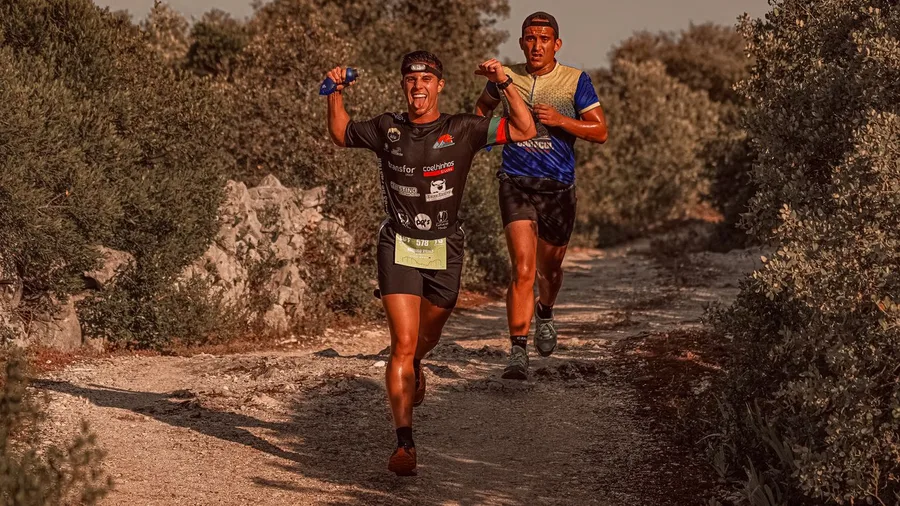
Set the bone data aside for a moment, because this is where the story genuinely flips.
Five months of sustained aerobic effort reshapes the cardiovascular system in ways that most gym programs never get close to. The heart muscle strengthens and adapts, increasing stroke volume – the amount of blood it pumps with each beat. A bigger stroke volume means the heart can meet the same demand at a lower rate, which is why endurance athletes tend to have unusually low resting heart rates. Less work per beat, more efficient output.
Ted Weiss and his mentor specifically measured arterial stiffness and responsiveness as part of their PCT study, and both markers improved meaningfully. The arteries became more elastic and more reactive to changes in blood flow – which matters because stiff, sluggish arteries are a major driver of cardiovascular disease.
Capillary density rises too. The body lays down new small blood vessels to keep up with muscles that are working hard, day after day. Red blood cell count increases to match the greater oxygen demand.
This is the exact same adaptive machinery that makes elite distance runners and cyclists so cardiovascularly resilient. Thru-hiking triggers the whole cascade – just spread across months of trail rather than a structured training block.
How Cardiovascular Adaptation Builds on Trail
VO2 Max Almost Certainly Rises After Five Months of Sustained Effort
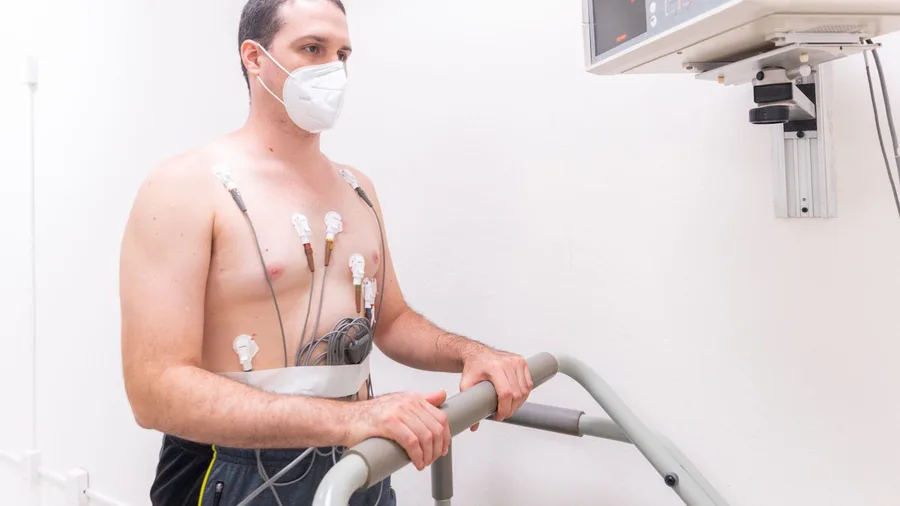
VO2 max refers to the upper limit of oxygen your body can absorb, transport through the blood, and deliver to working muscles during physical effort. It ranks among the most reliable indicators of both lifespan and overall health quality — the higher your number, the better your prospects on virtually every measure.
A meta-analysis of 41 controlled clinical trials found that endurance training produced an average 16.3% increase in VO2 max, and programs running longer than 20 weeks showed the biggest gains. A typical thru-hike runs about five months – well past that 20-week threshold – which puts it squarely in the territory where those gains should be at their greatest.
no study has directly measured VO2 max on thru-hikers before and after a long trail. This is a well-grounded inference from endurance physiology, not a confirmed trail-specific finding.
What Ted’s study did measure directly – arterial elasticity, stroke volume, capillary development – are the same underlying mechanisms that drive VO2 max gains in other endurance athletes. The physiology connects. The confirmation study just has not been done yet, and it should be.
Real Cardiovascular Gains, Real Short-Term Risks — Food and Sleep Are the Levers

The straight answer is: genuinely both, at the same time, with the balance shaped by variables you actually control.
The cardiovascular side is well-supported – stronger heart muscle, more elastic arteries, better oxygen delivery throughout the body, and a likely meaningful VO2 max increase. The bone loss and heightened injury risk are equally well-documented. What the current data cannot resolve cleanly is the cholesterol picture – one case study showed a drop post-hike, another showed a rise – and the long-term hormonal effects remain murky. These are small studies with real confounding variables, and larger-scale research is genuinely needed before anyone draws firm conclusions.
What is clear is that a thru-hike holds the body in a prolonged stress state for its entire duration. The two variables that most determine which side of the ledger wins – adaptation or damage – are food quantity and sleep quality. Eating more, and eating densely, limits how deep the energy deficit goes. That deficit is the trigger for the bone and muscle shutdowns. Sleep gives the body the recovery window where repair actually happens.
None of this is a reason to stay home. It is a reason to pack more calories than feels necessary, treat sleep as a serious recovery tool rather than an afterthought, and step onto the trail knowing exactly which risks are real and which ones you can actually push back on.
Older Hikers and Women Face a Steeper Bone Risk From the Start
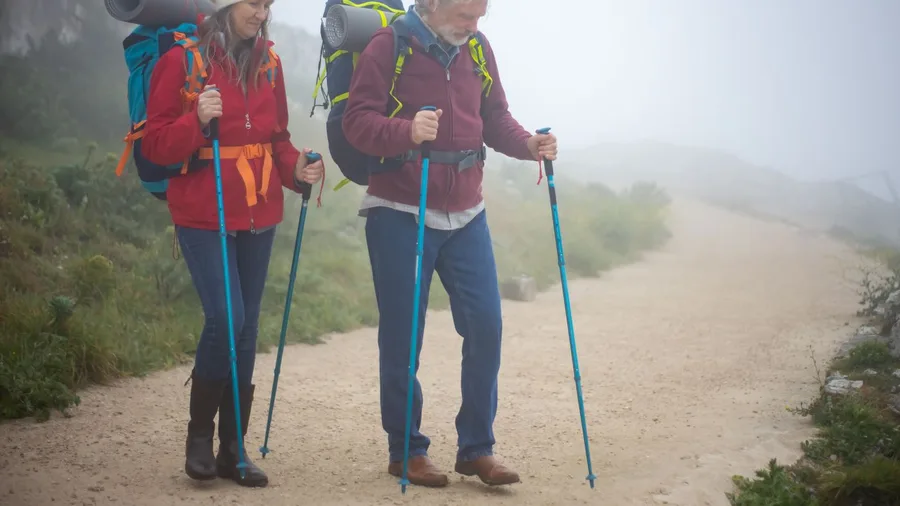
If you are an older hiker or a post-menopausal woman, the bone loss story hits harder than the raw percentages suggest – and it is worth sitting with that for a moment before committing to five months on trail.
Bone density falls naturally with age and drops sharply after menopause. So when a younger male researcher loses 8.5% of his spinal bone mineral density and still has plenty of density left in the bank, that sounds alarming but survivable. For someone who started with a lower baseline, the same percentage loss lands in a more dangerous place – because what matters for fracture risk is the absolute amount of bone mineral density remaining after the hike, not the percentage change from wherever you started.
That distinction is real, and it is not addressed by the existing data. The PCT case studies we have come almost entirely from younger male hikers. Their recovery timelines and loss figures cannot simply be applied to older hikers or women, because the underlying biology is genuinely different.
There is a practical step that cuts through the uncertainty. Get a baseline DEXA scan before you go – it is the gold-standard tool for measuring bone mineral density and is widely available through most hospitals and imaging clinics. Take those numbers to your doctor and talk through what a potential 5 to 9 percent loss would actually mean for your specific starting point. Age thresholds and clinical risk cutoffs vary from person to person, so only your own numbers and a healthcare provider can give you a picture that is actually meaningful for your hike.
Thru-Hiking: What the Body Gains vs. What It Risks
What You Gain
- Stronger heart with higher stroke volume and lower resting rate
- More elastic, responsive arteries (directly measured in Ted's study)
- Increased capillary density and red blood cell count
- Likely significant VO2 max increase after 20+ weeks of effort
- Bone density, muscle mass, and body composition appear to fully reverse within 12 months
What You Risk
- Up to 8.5% spine bone mineral density loss during the hike
- Muscle wasting — especially upper body (T-Rex syndrome)
- Roughly 1-in-2 chance of a meaningful injury on a long trail
- Reproductive hormone disruption from prolonged energy deficit
- Chronically poor sleep degrading recovery throughout the hike
Frequently Asked Questions
How much weight do most people lose on a thru-hike?
The data varies considerably between individuals. The combination of a ~5,000-calorie daily burn and the practical difficulty of carrying enough food creates a deepening deficit over months, and most thru-hikers lose meaningful amounts of body weight — including both fat and muscle. The exact figure depends on starting body composition, how aggressively the hiker eats on trail, and how long the hike runs.
Does hiking build muscle, or does a thru-hike actually destroy it?
Short day hikes can build lower-body muscle if caloric intake is adequate. On a thru-hike, the sustained energy deficit tips the balance the other way — the body breaks down lean tissue for fuel when it cannot source enough calories from food. The ‘T-Rex syndrome’ hikers describe, where legs remain relatively strong but the upper body wastes away, reflects exactly this dynamic.
Can I prevent bone density loss on a long trail?
You cannot eliminate the risk entirely, but you can reduce it significantly. The mechanism is an energy deficit that shuts down bone remodeling — so eating as close to your caloric needs as the trail allows is the most direct intervention. Carrying calorie-dense foods (nut butters, olive oil, full-fat cheese) and eating proactively rather than reactively makes a real difference.
How long does bone density recovery take after a thru-hike?
Ted Weiss’s data showed full recovery by the 12-month mark after his PCT hike. That is encouraging, but it is one data point. Individual recovery timelines will depend on starting bone density, age, hormonal status, and how well the hiker eats and trains in the post-hike period. Anyone with concerns about their recovery should get a DEXA scan and discuss results with a doctor.
Is thru-hiking harder on the body than marathon training?
On the injury metrics, yes — substantially. AT thru-hiker surveys show injury rates around 54%, compared to roughly 30% for marathon runners in training. The key difference is not the physical effort itself but recovery conditions: marathon runners go home after long efforts to quality food and real sleep, while thru-hikers accumulate fatigue without those recovery tools.
Should I get a DEXA scan before a thru-hike?
For most young, healthy adults, a DEXA scan is not strictly required — but it is a sensible baseline. For women over 50 and anyone post-menopausal, it is genuinely advisable before committing to a long trail, because bone density that is already below average makes an 8% further loss a meaningfully different risk than the same loss starting from a peak. Talk to your doctor about whether a scan makes sense for your situation.
Both Things Are True, and Knowing That Is What Makes You a Smarter Hiker
Thru-hiking delivers real cardiovascular gains — a stronger heart, more responsive arteries, better oxygen delivery, and almost certainly a meaningful VO2 max increase. It also delivers real short-term damage to bones and muscles, and a roughly one-in-two shot at a significant injury. Both of those things are true, simultaneously, for the same hiker on the same trail.
The bone loss appears to reverse within a year for most people, which is genuinely reassuring. But ‘temporary’ still means living with depleted bones and a higher fracture risk for the duration of the hike itself — and for older hikers or anyone starting from a lower bone density baseline, that window matters more.
Nutrition and sleep are the two levers most within your control. Pack more calories than feels reasonable. Treat sleep as a recovery tool, not just a camping chore. Those two adjustments do not eliminate the risks — the science is clear that prolonged extreme exertion creates stress the body has to work hard to handle — but they are the difference between a body that manages the damage and one that compounds it.
Go hike. Go hike long and hard and far. Just go knowing what is happening inside, and make the choices that keep the balance on the right side.
Check the Injury Risk Section Before You Pack
The survey data on thru-hiker injuries — and exactly how it compares to marathon training — is in the 'Depleted Bones and Tired Muscles' section above. Read it once before you finalize your gear list.