How to Keep a Tiny House Cool in Summer Without Air Conditioning

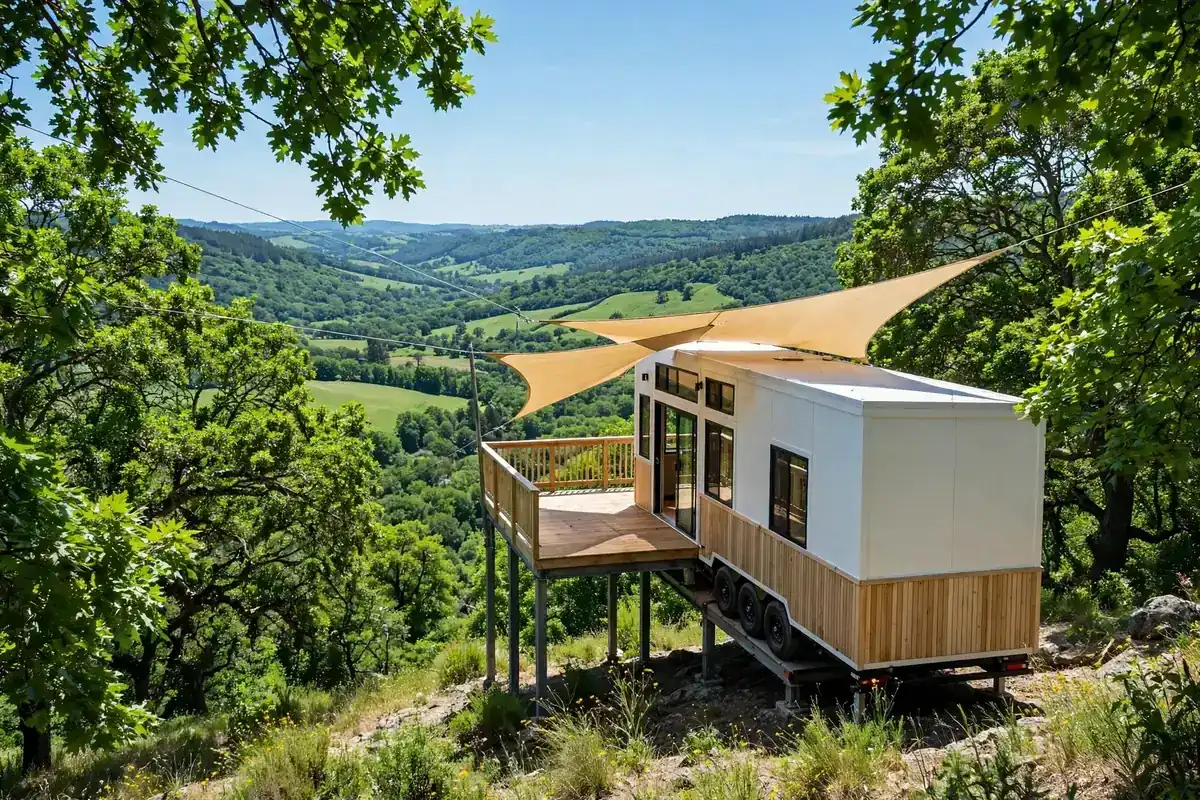
A tiny house heats up fast in summer. There is very little air inside, and the roof sits close to your head. One sunny afternoon can turn the whole place into an oven.
The good news is that most of the fix is not a machine. It is shade, airflow, and timing. Get those three right and many tiny houses stay comfortable with no air conditioning at all.
This guide walks through the tricks in the order that matters most. Start with keeping heat out. Then move air through the house. Only then think about fans and gadgets.
At a Glance: Cooling a Tiny House Without AC
- Shade first. Stopping sun before it hits glass and walls beats every gadget inside.
- Ventilate at night. Flush the day’s heat out with cool night air, then close up in the morning.
- Cool roofs work. Light colored roofs with a high solar reflectance can run 50 to 60 degrees F cooler on the surface than dark roofs.
- Fans cool people, not rooms. A ceiling fan can make you feel about 4 degrees F cooler, so switch it off when you leave the room.
- Evaporative coolers need dry air. In humid air they barely cool and just add dampness.
- Honest limit. In a long humid heat wave, even a perfect passive setup may need a small backup cooler.
1. Start With Shade and Orientation
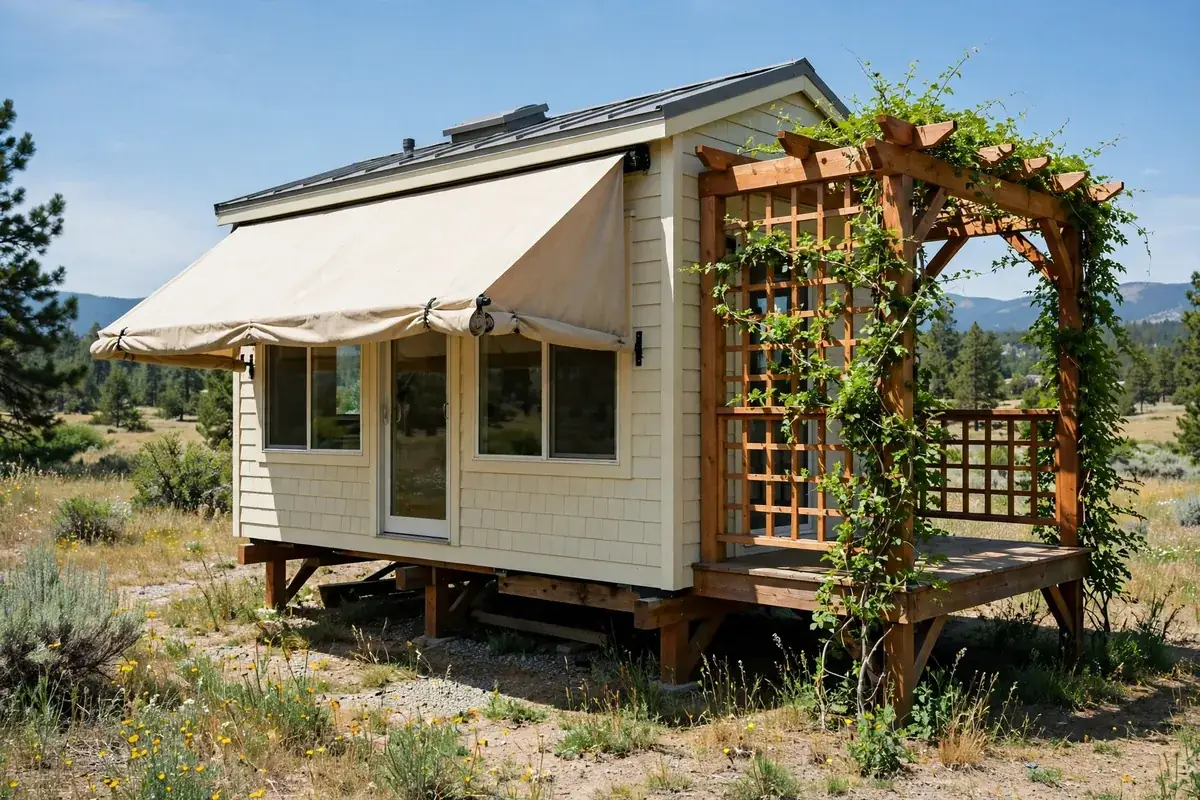
Shade is the single biggest win, because it stops heat before it ever gets inside. A window in full sun acts like a magnifier. The same window behind an awning stays calm and cool.
If you can choose your parking spot, think about the sun’s path. In the Northern Hemisphere, keep the long side of the house and the biggest windows facing north or south. The west side takes the worst of it, with low, hot afternoon sun that pushes straight through glass.
Put the shade outside, not inside. An awning, a shade sail, or a pergola blocks the sun before it touches the wall. Curtains inside can only fight heat that is already in the room. One clever setup comes from a passive cooled tiny house in California, where pulley mounted cedar shade awnings cover the big sliding glass door in summer and lift away to let winter sun in, as described by RMI.
Size the shade for summer sun, which sits high in the sky. An awning that reaches well past the window will block the high midday rays. Check it at noon. If sun still hits the glass, the shade is too short.
2. Build a Cross Breeze That Actually Moves Air

A tiny house with still air feels ten degrees hotter than it is. Moving air is the cheapest comfort you can buy, and most of it costs nothing at all.
Cross ventilation means air enters on one side and leaves on the other. Put operable windows on opposite walls so a breeze has a clear path through the house. Low windows on the cool, shaded side bring fresh air in. High windows or a roof vent on the far side let hot air out.
Use the stack effect to your advantage. Hot air rises, so an open skylight or a high vent in the loft acts like a chimney. It pulls cooler air in below while the hot air escapes above. Habitatista notes that casement windows work especially well here, because their hinged panels can catch a breeze coming at an angle and scoop it indoors.
Keep the path clear. Tall shelves, closed loft doors, and heavy curtains across the airflow all choke the breeze. Open interior doors, raise the loft window, and let the air run the full length of the house. On a still day, a small window fan can start the flow.
3. Fix the Roof and the Insulation
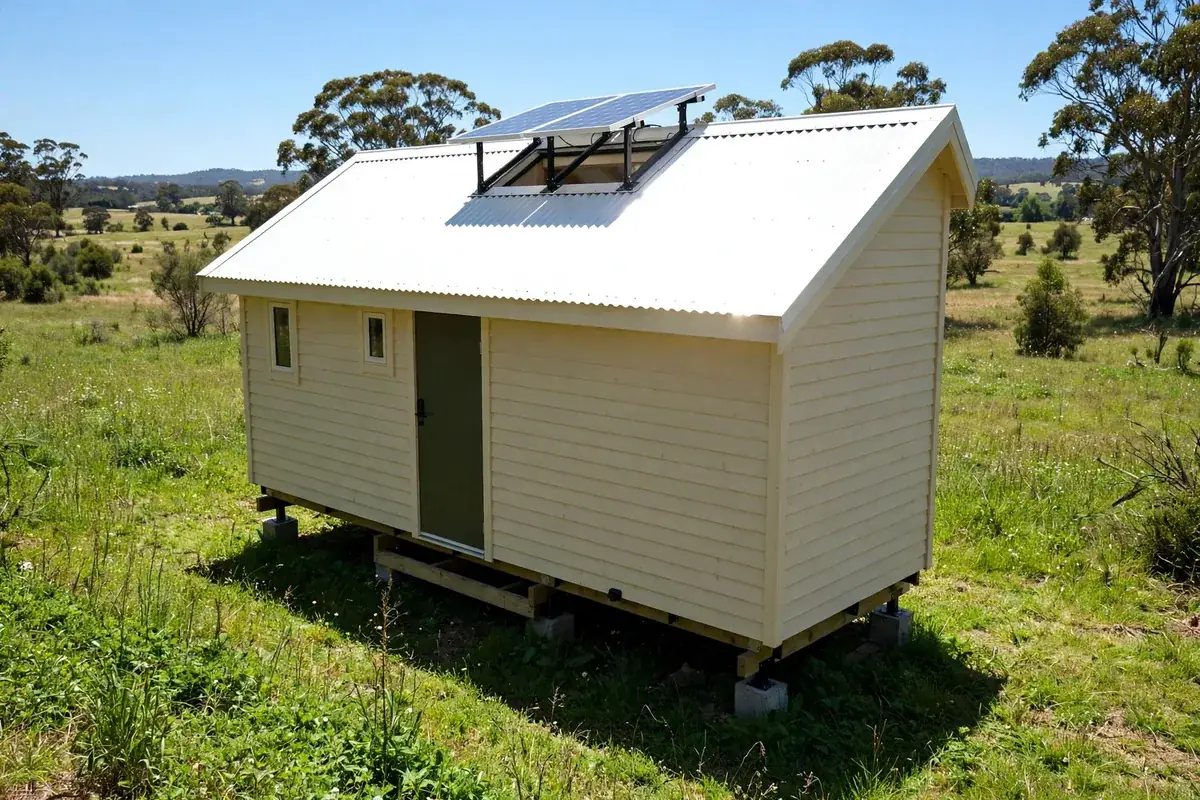
The roof takes more summer sun than any wall. In a tiny house the roof is also close to where you sleep, so a hot roof means a hot loft. This is the part of the house worth spending money on.
Color matters more than most people expect. A white or light colored metal roof reflects sunlight instead of soaking it in. Reflective cool roofs can run 50 to 60 degrees F cooler on the surface than a dark roof, according to a Penn State energy course on natural cooling. That is a huge difference when the ceiling is only a few feet above your bed.
Insulation is the second layer. It slows the heat that does get absorbed, so the inside warms up slowly instead of all at once. Fill the walls and roof properly and seal gaps around windows and doors. Insulation on the outside of the framing helps even more, covering the wooden studs that act as heat bridges.
Solar panels help twice over. Mounted on brackets with an air gap beneath them, they shade the roof while they make power. Air flowing under the panels carries heat away before it reaches the roofing below.
4. Let Thermal Mass Work the Night Shift

Thermal mass is a plain idea with a fancy name. Dense materials like concrete, stone, and tile soak up heat during the day and give it back slowly at night. They act like a battery for coolness.
Here is how it works in practice. During a hot day, an exposed concrete floor or a stone wall absorbs warmth and keeps the peak temperature down. At night, you open the windows and let cool air wash over that same mass. It dumps its stored heat outside and starts the next morning cool again.
This trick only works where nights actually cool down. Passive solar experts put the rule of thumb at a day to night swing of about 10 degrees C or more, as explained by Passive Solar Architecture. Warm sticky nights give you nothing back.
Keep the mass exposed. Rugs, carpet, and wood flooring over a concrete slab hide it from the room air and kill the effect. In a house on wheels, go light with it. A thin polished concrete floor or a stone hearth gives you useful mass without adding trailer busting weight.
Your Summer Day in Five Moves
- Early morning: Open everything wide and flush out the night’s stale air while it is still cool outside.
- Before the heat builds: Close windows and doors on the sunny side and drop the shades and blinds.
- Midday: Live in the shade. Cook outside if you can, and keep the oven and other heat makers off.
- Evening: As soon as the outside air feels cooler than inside, open up again and let the breeze run through.
- Night: Run a window fan to pull cool air in, point a ceiling fan at the bed, and let the house reset for tomorrow.
5. Fans That Cool You, Not the Room
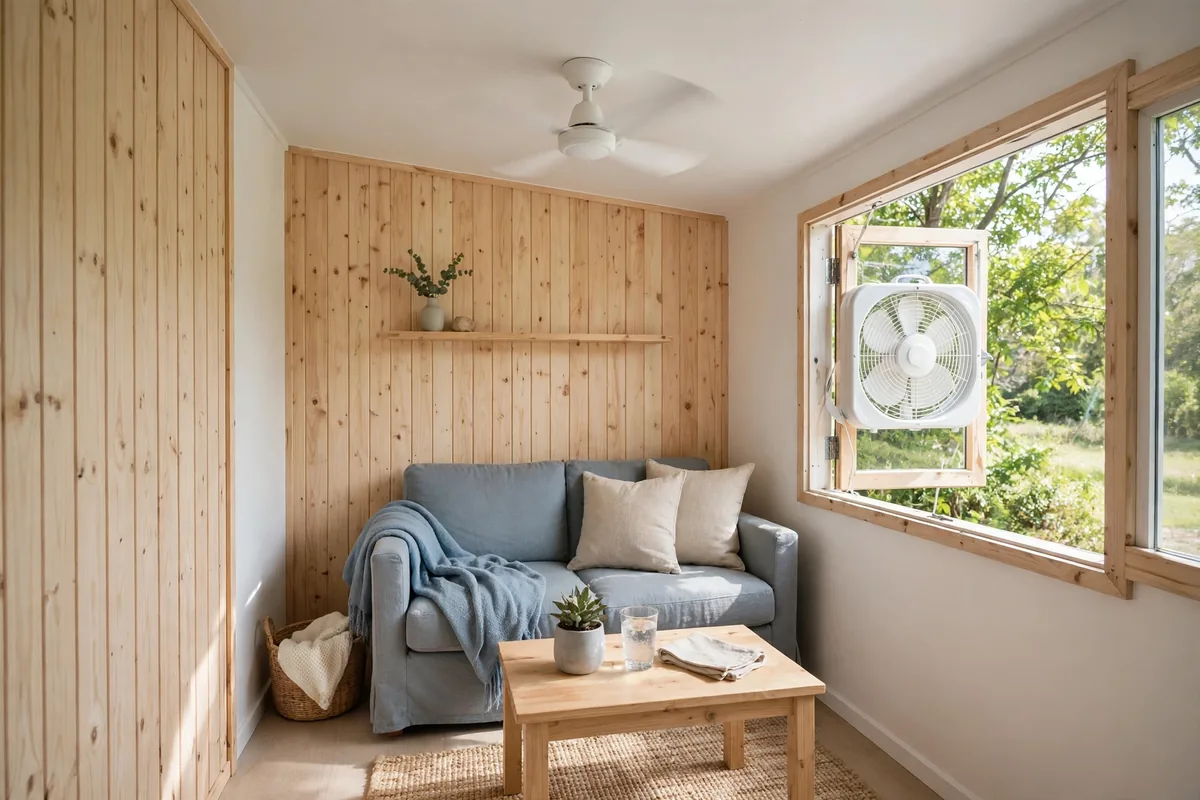
A fan does not lower the temperature of the air. It moves air across your skin, which helps sweat evaporate and makes you feel cooler.
The US Department of Energy says a ceiling fan lets you feel about 4 degrees F cooler. A small efficient fan uses only a few watts on low, an easy load for solar or a battery.
Run the ceiling fan counterclockwise in summer so it pushes air down onto you. Turn it off when you leave the room. A fan spinning in an empty house cools nobody and just adds a little motor heat to the air, a point the Department of Energy and Energy Star both make, as summed up by Querigami.
A window fan earns its place at night. Set it to pull cool outside air in on the shaded side, and let hot air escape through a window or vent on the far side. Solar vent fans are a neat off grid option, running hardest exactly when the sun is strongest.
6. Dress Your Windows for Summer
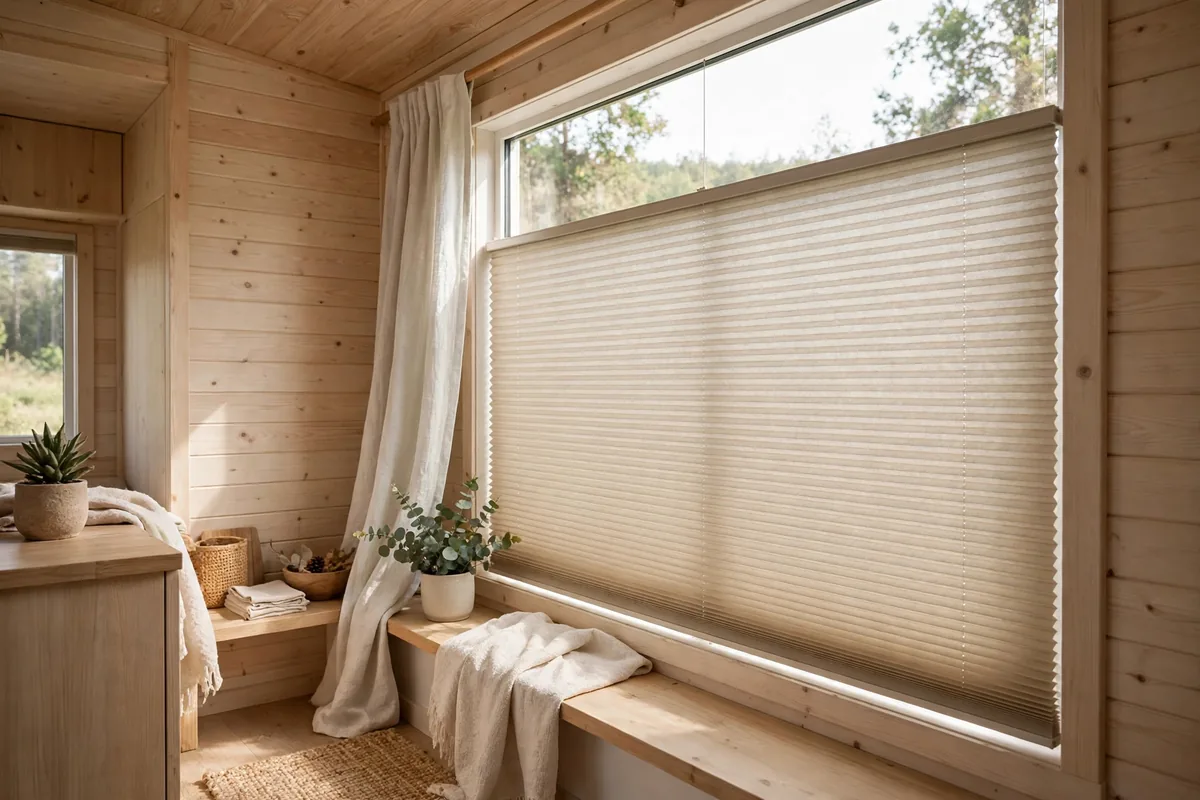
Glass is the weak point of every tiny house. Big windows make a small space feel open, but each one is also a doorway for heat. The fix is layers, and the order matters.
Exterior shade comes first, as covered above. Inside, cellular honeycomb blinds are one of the best choices for a small space. Their air filled pockets trap heat the way a puffy jacket traps warmth, and they fold up tiny when you want the view back.
Choose light colors. Pale blinds and linen curtains reflect sunlight back out, while dark fabric absorbs it and radiates the heat into the room. Reflective window film is another strong option. It can block 70 to 90 percent of solar heat while still letting light through, according to Habitatista, a good fit for a west facing window you cannot shade from outside.
Work the coverings like a daily routine. Close the blinds on the sunny side by late morning, before the heat peaks. Leave the shaded side open for light and air. Top down bottom up blinds let daylight in at the top while blocking low sun at the bottom.
7. Cool the Ground Around the House

The patch of land around your tiny house is part of the cooling system. Bare dirt and dark pavement soak up sun all day and throw heat back at the walls long after sunset. Plants do the opposite.
A deciduous tree on the west or south side is the classic move. Its leaves shade the wall all summer, then drop in autumn and let the low winter sun warm the house. That is free seasonal shading no awning can match. Plant it far enough out that roots and branches never threaten the roof.
Climbing plants on a trellis are the faster option. A vine covered frame set a few inches off the wall shades it while air flows in the gap behind. Potted plants on the deck help too, and they move with you when the house does.
Plants also cool the air itself. Leaves release moisture as they breathe, a process called transpiration, and that evaporation pulls heat out of the surrounding air. A green, planted spot genuinely feels cooler than a bare gravel lot on the same afternoon. A shade cloth over your sitting area makes the evening outside the coolest room of the house.
8. What Changes When the Air Is Humid
Everything above still helps in a humid climate, but a few favorite tricks stop working, and the wrong gadget in humid air makes things worse.
Evaporative coolers, often called swamp coolers, are the big one to skip. They cool by evaporating water into air, and humid air cannot take in much more. The US Department of Energy says not to use them in humid climates. At 95 degrees F and 50 percent humidity, one only cools the air to about 84 degrees while adding dampness, per Department of Energy figures cited by EcoFlow.
In humid air, airflow and dryness matter more than raw cooling power. Keep air moving so sweat can evaporate and damp corners never sit still, and watch for mold behind furniture and under the loft mattress. Open up for a flush only when outside air is cooler and drier than inside, often early morning rather than mid afternoon.
A small dehumidifier often helps more than a second fan, and a small window unit on the worst afternoons is a sensible backup. Staying cool without AC most of the summer is a real win, and a little help on the hardest days does not cancel it.
Humid Climate Reality Check
- Skip the swamp cooler. Above about 50 percent humidity it barely cools and just adds moisture indoors.
- Lean on airflow. Ceiling fans, window fans, and open cross breezes are your main tools when the air is sticky.
- Chase dry air. A small dehumidifier often improves comfort more than a few extra degrees of cooling.
- Flush at the right hour. Night air can still be humid, so open up when the dew point drops, usually early morning.
- Watch for mold. Keep air moving in corners, lofts, and behind furniture, and never let damp bedding sit packed away.
Keeping a tiny house cool without air conditioning is a system, not a single purchase. Shade keeps the heat out. Ventilation moves it through. A cool roof, good insulation, and a little thermal mass slow it down. Fans make the air you already have feel better on your skin.
Start with the free moves first. Park in shade, open the right windows at the right hours, and close up before the afternoon peak. Then add the cheap fixes, like blinds and a good ceiling fan. The bigger jobs, like a light colored roof or better insulation, pay you back every summer after.
And know your limit. If the heat index stays dangerous for days, or someone in the house is elderly, very young, or unwell, get to a cooled space or run a small backup unit. A comfortable tiny house is a wonderful thing in summer. A safe one matters more.