Laid Off in 2020, She Turned a Retired Mini Bus Into a 98 Sq Ft Home for Herself and Her Two Pets

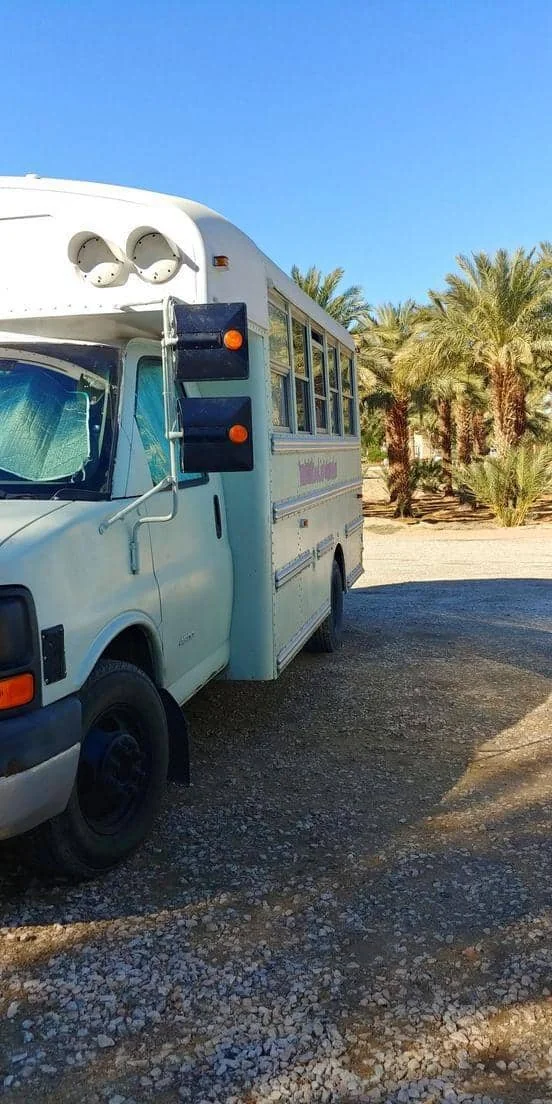
Elizabeth had a good job, a big apartment, and a short walk to work. Then, in April 2020, COVID shut things down and she was laid off.
Most people would have looked for the next job and the next apartment. Elizabeth went down a vanlife rabbit hole on YouTube instead.
Today she lives in about 98 square feet with her dog and her cat. Her home is a retired mini bus named Wanda, and she built it herself.
This is her story, in her own words as much as possible, with the practical lessons she wants other people to hear first.
At a glance
Who: Elizabeth, a travel consultant
Her home: Wanda, a retired mini bus
Size: About 98 sq ft
Housemates: Tia, an 11-year-old Chihuahua-mix dog, and Tabasco, known as Tabi, a 12-year-old Persian cat
Found: April 2022, on Facebook Marketplace
Build: DIY, finished around October 2023, and still being tweaked
Work: Independent Travel Consultant, working remotely wherever she has Wi-Fi
Where she stays: On the road, including boondocking on BLM land, which is public land managed by the Bureau of Land Management
1. A Layoff, a Rabbit Hole, and a New Idea

Photo: @miniskooliewanda via Tiny House Talk
Before the layoff, Elizabeth was renting a 970 sq ft two-bedroom apartment. It was on the top floor of a century home, and it was a five-minute walk from her old office.
It was a comfortable setup. It was also, she soon realised, far more space than she needed.
She started watching vanlife videos online, one after another. As she puts it, “I fell down that rabbit hole and I think I’ve watched every video ever made about vanlife…and I realized that I didn’t NEED 970 sq feet.”
That idea stuck. She was not looking for a smaller apartment. She was looking for a completely different way to live.
She had worked in travel for years. The idea of a home that could move made sense to her in a way a fixed apartment no longer did.
She also warns against rushing in. She says, “I know many vanlifers say, ‘Just do it!’. I don’t agree with that advice. It’s not easy. And it can be uncomfortable if you don’t know yourself. My advice: figure out your WHY”.
2. From 970 Square Feet to What She Really Needs

Photo: @miniskooliewanda via Tiny House Talk
Downsizing from 970 square feet to a mini bus does not happen in a weekend. Elizabeth held three yard sales in 2020 to clear out what she owned.
For her, that part was not painful. She says, “I’ve never been materialistic and have always valued experiences over things….so getting rid of stuff wasn’t a hardship for me….in fact it felt very freeing.”
She did not get rid of everything. She keeps a small storage unit in Ontario for sentimental items, the things that matter too much to sell or give away.
The rest went. What was left had to earn its place in a very small home.
That is the heart of her story. She says, “This lifestyle has changed my life in SO many ways! I don’t even know where to start! Living in (approximately) 98 sq ft you learn what you NEED, what you REALLY need.”
3. Finding Wanda on Facebook Marketplace

Photo: @miniskooliewanda via Tiny House Talk
In April 2022, Elizabeth found her bus on Facebook Marketplace. It was a retired mini bus, and the seller had already removed the seats and the wheelchair lift.
She named it Wanda. The name fits the bus in the photos, a pale, friendly little bus with curtains in the windows and a hand-painted line on the side that reads “0 to 60 in 5 days”.
Wanda is not a large school bus. It is a mini bus, and the living space inside is about 98 square feet. That is roughly the size of a small bedroom.
There is no separate living room, bedroom, and kitchen here. Every part of Wanda has to do more than one job, and every inch has to be planned.
That is what makes the build so interesting. It is not about luxury. It is about making a tiny space work for one woman and two pets, day after day.
4. Building It Herself, One Loose Screw at a Time

Photo: @miniskooliewanda via Tiny House Talk
Elizabeth converted Wanda herself, turning it from a bus into a camper, and then into a home. She finished the main work around October 2023.
Finished does not mean done. This is a home that moves, and moving shakes things loose. Washboard roads on the way to BLM boondocking spots are rough on a small bus.
She calls it “living in a constant earthquake” and says Wanda rides “like a bucking bronco”. Things come loose. She fixes them, and she keeps going.
That is an honest detail, and it matters. A skoolie is not a house that stays still. It is a vehicle first, and a home second, and the road keeps reminding you of that.
The cork tiles in the photo above are one of her smartest choices. They cover the cab walls and the overhead area, and they help with sound, warmth, and insulation.
Her advice on timing is simple. She says, “don’t invest your time and money into converting anything until you’ve lived in your rig for at least six months.” Live in it first, then build.
5. Four Small Choices That Make 98 Square Feet Work

Photo: @miniskooliewanda via Tiny House Talk
Small homes live or die on small choices. Elizabeth made four that shape the whole bus.
First, the cork tiles. They line the cab walls and overhead, and they absorb sound, feel warm, and add insulation. They also give the front of the bus a soft, natural look.
Second, there are no overhead cabinets. That was a deliberate choice. Without them, she keeps a clear sight-line through the bus, and the space does not feel claustrophobic. Her spices stay visible instead of hidden behind cabinet doors.
Third, there is real carpeting in two sections. It feels warm underfoot, and it helps her little dog jump up to the loveseat and the bed. In a small home, soft underfoot matters more than you might think.
Fourth, the loveseat converts to her bed at night. She sleeps on a twin 3-inch memory foam pad on top of it. A fixed bedframe was not an option, because a heater sits in the back driver-side corner and blocks that spot.
What the build cost: what we know, and what we do not know
Total build cost: Not disclosed. No total figure was shared in the source interview, so we are not guessing one here.
The bus: Bought used on Facebook Marketplace in April 2022, a retired mini bus with seats and wheelchair lift already removed.
The labour: DIY. Elizabeth converted it herself, from bus to camper to home.
Income: Commission-based remote work as an Independent Travel Consultant. A slow month means driving less.
Running costs: She says her expenses are minimal now, and she keeps a “what if” fund set aside for repairs.
The honest takeaway: A used mini bus and DIY labour can keep the starting cost low, but repairs on an older vehicle are a real, ongoing cost. Budget for them before you buy.
6. Life With Tia and Tabi

Photo: @miniskooliewanda via Tiny House Talk
Wanda is home to three living beings, not one. Tia is an 11-year-old Chihuahua-mix dog, and Tabasco, known as Tabi, is a 12-year-old Persian cat.
In the photo above, both of them are asleep on the loveseat in the sun. Their pet beds sit on the carpet below, close by, so they always have a soft spot of their own.
Living with two older pets in 98 square feet means thinking about them first. Elizabeth has to watch the temperature inside the bus for them, because a small metal box heats up and cools down fast.
The carpet helps here too. It gives Tia, a small and older dog, an easy step up to the loveseat and the bed, instead of a hard jump onto a cold floor.
Their bowls sit on a tray by the dresser, their beds are always out, and their toys are part of the decor. This is their home as much as hers, and the bus is built around that fact.
7. Working From the Road, on Commission

Photo: @miniskooliewanda via Tiny House Talk
Elizabeth did not stop working when she moved into Wanda. In November 2021, she signed a new contract with the travel agency she had worked with since 2017.
She now works as an Independent Travel Consultant, remotely, wherever she has Wi-Fi. Her office is a countertop with a bowl of fruit, her toiletries in a tray, and the desert outside the window.
Her income is commission-based, so it rises and falls. A slow month means driving less.
She keeps a “what if” fund for repairs. When the bus needs work, the bill cannot wait.
She says, “I don’t feel like I’m just working to pay bills anymore. My expenses are minimal now.” That is the trade she made: less income some months, but far lower costs, and a life that feels like her own.
She also says, “EVERY day brings something new….not necessarily something BIG NEW, but something new nonetheless…..I don’t feel like I’m stagnating…and if I DO feel that way, then I turn the key in the ignition and off we go.”
The honest pros and cons
Pros: Minimal expenses, freedom to move when she wants, a home she built herself, daily variety, and more personal connections than she expected.
Pros: Downsizing felt freeing, not painful, and 98 sq ft taught her what she really needs.
Cons: Repairs can mean losing your home overnight while it sits in a garage, and finding a place to stay with two pets.
Cons: Washboard roads shake things loose, the ride is rough, and the build is never truly finished.
Cons: Commission income varies, so slow months mean driving less and watching every dollar.
Cons: Temperature inside a small bus needs constant watching, especially with two older pets on board.
8. The Hard Parts, and Her Honest Advice

Photo: @miniskooliewanda via Tiny House Talk
“I’m an introvert, but I’ve made more personal connections with people whilst living on the road than I have in 55 years of NOT living on the road.”
She says, “Don’t isolate yourself… I have a network of people, my ‘tribe’, my ‘community’, who ‘gets me'”.
“The hardest part of vanlife/skoolielife is when the vehicle needs repairs that require over-night stay at the garage/service center. Because you’re not just without your vehicle, you’re without your home.”
Plan for that before you buy: where will you and your pets sleep, and what will it cost? Also think through land, parking, permits, power, water, waste and laundry, and repair skills.
Elizabeth lost a job in 2020 and gained a home that moves. Small, shaky, and full of new friends and new days.
That trade is not for everyone. But for her, in Wanda, with Tia and Tabi, it works.
Sources: Tiny House Talk, “Her DIY Skoolie Life w/ Her Two Pets”. Photos by @miniskooliewanda on Instagram via Tiny House Talk.