They Built a 128 Sq Ft Desert Cottage for ,000 and Lived There for Nearly 30 Years

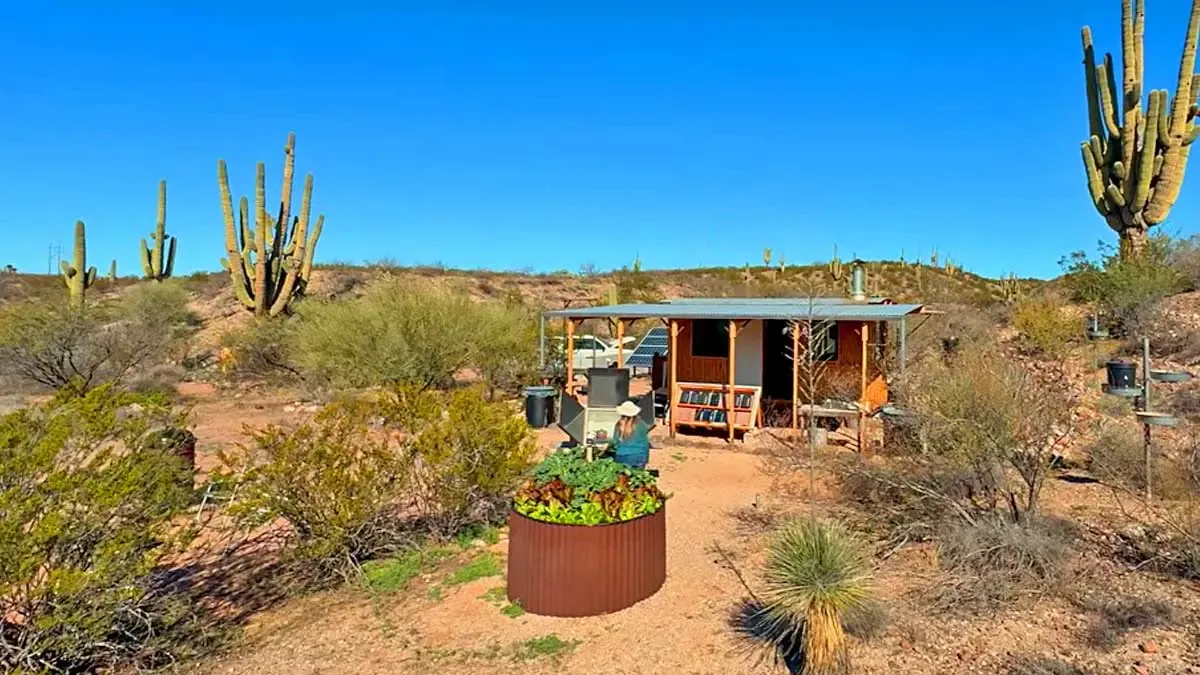
Most people dream of a bigger house. David and Pearl Omick went the other way. In 1997 they moved to remote land in the Sonoran Desert, searching for a slower, simpler life more connected to nature. At the center of their off-grid micro-homestead sits a cottage of just 128 square feet. It has been their full-time home for nearly 30 years.
They built it in three and a half weeks for around $6,000. They have moved it eight times. They have sailed to Tahiti and bicycled across the United States. And they say they have never been in debt. This is how a tiny desert cottage gave two people a very large life.
“We moved out here in 1997. We bought 20 acres for $101,000; it was very cheap back then. It’s still relatively affordable.” That was the start of it all. Land they could afford outright, and a home small enough to build with their own hands.
At a Glance
- Who: David and Pearl Omick
- Where: 20 acres in the Sonoran Desert
- Moved there: 1997
- The home: 128 square feet, 8 by 16 feet
- Build time: Three and a half weeks
- Build cost: Around $6,000, about $5,000 on materials
- Times moved: Eight, leaving almost no trace
- Power: Small solar setup, about 480 watts
- Water: Collected by hand, every drop lifted
- Monthly costs: Very low, mostly groceries, internet and phone
A Slower Life in the Sonoran Desert
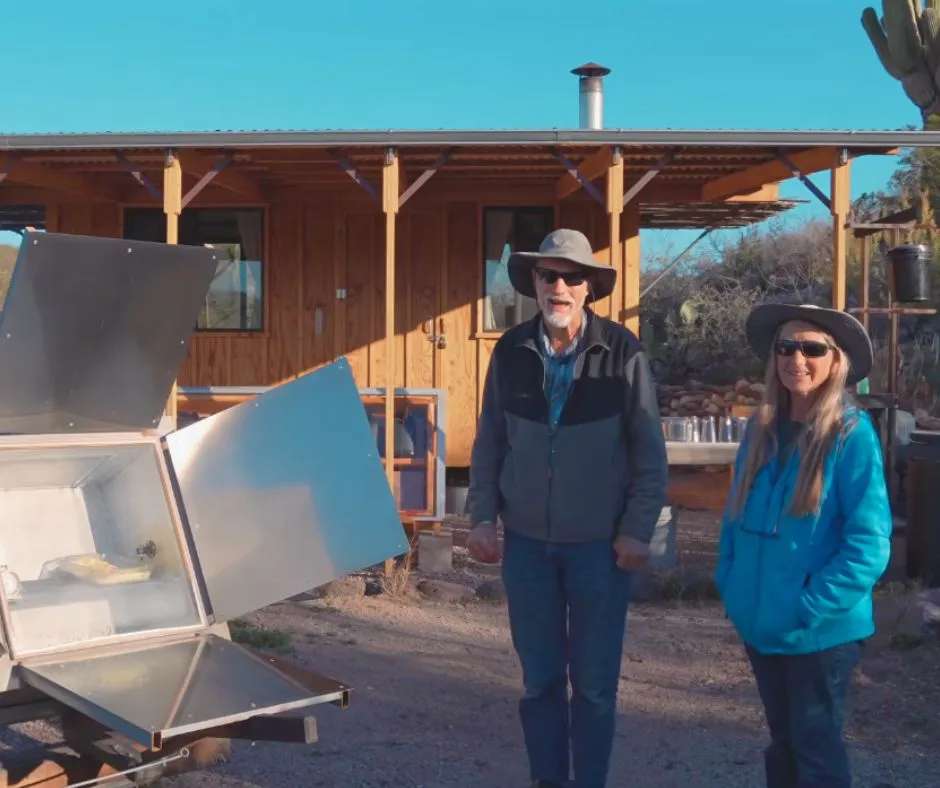
Photo: Kirsten Dirksen via My Positive Outlooks
David and Pearl did not move to the desert to escape the world. They moved there to live closer to it. Their 20 acres sit far from towns and traffic, surrounded by cacti, scrub and open sky. Life there runs at a different speed.
There is no rush in their days. Cooking, cleaning and bathing all happen outside, under the desert sky. The garden gives them fresh vegetables year round. The sun powers their lights and cooks their food. It is a life built around what the land provides, not around what a store sells.
The cottage itself is small, but the homestead around it is not. Outdoor work areas, barrel pantries, drying racks and mulch basins spread across the land. The house is the bedroom and the office. The desert is the rest of the home.
“We highly value freedom. We’ve never been in debt, which if we had a bigger house would be quite likely the case.” For David and Pearl, freedom is not a slogan. It is the reason they chose this life, and the reward for keeping it small.
A House Built in Three and a Half Weeks
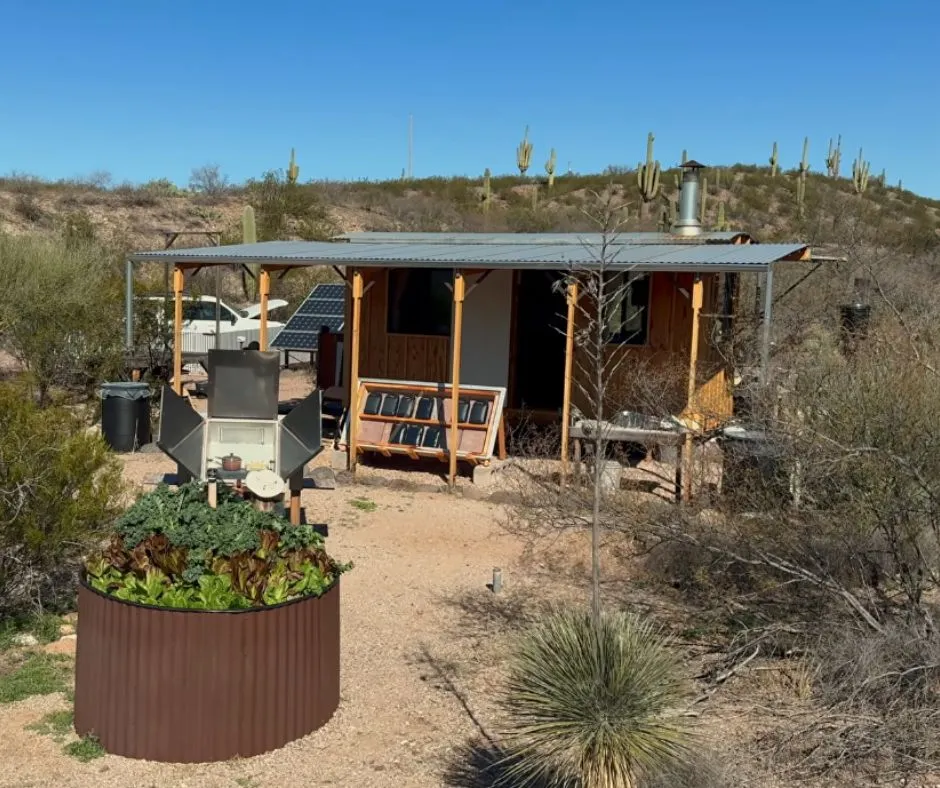
Photo: Kirsten Dirksen via My Positive Outlooks
Three and a half weeks. That is all it took to build the cottage. The total cost came to around $6,000, with about $5,000 spent on materials. The materials were simple and widely available, the kind of thing any builder can find.
The outside is CDX plywood, a common construction plywood, over 1×2 framing spaced at one-foot intervals. Corrugated galvanized metal siding covers the exterior. Inside, another layer of plywood adds durability and insulation. Nothing fancy. Nothing fragile. Just layers that work together.
“It’s 128 square feet. It’s 8 by 16 and it’s by far the favorite house we’ve ever lived in.” Size was never the point. The cottage was built to be enough, and it has been enough for nearly 30 years.
That speed matters for anyone dreaming of their own small build. A simple design, built with standard materials, can go up in weeks rather than months. The trade is comfort in the usual sense. There is no spare room, no hallway, no place to hide clutter. Every inch has a job.
Cost Breakdown: What We Know
- Land, 20 acres, bought 1997: $101,000
- Cottage build, total: Around $6,000
- Of that, materials: About $5,000
- Build time: Three and a half weeks
- Second sailboat, bought used: About $1,500, then repaired by hand
- Monthly expenses: Very low, mostly groceries, internet and phone
- Working years: They only needed to work about 50 days each year
No mortgage, no rent and no utility bills in the usual sense. That is the whole point of the numbers. The cottage was cheap to build, and the life around it stays cheap to run.
A Home That Can Move
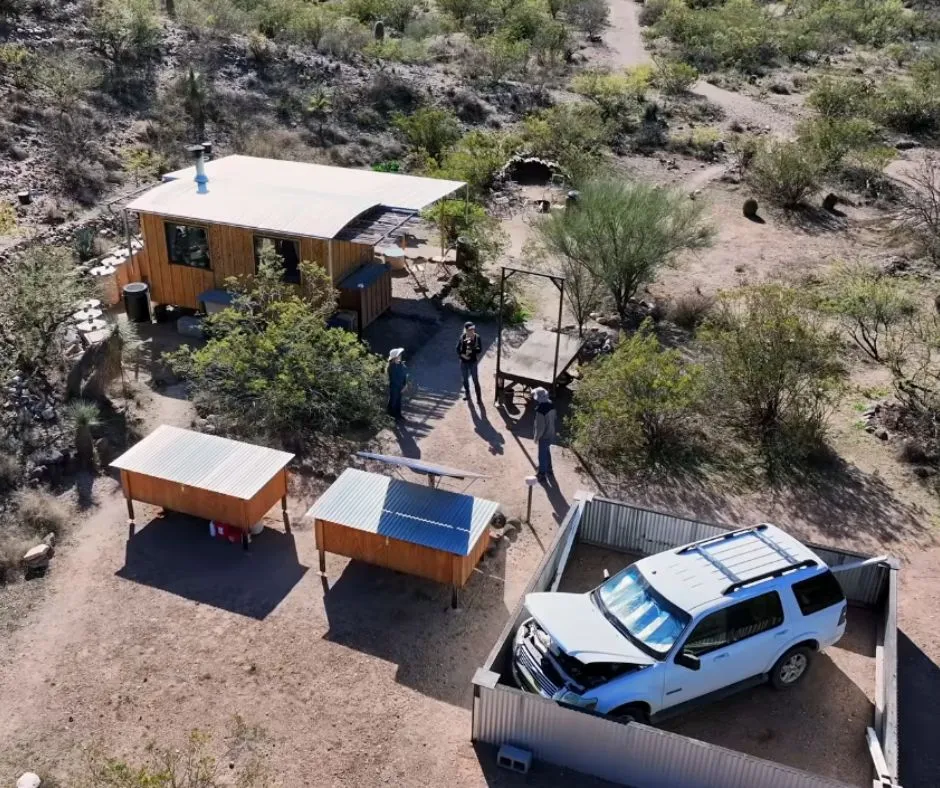
Photo: Kirsten Dirksen via My Positive Outlooks
Most houses stay where they are built. This one does not have to. The cottage rests on flat rocks and is leveled with threaded rods, long metal rods with screw threads that let the height be adjusted. Wheels, an axle and a tow hitch can be attached, and then a pickup truck can pull the whole house to a new spot.
David and Pearl have relocated it eight times. Each move leaves almost no trace on the land. The rocks go back to being rocks. The desert grows over the spot where the cottage stood.
That freedom to move changes how they think about home. They are not tied to one patch of ground. If a spot stops working, or if they simply fancy a change of view, the house can come with them.
It also means the build had to be strong in a particular way. A house that gets towed needs a frame that holds together on the road, not just standing still. Simple materials, well joined, turned out to be exactly right for the job.
Sleeping, Working and Storing in 128 Square Feet
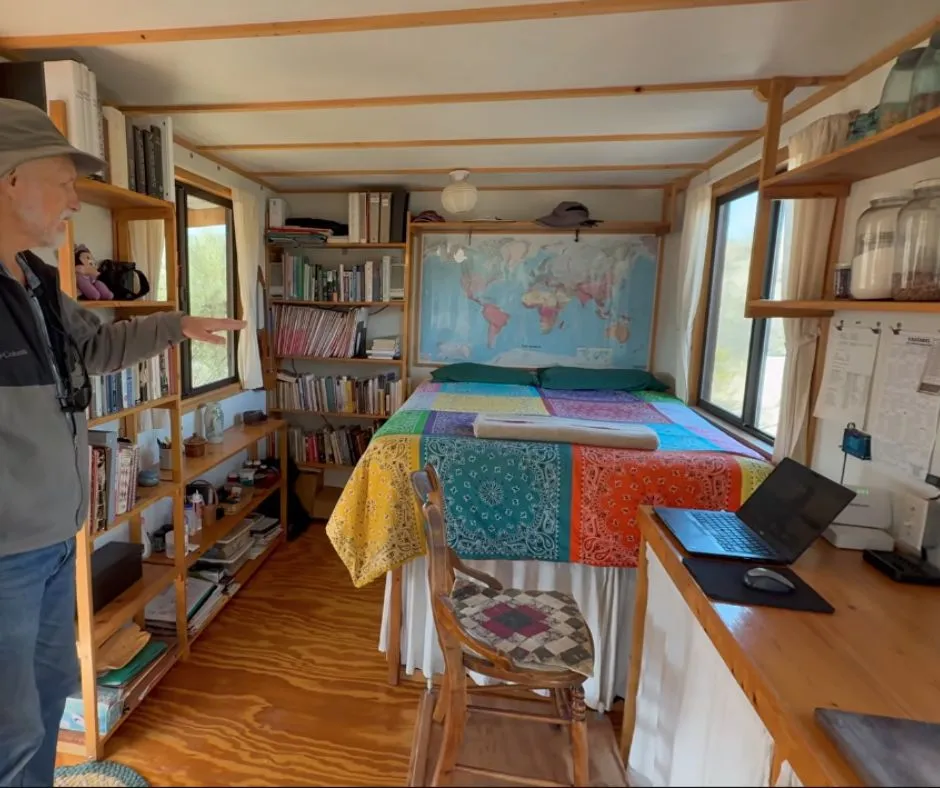
Photo: Kirsten Dirksen via My Positive Outlooks
Step inside and there are no dividing walls. The layout is completely open. A full-size bed sits at window level, so cool air flows through on hot desert nights. Underneath the bed is storage, and that storage is their closet.
“It’s all storage. It’s our closet.” There is no walk-in wardrobe, no spare cupboard, no junk drawer that grows by itself. What they own fits under the bed, on shelves, and in the outdoor pantries.
The same space turns into a home office in seconds. A small platform and a chair set up a work spot, and pack away just as fast. A laptop on the desk, books on the shelves, and a world map on the wall hint at how much of the world they have already seen from this little room.
LED fixtures light the cottage, with the wiring left exposed so it is easy to reach and repair. Nothing is hidden behind drywall. If something breaks, they can see it, reach it and fix it. That is the logic of the whole house: simple to build, simple to live in, simple to mend.
Cooking With the Sun
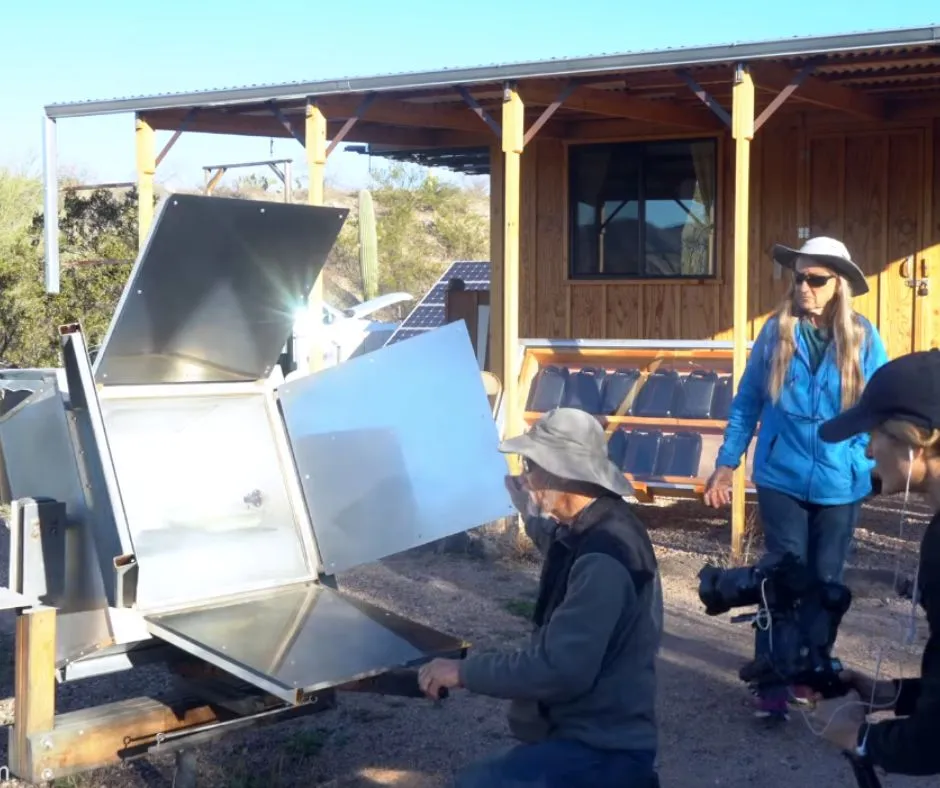
Photo: Kirsten Dirksen via My Positive Outlooks
Their main oven runs on sunlight. The solar oven is a box built from stainless steel reflectors, glass and insulation. It reaches about 275 degrees and works like a slow cooker, gently cooking food over hours instead of blasting it with heat.
“Well, it’s the only oven we have,” Pearl said. There is no gas range, no electric oven, no backup. The sun does the cooking, and the cooking shapes the day. Meals go in early and come out when they are ready.
David has built about 10 or 12 of these ovens over the years. “This is probably the 10th or 12th one I’ve built,” said David. “Trial and error.” Each version taught him something, and each one got a little better.
Power for the rest of the cottage comes from a small solar setup of about 480 watts. That is enough for lights, charging devices, and one induction cooktop, a flat electric hob that heats pots with magnetism. It is a modest system, and it matches a modest way of living. They use what the sun gives them, and they do not ask for more.
Every Drop of Water Gets Lifted
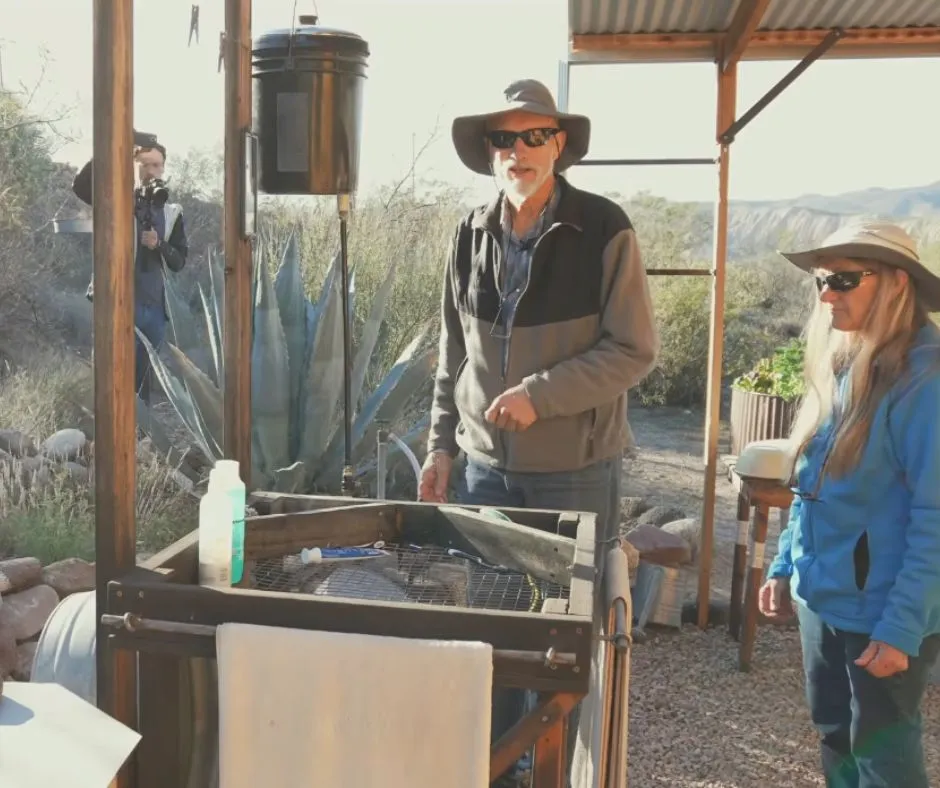
Photo: Kirsten Dirksen via My Positive Outlooks
Water is the hardest part of desert life, and David and Pearl do not pretend otherwise. They collect their water, and they lift every drop they use. There is no tap to turn on and forget about.
“We can use as much water as we want, but we have to lift every drop we use. Water is heavy,” David explained. That weight shapes everything. You do not waste what you have carried yourself.
Cooking, cleaning and bathing happen outside. There is an outdoor dishwashing station and a shower area, open to the sky. Used water does not go to waste either. A graywater system, which reuses water from washing, feeds seven mulch basins, one for each day of the week.
Rainwater harvesting adds to their supply when the rains come. Food drying racks preserve what the garden produces. It is a system built on patience and reuse, where nothing is thrown away until it has done a second job.
A Garden That Feeds Them Year Round
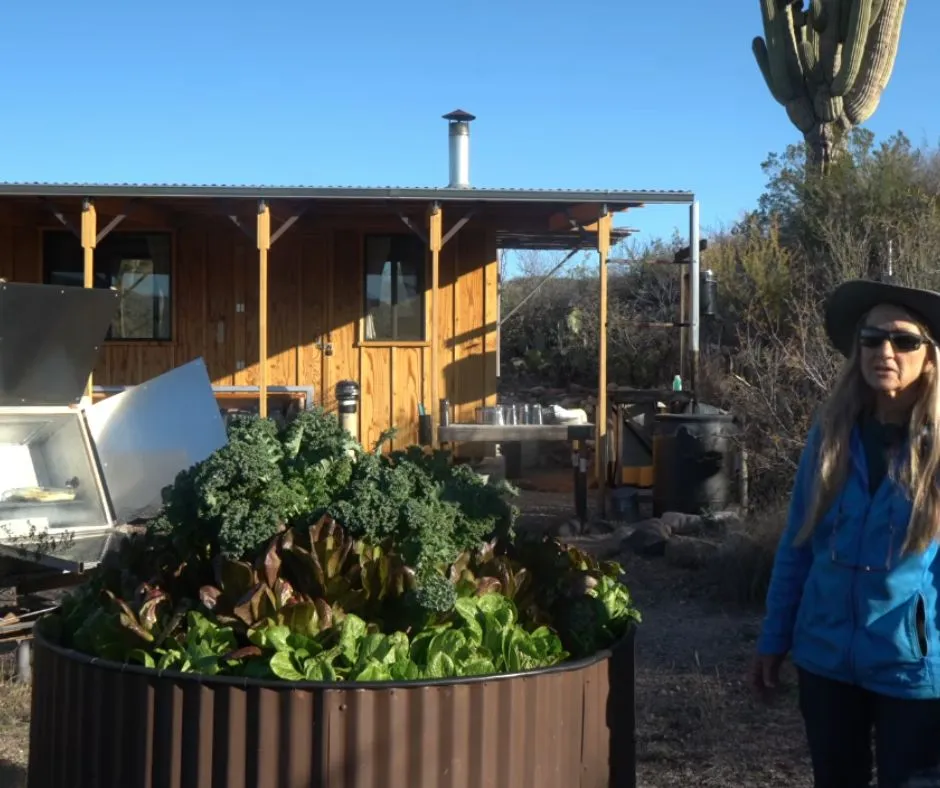
Photo: Kirsten Dirksen via My Positive Outlooks
The small garden provides fresh vegetables year round, even in the desert. Raised beds hold leafy greens and salad vegetables, watered with care and fed by compost from a three-barrel composting toilet system. Waste becomes food for the soil, and the soil feeds them back.
“100% of our salads come from here.” That is not a boast. It is a fact of daily life. Step outside, pick greens, and lunch is mostly sorted.
Food is stored in outdoor barrel pantries, simple and sturdy. A cooler system uses cold night air to keep things fresh, borrowing the desert’s own temperature swing instead of fighting it. Nothing here runs on a plug if the night sky can do the job for free.
The garden is also the reason their monthly expenses stay so low. Groceries, internet and phone make up most of what they spend. When the land feeds you and the sun powers you, there is not much left to buy.
Eight Months on a Sailboat Smaller Than the Cottage

Photo: Kirsten Dirksen via My Positive Outlooks
The desert cottage is not the smallest place David and Pearl have lived. In 2017 they bought a 25-foot sailboat named Minimus and sailed from California to Tahiti, living aboard for about eight months. The boat was smaller than the cottage.
“And eight months. And that was fine in a smaller space than this,” Pearl shared. After years in 128 square feet, a 25-foot boat felt familiar. Small spaces were already their normal.
Later they bought another sailboat for about $1,500, repaired it themselves, and sailed from Seattle to Alaska. The pattern is always the same: buy something small and affordable, fix it with their own hands, and go further than most people think possible.
During their working years, they only needed to work about 50 days each year. The rest of the time was theirs. That is what no debt buys. Not luxury, but time. Time to sail, to build, to garden, and to live at the pace they chose.
Camping In Instead of Camping Out
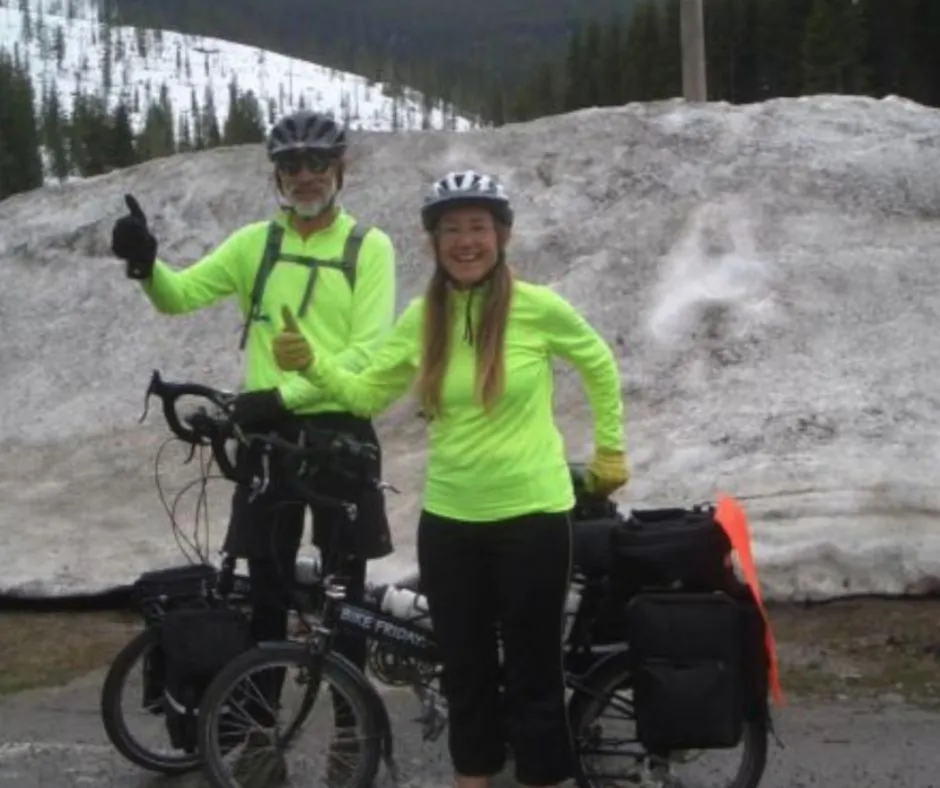
Photo: Kirsten Dirksen via My Positive Outlooks
They also bicycled across the United States, a trip of three to four months with only a small tent for shelter. Compared with that, the cottage feels generous. It has a real bed, a roof that does not flap, and a garden outside the door.
“We love camping. We call this ‘camping in’ instead of ‘camping out,'” David quipped. The joke holds a truth. Their home keeps the parts of camping they love, fresh air, open sky, simple days, and adds just enough shelter to make it a life rather than a trip.
Nearly 30 years in, they do not talk like people who gave things up. They talk like people who traded wisely. A big house would have meant a big mortgage, long working years, and far less time for the sea, the road and the desert.
“I’m hard-pressed to think of what we might be sacrificing. It does not feel like sacrifice. I feel like we have an abundance of freedom,” David concluded. After three decades in 128 square feet, that is the verdict. Not less. More.
The Honest Pros and Cons
What works
- No debt, and very low monthly costs
- Freedom to work only about 50 days a year during working years
- A home that can move, relocated eight times with almost no trace
- Fresh food from the garden year round
- Simple systems that are easy to repair by hand
What is hard
- Every drop of water must be collected and lifted by hand
- Cooking, cleaning and bathing all happen outdoors
- Only 128 square feet with no dividing walls, so privacy is limited
- The solar oven cooks slowly and depends on sunshine
- Desert heat and a remote location, far from shops and services
- It only works if you enjoy hands-on building, repairs and daily chores
Thinking of copying their idea? Start with the land, not the house. David and Pearl bought 20 acres they could afford outright, and that single choice made everything else possible. Research local rules before you build, since permits and building codes vary widely by county and by state, and a movable structure still needs a legal place to sit.
Be honest about utilities. Solar power, collected water and a composting toilet are simple systems, but they need daily attention and basic repair skills. Budget for land, water collection, storage and a way to handle graywater. Plan for ongoing costs too, even small ones like groceries, internet and phone, and for the tools and materials that repairs will need.
Most of all, try small before you commit. A season in a tiny space, or a few weeks living mostly outdoors, will tell you more than any article can. David and Pearl spent nearly 30 years proving that a 128 square foot cottage can hold a full life. The question is not whether the house is big enough. It is whether the life around it is the one you want.
Sources: This story is based on the My Positive Outlooks article about David and Pearl Omick, and the video tour with Kirsten Dirksen. Read the original here: Tiny Home Desert Dream Lifestyle on My Positive Outlooks. Watch the tour on the Kirsten Dirksen YouTube channel.