What Happens to a Container Home in 100°F Heat

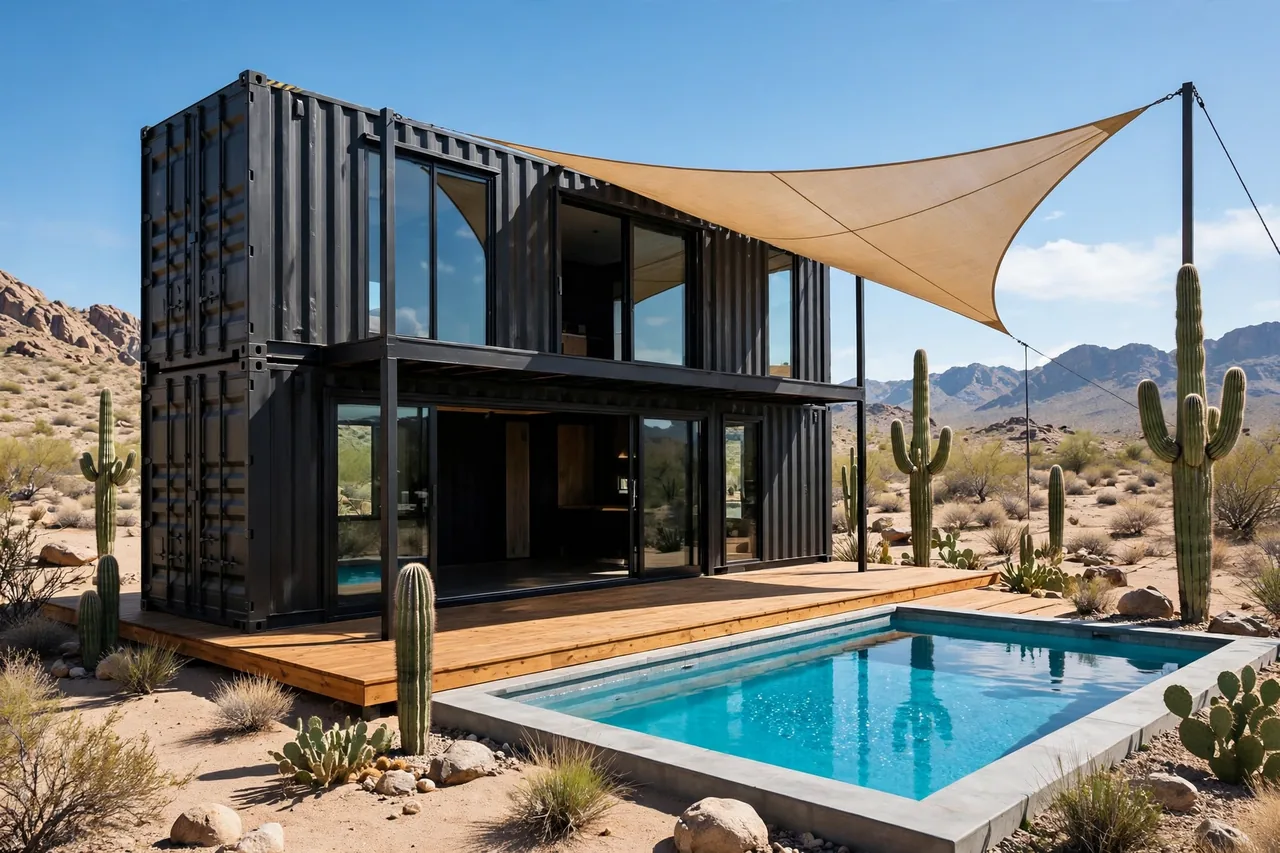
Picture a steel box sitting in the Arizona sun. The thermometer outside reads 100 degrees. You open the door of your container home and walk into air that feels like it belongs inside an oven.
This is the part of container living that rarely makes the photos. Steel is one of the fastest conductors of heat in common building materials, and in desert climates that physics runs on fast forward.
The good news: owners in Arizona, Texas, and Southern California have figured this out. With the right insulation, ventilation, and shade, a container home can stay genuinely cool through 100-degree weeks. Here is exactly what happens inside that box, and what to do about it.
The Oven Effect: What 100 F Outside Becomes Inside
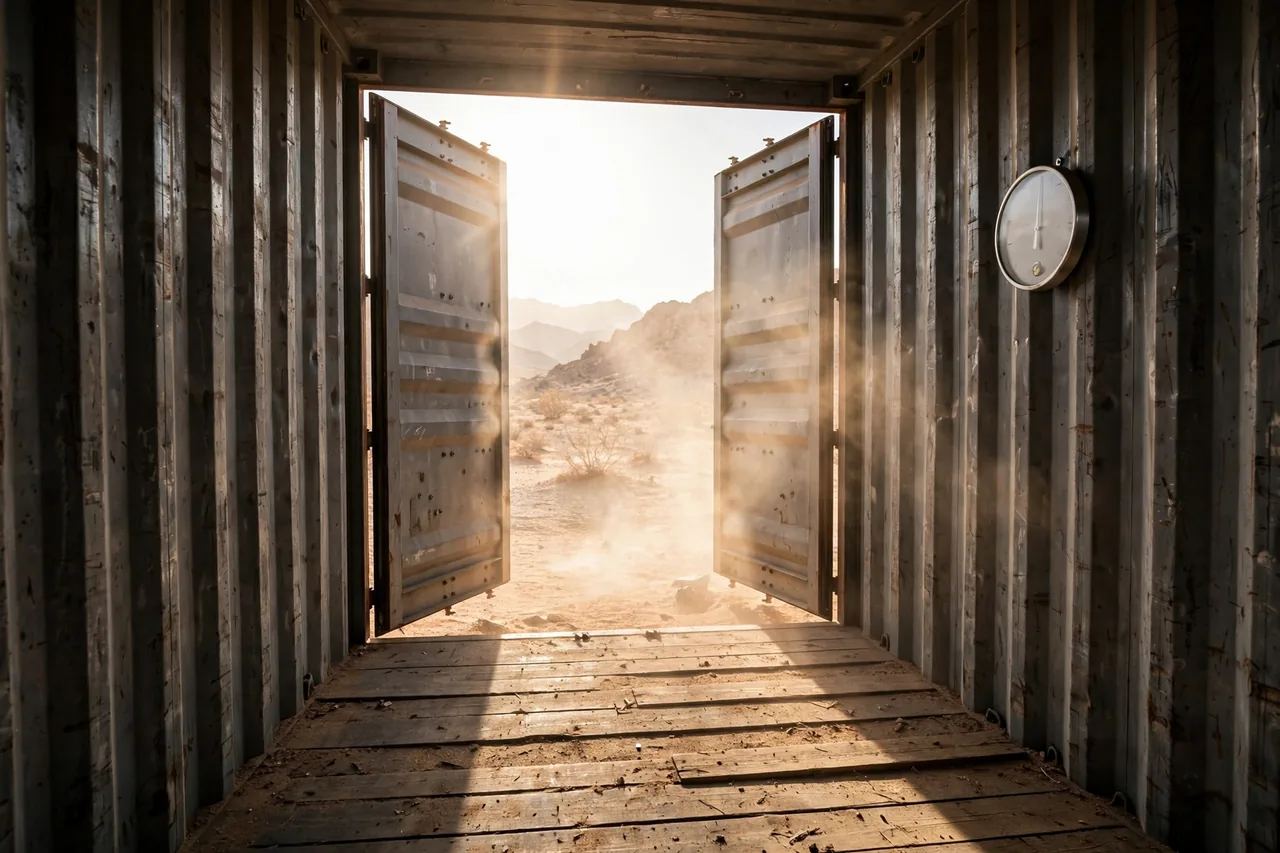
On a sunny 90-degree day, the inside of an unventilated steel container can reach 120 to 135 degrees. That number comes from container suppliers who measure it, and it is not the worst case.
At a storage yard in Lakeland, Florida, researchers clocked 92 degrees outside and 122.9 degrees inside a beige container. The dark red container sitting next to it ran nine degrees hotter on its skin, and on the hottest days they expect interiors to push toward 140 degrees.
Translate that to a 100-degree day in Phoenix or Tucson with a dark-painted box, and you are looking at 130 to 140 degrees inside by mid-afternoon. Vinyl records warp. Adhesives fail. Houseplants cook. Electronics age years in a single summer.
In one comparison test, a standard container hit 115 degrees while a ceiling-insulated one stopped at 95 and a reflective-roofed one at 99. Twenty degrees is the difference between a sauna and a home, and it comes from a handful of upgrades this article walks through.
Steel Is a Highway for Heat
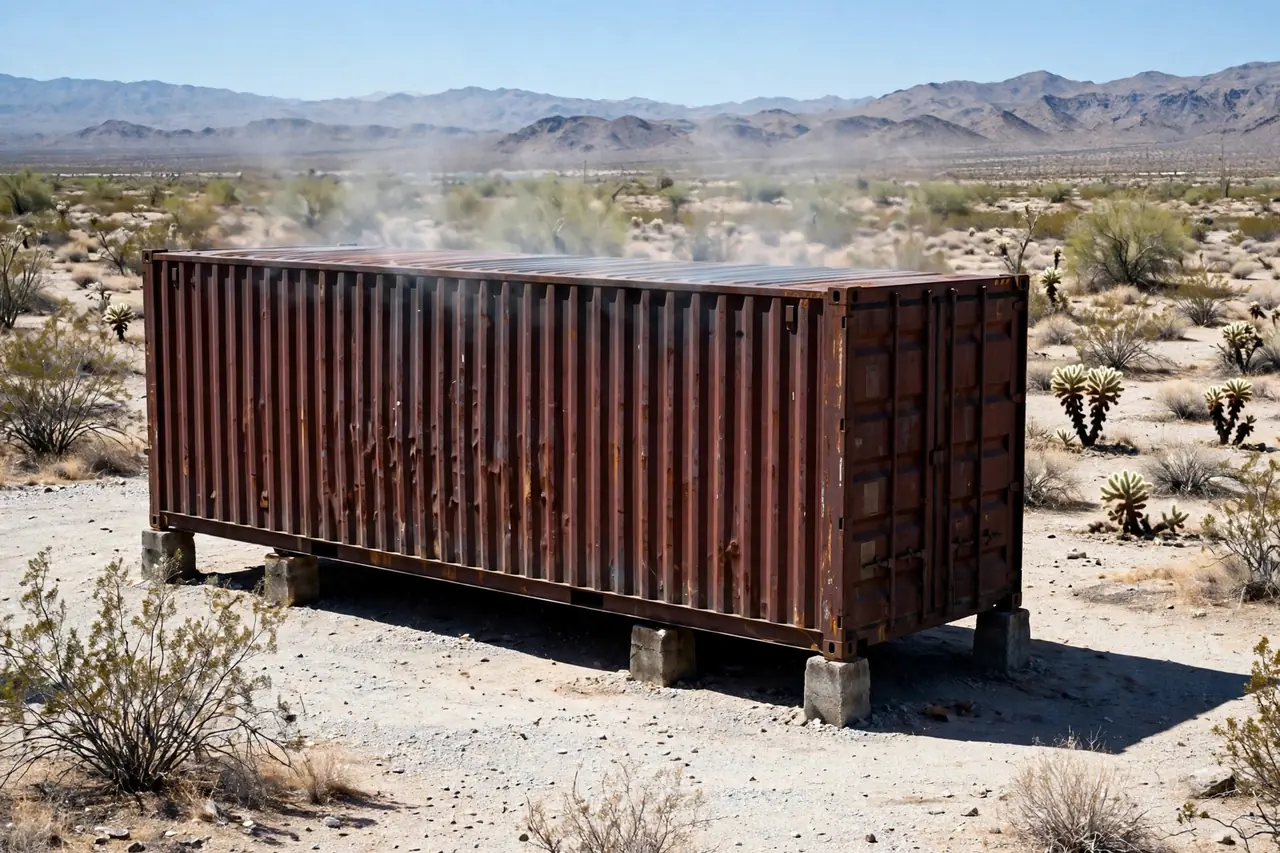
Steel moves heat several hundred times faster than wood framing. The steel skin of a container has effectively zero R-value, which is the number builders use to measure resistance to heat flow. Heat goes through it like a rumor through a small town.
The corrugation ribs make it worse. Every ridge is a thermal bridge, a solid steel path carrying heat from the sunlit outer skin straight to the inner skin. Touch the inside wall of a container at 2 p.m. and it burns. That is heat arriving by conduction, not through the air.
This is why a container feels hotter than its air temperature suggests. The walls themselves radiate heat at you from every side, like standing near a campfire in a circle of campfires.
The same physics runs in reverse at night. Steel sheds heat fast after sunset, which is why desert owners throw every window open at 9 p.m. and let the night air flush the box. That fast release is an asset if you design for it.
Insulation That Actually Works in Desert Heat
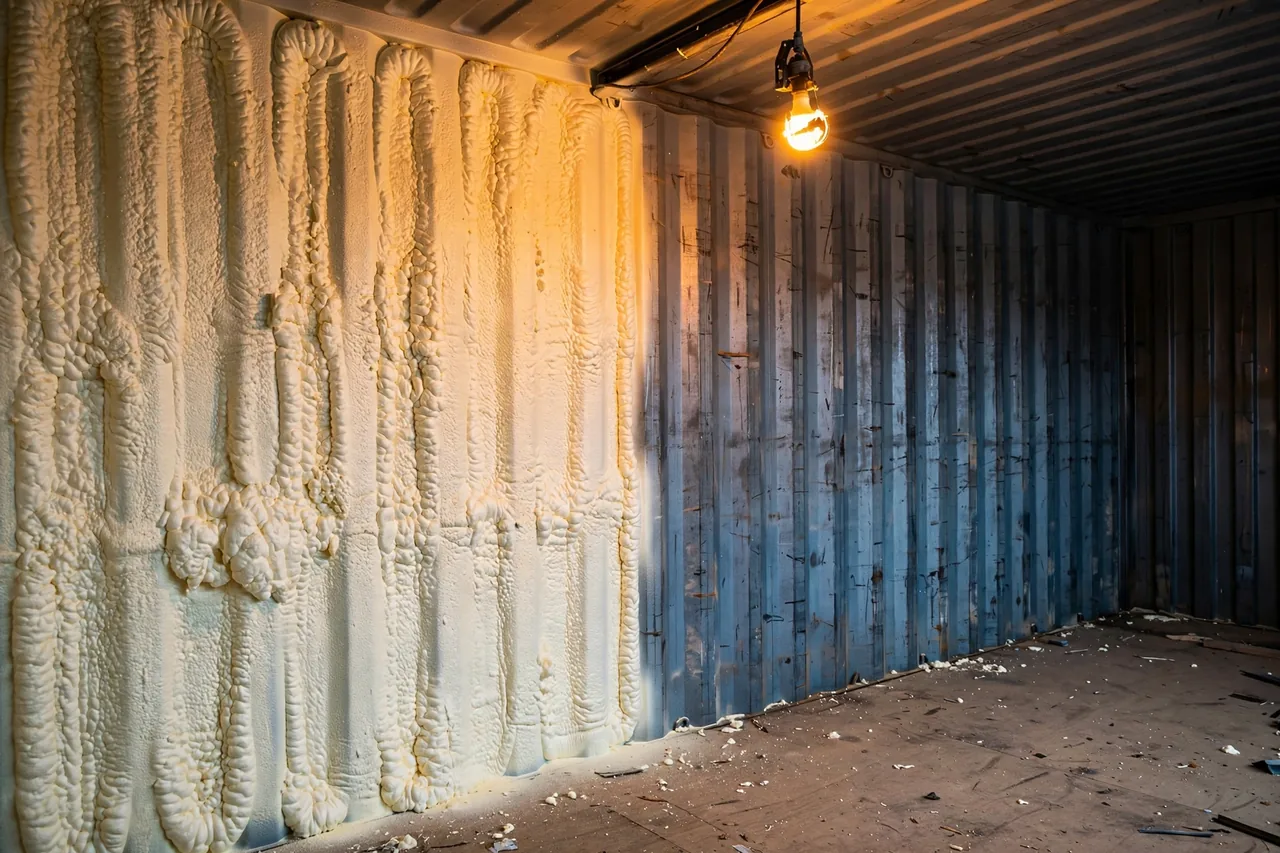
Closed-cell spray foam is the desert container favorite, and the reasons are practical. It delivers about R-6 to R-6.5 per inch, and two to three inches on the walls and roof lands you at roughly R-14 to R-21. It sprays straight onto the corrugated steel, filling every groove with no gaps, and it doubles as a vapor barrier.
That matters more than it sounds. A container is only eight feet wide outside. Foam needs no wooden framing, so you keep inches that batt insulation would steal. Per container, professionally sprayed foam typically runs $2,000 to $4,000.
Rigid foam boards are the budget alternative at about R-5 per inch. They glue to the walls, but the corrugations leave air pockets behind every panel, and those pockets are where condensation hides.
Fiberglass batts are cheapest and worst here. Gaps around batts plus steel plus humidity equals hidden moisture and hidden rust. In a desert build, do the foam, and do the roof first, because the roof takes the worst of the sun.
The Exterior Insulation Move
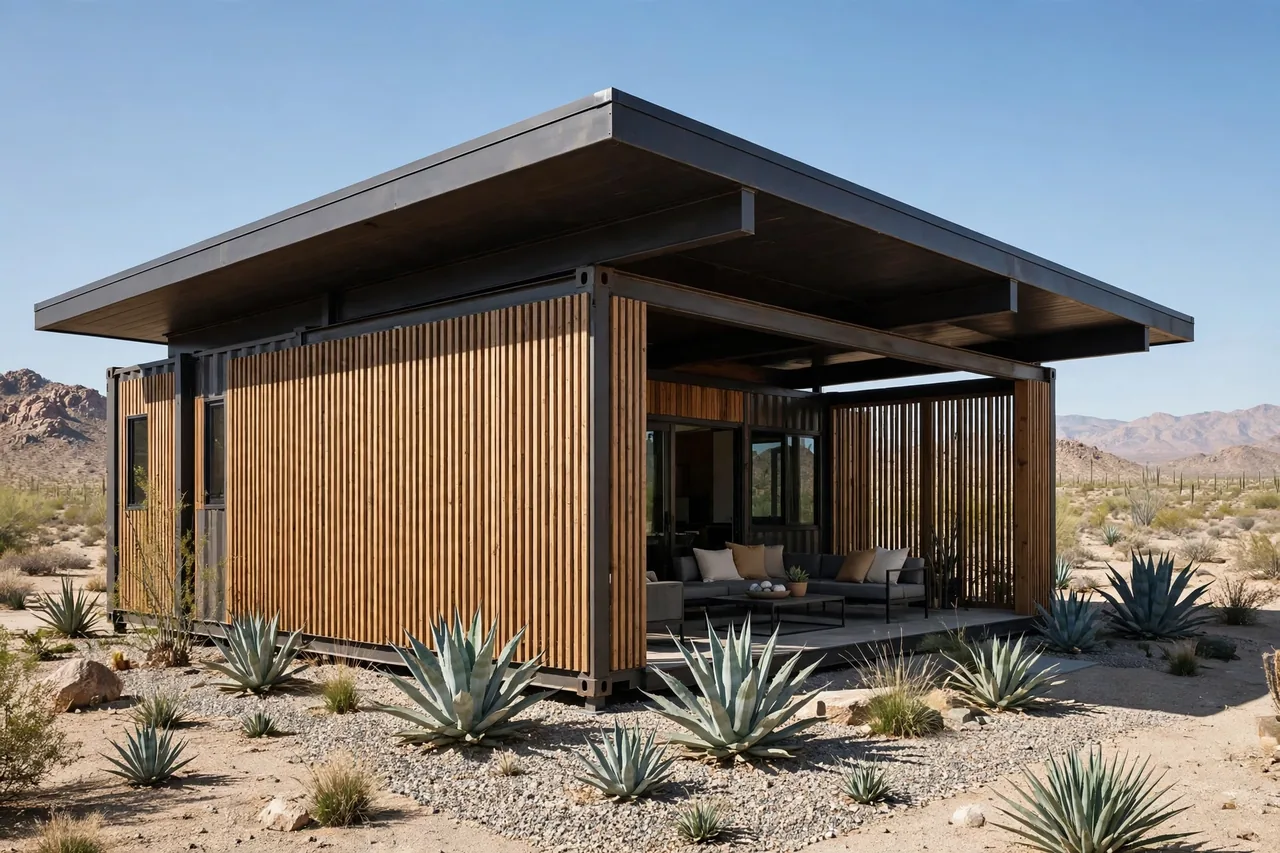
Here is the move desert builders brag about: insulate the outside instead of, or as well as, the inside. Exterior rigid foam or a cladding screen over the steel stops the heat before it ever touches the metal. The steel never gets hot, so it never radiates at you.
Wood slat screens are the classic version. The slats sit on battens with an air gap behind them, and hot air rises through that gap and vents out the top. It is shade and insulation in one assembly, and it looks a hundred times better than bare steel.
Exterior insulation also protects the paint and slows rust, which is a real cost saver over a decade. The trade-off is labor and careful detailing around windows and corners.
And while you are at the exterior, paint matters. In that Florida test, a dark red container’s skin ran nine degrees hotter than a beige one in the same sun. White or reflective coatings are not a style choice in the desert. They are climate equipment.
Ventilation: The Cheapest Degree You Will Ever Buy
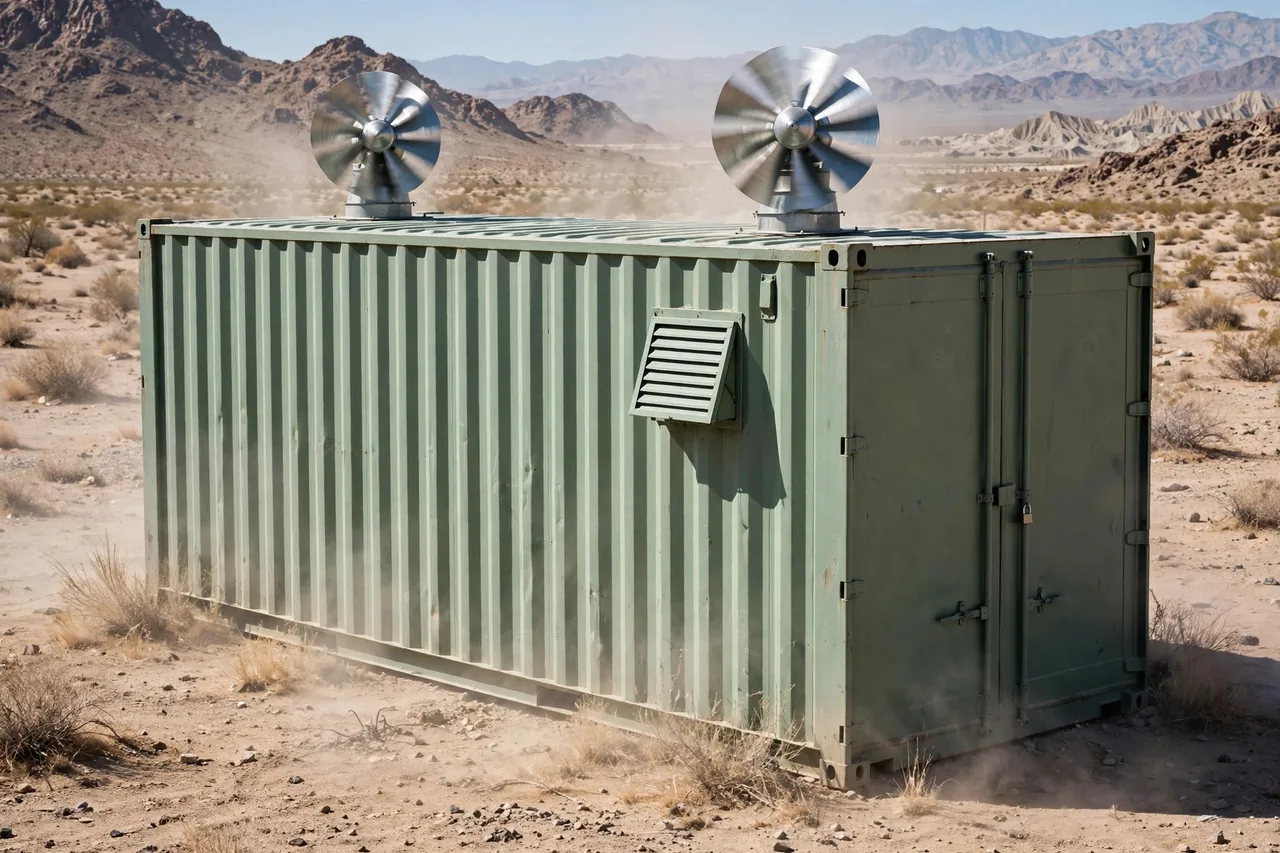
Before you buy a bigger air conditioner, cut vents. Place them high on one end of the container and low on the opposite end, and hot air has an exit path while cooler air enters low. Air moves through the whole box instead of cooking in one corner.
Turbine vents, the spinning whirlybirds on roofs, cost little, use no electricity, and pull hot air out whenever there is a breeze. They are ugly and wonderful in equal measure.
Then learn the night flush. Desert nights often drop 30 to 40 degrees below the afternoon peak, and steel cools fast. Open everything after sunset, let the night air strip the heat out of the structure, and close up in the morning. Owners call it free air conditioning, and they are not exaggerating much.
Ventilation will not beat a 100-degree afternoon by itself. But it shaves the peak and keeps your air conditioner from fighting the battle alone, which shows up on the electric bill.
Shade the Roof, Cool the House
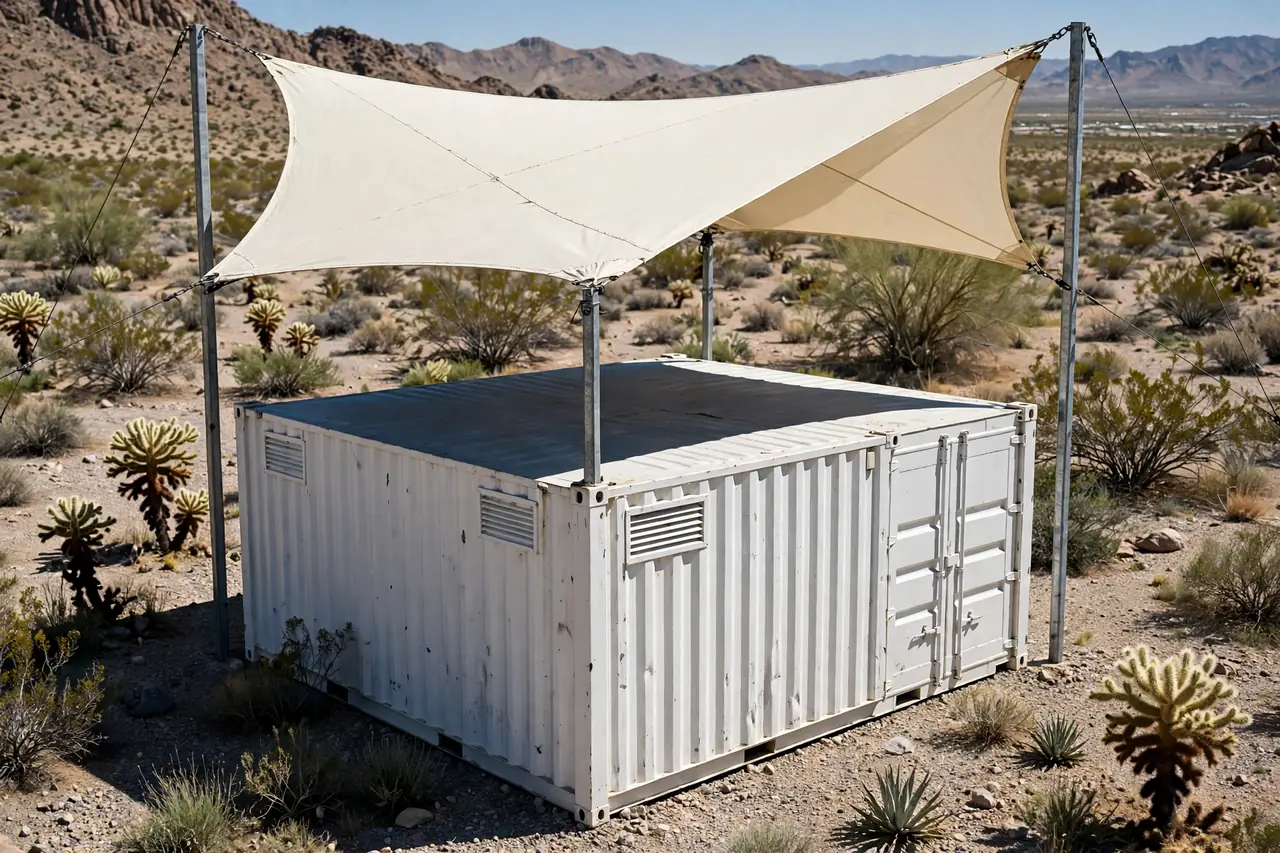
The roof is the front line. It takes direct sun all day while the walls only catch it at angles, so shading the roof buys the most cooling per dollar after insulation.
A shade sail on posts, a pergola, or a simple second fly roof held a foot above the container roof all work. The trick is the air gap. Sun heats the shade, air moves through the gap, and the container roof underneath stays dramatically cooler.
Reflective roof coatings earn their keep too. In one field test, an uninsulated container with a reflective roof structure measured about 99 degrees inside versus 115 for the bare box. Sixteen degrees from shade alone.
Mind the glass as well. Big west-facing windows turn into radiators by 4 p.m. Double glazing with low-E coating and real exterior shading, not just curtains, keeps the view without the furnace.
What Cooling Really Costs
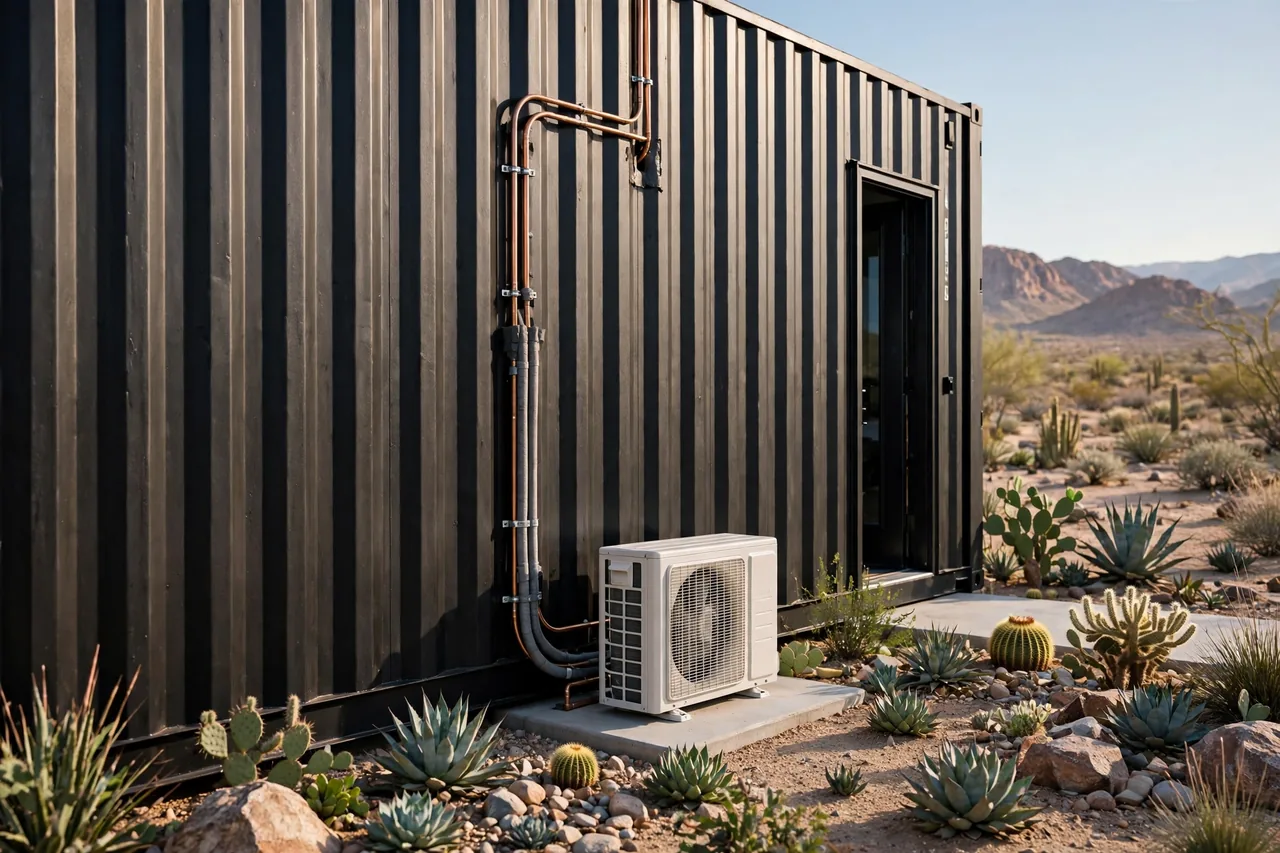
A ductless mini-split is the standard answer for desert container homes, and the pricing is straightforward. A single-zone system with 9,000 to 24,000 BTU of capacity runs about $2,000 to $3,000 for the equipment, and a professionally installed single zone typically lands between $3,800 and $7,500.
Size it for the heat, not the square footage. A 40-foot container is only 320 square feet, but its steel walls leak heat like a tent. For 100-degree-plus regions, size the unit 10 to 20 percent above what the square footage suggests, and pick a model rated to hold capacity at 115 degrees outside.
What does it cost to run? One Phoenix example: a properly sized 18,000 BTU unit cooling 750 square feet of well-insulated space held 75 degrees inside through 110-degree days for roughly $90 to $130 a month in summer. Skimp on insulation and that number climbs fast.
Three cheap tricks cut the bill. Shade the outdoor condenser, which buys 5 to 10 percent efficiency. Pre-cool in the morning before peak electricity rates hit. And run ceiling fans, which let you set the thermostat three or four degrees higher without noticing.
What Desert Owners Say After One Summer
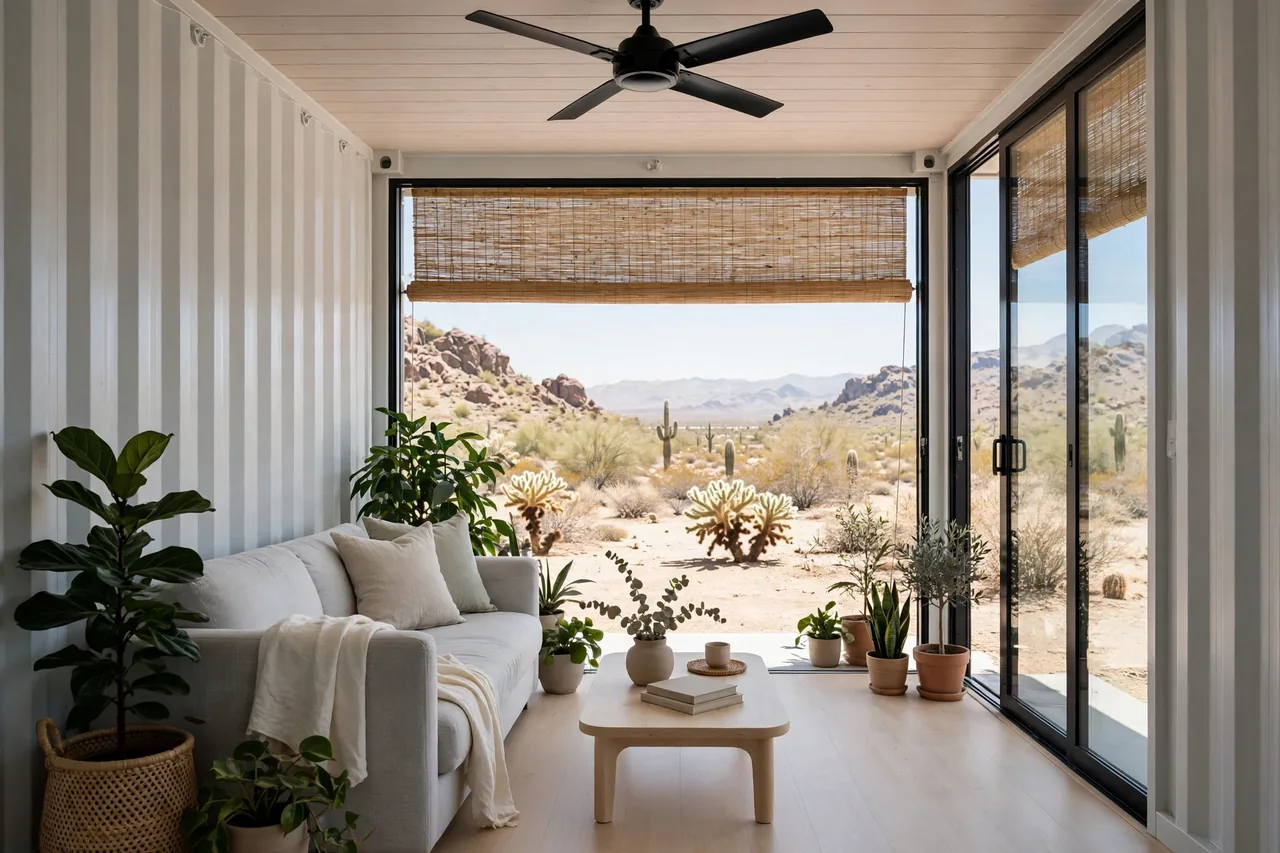
Ask desert container owners what they would do differently and the answers rhyme. Almost nobody regrets insulating. Plenty regret the dark paint color, the west-facing glass wall with no shade, and the air conditioner sized for a stick-built house instead of a steel box.
The veterans all describe the same system, not a single product. Light exterior. Two to three inches of closed-cell foam. High and low vents. Shade over the roof. A mini-split sized up for the heat. Each piece is modest. Together they are the difference between a home and a storage unit with furniture.
Budget for the heat package like a real line item, roughly $5,000 to $10,000 above the bare build for insulation, cooling, and shade. It is the cheapest money in the project, because every dollar there comes back as comfort and lower bills for the life of the home.
A container home in 100-degree heat is a physics problem with a price tag, not a dealbreaker. The steel will always move heat fast. Your job is to make sure it moves it somewhere other than your living room.
Do the insulation, the ventilation, and the shade, and the box that hits 135 degrees bare will sit at 75 with the door closed and the dog asleep on the floor. That is not a fantasy. That is just the build done right.