
Winter Raises Your Blood Pressure: 7 Daily Moves That Keep It Steady

Winter has a quiet way of tightening its grip on your body. You step outside on a cold morning and your shoulders rise, your breath shortens, and your blood vessels narrow to hold your warmth in. That narrowing is not a flaw. It is your body protecting its core heat. But it also means your heart has to push harder to move the same blood through tighter tubes, and your readings climb.
Doctors have tracked this pattern for years. Blood pressure is generally higher in winter and lower in summer, according to the Mayo Clinic. One study from 2009, published in the journal Archives of Internal Medicine, found average systolic pressure (the top number) about 5 mmHg higher in winter than in summer. Other population data put the typical winter rise at roughly 2 to 4 mmHg on average, with larger jumps in some groups, including older adults and people who already have high blood pressure.
A few points on a reading may sound small. Across a whole season, though, small and steady adds up. Winter also brings the habits that push pressure higher: less movement, saltier comfort food, poorer sleep, and shorter days. The good news is that the same daily routine that keeps you warm and comfortable can also keep your readings steadier. The seven moves below are simple, and each one fits into a normal day.
One important note before we start. This article is general information, not medical advice. If you have high blood pressure, check with your clinician about your personal targets and how often you should monitor. Nothing here replaces your prescribed treatment.
Why Winter Pushes Pressure Up
Cold narrows vessels. To conserve heat, blood vessels tighten, and pressure rises.
Less daylight. Shorter days can disturb sleep and the body clock that helps regulate pressure.
Less movement. Cold mornings and early sunsets make it easy to skip walks.
Saltier food, poorer sleep. Holiday meals, soups, and late nights all nudge readings upward.
1. Let Morning Light In First

Your blood pressure naturally rises after you wake up. In colder months, that morning rise may be stronger, because waking, feeling cold, and starting activity all pile up at once. Morning light is the gentlest way to ease into the day. It tells your body clock that the day has begun, and a steady body clock supports steadier sleep and steadier pressure.
Open the curtains as soon as you get up. Sit near the window while you drink your water or eat breakfast. If the sun is out, step outside for a few minutes, even if you only stand on the porch. You do not need a long session. Ten to twenty minutes of morning daylight is a practical goal, and it doubles as a reason to get out of bed instead of scrolling under the covers.
On dark, grey mornings, turn on bright indoor lights right away and keep the same wake time. Consistency matters more than perfection. A regular wake time trains your body to expect the day, and that regularity helps your sleep the next night too. Think of light as the first small move that sets the tone for everything that follows.
2. Move Before the Cold Bites

Winter steals movement in small ways. The walk to the shop becomes a car ride. The evening stroll disappears when the sun sets at five. Less movement makes blood pressure harder to control, and it often arrives with a little winter weight gain. The fix is not a heroic workout. It is a short, daily walk that you actually do.
Aim for a brisk ten minute walk, twice a day if you can. Walk indoors when the weather is harsh: laps around the house, stairs, a shopping mall, or a simple exercise video all count. The widely accepted adult guideline is 150 minutes of moderate activity per week, and short walks add up to that total just as well as long ones.
Warm up before you head out, especially on bitter mornings. March in place for a few minutes, roll your shoulders, and loosen your legs. Sudden hard effort in the cold, like rushing to shovel heavy snow, puts real strain on the heart. If you must shovel, take small scoops, rest often, and ask for help when the load is heavy. Gentle and regular beats intense and rare, every time.
3. Dress for the Walk, Not the Weather Report

Here is a simple truth about winter walks: most people quit them because they feel cold, not because they lack willpower. Dressing well is therefore a blood pressure move, not just a comfort move. Warm layers keep your vessels from clamping down as hard when you step outside, and they make the walk pleasant enough to repeat tomorrow.
Start with a base layer that wicks moisture away from your skin. Add an insulating middle layer, like fleece or wool. Finish with a windproof outer layer. Cover your head, hands, and neck, because heat escapes fast from exposed skin. Good shoes matter too. Choose a pair with grip, so icy paths do not turn a healthy walk into a fall.
Dress warmly indoors as well. A chilly house can keep your vessels tight all day, and cold hands are a sign your body is still conserving heat. Keep your living space comfortably warm, wear socks and a sweater at home, and warm up before you take a reading. A reading taken with cold skin can look higher than your usual, and that noise makes it harder to spot real trends.
4. Build Your Plate Around Potassium and Less Salt

Winter food leans salty. Soups, cured meats, takeout, and holiday dishes all carry more sodium (salt) than summer meals, and sodium holds water in the body. More fluid in the same vessels means higher pressure. You do not need a strict diet to push back. You need a few swaps that you can live with all season.
Start with the label. The World Health Organization recommends less than 5 grams of salt per day, which is about one teaspoon. A single can of soup can hold close to half of that, so check before you pour. Cook at home when you can, and season with herbs, garlic, lemon, and pepper instead of reaching for the salt shaker. Rinse canned beans and vegetables to wash away some of their salt.
Then add potassium-rich foods, because potassium helps balance the effect of sodium. Potassium is a mineral found in everyday foods like bananas, potatoes, beans, leafy greens, yogurt, and oats. Build your winter plate around vegetables, beans, whole grains, and fruit, and let the salty extras be the side note rather than the main event. Small swaps, repeated daily, do more than a perfect week followed by a salty month.
Your Daily 7 Move Checklist
1. Morning light within an hour of waking.
2. A short walk, indoors or out, before the day gets away from you.
3. Warm layers, hat, gloves, and grippy shoes for every outing.
4. One potassium rich food and one less salty choice at each meal.
5. A fixed bedtime and a screen free wind down hour.
6. A home reading, taken the same way, at the same time.
7. A slow evening: warm drink, calm room, and no rushing.
5. Protect Your Sleep Window

Poor sleep raises blood pressure in any season, and winter makes good sleep harder. Long nights tempt us to stay up late, screens glow in dark rooms, and heavy late meals sit uncomfortably. Yet sleep is when your pressure gets its nightly reset, and guarding it is one of the highest value moves on this list.
Pick a fixed bedtime and a fixed wake time, and hold them even on weekends. Keep your bedroom cool, dark, and quiet. Stop screens an hour before bed, and swap scrolling for a book, gentle stretching, or a warm shower. Avoid heavy meals, alcohol, and caffeine late in the evening, because each one can break up your sleep even when you do fall asleep quickly.
If you snore loudly or wake up exhausted despite a full night in bed, mention it to your clinician. Sleep problems like sleep apnea (repeated pauses in breathing during sleep) are linked to higher pressure, and they are treatable. You cannot fix what you do not notice, and a simple conversation can open the door to real help.
6. Check Your Pressure at Home, the Same Way Each Time
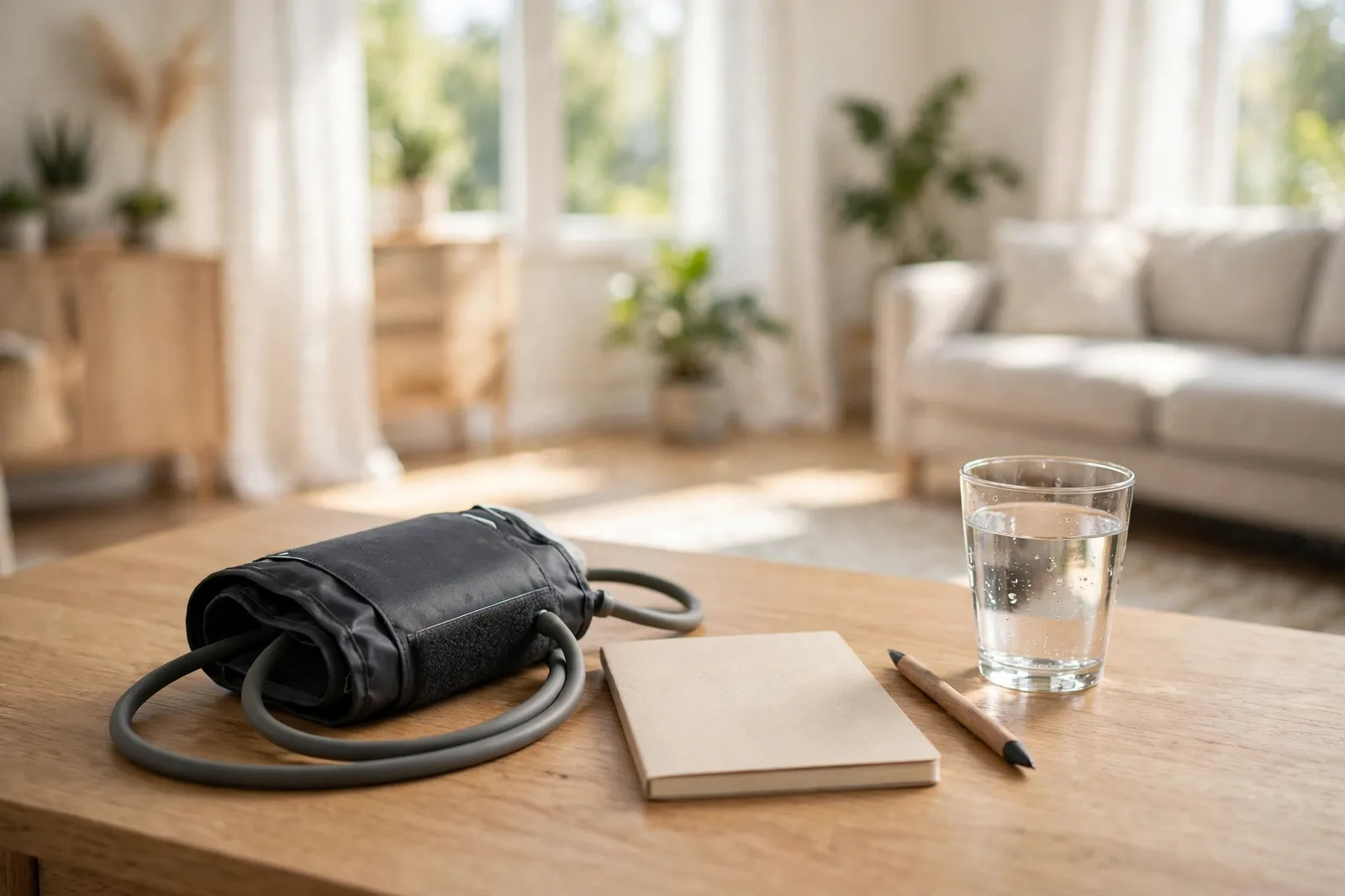
Winter readings can drift upward without you feeling any different, which is why home monitoring matters. A home cuff shows you your real pattern over days and weeks, instead of one nervous reading in a clinic. It also helps you and your clinician see whether your winter routine is working.
Technique matters more than fancy equipment. Sit with your back supported and your feet flat on the floor. Rest quietly for five minutes first. Keep your bare upper arm supported at heart level, and do not talk during the reading. Avoid caffeine, exercise, and smoking for thirty minutes before you measure, and empty your bladder first. Take two readings a minute apart and write down both.
Measure at the same times each day, ideally once in the morning before breakfast and once in the evening. Watch the trend, not a single number. One high reading after a cold walk or a salty dinner is not a verdict. A slow upward drift across two weeks is worth a call to your clinician. Also check the labels on cold remedies: common decongestants like pseudoephedrine and phenylephrine can bump readings, so ask your pharmacist if you are unsure.
7. Slow the Evenings Down

Cold weather triggers the release of stress hormones like adrenaline, which raise heart rate and tighten vessels. Winter evenings add their own stress: rushing, late meals, holiday pressure, and too much alcohol. A calm evening is therefore not a luxury. It is a direct way to take pressure off your heart before bed.
Build a simple wind down ritual. Lower the lights, put the phone away, and make a warm caffeine free drink. Stretch gently for five minutes, or sit quietly and breathe slowly. Keep alcohol modest, because heavy drinking pushes pressure up and wrecks sleep in the same night. Warmth helps too: a warm blanket, a heated room, and a hot shower all signal your vessels to relax.
Notice what your evenings usually contain, and change one thing at a time. Swap one late snack for herbal tea. Move one chore to the morning. End the day with something pleasant and unhurried. These small choices will not transform your health overnight, and no single habit can promise a perfect reading. But stacked together, day after day, they give your body the steady conditions it needs to hold pressure in a healthier range all winter long.
A Steady Home Reading Routine
Step 1: Sit, back supported, feet flat, arm at heart level.
Step 2: Rest quietly for 5 minutes. No talking, no phone.
Step 3: Take two readings, one minute apart, and log both.
Step 4: Measure morning and evening, at the same times daily.
Step 5: Watch the two week trend, and share it with your clinician.
Winter will always ask more of your heart. Cold air, short days, and heavy meals are part of the season, not problems you can switch off. But your daily routine is yours to shape, and these seven moves work with the season instead of fighting it. Light in the morning, movement in the day, warm layers, a kinder plate, guarded sleep, honest monitoring, and slow evenings: none of them is dramatic on its own, and together they form a rhythm your body can rely on.
If you already take blood pressure medicine, keep taking it exactly as prescribed. These daily moves support your treatment, they do not replace it. Never stop or change a dose because a home reading looked better for a few days. Bring your log to your next appointment instead, and let your clinician decide whether anything should change.
Start with just one move tomorrow. Pick the easiest one, do it for a week, and then add the next. If your readings drift upward despite steady habits, or if you feel unwell, contact your clinician promptly rather than waiting for spring. Steady is not about perfection. It is about giving your heart the same calm, warm, regular days, all winter long.