12 Desert Trails That Bloom Into Paradise (Only 3 Weeks Each Year)

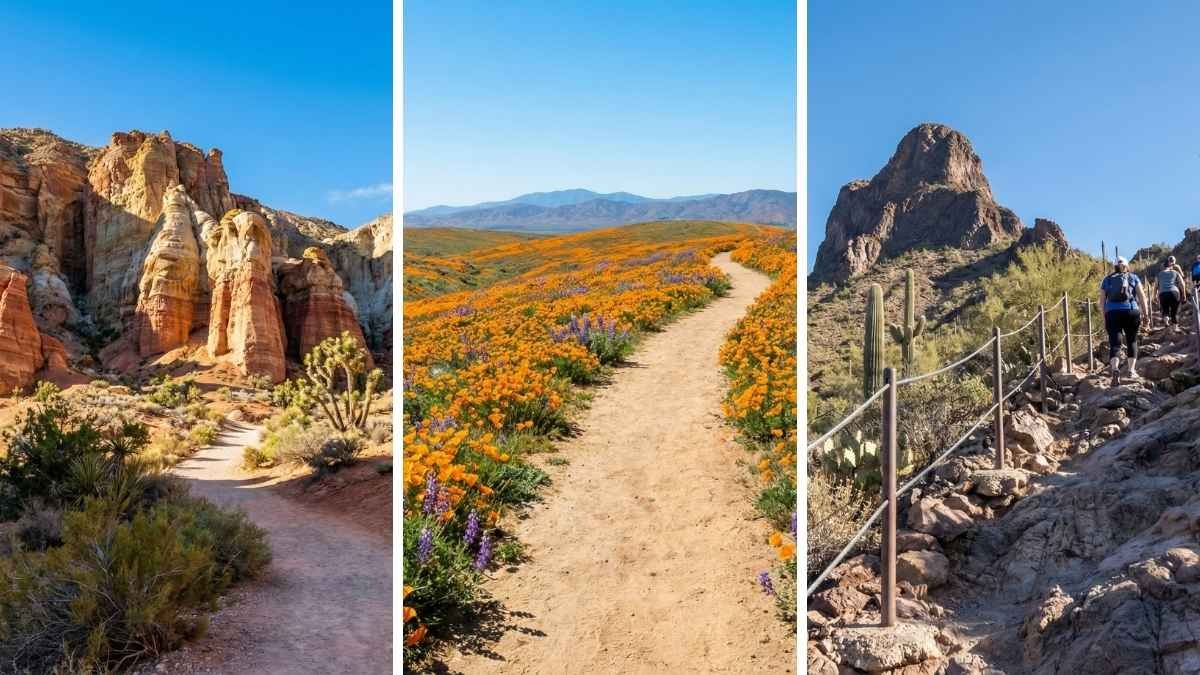
Deserts don’t ask for attention—they earn it. For most of the year, these landscapes hold their breath, sunbaked and silent, until a brief window cracks everything wide open. Color floods places that once felt unforgiving.
Trails soften. Air changes. And suddenly, what looked empty reveals a pulse of life that disappears almost as fast as it arrives. Miss the timing, and the magic never shows up. Catch it right, and the ground tells a completely different story—one written in petals, light, and fleeting beauty.
That urgency, that reward-for-the-prepared feeling, is what makes these rare weeks unforgettable—and worth chasing wherever they appear.
1. Antelope Valley California Poppy Reserve – Poppy Trail
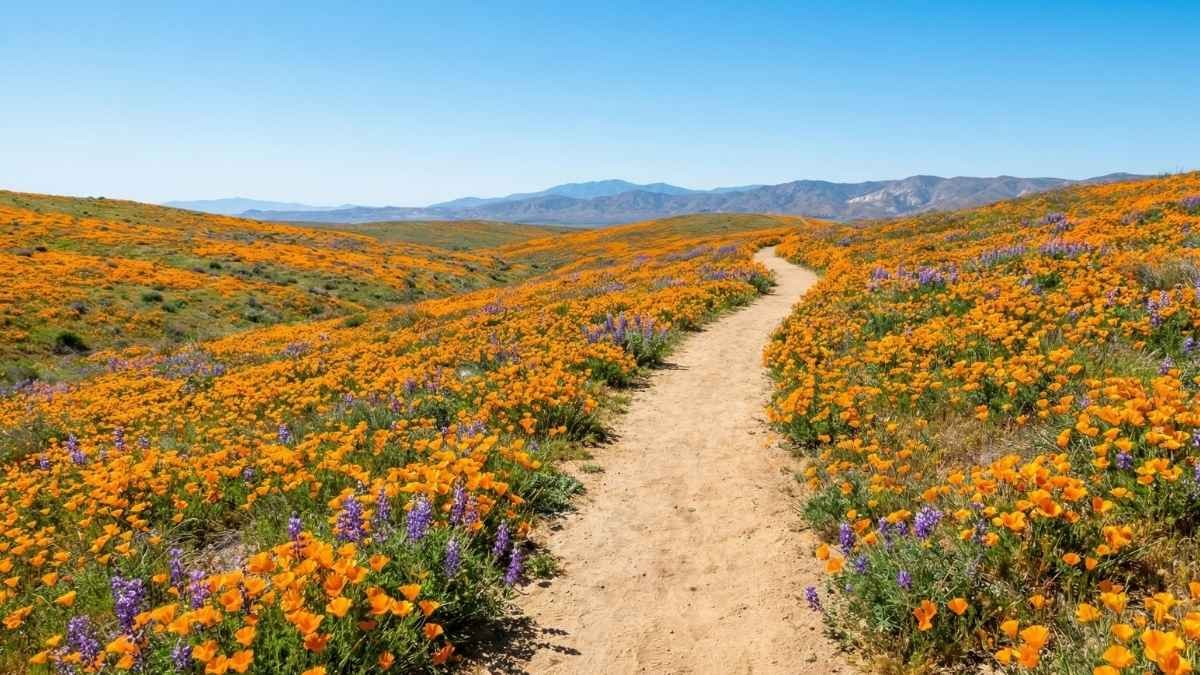
For most of the year, this stretch of high desert feels stark and windswept. Then, almost without warning, the land erupts into color. Hills roll endlessly in shades of electric orange, broken only by purple lupine and soft yellow coreopsis. The trail itself is gentle, but the scale of the bloom makes every step feel cinematic.
What makes this trail stand out is how dense and uninterrupted the wildflowers can be during peak season. There are moments when the horizon looks painted rather than real. Even seasoned hikers often slow down here—not from difficulty, but from sheer visual overload.
Timing is everything. Miss the window by a week, and the magic fades fast. Catch it right, and it becomes one of the most iconic desert bloom experiences anywhere in the U.S.
Good to know
- Best months: Mid-March to early April
- Bloom window: ~2–3 weeks (rain-dependent)
- Difficulty: Easy
- Trail length: ~8 miles (network of loops)
- Crowds: High on weekends (arrive early)
- Elevation: ~3,000 feet
2. Carrizo Plain National Monument – Wallace Creek Trail
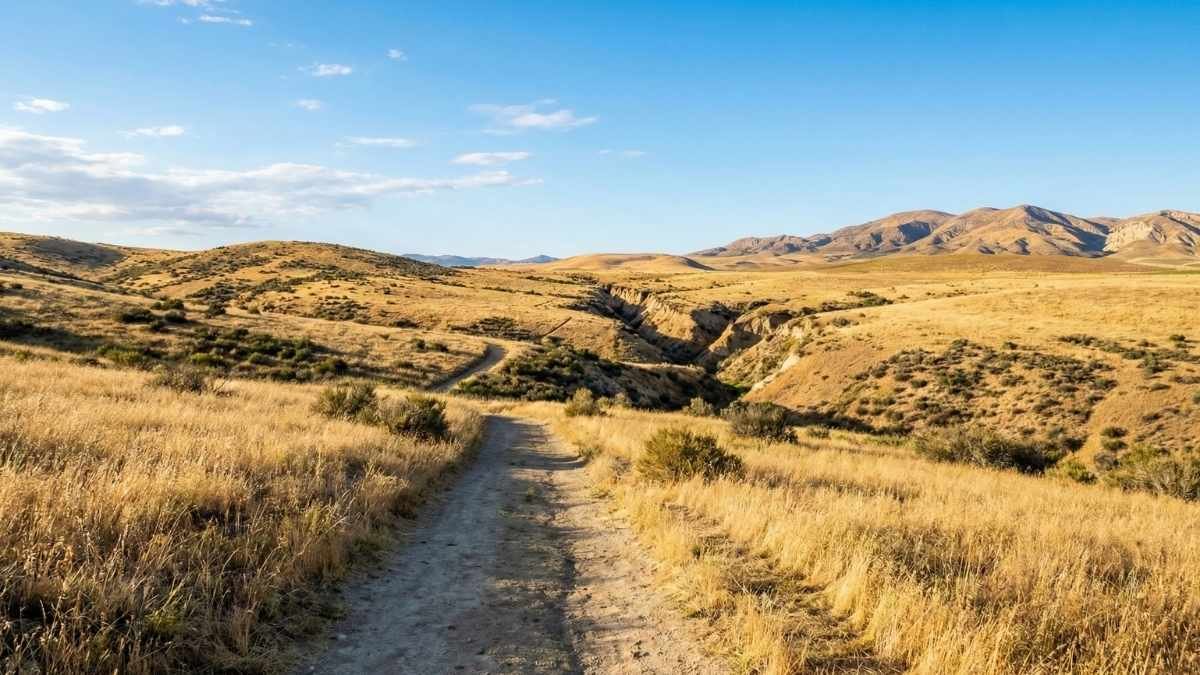
Carrizo Plain doesn’t whisper when it blooms—it announces itself. Vast, open grasslands explode with color beneath a backdrop of the San Andreas Fault, creating one of the most surreal contrasts in the desert Southwest. The trail runs through a landscape that feels untouched, almost prehistoric.
Wildflowers here are less manicured and more raw and sprawling, stretching mile after mile with very little human intrusion. The isolation amplifies the experience. Silence, wind, and color dominate, making the hike feel immersive rather than curated.
This is one of those rare places where scale is the star. The flowers don’t just frame the trail—they swallow it whole.
Good to know
- Best months: Late March to mid-April
- Bloom window: ~2–3 weeks
- Difficulty: Easy to moderate
- Trail length: ~3.5 miles
- Crowds: Low to moderate
- Elevation: ~2,000 feet
- Facilities: Very limited (plan ahead)
3. Anza-Borrego Desert State Park – Borrego Palm Canyon Trail
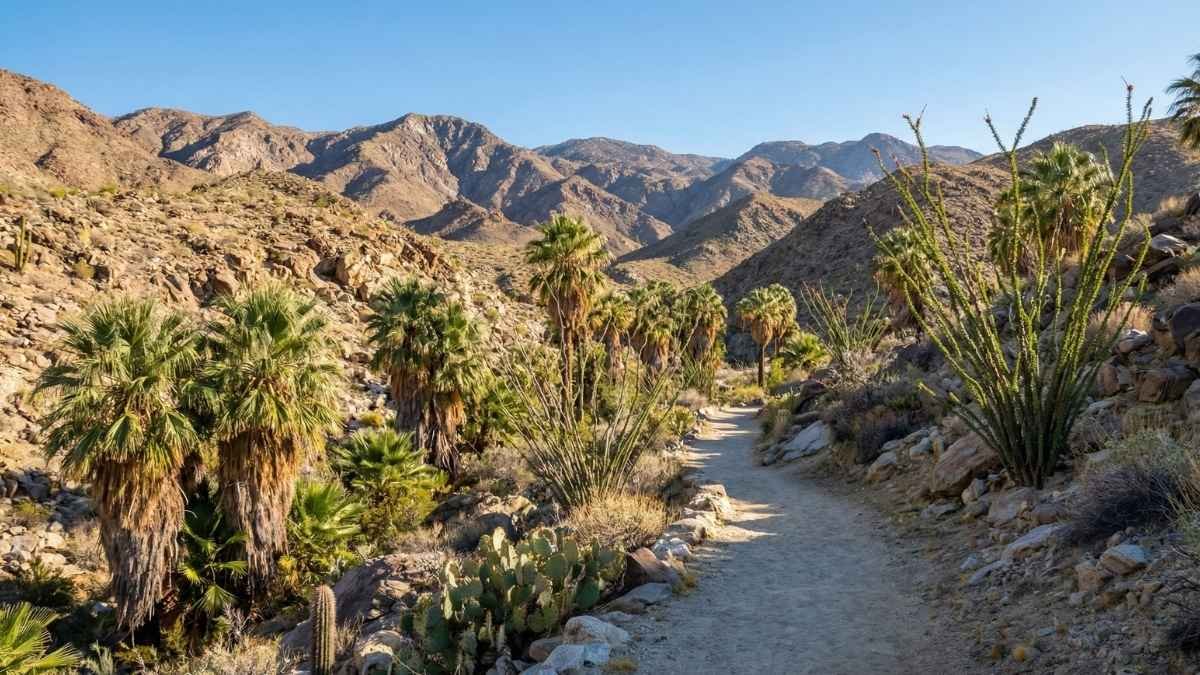
At first glance, the landscape feels harsh and sunbaked. Then color begins to appear—golden poppies, purple sand verbena, and soft white primrose threading through rocky canyon walls. The transformation feels almost impossible given the dryness of the terrain.
The trail slowly pulls hikers deeper into the canyon, where desert blooms mix with rushing water and native palms. That contrast—flowers against stone, green against dust—is what makes this trail unforgettable during peak bloom.
It’s not just about flowers here; it’s about layers of life suddenly revealing themselves in a place that usually feels stripped bare.
Good to know
- Best months: Late February to March
- Bloom window: ~2–3 weeks
- Difficulty: Moderate
- Trail length: ~3 miles round trip
- Crowds: Moderate to high during bloom
- Elevation gain: ~500 feet
- Bonus: Seasonal waterfall after rain
4. Death Valley National Park – Badwater Basin Wildflower Wall
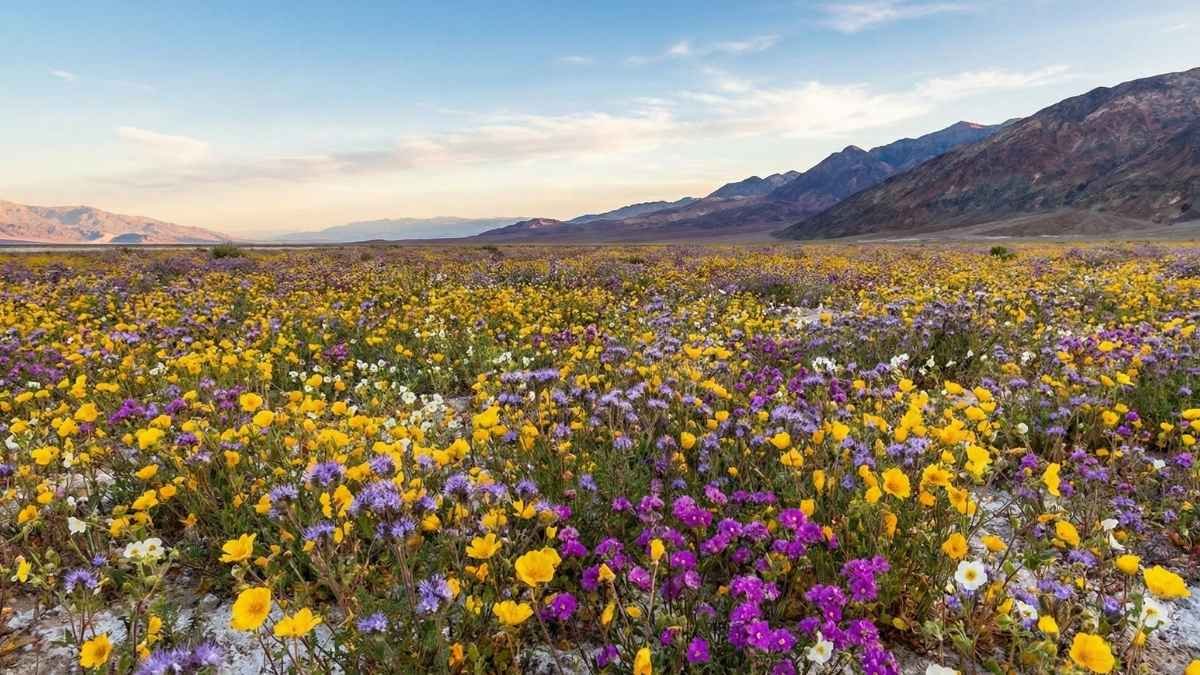
Death Valley isn’t supposed to bloom—and that’s exactly why it feels so shocking when it does. During rare superblooms, life pushes through salt flats and cracked earth in ways that feel almost rebellious.
The trail near Badwater Basin stays relatively flat, but the setting is unmatched. Flowers emerge against a backdrop of the lowest elevation in North America, turning one of the planet’s most extreme environments into something unexpectedly delicate.
Because these blooms depend on perfect conditions, catching them feels like stumbling upon a secret the desert doesn’t share often.
Good to know
- Best months: February to early March
- Bloom window: 1–3 weeks (highly unpredictable)
- Difficulty: Easy
- Trail length: Variable, informal walking paths
- Crowds: Moderate during bloom announcements
- Elevation: –282 feet
- Important: Extreme heat outside bloom season
5. Picacho Peak State Park – Hunter Trail
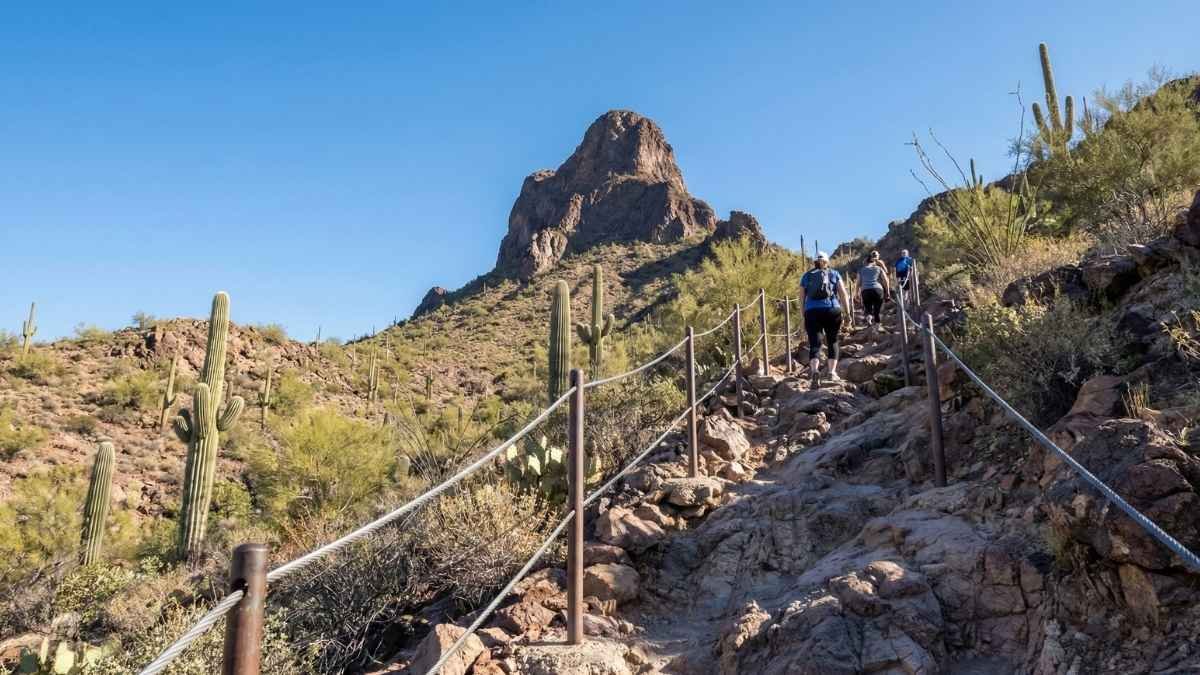
This trail delivers drama even without flowers—but during bloom season, it becomes something else entirely. Bright wildflowers cling to steep slopes beneath a towering volcanic peak, adding bursts of color to an already striking landscape.
The hike is physically demanding, using cables and steep ascents, which makes the blooms feel earned rather than handed out. Each pause for breath doubles as a moment to take in fields of color stretching across the desert below.
It’s one of the few bloom trails where adrenaline and beauty share equal billing.
Good to know
- Best months: February to early March
- Bloom window: ~2–3 weeks
- Difficulty: Strenuous
- Trail length: ~3 miles round trip
- Crowds: Moderate
- Elevation gain: ~1,600 feet
- Footwear: Grippy hiking shoes are strongly recommended
6. Walker Canyon – Lake Elsinore Wildflower Trail
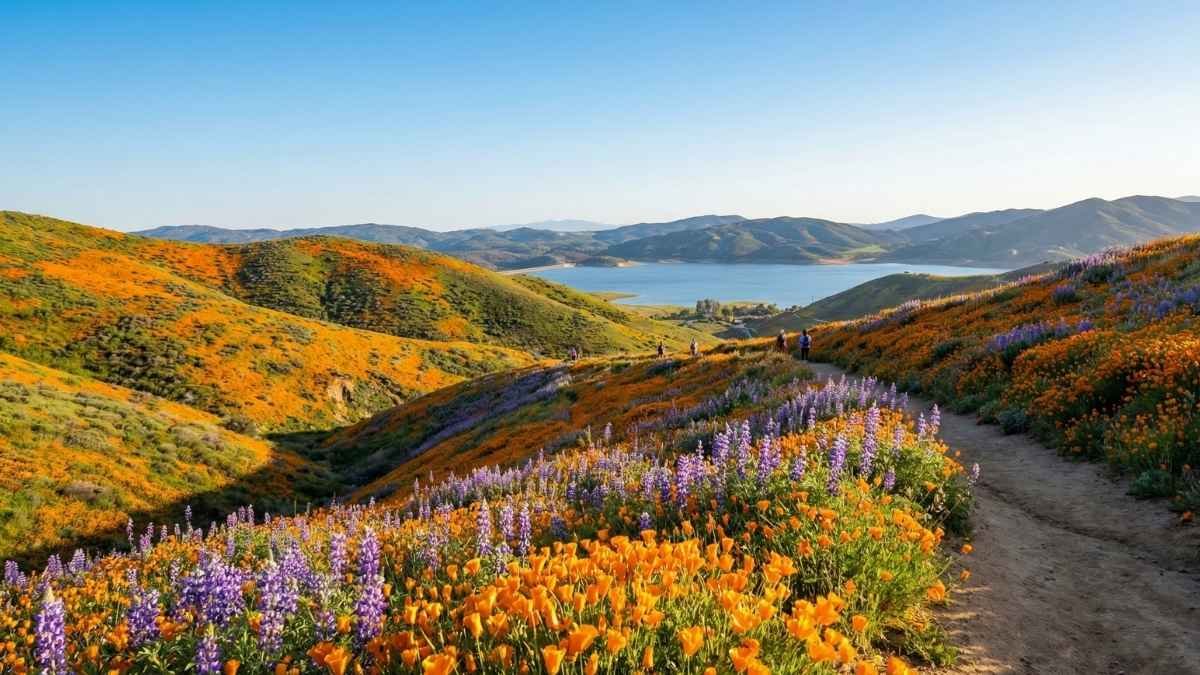
Walker Canyon is famous for how suddenly it changes. Most of the year, the hills feel muted and dry. Then the poppies arrive, carpeting entire slopes in blazing orange that glow under open skies. The trail climbs just enough to give sweeping views of the bloom below, making every turn feel rewarding.
What sets this trail apart is visibility. The flowers don’t hide in pockets—they dominate the landscape, turning the canyon into a living panorama. During peak bloom, the color feels almost continuous, flowing from ridge to ridge.
Because of its accessibility, timing matters here. Early mornings offer the calmest experience before foot traffic picks up.
Good to know
- Best months: Late March to early April
- Bloom window: ~2–3 weeks
- Difficulty: Moderate
- Trail length: ~4 miles round trip
- Crowds: High during peak bloom
- Elevation gain: ~800 feet
- Tip: Weekdays are far quieter
7. Superstition Mountains – Peralta Trail
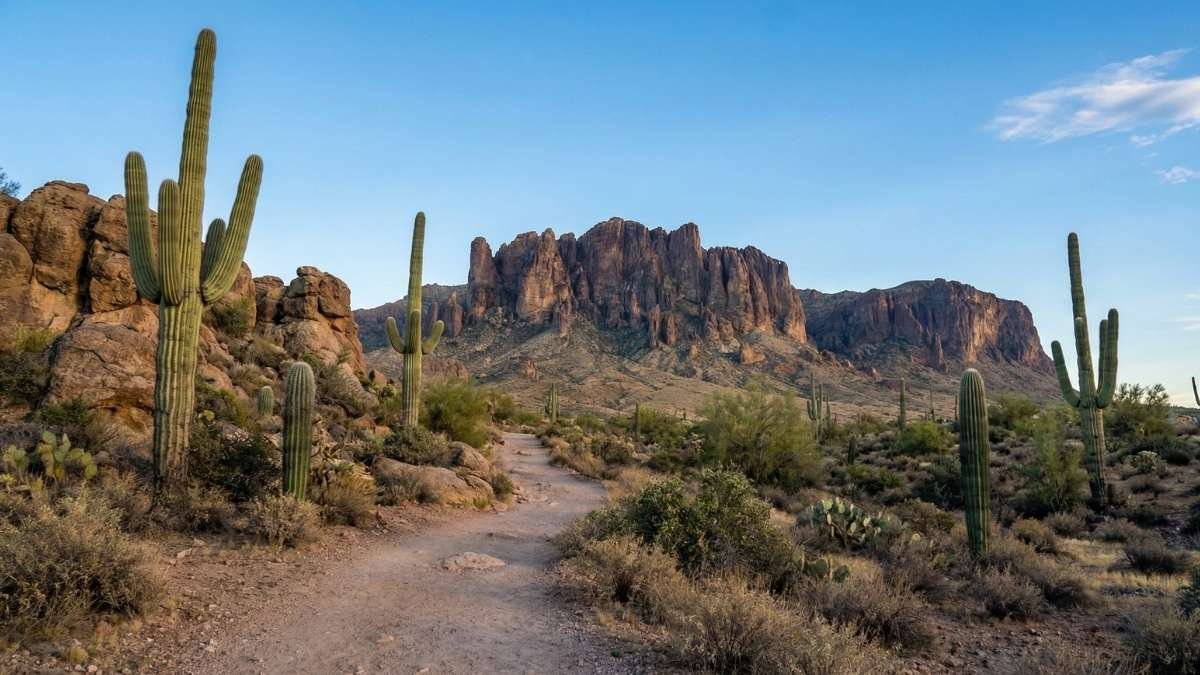
The Peralta Trail blends rugged desert scenery with a surprisingly rich bloom season. As the trail climbs, wildflowers line the path—yellow brittlebush, purple lupine, and red chuparosa—framed by jagged volcanic cliffs.
Unlike flatter bloom trails, this one feels dynamic. Elevation changes reveal new colors at different points, and the shifting views keep the hike engaging from start to finish. The desert here doesn’t overwhelm—it unfolds gradually.
By the time the trail opens to wide vistas, the bloom feels like a reward layered onto already dramatic terrain.
Good to know
- Best months: February to March
- Bloom window: ~2–3 weeks
- Difficulty: Moderate
- Trail length: ~4.5 miles round trip
- Crowds: Moderate
- Elevation gain: ~1,300 feet
- Weather note: Can warm up quickly mid-day
8. Joshua Tree National Park – Bajada Nature Trail
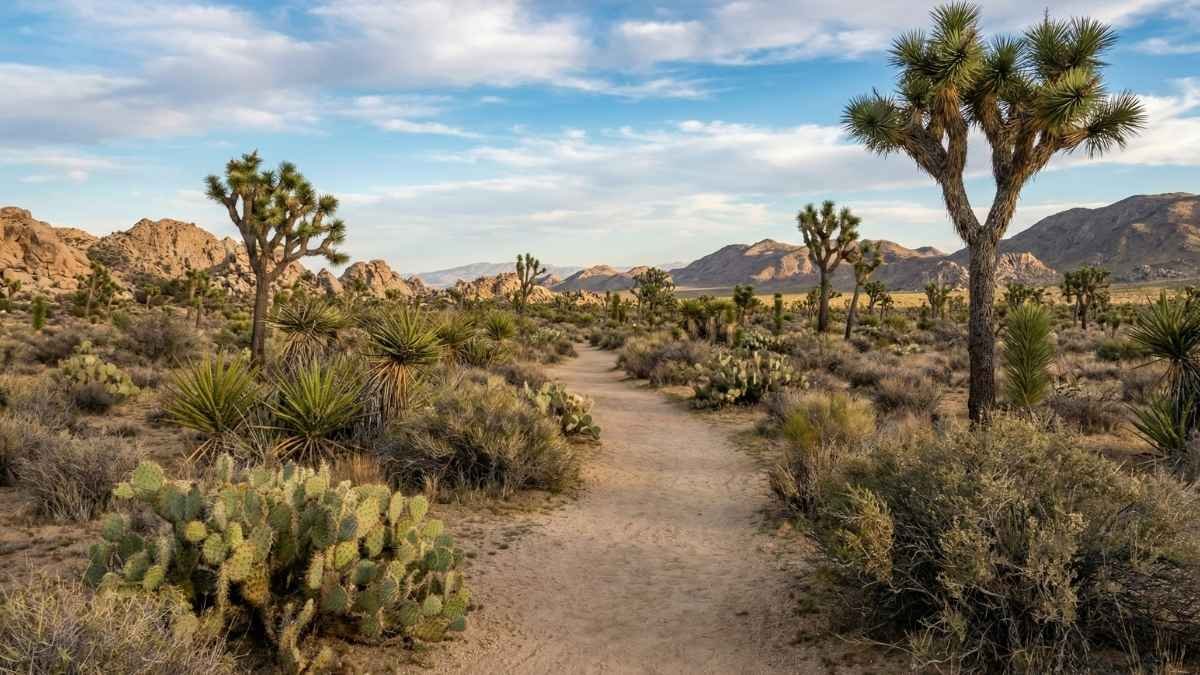
Joshua Tree’s bloom is quieter, but no less captivating. Instead of massive fields, this trail offers intimate bursts of color scattered among iconic Joshua trees and rounded boulders.
Wildflowers appear in clusters—delicate purples, whites, and yellows that feel carefully placed rather than overwhelming. The contrast between soft petals and harsh granite gives the trail its charm.
It’s a place where slowing down pays off. The beauty reveals itself close to the ground, not on the horizon.
Good to know
- Best months: March to early April
- Bloom window: ~2–3 weeks
- Difficulty: Easy
- Trail length: ~0.5 mile loop
- Crowds: Moderate
- Elevation: ~3,000 feet
- Best time: Late afternoon light
9. Saguaro National Park (East) – Freeman Homestead Trail
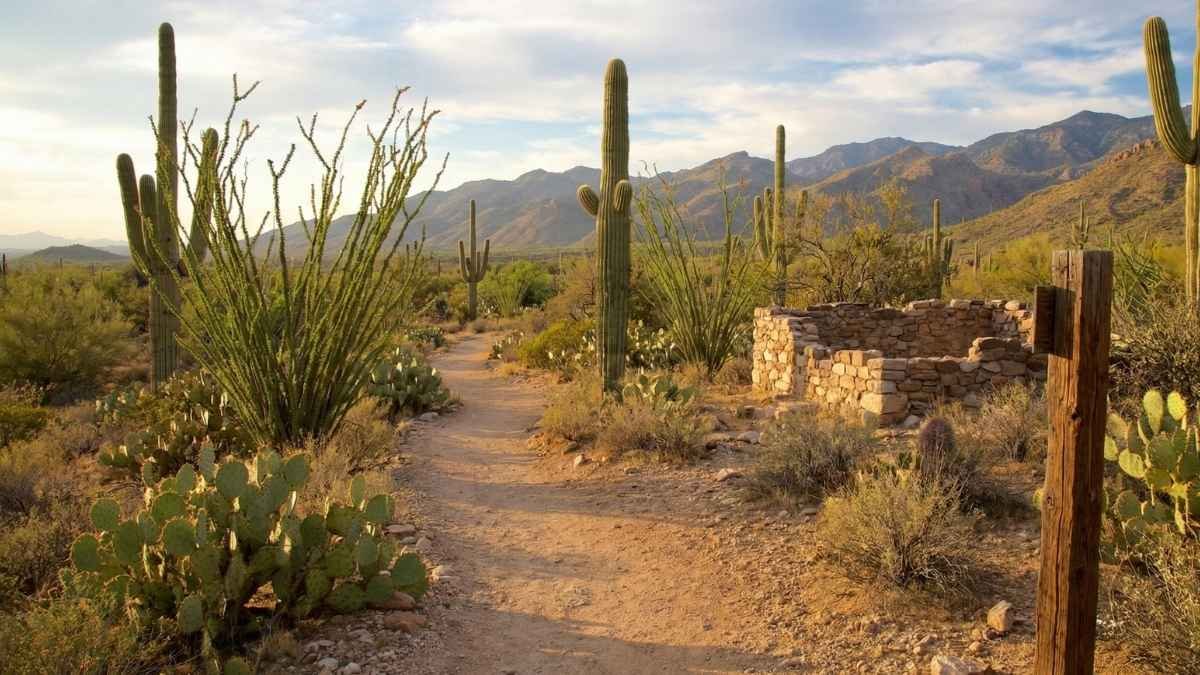
Here, wildflowers bloom beneath towering saguaros, creating a scene that feels distinctly Sonoran. The flowers don’t compete with the cacti—they accent them, filling the space between towering silhouettes with color.
The trail is gentle and open, allowing views to stretch far across the desert. Spring brings pops of orange, purple, and white, turning the path into a slow, steady reveal rather than a single grand moment.
It’s an ideal trail for experiencing desert bloom without steep climbs or technical terrain.
Good to know
- Best months: February to March
- Bloom window: ~2–3 weeks
- Difficulty: Easy
- Trail length: ~1 mile
- Crowds: Low to moderate
- Elevation: ~2,600 feet
- Bonus: Excellent bird activity during bloom
10. Red Rock Canyon State Park – Hagen Canyon Trail
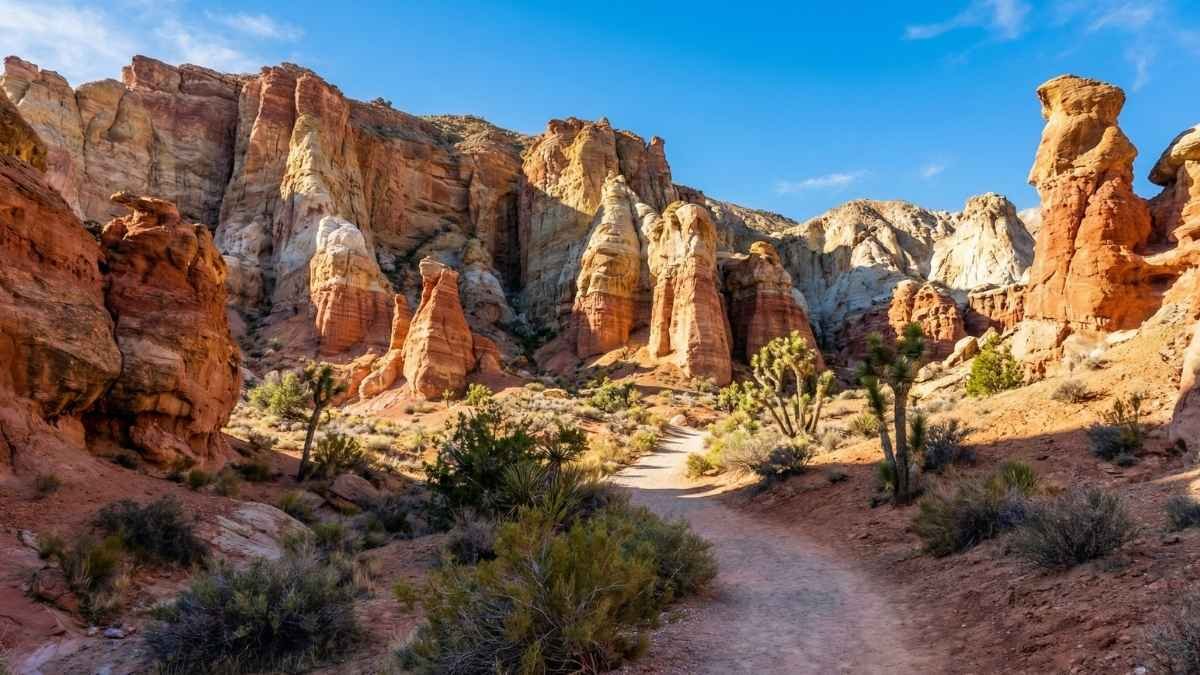
This trail delivers a striking mix of color and geology. Wildflowers spread across the canyon floor while towering red cliffs rise sharply above, creating one of the most photogenic bloom settings in the desert.
The flowers here feel bold against the landscape—bright yellows and purples that stand out sharply against rust-colored rock. Every section of the trail offers a different angle, keeping the experience visually fresh.
It’s less famous than many bloom hotspots, which adds to its appeal during peak weeks.
Good to know
- Best months: March to April
- Bloom window: ~2–3 weeks
- Difficulty: Easy to moderate
- Trail length: ~2 miles
- Crowds: Low
- Elevation: ~2,400 feet
- Photography: Strong contrast and wide-open light
11. Mojave National Preserve – Teutonia Peak Trail
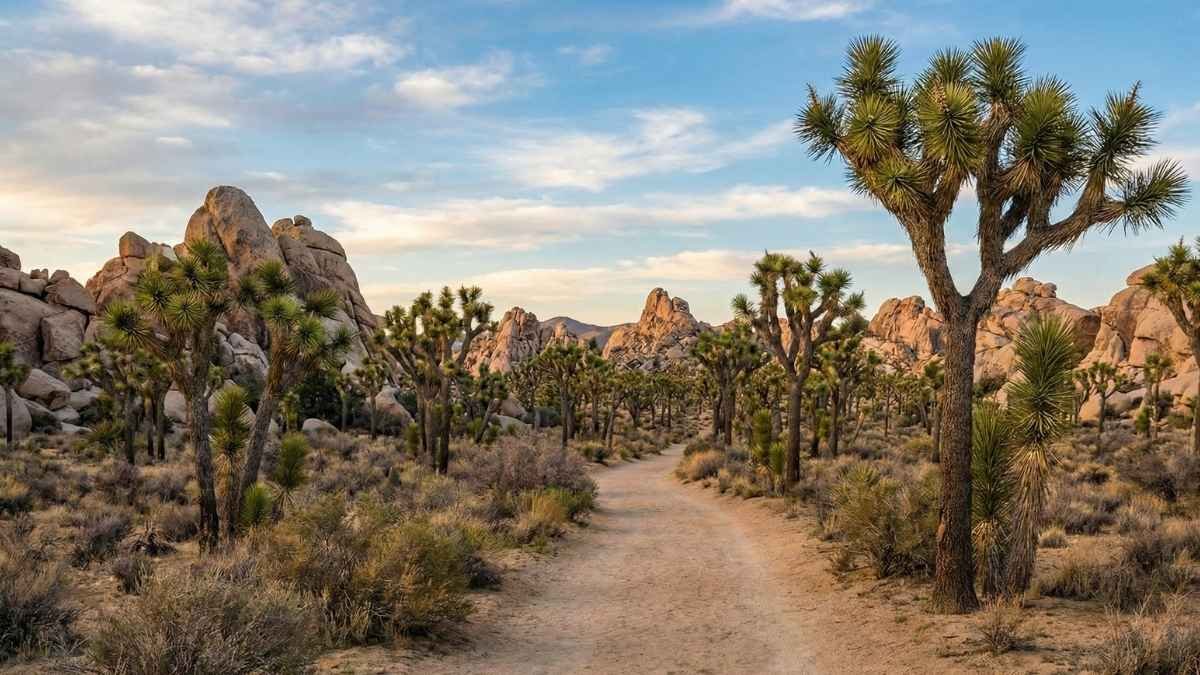
Teutonia Peak doesn’t rely on spectacle alone. Instead, it offers a slower, more layered bloom experience set among one of the largest Joshua tree forests on the planet. When wildflowers appear, they weave through volcanic rock and ancient trees, adding color without stealing the spotlight.
The trail climbs steadily, and with each gain in elevation, the scenery shifts. Flowers cluster in pockets—yellow desert dandelions, white primrose, soft pink phacelia—appearing where rain lingered just long enough. The restraint is part of the appeal. Nothing feels forced or overcrowded.
At the summit, the desert stretches endlessly in all directions, making the short-lived bloom below feel even more precious.
Good to know
- Best months: March to early April
- Bloom window: ~2–3 weeks
- Difficulty: Moderate
- Trail length: ~3 miles round trip
- Crowds: Low
- Elevation gain: ~700 feet
- Conditions: Wind can be strong near the top
12. Organ Pipe Cactus National Monument – Desert View Trail
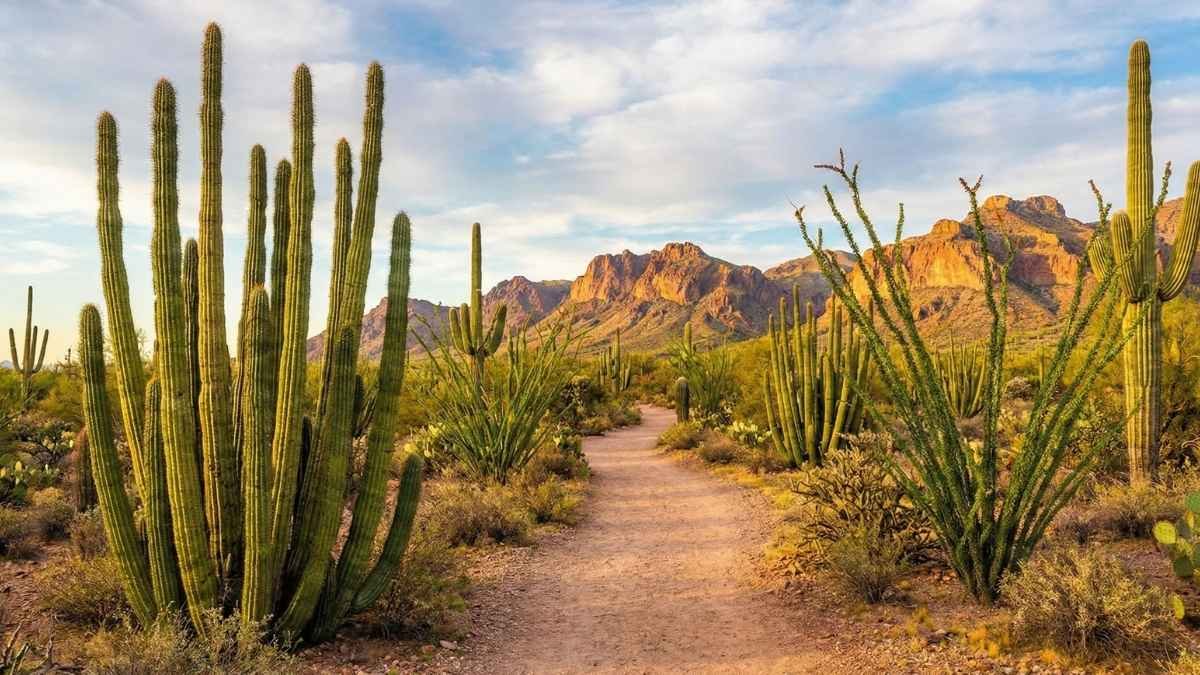
This trail delivers something rare: a bloom season shaped as much by cactus flowers as by wildflowers. Along the path, brittlebrush and poppies share space with organ pipe cactus blooms, creating layers of color at multiple heights.
The trail itself is unhurried and open, encouraging pauses rather than pushing forward. Color appears gradually—first at ground level, then climbing upward as cacti begin to flower. The effect feels intentional, almost staged, yet entirely natural.
Because of its remote location, the experience stays peaceful even at peak bloom. The quiet becomes part of what makes the short season linger in memory.
Good to know
- Best months: February to March
- Bloom window: ~2–3 weeks
- Difficulty: Easy
- Trail length: ~1 mile
- Crowds: Very low
- Elevation: ~1,700 feet
- Wildlife: Active during early mornings