13 State Park Trails Better Than National Parks (Without the Crowds)

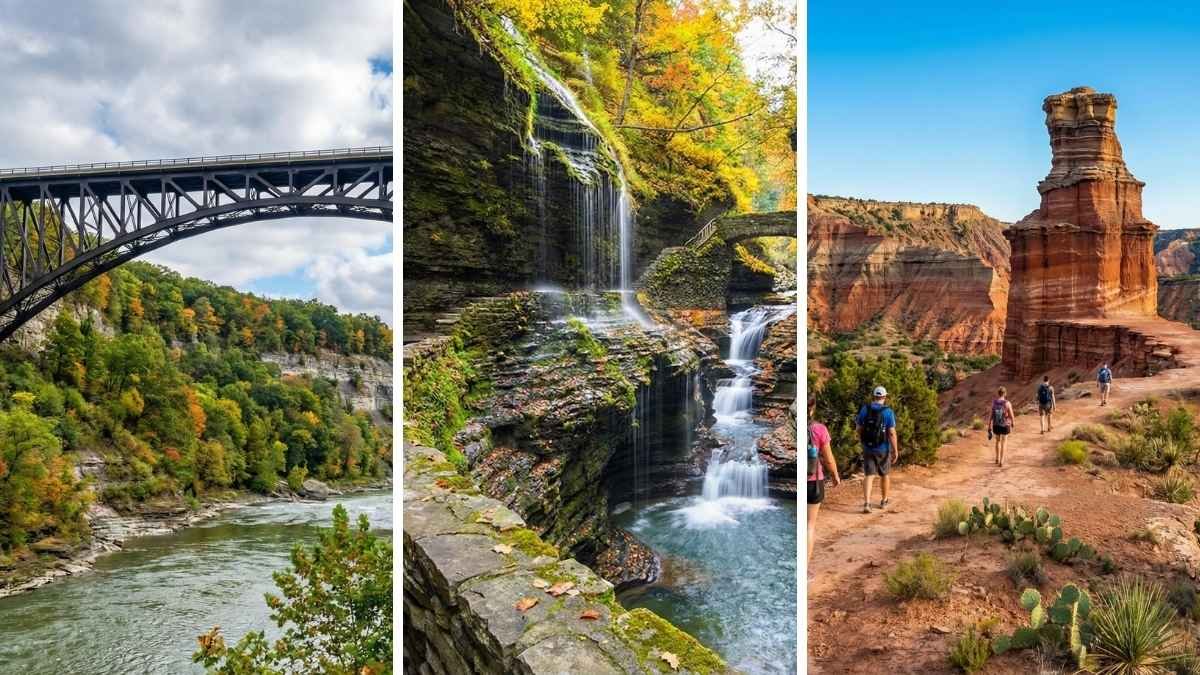
Sunrise spills across quiet canyons, waterfalls whisper through hidden gorges, and rugged cliffs stretch endlessly under a sky that feels impossibly wide.
Out here, the trails aren’t marked by crowds or selfie sticks—they’re measured in the rhythm of your own footsteps and the subtle shifts of light across rock and forest. Every turn brings a new scene that surprises and humbles, from secluded oases to towering spires, all demanding attention without shouting for it.
For hikers craving wild beauty without the shoulder-to-shoulder chaos, these trails promise both adventure and calm, a chance to experience nature on your own terms.
1. White Domes Loop – Valley of Fire State Park, Nevada
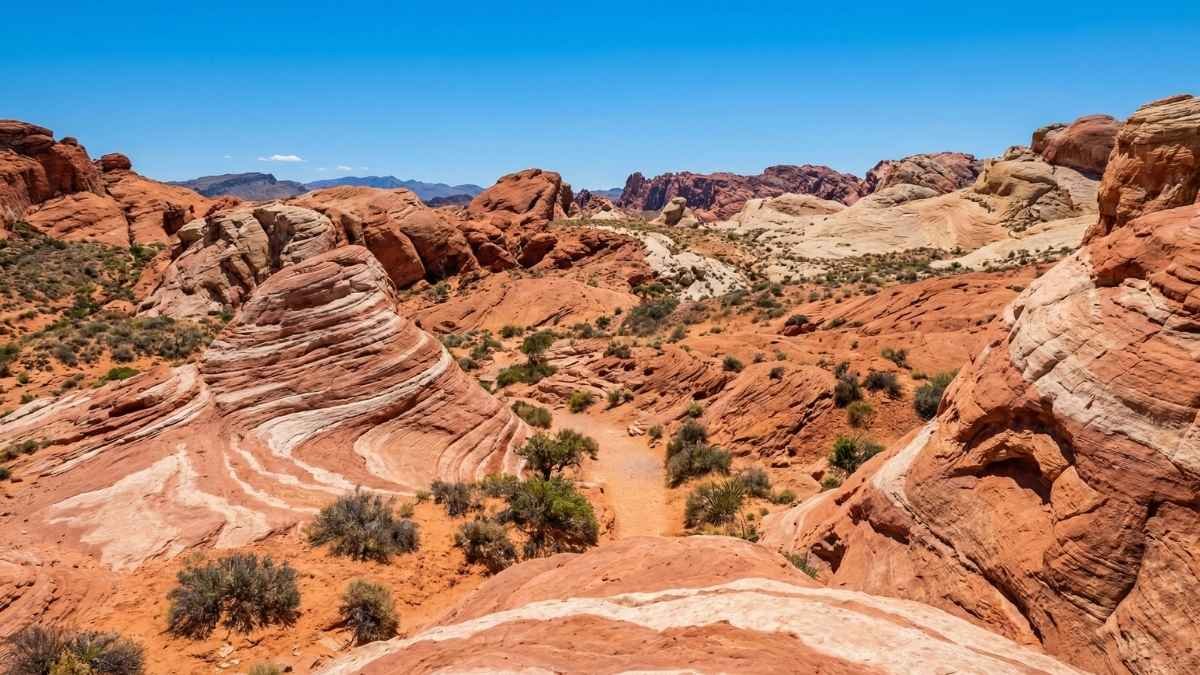
White Domes Loop feels like walking through a living geology lesson that somehow forgot to rope itself off for tour buses. The trail weaves through blazing red sandstone, narrow slot-like passages, and rolling slickrock that changes color with every shift of sunlight. One moment it’s Martian red, the next it’s pale cream or dusty pink. It delivers that dramatic, otherworldly scenery people chase in famous desert parks—without the noise or traffic.
What makes this loop stand out is how much variety it packs into a short distance. Dunes give way to rock scrambles, which then open into wide desert basins. There’s even an old movie set ruin tucked into the landscape, adding a strange, cinematic pause along the way. It never feels repetitive, and the terrain keeps attention locked in from start to finish.
Despite its visual punch, the trail remains approachable for most hikers with basic fitness. That balance—high payoff, low crowd pressure—is exactly why it consistently outshines more famous desert hikes nearby.
Other useful info:
- Best months: October–April
- Distance: ~1.2 miles loop
- Difficulty: Moderate
- Highlights: Red rock formations, slot canyons, desert colors
- Good to know: Summer heat is extreme; midday hikes are risky
2. Rim Loop Trail – Dead Horse Point State Park, Utah
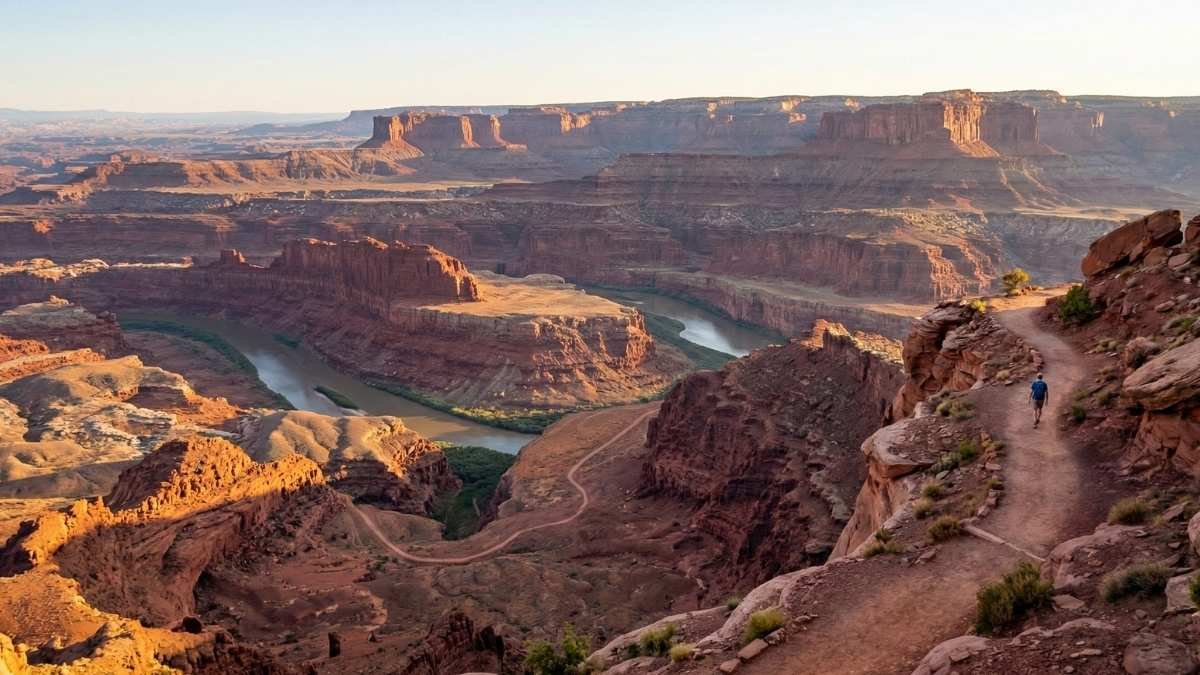
The Rim Loop Trail delivers one of the most jaw-dropping canyon views in the American Southwest, yet somehow stays calmer than nearby headline parks. The trail traces the edge of sheer cliffs high above the Colorado River, offering constant, uninterrupted overlooks that feel vast and cinematic without requiring technical hiking.
What sets this trail apart is its rhythm. The path stays mostly flat and forgiving, allowing the scenery to do the heavy lifting. Every bend reveals a new angle of layered canyons, distant mesas, and river bends far below. Sunrise and sunset here feel almost unreal, with shadows stretching across the landscape like moving art.
Unlike more famous canyon hikes, there’s space to stop, breathe, and actually take it all in. No rushing, no jostling for photos—just wide-open silence and scale that sneaks up on you.
Other useful info:
- Best months: March–May, September–October
- Distance: ~5 miles (can be shortened)
- Difficulty: Easy to moderate
- Highlights: Canyon overlooks, Colorado River views
- Good to know: Wind can be strong along exposed sections
3. Borrego Palm Canyon Trail – Anza-Borrego Desert State Park, California
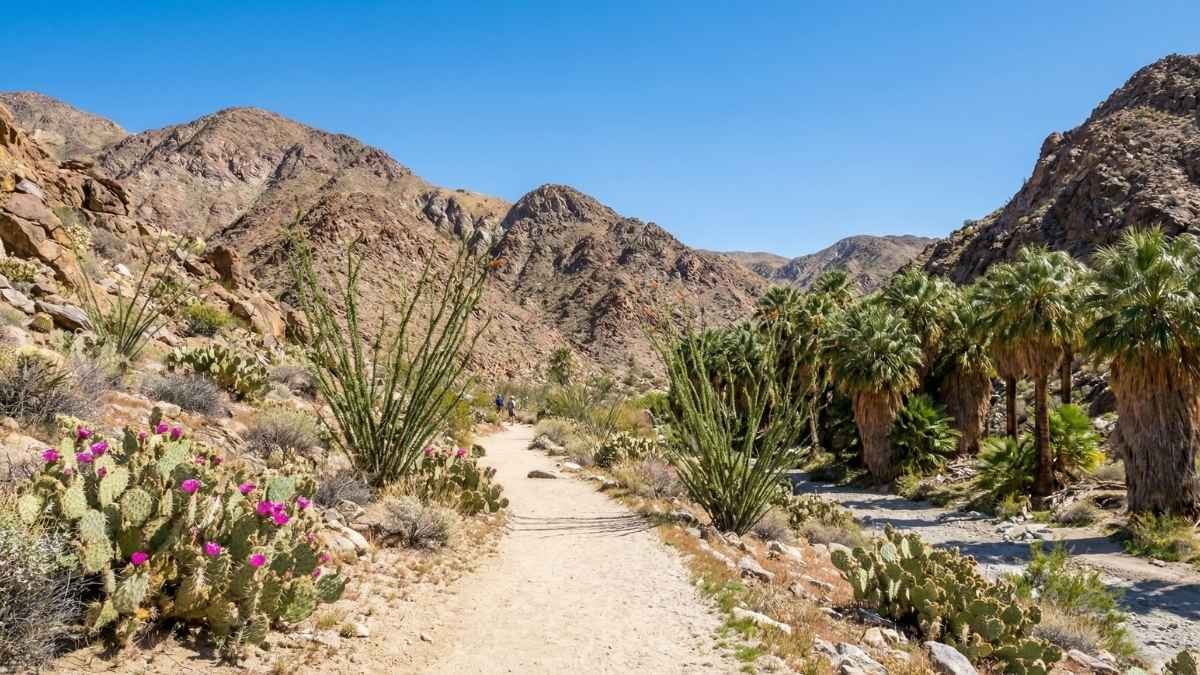
Borrego Palm Canyon feels like a secret the desert keeps well hidden. The trail begins in classic open desert—wide skies, gravel washes, rugged hills—before slowly pulling hikers into a narrowing canyon that changes everything. As elevation rises, rock walls close in and the air cools just enough to signal something unexpected ahead.
That surprise comes in the form of a lush palm oasis, complete with flowing water and towering native fan palms. The contrast is striking and unforgettable. One moment it’s raw desert, the next it feels almost tropical. It’s the kind of place that makes the hike feel earned rather than staged.
The trail’s steady incline keeps it engaging without being overwhelming, making it accessible while still rewarding. It’s proof that desert hiking doesn’t have to mean endless sameness.
Other useful info:
- Best months: November–March
- Distance: ~3 miles round trip
- Difficulty: Moderate
- Highlights: Palm oasis, canyon walls, desert wildlife
- Good to know: Flash floods possible after heavy rain
4. Lake of the Clouds Escarpment Trail – Porcupine Mountains Wilderness State Park, Michigan
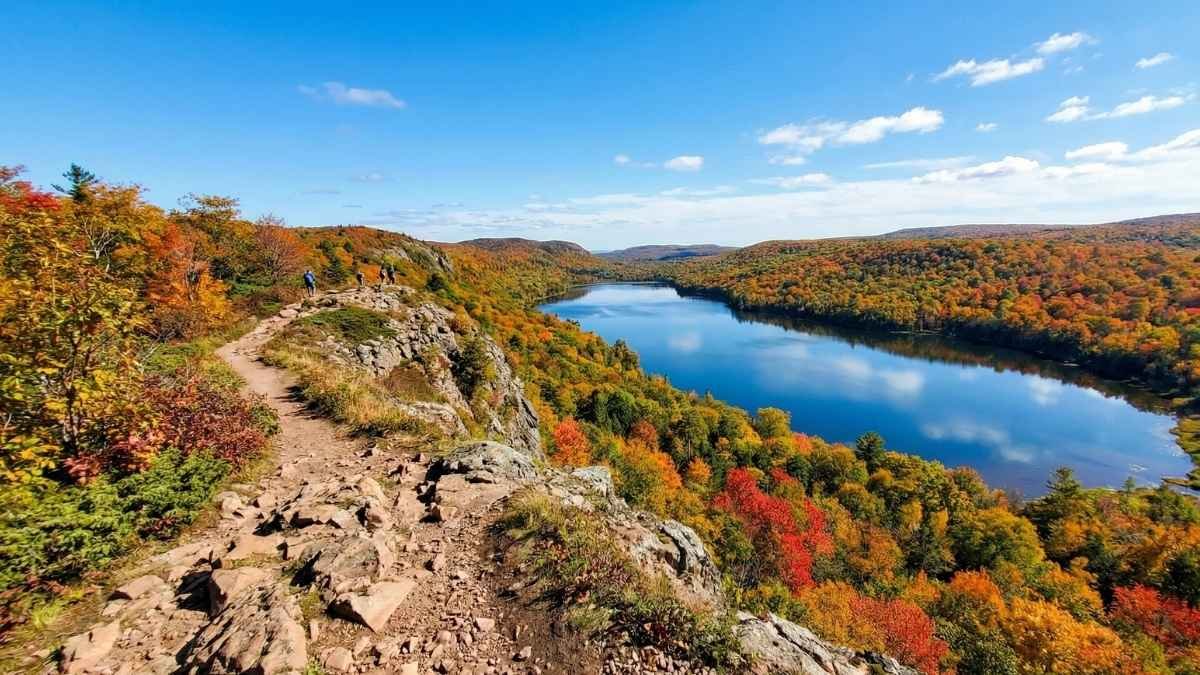
This trail delivers the kind of wild, untamed scenery people expect deep in national parks, yet it unfolds quietly along Lake Superior’s high escarpment. The route hugs dramatic cliffs overlooking dense forest and shimmering water far below, creating a sense of scale that feels both peaceful and powerful.
The trail doesn’t rush its rewards. Views appear gradually, framed by old-growth trees and rocky outcrops. When the lake finally opens up beneath you, it feels earned—and the silence up there is just as impressive as the view itself.
This is a trail for hikers who appreciate mood as much as mileage. Fog rolling off the lake, wind moving through the trees, and long stretches without another soul nearby make it feel deeply immersive.
Other useful info:
- Best months: June–September
- Distance: ~4 miles one way
- Difficulty: Moderate
- Highlights: Lake Superior views, cliffs, wilderness feel
- Good to know: Weather can change quickly near the lake
5. Black Elk Peak via Cathedral Spires – Custer State Park, South Dakota
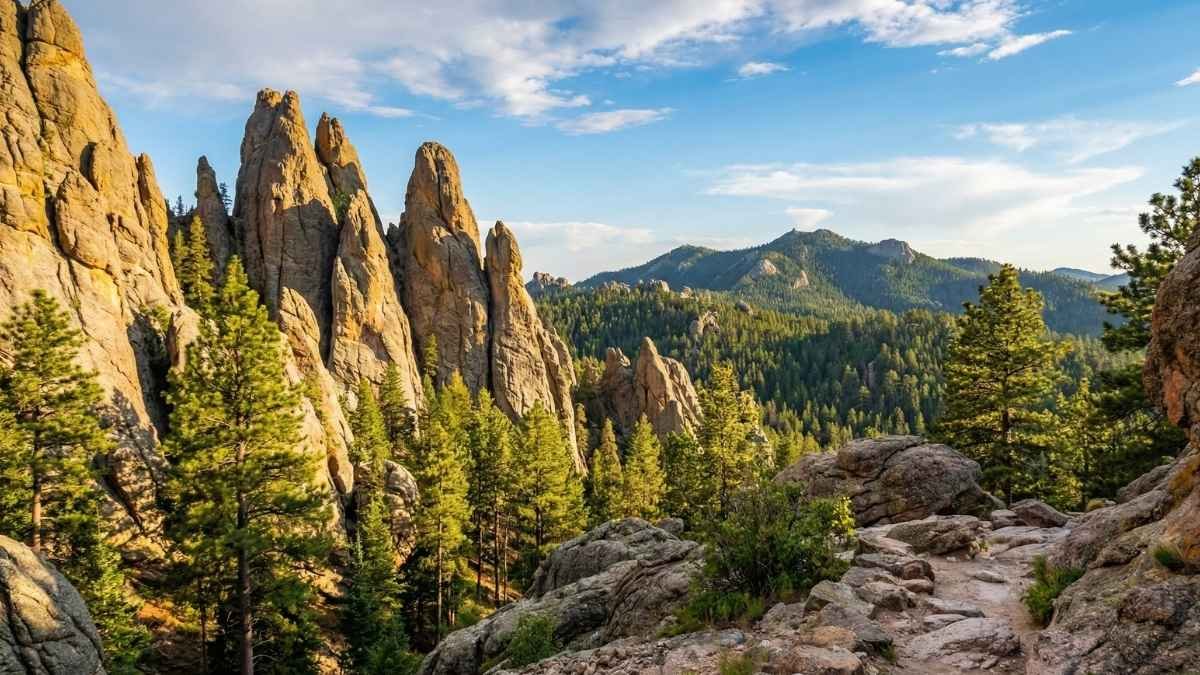
Black Elk Peak via Cathedral Spires blends dramatic rock formations with classic mountain payoff. The trail winds through narrow granite spires that feel almost architectural, forcing the path to twist and climb in playful, engaging ways. It’s visually striking long before reaching the summit.
As elevation increases, forests thin out and views expand across the Black Hills. The final stretch leads to a historic stone fire tower at the summit, where 360-degree views stretch across multiple states on clear days. It’s a powerful finish that rivals far more famous mountain peaks.
What really elevates this hike is how dynamic it feels. There’s constant change—rock corridors, forested stretches, exposed viewpoints—making every mile feel purposeful rather than transitional.
Other useful info:
- Best months: May–October
- Distance: ~6.5 miles round trip
- Difficulty: Moderate to strenuous
- Highlights: Granite spires, summit views, fire tower
- Good to know: Afternoon storms are common in summer
6. Old Man’s Cave to Cedar Falls – Hocking Hills State Park, Ohio
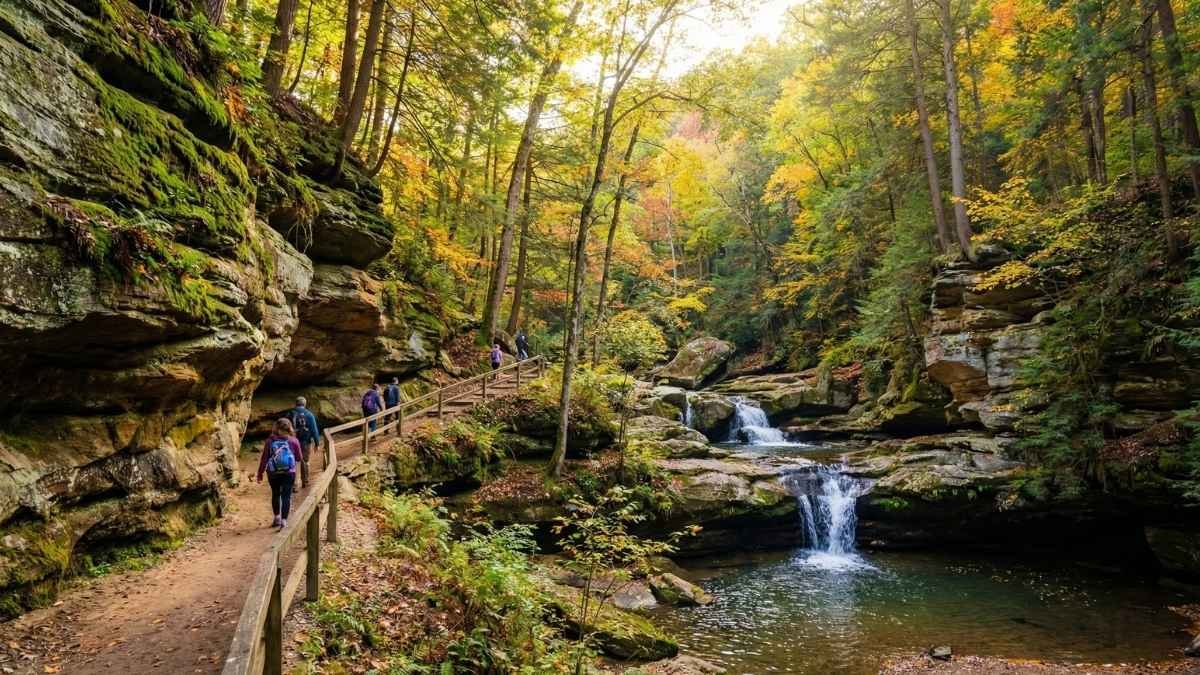
This trail feels like stepping into a hidden pocket of the Midwest that most people never expect. The path winds through a deep gorge carved by water over centuries, with towering cliffs, recessed caves, and cascading waterfalls appearing one after another. It’s not a single “wow” moment—it’s a continuous series of them.
What makes this hike special is how intimate it feels. Moss-covered rock walls narrow the world around you, muting outside noise and pulling attention toward the sound of flowing water and footsteps on stone. The transitions between caves, bridges, and waterfalls keep the experience moving without ever feeling rushed.
Despite its popularity on weekends, early mornings, and weekdays, this trail earns a spot among the best. It offers national-park-level scenery in a place many hikers underestimate.
Other useful info:
- Best months: April–October
- Distance: ~5 miles one way
- Difficulty: Moderate
- Highlights: Waterfalls, caves, stone bridges
- Good to know: Slippery after rain; sturdy shoes matter
7. Misery Ridge Loop – Smith Rock State Park, Oregon
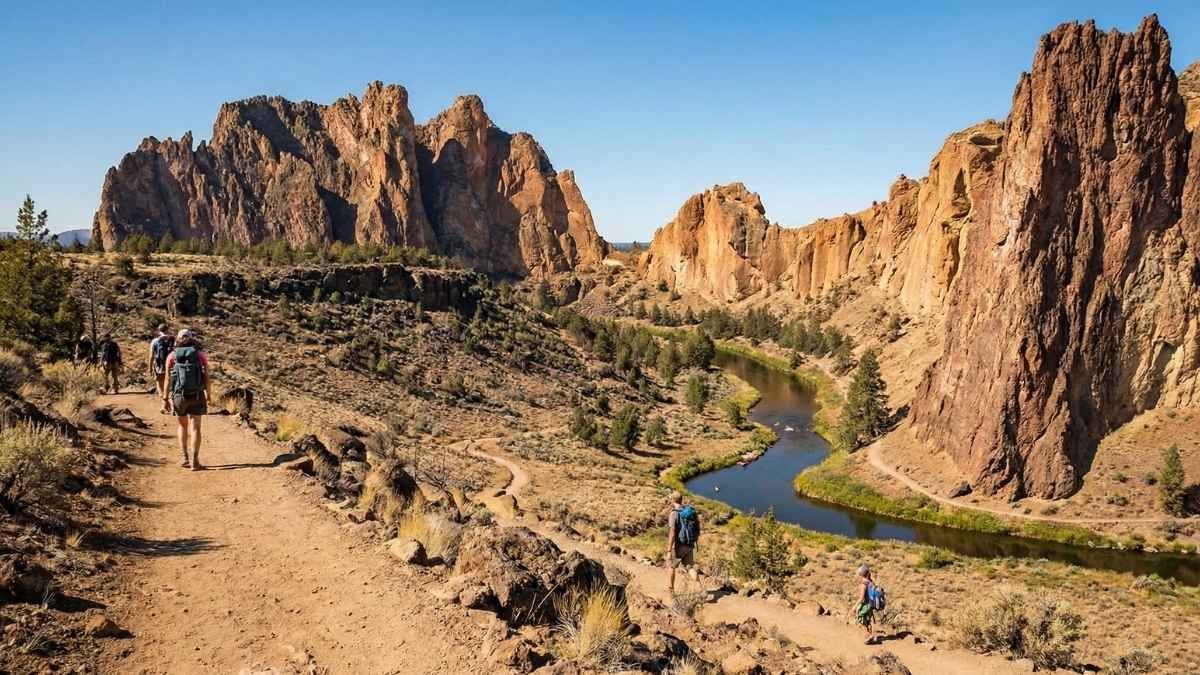
Misery Ridge doesn’t ease you in—and that’s exactly why it delivers. The climb starts fast and steep, gaining elevation quickly as the trail cuts into volcanic rock. Every switchback reveals more of the towering spires and deep river canyon below, turning effort directly into reward.
Once at the top, the trail shifts gears. Wide-open views stretch across central Oregon, with layers of rock formations standing like sculptures against the sky. The descent loops back through gentler terrain, balancing the intensity of the climb with time to absorb the landscape.
It’s a hike that feels bold and efficient—short, demanding, and unforgettable. For those who want dramatic scenery without an all-day commitment, this trail punches far above its weight.
Other useful info:
- Best months: March–May, September–October
- Distance: ~3.7 miles loop
- Difficulty: Strenuous
- Highlights: Canyon views, rock spires, elevation gain
- Good to know: Exposed sections—sun protection is essential
8. Algonquin Peak via Wright Peak – Adirondack Park, New York
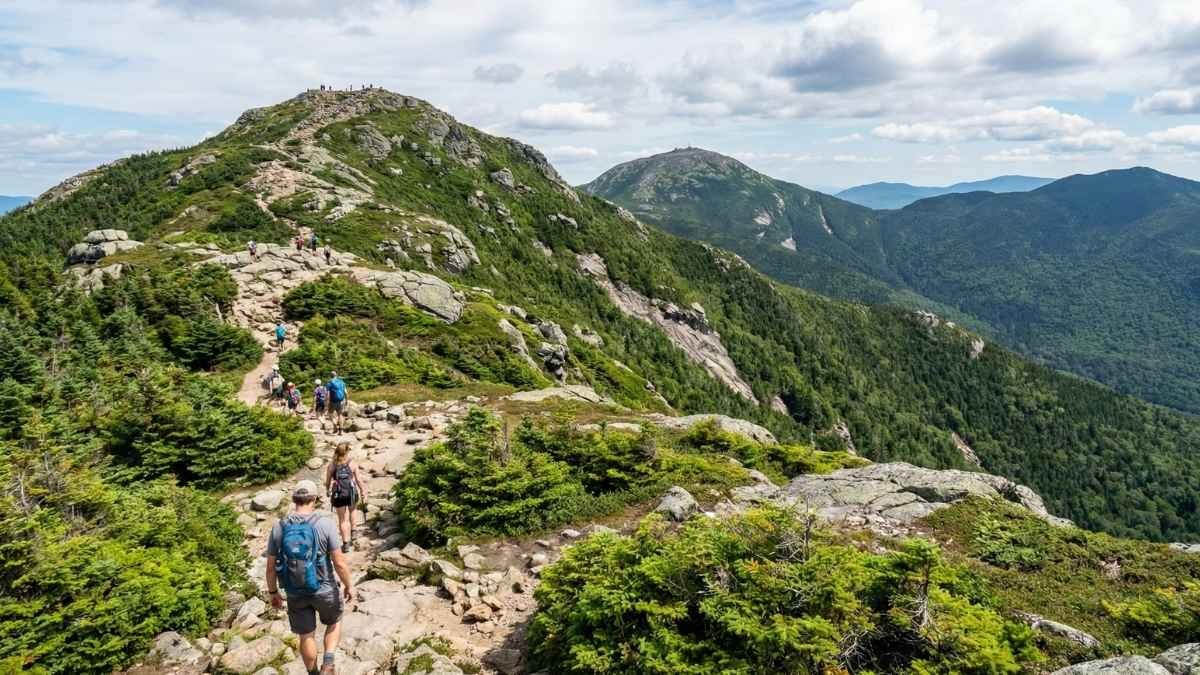
This route offers one of the most satisfying alpine experiences in the Northeast, combining rugged climbs with expansive mountain views. The ascent over Wright Peak introduces open rock slabs early, easing hikers into high-elevation terrain before pushing onward to Algonquin’s broad summit.
Above the treeline, the world opens up. Wind sweeps across exposed stone, and the views stretch endlessly across the Adirondacks. It feels remote and serious without being inaccessible—a hike that commands respect but rewards preparation.
What sets this trail apart is its atmosphere. Weather, light, and elevation create a constantly shifting mood, making the journey feel alive rather than static.
Other useful info:
- Best months: June–September
- Distance: ~8.4 miles round trip
- Difficulty: Strenuous
- Highlights: Alpine terrain, summit views, open slabs
- Good to know: Conditions change fast; layers are critical
9. Gorge Trail – Watkins Glen State Park, New York
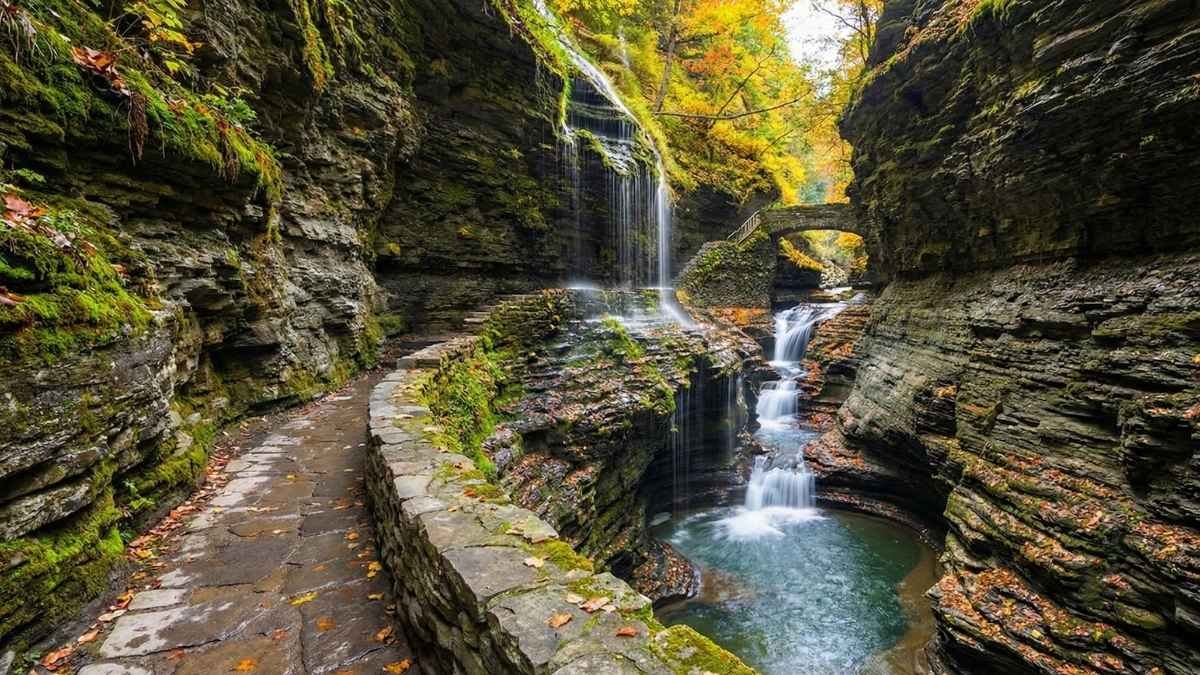
The Gorge Trail feels carefully crafted by nature and refined just enough to let hikers move through it safely. Stone staircases climb beside waterfalls, while sheer rock walls rise overhead, creating a narrow corridor of sound, mist, and movement.
Water flows everywhere—over ledges, beneath bridges, and through sculpted rock channels. Each section feels distinct, yet connected, making the hike feel cohesive rather than crowded with features.
Early morning walks reveal the trail at its best, when light filters into the gorge and the sound of water dominates the experience. It’s proof that shorter trails can still feel complete.
Other useful info:
- Best months: May–October
- Distance: ~1.5 miles one way
- Difficulty: Moderate
- Highlights: Waterfalls, stone bridges, narrow gorge
- Good to know: Closed in winter due to ice
10. Gorge Trail – Fall Creek Falls State Park, Tennessee
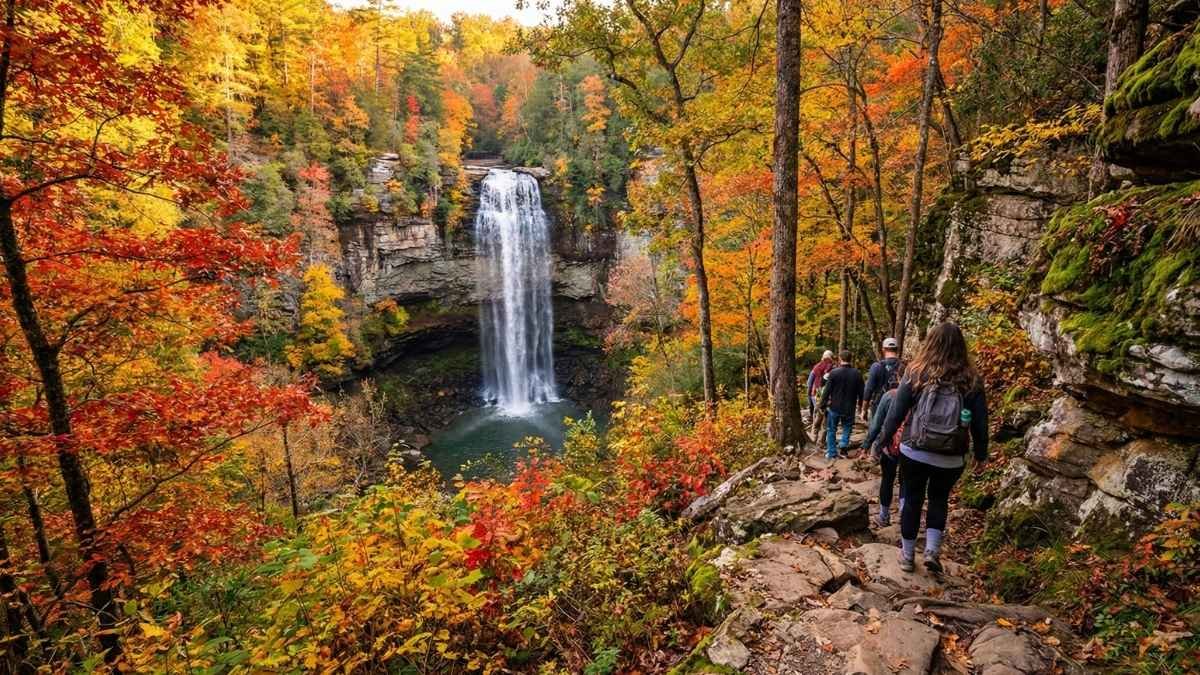
This trail leans into raw Appalachian beauty, tracing rugged cliffs and plunging waterfalls deep within a forested gorge. The descent pulls hikers closer to the water, where the scale of the falls becomes fully apparent, and the air cools noticeably.
Unlike more polished waterfall trails, this one keeps a wild edge. Uneven terrain, roots, and rocks make the hike feel earned, not guided. Each viewpoint reveals a slightly different perspective of the gorge, keeping the experience dynamic.
It’s a trail that rewards patience and awareness, especially when water levels are high, and the landscape feels most alive.
Other useful info:
- Best months: March–May, September–November
- Distance: ~2 miles round trip
- Difficulty: Moderate
- Highlights: Waterfalls, gorge views, forest scenery
- Good to know: Can be muddy after rain
11. Lighthouse Trail – Palo Duro Canyon State Park, Texas
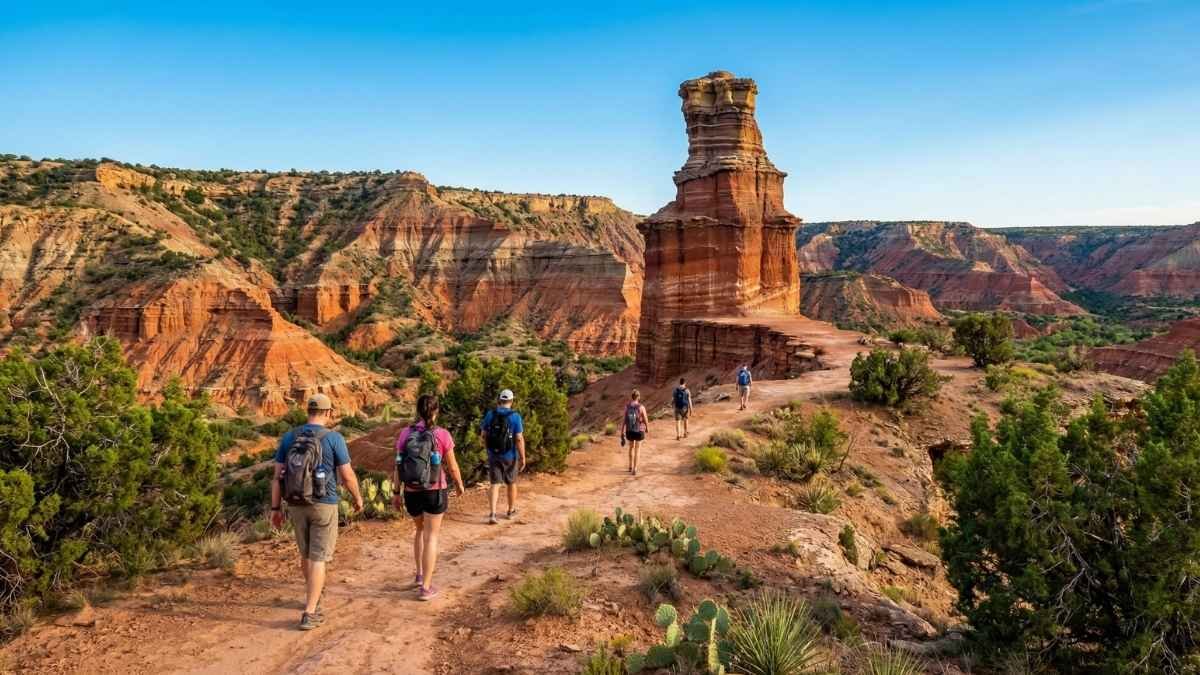
The Lighthouse Trail wastes no time showing off. The path cuts straight into the canyon, where layered rock walls rise and fall in warm earth tones that feel distinctly Texan—bold, wide, and unapologetically open. The scale is impressive, yet the trail keeps everything approachable, letting the landscape speak without overcomplication.
As the hike continues, the terrain alternates between packed dirt and rocky stretches, slowly guiding hikers toward the iconic Lighthouse rock formation. The final approach feels cinematic, with the formation growing larger and more dramatic with each step. It’s not a subtle payoff—it’s a statement.
What makes this trail stand out is its clarity. No distractions, no unnecessary detours—just a clean line through one of the most striking canyon landscapes in the region.
Other useful info:
- Best months: October–April
- Distance: ~6 miles round trip
- Difficulty: Moderate
- Highlights: Lighthouse rock formation, canyon views
- Good to know: Limited shade; heat management is important
12. Gorge Trail – Letchworth State Park, New York
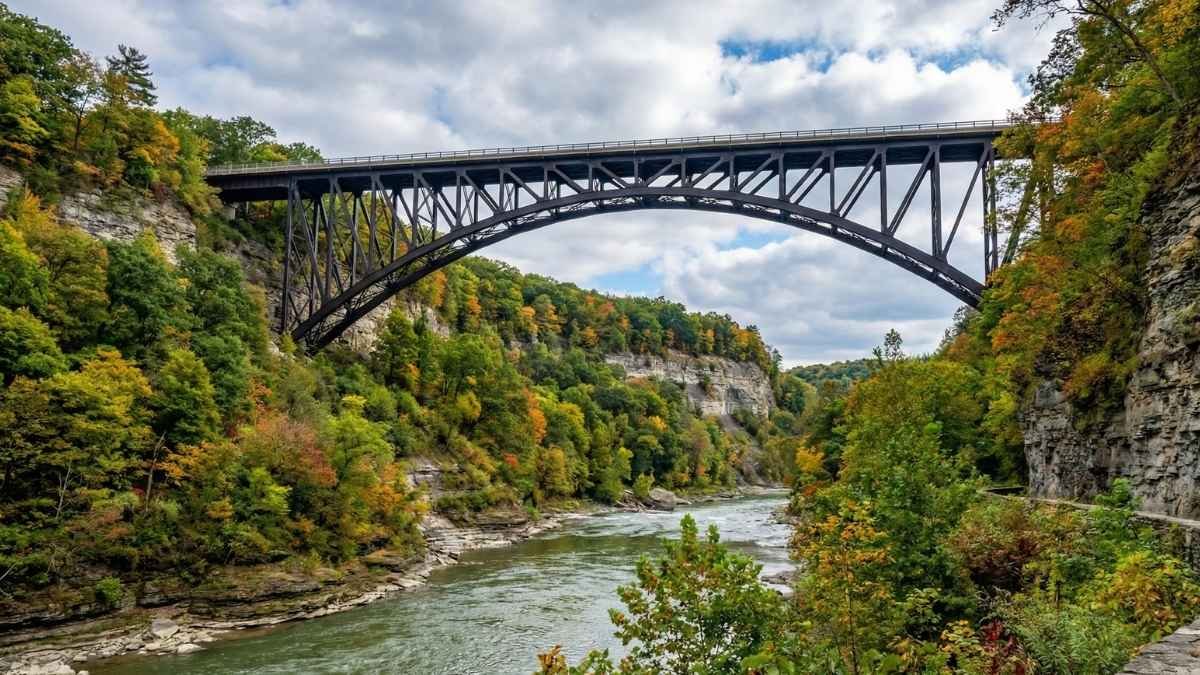
Letchworth’s Gorge Trail delivers grandeur without demanding grit. The path runs parallel to a powerful river slicing through towering cliffs, creating a constant sense of movement and energy. Massive waterfalls punctuate the route, each one spaced just far enough apart to keep anticipation alive.
The trail’s layout encourages lingering. Overlooks are frequent and well-positioned, allowing time to absorb the scale of the gorge without feeling rushed. It’s dramatic, but never overwhelming—a rare balance that keeps hikers comfortable while still deeply impressed.
This is the kind of trail that proves accessibility doesn’t mean compromise. The views hold their own against far more famous canyon corridors.
Other useful info:
- Best months: May–October
- Distance: ~7 miles one way (sections can be chosen)
- Difficulty: Easy to moderate
- Highlights: Major waterfalls, river gorge, scenic overlooks
- Good to know: Upper overlooks can be windy
13. Original Trail – Natural Bridge State Resort Park, Kentucky
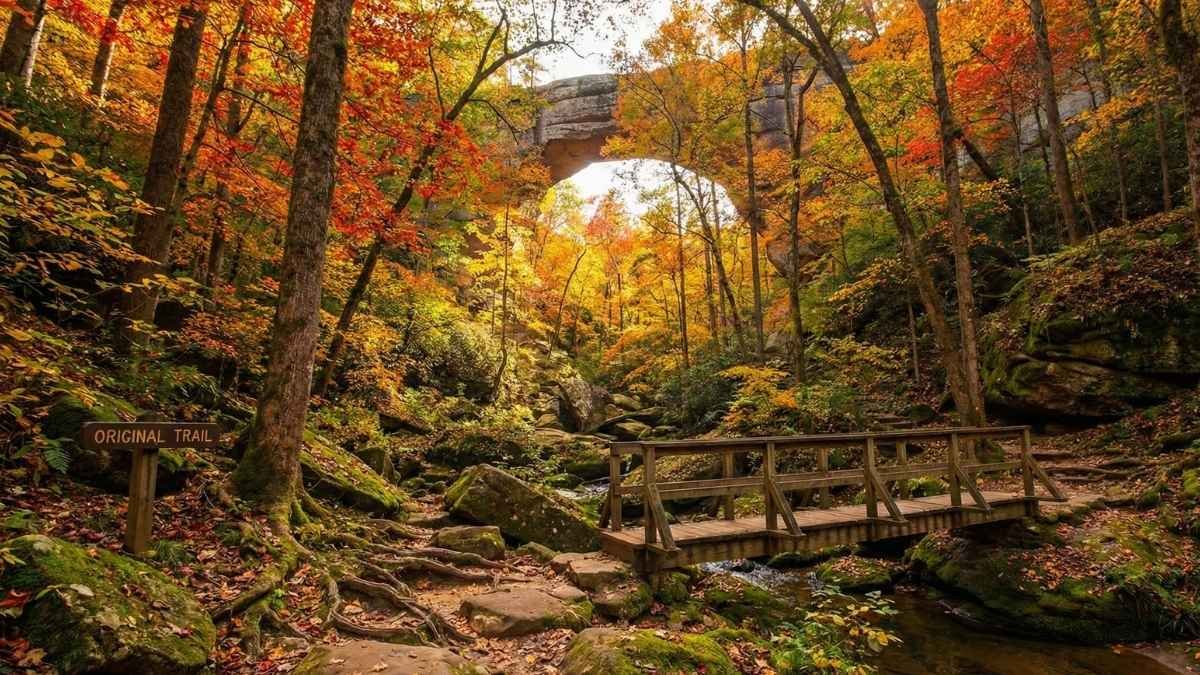
Ending the list on the Original Trail feels fitting—it’s a hike that blends geological drama with quiet reflection. The climb begins gently, winding through forested hills before tightening into steeper sections that demand just enough focus to feel earned.
Reaching the massive natural sandstone arch is a moment that slows everything down. The structure feels both delicate and impossible, suspended high above the forest floor. Views from the top stretch outward, offering a peaceful contrast to the effort of the ascent.
Rather than overwhelming with scale, this trail leaves a lasting impression through balance—effort and calm, elevation and stillness. It’s the kind of ending that stays with readers long after the list is finished.
Other useful info:
- Best months: April–October
- Distance: ~2 miles round trip
- Difficulty: Moderate
- Highlights: Natural stone arch, forest views
- Good to know: Stair sections can be strenuous on the return