17+ RV Storage Hacks Full-Timers Swear By

Living in an RV full time changes how you think about stuff. Every item needs a home, and every home needs to survive a bumpy road, a sharp turn, and a sudden stop.
Full-timers learn this fast. A drawer that works fine in a sticks and bricks house becomes a jumbled mess after one drive day. A closet that holds a week of clothes suddenly has to hold a whole season.
The good news is that RV storage is a solved problem. Thousands of people live in rigs year round, and they have tested every bin, hook, rod, and tray on real roads.
This list gathers their best ideas. Each one is cheap, simple, and proven on the move. Steal the ones that fit your rig, skip the rest, and enjoy a home that stays tidy even at 60 miles per hour.
The Full-Timer Storage Rule
Home, lock, limit. That is the whole system.
1. Entryway Command and Mud Station

Your door is the busiest spot in the rig. Shoes, keys, jackets, dog leashes, and mail all pile up there, and a tiny entry can turn into a junk zone in one day.
Fix it with a small command station right inside the door. A row of strong hooks holds jackets and bags. A basket catches keys, sunglasses, and mail. A low shoe tray keeps mud off the floor.
Use adhesive hooks rated for RV walls if you do not want to drill. A command hook is a removable adhesive hook, and it peels off clean when you move out. Test one hook first, then add the rest.

Keep the station small on purpose. If it grows past one basket and one row of hooks, it stops being a station and starts being clutter again.
Empty the basket once a week. Toss junk mail, return borrowed items, and put stray tools back in their real home.
2. Over-Door Pocket Organizers, Everywhere

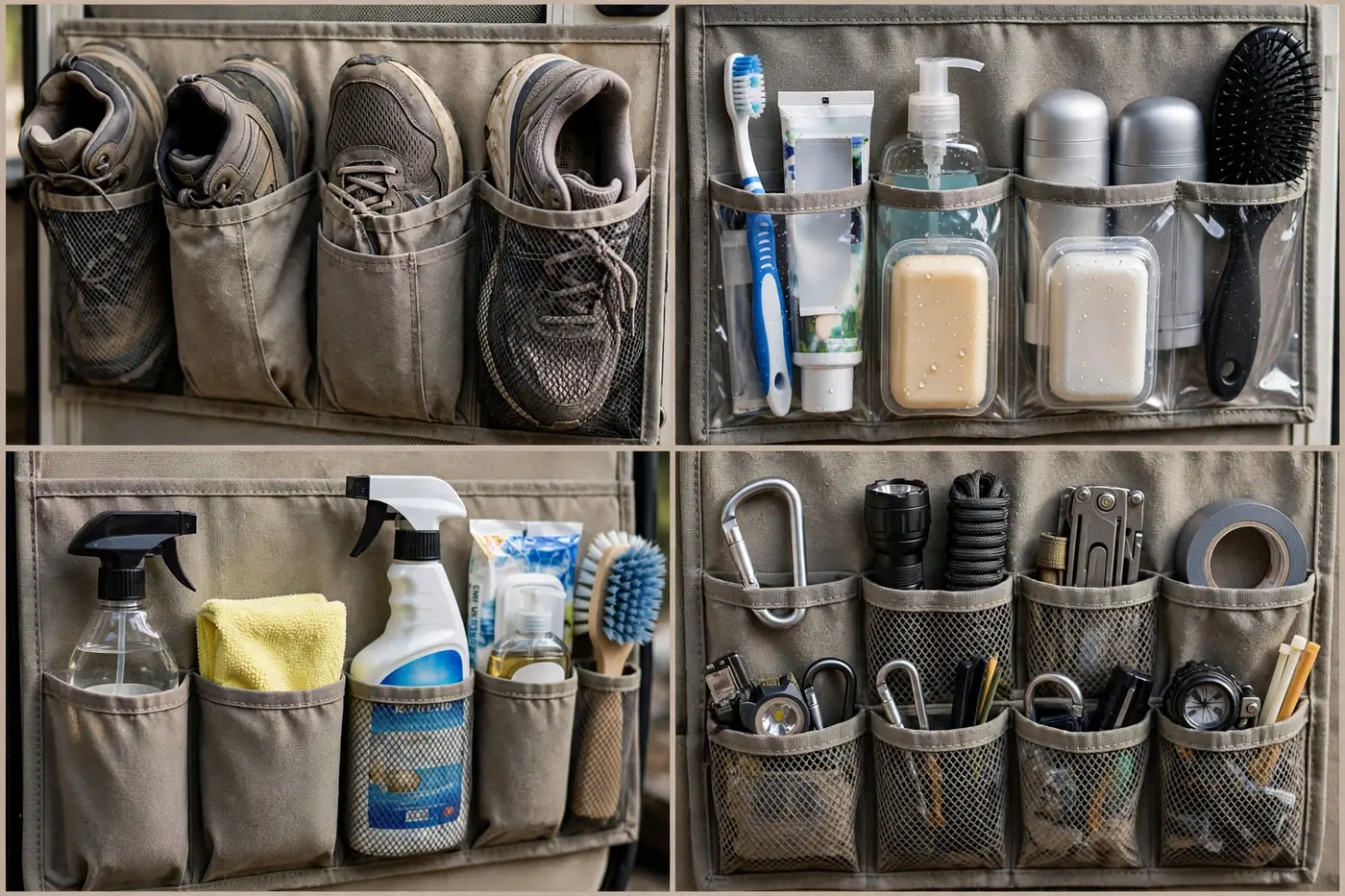
The humble shoe organizer is the full-timer’s secret weapon. It is cheap, it needs no tools, and it turns a dead door into a wall of storage.
Hang one on the bedroom door for shoes. Hang another on the bathroom door for toiletries, hair tools, and cleaning sprays. A third in the kitchen can hold snacks, foil, and small gadgets.
Clear pockets work best. You can see what is inside without digging, and you will actually use what you can see. Opaque pockets hide things, and hidden things get bought twice.
Cut a long organizer in half if a full one is too tall for your door. Hem the cut edge or tape it, and hang each half where it fits.
Check the door swing before you buy. The organizer must clear the frame, the latch, and any nearby wall when the door closes.
3. Under-Bed Bins on Lift Struts

The space under your bed is the biggest hidden storage area in most RVs. Too many owners waste it on loose bags that slide around and get forgotten.
Start with flat bins that fit the exact height of the space. Measure first, because one inch too tall means the bed will not close. Label each bin on the end you can see.
If your bed platform lifts on gas struts, those are the spring loaded arms that hold the platform up, you already have easy access. If it does not lift, add a strut kit. It turns a two person wrestling match into a one hand lift.
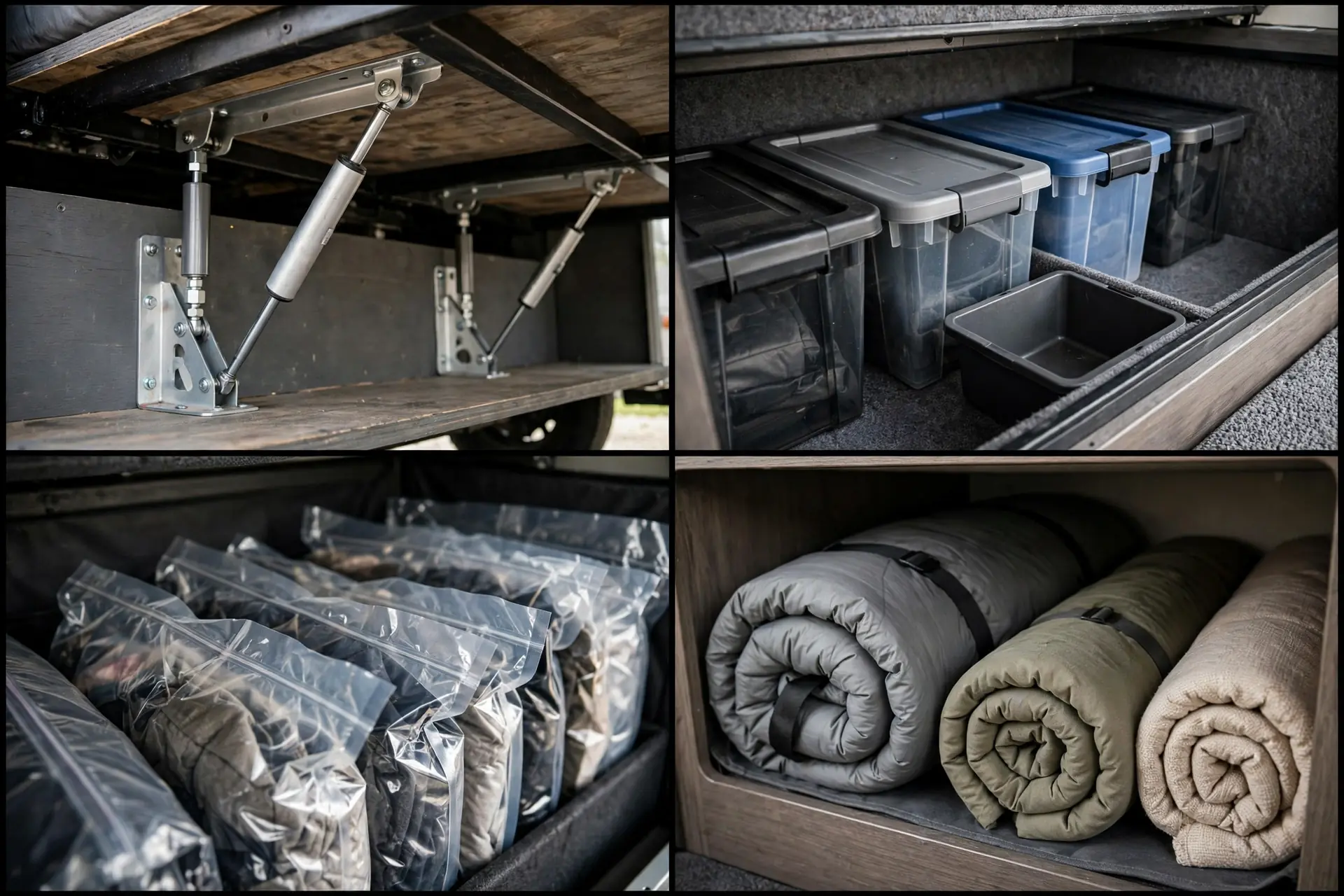
Put seasonal items in the back and everyday items in the front. Winter coats go behind summer shorts in July, and you swap them when the weather turns.
Vacuum bags shrink bulky bedding to a third of its size. Squeeze the air out, seal the bag, and stack it flat like a book.
4. Overhead Cabinet Risers and Clear Bins
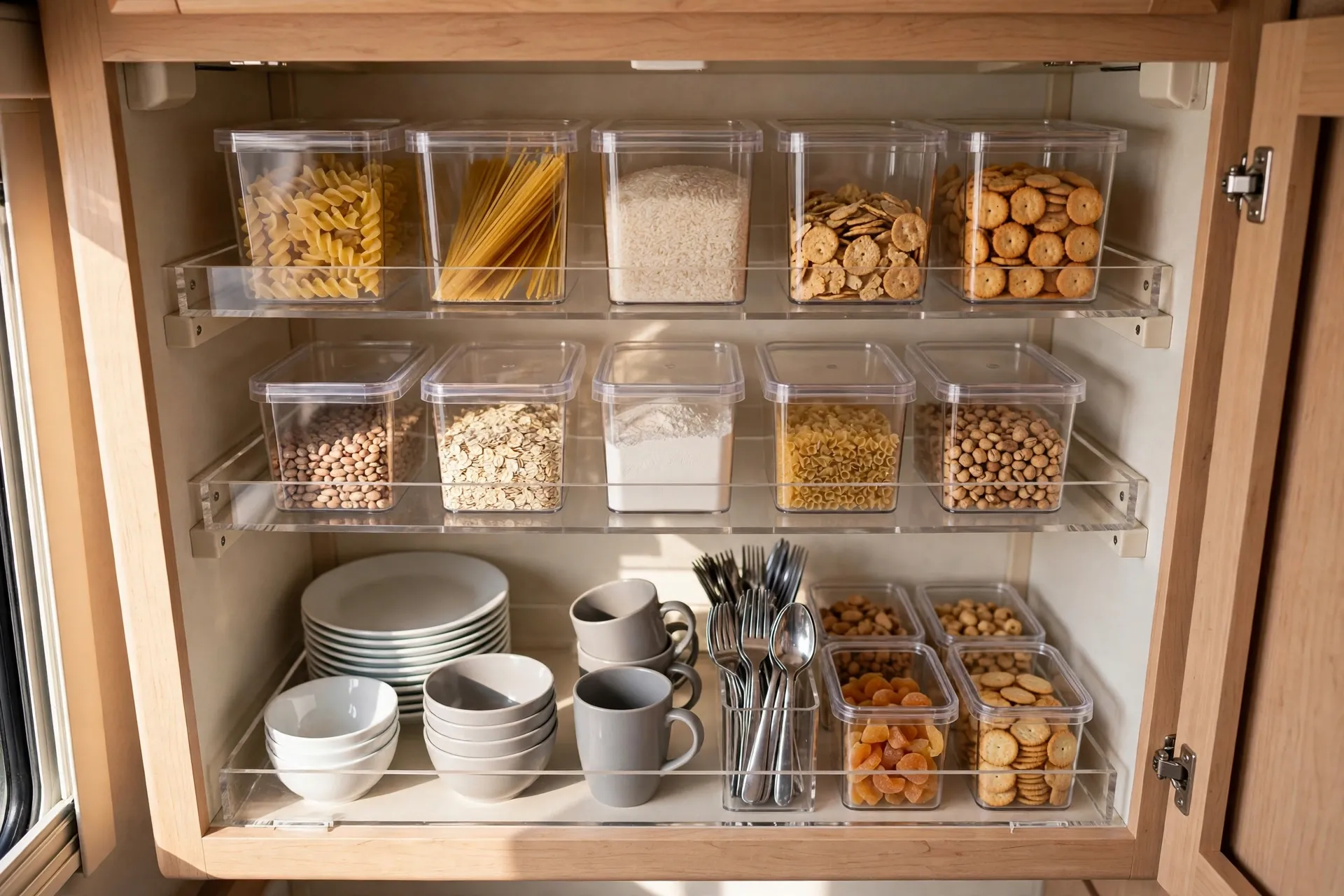
Overhead cabinets look big until you stack things in them. Then the bottom layer vanishes, and you end up buying a third jar of pasta sauce.
Shelf risers fix this. A riser is a small wire or plastic shelf that sits inside the cabinet and creates a second level. Put short items on top and tall items below.
Add clear bins to group like items together. One bin for baking, one for snacks, one for medicines. Pull out the whole bin to find what you need, then slide it back.

Leave a little air at the front of each bin. A bin packed to the brim spills the moment you hit a bump, and nobody wants rice on the floor.
Label the bins even if they are clear. Labels help guests and partners put things back in the right spot without asking you.
5. Tension Rods as Dividers and Guards

A tension rod is a spring loaded bar that wedges between two walls. It costs a few dollars, needs no screws, and solves a dozen RV problems.
Stand one upright in a cabinet to keep cutting boards and baking sheets from falling over. Lay one across a fridge shelf to stop bottles from rolling. Place one at the front of a tall shelf to act as a guard rail.
Measure the gap before you shop. Rods come in set size ranges, and the right one extends just past your gap so the spring stays tight.
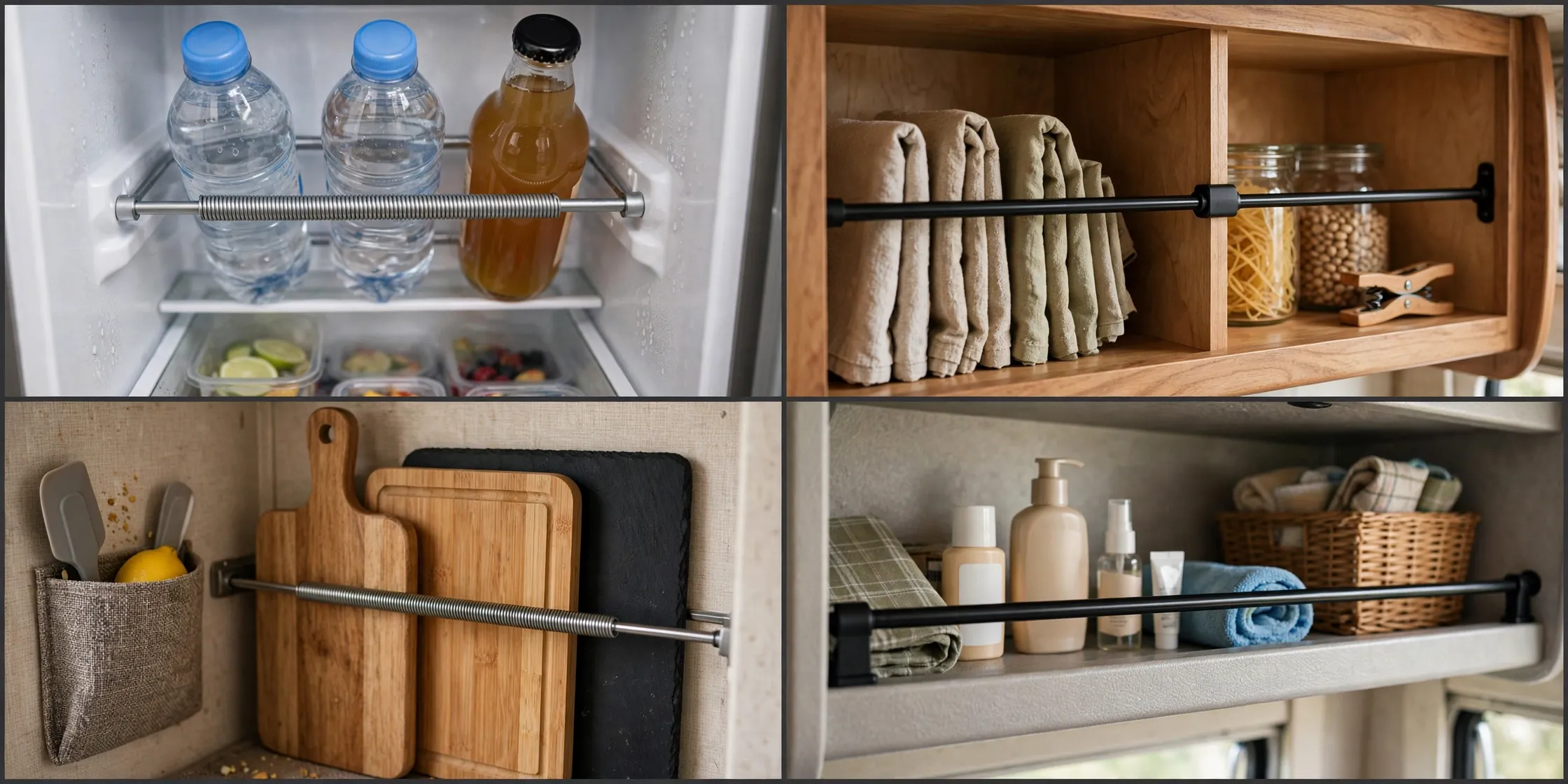
In the fridge, wrap a rod in a bit of shelf liner for grip. Cold smooth walls can let a bare rod slip, and one slip can send a whole shelf sliding.
Keep a spare rod in the basement bay. When a new storage problem pops up on the road, you will solve it in two minutes flat.
6. Slide-Out Basement Storage Trays

Basement bays are deep, dark, and hard to reach. Owners crawl in, grab the wrong bin, and give up on the thing they actually needed.
A slide-out tray changes the whole bay. The tray rolls out on rails like a drawer, so everything at the back comes to you. No crawling, no guessing, no bruised knees.
You can buy a tray kit sized to your bay, or build one from plywood and heavy drawer slides. Slides are rated by weight, so pick ones rated above your heaviest load.

Put heavy tools low and near the center. Keep light bulky items like chairs and hoses on top or at the sides.
Leave a finger gap between trays and bins. A tray that is packed edge to edge will jam, and a jammed tray on a rainy setup day is pure misery.
7. Magnetic Strips and Wall Rails

Walls are wasted space in most RVs. Magnetic strips and rails turn a blank wall into storage without taking a single inch of floor.
A magnetic knife strip holds knives safely and frees a whole drawer. Small magnetic spice jars stick to a metal strip or the side of the fridge, and they stay put on rough roads.
Mount strips with screws into a stud when you can. A stud is the solid frame piece behind the wall panel. If you cannot find one, use strong adhesive rated for the weight.
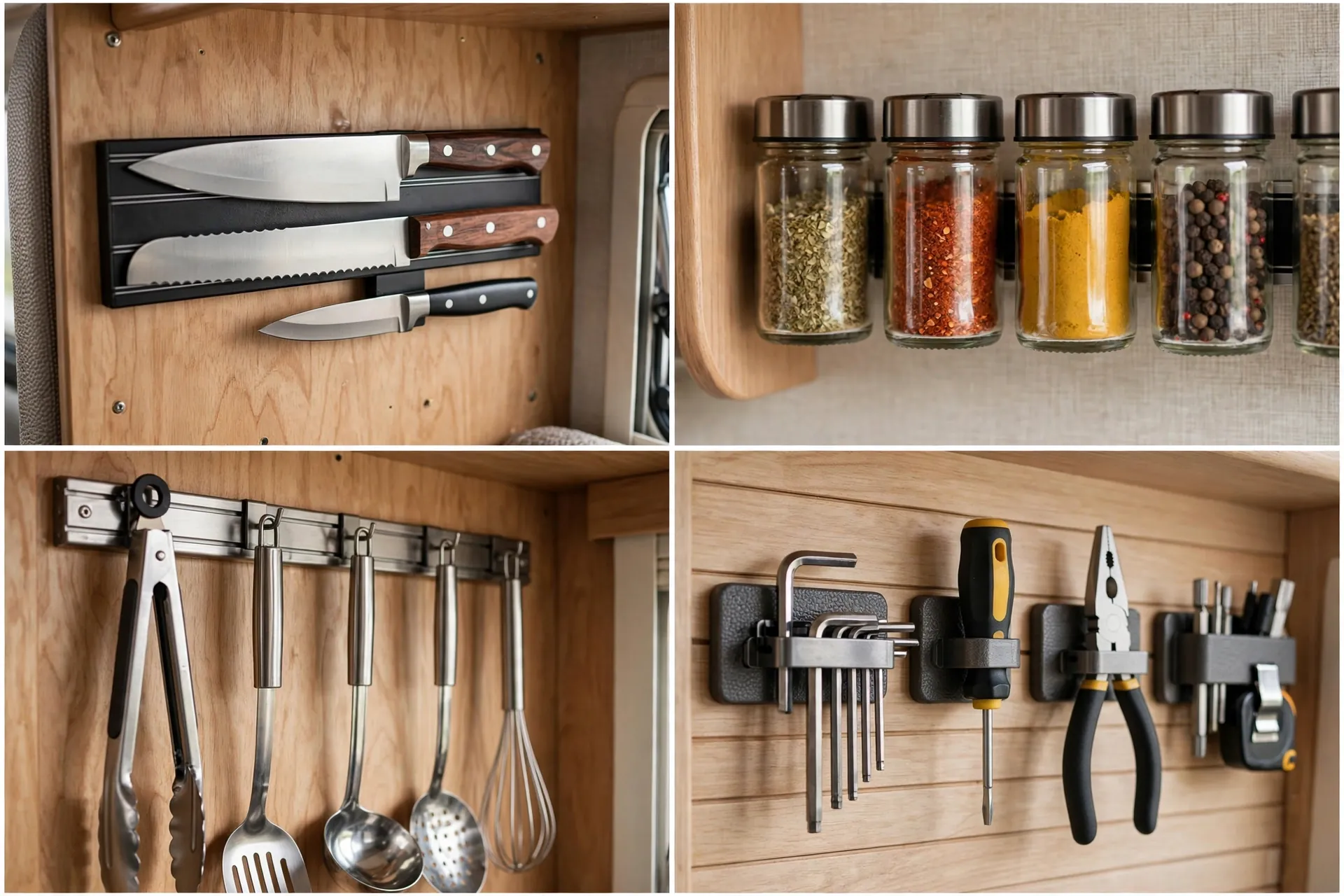
Keep magnets away from credit cards and old style hard drives. Modern phones are fine, but a strong magnet can still wipe a hotel key card.
Test the hold before a long drive. Shake the strip by hand. If a jar wobbles, add a second strip or a small lip below it.
8. Fold-Down Desk and Table Extension
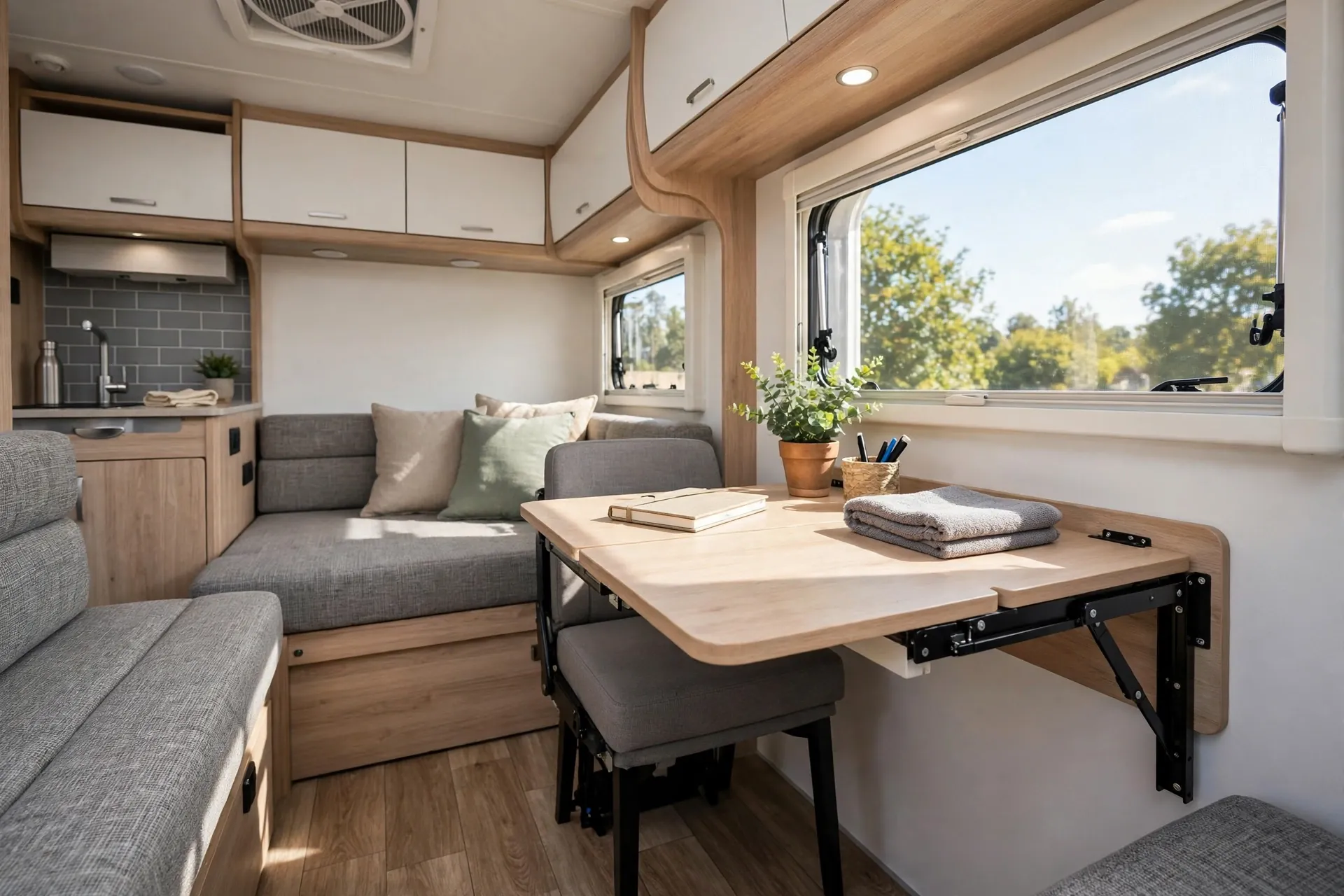
Full-timers who work from the road need a desk, but a fixed desk eats space all day. A fold-down desk gives you a workspace only when you need it.
Mount a sturdy board to the wall on hinges. Add folding brackets underneath, which are the arms that lock the board level and fold away flat. Fold it down to work, fold it up to live.
The same trick works for dining. A small table extension folds out for dinner for two, then folds back so the walkway stays clear.

Pick a board that matches your wall color so the folded desk looks like a panel, not a project. Paint and trim hide a lot.
Do not overload a fold-down desk. A laptop, a notebook, and a coffee mug are plenty. Heavy monitors belong on a fixed surface.
Where Full-Timers Gain the Most Space
Start under the bed and in the basement bay. That is where the big wins hide.
9. Dinette Bench Storage with Labeled Bins
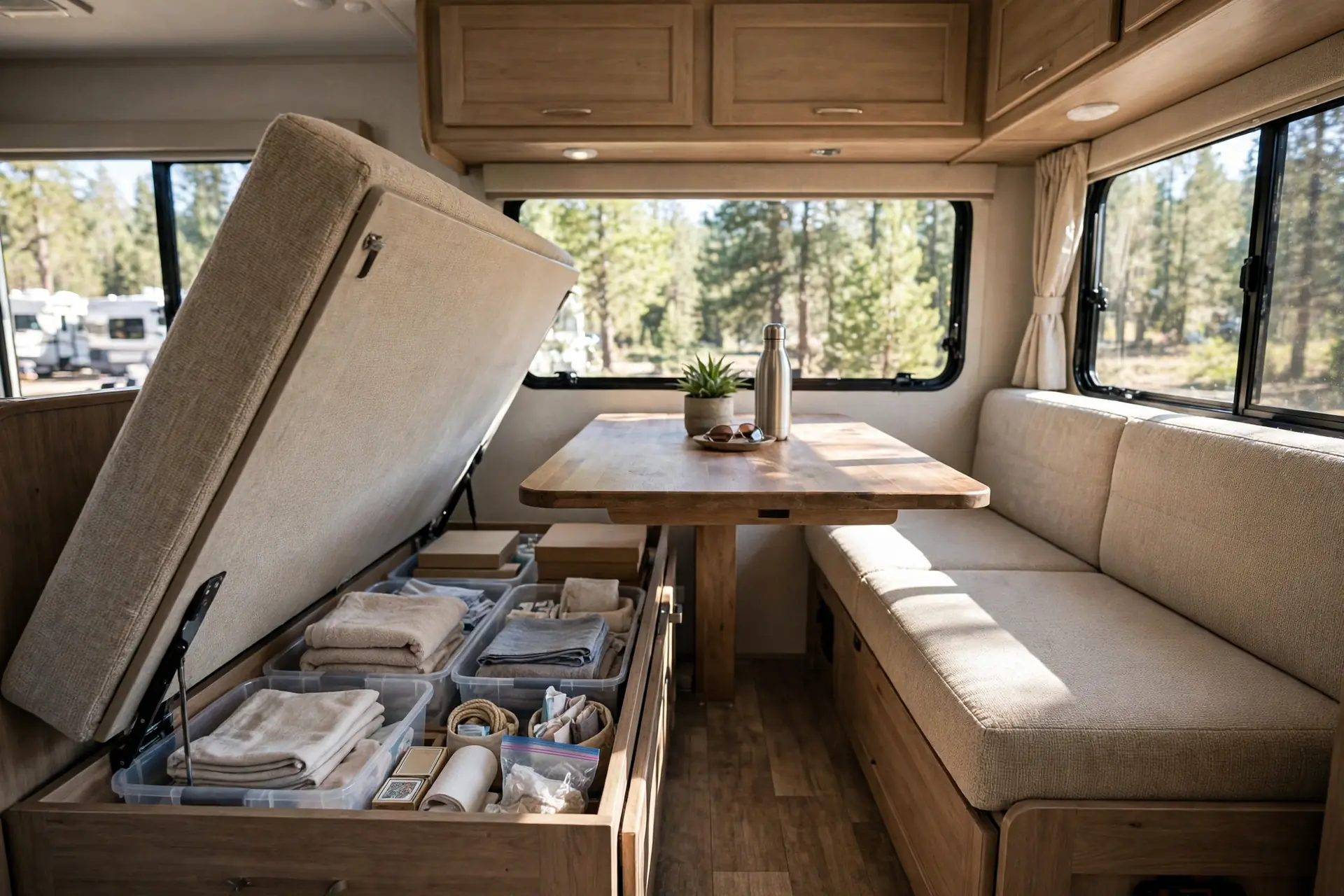
Dinette benches look like seats. Full-timers know they are boxes with cushions on top, and those boxes hold a surprising amount.
Lift a cushion and you will find space for board games, extra linens, pet supplies, or craft gear. The trick is to keep it organized, or it becomes a junk drawer you sit on.
Use small bins that fit the bench exactly, and label them. One bin per category beats one big bin of everything, because you can pull just the bin you need.

Put the items you use least at the bottom and the far end. Daily items go near the front edge, where your hand lands first.
Add a finger pull or a small strap to each bin. Without one, you will pinch fingers and curse every time you lift a heavy bin out.
10. Bathroom Tension-Pole Caddy System

RV bathrooms are tiny, and the shower doubles as storage for many owners. The problem is that bottles fall, leak, and slide everywhere.
A tension-pole caddy solves it. The pole wedges between floor and ceiling, and shelves clip onto it at any height. No drilling, no suction cups failing at midnight.
Add suction baskets for the shower wall as a second layer. Suction works best on smooth fiberglass, so clean the wall first and press the cup flat.
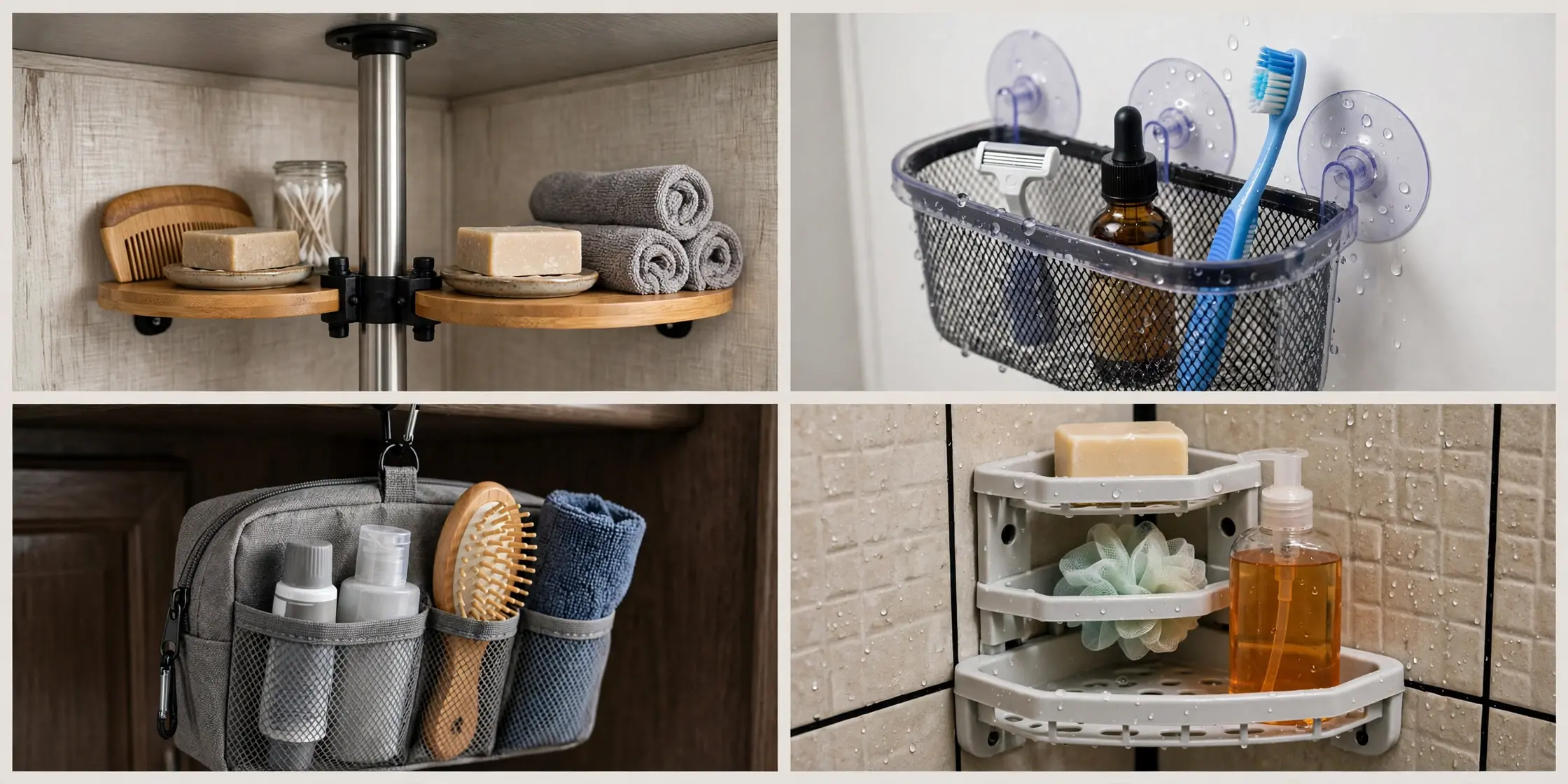
Keep only daily toiletries on the pole. Back stock lives in a bin under the sink, and you refill the pole once a week.
Check the pole tension after every long drive. Vibration loosens things slowly, and a quick twist keeps the whole tower standing.
11. Closet Hanging Cubes and Vacuum Bags

RV closets are narrow and deep, and hanging clothes alone wastes the bottom half. Hanging cubes fill that dead space fast.
A hanging cube organizer hangs from the rod and gives you four or five fabric shelves. Folded shirts, pants, and underwear each get a shelf, and you can see them all at a glance.
Use slim hangers for the clothes you do hang. Thick wooden hangers eat inches you do not have, and slim ones can double your hanging space.
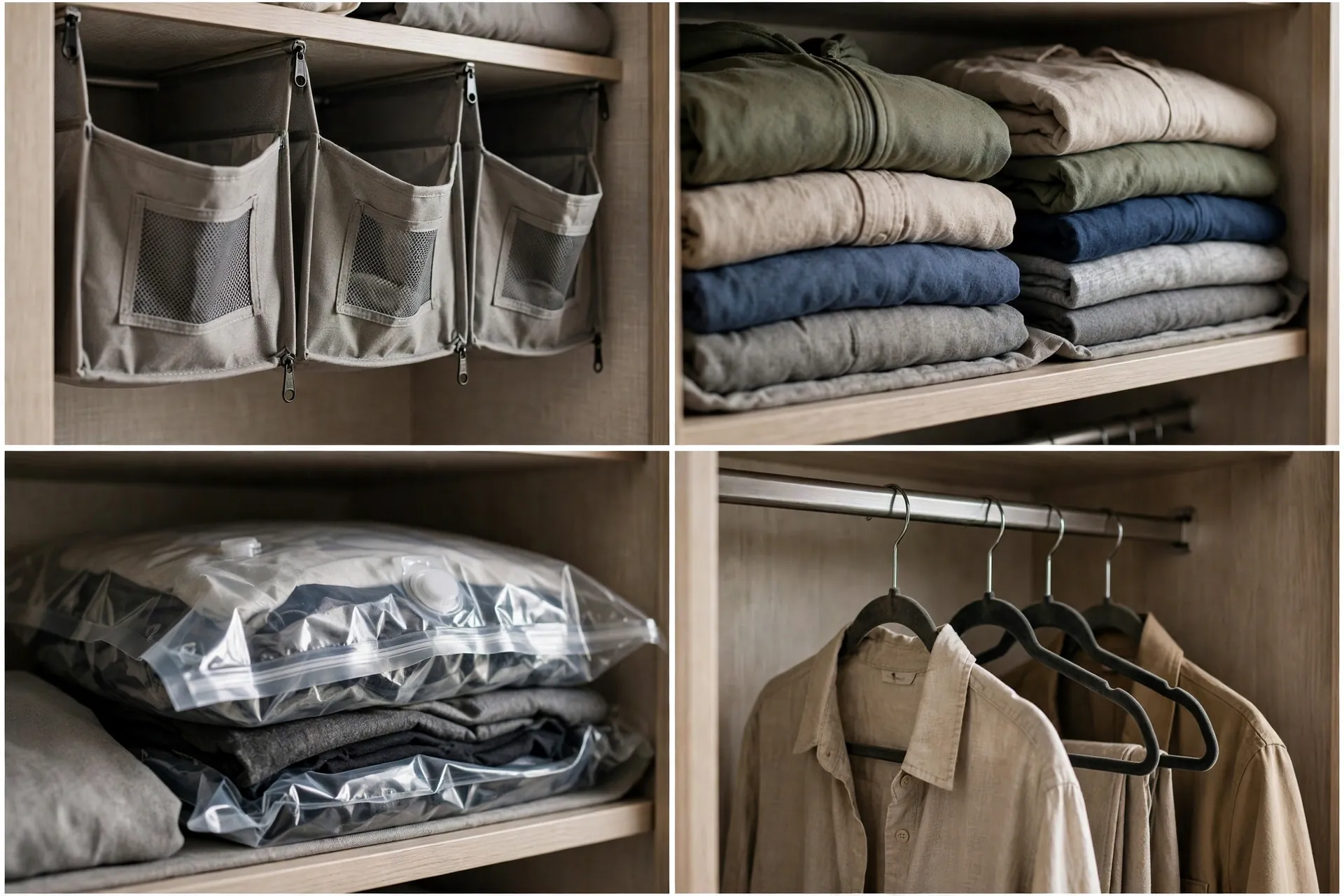
Vacuum bags handle off season clothes. Seal a bag, roll out the air, and slide it flat under the bed or on the top closet shelf.
Do one closet purge per season. If you did not wear it in the last season, it goes to donation, not to another bag.
12. Color-Coded Basement Bins with an Inventory List

When every bin looks the same, finding anything takes forever. Color coding ends the hunt. Pick one color per category and stick to it.
Try blue for water gear, red for tools, green for outdoor living, and yellow for electrical items. The exact colors do not matter. Consistency does.
Put a simple inventory list on the inside of the bay door or on your phone. List each bin color and what is inside it, in plain words.

Update the list when you move a bin. A list that is one move out of date is worse than no list, because it sends you to the wrong bin with confidence.
Use clear bins inside the colored system if you want both tricks at once. Colored lids plus clear sides give you color coding and a quick peek inside.
13. Collapsible Kitchen and Laundry Gear

Fixed bowls, buckets, and dish racks take up the same space full or empty. Collapsible versions fold flat when you are done, and that saved space adds up fast.
A collapsible colander folds to the thickness of a plate. A collapsible dish rack folds flat against the wall. A collapsible laundry basket folds down to almost nothing for travel days.
Look for silicone gear with a sturdy base. Cheap collapsible items wobble and spill, and a wobbly bowl is worse than a big bowl.

Dry collapsible gear fully before folding it away. Trapped water grows mildew, and mildew smell in a small rig is hard to lose.
Keep one collapsible bucket in the basement bay. It works as a mop bucket, a wash basin, and a catch all for muddy shoes.
14. Sofa-Side and Bedside Pocket Organizers

Small items cause big messes in an RV. Phones, remotes, chargers, books, and glasses end up on every flat surface, and then they slide off on the first turn.
Pocket organizers catch them. A fabric organizer drapes over a sofa arm or hangs beside the bed, and each pocket holds one kind of item.
Put the charger pocket closest to the outlet. Run the cable through the pocket so the phone charges while it sits safe, not while it balances on a pillow.

Give every person their own pocket row if you travel as a couple. Shared pockets turn into mixed piles, and mixed piles turn into arguments.
Empty the pockets before a drive day. Loose items in pockets can still bounce out, and a flying remote is a hazard, not a convenience.
15. Pegboard Tool Wall in the Pass-Through Bay

Tools tossed in a bin get damaged, lost, and forgotten. A pegboard wall in the pass-through bay keeps every tool visible and in reach.
Mount a sheet of pegboard to the bay wall with standoffs, which are small spacers that leave room for hooks behind the board. Add hooks and small pouches for wrenches, pliers, tape, and fuses.
Trace each tool in marker on the board if you like. A missing outline tells you at a glance what is still out on a job.

Secure loose tools with a bungee cord across the board for travel days. Vibration shakes hooks loose over time, and a cord stops the fall.
Keep a small flashlight on the pegboard too. Bay lighting is weak, and you will need both hands free when a repair happens after dark.
16. Kitchen Pull-Out Pantry Tower

Deep narrow pantry cabinets are the worst. You can see the front row, and everything behind it is a mystery until you pull half the cabinet out.
A pull-out pantry tower fixes it. The whole shelf unit slides out on rails, so every can and jar comes into the light at once. No more lost cans at the back.
Measure your cabinet opening to the millimeter before ordering. Towers come in set widths, and a tower that is a hair too wide will not slide.

Put heavy cans at the bottom and light boxes at the top. A top heavy tower tips when you pull it fast, and canned tomatoes are not gentle.
Add a small lip or rail to each shelf. Without one, jars slide off the back during a hard stop, and you will find them behind the tower.
17. Vertical Filing for Flat Stuff and a Charging Drawer
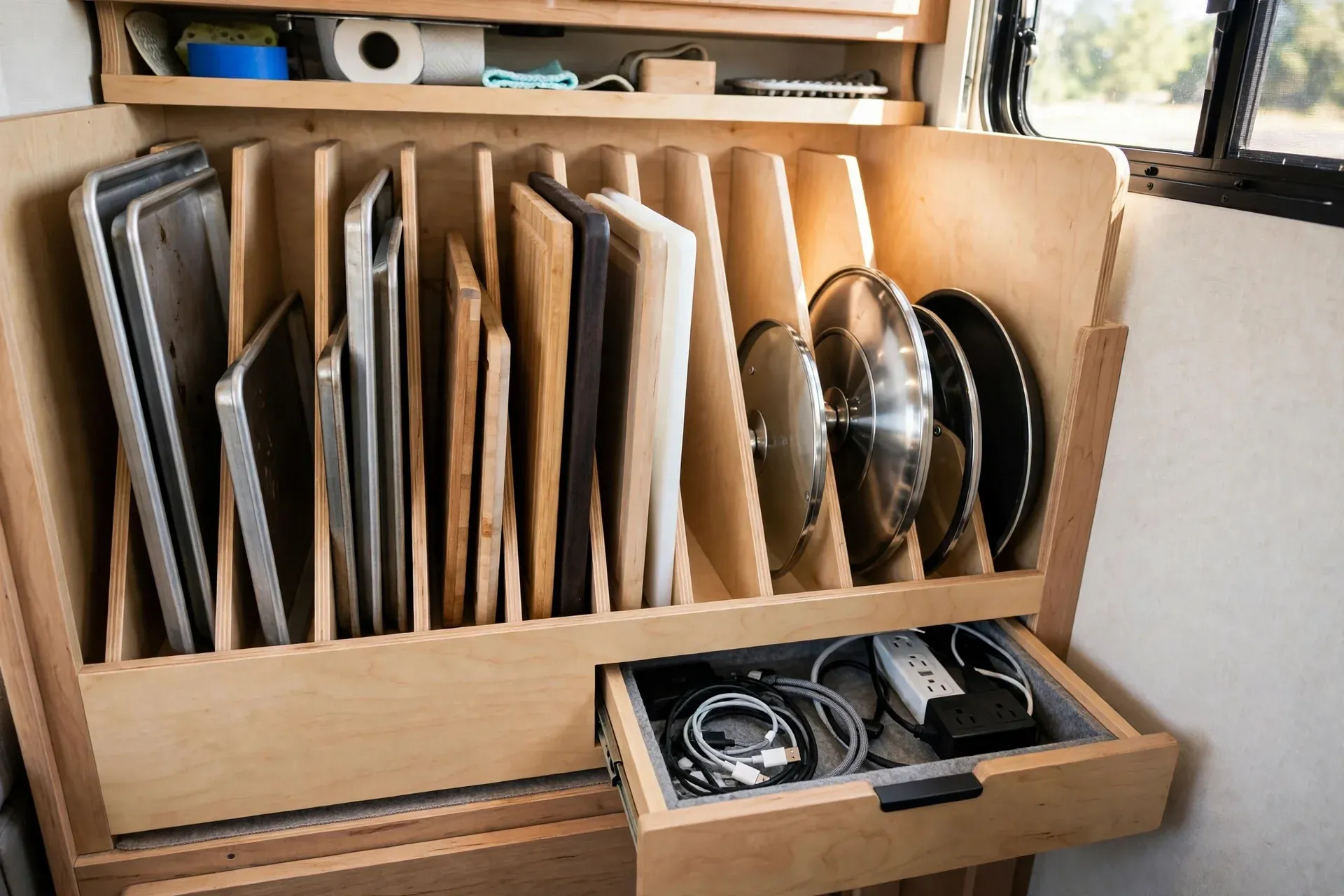
Flat items are the hardest to store. Baking sheets, cutting boards, and pot lids stacked flat mean lifting the whole pile to reach the bottom one.
File them upright instead. A vertical divider turns a cabinet into a filing cabinet, and you pull out just the sheet you need, like pulling a book off a shelf.
Use the same trick for a charging drawer. One drawer with a power strip holds phones, tablets, and cameras, and it keeps cables off the counters for good.

Label the front of each divider slot if you have many similar sheets. A cookie sheet and a pizza pan look alike in a hurry.
Keep the charging drawer ventilated. Do not seal hot chargers in a tight drawer, and unplug gear that is fully charged.
Your First Weekend Storage Sprint
One area per weekend beats a whole rig overhaul that never finishes.
The best storage system is the one you actually keep using. Start with the area that annoys you most, fix just that spot, and live with it for a week.
If it still works after a long drive, copy the idea to the next area. If it fails, change one thing and test again. Small fixes stack up into a rig that feels twice as big.
Full-time RV life rewards people who keep things simple, visible, and locked down. Pick your first hack from this list today, and enjoy the extra room tomorrow.