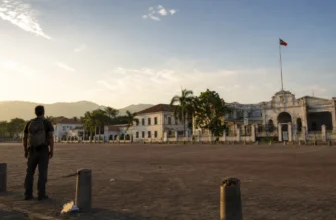
Why Some Countries Ban Entry Based on Where You’ve Traveled Before


Can a perfectly valid passport get you turned away at a border you did nothing wrong to reach? Yes – and it happens specifically when the first stamp in that passport signals something to the second government that has nothing to do with you personally. A traveler planning Israel followed by Jordan, or Cuba followed by the United States, can carry a document with no violations and still be refused entry at the second desk because of what the first visit represents to a government making a political calculation you were never part of.
These bans are not judgments about the traveler. They are state-level instruments – political, diplomatic, security-driven – that treat a stamp or a data record as evidence of an association the destination government will not accept, regardless of why the traveler was there or what they did.
Understanding the four distinct reasons governments impose these bans, and the three ways officers uncover travel history even when no stamp is visible, tells you exactly which itineraries carry genuine risk and why the fixes most travelers reach for only solve part of the problem.
By the end, you can identify which legs of a planned multi-country trip create real exposure, understand which workarounds actually help and where they stop helping, and know the one step that reliably prevents the problem before any ticket is purchased.
⚠️ COMMON MISTAKE
The Ban Is Not About You
Every travel-history entry ban is a state-to-state political instrument. The officer enforcing it cannot make an exception for your specific reason for traveling, your profession, or your good intentions. The stamp is the signal — your explanation is not.
Political Non-Recognition Turns Certain Stamps Toxic

A stamp becomes toxic the moment the country issuing it is one that the destination government refuses to recognize as a legitimate state – at that point, the officer is not reading your history, they are reading a transaction with an entity their government considers illegitimate.
The Israel – Arab League situation is the most documented and long-running version of this problem. Several Arab League states have historically denied entry to any passport bearing an Israeli stamp, and the policy has nothing to do with the individual traveler’s views or purpose. The stamp signals state-level engagement with a country whose right to exist those governments reject. A tourist, a business traveler, a student – the category is irrelevant because the stamp does not record one.
The same mechanism operates anywhere a disputed territory or unrecognized breakaway state issues its own entry documents. A stamp from an entity that one government regards as illegally constituted is disqualifying at the borders of every country that shares that position – not because those countries suspect the traveler, but because accepting the stamp would implicitly accept the stamping authority.
What makes this category worth understanding before you book is the asymmetry it creates. The same passport that clears you through dozens of borders without a second glance can be a disqualifying document at one specific desk – not a global problem with the document, but the precise consequence of one bilateral relationship that you happened to walk into.
Security Profiling Links Travelers to Conflict Zones

Security profiling works on a different logic: the stamp’s country of origin is treated as a risk indicator in itself, independent of any recognition dispute, and the question the receiving government is asking is not whether it acknowledges that country’s existence but whether it considers a visit there a credible threat signal.
The practical outcomes vary by country and by destination. A North Korea, Iran, or Cuba stamp at a US port of entry triggers enhanced screening at customs – not an automatic refusal, but a guaranteed secondary conversation. Pakistan and Afghanistan stamps produce secondary inspection at several Western borders. Some states go further and deny entry outright. What none of these systems do is record why you were there: the journalist, the aid worker, and the backpacker all carry the same flag from the same stamp.
The risk does not expire with the trip.
A stamp acquired years ago for entirely legitimate work – a research project, a humanitarian posting, a documentary assignment – can become newly problematic at a border crossed today if that country’s security profile has shifted in the receiving government’s threat assessment. These shifts respond to intelligence conditions and diplomatic signals rather than formal treaty changes, which means they can happen without any public announcement.
That makes this the category most likely to catch a careful traveler off guard. A rule that did not exist when you last checked may be in force at the gate – which is the only reason to check current official guidance close to your departure date, not months before it.
Reciprocal Bans Punish Travelers for Their Government’s Choices
A third category of ban originates not with the country you are entering but with your own government – because your government moved first, and the destination country matched it.
The mechanism is retaliation. One state restricts or bars travelers carrying evidence of a visit to a rival; the rival government responds by applying the same logic in reverse. The traveler in the middle did not create the dispute and has no leverage in it – the passport stamp is simply how one state signals its position to another, and you happen to be carrying it.
What makes this category genuinely unpredictable is the speed. A reciprocal ban can materialize within days of a diplomatic rupture and dissolve just as quickly when talks resume. A rule you checked six months before travel may have been replaced by a different rule before you reach the gate – in either direction. That timeline makes standard pre-booking research less reliable here than anywhere else in this article.
Appealing at the border is not an option. The officer in front of you is enforcing a government-to-government instrument; no individual circumstance changes that. Your reason for visiting the flagged country is irrelevant to the calculation.
Enforcement is also uneven. One side of a reciprocal arrangement may apply it at every port, every day, while the other side enforces it loosely or inconsistently. Travelers on the same itinerary can get entirely different outcomes at the same border on consecutive days – which looks like luck but is actually the gap between formal policy and inconsistent implementation.
Sanctions Regimes Extend Beyond Trade to Individual Travelers

A fourth mechanism ties travel history to something most travelers never think of as a political act: paying for a hotel room.
Sanctions frameworks in several countries explicitly restrict financial transactions with sanctioned states – and that restriction covers tourism spending. A hotel booking, a credit card charge at a restaurant, or a documented tour payment can each surface at a border as evidence of financial engagement with a government the sanctioning country has declared off-limits. The traveler did not move money through a shell company or violate an arms embargo; they paid for a bed and a meal. The transaction is still the flag.
The multilateral versus unilateral distinction matters here more than anywhere else in this article. A UN-level sanctions regime applies by nationality of the traveler’s passport; a unilateral national sanctions regime applies only to the citizens of the country that imposed it. The same trip to Cuba creates no legal issue for a German passport holder at a US port of entry while generating enhanced customs questioning for an American one – the itinerary is identical, the legal exposure is not.
These rules are also among the least stable. They change without broad public announcement, they differ by the specific nationality of the traveler, and they interact with other entry restrictions in ways that a general summary cannot capture accurately.
The only source that reflects the current rule for your specific passport is your own government’s official sanctions guidance and travel advisory page – checked in the days before booking, not before departure.
Passport Stamps Are the First Thing Officers Look For

The most immediate source of travel history is also the one a traveler hands over voluntarily: the passport itself, read page by page.
An experienced border officer goes through the entire document – entry stamps, exit stamps, visa labels, currency endorsements – treating it as a timeline of every international movement across the life of that booklet. A single pass through the pages can establish which countries were visited, roughly when, and for how long.
A missing exit stamp is not a clean slate. Several countries with sensitive political profiles do not issue exit stamps, and officers know which ones. An entry stamp from such a country with no corresponding exit record does not read as a gap – it reads as confirmation of a visit that ended outside normal departure channels, which draws more scrutiny, not less.
A visa label is just as damaging as an arrival stamp, and in some respects more so. It proves the traveler applied for permission to enter a listed country, went through the process, and was issued documentation – even if the trip was later cancelled. The application and the issued visa are both in the document.
Date mismatches between entry and exit records, evidence of overstays, and transit stamps through sensitive hub cities all add to that timeline. An officer who can identify every country’s stamp format on sight reads the full document in minutes, and any anomaly in the sequence is reason to ask questions.
How Border Officers Build a Travel Picture
🗺️ Entry stamps
Country, date, port of arrival
🚪 Exit stamps
Missing exit = suspicious gap
📋 Visa labels
Proves intent even if trip cancelled
✈️ Advance passenger data
Transmitted hours before landing
📅 Date cross-checks
Inconsistencies flag anomalies
🧳 Physical items
Currency, receipts, SIM cards
Key point
Electronic immigration records held by foreign governments are not erased when a traveler renews or replaces their passport.
Electronic Records Survive Long After Stamps Are Gone

What is printed in the passport is only part of the picture – and it is the part a traveler can see. The part they cannot see may already be waiting for them at the desk.
Airlines transmit passenger data to destination governments hours before a flight lands. By the time a traveler reaches the primary inspection point, the border agency may already have queried flight records, prior arrival data, and travel history linked to that name and date of birth. The officer picking up the passport is sometimes confirming what the system already flagged, not discovering it.
Renewing or replacing a passport removes the physical stamps from the document. It does not touch a single record in any foreign immigration database. Those records are indexed to the person – name, date of birth, biometric data – not to the document number. A passport cancelled after a loss, a passport renewed because the pages were full, a passport reissued after a name change: none of those events reach the country whose system logged the original visit.
Some immigration databases retain records well beyond the trip itself. A visit made five years ago on a document that no longer exists is still on file in the system of the country visited.
Lying about prior travel on an entry declaration to get around this is not a gray area. It is a separate offense – active misrepresentation – and the consequence is not additional screening. It is a permanent entry ban.
⚠️ COMMON MISTAKE
Replacing Your Passport Does Not Erase Your History
Electronic immigration records in foreign countries are tied to you, not to your document. A renewed passport presents a clean physical booklet, but the records at every border agency you have passed through remain exactly where they were.
Questioning Surfaces What Stamps and Systems Miss
Stamps and electronic records are the first two layers – but a clean passport and a clear primary-desk query still leave a third layer in place: a trained officer asking direct questions.
At borders where these bans are actively enforced, structured questioning is standard, not exceptional. An officer will work through your recent itinerary in order, ask who you know in the destination country, and want to know how you funded the trip. The specific danger is not any single answer – it is inconsistency. A date that does not line up with a stamp, or a claimed purpose that does not match what your bank records or documents show, is treated as evidence of concealment, not as an innocent memory lapse.
Secondary inspection goes further. Some agencies will examine a phone – photos, apps, and contacts. A photo geotagged inside a flagged country, a messaging app whose user base is primarily associated with a specific region, or a contact name that matches a person of interest can place you in a country that left no stamp anywhere in the document and no entry in a database you could anticipate.
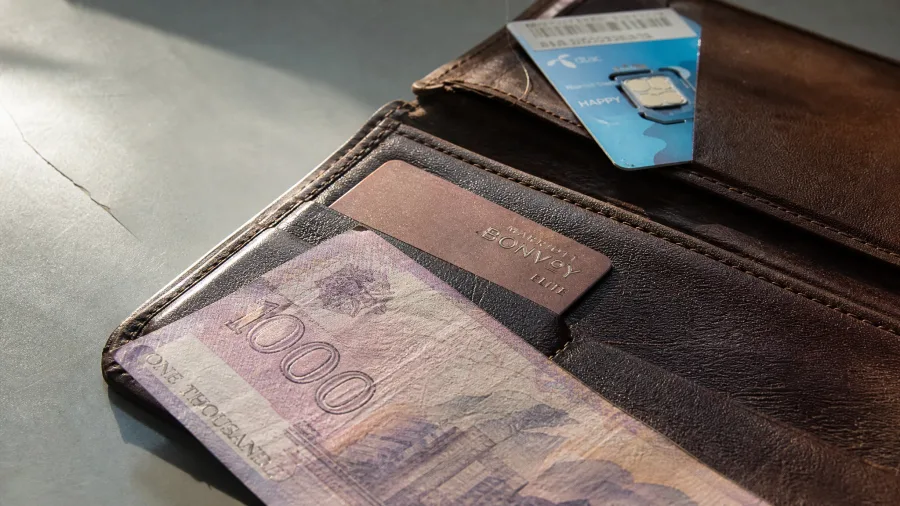
Physical luggage tells the same story without any digital help. A banknote denomination not used outside one country, a hotel loyalty card, a local SIM still in the travel wallet, or a retail receipt folded into a guidebook each independently establishes a location – with no stamp or prior record required.
None of this is applied at every border in the world. It is specifically concentrated at the borders where travel-history bans operate – which is exactly where a traveler carrying a conflicting itinerary is going to arrive.
Physical Stamp vs. Electronic Record: What Each Reveals
Passport Stamp
- Visible to any officer who opens the document
- Removed when passport is renewed or replaced
- Can be avoided by requesting a slip (Israel only, ask first)
- Visa labels remain even if trip was cancelled
- Transit stamps reveal routing even without entry
Electronic Record
- Transmitted by airline hours before you land
- Persists after passport renewal or replacement
- Tied to the person, not the document
- Retained for years beyond the original trip
- Shared between agencies under data-sharing agreements
Requesting a Separate Entry Slip Avoids Some Stamp Problems
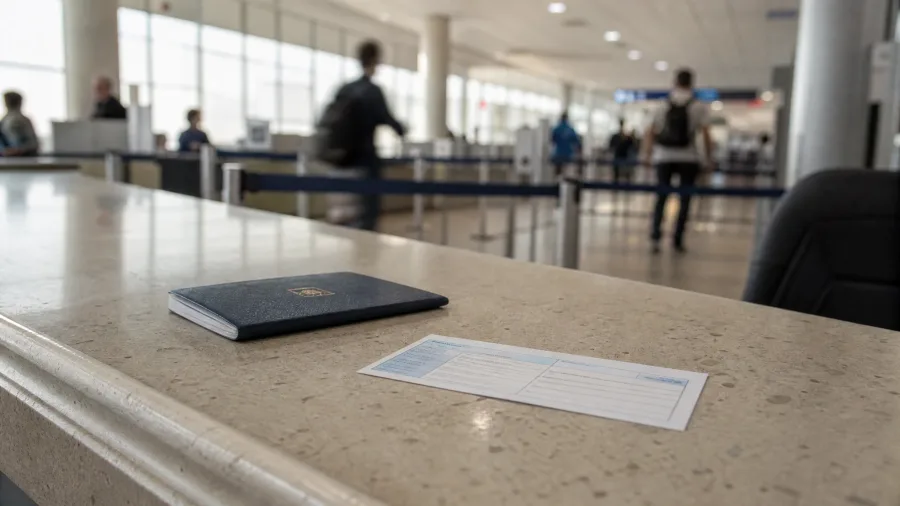
The separate-entry slip is the one physical workaround that actually works – and Israel is where it is most reliably available and best documented.
At Ben Gurion Airport, the officer at the immigration desk will stamp a loose card rather than the passport itself, leaving the document clean of any evidence that the visit happened. That card is yours to keep or discard; nothing is added to the physical pages.
The window for making the request is a single moment. You ask before the officer’s hand moves toward your passport – those words need to be the first thing out of your mouth at the desk. After a stamp lands in the document, no correction is possible, and no supervisor can reverse it.
Do not assume the same option exists at every border where a sensitive stamp could be a problem. Some countries offer a comparable arrangement; others do not, and there is no standard policy. The only way to confirm is to check the destination’s official entry guidance before you travel – not on arrival, and not by asking another traveler whose experience may be months out of date.
There is one hard limit to what the slip achieves. It removes the physical trace, but it does not touch the electronic record the visited country’s immigration system already holds. If the country you are heading to next shares data with the country you just left, the slip changes nothing about what that border agency already knows.
A Second Passport Removes Stamps But Not Electronic History

A second passport is the other fix travelers reach for when conflicting destinations keep coming up – and it works on exactly the same layer the slip does, and no further.
First, a distinction that matters legally: a second passport of the same nationality is not dual citizenship. Some countries issue a second valid passport to their own citizens who can document a genuine itinerary conflict – a business traveler who regularly needs to hold a visa application at one embassy while using the other document to travel. It is a different document from the same government, not a second nationality. Eligibility varies significantly by country; the only source worth trusting is the passport-issuing authority of your own government.
The limit of the fix is straightforward. Foreign governments store immigration records against the person, not the document. A visit made on Passport A is in the database of the country you visited regardless of whether you present Passport B at the next border. The second passport solves the physical-stamp problem – it does not reset or hide anything held in an external electronic record.
There is also a direct legal risk. If a border officer asks explicitly whether you hold any other passport, saying no when the answer is yes is a false declaration. That is the same offense, with the same potential outcome – a permanent entry ban – as lying about prior travel on an entry form. The second passport is a legitimate tool in the right circumstances. Using it to evade a direct question is not a gray area.
🗺️ How to Check a Multi-Country Itinerary Before You Book
List every country in travel order
Write out all stops in the sequence you will actually visit them, including transit countries where you clear immigration.
Check stop one against your passport
Confirm entry requirements for your specific nationality on that country's official embassy or consulate website.
Check each subsequent stop against the stamps stop one will add
A stamp acquired at stop two can block entry at stop three — review each country in the context of what your passport will contain by the time you reach it.
Check your own government's travel advisory for each destination
Your government's advisory page flags sanctions, reciprocal bans, and known secondary-screening triggers that the destination country's site will not volunteer.
Re-check within two weeks of departure
Entry rules can shift within days of a diplomatic event; the check done at booking is not the check that protects you at the gate.
Checking Every Leg of the Itinerary Before Booking Is the Only Reliable Step
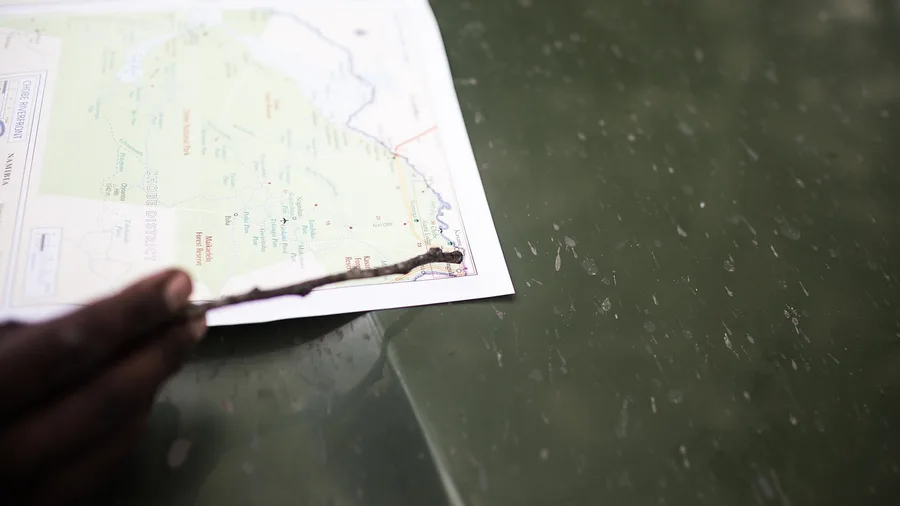
Research is the one step that closes the gap the slip and the second passport leave open – and it only works if you run it across the whole itinerary in sequence, not country by country in isolation.
That matters because the risk is relational. A stamp or electronic record picked up at stop two does not affect stop two – it affects stop three. Checking Jordan’s entry rules without then checking whether your Israel record creates a problem at the next border is the exact error that produces a refusal nobody saw coming. Work through every leg in order, treating each destination’s entry conditions as a response to everything that came before it on the itinerary.
The only sources worth trusting are the destination country’s official embassy or consulate website and your own government’s travel advisory page. Not a travel forum. Not last year’s blog post.
Check both close to the booking date – ideally within the same week you purchase the ticket. Entry rules can shift within days of a diplomatic development, and a check done six months before departure may not reflect the rule the gate officer is enforcing when you arrive. The timing gap is not theoretical; it has cost travelers a ticket price and a trip.
If you arrive without knowing a restriction applied to your specific sequence of stops, the border officer cannot waive it and the airline will not refund it. The cost of that gap falls entirely on you.
A Week-Before-Departure Check for a Multi-Country Itinerary
Frequently Asked Questions
Can a country deny you entry just because you visited somewhere else?
Yes, and it is entirely legal under international law. Entry into any country is a sovereign decision, and no traveler has an automatic right of admission. Travel-history bans are documented policy in several countries and apply regardless of why the traveler made the prior visit.
Does getting a new passport erase my travel history?
It removes the physical stamps from circulation but has no effect on electronic immigration records held by foreign governments. Those records are tied to you as a person, not to a specific document. A visit made on an old passport is still on file in the system of the country visited, and potentially visible to third-country border agencies under data-sharing arrangements.
What happens if I visit Israel — will Arab countries turn me away?
Policies vary by specific country and change over time. Several Arab League states have historically refused entry to passports bearing Israeli stamps, but the situation is not uniform across the region and has shifted as some countries normalized relations with Israel. Check the specific entry requirements for each Arab country you plan to visit against your own government’s travel advisory, close to your departure date. If you are visiting Israel first, ask the officer at the Israeli border to stamp a removable slip rather than your passport — that request must come before the officer handles the document.
Is visiting Iran, North Korea, or Cuba a problem for entering the US?
Visits to those countries can trigger enhanced screening and additional questioning at US Customs and Border Protection, and may affect eligibility for the Visa Waiver Program depending on your nationality and when the visit occurred. These are not automatic bars to entry but they do mean secondary inspection is a realistic possibility. Check the US CBP and State Department pages for the current rules that apply to your specific nationality.
If I answer honestly about a sensitive country visit, what actually happens?
The outcome depends on the specific country and its current policy. Honest disclosure may trigger secondary screening, an interview, or — in countries with outright bans — denial of entry. It will not result in a permanent ban on its own. Providing a false answer, by contrast, is an active misrepresentation that can result in a permanent entry ban and in some jurisdictions a criminal offense — a significantly worse outcome than the original travel-history issue.
How quickly can entry rules change?
Within days of a significant diplomatic event. Reciprocal bans have appeared and disappeared in response to specific incidents, sanctions designations, and diplomatic normalization agreements. The practical implication is that a check done at the time of booking is not sufficient on its own — re-check against official embassy websites and your government’s travel advisory within two weeks of departure, and again close to travel if there has been any news of a diplomatic shift involving your destination countries.
The Traveler Most at Risk, and the First Action That Addresses It
The traveler facing the highest real-world risk is not the one who made a single sensitive visit years ago. It is the one running a multi-country itinerary where a stamp or electronic record picked up at stop two directly affects entry at stop three – a situation that comes up repeatedly in Middle East circuits, Central and South Asia combinations, and any route that mixes Cuba with a US port of entry. That interaction between consecutive stops is exactly what a country-by-country check misses when it is done in isolation.
The passport is not a neutral document. Every page is read as a record of associations, and electronic systems hold records that no page shows and no renewal erases. That is the condition the traveler faces regardless of which workaround they apply.
So before purchasing any ticket, check the entry requirements for every country in your planned sequence, in order, against the official embassy or consulate website of each destination and your own government’s travel advisory – and do it as a chain, not as separate lookups, in the week before booking rather than the week before departure. The traveler who planned Israel followed by Jordan and got turned back at Aqaba did not have the wrong passport. They had the wrong sequence, checked too late. The sequence is the variable you can still change.
Check the Chain, Not Just Each Stop
Use the five-step sequence in this article to review your full itinerary in travel order — each stop against what your passport will carry by the time you reach it. The FAQ section above covers the specific country pairs that come up most often.