10 Countries Where Overstaying Even One Day Has Serious Consequences


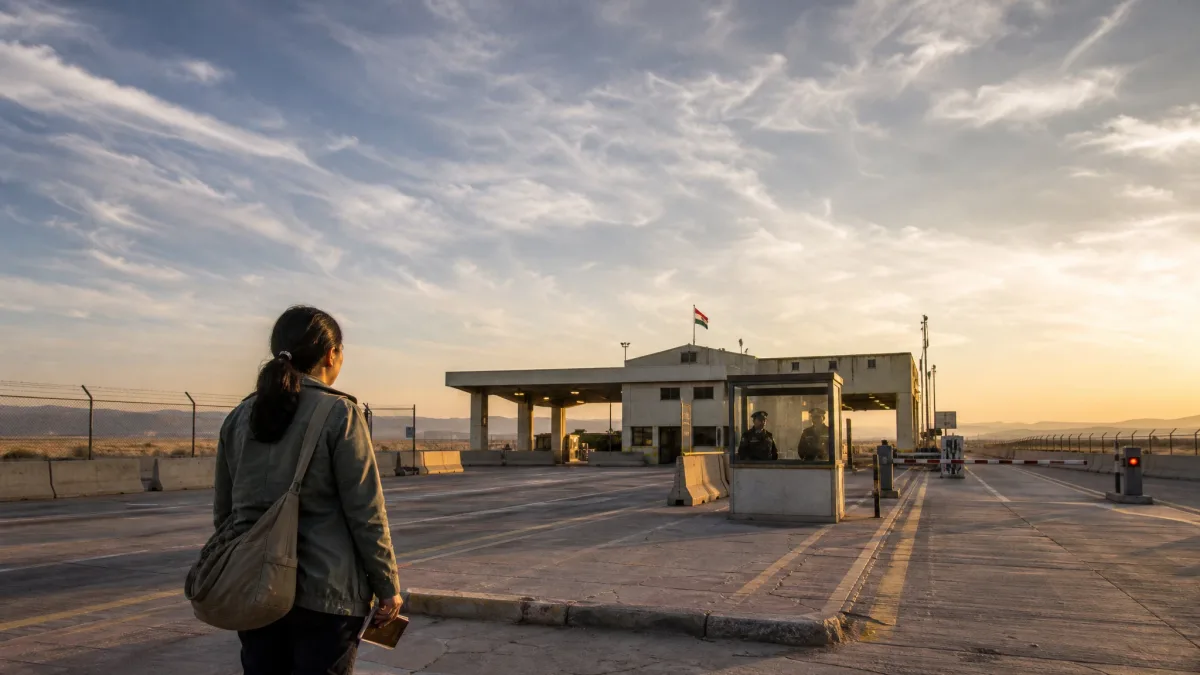
The stamp lands in your passport with a sound like a small bet being placed, and whether it is the beginning of a problem depends entirely on which country’s desk you are standing at.
Most travelers treat a visa expiry the way they treat a hotel checkout time – a rough guideline, forgiven with a smile if you run a little over. In ten countries, that assumption is not just wrong, it is the specific mistake that sets a consequence in motion.
That consequence may not show up at the departure gate. It may show up at a hotel door on a future trip, in a detention room at an airport you thought you were just passing through, or as a criminal charge filed before your flight home even boards.
This list names the ten countries, the specific consequence each one triggers, and the point in your travel timeline when that consequence actually lands – not at the exit desk, necessarily, but months or years later, in a place you did not expect.
Exact fine amounts, ban lengths, and detention thresholds change without public notice and differ by nationality. Every entry in this list points to the official authority where you verify current figures before you travel. A number quoted in a forum post or an article from last year is not a number you can rely on. The only step that changes the outcome in nearly every case here is contacting the right authority before the visa expires – not after.
Quick Tips Before You Start
Count the Right Days
Your visa validity and your permitted stay are different things — check both fields in your passport stamp, not just the visa sticker.
Use Official Sources Only
Fine amounts and ban lengths on travel forums are almost always outdated. Go directly to each country's immigration authority website for current figures.
Call Before You Overstay
If you think you might miss your departure date, contact the nearest embassy or immigration office before the visa expires — not after. Proactive contact consistently produces better outcomes.
Book a Buffer Day
On tight itineraries with onward connections, build at least one clear day between your visa expiry and your scheduled departure to absorb delays.
Check Zone Rules Too
In the Schengen Area, your permitted days count across all member states combined, not per country. Use the European Commission's official short-stay calculator before you book.
Detention and Criminal Exposure
The countries in this first group treat an overstay as something more than a bureaucratic slip. The consequences they apply — detention, criminal prosecution, financial liability that must be cleared before you board — arrive at a moment when you have the least ability to negotiate.
What makes these cases distinctive is that the traveler often does not know the enforcement has been triggered until they are already in a situation they cannot talk their way out of. Understanding the mechanism in advance is the only reliable protection.
1. UAE Detains Overstayers on Their Next Visit
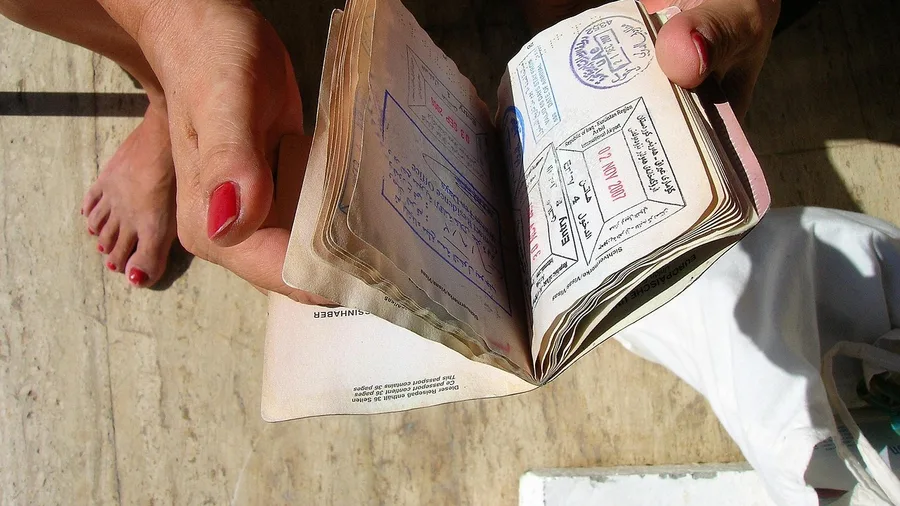
Zero days is the grace period the UAE immigration system allows – not one, not twelve hours, not a rounding error on a late-night flight.
What makes this enforcement pattern genuinely surprising is how calm the original departure feels. The overstay is recorded electronically the moment you clear the exit desk, no officer pulls you aside, and you board the flight home with no indication that anything has been flagged. That calm is the trap. The penalty does not activate at the airport on the way out – it activates the next time you try to walk through UAE immigration, when the system surfaces the old record and the process shifts immediately to detention, formal deportation, and a ban on re-entry.
That ban is not a matter of officer discretion, and your nationality does not soften it. More consequentially, it is not limited to the UAE: a confirmed overstay can trigger restrictions across Gulf Cooperation Council member states, which means one short trip could quietly close travel to Saudi Arabia, Kuwait, Bahrain, Oman, and Qatar as well. Fine amounts and ban durations are updated by the UAE Federal Authority for Identity, Citizenship, Customs and Port Security without public announcement and differ by passport – check directly with that authority before any trip where your departure date is tight.
💡 Tip: Do not assume the fine at original departure means the matter is closed. The UAE system records the violation and enforces it later, at a different border.
2. Singapore Can Prosecute an Overstay as a Crime

Singapore treats an overstay as a criminal offense, not a paperwork problem.
That single distinction separates it from almost every other country a traveler is likely to visit. In most places, overstaying a visa puts you in the same legal category as a parking fine that went unpaid – annoying, potentially expensive, but civil. Singapore’s Immigration Act places the same act inside the criminal code, which means the state can prosecute, fine, and imprison an overstaying visitor. Those are not theoretical powers listed for deterrence; they are applied.
There is no published floor below which the criminal provision stops applying. Some travelers try to calculate a window – one extra day, surely that is too small to prosecute – but Singapore’s law contains no such threshold. The provision is available for any confirmed overstay, which means the only safe number of extra days is zero. This is the feature that makes Singapore categorically different from a country that detains you on a future visit or logs a civil violation: the enforcement can arrive before you leave, not months or years later.
Courts in Singapore have also imposed caning in particularly serious overstay cases. Singapore is the only country on this list where a physical penalty of that kind sits inside the documented enforcement record – not a rumor, not a theoretical maximum, but a sentence that has been handed down. For most travelers the realistic outcome of a short overstay is prosecution and fine rather than imprisonment, but the structure of the law makes it impossible to guarantee which pathway applies to your case.
A conviction does not stay inside Singapore’s borders. It goes onto your immigration record permanently, and visa applications across Southeast Asia and beyond require disclosure of prior convictions – a Singapore overstay conviction can complicate or close entry to multiple countries you visit later. The Immigration and Checkpoints Authority of Singapore publishes current penalty ranges; if your itinerary ends with a tight departure window, that is the page to read before you travel, not after.
⚠️ COMMON MISTAKE
The 'One Day Won't Matter' Assumption
In detention and criminal-exposure countries, the enforcement mechanism does not scale with the length of the overstay. A one-day violation and a thirty-day violation can trigger identical processes. Never assume brevity is a defense.
3. Saudi Arabia Holds the Visitor and the Sponsor Liable

The important thing to know before your Saudi Arabia trip is that an overstay does not create one set of legal problems – it creates two, simultaneously, for two different people. Most visitors enter under the kafeel sponsorship system, which makes a local sponsor legally responsible for the visitor’s status. The moment the visitor overstays, that sponsor faces financial and legal penalties alongside them.
That shared liability is not a safety net for the traveler – it is the opposite. A sponsor facing direct legal exposure has every reason to report the overstay to authorities rather than quietly help someone extend their departure. Fines accumulate from day one and must be cleared in full before any departure is authorized; you cannot settle at the destination airport and pay later at home. After deportation, a re-entry ban typically follows that covers not just Saudi Arabia but other Gulf Cooperation Council states – including the UAE, Kuwait, Bahrain, Oman, and Qatar. The Saudi General Directorate of Passports, known as Jawazat, is the authoritative source for current fine rates and ban lengths.
4. China Fines You Daily and Then Detains You

The daily fine is the detail most travelers focus on – and focusing on it is the mistake. Yes, China’s penalty structure starts accumulating from day one of an overstay, so a traveler who realizes the problem a week late has already built a real financial liability before they’ve packed a bag. But the fine is not the serious consequence here.
The serious consequence is detention. China’s internal registration systems – hotel check-ins, train and bus ticket purchases, routine residency sweeps – mean authorities can locate an overstaying traveler while they’re still inside the country, nowhere near a departure gate. When that happens, the enforcement pathway changes entirely: detention before deportation becomes routine, not a worst-case scenario. The option of arriving at the airport, paying a fine at an immigration window, and boarding a flight disappears. You don’t get to leave quietly.
Deportation is almost always followed by a formal re-entry ban, and China’s border and residency tracking infrastructure makes detection a realistic risk for any stay that runs long – not just a theoretical one. For current daily fine amounts, the National Immigration Administration of China is the only authoritative source worth checking; the figures are subject to change and should not be taken from any third-party summary.
💡 Tip: Hotel check-in in China requires passport registration with local police. Every night you stay, your location is recorded. An overstay is not easy to move through quietly.
What Travelers Get Wrong About Overstays
Automatic Multi-Year Entry Bans
These countries do not need to find you inside the country, arrest you, or conduct a hearing. The ban is triggered automatically when the overstay is confirmed — usually at departure — and recorded in a system that every future border crossing checks.
What makes automatic bans particularly consequential is that the traveler often has no opportunity to explain, negotiate, or pay their way to a different outcome. The mechanism runs without discretion. The only effective strategy is to prevent it from running at all.
5. One US Overstay Day Cancels Your ESTA Permanently

You clear the departure gate, the officer stamps you out, and nothing happens. No fine window, no secondary interview, no scene. That quiet exit is exactly what makes a one-day US overstay so easy to underestimate – the consequence isn’t at that desk, it’s in the record that desk just created. Any overstay, regardless of length, registers as a formal immigration violation. Your ESTA is cancelled from that moment forward, permanently, meaning every future trip to the US requires a full nonimmigrant visa application with the overstay disclosed on it, and that disclosure can result in denial.
There is also a statutory threshold – the specific number of days is subject to legislative change, so check uscis.gov for the current figure – beyond which a multi-year re-entry bar is triggered automatically. Even before that threshold, the record doesn’t stay in one place: the US shares immigration data with the UK, Canada, Australia, and New Zealand through Five Eyes arrangements, so a violation logged at JFK can surface at Heathrow or Sydney on a future trip. uscis.gov holds the current unlawful presence rules, bar thresholds, and waiver pathways – it’s the only source worth trusting here.
What You Can Still Control — Before vs. After the Visa Expires
Before It Expires
- Contact the immigration authority to request an extension
- Explain the reason (medical, flight cancellation, force majeure)
- Pay any applicable extension fee through official channels
- Get written confirmation of the extended or amended status
- Depart on the amended date with documentation in hand
After It Expires
- No extension is available — only departure or enforcement
- Fines have already started accruing in China and Saudi Arabia
- In-country detection risk rises every day you remain
- Departure may require supervised processing or detention first
- Immigration record is marked regardless of how you eventually leave
6. Russia’s Ban Is Automatic and Scales With the Overstay

The border crossing at departure is a cold, procedural moment – a document check, a system query, a result. Russia’s process at that point produces no argument and no discretion. The moment an overstay is confirmed, an entry ban is applied. Not filed for review, not referred to an officer’s judgment – applied. There is no mechanism to appeal it at the crossing itself.
What makes Russia’s system distinct is the scaling. One day over your visa’s validity and one month over it both result in bans, but not the same ban. The duration rises proportionally with the overstay length, which means a single extra day is never consequence-free – it just sits at the shorter end of a table that gets significantly longer above it. The Russian Ministry of Internal Affairs’ migration authority publishes the current scaling figures; those numbers are subject to revision, and any traveler with a tight departure window should verify them directly rather than rely on a figure from a travel forum.
The ban doesn’t stay within Russian borders, either. Neighboring states with data-sharing arrangements check the same systems, so the block can appear at a crossing you didn’t expect it to. The assumption that one careless day is too small to matter is precisely the assumption Russia’s automatic mechanism is built to correct.
7. Japan Deports and Bans With Almost No Exceptions

Some countries calibrate their bans – a longer overstay earns a longer ban, a shorter one earns a shorter one, and the math gives you something to weigh. Japan does not work that way. The re-entry prohibition Japan issues at departure is largely the same outcome whether the overstay was a single afternoon or a full month, and the near-total absence of exceptions is the detail that separates Japan from nearly every other country on this list.
Japan’s biometric entry and exit infrastructure is among the most thorough in the world. When you leave, the system matches your departure scan against your visa validity precisely – not approximately. If the math shows even one day past your permitted period, that discrepancy is flagged and processed before you board. The traveler who moved through Japan for weeks without a single interaction with an immigration officer should not take that quiet as evidence that the overstay went unnoticed. It was recorded. Detection at departure is close to guaranteed.
What follows is where Japan diverges most sharply from the informal reputation some destinations carry. There is no fine window at the airport where payment closes the matter. There is no officer with the authority to exercise discretion in your favor because the overstay was brief or the circumstances were unusual. The prohibition is issued, the departure is supervised, and the record is created. Payment in lieu of prohibition is not an available resolution. Japan’s consistency across cases is not a reputation – it is the documented pattern in how the Immigration Services Agency processes these departures.
The prohibition period starts on the date of forced departure and attaches permanently to your immigration history. Every subsequent Japanese visa application requires disclosure of it, and processing times lengthen accordingly – sometimes resulting in refusal outright. Partner countries that share immigration data with Japan also see the record, which can complicate visa processing in ways that have nothing to do with your destination country’s own rules. The Japan Immigration Services Agency publishes current prohibition lengths and is the authoritative reference for any traveler whose departure window is tight enough that a miscalculation is possible. Check the date on your stamp before you assume you have a day in hand.
Japan Overstay — At a Glance
🛂 Detection Method
Biometric exit tracking
⚖️ Consequence Type
Formal re-entry prohibition
🔄 Discretion at Border
Minimal to none
📋 Visa Impact
Appears on all future applications
🌐 Authoritative Source
Japan Immigration Services Agency
Key difference from Thailand
Japan does not offer a pay-and-leave fine window — the prohibition is applied regardless of how short the overstay was.
8. Australia Cancels the Visa Before You Reach the Airport
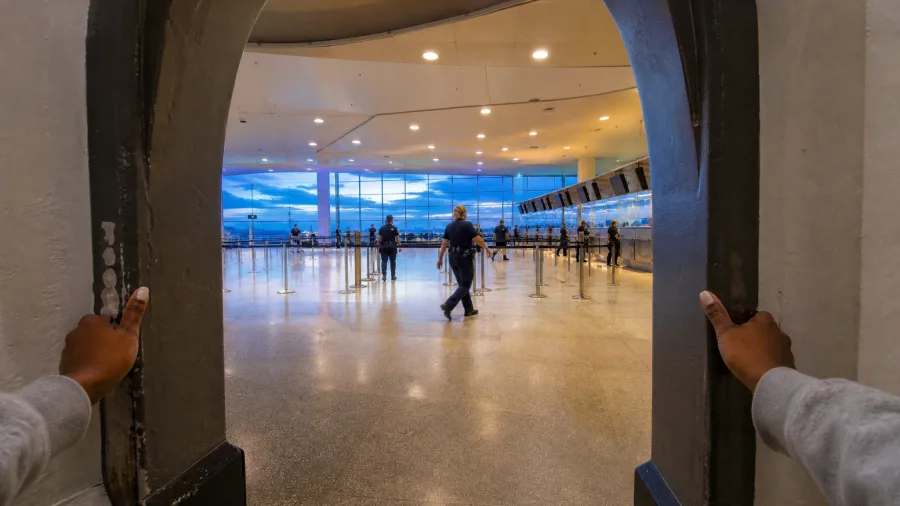
The answer is that the Department of Home Affairs can cancel the visa before you ever reach the airport – not at check-in, not at the departure gate, but while you’re still at your accommodation – and from that moment you are an unlawful non-citizen inside Australia. That changes your departure from a straightforward flight to a supervised removal process, with detention possible in the time between that status being established and you actually leaving. The record that follows is permanent: a re-entry ban appears on every future Australian visa application with no mechanism to remove it, and because Australia is a Five Eyes partner, that record travels automatically to immigration authorities in the United States, the United Kingdom, Canada, and New Zealand, where it can affect entry decisions independently of Australian rules.
Australia’s Department of Home Affairs publishes current cancellation triggers, unlawful presence rules, and re-entry ban lengths – that page is the only reliable source for exact figures, which shift without public announcement. The practical point for any traveler is this: by the time you realize the visa has expired, the decision about your status may already have been made on the government’s side, not yours. Proactive contact with the Department before expiry is the only position that gives you any say in what comes next.
💡 Tip: Australia's visa status is held in a digital system, not stamped in your passport. You cannot see whether your visa has been cancelled by looking at your passport — check the Visa Entitlement Verification Online (VEVO) tool at the Department of Home Affairs website.
What to Do If You Realize You Might Overstay — Day by Day
Fines and a Lasting Immigration Record
At first glance, the countries in this group look more forgiving: there is a fine window, you pay, you leave. But the fine is only the surface layer. What sits beneath it — a blacklist trigger, a permanent immigration record, or a flag that spreads across 27 countries — is what makes these entries earn their place on this list.
The danger here is that the payment-at-departure experience feels routine and finite, which is exactly why it breeds repeat offenses. The second offense, or the overstay that crosses a threshold, produces a result that is nothing like the first.
9. Thailand’s Airport Fine Hides a Blacklist Behind It
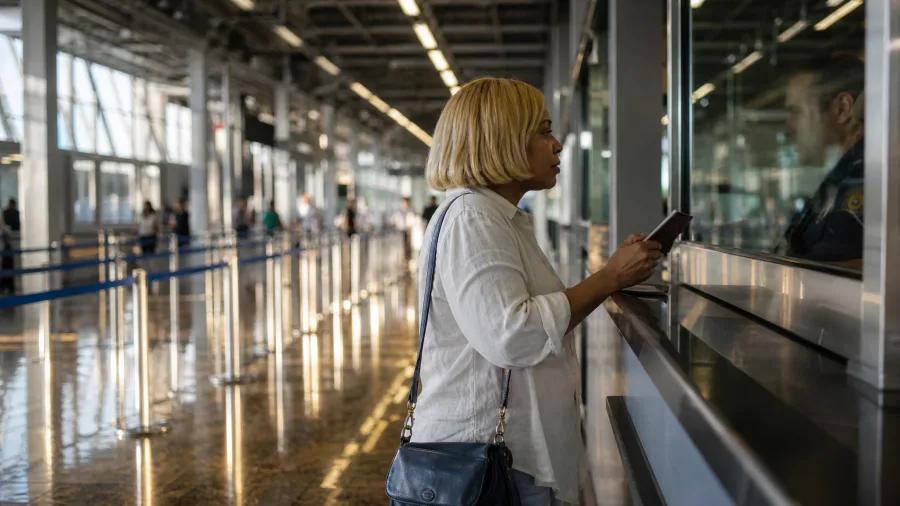
You’re standing at the immigration counter at Suvarnabhumi, watching the officer count the days on your passport stamp, and the process feels almost mundane – a queue, a calculator, a cash payment, a stamp, and you’re on your way to the gate. That routine is real for a short overstay, and it has built Thailand a reputation as a country that treats the whole thing as a minor administrative matter. The reputation is earned, up to a point.
That point is a specific threshold – published by the Thai Immigration Bureau – beyond which the outcome stops being a fine and becomes a formal blacklist: a multi-year or permanent bar on re-entry that no subsequent payment clears. It is a recorded decision in the Thai immigration system, not an officer’s call in the moment. For a traveler who visits Thailand once a decade, a blacklist is serious. For anyone who returns annually, uses the country as a regional base, or has booked future trips already, it closes a door that was previously wide open. Check the Thai Immigration Bureau’s current daily fine rates and blacklist thresholds before any trip where your departure date is fixed and the margin is thin.
💡 PRO TIP
How to Count Your Schengen Days Correctly
Open the European Commission's official short-stay Schengen calculator at ec.europa.eu and enter every date you have been in any Schengen state in the last 180 days, not just the current trip. The tool calculates your remaining permitted days in real time. Run it before you book, not the day before you fly.
10. Overstaying in Germany Closes the Entire Schengen Zone

No – and that one word is the reason this entry closes the list. A single overstay anywhere in the Schengen Area is written into the Schengen Information System, a shared database that every border officer in all 27 member states can read in real time. The record does not sit in a German file. It belongs to the zone.
That means one extra day in Berlin – or Paris, or Rome, or Athens – can simultaneously close France, Italy, Spain, Portugal, Greece, the Netherlands, and 22 other countries to you at once. No other country on this list produces that kind of geographic damage from a single event. The Schengen Information System does not let you sidestep the flag by applying to a different member state; every short-stay visa application across the zone requires disclosure of the SIS record, and every member state can refuse on that basis.
The most dangerous part is how easily the overstay happens by accident. The 90-in-180-day Schengen rule counts total days across all member states inside any rolling 180-day window – not consecutive days in one country, and not a fixed calendar period starting at first entry. Travelers who spend three weeks in Spain, fly home, return six weeks later for two weeks in Italy, then add a week in France can be over the limit without ever intending to stay long. The European Commission’s official Schengen pages carry a free short-stay calculator tool that does the count for you; if your itinerary touches more than one Schengen country in any six-month stretch, check it before you book the return flight.
🛂 From Overstay to Consequence — How It Typically Unfolds
Visa Expiry
The permitted stay ends; from this moment, any further presence in the country is a violation regardless of how it was incurred.
Detection Trigger
The overstay is flagged — at hotel registration, a transport check, or most commonly at the departure checkpoint.
Immediate Consequence Applied
Depending on the country, this is a fine, detention, supervised departure, or all three — and the traveler is rarely given a choice of which.
Departure Processed
The traveler departs, sometimes under escort, with a formal record of the violation stamped onto the immigration file.
Record Propagates
The violation enters the relevant database — SIS, Five Eyes, GCC shared systems — and becomes visible to border agencies in partner countries.
Future Entry Affected
The next visa application or border crossing in the affected country or zone encounters the record, triggering denial, additional scrutiny, or a ban.
Frequently Asked Questions
Is there any country on this list where one day genuinely does not matter?
No. Every country on this list has documented enforcement for day-one overstays. Thailand comes closest to a lenient first response — a per-day fine at the airport — but even there, a pattern of short overstays can trigger blacklisting. The others apply automatic bans, criminal provisions, or detention without any minimum threshold.
What should I do the moment I realize I might not make my departure date?
Contact the nearest embassy for your home country and the immigration authority of the country you are in — before the visa expires, not after. Proactive contact almost always produces a better outcome than being caught. Gather any documentation supporting your reason (medical emergency, cancelled flight, force majeure) and keep all written correspondence with authorities.
Does overstaying in one Schengen country really block all of them?
Yes. The Schengen Information System is shared across all 27 member states. A single overstay record is visible to every member state’s border authority simultaneously. You cannot apply to France or Italy to avoid a flag entered against a Germany or Spain overstay — the database is zone-wide by design.
If I paid the fine at the Thai airport, is my record clear?
The fine settles the financial penalty for that specific overstay. It does not delete the immigration record. Future visa applications in Thailand still reflect the violation, and a subsequent overstay — or a first overstay past a threshold — can result in blacklisting rather than another fine opportunity.
Does a US overstay affect my ability to travel to the UK or Australia?
It can. The US participates in Five Eyes border data sharing with the UK, Canada, Australia, and New Zealand. An overstay record in the US immigration system is visible to border agencies in those four countries when they process future entry applications. Disclosure requirements on visa applications also mean the overstay must be declared directly.
Can I appeal a ban applied automatically at a Russian or Japanese border crossing?
Not at the crossing itself — neither country offers an appeal window at the border. Any appeal must be filed through the formal administrative process in that country after departure. Consult an immigration lawyer in your home country who specializes in the relevant jurisdiction, and verify the appeal procedure with the official immigration authority before submitting anything.
The Spectrum Runs From a Fine You Pay to a Ban You Cannot Argue Your Way Out Of
The spectrum runs roughly like this. At one end, a Thai-style per-day fine settled at the airport counter and the matter is closed – unless you cross the threshold that converts it into a blacklist entry. One step up: a formal immigration record violation that travels with you on every future application, as a single-day US overstay creates before any statutory threshold is reached. Further along: an automatic multi-year re-entry ban triggered at departure with no hearing and no discretion, as Russia and Japan apply it. Then the Schengen block – one overstay record simultaneously closing 27 countries through a shared information system. Then in-country detention before deportation, as China routinely applies once an overstay is discovered, and as the UAE enforces on the next visit rather than the current one. Then Saudi Arabia, where the financial penalties must be settled in full before departure is physically permitted and your local sponsor is also held liable. Then Australia, where the visa can be cancelled while you are still in the country, making you unlawful before you reach the airport. At the most severe end: Singapore, where the Immigration Act classifies an overstay as a criminal offense and where prosecution, fines, imprisonment, and in serious cases caning are all available responses.
The traveler who assumed one extra day was a rounding error now has ten specific country profiles showing exactly where that assumption fails and what it costs. The single step that improves the outcome in every jurisdiction on this list is the same: contact the nearest embassy or that country’s official immigration authority before the visa expires. Not at check-in. Not at the departure gate. Before. Every country here has a formal process for extensions and emergencies, and every one of those processes produces a result that is measurably better than being caught. Find the relevant authority, make the call, and the stamp that sounded like nothing becomes a problem you actually had a chance to solve.