10 Countries With Rules Tourists Break Without Realizing It


A municipal officer in Rome reaches the tourist before she has even settled her weight on the Spanish Steps – fine already written, no negotiation offered.
The traveler stopped at Singapore customs is not carrying contraband. There is a packet of Wrigley’s in a toiletry bag, tucked between a travel toothbrush and a lip balm, exactly where it lives at home. That is the whole problem.
Most of the violations that catch tourists abroad are not crimes of intent. They are crimes of assumption – habits formed over years in one legal environment, carried without adjustment into a country where those same habits are enforceable offences.
Ten countries. Ten rules actively prosecuted against tourists who did not know they existed. For each one: what the rule is, why it is there, and which official source to open before you board. By the end, you will know exactly where the gap between your assumptions and the local law sits – and you will know how to close it before departure, not at the border.
Quick Tips Before You Start
Use Official Sources
Check the destination country's government or official tourism website — not a travel blog — for current rules before you pack.
Check Your Bag Contents
Food, seeds, soil on gear, and over-the-counter medication all have different rules at different borders — review your pack before departure.
Your Phone Is a Legal Object
Posts, reposts, and likes made while physically inside a country can fall under that country's laws, including speech laws.
Dress Codes Apply in Public
Resort wear is not the legal standard in the country surrounding the resort. Carry a light scarf and check the dress rules for every non-beach venue.
Paths Are Legal Boundaries
In protected natural areas, marked trails are not suggestions. Stepping off them can be a fineable offence — check protected-area rules before hiking.
Asia and the Middle East
The rules in this region most likely to catch tourists share a common structure: they look like exaggerations until the border officer acts on them.
Four countries here — Singapore, Japan, Thailand, and the UAE — each have a specific enforcement reality that visitors from the US are almost never prepared for, because the equivalent rule does not exist at home.
1. Singapore: Gum Imports Are a Real Border Issue

The version most travelers have heard – that chewing gum is simply illegal in Singapore – is loose enough that many people shrug it off before they even start packing. That loose version is the problem. What the law actually prohibits is the act of bringing gum into the country for recreational use, and selling or giving it away is banned outright. A pack of Wrigley’s picked up at a US airport pharmacy before boarding is, at the Singapore border, a restricted import – which is precisely what Immigration and Checkpoints Authority officers are trained to look for when they search bags.
There is one lawful route in: therapeutic nicotine gum, carried with a valid prescription. That carve-out is not incidental – it shows exactly what the law is targeting. Medicinal use is permitted; recreational gum is not. ICA officers enforce this at entry points; the rule is not kept alive by rumour. Once the bag is searched and the pack is found, no explanation changes the outcome. Current import conditions, including the full terms of the nicotine-gum exception, are published on the ICA website at ica.gov.sg – check there before you zip the toiletry bag.
💡 Tip: The prescription exception is narrow — a doctor's note for nicotine gum, not a general dental recommendation. Do not assume any gum qualifies.
✅ How to Actually Prepare Before Any International Trip
Identify the Destination's Official Source
Find the government tourism authority or customs website for the country — not a blog, not a forum thread.
Check Entry Restrictions
Look up what you cannot bring in: food, gum, medication, outdoor gear — each country has its own list.
Read the Conduct Rules for Public Spaces
Dress codes, public consumption, and physical conduct rules are usually on the official tourism portal under 'local laws' or 'visitor guidelines'.
Check Your State Department Advisory
Visit travel.state.gov for your destination's current advisory — it names specific laws that have been applied to US citizens recently.
Ask Your Accommodation on Arrival
Your hotel, guesthouse, or dive operator knows the current local enforcement reality — one question on check-in covers what official pages may lag on.
2. Japan: Bin Rules Require Actual Sorting

Four categories – burnable, non-burnable, recyclables, and PET bottles – are what you sort your rubbish into in Japan, and getting the category wrong is a genuine violation, not a social faux pas. The near-total absence of public bins is not an oversight: following a 1995 nerve-agent attack on the Tokyo subway, bins were identified as concealment points and systematically removed as a security measure. The street looks clean because residents carry their rubbish home, and the expectation is that you will too.
Convenience-store bins exist for waste from purchases made inside that specific store – walk in from the street with a coffee from somewhere else and staff will redirect you, firmly. If you are staying in an apartment or guesthouse, your host’s sorting schedule applies to you the same way it applies to a resident; a wrongly sorted bag left at a collection point will be noticed and traced back. In Kyoto, eating while walking through certain historic districts carries its own separate restriction – finish the takoyaki before you move, not during.
⚠️ COMMON MISTAKE
Convenience-Store Bins Are Not Public Bins
Using a Japanese convenience-store bin for waste you brought in from outside is a common tourist error. Those bins are provided for in-store purchases only — staff will ask you to take the rubbish back.
3. Thailand: Social Media Posts Can Trigger Arrest

You are sitting on a rooftop bar in Bangkok, phone in hand, scrolling through a news story that came up in your feed. The headline is about the Thai royal family. You tap a share, or maybe just a like, and put the phone back down. That action, performed while you are physically on Thai soil, can be the basis of a criminal complaint under Section 112 of the Criminal Code – the lèse-majesté statute. Most visitors assume it applies to Thai citizens caught in a political dispute. It does not: the law has been used to prosecute foreign nationals, and the location of the server, the platform, or the account’s home country is irrelevant to whether a complaint can be filed.
What makes the exposure unusually hard to manage is the enforcement mechanism. A police officer does not have to witness anything. Any member of the public can walk into a police station and file a complaint, which means a tourist does not have to be loud, public, or even noticed by anyone who looks like an authority figure for a violation to be reported. The trigger can be something that felt like obvious satire at home – a captioned image, a meme reposted from a foreign outlet, a string of emojis that read as mockery in context. Intent to insult is not a required element for a complaint to proceed.
The practical move before departure is to check travel.state.gov for the current Thailand travel advisory. The State Department’s page includes recent cases involving tourists and a direct risk assessment – not a general note about being respectful, but documented outcomes. Reading it takes ten minutes and gives you a clearer picture of the actual exposure than any summary can.
4. UAE: The Resort Bubble Is Not the Legal Standard

The single most dangerous assumption a tourist brings to the UAE is that the country is whatever the resort says it is – it is not, and the gap between those two realities is where detentions happen.
Physical conduct rules reach further than most visitors expect. Couples who know not to kiss but still hold hands or embrace in a mall, a souk, or on a metro platform have been detained – the law is not limited to the obvious act, and stopping short of a kiss does not put you automatically in the clear. Dress code works the same way: shoulders and knees must be covered in malls, markets, and on public transport, and the poolside standard you observed at the hotel is a resort courtesy, not a national one. Alcohol sits in its own category – it is legal inside a licensed hotel bar, and the moment you step outside with that drink, whether onto a beach a block away or into a street market, the legality ends regardless of where the purchase happened.
The structure of Dubai’s tourist infrastructure creates this trap deliberately. The hotels, the international restaurants, the glass-and-chrome shopping centres – all of it is designed to feel globally familiar, which trains a visitor’s instincts toward the wrong baseline. Check visitdubai.com and uaecabinet.ae before you travel, not the day before checkout: regulations do get updated, and the government portals carry the current, enforceable version of the rules, not a summary someone wrote two years ago. Several countries have also rewritten immigration and entry rules this year in ways that affect what visitors can do once inside.
💡 Tip: Pack a lightweight linen shirt or scarf for the day you leave the resort. It resolves the dress code for markets, transport, and religious sites simultaneously.
The Resort Assumption vs. The Legal Reality
Europe
European rules catch tourists specifically because Europe feels familiar to most American travelers — the infrastructure is recognizable, the signage is readable, and the assumption sets in that the norms are the same.
Three countries here prove that assumption wrong in three completely different ways: a traffic signal, a beach surface, and a set of coordinates in Rome.
5. Germany: Crossing a Red Pedestrian Light Is a Fineable Offence

Germany’s pedestrian red light is a real law with real fines, and it is enforced.
Under the Federal Highway Code, crossing at a red pedestrian signal is an offence whether a single vehicle is visible or not. The rule is about the signal itself, not about whether you are in anyone’s way. German police issue fines on the spot – this is not a dormant technicality that exists on paper and gets ignored in practice. It is treated the same way a traffic violation is treated: you crossed on red, here is your fine.
The rule extends to cyclists. If you rent a bike and treat pedestrian light phases the way you might at home – as suggestions that yield to a quick gap in traffic – you are within the same enforcement reach as anyone on foot. Two wheels do not change the legal standard at a crossing.
The social layer is the part that catches visitors off guard. Locals, especially if there are children nearby, will say something out loud when a tourist crosses on red. The reaction is not hostile as a rule, but it is direct and immediate – a sharp remark from a stranger on a pavement can land harder than the fine itself, and it will happen in public. Germany treats the pedestrian signal as a shared civic contract, not merely a legal one, and the social enforcement is as consistent as the official kind.
Current fine amounts are set under the Strassenverkehrsordnung and are published by the German Federal Ministry for Digital and Transport and the ADAC. Any figure you find in a travel article, including this one, may be out of date – check those sources directly for the number that applies on the day you travel.
Tourist Assumption vs. How Enforcement Actually Works
What Tourists Assume
- Empty street means crossing is fine
- Gum in a bag is too small to matter
- A sign on a beach is a courtesy reminder
- Resort behavior is the country's standard
- Posting online feels like a private act
What the Law Says
- The signal is the offence — traffic is irrelevant
- Importing restricted items starts at the border
- Beach material is classified as natural heritage
- Licensed zones are legal exceptions, not the rule
- Posts made inside the country fall under local law
6. Greece: A Handful of Beach Sand Is a Criminal Matter

The sand at a Greek island beach is warm underfoot, pale as chalk in some places and iron-dark in others, and it is protected by criminal law.
Taking any of it home – filling a small bottle, pocketing a fistful of pebbles, tucking a flat stone into a bag – is a criminal offence under Greek environmental protection law. Not a fine issued by a resort, not a civil penalty: a prosecution. Tourist arrests and convictions have happened and have been reported across European outlets, involving visitors who did exactly what millions of people have done before thinking it might matter. The reasoning is not symbolic. Greece’s coastline faces active erosion, and its beaches carry natural heritage classification – the law exists because individual acts, multiplied across the millions of visitors who arrive each summer, add up to a measurable and documented problem.
The prohibited material is the beach’s natural surface: sand, pebbles, rock fragments. Items that washed up from elsewhere fall outside the scope, but the Greek Tourism Organisation and the relevant ministry’s website define that boundary exactly – it is worth checking before you assume a particular item qualifies as found rather than taken. The practical fix costs nothing: leave the beach as you found it. If you want something to bring home, the souvenir shops near every major beach sell legal replicas. The beach itself is not available.
7. Rome: The Fine for the Wrong Seat Comes Fast

Rome charges nothing to look at the Spanish Steps, and the Trevi Fountain costs nothing to stand in front of – the fine comes the moment you sit on one or step into the other. Sitting on the Steps is banned outright under Rome’s municipal code, and Vigili Urbani officers patrol the site specifically for that violation; they issue the fine on the spot, without a verbal warning first. The same rule covers every city fountain, Trevi included: wading and swimming carry identical enforcement weight, and August heat is not a defence the officers entertain.
The day that combines the Steps, the Trevi, and even one church visit is also the day the dress code applies – shoulders and knees covered before entering the Pantheon, any basilica, any Catholic church on the route. A light scarf packed in a bag costs almost nothing and settles the church problem in seconds. Knowing not to sit on the Steps costs even less.
💡 Tip: Vigili Urbani officers near the Trevi and the Steps are not there for photo opportunities — they are working. Do not wait to be told to move.
Rest of the World
The final three countries cover rules tied to landscapes and ecosystems — environments so specific that the laws protecting them have no equivalent anywhere most tourists come from.
Iceland, New Zealand, and the Philippines each enforce rules that look minor until you understand the fragility or isolation of what they are protecting. The consequences are serious in all three cases.
8. Iceland: Leaving the Trail Is Actually Illegal

It is law. Stepping off a marked path in a protected area is a prosecutable offence, and the reason is written directly into the landscape: the dark, boot-shaped scars you see in the moss beside trails are not wear marks from overuse. Rangers share similar concerns about unspoken park rules that visitors routinely overlook in protected natural spaces closer to home. That moss took decades – sometimes centuries – to grow. One misplaced step compresses it permanently, and the scar will still be there long after the person who made it has forgotten the hike entirely.
Off-road driving is a separate rule and carries its own penalties. Renting a 4WD does not open the highlands to you; driving outside designated F-roads on nature-reserve terrain is illegal and causes the same lasting damage the trail rules address. Drone restrictions add a third layer: flying near geothermal sites or protected bird-nesting areas is restricted, and Iceland is a destination people specifically bring drones to photograph.
These three rules – where you walk, where you drive, where you fly a drone – are independent of each other. Researching one does not cover the others. The Environment Agency of Iceland at ust.is publishes the current fine amounts, the full protected-area list, and the drone restriction zones; check all three before arrival, not just the one that matches your planned activity.
💡 PRO TIP
Iceland's F-Roads Have a Legal Definition
F-roads are highland roads legally open to 4WD vehicles. Any other unmarked highland terrain is not a grey area — driving on it is illegal regardless of what the vehicle can physically handle. Check the Icelandic Road and Coastal Administration (vegagerdin.is) for current F-road access.
9. New Zealand: Non-Declaration Is the Offence, Not the Item
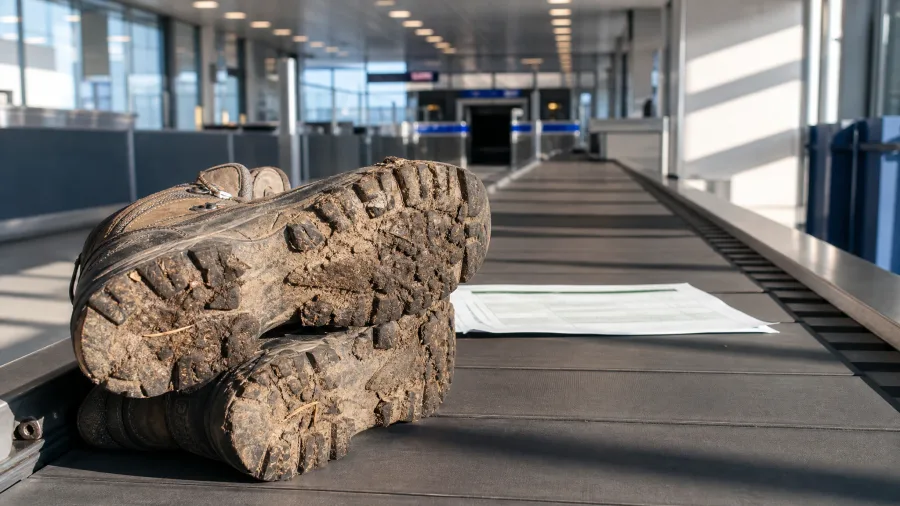
The mistake most visitors make at New Zealand biosecurity starts before they even reach the luggage carousel: they assume that declaring an item means losing it, so they say nothing. That logic inverts the actual rule. Declaration gives an officer the chance to inspect the item and potentially clear it. Non-declaration triggers an on-the-spot fine regardless of whether the item would have passed inspection – and the fine does not require a court date or a follow-up process. It is issued there, at the border, immediately, and ‘I forgot it was in my bag’ does not reduce it.
The items that trigger this most often are not exotic: an apple left over from an in-flight meal, trail mix from a US outdoor store, honey, seeds, or hiking boots pulled straight from a weekend trip and packed without cleaning. New Zealand treats a soil clod on a boot sole with the same legal seriousness as fresh fruit, because both are genuine vectors for pests and diseases in an agricultural system that has no natural defenses against introduced species. The Ministry for Primary Industries keeps the current declarable-items list at mpi.govt.nz – check it before you pack, not after the flight lands.
💡 Tip: Clean your hiking boots before packing them. Soil in the lug soles is the most commonly flagged problem for outdoor travelers — a stiff brush before you leave solves it.
New Zealand Border — At a Glance
🍎 In-Flight Meal Trap
Uneaten fruit from the plane counts — bin it before landing
👟 Boot Standard
Clean to bare rubber — visible soil is a chargeable risk
📋 If You're Unsure
Tick 'Yes' on the arrival card — officers can clear borderline items
⚡ Fine Timing
Issued at the border, paid before you leave the hall
🌐 Current Penalty Amount
Check mpi.govt.nz — figures update; the article cannot state them reliably
The Threshold That Matters
Declaration is not admission of guilt — it is the only move that keeps the item in play. Silence is the offence.
10. Philippines: Touching Coral Is a Criminal Offence, Not a Resort Policy

The sign at the entry to El Nido’s most popular snorkel site that says ‘Do Not Touch the Reef’ is not a request from a resort’s activities desk – it is a restatement of the Philippine Fisheries Code, which classifies reef contact as a criminal offence.
Most tourists process that sign as etiquette. The legal reality is different. Standing on coral, snapping off a fragment, or collecting any part of the reef structure exposes you to criminal prosecution, not a civil fine or a resort penalty. The distinction matters because criminal classification in the Philippines carries actual court proceedings, not a transaction at a desk.
The scope of the law catches people who never went near the coral. Lifting a starfish for a photograph, pocketing a cone shell from the sand, picking up a sea cucumber to show a travel companion – all of it falls under the same statute, in the same criminal category, with no lesser tier for items that were already loose or seemed like souvenirs. The reef’s living and recently dead components are treated as one protected system, and the law does not grade your intentions.
Marine wardens patrol Tubbataha Reef, Apo Island, and the waters around El Nido specifically because tourist contact violations happen there. These are not theoretical enforcement zones staffed by officers who look the other way – wardens at these sites have stopped and acted against tourists for exactly the kind of incidental contact that feels reflexive in the water: a steadying hand on a coral head, a foot touching bottom in shallow reef, a shell lifted and then replaced. The act of replacing it does not undo the contact.
The single most reliable thing you can do before any dive or snorkel trip in the Philippines is ask your local operator directly about the current rules for that specific site. Protected-area boundaries shift, no-touch zones are redrawn, and anchor restrictions change in ways that no general travel list keeps pace with. Local dive operators work inside those rules daily and know when they were last updated. Ignorance of the Fisheries Code does not reduce the charge in a Philippine court – and a tourist who reads ‘don’t touch’ as advisory rather than legal is staking quite a lot on that assumption.
Rules Ranked by How Often Tourists Dismiss Them as Myths
Frequently Asked Questions
Is it really worth worrying about these rules, or do tourists almost never get caught?
The rules in this article are all actively enforced — not just technically on the books. Singapore’s ICA checks bags at the border. Roman municipal police patrol the Spanish Steps specifically for sitting violations. Philippine marine wardens are present at dive sites. The question is not whether enforcement happens; it is whether you want to find out firsthand.
Can I get arrested for something I posted online before I arrived in Thailand?
Section 112 applies to acts committed while physically inside Thailand. A post made before arrival, from a different country, falls under different legal jurisdiction. The risk is specifically tied to activity conducted while you are in the country — including accessing and sharing content through your phone once you have landed.
What happens if I accidentally bring fruit into New Zealand without declaring it?
An on-the-spot fine is issued at the border — the process does not require a court date or a subsequent legal proceeding. The fine amount is set by the Ministry for Primary Industries and is published on mpi.govt.nz. ‘I forgot it was in my bag’ does not reduce the fine; the obligation to declare is yours regardless of intent.
If I stay inside a resort in Dubai, am I subject to UAE public conduct laws?
Licensed hotel and resort zones operate under specific exemptions — poolside alcohol, for instance, is legal within a licensed venue. The moment you leave that licensed perimeter and enter a public space, market, mall, or street, national law applies in full. The resort boundary is a legal line, not just a fence.
Do these rules apply to children traveling with their family?
In most cases, the parent or accompanying adult bears legal responsibility for a minor’s conduct. Singapore’s gum restriction applies to what enters the country in any bag — a child’s carry-on included. New Zealand’s declaration obligation applies to every passenger, including minors — parents typically complete the declaration for children but must include all items in the family’s possession.
Where is the single best place to check for a country’s tourist conduct rules before I go?
The US State Department’s travel advisory pages at travel.state.gov provide country-specific legal risk summaries that are updated based on recent cases involving US citizens. Pair that with the destination country’s official tourism or customs authority website for the specific item and conduct rules. Those two sources together cover what any general article — including this one — cannot keep current.
A Pebble in Your Pocket and a Criminal Charge in Your Future
Picking up a piece of coral on a snorkel in the Philippines feels like the most natural reflex of a beach holiday. It is also a criminal offence under national law, enforced by wardens who do not treat it as a resort policy violation. That distance – between how an action feels and what a country’s legal code classifies it as – is the same distance that runs through every item on this list.
Gum in a toiletry bag. Sand in a shoe. A meme shared from a Bangkok rooftop. Each one is a habit formed somewhere it was legal, carried into a jurisdiction where it is not. None of these enforcement mechanisms pause for the explanation that nobody told you.
Before every international trip, open the official customs or tourism authority website for your specific destination and read what it says about visitor conduct. Not a list like this one – the government source, with the current rules. The tourist on the Spanish Steps had time to check. So do you.
Check the Official Source Before You Pack
The FAQ section above names the two sources worth opening for every destination: travel.state.gov for recent enforcement cases, and the destination country's official tourism or customs site for current item and conduct rules.