The Real Reason Some Countries Have Two Different Price Tags for Tourists


A 20:1 price ratio at the same ticket window, on the same morning, for the same entrance – that is the documented ceiling at formal heritage sites in countries including India, Indonesia, Egypt, Kenya, and Cambodia, and most travelers walk into it without any warning at all.
You hand over your passport, watch the person ahead of you pay the equivalent of fifty cents, and walk away having paid ten dollars. The first instinct is to feel cheated – or, almost worse, vaguely guilty for having money the person in front of you does not. Both reactions are understandable. Both are based on a misread of what just happened.
In many countries, that gap is not the ticket seller’s invention. It is a legislated schedule, publicly posted, state-collected, and running anywhere from 2:1 to 20:1 depending on the site. The logic behind it is structural and deliberate.
Dual pricing is a policy instrument when a government tariff backs it – and a genuinely different thing when no such schedule exists. By the end of this article you will know which situation you are standing in, what the money is actually paying for, and the single question that tells you everything you need to know before you hand anything over.
It Is Often Government Policy, Not a Hustle
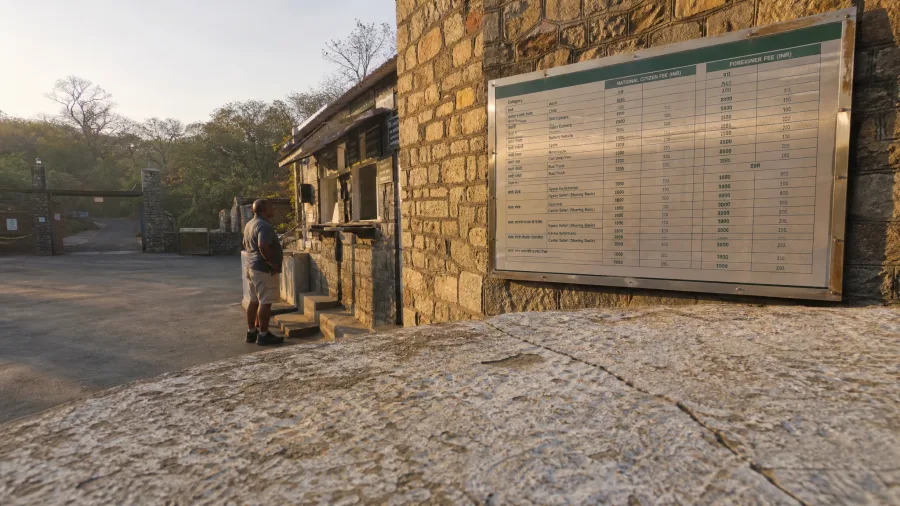
In India, Indonesia, and Egypt, the higher price on your ticket is not the invention of the person handing it to you – it is written into national law or park regulation, set before you arrived, and applied the same way to every foreign passport that day.
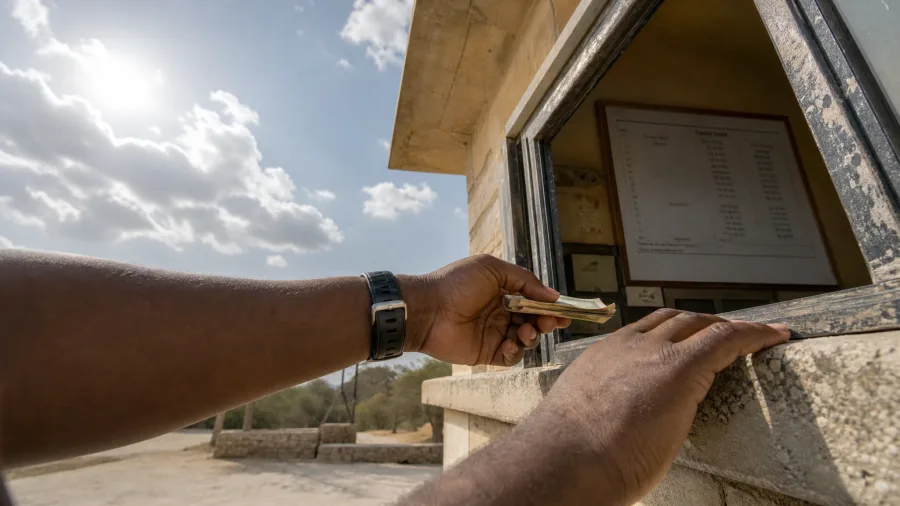
The clearest signal is the tariff board. At a government ticket booth, a printed schedule lists the national rate and the foreigner rate side by side, in local currency, bolted to a wall or mounted above the window. That board exists because a ministry or park authority decided the schedule, published it, and made it the collector’s legal obligation to enforce it. The person selling the ticket has no discretion in either direction.
Compare that to a market vendor who quotes one price to a local standing next to you and a higher price to you. The behavior looks identical from the outside – two people, two prices, same goods. But there is no board, no regulation, no government account the difference flows into, and no one auditing whether the gap is consistent from one customer to the next.
That contrast is the only test that matters at the window. A publicly posted, state-collected price schedule is the line between a policy instrument and an improvised surcharge – and everything else in how you should respond to the higher price depends on which side of that line you are on.
The Gap Is Often Ten Times the Local Rate

Accepting that the system is real does not prepare you for how large the gap actually is.
Most travelers assume they will pay a modest premium – maybe double. The documented range at formal heritage sites runs from 2:1 at the low end to 20:1 at the high end. At a national park entrance in Kenya or a major monument in India, it is common to arrive at a window where a citizen pays the equivalent of $1.50 and you pay $15 for the same gate on the same morning. That is not a rounding error. It is the designed outcome.
The absolute number stays manageable. At most formal sites the foreigner rate lands under $20, which is why the ratio can be extreme without the transaction feeling extortionate to a visitor from a high-income country.
That is precisely the point. The ratio is steep because the purchasing-power distance between the two groups is steep – not because someone decided foreigners deserve a penalty. A $15 entry fee is a reasonable afternoon cost in one economy and a full day’s wage in another. The gap reflects that distance directly, and the next sections spell out the specific costs that the premium is meant to cover.
Where Formal Dual Pricing Is Widest — Most to Least Regulated
The further down the pyramid, the less official oversight applies
National Parks and Monuments Carry the Widest Gaps

The steepest ratios – the 10:1 and 20:1 figures – do not show up at boutique hotels or private tour operators. They appear at exactly one category of place: sites the national government controls outright.
Think Angkor Wat in Cambodia, the major temple complexes at Bali’s state-managed sites, Ranthambore National Park in India, or the entrance gates to Kenya’s Maasai Mara conservancies. Each has a single chokepoint – one ticket booth, one queue, one posted tariff – and a government authority that sets the price, prints the board, and audits the collection. That administrative structure is what makes a 10:1 gap enforceable rather than theoretical. There is nowhere to negotiate and no parallel window offering a different figure.
Private businesses do not work this way. A hotel can quietly quote a higher room rate to a foreign booking platform than to a local one, and a restaurant can price a menu without disclosing a two-tier system – but neither is operating under a published government schedule, and neither is subject to the oversight that comes with one.
The concentration at state-managed sites is not coincidental. These are the only places where the government can simultaneously make the economic argument – high international visitor volumes, real infrastructure costs, measurable conservation needs – and have the administrative reach to apply the policy consistently. The widest gaps cluster where the justification and the machinery happen to exist at the same time.
💡 PRO TIP
The One-Second Test at Any Ticket Window
Look for a posted tariff board before you reach the cashier. If the prices are displayed in the local currency, in two columns, with a government logo — you are inside a formal system. If the price appears only when the cashier says it aloud, you are not.
Local Wages Make Equal Pricing Genuinely Unaffordable

The same $15 entry fee lands differently depending on where you earned your money. For a visitor on a Western income, that amount is roughly 0.1 percent of a monthly paycheck – a rounding error on the trip budget. For a worker earning the national median in Indonesia or Kenya, $15 can represent a full day’s wages or more.
Set a single flat price at that level, and you have not created equal access. You have priced citizens out of their own heritage sites while creating no real obstacle for most foreign visitors. Equal nominal pricing sounds fair until you run the numbers – at which point it turns out to be the less equitable option.
The counterargument deserves an honest hearing. A gap-year traveler or budget backpacker does not carry a wealthy tourist’s income, and the system has no way to know that. It reads a passport, not a bank statement. The person in front of you paying a fraction of your ticket price may not be richer than you – they are simply local, and local is how the system draws the line.
That bluntness is a feature, not an oversight. Means-testing every visitor at a government ticket window is not feasible – it would require documentation, verification, and staff overhead that no heritage site has the capacity to run. A population-level purchasing-power gap is real even when any two individuals at the window might complicate the picture. The system is designed to work across millions of transactions, not to be precise about any single one.
Visitor Infrastructure Has to Be Paid for Somehow
The purchasing-power argument addresses fairness between two groups. There is a second, more concrete justification: the site you are walking through was largely built and staffed for you.
Multilingual signage, paved trail networks, visitor centers, safety barriers at cliff edges, and daily waste removal at high-traffic parks – none of that exists at the scale you encounter it because of local visitors. A community using its own regional park at local frequency would not generate the footfall that demands it. The infrastructure is calibrated to international throughput, and international visitors are the ones who finance it.
Tax revenue from local populations does not cover the operating costs of sites receiving millions of foreign visitors a year. The gap has to be funded from somewhere, and the tourist premium is the mechanism that closes it.
A marked, maintained trail network is the clearest example. Local hikers benefit from it, and that is fine – but the scale of the signage, the staffing levels, and the maintenance schedule are all set by international visitor volume. When you pay a premium at the gate, a portion of that goes directly toward the path you are about to walk, the signs in your language, and the staff managing the crowd you are part of. That is a user fee. Framing it as a surcharge misses what it is actually buying.
Dual Pricing — At a Glance
📊 Documented price ratio range
2:1 to 20:1
💵 Typical foreigner fee ceiling
Under $20 USD
🌍 Countries with legislated systems
India, Indonesia, Egypt, Kenya, Cambodia
🏛️ Sites with widest gaps
UNESCO monuments, national parks, state temples
✅ Formal system signal
Posted tariff board, government-collected
🚫 Informal system signal
Price named at point of sale, no schedule
The structural test
A publicly posted, state-collected schedule is what separates a system from a scam — everything else follows from that.
Conservation Funding Often Comes Entirely from Tourist Premiums

Infrastructure maintenance is a recurring cost; conservation is an emergency one – and at fragile sites, the tourist premium is not a contribution toward that emergency but the entire budget for it.
In Kenya’s wildlife reserves, ranger salaries and anti-poaching patrols are line items drawn directly against entry revenue. In Indonesia’s heritage parks, habitat-restoration programs run on the same source. Remove the foreign-visitor premium and those programs are not quietly funded from somewhere else – they are cut, scaled back, or ended. The site does not become cheaper to run; it becomes more dangerous and less protected.
That distinction matters because the alternative on offer is not an equal price – it is an underfunded one. Fewer rangers means larger territories left unchecked. Reduced patrol coverage means poaching pressure rises. In some cases the practical result is restricted access or temporary closure while the site stabilizes. The higher ticket price is not a premium on top of a functioning system; it is what keeps the system functioning.
Verifying this is straightforward. Reputable parks in Kenya, Indonesia, and comparable destinations publish annual reports or publicly post breakdowns of how entry revenue is allocated – some display the split on a board near the ticket window. If a park can show you where the money goes, that transparency is itself a signal the system is doing what it claims.
The Tourist Fee Can Subsidize Free Entry for Locals
Some of that tourist premium does not stay inside the site at all – it flows back to the people who live in the shadow of it, in the form of free or near-free entry for citizens at the same gate where the foreign visitor just paid fifteen dollars.
That is not an incidental outcome. In several formal dual-pricing systems the revenue is explicitly ring-fenced for this purpose, meaning the foreigner’s ticket is the direct financial mechanism that makes a resident’s visit affordable or free. Remove the higher foreign rate and the subsidized local entry does not find another source of funding – it disappears with it.
This changes what the price gap actually is. It is not one group being overcharged relative to another group receiving the same service at the same cost. It is a transfer: purchasing power moving from the population with more of it to the population with less, administered at a ticket window rather than through a tax schedule.
The caveat matters, though. The transfer only works when the revenue is specifically allocated to local access – ring-fenced in the budget, not pooled into general government funds. When tourist entry fees feed into a central account with no designated line to subsidized citizen visits, the chain from your ticket to a local schoolchild’s free admission becomes very hard to trace. Reputable parks and UNESCO-managed sites often publish annual revenue breakdowns; checking for that documentation is the clearest way to confirm the cross-subsidy is real rather than rhetorical.
When No Policy Exists, the Logic Disappears

Every piece of that logic – the redistribution, the conservation fund, the subsidized local entry – depends entirely on a formal system sitting behind the price. Step outside one and the justification does not stretch to cover the new situation. It simply vanishes.
The test is concrete: was the price written on a board before the transaction, or did someone name it at the moment of sale? The first is a system with legal backing and accountability. The second is not.
Informal dual pricing turns up constantly – in taxis running without meters, at restaurants where no menu appears until after you have ordered, with unlicensed guides who assess the rate by looking at who is asking. None of these categories has an official schedule, a stated beneficiary, or any oversight body. There is no conservation ranger being paid, no local getting in free because of the gap, no posted tariff anyone can check.
Recognizing what informal overcharging actually looks like is the practical skill here. The price arrives after the service is delivered. Or it shifts noticeably once the vendor spots a foreign passport. Or the number given to the local ahead of you in the same queue is simply different. These are the signals that no policy is operating – only an individual collecting a premium that benefits only them.
That distinction is not a reason to treat every informal vendor as a bad actor. It is a reason not to confuse the two situations when deciding whether to accept a price, question it, or walk away.
⚠️ COMMON MISTAKE
The Mistake That Makes Staff Less Trusting
Attempting to pay the local rate through deception — borrowing a local's ID, joining the wrong queue — is tried often enough that staff at formal sites are trained to catch it. Getting caught creates friction for you and erodes goodwill for the next foreign visitor. The legitimate exception: travelers with dual citizenship or documented local residency are entitled to the local rate and should ask for it directly.
Trying to Pass as a Local Usually Backfires
At a formal dual-pricing site, the answer is almost always no – and the attempt costs more than the price difference.
The enforcement at these sites is thorough because it has been tested by every trick imaginable. Most major heritage sites and national parks run separate queues for nationals and foreign visitors, with ID required at the booth. Staff have seen the laminated student cards, the borrowed local ID, the confidently stated local city name. The workarounds are not novel; they are a known list, and the person behind the glass has processed all of them.
Getting caught means delay at minimum – pulled from the queue, referred to a supervisor, asked to produce additional documents. At some sites it means denial of entry for the day. The friction radiates outward: staff who spend twenty minutes resolving one attempted workaround arrive at the next foreign visitor with less goodwill. The cost lands on other travelers, not just on the person who attempted it.
There is also a structural problem with succeeding. A traveler who gets through at the local rate at a site where the tourist premium funds conservation or subsidizes citizen access has not beaten the system – they have pushed their share of the cost onto everyone else who paid the posted rate.
The legitimate exception is straightforward: dual citizens and documented local residents are entitled to the national rate, and they should ask for it without hesitation. That entitlement is exactly what the two-tier system is built to accommodate. If you qualify, say so and show the documentation – the system expects this and handles it routinely.
Formal System vs. Informal Overcharging — How to Tell Them Apart
Formal Dual Pricing
- Price posted on a government tariff board before purchase
- State-collected; the cashier sets nothing independently
- Legal backing in national or park regulation
- Stated beneficiary: conservation, infrastructure, or local free entry
- Consistent rate for all foreign nationals on the same day
Informal Overcharging
- Price named verbally at point of sale, no posted schedule
- No official oversight or audit
- Rate can change when vendor sees a foreign passport
- No stated beneficiary beyond the individual collecting it
- Price may appear only after the service is delivered
Both Sides Can Feel the System Is Unfair

That discomfort is real, and it belongs to both people at the window – not just the traveler paying the higher number.
From the local side, a monument that sits in someone’s own city or region can start to feel like it has been quietly handed over to international tourism. When even the nominal citizen rate is pegged to a pricing structure built around foreign visitor volumes, the implicit message is that the site’s primary audience is now people arriving from elsewhere. That is a reasonable thing to resent, regardless of where the revenue goes.
From the traveler’s side, the system charges by passport – which means a budget backpacker on a three-week trip pays the same foreigner rate as someone on a luxury package tour with a per-night hotel cost that exceeds the backpacker’s weekly budget. Nationality is a blunt proxy for purchasing power. It is the only proxy available at a ticket booth, but it is still a blunt one, and the individual on the wrong end of it is not wrong to notice.
Both reactions are honest responses to a system that is structurally correct but individually imprecise.
The purchasing-power gap between populations is documented and real. The infrastructure and conservation costs are real. Neither of those facts makes the friction disappear for the specific person standing at the window – and pretending the system produces no friction at all is less useful than simply acknowledging that a structurally sound policy can still land awkwardly on any given individual it touches.
🎟️ What Happens When You Hit a Dual-Price Window
Spot the tariff board
Before joining any queue, look for a posted price schedule — two columns, local and foreign rates, in the local currency.
Confirm it is government-collected
A government logo, a uniformed cashier, or an official receipt confirms this is a formal system, not an informal markup.
Check your status
If you hold dual citizenship or documented local residency, state it at the window and ask for the corresponding rate.
Pay the posted rate
Negotiating at a government window treats a policy instrument as a market transaction — it will not work and creates unnecessary friction.
Ask one question if in doubt
If no board is visible, ask: 'Can you show me the official price list?' — a formal system always has one.
Accepting the Price Is Usually the Simplest Right Answer
That discomfort acknowledged, the practical answer is almost always to pay the posted rate and move on.
At a 10:1 ratio, the absolute number most foreign visitors hand over at a formal site is still under $20. Against the cost of reaching the country, booking accommodation, and spending days getting to the site, that sum is rarely what tips a trip budget. The ratio feels large; the amount rarely is.
Bargaining at a government window is worth avoiding not as a moral position but as a practical one. A posted government schedule is a policy instrument, not an opening offer, and treating it like one achieves nothing except a longer queue behind you.
The money is doing something specific. At formal dual-pricing sites it funds ranger operations, maintained trails, multilingual infrastructure – and in some systems it is what makes the citizen rate free or near-free in the first place. Paying it is closer to a user fee than a surcharge.
Push back only when the signals shift. No price board visible before the transaction, a rate named by an intermediary rather than read off a posted schedule, or a number that changes when the seller sees a foreign passport – any of these means the situation is informal, unregulated, and not the same system this article describes.
One question resolves the ambiguity every time: ask to see the official price list. A formal system produces it immediately. The inability or refusal to show one is, on its own, the only answer needed.
Frequently Asked Questions
Is tourist pricing legal, or are these countries breaking some kind of rule?
In countries like India, Indonesia, Egypt, Kenya, and Cambodia, differential pricing for foreign nationals is written into national law or park regulation. It is not a loophole or informal practice — it is legislated policy, which is why the rates are posted on government boards and collected by state employees. No international law prohibits it.
Can I pay the local price if I look like a local or speak the language?
At formal sites, the rate is determined by nationality, not appearance or language. ID checks are standard procedure at dual-price windows, and staff are trained to recognize workarounds. Travelers with documented dual citizenship or local residency are entitled to the local rate and should ask for it directly — that is exactly the scenario the system accounts for.
Does the extra money I pay actually go toward conservation, or does it disappear into a government budget?
At many well-known wildlife reserves and heritage parks — particularly in Kenya and Indonesia — entry revenue is specifically ring-fenced for ranger salaries, anti-poaching operations, and site maintenance. Reputable sites publish annual reports showing revenue allocation. A quick search for the park’s name plus ‘annual report’ will tell you whether that chain is auditable at your specific destination.
How do I know when a higher price is informal overcharging rather than an official system?
The test is straightforward: is there a posted price schedule that existed before you arrived? A government tariff board with two columns — local and foreign rates — indicates a formal system. A price named verbally at the point of sale, a rate that shifts when the vendor sees your passport, or a charge that appears only after the service is delivered — these are informal. Ask to see the official price list if you are unsure.
Is it rude or wrong to ask why I am being charged more?
At a formal site, asking is reasonable — but direct the question at the board, not the cashier. The cashier did not set the rate and cannot change it. At an informal setting with no posted schedule, asking is the right move: request the price list before any service begins, and treat an inability to produce one as useful information.
Do budget travelers get any concession, or is it always full foreigner rate?
Formal dual-pricing systems charge by nationality, not income — a budget backpacker pays the same foreigner rate as a luxury traveler. Some sites offer student or youth discounts that apply regardless of nationality, so it is worth asking. Beyond that, the system is blunt by design: individual means-testing at a ticket window is not feasible at scale.
The Board Price Is the Answer — and One Question Gets You There
When a posted government schedule sits behind the higher price, pay it without resentment. That schedule means you are buying into a real system – one that may be funding conservation, maintaining visitor infrastructure, or making the same entrance free for a local family earning a fraction of what you earn in a week. The 20:1 ratio is steep. The absolute figure is almost always under twenty dollars. The logic is not personal.
When no schedule exists – when the number appears only after you hand over your passport, shifts depending on how you are dressed, or comes from someone with nothing posted behind them – none of that economic justification applies. That is a different situation, and it calls for a different response.
One question settles it at any window: ask to see the official price list. A formal dual-pricing system always has one, usually displayed before you even reach the counter. The 20:1 gap that felt arbitrary when you first encountered it either has a document behind it or it does not – and the answer to that single request is the only information you need.