10 Countries That Will Pay for Your Flight If You Move There


Ten countries, four types of incentive, and almost none of them will reimburse your flight.
That is the expectation most readers carry into this list: that some government, somewhere, cuts a check for the airfare. Almost none of them do. What these programs actually deliver is either an exemption from local income tax on foreign-sourced salary or a direct cash grant tied to a property purchase or rural relocation. Those are structurally different from a reimbursed ticket, and that distinction matters before you read a single entry.
The real question is whether the tax saving or cash grant – calculated against a $60,000-$80,000 income and the actual round-trip airfare, which runs from around $400 to Barbados to roughly $1,800 to Mauritius – makes the move net-positive, and which of these ten programs produces that result for a US-based remote worker.
By the last entry, you can match a program to your income level, run the break-even math against the real flight cost to your chosen destination, and go directly to the official government portal to act. No aggregator blog required.
| Country | What the incentive actually is | Visa or permit length | Income requirement | Approximate application cost |
|---|---|---|---|---|
| Barbados | Full exemption from Barbados income tax on foreign-sourced salary | 12 months | Confirm at Barbados Immigration portal | ~$2,000 (individual); confirm current figure |
| Bermuda | Legal remote-work authorization; no local income tax levied | 12 months | Confirm at Bermuda Immigration portal | Under $300; confirm current figure |
| Antigua & Barbuda | 2-year remote-work permit; family inclusion allowed | 2 years, renewable | Confirm at Antigua Immigration portal | Confirm at official portal |
| Cayman Islands | Zero personal income tax on all earnings | 2 years | Confirm at Cayman Islands Government portal | Confirm at official portal |
| Italy (villages) | Direct cash grant up to €25,000–€30,000 reported; per-comune terms vary | Multi-year residency required | Property purchase + residency days | Varies by comune |
| Greece | Reported 50% income tax reduction for 7 years | 1 year, renewable | Confirm at Greek Immigration and Asylum Service | Confirm at official portal |
| Japan (rural) | Reported subsidy up to ~¥1,000,000 (~$7,000) | Qualifying long-term visa required first | Confirm at Japan regional revitalization portal | Separate visa cost; confirm |
| Estonia | Legal EU/Schengen base; no tax reduction or cash grant | 1 year | Confirm at Estonian Police and Border Guard Board | Under $120; confirm current figure |
| Albania | Zero income tax on remote work income for up to 3 years | Multi-year; confirm at e-Albania portal | Confirm at e-Albania portal | Confirm at official portal |
| Mauritius | Zero tax on foreign-sourced income; annually renewable | 1 year, renewable | Confirm at Mauritius Economic Development Board | Confirm at official portal |
1. Barbados Welcome Stamp — Tax Exemption, Not a Ticket
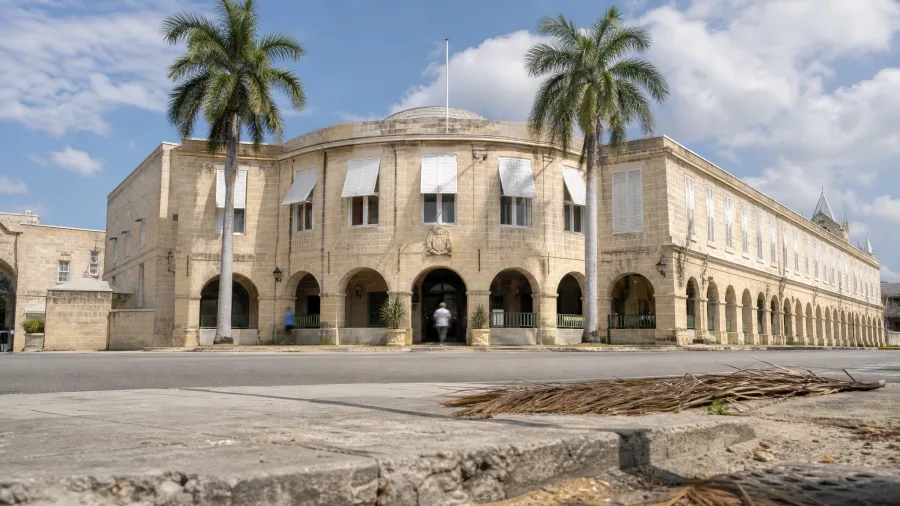
Before you book a flight to Bridgetown, know this: the Welcome Stamp will not refund your airfare, and it will not reduce what you owe the IRS. What it does is exempt you from Barbados income tax on the salary you earn from your overseas employer – and if your salary is high enough, that exemption can be worth more than the flight within the first few months.
The program runs for 12 months and is aimed squarely at people who already work remotely for a company or client based outside Barbados. If you are thinking about picking up freelance work from a local Barbadian business to supplement your income, stop – that disqualifies you. The stamp covers foreign-sourced earnings only, and the program is structured that way by design.
The application fee is reported at roughly $2,000 for a single applicant. That number is subject to change, and you must confirm the current figure directly at the official Barbados Immigration portal before submitting anything – third-party visa guides tend to lag behind the official version. At that fee level, the program sorts itself by income bracket before you even board a plane.
A $60,000 earner looking at a $2,000 application fee plus a $400-$700 round-trip flight is already close to $3,000 out of pocket before month one. US federal tax still applies regardless of where you live, so the local Barbados exemption saves only what Barbados would have charged – and on a $60,000 income, that saving may not cover the entry cost by a comfortable margin. For a $120,000 earner, the same $2,000 fee is a rounding error against the income shielded from local tax, and the break-even point arrives faster. The Welcome Stamp is not the wrong program for a mid-range remote worker – it is just a program that rewards higher earners far more sharply, and the honest move is to run your own numbers against the official portal’s current figures before treating it as a flat offer.
💡 Tip: Barbados Immigration periodically adjusts the Welcome Stamp fee — the $2,000 figure is widely reported but must be verified at the official portal before you pay anything.
Quick Tips Before You Start
Use Official Portals Only
Program fees and income thresholds change annually — only the official government portal has the current number.
US Tax Obligations Don't Disappear
A local tax waiver abroad reduces what you owe to that country, not the IRS — consult a US tax professional before applying.
Price Your Actual Round Trip First
Flight costs range from $400 (Caribbean) to $1,800 (Mauritius) — know your number before calculating any break-even.
Match Permit Length to Your Plan
A 12-month Caribbean permit amortises one year of savings; Albania's 3-year zero-tax window compounds the benefit three times over.
Family Changes the Math
Only Antigua and Barbuda's program explicitly covers a spouse and dependants under the primary permit — check each entry for family provisions.
2. Bermuda Work From Bermuda Certificate — Lowest Caribbean Fee
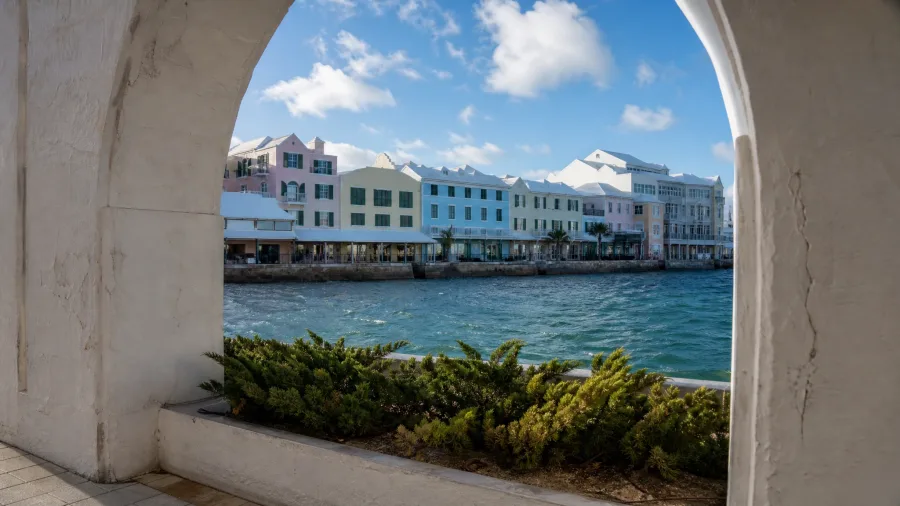
Under $300 to apply, and a round-trip economy flight from New York runs roughly $500-$700 – that puts the total entry cost under $1,000, the lowest of any Caribbean program here. Bermuda has spent decades cultivating an image as a financial hub precisely because it imposes no income tax on residents, a policy that stretches back to the island’s early days as a British territory built around reinsurance and offshore finance rather than tourism alone. That tax-free history is why the Work From Bermuda Certificate exists at all – the island already knew how to attract high earners. Confirm current fees and eligibility at both the Bermuda Tourism Authority and the Bermuda Department of Immigration portals before applying, as details have shifted since the program launched.
The certificate permits only remote work for overseas clients – local Bermudian employment is off the table – and the low application number is the headline figure that makes it look compelling for a $60,000-$80,000 earner. Here is the catch: Bermuda’s cost of living is among the highest in the Atlantic. A single month’s rent and groceries can comfortably exceed your entire travel-and-application outlay, which means the financial case rests not on what you save at entry but on whether your income can sustain Bermuda-level expenses month after month. The low barrier to arrive is real. The ongoing cost is what decides whether this program makes sense for you.
Caribbean Programs — Break-Even Timeline for a $70,000 Earner
3. Antigua and Barbuda Nomad Digital Residence — Two Years, Whole Family

Most Caribbean remote-work programs are built for one person – one applicant, one permit, one set of conditions. Antigua and Barbuda’s Nomad Digital Residence is the exception: a single application covers a spouse and dependants, making it the only Caribbean option on this list where a family of four moves on one filing. A family of three flying economy from the US East Coast pays roughly $1,500-$2,100 in round-trip airfare; a family of four, roughly $2,000-$2,800. Those numbers sound significant until you spread them across two years – and the permit is renewable, so the per-month travel cost for the whole household drops to a figure that a mid-range remote income can absorb without restructuring a budget.
The program requires that all income originate from clients or employers outside Antigua and Barbuda – local employment is not permitted during the permit period. The minimum annual income threshold is reviewed periodically, and third-party aggregator sites frequently carry figures from earlier versions of the scheme; the only number worth trusting is the one on the official Antigua and Barbuda Immigration Department portal at the time you apply. If you have been weighing a Caribbean move and the sticking point has been what to do with the rest of your household, this is the program that removes that obstacle.
💡 Tip: The two-year term is renewable, which means a family that qualifies once is not forced back to zero after 12 months — that renewal option is the program's quietest financial advantage.
4. Cayman Islands Global Citizen Concierge — Zero Income Tax
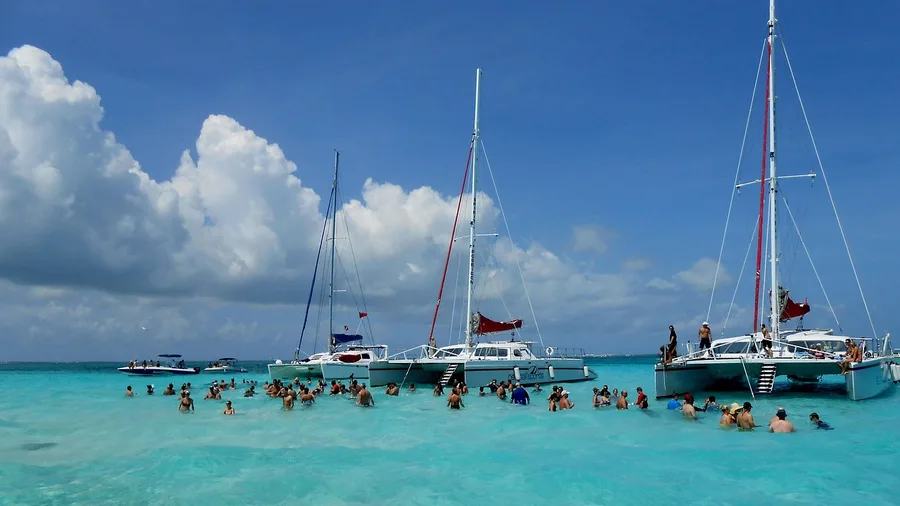
For a $100,000 earner, the Cayman Islands is the most financially direct Caribbean option on this list: zero personal income tax on all earnings, not a reduction, not an exemption on foreign-sourced income only – nothing collected on any salary at any level. At that income, the tax saving alone can exceed the combined cost of a round-trip economy flight from a US East Coast hub (~$400-$650) and the application fee within the first two or three months of arrival.
The program runs for two years and does not automatically lead to permanent residency. Both the application fee and the minimum income threshold shift periodically – confirm both at the official Cayman Islands Government portal before you start any paperwork, and treat any figure from a third-party visa guide as a starting point, not a rule.
The math changes sharply depending on where your income sits. Grand Cayman is expensive: rent, groceries, and utilities are high enough that a $60,000 earner near the eligibility floor may find that living costs absorb much of what the zero-tax structure saves, leaving the net gain modest. At $100,000 and above, the same cost structure becomes a smaller share of a larger tax saving, and the round-trip flight – the number that dominates the break-even calculation for every other Caribbean program – is barely a line item here.
⚠️ COMMON MISTAKE
Your US Tax Bill Does Not Move With You
A local tax exemption in Barbados, the Caymans, or Albania reduces what you owe to that country — not the IRS. US citizens and green card holders owe federal tax on worldwide income regardless of where they live. Run the real numbers with a US expat tax professional before treating any foreign waiver as a full tax saving.
5. Italy’s Depopulated Village Grants — Actual Cash, Real Conditions

Italy’s depopulated village grant programs are the only entries in this list where that actually happens. Several comuni in Calabria and Molise – regions of southern Italy that have been losing residents for decades – offer reported cash grants of up to €25,000 – €30,000 to people who buy a property below a specified price ceiling and commit to spending a minimum number of days there each year. That is real money moving from a local authority to a private individual, and nothing else on this list does that.
there is no single national portal, no standardized application, and no uniform set of rules. Each village runs its own scheme. One comune may cap the purchase price at €30,000 and require 90 days of residence annually; the next village over may demand you register a local business as part of the deal. A round-trip flight from the US East Coast to southern Italy costs roughly $700-$1,100 – technically within the grant ceiling – but the grant arrives in instalments spread across several years, not as a lump sum when you land. The flight, the property purchase, and any renovation costs all come out of your own pocket first. To get current terms, you contact the specific comune directly; a well-intentioned blog post from two years ago will not tell you whether the program is still active or what the current conditions are.
This program suits one specific reader: someone who wants to own property in rural Europe, can tolerate a multi-year residency commitment, and has the capital to front the purchase and renovation before any grant payments arrive. If you are looking for a low-friction, flexible base you can leave after twelve months, this is the wrong program entirely – the commitment structure alone rules it out.
Italy Village Grant — What the Prose Can't Tell You
🏠 Typical purchase price ceiling
Often €30,000 or under — but each comune sets its own cap; one village's ceiling may disqualify the next village's cheapest listing
📋 Minimum residency trigger
Commonly 90 days per year, but some comuni also require registering a local business — these are separate conditions, not alternatives
🔧 Realistic grant-to-cost ratio
Renovation alone can run €50,000–€100,000+ on a derelict property; the grant covers a fraction of total outlay, not the whole project
📅 How long before you see money
Instalments typically spread over 3–5 years and tied to meeting residency milestones — year one cash received is usually zero
⚠️ Program status risk
Individual comuni can suspend, alter, or close their scheme at any time; verify directly with the municipal office before any purchase
Capital requirement
You need enough cash to buy the property, fund the renovation, and cover several years of living costs before the first grant instalment arrives. This is a long-term property investment with a grant attached — not a relocation package.
6. Greece Digital Nomad Visa — Half Your Tax Bill for Seven Years
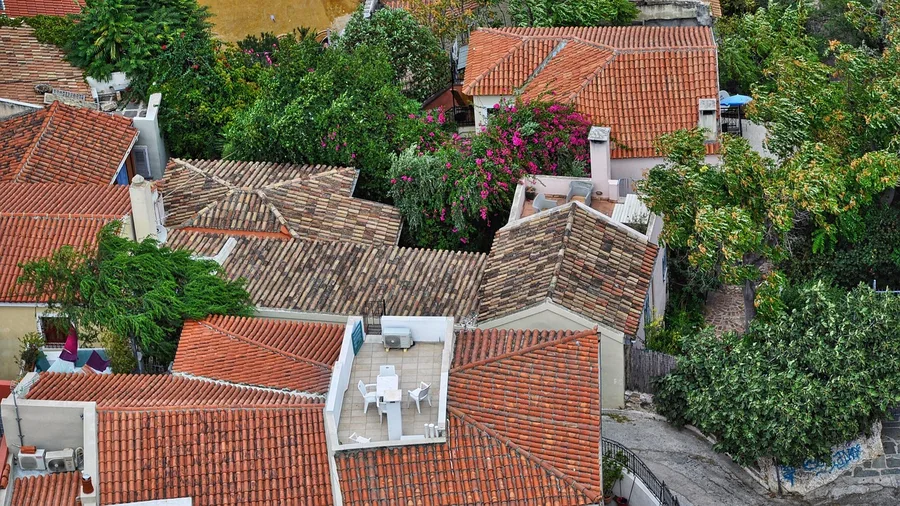
Sit at an outdoor table in Athens in October – the air still warm, the coffee arriving in a small cold glass alongside the cup, the Acropolis catching the last hour of afternoon light above the rooftops – and you start to understand why Greece draws remote workers who came for a visa and stayed for years. The €3-4 freddo espresso is not a minor detail; it signals something about the daily cost of being here that the tax math alone does not capture.
Greece offers a reported 50% reduction on income tax for qualifying remote workers, and it holds that rate for seven years. For a $70,000 earner, the annual saving at a typical effective income tax rate can run to several thousand dollars – a figure that is already a meaningful multiple of the round-trip flight from the US East Coast, which costs approximately $700-$1,100. No other European program on this list runs that long. A 12-month Caribbean permit forces you to recalculate the break-even every year; Greece gives you a seven-year window and turns the math into a compounding multi-year strategy rather than a single-year gamble.
The income must come entirely from outside Greece – you cannot take on a local Greek employer and keep the benefit. That single rule defines who this visa is for: remote employees and freelancers whose clients are abroad. If your work situation fits that description, the mechanics are straightforward.
Do not take the minimum monthly income requirement or the visa fee from a third-party aggregator. Both figures appear in earlier versions of the program that have since been revised, and the Greek Immigration and Asylum Service portal carries the only version you should trust. Confirm the current numbers there before you start pulling documents together.
The seven-year duration is the thing that separates Greece from everything else in the European tier. Commit for three years and the cumulative tax saving dwarfs the flight cost by a margin that most single-year programs cannot reach even under the most favorable assumptions. That is the frame for this program: not whether year one breaks even, but what year three looks like.
💡 Tip: The 50% tax reduction applies to Greek income tax only — Greek social insurance contributions and your home country's tax obligations are separate questions. Verify both with a tax professional before treating the Greek saving as the whole picture.
7. Japan’s Rural Relocation Subsidy — Up to $7,000 in Direct Cash

Japan is the only entry on this list where the government pays you a direct cash sum specifically because you relocated – up to roughly ¥1,000,000, which lands around $7,000 at recent exchange rates, through its regional revitalization program for people who move to designated rural areas.
That $7,000 national figure can cover a round-trip economy flight from the US West Coast ($900-$1,300) several times over – which puts it in a different category from every tax-waiver program discussed so far. Individual prefectures and municipalities can layer additional top-up payments on top of the national amount, though both tiers vary by location and must be confirmed at Japan’s official regional revitalization portals before you build any budget around them. Not every applicant receives the reported maximum, and the municipal bonuses are inconsistent.
The catch is sequencing. The program is built for people already living in Japan on a qualifying long-term visa – a US applicant has to secure the right visa category first, which is a separate application with its own documentation and timeline. English-language guidance across Japanese municipal websites ranges from thorough to nonexistent; some rural prefectures do publish English relocation pages, and tracking down a currently active one before you start is worth the hour it takes.
💡 Tip: Some rural prefectures participating in Japan's regional revitalization scheme publish English-language relocation pages — confirm that any English portal you find is an official prefectural or municipal site, not a third-party aggregator using government branding.
Tax Waiver vs. Cash Grant — What You Are Actually Getting
Tax Waiver Programs
- Benefit scales directly with your income — higher earner, bigger saving
- No property purchase or local business required
- Greece's 50% reduction runs for 7 years; Albania's zero-tax runs for 3
- Break-even against flight cost can arrive within months
- Value is invisible on arrival — it accumulates through the year
Cash Grant Programs
- Italy's grants are real cash — but paid in instalments, not day one
- Property purchase and multi-year residency required up front
- Grant amount is fixed, not proportional to your income
- Higher upfront costs (purchase, legal fees, renovation)
- Suits a buyer, not a flexible or short-term remote worker
8. Estonia Digital Nomad Visa — Cheapest EU Legal Base in Europe
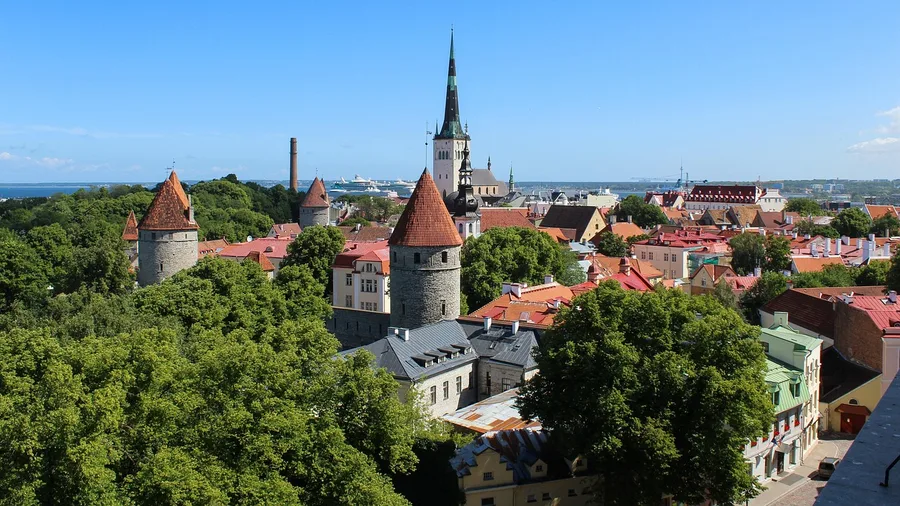
You file the application on your laptop, pay under $120, and a few weeks later you have the legal right to live in Tallinn and move freely across the Schengen Area for a year – no cash grant, no tax reduction, no subsidy of any kind toward the $800-$1,100 round-trip flight from the US East Coast you paid to get there. The current fee must be confirmed at the Estonian Police and Border Guard Board portal, but it is the lowest entry cost of any program in this article.
Estonia does not pretend to pay for your relocation. Its value is friction removal: the application is largely online, the legal framework is clear, and one approval covers 26 countries of movement. For a remote worker whose priority is a clean EU legal base rather than a financial return, that is the calculation – and for anyone whose break-even math depends on tax savings or a cash payout, Estonia offers neither, and you should know that before you apply.
9. Albania Digital Nomad Visa — Zero Tax for Three Full Years

Albania’s zero-income-tax rule for remote workers has changed its terms more than once since the visa launched – confirm every current condition at the official e-Albania portal before acting on any figure from a third-party source, because outdated terms circulate widely and the gap between an old blog post and the live rules can be significant.
For a $65,000 earner who qualifies under the current version, the three-year zero-tax window can add up to a five-figure cumulative saving – the strongest per-year financial case of any European program here. A round-trip flight from a US hub to Tirana runs approximately $800-$1,100, and with one of the lowest costs of living in Europe on top of no local income tax, year one can turn net-positive well before the twelve-month mark. The trade-off is geography: Albania sits outside the EU and the Schengen Area, so extended stays in France, Germany or anywhere inside the Schengen zone count against the standard 90-days-in-180-days tourist allowance. Plan your travel calendar around that limit before you commit.
10. Mauritius Premium Visa — Zero Tax, Highest Flight Cost

You land after a 20-hour journey routed through Dubai or Paris, step out into Indian Ocean humidity, and the first thing that registers is how far you’ve come – and that the ticket cost you $1,400 to get here. Mauritius taxes none of your foreign-sourced income, and the Premium Visa renews annually, so the zero-tax logic is real and it compounds year over year. But the flight overhead is the highest of any program in this article, and for a US-based applicant it isn’t a one-time cost: every full round trip eats another $1,200 to $1,800 depending on routing and timing.
That travel burden is the catch the headline buries. The remote-working community Mauritius actually attracts skews heavily toward South Africa and Europe, where the same flight runs a fraction of the US figure – a Johannesburg resident might pay $400 round-trip and reach break-even in the first month of tax-free income. A $70,000 earner flying from a US East Coast hub needs to run the math honestly: calculate the annual local tax saving against a realistic $1,400-$1,800 round-trip cost, factor in how many times you’ll actually leave and return each year, and confirm the current minimum income threshold directly at the Mauritius Economic Development Board portal – that number changes, and third-party aggregator pages frequently run behind.
The three-step framework earns its keep most visibly here. Check your income against the current threshold at the official Mauritius Economic Development Board portal. Calculate your specific annual tax saving against your specific departure-airport flight cost – not an average, your cost. Then apply directly through the portal. No intermediary shortens that calculation or changes the arithmetic that matters most: whether the tax-free income, at your salary, outweighs the most expensive airfare on this list.
💡 Tip: The minimum income threshold for Mauritius's Premium Visa is set by the Economic Development Board and reviewed periodically — confirm the current figure there before any other step.
🗺️ From Decision to Residency — The Five Steps That Apply to Every Program
Confirm the current terms
Go to the official government portal for your chosen program and verify the current fee, income threshold, and permit length — not a third-party blog.
Run your break-even calculation
Take your actual annual income, estimate the local tax saving or cash grant, and subtract your real round-trip flight cost plus the application fee.
Verify your US tax position
Consult a US expat tax professional to confirm how the foreign waiver interacts with your federal and state obligations before you apply.
Gather documentation and apply
Collect proof of income, employment contracts or client agreements, and any property documents required by the specific program, then submit through the official portal.
Book travel and confirm accommodation
Price the round-trip economy fare from your actual US departure city — not a generic hub — and lock in a monthly rental before the permit start date.
Frequently Asked Questions
Do any of these countries actually pay for the flight itself?
Almost none of them do. The headline is technically true in the loosest sense — some programs deliver cash grants or tax savings large enough to cover a round-trip fare many times over — but no country on this list directly reimburses a purchased ticket. The incentive is a tax waiver, a zero-tax window, or a direct cash grant tied to a property purchase. Japan’s rural subsidy (~$7,000) and Italy’s village grants (up to €25,000–€30,000 reported) are the closest to cash-in-hand; neither is paid as a flight reimbursement.
Do these programs exempt me from US federal income tax?
No. A foreign tax waiver reduces what you owe to the host country, not the IRS. US citizens and permanent residents owe federal tax on worldwide income regardless of where they live. Some expats qualify for the Foreign Earned Income Exclusion or a foreign tax credit, but these interact differently with each program — a US expat tax professional should review your specific situation before you apply to any of the ten programs listed here.
Which program has the lowest upfront cost?
Estonia’s digital nomad visa is reported at under $120 in application fees — the lowest entry cost of any program in this list. Bermuda’s Work From Bermuda Certificate is the next cheapest Caribbean option, reported at under $300. Both figures must be confirmed at the respective official portals, as fees are updated periodically. Note that low application fees do not mean low total costs: Estonia’s high cost of living and Bermuda’s are both well above European or Caribbean averages.
Can I bring my family?
Antigua and Barbuda’s Nomad Digital Residence explicitly covers a spouse and dependants under the primary applicant’s permit for two renewable years — it is the only Caribbean program on this list with a clear family-inclusion clause. Most other programs are structured around the individual applicant; some allow a dependant to apply separately under their own category. Check the specific family provisions at the official portal for each country before treating any program as a family relocation solution.
Is it worth applying to one of these programs if I earn $60,000 a year?
It depends on the program. Barbados’s $2,000 application fee is a steep proportion of the local-tax saving at $60,000; Albania’s zero-tax window and low cost of living make the break-even point far more achievable at that income level. The Cayman Islands and Mauritius both carry high living costs that can erode the tax saving at $60,000 faster than they do at $100,000. Run the calculation against your actual income and your actual flight cost before deciding — no general rule covers all ten programs.
How do I find the official portal for each program?
Search the country name plus its official immigration or economic development body: Barbados Immigration Department, Bermuda Tourism Authority plus Bermuda Department of Immigration, Antigua and Barbuda Immigration Department, Cayman Islands Government portal, Greece Immigration and Asylum Service, Japan’s regional revitalization portals (chihou-souseikan.go.jp), Estonian Police and Border Guard Board, Albania’s e-Albania portal, and the Mauritius Economic Development Board. For Italy’s village grants, there is no central portal — contact the specific comune directly.
Before You Book the Flight Do This
The same three steps apply to every program on this list. Check your income against the published threshold at the official government portal – not a visa aggregator, not a consultant’s summary. Calculate the annual tax saving or cash grant against your actual round-trip flight cost from your actual departure city: that number, expressed in months, is your break-even point. Then apply directly through the official portal, where the current fee, the current threshold, and the current residency rules live.
The headline is technically inaccurate for almost every entry here. That is the wrong frame. The right frame is whether the financial benefit, run against your specific salary and your specific airfare, makes the move net-positive within year one – and for several programs on this list, it does, by a margin that has nothing to do with a refunded plane ticket.
The flight cost is the smallest number in every calculation on this list. Start with your income, find the program whose incentive clears your break-even inside twelve months, and open the official portal. That is the move the headline was always pointing toward.
Run Your Break-Even Before You Book Anything
Use the table near the top of this article to find the program that fits your income level, then go straight to that country's official portal to confirm the current fee and threshold — both numbers are in there.