The Passport That Went From Weakest to Strongest in a Decade


Which passport actually made the climb everyone keeps citing in ranking threads – and was it really as fast as the charts suggest? The answer is yes, and the document is the United Arab Emirates passport.
If you have seen the headline, you probably assumed the rise tracks the way European passports were built: decades of rising incomes, deepening trade, and gradually warming diplomatic relations until the doors opened on their own schedule. That is not what happened here.
The UAE passport went from roughly 67 visa-free or visa-on-arrival destinations in 2013 to roughly 185 by 2024. No other passport in the modern ranking era has held a gain that steep over a comparable span – and it was not organic. The government ran a coordinated, decade-long campaign that spent diplomatic capital the way a sovereign wealth fund deploys money: strategically, ahead of returns, and at a scale that compressed a generational process into eleven years.
What that means in plain terms: a document that once locked its holders out of Europe, most of Latin America, and much of Asia now clears nearly all of them. The story of how is really a story about how state power buys border access – and whether any other country sitting at the bottom of a ranking today can buy the same thing.
| Region | Destinations accessible ~2013 | Destinations accessible ~2024 | Net change |
|---|---|---|---|
| EU Schengen Area | 0 (visa required) | 26 (full access) | +26 |
| Rest of Europe | Limited | Most countries | +10 est. |
| Southeast Asia | Partial | Most countries | +8 est. |
| Latin America | Very limited | Majority of nations | +20 est. |
| Sub-Saharan Africa | Partial | Large portion | +25 est. |
| Gulf Cooperation Council | Full access | Full access | — |
| US, Canada, UK, Australia | Visa required | Visa required | 0 |
| Total (approx.) | ~67 | ~185 | +118 |
The UAE Passport Made the Most Dramatic Climb on Record
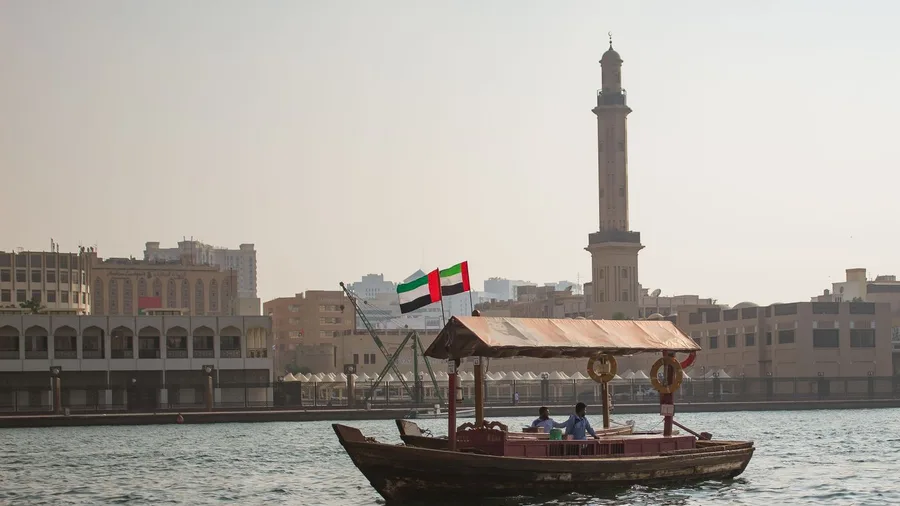
The passport at the center of this story is the United Arab Emirates – a document that went from roughly 67 visa-free or visa-on-arrival destinations in 2013 to approximately 185 by 2024, a gain of around 118 countries in eleven years.
That number needs context to land properly. Most passports that currently sit at the top of global rankings moved incrementally across the same period – picking up two or three destinations in a good year, losing one in a bad one. The UAE added destinations at a rate no other passport in the modern index era has matched over a comparable span. This was not a gradual climb; it was a sustained sprint.
The current position is just as striking as the trajectory. Depending on the index edition and the month it was published, the UAE passport now sits alongside or above several Western European documents on raw destination count – a comparison that would have been dismissed as implausible from the 2013 baseline.
The destination counts here are drawn from public passport indices. If you want a verified live figure before booking anything, the Henley Passport Index and IATA’s Timatic database are the authoritative sources and updated regularly.
So the what is settled: the UAE, roughly 67 destinations to roughly 185, eleven years. What the rest of this article reconstructs is the how – and what the document actually means to the roughly one million people who carry it.
In 2013, Most of Europe and the Americas Stayed Shut

Sixty-seven destinations sounds livable until you map which 67 they were.
The entire Schengen Area was off the table. So was the UK, Canada, and the overwhelming majority of Latin America. For a UAE national in 2013, a business invitation to Paris meant weeks of advance preparation – gathering bank statements, employer letters, travel history, and hotel bookings just to apply for a Schengen visa before boarding. A colleague holding a German or Singaporean passport walked to the gate and flew. That gap – the gap between needing a file of documents and needing nothing – defined the daily friction of holding the UAE document on any route that mattered.
The passport was not useless. Gulf Cooperation Council neighbors were accessible without fuss, and the document worked adequately within the region. But the GCC was not where UAE nationals needed mobility most urgently – the high-stakes routes were exactly the ones that stayed shut.
What made this particularly pointed was the disconnect from economic reality. By 2013 the UAE was already a significant global trading state, with Dubai functioning as a major international business hub. The passport simply had not caught up. Its 67-destination ceiling reflected the diplomatic relationships the country had built – not its GDP, not its infrastructure, and not its geopolitical ambitions. Those relationships still needed to be constructed, almost from scratch, with the receiving world.
What People Get Wrong About Passport Power
By 2024, Nearly 185 Destinations Open on Arrival

Eleven years later, a UAE national can board in Dubai for Paris, fly on to Bali, and continue to Sao Paulo without a single visa arranged in advance. In 2013, that itinerary required three separate applications, three sets of supporting documents, and three approval waiting periods.
The 185-destination figure breaks down into concrete blocs. All 26 Schengen countries are now open on arrival. Most of Southeast Asia is accessible without advance paperwork. The majority of Latin American nations have opened since 2013. Large portions of sub-Saharan Africa have followed. The region-by-region comparison table that accompanies this article maps the full before-and-after picture if you want to check specific countries.
The gaps that remain matter, particularly for business travel.
The United States, Canada, the United Kingdom, and Australia all still require UAE nationals to apply for visas before traveling. These four destinations together represent a large share of the highest-value business routes in global aviation, which means the passport has not yet cleared what you might call the full English-speaking tier. For leisure travel across Europe, Asia, and Latin America, the practical gap between a UAE passport and a top-five passport has become nearly irrelevant. For a deal in New York or a meeting in Sydney, the old constraints still apply.
The scale of the change is now visible. What produced it – the specific levers pulled and in what order – is where the more instructive part of the story begins.
💡 PRO TIP
Check the Index Before You Book
Passport rankings shift month by month as bilateral agreements come into force. Before any trip, verify UAE visa requirements for your specific destination on IATA's Timatic database — the same system airlines use — rather than relying on a ranking snapshot from six months ago.
The UAE Treated Visa Deals as Foreign Policy, Not Travel Perks

The jump from 67 to 185 destinations did not happen because UAE tourism numbers climbed or because trade flows gradually warmed foreign governments to the idea. The UAE’s Ministry of Foreign Affairs ran visa waivers as instruments of national strategy – bundling them alongside investment frameworks, trade agreements, and aid packages rather than routing them through a travel-sector department the way most countries do.
The sequencing mattered. UAE embassies opened and aid channels began operating in target countries years before any meaningful flow of UAE tourists existed to justify them. The goodwill was being banked in advance, so that when a formal visa-waiver request eventually landed on a foreign minister’s desk, there was already a financial and diplomatic relationship underneath it – not a cold ask from a country they barely knew.
That financial weight was real, not rhetorical. UAE development and infrastructure spending per capita ranked among the world’s highest across this period. In sub-Saharan Africa the pattern is visible in the timing: UAE infrastructure investment arrived first, and bilateral visa waivers followed. Negotiators were not arriving with charm and a glossy tourism pitch; they were arriving after their country had already built something.
Most passports improve the other way. GDP rises slowly, tourist arrivals build over years, export relationships deepen, and receiving countries lower their guard incrementally – a process that typically spans decades and several governments. The UAE compressed that entire arc into eleven years by front-loading the relationships that normally take generations to develop organically.
The Schengen Breakthrough Was the Single Biggest Turning Point
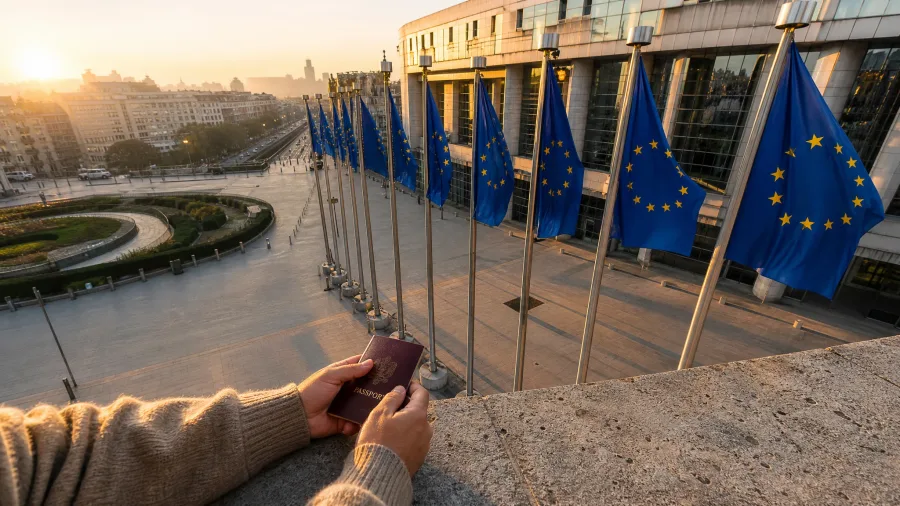
One agreement did more than any other to change what the UAE passport meant to the rest of the world: the EU Schengen visa waiver, which added 26 countries to the passport’s reach in a single stroke.
That number matters because nothing else in passport diplomacy moves the needle by 26 at once. Every other bilateral deal adds one country, sometimes two. Schengen is structurally different – clear the EU’s threshold and a quarter of the world’s most-demanded destinations open together.
The EU’s bar for granting that access is genuinely high. Biometric passports, security data-sharing agreements, and a demonstrated record of low overstay rates among nationals already traveling to EU territory – the UAE satisfied all three. Critically, the UAE rolled out biometric e-passports earlier than most regional peers, which meant it could clear the technical criteria ahead of schedule rather than waiting years in a queue of applicants still upgrading their document infrastructure.
The downstream effect was structural, not just numerical.
Once EU border authorities had vetted the passport and its holders and found both acceptable, every subsequent negotiating partner had a ready-made reference point. A smaller country with limited resources for its own risk assessment could simply note that Schengen had already done the work. That credibility transfer shortened timelines across Latin America and Southeast Asia in the years that followed – regions where the diplomatic groundwork was already in place and waiting for exactly this kind of external validation to close the deal.
🛂 How the UAE Passport Gained Ground: The Mechanism Step by Step
Diplomatic groundwork laid
UAE embassies and aid channels opened in target countries years before formal visa-waiver requests, building political capital in advance.
Biometric e-passport introduced
Early adoption of biometric standards met EU and other high-demand partners' technical requirements ahead of schedule.
Schengen Area unlocked
A single agreement added 26 European countries and created a verifiable track record for every negotiation that followed.
Latin America and Southeast Asia open
With Schengen as proof of compliance, both regions granted access relatively quickly in the years that followed.
Sub-Saharan Africa waivers secured
UAE infrastructure investment and development spending in Africa preceded and enabled the bilateral visa waivers in the region.
Credibility compounds
Clean overstay data and high-income traveler profiles lowered perceived risk for remaining holdout countries, shortening each new negotiation.
Each Deal Shortened the Negotiation for the Next One
Passport credibility compounds the same way a financial record does: a clean history with demanding partners reduces the cost of the next assessment, which produces another clean record, which reduces the cost of the one after that. The Schengen clearance was the first high-value entry on that record, and the agreements that followed moved faster because of it.
Latin America and Southeast Asia both opened in the years after the Schengen milestone – and in both regions the UAE’s existing track record did real work. Receiving-country officials could see that EU border authorities had run the numbers and accepted the passport. That is a statistical argument, not just a diplomatic one.
The underlying data held up because it was genuine. UAE nationals traveling abroad ran genuinely low overstay rates – not a number polished for a presentation, but an operational fact that gave foreign immigration officials a concrete basis for confidence. High average income among UAE national travelers and consistent Gulf-state political stability reinforced the risk calculation further, lowering what receiving countries perceived as the downside of granting access.
The loop this created is self-reinforcing: more open destinations produce more travel, more travel produces more data, a cleaner data record makes the next negotiation shorter. But a loop only runs after someone starts it. The diplomatic front-loading – the embassies, the aid channels, the infrastructure deals placed years in advance – is what gave the compounding mechanism somewhere to begin.
Sovereign Wealth Funded the Goodwill That Opened Borders
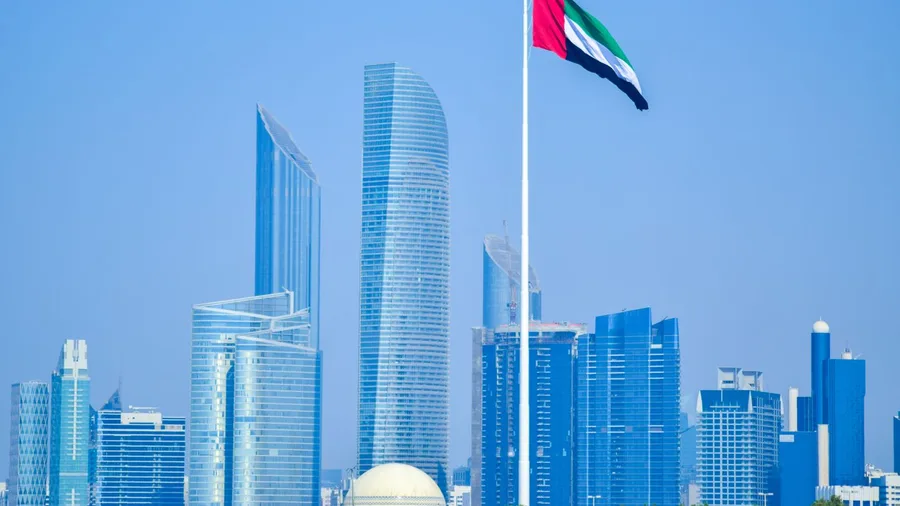
What the UAE gave in return was money – real, directed, front-loaded money that arrived in partner countries before any formal visa conversation began.
During the decade spanning roughly 2013 to 2024, the UAE deployed development capital at a per-capita rate that put it ahead of almost every other donor nation on earth. That spending was not random. Infrastructure loans went to sub-Saharan African governments that had no significant tourist relationship with the UAE and, at that point, no particular reason to open their borders to Emirati nationals. The visa waivers followed. The sequencing was not coincidental – it was the point.
Parts of the Pacific saw the same pattern: UAE trade agreements and development funds arrived first, creating a material obligation and a political relationship that made the subsequent visa-waiver request easy to say yes to. A country weighing a bilateral access deal does not operate in a vacuum; it weighs what the other side has done for it lately.
The honest comparison is with how other strong passports built their reach. French and British passport holders travel freely across much of West Africa and the Caribbean today partly because colonial-era trade networks and post-independence aid relationships hardwired that goodwill into the system decades ago. The UAE reproduced that dynamic in eleven years rather than across a century, because it had a sovereign wealth fund large enough to make the capital flows meaningful quickly.
None of this means the UAE passport was purchased outright. Security standards, biometric compliance, and low overstay rates were all real and independently verified by receiving countries. But sovereign capital removed the waiting – the years of gradually thickening trade, slowly rising tourist numbers, and incrementally warming diplomatic relations that would otherwise have been the only path forward.
UAE Passport — The Numbers Behind the Sprint
🛂 Destinations ~2013
~67
✈️ Destinations ~2024
~185
📈 Net gain
+118 in 11 years
🇪🇺 Biggest single unlock
Schengen (+26)
👤 Nationals who hold it
~1 million
🌍 Foreign residents (don't hold it)
~9 million
Still visa-required
The US, Canada, UK, and Australia continue to require visas for UAE nationals as of 2024.
It Now Matches or Beats Several Western European Passports

All that mechanism eventually produced a result you can read off a ranking table: the UAE passport now sits alongside documents that would have been completely out of reach from its 2013 position.
Depending on which index you check and which month, the UAE document trades places with passports from New Zealand, Portugal, and Chile on total accessible destination count. In 2013 those were the benchmarks a UAE national might have envied while filling out a Schengen visa application. The distance has closed to near zero on the numbers.
The practical gap that remains is real, though, and it clusters in one corner. The US, UK, Canada, and Australia all still require visas. For a Dubai-based executive whose highest-value meetings run through New York, London, and Toronto, that gap is not academic – it means advance appointments at consulates, document queues, and the occasional refused entry that cleaner passports avoid entirely. Those four countries account for a disproportionate share of the world’s premium business routes.
For leisure travel the story looks different. Schengen clears on arrival. Southeast Asia clears on arrival. Most of Latin America clears on arrival. A UAE national and a German national boarding the same flight to Rome face identical entry procedures at the gate. The practical difference between a UAE passport and a top-five European document, for the majority of holiday destinations, has become negligible.
Calling the UAE passport the world’s strongest document would be an overclaim the data does not support – it moves in and out of the top rankings depending on the edition. But a document that could not enter Paris without weeks of paperwork now walks into 26 European capitals freely, and sits in the same tier as passports that spent the better part of a century building their reach.
UAE Passport 2024: Where It Stands vs. Where the Gap Remains
Fully Open Now
- All 26 EU Schengen countries — no visa, no pre-approval
- Most of Southeast Asia, including Indonesia, Thailand, and Vietnam
- Majority of Latin American nations, including Brazil and Argentina
- Large portions of sub-Saharan Africa
- Matches or beats New Zealand, Portugal, and Chile on total count
Still Requires a Visa
- United States — visa required, embassy appointment needed
- Canada — visa required before travel
- United Kingdom — visa required since Brexit restructuring
- Australia — visa required for all UAE nationals
- A handful of Pacific and Caribbean nations
Only About 1 Million Nationals Hold It; 9 Million Residents Do Not
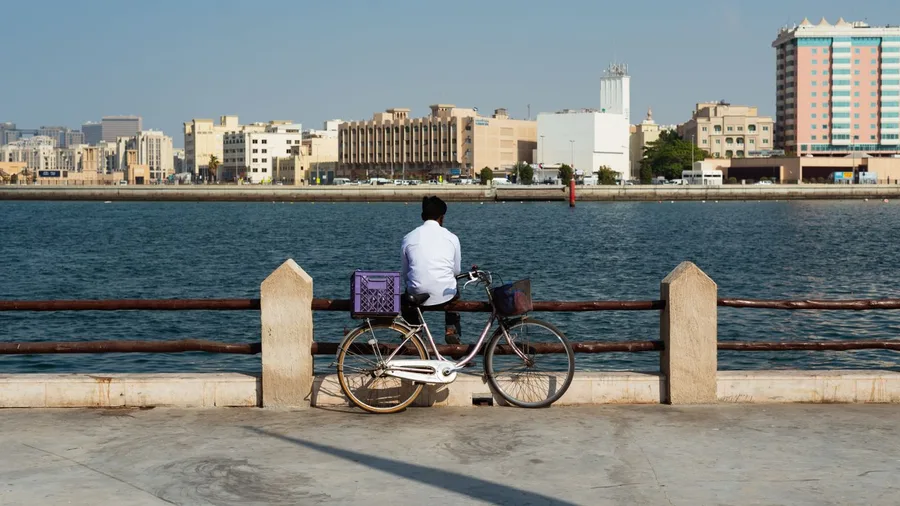
There is one number that reframes everything above: roughly 1 million people actually hold this passport.
The UAE’s resident population is around 10 million. Approximately 9 million of those residents are foreign nationals – South Asian labor migrants, Western professionals, domestic workers, and everyone in between – living on residency visas and traveling on their home-country documents. The UAE passport’s expanded visa-free network is entirely irrelevant to their daily lives. A construction worker from Kerala and a marketing director from London both watch this ranking shift from the outside.
UAE citizenship is not available as an earned path for long-term residents the way it is in many countries. It is discretionary, tightly controlled, and issued rarely. The passport pool is not going to grow through naturalization at any meaningful scale, which means those roughly 1 million nationals represent a fixed and deliberately narrow group.
That scale matters for the achievement itself. The most dramatic passport improvement on record benefits a national population smaller than many single cities.
It also partly explains why the strategy worked. A small, high-income national population under strong governmental oversight travels in a pattern that receiving countries find easy to approve: low overstay rates, high average spend, minimal security flags. The passport’s credibility as a risk profile and the passport’s political achievement are not separate stories – the demographic structure that limits who holds it is the same structure that made it negotiable in the first place.
If You Hold the UAE Passport: A 7-Day Route Now Available That Was Impossible in 2013
Most Weak-Passport Countries Cannot Replicate This Sprint
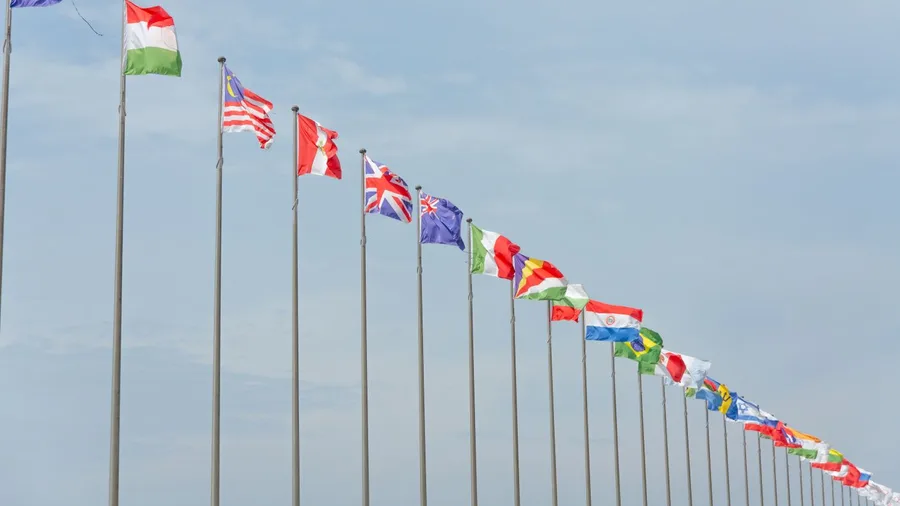
The playbook only works if you have all three instruments at once – and almost no weak-passport country does.
The UAE needed a sovereign wealth fund large enough to put real infrastructure money on the table before asking for anything back, a diplomatic corps capable of running coordinated long-term campaigns across sub-Saharan Africa, Southeast Asia, and Latin America simultaneously, and a traveler profile – small national population, high average income, demonstrably low overstay rates – that gave receiving countries a statistical reason to say yes. Strip any one of those three away and the strategy stalls. A Pakistan or a Myanmar or most sub-Saharan African nations cannot pre-fund bilateral goodwill at UAE scale, carry a thinner diplomatic presence in the countries that matter most, and present a traveler risk profile that receiving-country officials weigh differently. That is not a judgment; it is the operating constraint those governments actually face.
A legitimate path does exist for countries in that position. Sustained economic growth, deepening trade ties, and rising tourist volumes do translate into passport gains over time. The problem is the clock: that process runs on a timeline measured in generations, not in a single concentrated ministerial push.
The structural truth is plain. Passport power follows state power, and state power follows money and alliances. The UAE did not find a shortcut available to everyone – it deployed sovereign capital and political leverage that most states simply do not have.
Frequently Asked Questions
Is the UAE passport now the strongest in the world?
It depends on the index and the month. The UAE passport consistently ranks in the top tier globally and matches or exceeds several Western European documents on total destination count. However, it still requires visas for the US, Canada, UK, and Australia — destinations that heavily influence where individual indices place it. No index currently places it definitively at number one across all measurements, though it has ranked at or near the top on some editions of the Henley Passport Index.
Can UAE residents use the UAE passport for visa-free travel?
No. Only UAE nationals — approximately 1 million people — hold the UAE passport. The roughly 9 million foreign residents in the UAE travel on their home-country passports and are not affected by the UAE’s visa-free agreements. Residency in the UAE does not confer nationality or access to UAE travel privileges.
How did the UAE get visa-free access to the Schengen Area?
The EU requires biometric passports, security data-sharing agreements, and demonstrated low overstay rates before granting visa-free access. The UAE met all three criteria, partly because it introduced biometric e-passports early relative to regional norms. The agreement added all 26 Schengen countries to UAE nationals’ visa-free reach in a single step and became the single most significant turning point in the passport’s rise.
Why did the UAE’s passport power improve so fast compared to other countries?
Three factors combined that most countries lack: a sovereign wealth fund large enough to make infrastructure and development spending a real diplomatic lever, the state capacity to run coordinated bilateral campaigns across multiple regions simultaneously, and a small high-income national population that produced a low-overstay travel record reassuring to receiving countries. Most passport power rises slowly through organic GDP and trade growth; the UAE accelerated by front-loading relationships that ordinarily take decades to develop.
Do UAE nationals need a visa to visit the United States?
Yes, as of 2024 the United States still requires UAE nationals to obtain a visa before travel. The same applies to Canada, the United Kingdom, and Australia. These four English-speaking nations represent a significant remaining gap in the UAE passport’s coverage, particularly for business travelers.
Where can I check the current UAE passport ranking?
The two authoritative sources are the Henley Passport Index, which publishes quarterly updates based on IATA data, and IATA’s own Timatic database, which airlines use to verify travel document requirements in real time. Both are publicly accessible. Because visa agreements change regularly, always verify requirements for a specific destination directly through one of these sources before booking.
Sovereign Wealth, State Deals, and What the Scorecard Actually Measures
Three things made this sprint possible, and they had to work together. First, sovereign wealth large enough to turn development spending into a genuine diplomatic instrument – money that arrived in partner countries before any visa conversation formally began. Second, a state-led negotiating strategy that treated each bilateral deal as foreign policy rather than a travel perk, running coordinated campaigns across multiple regions simultaneously. Third, a genuinely low overstay and incident rate among UAE nationals abroad, which gave receiving governments a real-world record to point to when saying yes. Remove any one of those three and the pace of the climb does not hold.
Most countries with weak passports today are missing at least two of those conditions. The sovereign fund is not there, the diplomatic footprint is thinner, or the traveler risk profile is assessed differently by the countries doing the admitting. The UAE’s path is not a template – it is a one-off built from resources that are, by definition, uncommon.
A passport index score is a ledger of a country’s relationships, its money, and its political reputation abroad. The UAE’s decade proves how fast that ledger can be rewritten when all three are available – and how unusual it is for all three to be available at once. You came in looking at a number that moved from 67 to 185. Now you know what it cost to move it, and you can judge for yourself whether any country on a similar starting rung is actually holding the same cards.
Check Where Your Passport Stands Right Now
Passport rankings shift as new bilateral agreements come into force. Head to the Henley Passport Index or IATA's Timatic database and look up your own document — the live ranking table at the top of this article gives you the UAE's region-by-region breakdown as a reference point.