
9 Things Nobody Tells You Before Buying an RV After 60

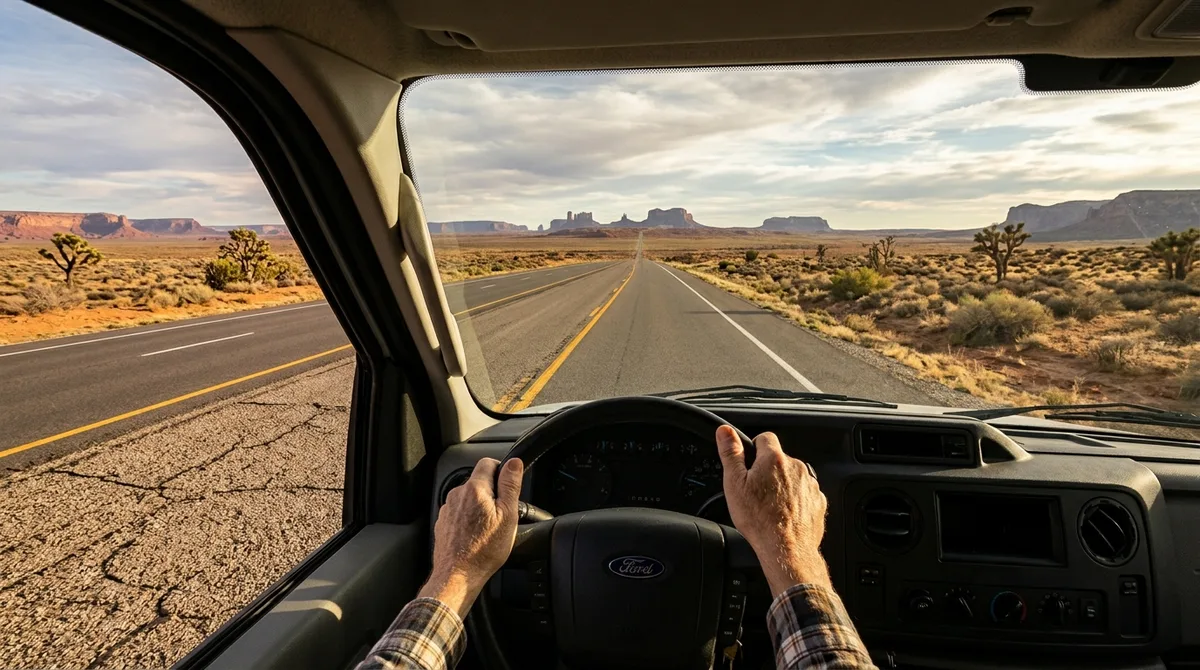
Glossy brochures sell you an idealized retirement on wheels, picturing golden-hour campfires and effortless national park hopping.
They skip the steep physical learning curves, unexpected repair bills, and tight parking spaces that greet you on your first real trip. Buying an RV after 60 is not just purchasing a weekend hobby; it is a structural lifestyle change that demands honest physical and financial preparation.
Forget the marketing fantasy. You will deal with heavy sewer hoses, strict campground booking windows, and the constant hum of highway maintenance.
Crawl under chassis components, back into tight gravel pads, diagnose 12-volt electrical failures, and patch rubber roofs in the rain.
Here are nine hard-earned truths about buying and living in an RV past sixty, covering safety, physical ergonomics, maintenance budgets, and real-world logistics.
💡 PRO TIP
The Post-60 Demographic Shift
Seniors are the fastest-growing segment of RV buyers, yet they face the steepest physical and mechanical adjustment curves when transitioning from stationary homes to mobile rigs.
Quick Tips Before You Start
Inspect the Roof
Always check rubber roof seals for cracking before making any purchase offer.
Weigh the Rig
Drive the fully loaded RV to a certified scale to verify true payload limits.
Rent First
Rent a similar class RV for two weeks before committing to a permanent purchase.
Test Connectivity
Verify cellular booster compatibility for remote medical access and navigation.
Where RVs Are Built and Serviced
Save this route to visit major RV manufacturing and service centers before buying.
RV Buying Quick Guide
1. Managing the Physical Demands of Camp Setup
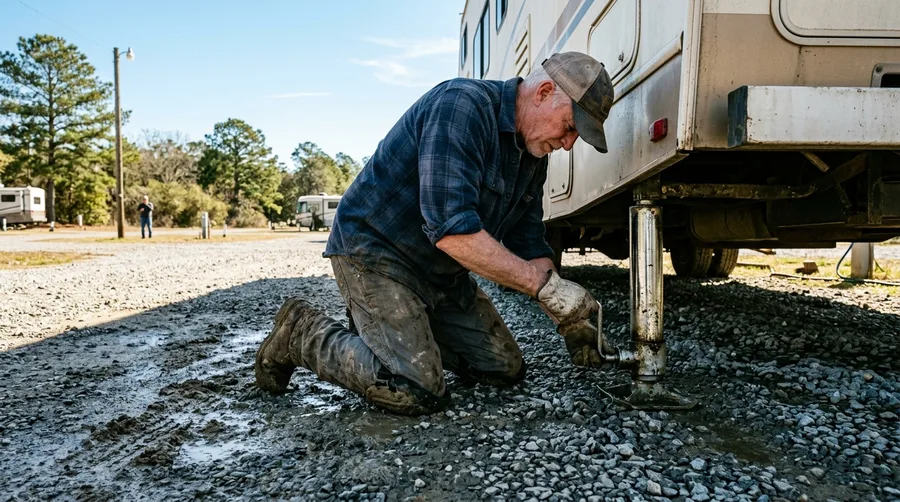
You pull into an unfamiliar gravel campsite in a downpour after driving six hours on I-75.
Your lower back tightens as you kneel in mud to wrestle a rigid, stubborn sewer hose into the dump port while stabilizing uneven leveling blocks.
Modern motorhomes look comfortable on dealership lots, but their utility hookups require upper-body strength, kneeling on stone, and twisting into awkward crawl spaces.
Over months of travel, this repetitive physical labor takes a heavy toll on aging joints, making simple daily chores feel exhausting.
Plan your setup routines carefully and invest in ergonomic tools to save your back.
💡 Tip: Buy heavy-duty rubber kneeling pads and ergonomic cam-lock hose fittings to protect your joints.
Leveling Systems — At a Glance
🪵 Manual Blocks
$30 Cost
⚙️ Hydraulic Jacks
$3,000 Upgrade
⏱️ Setup Time
15 Minutes
🏋️ Physical Strain
High (Manual)
Expert Advice
Hydraulic automatic leveling systems are worth every penny for travelers over 60.
2. Navigating Insurance Policies and Special Licenses

Assuming your standard auto insurance policy covers a massive Class A motorhome is a costly financial mistake.
Many jurisdictions require specialized non-commercial driver licenses or heavy vehicle endorsements once gross vehicle weight ratings exceed 26,000 pounds.
Dealership salespeople rarely mention these regulatory thresholds while you sign paperwork.
Commercial storage insurance, specialized roadside assistance plans for heavy commercial chassis, and medical evacuation riders add substantial annual fixed costs to your budget.
Call your insurance broker before test-driving anything to verify exact coverage limits and state licensing requirements.
💡 Tip: Ask for a total loss replacement rider to protect your investment during the first three years.
⚠️ COMMON MISTAKE
Assuming Standard Auto Coverage Applies
Standard car insurance policies almost universally exclude large RVs, leaving you unprotected in an accident unless you purchase specialized commercial-grade policies.
3. Calculating the Real Annual Maintenance Budget
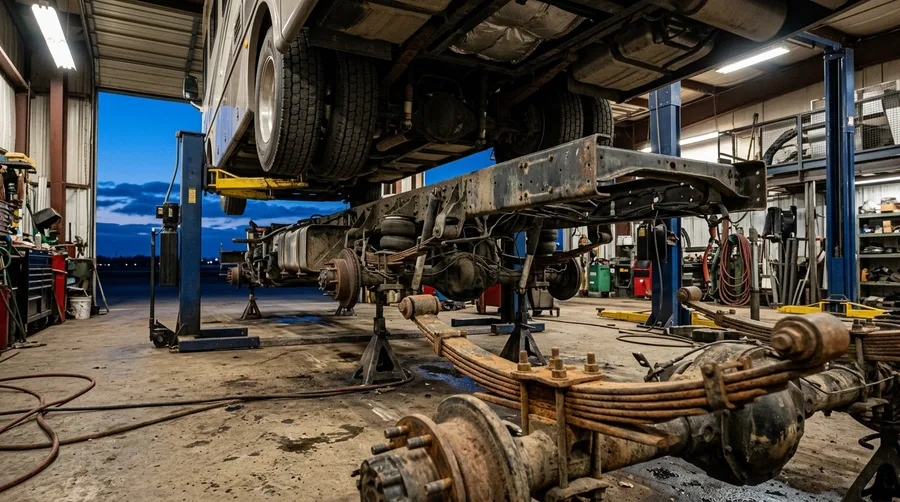
Budget at least ten to fifteen percent of the vehicle purchase price annually for unexpected repairs, rubber roof resealing, and depreciation.
Slide-out motors fail, water pumps burn out, and tire dry-rot requires complete replacement cycles every five to seven years regardless of tread depth.
Chassis maintenance on commercial truck frames costs significantly more than standard passenger car servicing.
DIY maintenance limitations for older adults mean relying on certified RV service centers where hourly labor rates regularly exceed two hundred dollars.
Keep a dedicated emergency repair fund untouched so mechanical failures never derail your retirement travels.
💡 Tip: Always set aside a dedicated emergency repair fund separate from your monthly travel cash.
Annual RV Ownership Expenses
Based on average five-year ownership data for mid-size motorhomes.
4. Securing Campground Reservations Months in Advance

Spontaneous road tripping during peak season is largely a myth in modern popular national parks.
Most premier state and federal campgrounds require booking precisely six months in advance at exactly 7:00 AM.
Arriving without a reservation forces you into stressful searches or expensive private parking lots.
First-come, first-served loops require physical stamina that exhausts travelers over sixty.
Target shoulder seasons, utilize federal recreation sites off the beaten path, or book through private networks to secure stress-free sites.
💡 Tip: Set digital calendar alerts for exactly 180 days before your desired arrival date.
The 6-Month Booking Workflow
5. Evaluating Ergonomic Floor Plans for Aging Joints
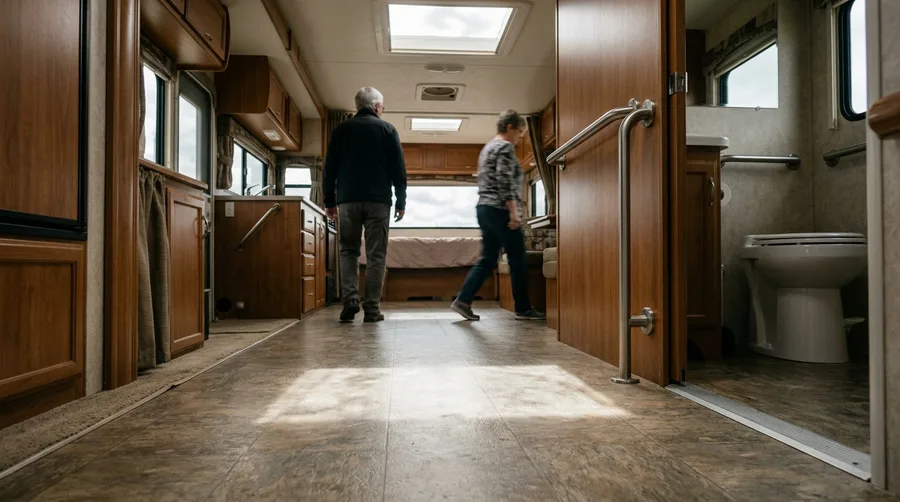
You step into a compact travel trailer and immediately squeeze sideways past a narrow dinette to reach the corner bed.
Climbs up high ladder bunks or squeezing past raised bathroom thresholds quickly become frustrating daily obstacles.
Evaluate whether a floor plan suits your mobility before signing contracts.
Anyone with arthritis or balance concerns should avoid cramped layouts that restrict movement.
Look for walk-around island beds, residential-height toilets, step-in showers with sturdy grab bars, and zero-threshold entry doors.
💡 Tip: Prioritize walk-around beds and residential bathrooms over extra living room floor space.
Ergonomic Must-Haves
6. Maintaining Reliable Connectivity in Remote Areas
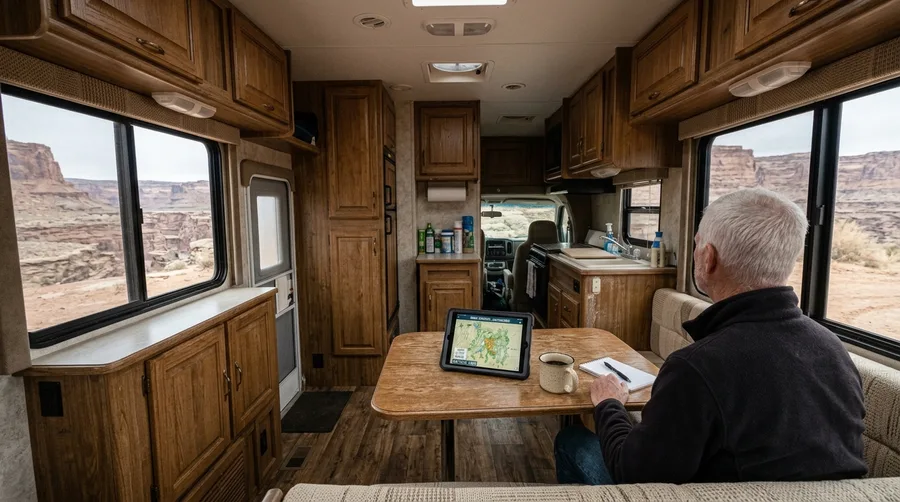
Escaping the grid sounds peaceful until you need a prescription refill or telemedicine appointment.
Standard cell phone boosters fail in deep canyon country or heavily forested state parks.
Maintain reliable internet access on the road.
Invest in cellular signal aggregation equipment and satellite router setups.
Reliable connectivity protects your health, safety, and financial management while traveling far from home.
💡 Tip: Combine a cellular hotspot with a roof-mounted booster for maximum remote signal strength.
Connectivity Realities
Signal coverage in remote parks
7. Mastering Towing and Tight Maneuvering Stress
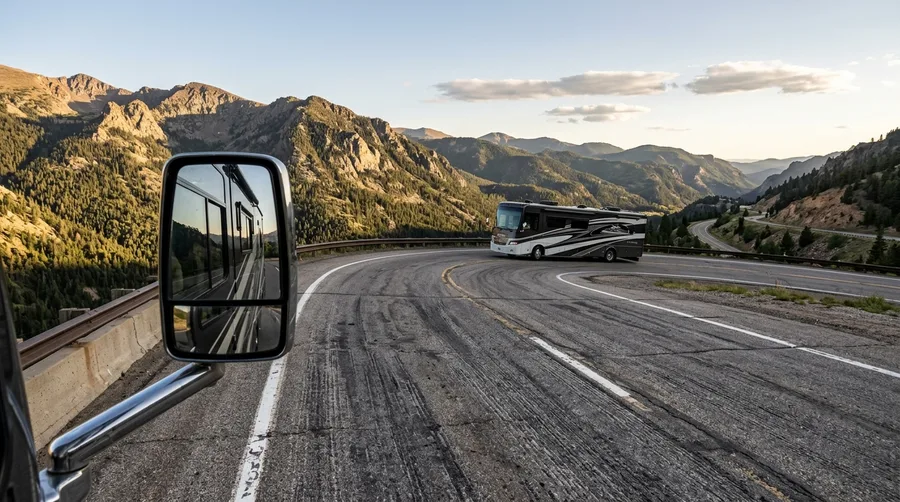
Navigating a forty-foot rig through a single-lane gas station canopy with a twelve-foot clearance tests your nerves instantly.
Practice backing up with a designated spotter, install comprehensive backup camera systems, and manage blind spots proactively.
High-stress highway driving, crosswinds on open interstates, and steep mountain grade descents cause significant cognitive fatigue.
Take frequent breaks and avoid driving more than two hundred miles in a single day.
Your reaction times and spatial awareness deserve respect on busy modern highways.
💡 Tip: Install aftermarket side-view camera systems to eliminate dangerous blind spots while changing lanes.
⛽ Safe Fueling and Maneuvering Steps
Scan Canopy Clearance
Check height signs before entering any service station.
Position Designated Spotter
Establish clear hand signals outside the vehicle.
Take Wide Turns
Swing wide past curbs to clear rear dual wheels.
Secure All Slides
Verify interior clearance before moving the rig.
8. Managing Healthcare Networks and Prescription Refills
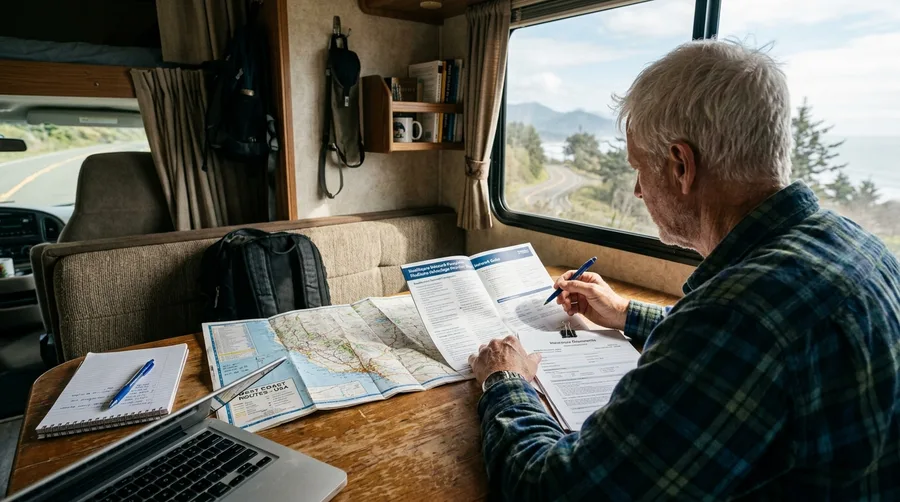
What happens when you need a routine specialist appointment three states away from your primary care network?
Managing routine medical care, insurance networks, and prescription refills while living a nomadic lifestyle requires careful logistical planning.
HMO insurance plans often restrict out-of-state medical coverage entirely, leaving you uncovered for urgent care visits.
Establish relationships with mail-forwarding pharmacy services, keep physical copies of your complete medical history onboard, and map out travel routes near quality regional healthcare facilities rather than deep wilderness outposts.
Prioritize your health infrastructure before exploring remote national monuments.
💡 Tip: Switch to a nationwide PPO insurance plan and set up mail-order prescription delivery before departure.
Insurance Network Risks
Out-of-state coverage breakdown
9. Downsizing Lifelong Possessions Into Three Hundred Square Feet

Start the emotional downsizing process at least six months before purchasing your rig.
Shedding a lifetime of accumulated possessions to live in three hundred square feet creates intense emotional friction.
Account for the hidden rental costs of off-site storage units for sentimental items that will not fit inside your motorhome.
Overloading your RV payload capacity with heavy keepsakes ruins fuel economy and compromises suspension safety.
Keep only what you use weekly.
💡 Tip: Weigh your packed rig at a certified truck scale to verify you haven't exceeded gross axle limits.
RV Packing: Worth It vs. Leave It Behind
Pack This
- Compact induction cooktop
- Lightweight nesting cookware
- Ergonomic leveling blocks
- Heavy-duty sewer hose kit
Leave Behind
- Cast iron skillet sets
- Extra bedding and pillows
- Board games and heavy books
- Large kitchen appliances
Frequently Asked Questions
Is it cheaper to travel by RV or stay in hotels after retirement?
Once you factor in fuel costs, campground fees, insurance, and rapid vehicle depreciation, traveling by RV is rarely cheaper than traditional travel. You choose this lifestyle for the experience of mobility, not for financial savings.
What size RV is easiest for a couple in their 60s to handle alone?
Class B campervans or manageable 24 to 28-foot Class C motorhomes offer the best balance. They fit into standard parking spaces, navigate fuel stations easily, and do not require heavy towing experience.
How do retiring RVers handle mail and official residency?
Full-time travelers typically use specialized mail-forwarding services based in domicile-friendly states like Florida, Texas, or South Dakota. These services scan your envelopes and ship packages to designated campground addresses.
Can you full-time in an RV with chronic health conditions?
Yes, provided you plan your travel routes near major regional medical centers and maintain a PPO insurance policy with nationwide coverage. Always map out urgent care facilities before entering remote wilderness regions.
How often do RV tires need to be replaced?
RV tires typically degrade from age and UV exposure before wearing out their tread. Plan on replacing all trailer and motorhome tires every five to seven years regardless of how many miles they have accumulated.
Navigating the Open Road With Eyes Wide Open
Buying an RV after 60 opens the door to unmatched geographic freedom, but only when approached with clear-eyed preparation.
By acknowledging the physical demands, budgeting for real maintenance costs, and selecting an ergonomic floor plan, you protect both your retirement savings and your peace of mind on the open road.