The Legal Reason You Can’t Park a Tiny Home Where You Think You Can


You buy a quiet plot of rural land assuming you can drop a tiny home on it by the weekend, only to discover that municipal codes treat any structure under four hundred square feet as an illegal camping site rather than a legal house.
That mismatch between what looks like private ownership and what zoning maps actually permit leaves thousands of buyers facing sudden stop-work orders and thousands of dollars in wasted timber and steel.
You stand to lose your entire upfront investment if you skip verifying how your county classifies mobile dwellings before signing a land purchase agreement.
We will walk through the exact legal barriers – from minimum square footage mandates to strict vehicle classifications – that dictate where your micro-dwelling can legally sit.
At a Glance
Why zoning codes classify tiny homes as RVs or illegal dwellings
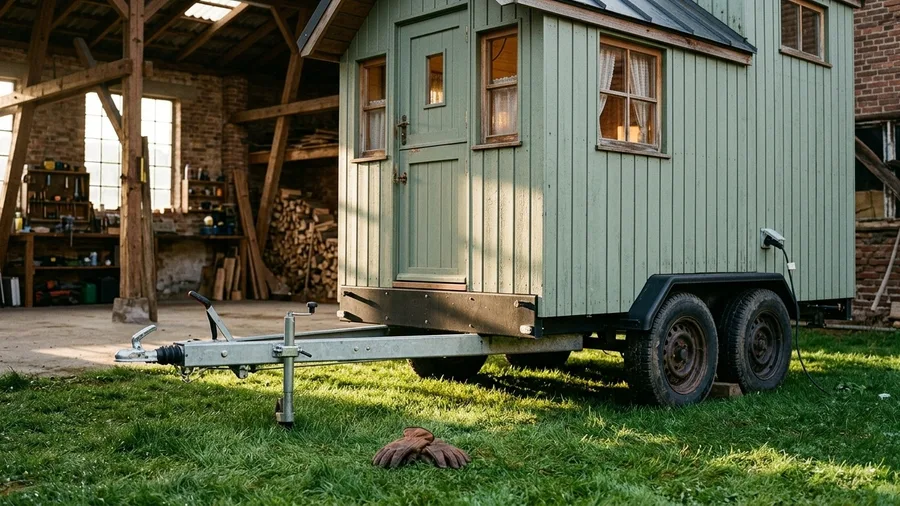
Local zoning ordinances mandate minimum square footage requirements for permanent residences, automatically disqualifying structures under 400 square feet.
Local municipalities enforce these strict floor area ratios to preserve neighborhood property values and maintain historical tax bases. When an inspector reviews a micro-structure on a residential lot, the lack of a permanent foundation instantly triggers a non-conforming use violation.
This automatic classification carries heavy financial penalties.
Without meeting regional building codes for habitable dwellings, the structure defaults to recreational vehicle status under state law.
⚠️ COMMON MISTAKE
Assuming Rural Land Has No Rules
Buying cheap acreage outside city limits does not grant exemption from county zoning restrictions or minimum dwelling sizes.
The legal difference between permanent foundations and wheels
Building codes classify structures on wheels as recreational vehicles, which municipalities legally prohibit from serving as permanent, year-round residences outside designated RV parks.
A chassis with axles and a towing tongue signals a temporary installation to local code enforcement officers, stripping the structure of real property rights.
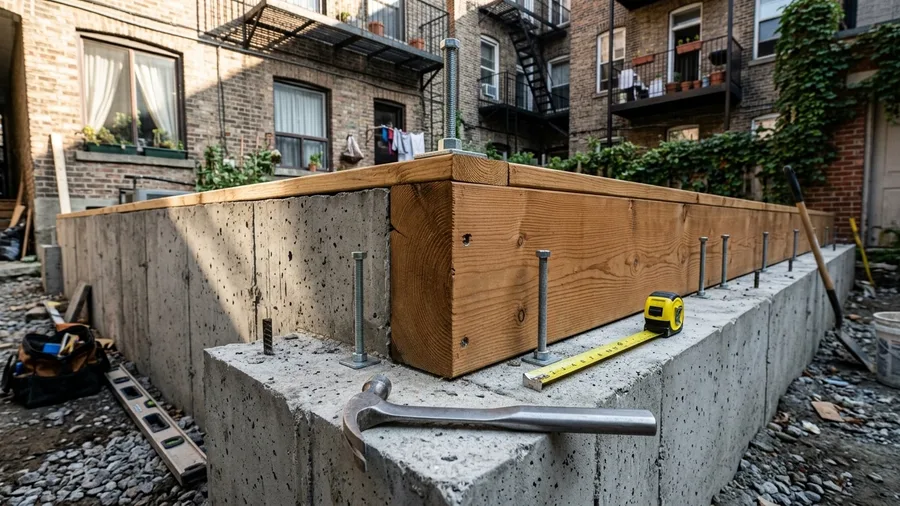
Bolting that same timber frame to a poured concrete perimeter foundation changes its legal definition entirely, shifting it from vehicle to permanent real estate.
However, dropping a mobile chassis onto temporary cinder blocks fails to satisfy permanent foundation statutes in nearly every jurisdiction.
Inspect local municipal codes for exact anchor bolt and footing depth requirements before signing a build contract.
Foundation Compliance Standards
How accessory dwelling unit (ADU) laws restrict backyard placement
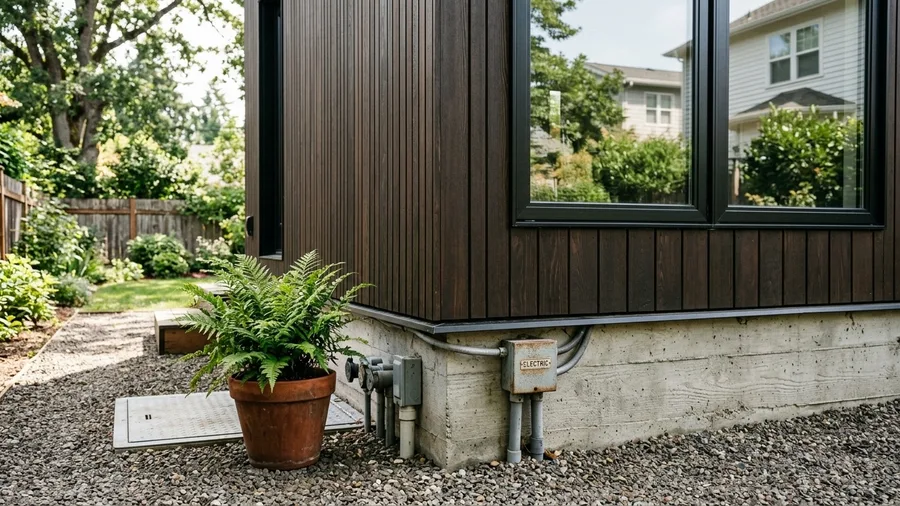
Even where accessory dwelling units are officially permitted by local ordinances, strict setback requirements, utility connection mandates, and owner-occupancy rules often exclude mobile tiny homes from qualifying entirely.
Municipalities require backyard secondary dwellings to tie directly into municipal sewer lines rather than holding tanks, adding thousands of dollars in trenching costs to the project.
Setback rules dictate that any secondary structure must sit at least five to ten feet away from property boundaries and main house walls.
Local planning boards enforce these perimeter clearances strictly.
Many jurisdictions also mandate that the primary property owner reside in the main house, making rental investments impossible for buyers who planned to live off-site.
💡 PRO TIP
Inspect Utility Inlets Early
Always verify local main sewer line depth before planning a backyard tiny home placement to avoid catastrophic trenching bills.
The hidden enforcement power of homeowners associations and deed restrictions

Private community covenants and homeowners association bylaws frequently impose architectural guidelines and minimum size rules that override municipal zoning allowances.
An unincorporated county might look the other way regarding a compact movable structure sitting on a gravel pad, but a neighborhood association with active architectural control committees will issue immediate stop-work orders and daily fines.
These private agreements run with the land, meaning restriction clauses remain legally binding regardless of who currently holds the title to the property.
Reviewing public municipal codes is never enough if private subdivision restrictions explicitly ban auxiliary or wheeled structures from the neighborhood.
Municipal Code vs. Private HOA Rules
City Zoning
- Regulated by elected local officials
- Allows public comment during hearings
- Focused on health, safety, and sanitation
- Subject to state housing legislation updates
Private HOA Covenants
- Enforced by private property boards
- Stricter aesthetic minimum size rules
- Can fine owners without court oversight
- Overrides permissive city ordinances
What you must verify with your local planning department before buying
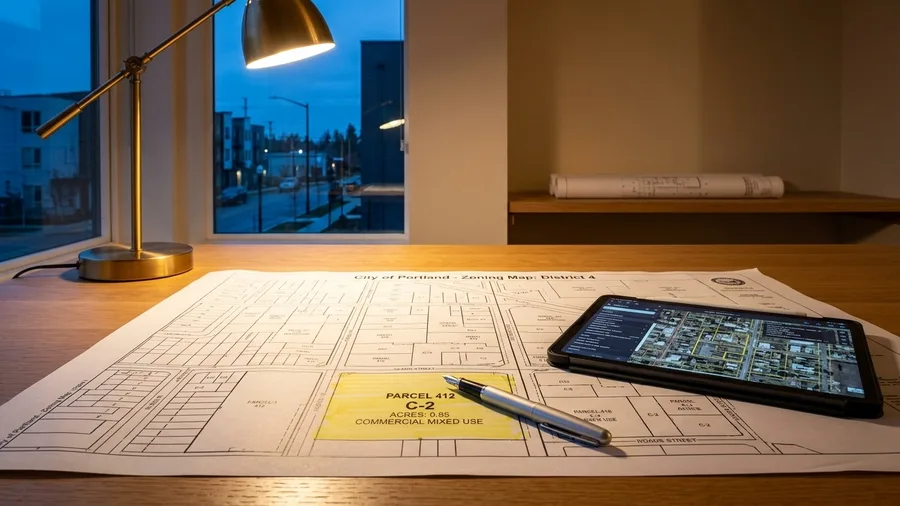
Homeowners must cross-reference municipal land-use definitions, permanent utility hookup laws, and county health department sanitation codes to avoid heavy fines or eviction.
Schedule an in-person meeting with a local zoning technician, bringing your exact parcel number and structural blueprints.
Ask explicitly whether dwelling units under 500 square feet are permitted as primary or secondary residences on your specific parcel zoning designation.
Securing written confirmation from the planning director protects you from sudden policy shifts and costly enforcement actions down the road.
🗺️ Pre-Purchase Verification Steps
Pull Parcel Data
Identify exact county zoning designation numbers online.
Check Minimum Size
Verify square footage thresholds with the planning desk.
Inspect Utilities
Confirm legality of water and septic connections for mobile frames.
Get Written Signoff
Secure official planning department approval before purchasing land.
Frequently Asked Questions
Can I legally live in a tiny home on wheels in my own backyard?
In most municipalities, parking a wheeled tiny home in a residential backyard violates local zoning codes. Cities classify these structures as temporary vehicles rather than permanent dwellings.
What is the minimum square footage requirement for a permanent home?
Most traditional zoning ordinances enforce a minimum floor area ratio of 400 to 1,000 square feet for primary residential structures. This automatically rules out standard micro-dwellings.
Do rural areas allow mobile tiny homes without restrictions?
Even unincorporated rural land is subject to county health department sanitation codes and minimum building size mandates. You must verify local rules before parking.
How can I make a tiny home legal on my property?
To satisfy building codes, you typically must remove the wheels and towing hitch, install a permanent foundation, and connect to approved municipal water and sewer lines.
Do HOAs have the power to ban tiny homes?
Yes. Private community covenants and HOA architectural guidelines override municipal allowances and frequently enforce strict minimum size and aesthetic rules.
Executing Your Initial Planning Desk Audit Today
Pull your county parcel map and verify the exact zoning code designation before spending money on a micro-chassis or vacant plot. Skipping this single check risks immediate eviction notices and heavy daily municipal fines.
Take your property parcel number down to the local planning office this week and demand written confirmation of their minimum square footage rules.
Ready to Verify Your Land Designation?
Review the zoning checkpoints detailed above and pull your local parcel file before committing to a purchase.