
10 Countries That Will Let You In Without a Visa Starting This Year


Ten countries changed or extended their visa-free access for US passport holders between 2024 and 2025 – that is ten borders you can now cross without filing an application, paying a consulate fee, or waiting on an approval that might not come.
The working assumption most travelers carry is still wrong: that going somewhere new means forms, fees, a waiting period, and the quiet dread of a rejection email landing after the flights are already booked. For a growing number of destinations, that process is simply gone.
What replaced it spans five regions: Africa, Southeast Asia, the Gulf, Latin America, and Central Asia. Kenya abolished its application entirely. Vietnam extended its permitted stay long enough to make a real trip viable. Kazakhstan – not a place most US travelers consider accessible without paperwork – now requires none.
This list tells you which ten countries made the change, who exactly qualifies, what you still need to show at the border when you get there, and where to verify the rule is still standing before you pay for anything. That last step is not optional – these policies move fast.
Pick the destination that fits the trip you would actually take, run one verification step the day you decide, and then book.
Quick Tips Before You Start
Always Verify Before Booking
Visa policies change without notice — confirm the waiver applies to your specific passport at each country's official immigration authority before paying for flights.
Six-Month Passport Rule
Nearly every country on this list requires your passport to be valid for at least six months beyond your intended departure date.
Carry Proof of Onward Travel
Airlines check for a confirmed return or onward ticket at check-in, not just at immigration — have it accessible from the moment you leave home.
Show Proof of Funds
A credit card in your name plus a recent bank statement is the standard way to satisfy 'sufficient funds' requirements at the border.
Use the IATA Travel Centre
The IATA Travel Centre (iatatravelcentre.com) cross-references your passport country against current entry rules and is updated faster than most travel blogs.
1. Kenya: Now Visa-Free for All Visitors

The smell hits before the gate opens: red dust, jet fuel, and something green underneath it – equatorial air that doesn’t exist at any US airport. Kenya is the full version of that arrival, and in 2024 it removed the last administrative barrier between a US passport holder and the country. The e-visa system is gone entirely. No online form, no fee paid weeks in advance, no approval email to screenshot and print.
That is a bigger shift than it sounds. The e-visa was not expensive and was not hard to get, but it required planning – you needed to apply before you booked, or book and then scramble. Scrapping it means Kenya is now a destination you can decide on Tuesday and fly to Friday without a single government portal standing between the idea and the ticket.
The border still has a border. Arriving at Nairobi’s Jomo Kenyatta International Airport without a valid passport, a confirmed place to stay, proof you’re leaving, and some evidence of funds is still a problem – none of that changed with the visa abolition. Immigration officers check all of it, visa or no visa. Have those documents accessible, not buried in a bag.
Jomo Kenyatta connects directly or with one stop from most major US cities, and it sits roughly three to four hours by road from the Maasai Mara. Amboseli and the Kenyan coast are each a different direction from Nairobi but equally reachable under the same entry stamp. The icon status is earned – this is one of the most recognizable wildlife destinations on the planet, the crowds in peak season are real, and it is still worth it. What the visa abolition changes is not the destination; it changes who can act quickly enough to catch it at the right time of year.
Visa policies are not permanent. Kenya’s waiver exists today and could be narrowed or suspended by the time the next booking cycle comes around. Check the current rule for a US passport directly at Kenya’s Department of Immigration website before paying for anything – not because this article is likely wrong, but because any article can become outdated the day a policy changes.
💡 Tip: Kenya's immigration portal (immigration.go.ke) is the authoritative source — not a travel aggregator, not a flight booking site. Check it directly.
2. Vietnam: A Stay Long Enough to Actually See It

You board in Hanoi and land in Ho Chi Minh City – same country, same visa-free stamp, same trip – and that is the practical shift the 2023 extension made possible. Where the old short-stay limit forced a choice between cities, the stretched window now covers a north-to-south route: a few days in Hanoi, the train south to Hoi An, then on to Saigon, all without touching a visa application or paying a government fee before you left home.
The current permitted stay in days for a US passport is at the Vietnam Immigration Department portal – check there, not here, because that number is the planning constraint everything else bends around. What this entry cannot give you is a figure that stays accurate; what it can tell you is that the extension is substantial enough to suit a first-time visitor who wants more than one city, and tight enough that a slow traveler spending a month or more needs to look at a different visa category.
Fly into Noi Bai in Hanoi or Tan Son Nhat in Ho Chi Minh City – both process visa-free arrivals without friction. Land borders are a different story; the rules there vary. One thing that surprises people: the airline at your departure gate will ask for proof of onward travel before the plane boards, not just at Vietnamese immigration on arrival. Have a confirmed return or connecting ticket accessible – not buried in an email thread – when you check in.
⚠️ COMMON MISTAKE
Land Borders Are Not the Same as Airports
Vietnam, Indonesia, and several other countries on this list process visa-free arrivals differently at land crossings than at international airports. If your itinerary includes an overland entry, confirm that specific crossing's current rules before you leave — the airport rule does not automatically apply.
3. Thailand: The Visa-Free Window Got Longer

Thailand changed its visa-free stay limit in 2024, and the change is real – this is not a rebranding of a rule that was already in place.
The Thai Immigration Bureau posts the current figure on its official site, and that is where to confirm it, because the permitted duration has shifted more than once in recent policy cycles. What the longer window actually opens up: Chiang Mai in the north, Bangkok, and a run south to either Koh Samui or Phuket all fit within a single trip without the clock-watching the old limit imposed. For a wildlife-focused visit, that matters – Doi Inthanon National Park near Chiang Mai and Khao Yai to the northeast both reward two or three days, not a rushed morning. Doi Inthanon is Thailand’s highest peak and reliably delivers montane birdlife and cool-weather forest; Khao Yai is genuinely one of the better chances in mainland Southeast Asia to see Asian elephants in open terrain, though sightings are common rather than guaranteed and early-morning entry gives you the best odds.
One limit the waiver does carry: Thai immigration is watching for travelers who use back-to-back tourist entries to live in the country long-term, and a history of repeated short trips can draw scrutiny at the border. If Thailand is a base rather than a visit, a different visa category fits better. For everyone else – have a printed or easily displayed hotel booking and a confirmed departure ticket ready to show at the immigration counter, not just on a phone with a dying battery.
4. Indonesia: Visa-Free, But the Clock Is Real

One archipelago, 17,000 islands, and a single entry stamp that covers all of it – no advance application, no fee paid before you board. A US passport gets you through the immigration hall at Bali’s Ngurah Rai Airport without any prior paperwork, and the same is true at Jakarta’s Soekarno-Hatta and Surabaya. Check the exact day count you are allowed at the Directorate General of Immigration Indonesia before booking, because the permitted stay has a hard ceiling and it is the kind of detail that shapes whether Lombok, the Gili Islands, Komodo, and Sulawesi all fit in the same trip or whether you are choosing between them.
The catch is the clock. Unlike the old visa-on-arrival system, which had an extension pathway you could handle at an immigration office, the current visa-free stamp does not roll over automatically – buying more time means a separate bureaucratic process in-country, one that takes planning and does not always go quickly. If you are pricing a longer stay, look into that process before you commit to flights, not after you land. One more practical note: smaller ports and some land crossings do not process visa-free arrivals at all, so flying into one of the three major international airports is the straightforward path to a clean entry.
💡 Tip: Smaller ports of entry and some land crossings may not process visa-free arrivals. Fly into Denpasar, Jakarta's Soekarno-Hatta, or Surabaya for straightforward entry.
How Visa-Free Access Has Shifted — 2019 to Now
Dates reflect announced or implemented policy changes. Always confirm current rules at each country's official immigration authority before booking.
5. Saudi Arabia: Entry Rules Changed More Than Once

The thing to know before you search for flights: Saudi Arabia’s entry mechanism for US citizens has changed several times since the country opened to leisure tourism in 2019, and it could change again. Whether the current status is visa-free, visa on arrival, or a streamlined eVisa, the Saudi Ministry of Foreign Affairs website is the only source that reflects the live position – any article, including this one, may already be behind. Confirming against that source immediately before booking is not optional due diligence; it is a required step.
What that open door actually reaches is worth the confirmation effort. AlUla’s Nabataean rock tombs sit in a sandstone landscape that most Western travelers have never seen in person. Jeddah’s Al-Balad district – a UNESCO-listed quarter of coral-brick merchant houses – is where Saudis themselves will point you first, not the glass towers of central Riyadh. Red Sea dive sites along the western coast remain genuinely uncrowded by regional standards. Dress code and conduct expectations are not part of the visa paperwork, but they shape how entry goes and how the trip proceeds – the Saudi Tourism Authority website has current guidance and it is worth reading before you land.
💡 Tip: Dress code and public conduct expectations are not visa paperwork, but they affect whether your trip proceeds smoothly. Current guidance is on the Saudi Tourism Authority website (sta.gov.sa).
Visa-Free: What It Covers vs. What It Does Not
What the Waiver Removes
- Pre-travel application forms and approval waits
- Advance visa fees paid before departure
- The risk of an application being denied before your trip
- Scheduling pressure to book only after a visa clears
- Multi-step embassy or consulate processes
What the Waiver Does Not Remove
- Passport validity requirements (typically six months beyond stay)
- Proof of onward or return travel at the border
- Evidence of sufficient funds for your stay
- Accommodation details for at least the first night
- The right of immigration officers to refuse entry
6. Malaysia: One Hub, the Whole Region Unlocked

Malaysia does not belong on this list because of a dramatic 2024 policy break – it belongs here because the visa-free relationship with US citizens is long-established and has recently been reaffirmed, making it one of the most dependable starting points for a multi-country Southeast Asia trip at a moment when other countries’ rules are in flux. The current permitted stay in days is at Malaysia Immigration and worth a quick check, since the figure has shifted in recent updates.
Kuala Lumpur International Airport is one of the most connected hubs in the region, and the onward flight options from there are both frequent and cheap. AirAsia and other low-cost carriers reach Bangkok, Hanoi, Ho Chi Minh City, Bali, and Colombo for fares that make a multi-country itinerary financially realistic – and you arrive in Malaysia on a visa-free stamp with no advance paperwork, so the opening leg of the trip is entirely frictionless.
One detail worth knowing before you book a domestic connection: Sabah and Sarawak, on the island of Borneo, are Malaysian states but they operate their own immigration checkpoints. Flying from Kuala Lumpur to Kota Kinabalu means passing through a secondary immigration check on arrival. No additional visa is required for US citizens, but the checkpoint is real and takes time – factor it in when you are planning connections.
Malaysia treats its stay limit as a hard deadline, not an approximate one. Overstaying triggers fines on the way out and can affect future entry applications across the region. The permitted duration is whatever the current figure says it is – not an estimate, not a range, not something that loosens if you seem like a genuine tourist. Know the date you need to leave before you decide how long to stay.
💡 PRO TIP
Use Malaysia as Your Southeast Asia Base Camp
Kuala Lumpur's KLIA2 terminal is AirAsia's main hub. You can book onward flights to Vietnam, Thailand, Indonesia, and even Cambodia for well under $60 each way once you're in the region — which means entering visa-free on the Malaysia leg and treating it as your routing hub rather than just a stopover.
7. Oman: One Story That Earns the Detour

If you are choosing between Gulf destinations and your interest is landscape rather than luxury malls, Oman earns the detour. Wadi Shab’s canyon pools, the cool terraced villages of Jebel Akhdar, the Wahiba Sands, and Muscat’s old waterfront district are a different proposition from what you find across the border – and that distinction matters when you are deciding where to spend the days. On dress and public conduct, Oman sits in noticeably different territory from some of its neighbors: still conservative by Western standards, but meaningfully less restrictive, which is practical information for anyone comparing itineraries across the region.
Whether entry is currently visa-free, visa on arrival, or processed through an eVisa depends on the latest policy from the Royal Oman Police immigration portal – that is the source to check, because the permitted stay in days and the entry mechanism have both shifted recently. Most US-departing flights route through Dubai, Doha, or London to reach Muscat, so build that transit leg into your total travel time before the trip looks shorter on paper than it is in practice.
Oman — At a Glance
🛂 Entry mechanism
Confirm at rop.gov.om — mechanism and permitted days have both shifted recently
✈️ Total travel time from US
Typically 18–22 hours gate to gate including one transit stop — factor this before the itinerary looks feasible
📋 Border documents to carry
Passport valid 6+ months beyond stay, return or onward ticket, proof of sufficient funds
🌡️ Best travel months
October–March; summer interior temperatures regularly exceed 40°C and make Wahiba Sands and Wadi Shab brutal
👗 Dress code in practice
Shoulders and knees covered outside beach areas; swimwear stays at the resort or wadi pool, not the street
The trip that surprises most people
Jebel Akhdar sits above 2,000 metres — pack a layer even in winter. Most visitors arrive expecting heat and get cold nights in the mountains.
8. Colombia: Is the Visa-Free Entry Really That Simple?

No application, no fee paid in advance, no approval email to hunt for in your inbox – a US passport holder walks off the plane in Bogota or Cartagena, passes through immigration, and receives an entry stamp on the spot. The number of days that stamp covers is posted at Colombia’s Migración Colombia website, and that is the place to check it, not this article. What belongs in the conversation is why Colombia is drawing serious attention right now: direct flight options from US cities have multiplied, and the safety picture in Medellín and Cartagena has shifted enough that travelers who wrote off the country years ago are reconsidering it on current information rather than outdated reputation.
One caution worth knowing before you plan your schedule: Colombian immigration has grown more alert to tourists who arrive on a leisure stamp and quietly spend months working remotely. The visa-free entry is tourism entry, and if that describes your trip only loosely, Colombia does offer a digital nomad visa worth checking separately. For a straightforward leisure itinerary, a single stamp covers more ground than most people expect – the walled city and Caribbean coast around Cartagena, the mountain neighborhoods and day trips of the Medellín area, and the coffee farms and colonial towns of the Antioquia highlands are all distinct in feel and all reachable within one visit, no additional paperwork required.
💡 Tip: Colombia's tourist stamp is for tourism. Travelers spending significant time working remotely should check Colombia's current digital nomad visa options — immigration has started paying closer attention to this.
9. Kazakhstan: Central Asia Without the Paperwork
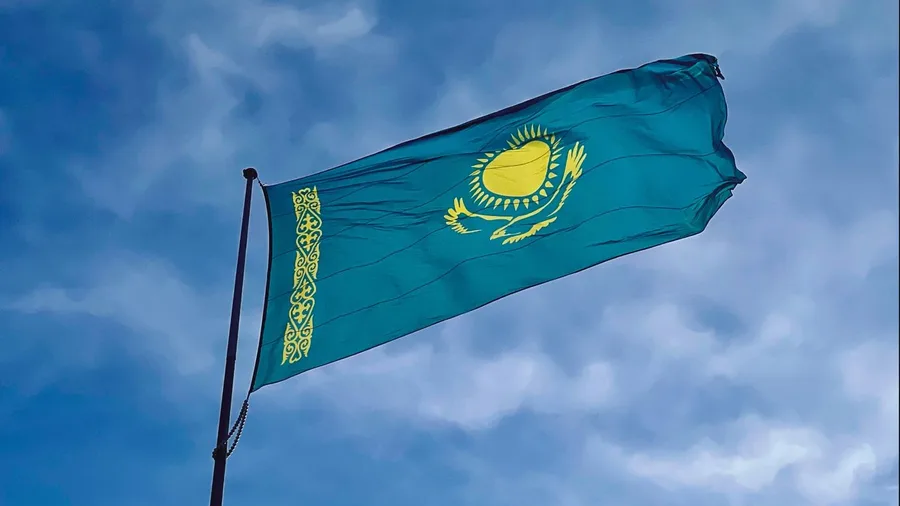
Central Asia has carried a reputation as one of the more bureaucratically demanding regions for US travelers – multiple-country itineraries used to mean a stack of pre-arranged visas and weeks of lead time. Kazakhstan is the direct contradiction of that assumption. US passport holders qualify for visa-free entry, and the exact number of days permitted is at Kazakhstan’s Ministry of Foreign Affairs website; check it there, since the window has shifted in recent policy cycles and no printed figure should be trusted over the official source.
What the waiver actually opens is a destination most US travelers have never seriously priced out: Almaty sits against a wall of snow-capped peaks visible from the city center, Astana is an architectural landscape unlike anything in the region, and the open steppe beyond both cities is the kind of space that requires seeing to scale properly. A long-haul flight from a US hub typically runs through a European or Gulf connection, and fares to Almaty can vary widely – budgeting time to compare routing options pays off. From Almaty, both Uzbekistan and Kyrgyzstan are reachable by air, and both currently offer US citizens visa-free or visa-on-arrival entry, which means a broader Central Asia trip no longer requires the multi-country visa logistics that used to make the region feel out of reach.
The waiver clears the paperwork barrier, but it does not flatten every friction. English signage outside Almaty and Astana is sparse, regional bus and rail connections require research rather than assumptions, and some tourist infrastructure is still at an early stage. Those are planning constraints, not reasons to skip it – they just mean the preparation looks different from a trip to Southeast Asia.
10. Ethiopia: Gateway to Africa, Entry Rules Evolving

The honest answer: it depends on when you are reading this. Ethiopia’s entry rules for US passport holders have been in active transition – the current status, whether that is a visa-free waiver, an e-visa on arrival, or something else implemented this year, sits at Ethiopia’s Immigration and Citizenship Service website, and that is the only source worth trusting. No article, including this one, can keep pace with a policy still moving.
What the entry rules open up is the real point. Lalibela’s rock-hewn churches, carved directly into volcanic rock at elevations above 2,600 meters, draw a fraction of the visitors that comparably ranked sites in Egypt or Morocco pull in any given month. The Danakil Depression – one of the hottest and lowest places on the planet, with active lava lakes and sulfur springs – has no crowd problem. The Simien Mountains require acclimatization time that belongs on the planning calendar alongside passport checks, since the altitude directly affects how many active days you can schedule without cutting a day short. Before any of that: land in Addis Ababa, sit down somewhere near the Mercato district, and order a macchiato. Ethiopian coffee culture runs deep, and a single cup, typically under $1 at a local cafe, is the clearest possible signal that you are somewhere with its own strong traditions and no interest in performing them for tourists.
Bole International Airport in Addis Ababa is Ethiopian Airlines’ main hub, and that airline’s Africa network is one of the widest on the continent. Travelers using Ethiopia as the opening stop of a broader Africa itinerary gain access to direct connections into East, West, and Southern Africa that are difficult to match from any other single hub. That routing logic holds regardless of how the entry rules finally settle – confirm the current waiver status at the official source, check that your passport clears the standard six-month validity requirement, and Ethiopia earns its place at the end of this list as the destination that opens a continent.
🛂 How to Confirm a Visa-Free Entry Before You Book
Identify the destination
Choose the one country from this list that matches your travel style, available time, and budget.
Go to the official source
Find that country's official immigration authority website or use the IATA Travel Centre (iatatravelcentre.com) — both are updated faster than any travel blog.
Check your specific passport
Confirm that the waiver applies to a US passport, not just generically to 'most nationalities' — the entry rules differ by passport country.
Verify stay duration
Note the exact number of permitted days and map them against your planned itinerary before purchasing any flights.
Check passport validity
Confirm your passport is valid for at least six months beyond your intended departure date from that country.
Book — in that order
Only after steps 1 through 5 are confirmed should you pay for flights or accommodation — a confirmed waiver today is not guaranteed for a flight booked three months from now.
Frequently Asked Questions
Do I really need nothing at all for these countries, or is there still some kind of form?
Most of these countries still conduct a normal border inspection — passport check, entry stamp, standard questions. What the visa-free status removes is the advance application: no form to fill out before travel, no fee to pay, no approval to wait for. Kenya is the most complete example: the e-visa was abolished entirely. Others, like Vietnam and Thailand, still stamp your passport on arrival but require nothing in advance. Always carry proof of onward travel and accommodation details, because those remain standard requirements.
Is it worth going to countries like Kazakhstan and Ethiopia, or are they too hard to reach from the US?
They are not hard to reach — they are just not obvious. Kazakhstan connects through Istanbul, Frankfurt, or Dubai, and flights run from major US hubs. Ethiopia is served directly by Ethiopian Airlines through Addis Ababa, with connections from Washington Dulles and New York. The visa-free status solves the paperwork; the flight routing is a separate planning question. Both destinations are meaningfully less crowded than comparably graded sites in Europe or East Asia.
Can I extend my stay once I am in the country if I want to stay longer?
It depends entirely on the country. Vietnam and Thailand have processes for extensions, though they vary by type of stay. Indonesia’s visa-free stamp is notably harder to extend than its previous visa-on-arrival system was. Malaysia and Colombia treat the permitted stay as a hard limit with real consequences for overstaying. Check the extension rules for your specific destination before traveling — and do not assume that being in-country makes the process easier than it looks from outside.
What happens if I am refused entry even though the country is on the visa-free list?
Visa-free status gives you the right to attempt entry — it does not guarantee admission. Immigration officers retain the authority to refuse entry if they are not satisfied with your documentation, your stated purpose, or your travel history. The most common refusal triggers on this list are travelers who cannot show proof of onward travel, travelers with no accommodation arranged, and travelers whose pattern of entries suggests they are using tourist access for long-term residence. Carry your documents, answer questions directly, and know your itinerary.
How quickly can a visa-free policy be reversed, and what happens to my booking?
Changes can happen within weeks. Saudi Arabia adjusted its entry mechanism multiple times between 2019 and 2025. Thailand’s permitted-stay window has been updated more than once. When a policy reverses, travelers who booked flights during the visa-free period are not automatically entitled to refunds — the airline’s obligation is to fly you to the destination, not to guarantee your entry. Confirm the current rule as close as possible to your travel date, and consider travel insurance that covers trip disruption due to entry policy changes.
Is the visa-free entry the same at every port of entry, or does it depend on where I land?
It is not always the same. Indonesia is a clear example: visa-free arrivals are reliably processed at major international airports like Denpasar, Jakarta, and Surabaya, but smaller or land-border crossings may not honor the same policy. Vietnam’s visa-free rules are well-established at its main international airports but can differ at land borders. Always confirm your specific port of entry against the official rule — ‘visa-free for this country’ and ‘visa-free at this crossing’ are not automatically the same statement.
Three Steps Between You and the Ticket
Three steps, in this order. First, go back through the list and find the one country that matches the trip you would genuinely take – the right region, the right pace, the right kind of travel. Not the most dramatic policy change on the list, but the one that fits.
Second, go directly to that country’s official immigration authority or the IATA Travel Centre and confirm the waiver applies to your specific passport today – not as described here, not as reported anywhere, but at the official source on the day you are deciding. Several policies on this list were suspended or narrowed within months of being announced, and a paid, confirmed booking made before a confirmed, current waiver is a real financial risk. Third, check that your passport is valid for at least six months beyond your intended return date, then book.
The assumption that international travel means advance visa work is wrong for these ten destinations right now. Whether it stays wrong is a question the official source answers – not this article, and not the day it was written.
Confirm Before You Click 'Pay'
Before you finalize any booking, scroll back to that country's entry in this article and go directly to its official immigration authority link. The IATA Travel Centre is a fast cross-check if you want a second source. Thirty seconds now saves a real problem at the gate.