Why the World’s “Most Powerful” Passport Isn’t Always the Most Useful


The passport ranking drops, the headlines run, and millions of travelers either feel reassured or quietly unsettled – then book exactly the trips they were already planning. That reflex deserves a second look.
Every year the coverage announces it fresh: country X now holds the world’s most powerful passport, cleared for entry to 193 destinations – a number that sounds as close to limitless as geography allows.
It only sounds that way. The world has roughly 195 internationally recognized sovereign states, which means the ceiling for any passport is 195, and the celebrated leaders are already within two or three of it. A mid-tier passport at rank 40 or 50 might cover 155 to 165 of those same destinations. The gap is real – often 20 to 40 countries – but most of those countries appear on neither holder’s wish list and never will.
What the ranking measures is visa-access breadth across every recognized state on earth. What you actually need to know before you book is whether your document opens the specific places on your list. Those are different questions, and the ranking was built to answer the first one, not the second.
By the end of this article you can run a two-step check against your own itinerary and stop inheriting anxiety from an index score that was never designed to describe your travel life.
What That 190-Country Number Actually Includes
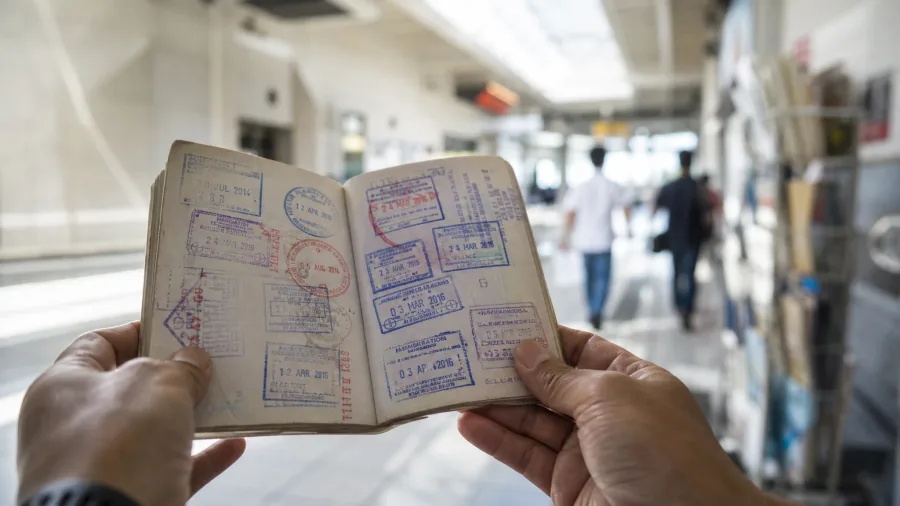
That 190-country figure describes access to almost every sovereign state on earth – which sounds impressive until you realize there are only about 195 sovereign states in total, meaning a top-ranked passport is already within five entries of the mathematical ceiling.
The score gets there partly by counting places that are extremely difficult to reach for reasons that have nothing to do with visa policy. Some entries are territories with no scheduled commercial flights. Others are micro-states or near-uninhabited islands where ‘access’ is a theoretical designation, not a booking you can actually make. A few are nations that almost nobody outside of specialized research or diplomatic work has any realistic reason to visit.
Strip those out, and then look at where leisure travel actually concentrates. The major draws – the regions across Europe, Southeast Asia, the Americas, and East Africa that account for the overwhelming bulk of trips taken every year – amount to well under 50 countries. That is the realistic universe for most travelers’ wish lists.
Here is what that means for the gap between passport tiers. A rank-5 passport and a rank-45 passport might differ by 20 entries in the index. But run down those 20 destinations and you will frequently find that neither holder has ever planned a trip there – or plans to. The gap that looked significant in a headline collapses to near zero when measured against actual itineraries.
The index answers one question cleanly: how many doors could theoretically open? It does not answer the one that actually matters to you: how many of the doors you want to walk through will open? Those are not the same question, and the ranking was never designed to answer the second one.
Passport Power — What People Believe vs. What Is True
Why Different Sources Give Your Passport Different Scores

Which destinations get counted is only part of the problem. How each destination gets categorized inside the total creates a second layer of distortion – and it is why two reputable sources can hand your passport two different scores for the same period.
Some indices fold visa-on-arrival access into the same headline figure as genuine visa-free entry, treating them as identical forms of open access. They are not. Arriving somewhere visa-on-arrival means joining a dedicated queue at the border, handing over a fee that typically runs anywhere from $20 to $100, and facing an immigration officer who has full discretion to turn you around – none of which happens when you cross on a true visa-free agreement, where the document alone is enough.
The practical difference shows up fast in a comparison. A passport with a headline score of 190 but with 30 of those entries classified as visa-on-arrival is a meaningfully different travel tool than a passport scoring 160 where every single entry is genuinely visa-free. The second passport often involves less friction, less cost, and less uncertainty at the border – even though the raw number says it ranks lower.
Not every index makes that split visible. Some publish disaggregated data if you dig into their methodology pages; others bury visa-on-arrival inside the main figure with no separation. That inconsistency is exactly why comparing scores across different ranking systems without reading their methodology notes first produces numbers that cannot reliably be set side by side.
Before you read anything into a published score, check one thing: does that index treat visa-on-arrival as equivalent to visa-free? The answer reframes what the number is actually telling you.
Visa-Free vs. Visa-on-Arrival — Not the Same Door
True Visa-Free Entry
- Walk straight through immigration — no form at the border
- No fee charged at point of entry
- Officer has standard discretion only
- Typically 30 or 90 days depending on bilateral agreement
- No advance preparation required beyond a valid passport
Visa-on-Arrival
- Queue at a separate border counter before immigration
- Fee typically $20–$100 payable in cash or card
- Officer retains full discretion to refuse entry
- May require proof of onward travel and sufficient funds
- Some indices count this identically to visa-free in their score
The Borders That Stop Top-Ranked Passports Cold

A rank-1 passport still gets turned away at certain borders – not occasionally, but as a matter of standing government policy – and some of those borders protect destinations that are genuinely popular.
For specific countries, the entry requirement for top-ranked passport holders is a full advance visa application: fees that typically run $50-$200, processing that takes 2-6 weeks, and no shortcut available regardless of where the document sits in any index. The reason is bilateral diplomatic relationships, not ranking position. When two governments have a fraught diplomatic history or a reciprocity dispute, the index score is irrelevant to the officer at that border.
These are not gaps the ranking systems will eventually close by refining their methodology. They are deliberate policy, built on treaties and diplomatic history that precede any passport index and will outlast any edition of one.
The inversion is worth sitting with. A mid-tier passport from a country that has maintained warm bilateral ties with a given destination can sometimes clear that border without any advance paperwork on the same day a rank-1 holder is waiting weeks for approval. The league table implies the opposite – but the league table does not control the visa desk.
For the traveler whose most-wanted destination is one of those friction points, the ranking is not just unhelpful. It is actively misleading about the one border that matters most to their specific trip.
⚠️ COMMON MISTAKE
Assuming a High Rank Means No Surprises
Index position tells you nothing about the destinations where your specific nationality faces friction. A rank-1 passport still hits full visa applications at borders that matter to many travelers. Check the diplomatic relationship, not the league table position.
Popular Destinations Look Nearly Identical Across Passport Tiers

For the destinations that fill most people’s wish lists, the raw index gap between a rank-5 and a rank-50 passport shrinks to almost nothing in practice.
Think about where the majority of international leisure trips actually go: France, Thailand, Mexico, Japan, Colombia, Indonesia, the Greek islands, Costa Rica. Across those high-traffic corridors, advance visa requirements simply do not apply to a wide band of passport holders – not just those at the very top of the league table. When you filter the headline index score down to the 30 or 40 countries that account for the overwhelming bulk of global tourism, the numerical gap between tiers often collapses to three or four destinations, sometimes fewer.
That number rarely matches the anxiety the headline score produces.
Comparing your index number to a neighbor’s is the wrong exercise entirely. The useful one is taking your specific wish list – the ten or fifteen countries you realistically plan to visit over the next few years – and checking each entry against your actual passport nationality. Those two exercises produce different answers, and the second one is the only answer that affects your life.
Where the gap becomes real is at the edges of the mainstream: politically sensitive destinations, rarely-served routes, countries where bilateral friction matters more than any global aggregate. A traveler whose list runs entirely through conventional tourism paths will almost never feel the difference between tiers in day-to-day planning. Someone targeting destinations the index lumps into that 20-country margin will feel it directly. The anxiety most people carry about their passport ranking is borrowed from that second traveler’s situation – and it may have nothing to do with the trips they are actually planning.
E-Visa Schemes Have Closed Much of the Remaining Gap

Where a genuine gap does exist between what a mid-tier passport enters without paperwork and what a top-ranked one does, e-visa infrastructure has quietly closed much of that distance at low cost and minimal delay.
The contrast with a traditional visa application is stark. Going the consular route for a destination that requires it means gathering documents, booking an appointment, paying somewhere between $50 and $200 in fees, and waiting two to six weeks for a decision – sometimes longer. An e-visa for the same destination typically runs $10 to $50, and the approval lands in your inbox anywhere from a few hours to 72 hours after you submit the form online.
That difference used to matter only at a handful of destinations. Over the past decade, e-visa programs have expanded to cover major leisure markets that once demanded in-person submissions and stamped paperwork. The practical result: for a large share of mid-tier passport holders, the real-world difference between ‘visa-free’ and ‘e-visa required’ is a 20-minute form filled out at home the week before departure.
Two situations where the gap stays real. If your nationality faces outright refusal at a given destination, no e-visa option changes that – the door is closed regardless of how streamlined the application system looks. And if you book at the last minute for a country that still runs only the traditional process, you are back to weeks of waiting with no shortcut available.
For most mid-tier passport holders working through a mainstream itinerary, combining visa-free access with e-visa coverage resolves the wish list with very little extra cost or effort compared to traveling on a top-ranked document. The friction that index comparisons imply often does not show up in the actual booking process.
When the Gap Stays Real vs. When It Disappears
💻 E-visa vs. traditional: cost difference
Up to $150 cheaper
⏱️ E-visa vs. traditional: time saved
Weeks down to hours
📆 Minimum lead time needed (e-visa)
72 hrs before departure
📋 Minimum lead time needed (traditional)
6+ weeks to be safe
🚫 Gap that e-visa cannot close
Outright nationality refusal
⚠️ Gap that last-minute booking reopens
Any country with no e-visa option
What to actually check
Before booking, confirm two things: whether your nationality faces a blanket refusal, and whether the destination runs an e-visa program — not just which index rank your passport holds.
Bilateral Tensions Can Neutralize a Top-Ranked Passport

The access that visa-free agreements and e-visa programs appear to lock in is not permanent – a diplomatic shift can erase it faster than any annual index revision has any chance of recording.
Passport ranking systems publish updates once or twice a year at best. Government policy on visa-free access moves on a different clock entirely. A bilateral agreement that was in good standing when an index was compiled in January may have been suspended, downgraded to visa-on-arrival with a fee attached, or reversed outright by the time you search that ranking in July. The index score sitting on the page still shows access the destination no longer honors.
Book a trip six months out based on an index number and you may be working from data that was already stale when you read it.
The inversion this can produce is striking. A passport from a country with a long, stable diplomatic relationship with a given destination can clear that border without incident on the same day a higher-ranked passport is held up or turned back – not because the ranking is wrong about the long-run picture, but because a specific bilateral dispute has changed the rules since the last index update. The league table has no mechanism to reflect that in real time.
The only sources that track current entry requirements without a publication lag are official ones: the destination country’s immigration or foreign affairs portal, and your own government’s travel advisory site. Checking both, separately, after you have built your wish list and before you purchase any flights, is the step that replaces reliance on the index score – not as a formality, but as the actual decision.
Visa-Free Entry Often Comes with Conditions the Ranking Skips

Stable access is only half the story – the terms attached to that access are where the headline number quietly falls short.
Many Asia-Pacific countries cap visa-free tourist stays at 30 days. The Schengen area runs to 90 days, but within any rolling 180-day window, so a traveler who spends three months in Europe in spring cannot simply return in autumn and count on the same allowance resetting. Neither limit appears in the index score. Both are the actual conditions of the access, not optional fine print.
Paid work is off the table under virtually every visa-free tourist arrangement, full stop. That makes the ranking figure close to meaningless for remote workers, anyone on a long-stay trip, or anyone whose plans run even slightly outside conventional tourism. The score says the door is open; it says nothing about what you are and are not permitted to do once you walk through it.
Frequent travelers feel this differently again. Cycle through Southeast Asia or the Schengen zone often enough and you start running into cumulative day limits that force planned gaps between trips. The index score that looked generous in January starts to bind by September.
a formal visa application – the supposedly weaker, slower option – can sometimes deliver a longer permitted stay, multiple-entry permissions, or activity categories that the automatic tourist allowance does not cover. Applying in advance occasionally beats arriving without one, on practical terms.
Visa-free entry is real access. It is not unrestricted access. For the travelers most likely to be consulting passport rankings in the first place – those planning extended stays, working across borders, or returning to the same regions repeatedly – the conditions matter as much as the entry itself.
💡 PRO TIP
Run Two Checks, Not One
After verifying entry requirements at the destination's official immigration portal, run a second independent check at your own government's foreign ministry travel advisory site. The two sources occasionally differ — and where they do, that gap is exactly the kind of risk worth knowing about before you buy the flight.
Index Scores Are a Snapshot; Entry Rules Change Overnight

Those conditions can also change, and they change faster than any ranking index can follow.
Most major indices update once or twice a year. An edition published in January captures policy as it existed at or before that date. A traveler booking a July departure and checking that January figure is already working from data that could be six months stale – in a policy environment where bilateral agreements can shift in days.
The concrete risk is not theoretical. When a visa-free agreement is suspended between two index editions, the ranking still shows the old access. A traveler arrives at the border with a document whose score says entry is open; the immigration officer is operating under rules that changed last month. That gap is entirely invisible in the league table.
Index scores are a reasonable rough guide to where a passport sits in a global pecking order. They are not a booking tool. Treating them as one moves the risk of outdated information onto the traveler, and the traveler is the one who ends up at the gate.
Two sources carry real authority: the destination country’s own immigration or foreign affairs portal, and your own government’s foreign ministry travel advisory page. Check both – separately – because each catches things the other occasionally misses.
Run those checks after you have built your wish list and before you buy any flight. Not as a box-ticking step, but as the actual moment you decide whether the trip works. That is the check that replaces the index score, not the one that follows it.
🗺️ How to Check Your Passport's Real Usefulness
Build your actual wish list
Write down every country you realistically plan to visit in the next two to three years — not a fantasy list, your actual one.
Look up current official requirements
For each country on the list, check the destination's official immigration or foreign affairs portal for the entry requirement that applies to your passport nationality.
Run the second independent check
Cross-reference with your own government's foreign ministry travel advisory site — the two sources occasionally differ, and that gap matters.
Identify the e-visa vs. full-visa split
Separate destinations into: visa-free, e-visa available ($10–$50, hours to 72 hrs), and full advance application required ($50–$200, 2–6 weeks).
Check the conditions on visa-free access
Confirm the day limits (30-day or 90-day caps are common) and any activity restrictions relevant to your plans — paid work, long stays, multiple entries.
Plan around the full-application destinations
Build the 2–6 week visa window into your booking timeline for any destination requiring a traditional application — and set a calendar reminder to recheck closer to departure.
The Only Score That Actually Matters Is How Your Passport Fits Your Itinerary

Once you understand what rankings measure and how quickly that measurement dates, the logical next step is to stop asking where your passport ranks and start asking what it actually does for your specific list of destinations.
The exercise takes about twenty minutes. Write down every country you realistically want to visit in the next two or three years – not an abstract bucket list, but the actual trips you are considering. Then look up the current official entry requirement for your nationality at each destination’s immigration authority or your own government’s foreign ministry portal. Not a ranking site. The official source. That list of results is your passport’s real score.
For most wish lists built around mainstream destinations, the picture is better than the index anxiety suggests. Where visa-free access does not apply, an e-visa often does – typically $10 to $50, with processing that runs anywhere from a few hours to 72 hours, completed at home before you pack.
Consider the practical comparison. A traveler who clears all ten countries on their personal list – even if two of those require a quick online form and a $30 fee – has a more useful document for their life than someone holding a rank-1 passport who still faces a full consular application, a $150 fee, and a four-week wait at two of the places they most want to go.
The league table is an answer to a question most travelers never actually need to ask. Your wish list, checked against current official sources, answers the one you do – and the whole check takes less time than reading one more ranking article.
Frequently Asked Questions
Which passport ranking is the most accurate and reliable?
No single ranking is definitively correct because they use different methodologies. The Henley Passport Index and the Arton Capital Passport Index are the two most widely cited, but they count visa-on-arrival and visa-free access differently. Before using any score, read the methodology page to understand what that index is actually counting — a score of 190 on one index is not the same as 190 on another.
Can a visa-free agreement be removed without warning?
Yes. Visa-free agreements are bilateral diplomatic arrangements that governments can suspend, downgrade, or reverse based on political events — sometimes with very little public notice. Index scores are updated once or twice a year at best, so a suspension that happens between editions will not appear in the ranking. Always verify against the destination’s official immigration portal before booking, regardless of what any ranking shows.
Is visa-on-arrival the same as guaranteed entry?
No. Visa-on-arrival means you are eligible to apply for a visa when you land, typically at a dedicated counter, paying a fee of around $20–$100. An immigration officer still reviews your documents and retains full discretion to refuse entry. Having proof of onward travel, sufficient funds, and a clear purpose of visit reduces the risk, but it is not the same guarantee as a visa obtained in advance.
Do digital nomads and remote workers need to worry about visa-free limits?
More than most. Visa-free tourist access almost universally prohibits paid work, which creates a real legal gray area for remote workers who are earning income while abroad. Day limits — 30 days in many Asia-Pacific countries, 90 in 180 days for Schengen — compound the issue for anyone cycling frequently through the same regions. Specific digital nomad or freelance visas now exist for several popular destinations and are often a cleaner solution than relying on tourist access.
How far in advance should I check entry requirements before a trip?
Check official requirements as soon as a destination goes on your serious consideration list, then check again after booking and once more roughly four to six weeks before departure. Diplomatic changes can happen at any point, and a final check close to travel gives you time to act if something has shifted. Use the destination’s official immigration portal and your own government’s foreign ministry travel advisory site as your two independent sources.
Is it ever worth applying for a visa in advance even when visa-free access is available?
Sometimes, yes. A formal visa application can unlock longer stays, multiple-entry permissions, or activity categories — such as volunteering or study — that standard visa-free tourist access does not permit. For frequent visitors to the same destination, a multiple-entry visa obtained once can be more practical than relying on repeated visa-on-arrival fees and border queues. Check whether the destination offers a longer-stay visa category before assuming the visa-free route is always the easiest option.
Your Wish List Is the Only Ranking That Answers Your Question
Index position is a blunt aggregate – a single number compressing 195 bilateral relationships into one ranking. Your passport’s real score is simpler and more useful: how many of the countries on your personal wish list does your document actually open, on what terms, right now. That number does not come from any ranking site. It comes from the official immigration authority of each destination or your own government’s foreign ministry travel portal, checked for your specific nationality.
The same headline figure that launched the question – 190-plus destinations, access to nearly every country on earth – turns out to describe a world that overlaps almost entirely with everyone else’s, and says close to nothing about the handful of places that genuinely matter to any one traveler.
So write down the list. Look up each destination officially. Where your document clears the entry requirement, that is your answer. Where it does not, you now know the exact visa you need, its cost, and its lead time – which is far more useful than knowing whether your passport sits at rank 5 or rank 45 in a league table built around 195 countries you were never going to visit all at once.
Run the Wish-List Check Before Your Next Booking
Scroll back to the six-step timeline in this article and work through it against your own destination list. It takes under an hour and gives you an answer the league tables never will.