What Airport Staff Notice About You Before You Even Speak

Most travelers spend their airport energy preparing what to say at the desk – while the actual read finished forming twenty feet back in the queue.
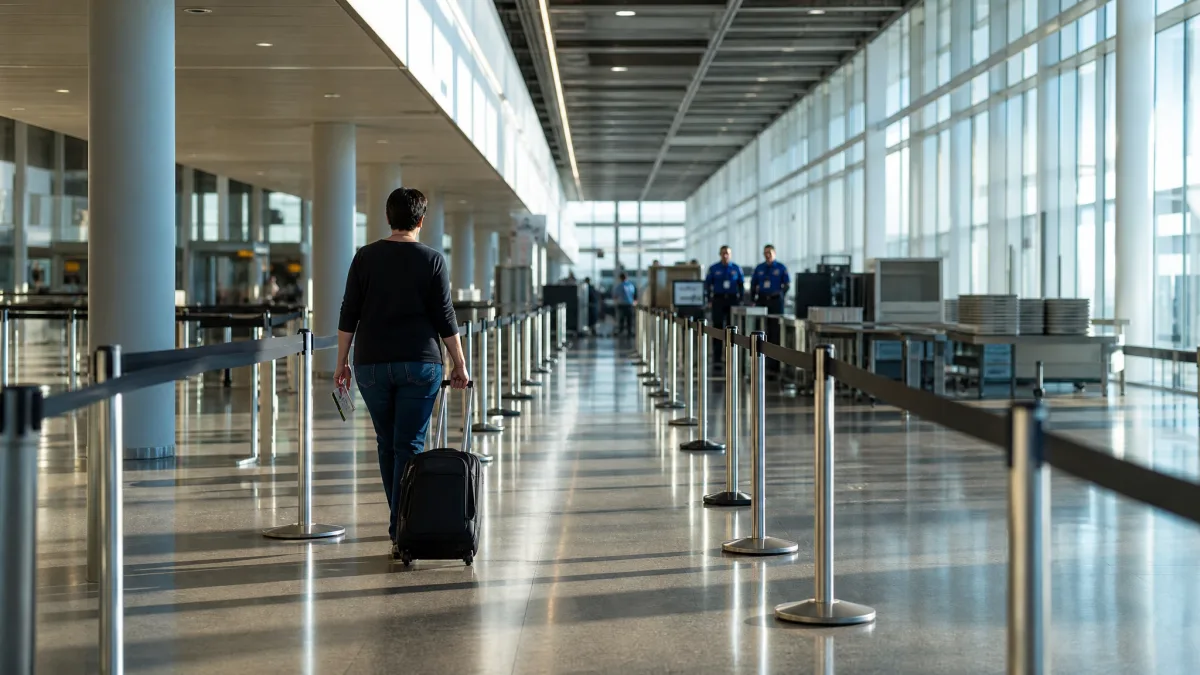
Security officers at a major hub start clocking the line from roughly 20 to 30 feet out, before a single bin has been touched or a document produced. The interaction does not begin at the belt. It begins the moment you enter the staff sightline, and by the time you arrive, a provisional verdict is already running.
That verdict is not personal. It is predictive – one question, asked unconsciously, answered fast: will this passenger cost time? Every cue on this list feeds exactly that calculation.
Work through the twelve signals ahead and you will be able to name the ones you are already sending – and pick the two or three adjustments that shift the read at every checkpoint, not just one.
Quick Tips Before You Start
Wear slip-on shoes
Lace-up boots at security predict a lane slowdown — staff see it before you reach the belt.
Open your boarding pass now
The right screen showing before you reach the agent is the single clearest signal that you have done this before.
Flatten the bag
A carry-on that zips flat and sits evenly reads as controlled; a straining bag reads as a fumble in progress.
Use brief eye contact
A neutral glance at checkpoint staff costs nothing and is the behavioral opposite of a suspicious signal.
Keep moving while consulting your phone
A full stop with a searching look triggers a staff approach; moving while checking does not.
How You Look From Across The Room
Staff begin forming their read from roughly 20–30 feet back in the queue — well before documents come out, well before anyone speaks. The signals at that distance are all visual: what you are wearing, how the bag sits, whether the overall picture says ‘done this before’ or ‘will need guidance at multiple points.’
None of these reads are fashion judgments. They are throughput predictions. A gate team managing 150–200 passengers per departure with one to three people is unconsciously sorting the queue by likely interaction smoothness — and appearance is the first sorting variable available.
1. Worn-In Travel Gear Reads as Experienced
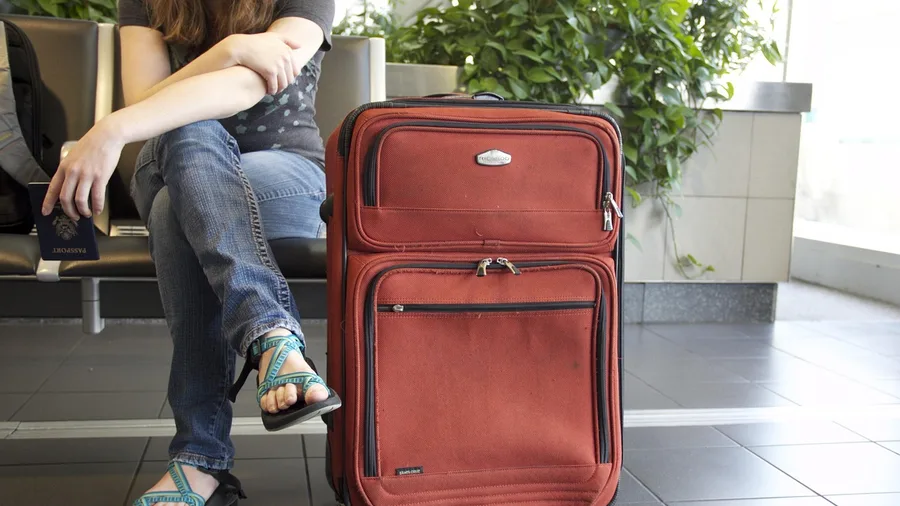
What you wear matters at every checkpoint – not as a style call, but because appearance is the first piece of data staff have, and they are working with almost nothing else at 20 to 30 feet.
With one to three people running a gate for up to 200 passengers per departure, there is no time to wait for a conversation to form an opinion. A scuffed soft-sided bag, slip-on shoes, and a light layer folded over one arm reads as someone who has cleared a belt before. A brand-new hard-shell case, a statement coat draped loosely over both arms, and chunky accessories reads as someone who will need prompting at the document check, the belt, and possibly the gate – three separate moments of slowed interaction, all predicted from a single glance.
this is a tendency, not a rule. A new bag does not flag you, and a worn one does not guarantee smooth passage. What it does is set the baseline tone – a passenger who reads as experienced gets a lighter touch at ambiguous moments, where staff have actual discretion. That is worth understanding, because the baseline is already being set before you have said a word.
💡 Tip: One worn luggage tag does more for the 'experienced' read than any amount of brand signaling. It says the bag has been somewhere before.
2. Lace-Up Boots Mark You as Unprepared for Security
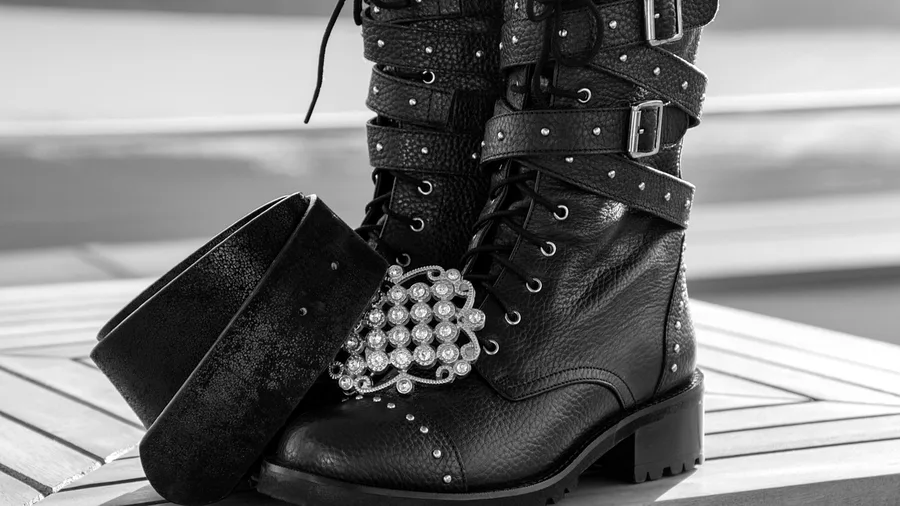
More than you might expect – and staff know it before you reach the belt. Footwear is one of the fastest reads a TSA officer makes from the queue. Slip-ons or easy-pull boots say the passenger has run through the checkpoint process mentally before arriving. Tall laced hiking boots with a double-knot, or anything with multiple buckles, say they have not. That prediction happens while the passenger is still 20 feet back, and it shapes how staff allocate attention in the lane before the bag even hits the belt.
The numbers explain why it matters to the whole lane, not just to you. A standard TSA checkpoint at a major hub is expected to move around 150 to 200 passengers per hour. One passenger spending an extra 90 seconds unlacing and re-lacing at the belt compresses the buffer for everyone behind them. Staff can see that compression coming – a passenger in heavy footwear earns a closer watch as they approach, because the lane math has already changed.
The boots themselves are not the problem. Plenty of people wear hiking boots through airports without slowing anyone down – because they chose low-profile laces, loosened them in the queue, or wore a PreCheck-enrolled credential that means shoes stay on anyway. Understanding which common items trigger secondary screening helps you think the full checkpoint through before you arrive. What staff are actually reading is whether the passenger has thought the checkpoint through. The boots are evidence of that, not the cause of it.
Which means the fix is not necessarily different shoes – it is doing the thinking in advance. If you are wearing complex footwear, loosen the laces before you reach the bin area. If you are not enrolled in PreCheck, wear something you can step out of in under five seconds. The gear choice is visible from across the room; the preparation behind it is exactly what staff are inferring from what they see.
3. Visible Agitation Is Clocked Well Before the Desk
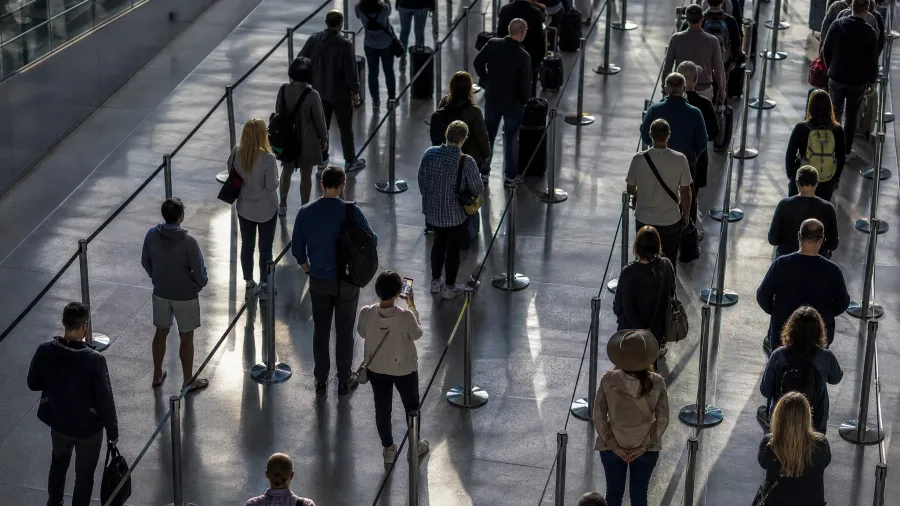
Your jaw is tight, your eyes are moving fast across the signs, and you have checked your phone three times in the last 90 seconds. You feel like you are holding it together. Staff at customs and security are already reading a different story.
Flushed skin, visible jaw tension, rapid environmental scanning, and repeated phone-checking are physiological and behavioral stress cues that staff at scrutiny points receive specific training to notice. The key distinction is context: stress that reads as ‘running late’ – purposeful movement, focused expression, one clear destination – is familiar and low-concern. Agitation with no obvious cause, or direction changes that seem unconnected to any goal, prompts a second look. One concrete reset that shifts the read: drop the shoulders, slow the pace by a single step, and let the gaze settle on one point ahead rather than scanning the space. That sequence converts the most legible anxiety signals into something staff categorize as ‘normal anxious traveler’ – a category they process without escalation.
The counterweight matters here. Most visibly nervous passengers move through without any further scrutiny – a single cue does not determine an outcome, and staff are always reading the combination. The goal is not to perform calm you do not feel; it is to let the signals with no clear cause – the ones that read as unexplained rather than situational – settle before you reach the checkpoint. That adjustment costs nothing and changes the read.
⚠️ COMMON MISTAKE
Agitation Without a Cause Is the Specific Signal
Running-late stress and unexplained agitation look different to trained staff. Directional, purposeful movement reads as ordinary. Repeated stops, direction changes, and unfocused scanning read as something else entirely.
How You Move Through The Space
Movement tells staff things appearance cannot. How you navigate a junction, whether you make eye contact, and how you stand in the boarding queue all feed into the same prediction — does this passenger have a plan, or are they going to require intervention at some point between here and the gate?
The reads in this section happen in real time, which means they are also the easiest to adjust in real time. A change in pace or posture is visible immediately.
4. Pausing at Signage Flags Uncertainty to Watching Staff
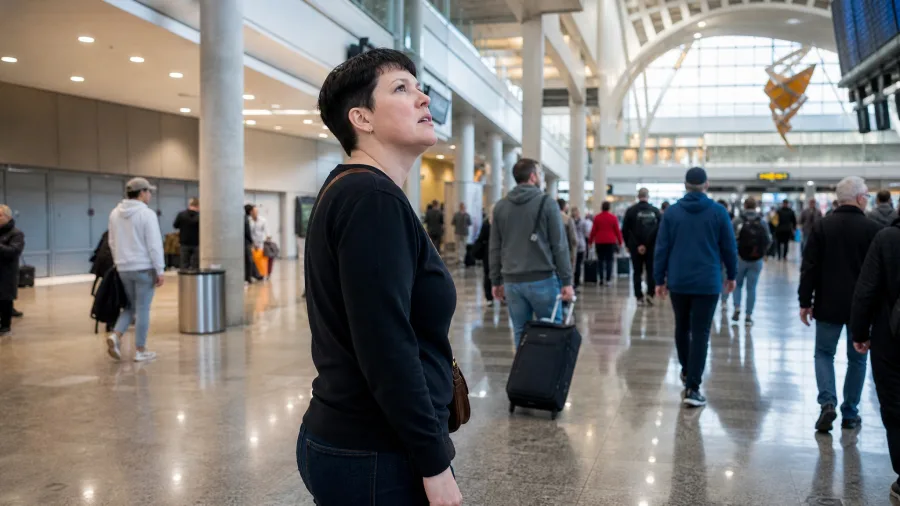
Where your body stops is the signal. Floor staff at a busy hub carry a specific duty: scan the terminal for passengers who are lost or distressed, and intervene before those passengers become a problem. The cue they are trained to act on is a full stop at a junction – someone who halts, looks left, looks right, and searches the overhead signs. That pause is unambiguous to a watching staff member: it reads as ‘this passenger does not know where they are going and may need redirecting.’ A passenger moving purposefully – even one who is quietly heading toward the wrong gate – does not trigger the same read, because purposeful movement looks like a plan.
On a tight connection, that staff approach is the last thing you want. A well-meaning redirect can pull you into a thirty-second exchange that becomes two minutes. The read you want instead: phone already open to the gate map, body already moving in one direction, eyes forward. It does not matter if you are mid-correction and slightly lost – moving while consulting your screen looks nothing like stopped-and-confused. Staff read those two behaviors as completely different situations, and only one of them draws someone toward you.
5. Avoiding Eye Contact Draws More Scrutiny, Not Less
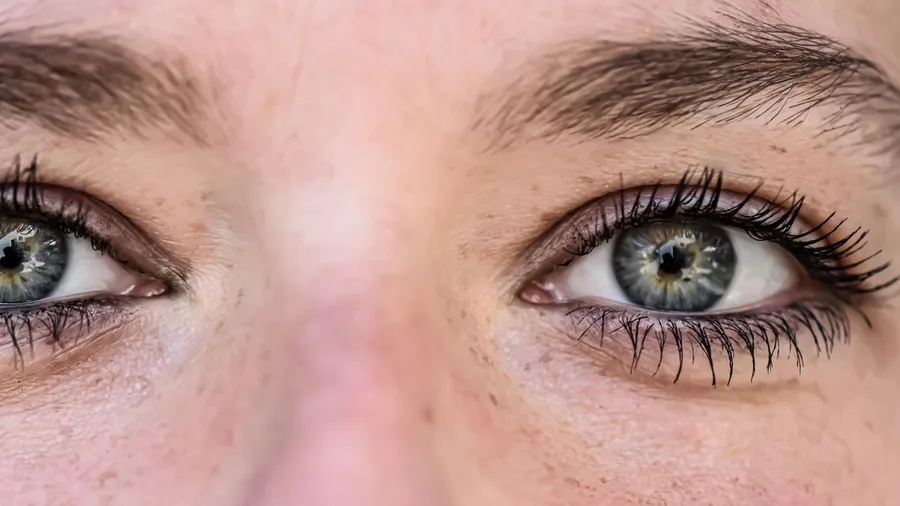
Looking away costs more than looking up. At a security lane or customs re-entry, actively dropping your gaze as an officer passes – turning your face down, angling away – is not neutral body language. Trained staff separate that from ordinary distraction immediately. Headphones in, eyes on a phone, gaze forward and unfocused: those carry an obvious explanation and do not register as avoidance. Actively steering your attention away from a staff member who is near you reads as something different – as an awareness of being watched paired with a decision not to engage – and that specific combination is precisely what customs and security training targets.
The fix is genuinely simple: a brief, neutral glance and a mild acknowledgment. Not a smile, not a stare – just the look that says you have no particular reason to look away. It communicates the behavioral opposite of suspicion and it costs nothing. This dynamic matters most at security and customs re-entry, where officers are in an active assessment role. At a domestic check-in counter the stakes are lower and the training focus is different – a distracted passenger there is just a distracted passenger. At the checkpoint, the eyes are a high-signal channel, and a neutral acknowledgment is the clearest way to keep them from carrying the wrong message.
💡 Tip: This matters most at security and customs re-entry, where staff are in an active scrutiny role. At domestic check-in, the stakes are meaningfully lower.
The Numbers Behind Every Staff Read
6. Queue Behavior Previews How Easy You Will Be to Board
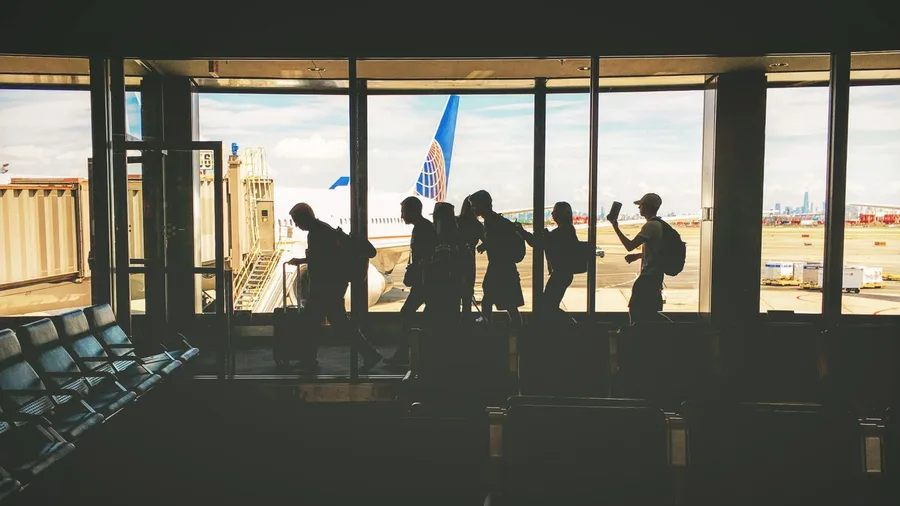
a gate agent scanning a 150-to-200-person queue before zones are even called sees them as a flag, not an accessory – the read is ‘this passenger will not hear their name, will not respond to their zone, will need a second prompt,’ and that prediction gets logged before the agent has taken a single step toward the podium.
The queue itself is a working document for the one to three staff managing that departure. Someone whose phone is already on the right screen, coat settled, single bag sitting on the floor beside them rather than half-open across two seats – that person has answered the agent’s core question before the agent asks it. The passenger still rearranging their bag when the gate opens, or buried in a pocket hunting for a boarding pass while the agent’s hand is already extended, has answered it differently: expect to wait.
None of this is about performance. Holding your boarding pass aloft or standing at rigid attention reads as odd, not prepared. What actually shifts the staff read is far smaller – document visible, attention facing forward, earbuds out or at least one ear free. Gate agents run a mental pre-sort of the queue while it forms, identifying the passengers most likely to stall the line. Looking ready moves you off that list before anyone has said a word.
What You Are Carrying And How
The shape and load of what you are carrying is legible from the queue — not just to security, but to gate staff managing overhead bin allocation. An overstuffed bag, four loose items, or a coat draped over the arm are not neutral signals. They are predictions about what the next 90 seconds will look like.
The entries in this section are about organization, not minimalism. Staff are not judging how much you packed — they are reading whether it is controlled.
7. An Overstuffed Carry-On Predicts a Belt Slowdown
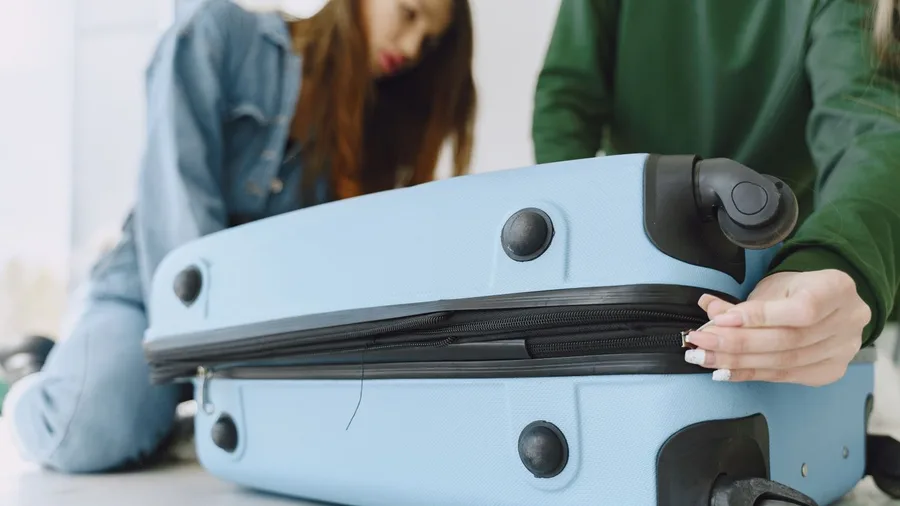
The sound a bag makes when it hits the conveyor belt tells a story before it reaches the scanner. A controlled thud, clean contact, flat profile – that is one read. A strained creak, a zip pulling sideways, the whole thing listing on its wheels because it is packed three inches wider than it wants to be – that is a different one entirely. Staff are processing that information from the moment the bag enters their sightline, well back in the queue, and the prediction is already forming: this bag will cost time.
A TSA lane at a major hub is expected to move around 150 to 200 passengers per hour. That math is tight, and staff are running it continuously – not consciously, but operationally. When a visibly overstuffed bag approaches, they adjust their positioning before the passenger arrives: expect a longer belt interaction, expect a second look, expect the passenger to fumble with the zip on the other side. The bag has already been categorized. The passenger may not have said a word yet, but the lane calculation has shifted around them.
A bag that closes flat reads as the opposite in every respect. It signals that it will open without a fight, lie flat in the bin, close again cleanly, and move on. Staff read that shape as a low-attention interaction – the passenger has thought about this, or at least their bag has. It does not indicate what is inside; it indicates how the whole exchange is likely to go.
There is a second signal layered on top of the first one. A carry-on packed to maximum capacity is also a gate concern, separate from the belt entirely. Gate agents reading the boarding queue see that same strained shape and anticipate an overhead bin dispute – who has to check a bag, who argues, whose departure time gets compressed. The one overstuffed bag triggers two staff calculations at two different checkpoints.
The practical fix is not about packing less. It is about the bag reading as under control. A bag that zips without pulling, sits flat on its wheels, and holds its shape under its own contents sends the same signal as a half-empty one – ‘this passenger has handled this before.’ The staff read is based on the shape, not the scale. Pack what you need; just make sure it closes properly, because that is the only part anyone outside your bag can actually see.
The Bag Read: Controlled vs. Chaotic
Reads as Controlled
- Bag lies flat, zipper closes without strain
- Coat packed or consolidated inside the bag
- One personal item, not three stacked
- Tray contents already mentally organized
- Documents out before reaching the belt
Reads as Chaotic
- Corners straining, handle pulled sideways
- Coat stripped off at the belt itself
- Coffee cup, hat, bag, and jacket all separate
- Multiple trays needed, decided on the spot
- Phone out, wrong screen showing
8. Documents Open Before the Desk Signal a Low-Friction Passenger
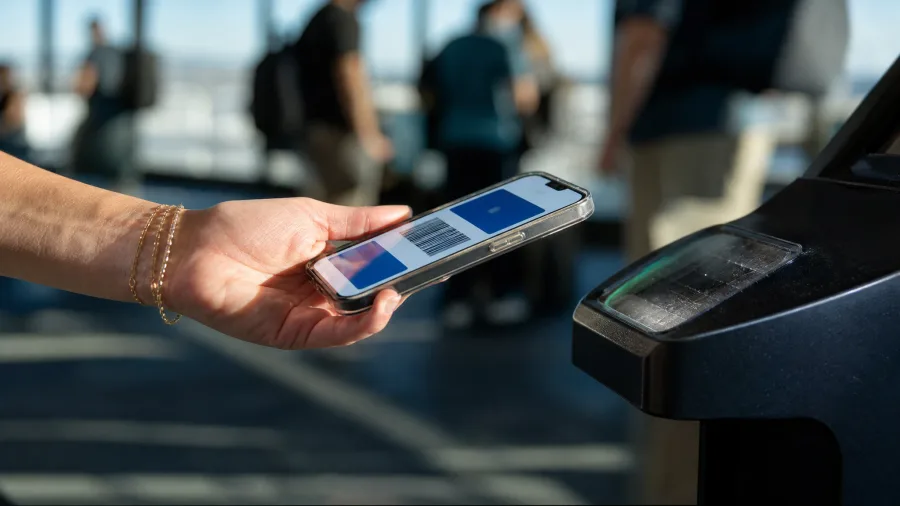
Under 90 seconds – that is the window for an average check-in or gate interaction at a busy US airport. Document readiness is the single most reliable cue that compresses that window from the first moment rather than expanding it. An unlocked phone, brightness up, the right screen already showing before the agent’s hand extends – that is the complete version of ready. A phone retrieved from a pocket while standing at the scanner, home screen lit, the app three taps away – that is functionally the same as having nothing prepared, and staff register the difference before a word is spoken.
This matters more than almost any other signal on this list because it is a demonstration rather than an inference. Appearance, pace, bag shape – all of those allow a staff member to guess at a passenger’s preparation level. Documents already showing removes the guesswork entirely. It is the clearest behavioral confirmation, across every checkpoint in the airport, that this passenger has done this before and will not cost time. An agent who sees the right screen already presented visibly relaxes their posture – the interaction has already been decided, and it will be short.
9. Juggling Too Many Loose Items Signals a Lane Delay
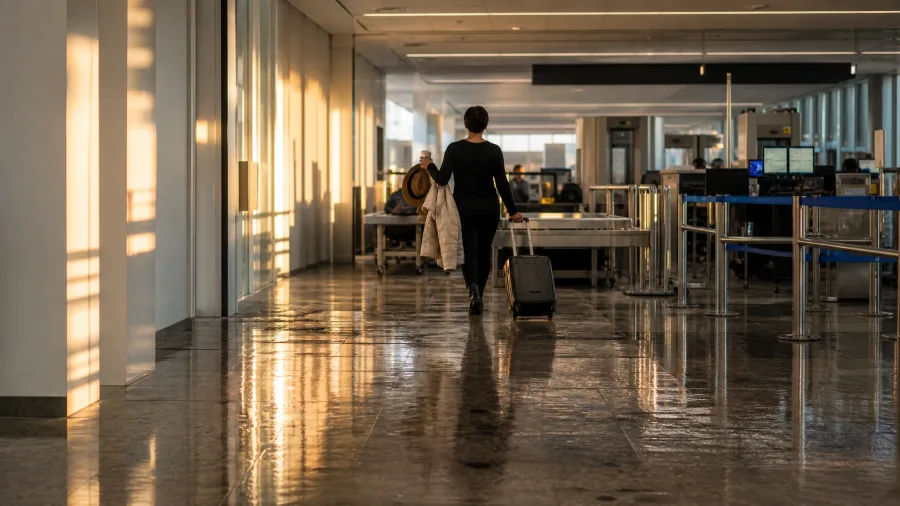
What a staff member actually clocks is the total count of loose pieces – four items in four separate hands, a coat draped over one arm, a coffee cup in the other, a hat balanced somewhere in between – because that picture, visible from 20 feet back in the queue, tells them the belt is about to slow down.
A standard TSA lane at a major hub runs at 150-200 passengers per hour, and that pace depends on each passenger arriving with their load already thought through. Staff read the queue ahead and position themselves based on what they see coming: a passenger carrying a chaotic spread of uncontained items lands in a separate mental category before they have touched a single bin. One tray can hold a coat, a laptop, a phone, and two shoes with room to spare – the question is whether those items are already grouped before the belt, or whether the passenger is making that decision in real time while everyone waits.
The coat is the easiest fix with the widest effect. Tucking it into the top of a bag before you join the checkpoint line removes a variable from the staff read and a fumble from your own process at the belt. The signal it sends when you do not is the same one an overstuffed bag sends: that the checkpoint itself came as a surprise. Staff recognize that pattern reliably – it is not the number of items that flags you, it is whether those items look like a plan or like everything you grabbed on the way out the door.
💡 Tip: Tuck the coffee cup into the top of the bag or finish it before the checkpoint line. A cup in hand at the belt means a third hand you do not have.
Your Pre-Checkpoint Read: How Do You Score?
What It Means For Your Journey
The signals covered above are not just about getting through security faster. They affect how interactions go at every checkpoint — check-in, security, customs, and the gate — and they affect the discretionary decisions that gate agents make in the 30–45 minutes before departure.
These final three entries connect the read to real outcomes: a reduced chance of longer screening, a better shot at the discretionary moments, and one concrete reset you can use anywhere in the airport when the earlier signals have not gone the way you intended.
10. Calm Presentation Lowers the Chance of a Longer Screening
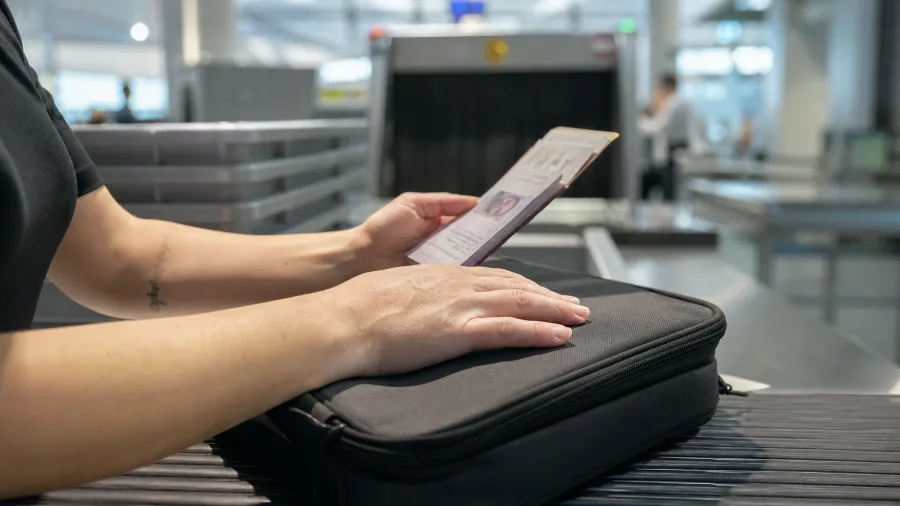
Four separate signals – pace, documents, eye contact, bag shape – produce a combined read at security and customs that no single one of them can produce alone. Slowing your pace by one step costs nothing. Pulling out your documents costs nothing. A brief, neutral glance toward the officer as you approach costs nothing. A bag that closes flat costs nothing extra to pack. The problem is that most travelers get three of the four right and surrender the fourth: they have documents out but shoulders up and pace ragged, and the composite still reads as friction.
This matters most at customs re-entry and the security checkpoint, where staff are running a continuous assessment – not at domestic check-in, where the scrutiny level is genuinely lower and the stakes of the read are smaller. One honest counterweight: random selection, algorithmic screening flags, and secondary inspection criteria operate entirely outside anything a passenger can influence. No behavioral adjustment touches those. What you can actually shift is the portion of outcomes that sits inside staff discretion – the reads formed in real time from what they see approaching. That slice is real, it is consistent across airports, and it responds directly to the combination of signals you are already sending.
💡 PRO TIP
The Discretionary Window Is 30–45 Minutes Out
Gate agents hold real power over standby placements, seat swaps, and upgrade offers — but only in the final window before departure. A passenger who has registered as low-friction across the journey is simply easier to approach with an offer when the agent scans the gate for candidates.
11. First Impressions Shift Discretionary Gate Outcomes
Avoiding a longer screening is the defensive version of the same read – but the identical signals that keep staff from looking twice also open something most travelers do not think of as within reach: standby upgrades, volunteer-oversell offers, seat swaps, and the quiet yes when you walk up and ask. Gate agents hold genuine discretion over all of these, and the window is specific: roughly 30-45 minutes before departure, while the gate area is full and the agents are scanning the room. Understanding the broader insider landscape of airports puts that discretion in context — airport secrets frequent flyers use gives you the fuller picture.
Two passengers can ask word-for-word the same question in that window and receive different answers – not because of any favoritism, but because the tone of the interaction has already been set. A passenger who arrives flustered, coat still half off, bag still being reorganized, creates a micro-exchange the agent has to manage before they can even process the request. A passenger who arrives settled, document already showing, asking the same question in the same words, is simply easier to say yes to. The agent’s internal category for them – built from everything that came before – is already ‘smooth.’
The window is finite and the agents are managing 150-200 passengers per departure. They are not scanning for the most deserving request; they are scanning for the interaction that will cost them the least time to handle. The traveler who has read as low-friction across the airport is the one who stays viable in that scan – not because they look a certain way, but because the ease of the interaction has already been demonstrated before they say a word.
✈️ The Staff Read From Queue to Gate
20–30 Feet Back
First visual read forms — gear, bag shape, posture, and overall 'experienced or not' prediction.
Checkpoint Queue
Footwear, loose items, and document readiness predict lane speed before the passenger reaches the belt.
Belt and Scanner
Bag control, tray organization, and eye contact either confirm or revise the initial read.
Floor and Corridor
Movement pattern — purposeful stride vs. searching stop — determines whether a floor staff approach is triggered.
Boarding Queue
Pass visibility, bag control, and earphone use set the gate agent's prediction for the boarding interaction.
30–45 Min Before Departure
Discretionary gate decisions — standby, swaps, upgrade offers — flow toward passengers already read as low-friction.
12. One Visible Shift Resets the Staff Read Quickly
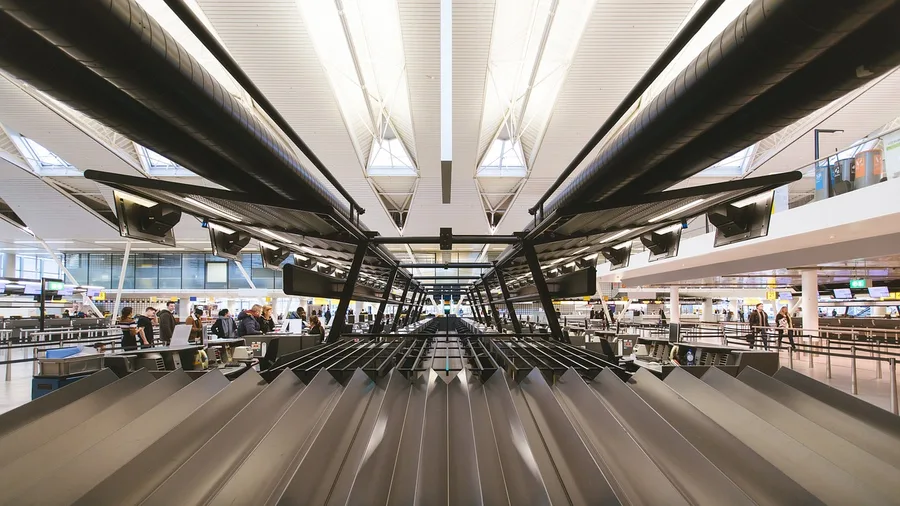
The checkpoint is loud, bright, and slightly too warm – bins scraping, belt running, the same announcement cycling overhead. That environment amplifies visible stress because everyone is slightly keyed up, which means a reset stands out precisely because the baseline is already elevated.
There is one sequence that converts the highest-concern signals into their opposites in a single visible move: slow the pace by one deliberate step, pocket the phone, then bring out documents. In that order. Slowing the pace cancels the agitation read. Pocketing the phone cancels the distraction read. Documents out cancels the unreadiness read. Done together, the sequence does not look like a performance – it looks like someone who has composed themselves, which is exactly what staff are waiting to see when they reassess a passenger mid-approach.
The bar staff are actually working against is not impressiveness. It is unremarkable. A passenger who registers as unremarkable – predictable pace, standard documents, clean bag, brief eye contact – gets processed without a second thought. That is the outcome. ‘Unremarkable’ is achievable at any point in the airport, at any checkpoint, regardless of how the earlier ones went.
That last part is worth holding onto: each checkpoint forms its own read. A rough exchange at security does not follow you to the gate. By the time you arrive at the gate area, the officer there has no record of the belt fumble twenty minutes earlier – they are reading what they see now. A traveler who resets between checkpoints effectively starts fresh each time.
The whole chain of signals this article has covered – gear, shoes, gait, eye contact, documents, bag shape – comes back to a single question staff ask from 20-30 feet back: will this passenger cost me time? The reset works because it answers that question in real time, visibly, before the interaction begins. Not to game anything. Just to stop broadcasting signals you never meant to send.
The Reset — At a Glance
🚶 Step 1 — when to start
Begin the reset 20–30 feet out, before any eye contact is made
📵 Step 2 — what the phone costs you
A phone in hand at the belt adds 10–15 seconds of fumble time — enough to draw a second look
🎫 Step 3 — which document, which side
Physical ID face-up in the right hand; boarding pass open on screen, not buried in an app
👁️ Step 4 — how long the window lasts
Staff form a read in the first two to three seconds of direct approach — eye contact in that window matters most
🎒 Step 5 — the bag detail most people miss
One bag, not two half-zipped ones; coat on top or already on the belt before you reach the officer
How long a reset takes
Under 10 seconds of visible behavior — and it works regardless of how the last checkpoint went.
Frequently Asked Questions
Do airport staff actually profile passengers based on appearance?
Not in a discriminatory sense — but appearance is the first data point available when staff are predicting how an interaction will go. Worn-in travel gear, easy-off shoes, and a flat bag communicate preparation. That prediction affects tone at every checkpoint before anyone speaks, which is meaningfully different from formal profiling.
Is it worth trying to get an upgrade by making a good impression at the gate?
Gate agents hold genuine discretion on upgrades, standby placements, and seat swaps in the 30–45 minutes before departure. A passenger who registers as calm and low-friction is simply easier to approach with an offer. That does not guarantee anything — the agents are managing 150–200 passengers — but it keeps you in the viable category when they scan the gate.
Can nervous behavior actually cause you to be pulled aside at security?
Agitation without an obvious cause — erratic direction changes, repeated unfocused scanning — is a specific behavioral cue that security and customs training targets. Running-late stress reads differently from unexplained agitation; the former is common and low-concern. No single signal triggers secondary screening, but the combination of multiple unexplained cues shifts the probability.
Does it actually matter whether I make eye contact with security staff?
Deliberate avoidance near a checkpoint — looking at the floor, turning the face away — is specifically what security training flags, because it reads as awareness of being watched and a choice not to engage. Natural inattention (headphones, phone, gaze forward) has an obvious explanation and reads differently. A brief neutral glance is the simplest way to send the right signal.
What is the single most effective change for moving through airports with less friction?
Document readiness carries more weight than any other single factor because it is a direct demonstration, not an inference. The right screen showing, brightness up, before you reach the agent — not while hunting for it at the scanner — is the clearest possible signal that you have done this before. Combined with easy-off shoes and a flat bag, it covers the three highest-read checkpoints in the journey.
Does a rough security interaction affect how I am treated at the gate?
Each checkpoint team forms its own read independently. A difficult security exchange does not follow you to the gate if your read has normalized by the time you arrive there. The reset — slow pace, phone pocketed, documents out — works at any point in the journey and produces a visible change in the staff read quickly.
Two Habits, Every Checkpoint, Every Time
Three adjustments move the needle widest. First: documents ready before the agent’s hand is out – right screen showing, brightness up, no fumbling. Second: loose items consolidated before you join the checkpoint line, not at the belt – coat inside a bag, everything in one tray’s worth of load. Third: pace and eye contact that match the environment – measured movement through the corridor, a brief neutral acknowledgment at scrutiny points rather than a look away.
All of it traces back to that read from 20 to 30 feet out – the one already in progress before you knew you were being seen.
The standard worth aiming for is not visible competence. It is the absence of anything to notice. Documents out, bag controlled, pace steady – and you become the passenger staff process without a second thought, a second look, or a second question. That is the whole goal. Decide which two habits you are taking out of the terminal today.
Check Your Own Pre-Checkpoint Read
Run through the checklist scorecard in this article before your next departure — it covers the six signals staff read before any conversation starts, and most take under two minutes to adjust.