
The Golden Visa Programs Quietly Shutting Down in 2026


Greece is the program Portugal always got compared to – slower paperwork, less prestige, but still open. Portugal’s real-estate route closed in 2023, and the comparison has flipped.
Thousands of applicants were still in the queue when Portugal shut that route down. Many of them found out late, through intermediaries, after the cut-off had already passed.
Three EU programs are gone entirely. The mechanism that closed them – Commission pressure, domestic politics, due-diligence failures – did not close with them. It is still running, pointed at the programs still open.
This article names what is closed, what is still accepting applications as of early 2025, and how to judge whether the open programs have enough runway to be worth pursuing. By the end, you will know whether to move, wait, or switch targets – and the one thing to do this week before you pay anyone a cent.
EU Countries Are Leading the Shutdown Wave

Three EU programs are already gone: Ireland’s Immigrant Investor Programme closed in February 2023, Portugal shut its real-estate investment route the same year, and the Netherlands followed in 2024.
That is not a wave building toward a peak – it is a wave that has already broken on three countries, and three more are standing in its path. Greece remains open as of early 2025 and is currently the most stable of the surviving EU programs. Malta is still accepting applicants but has drawn sharper criticism from Brussels than any other scheme still running. Spain is technically open while its own parliament debates whether to keep it that way – an application filed today could complete against a backdrop of active domestic legislation working against it.
The alternatives sitting outside EU jurisdiction are a different picture. UAE long-term residency, Thailand’s long-term residency visa, and Caribbean citizenship-by-investment schemes are all accepting applicants right now, and none of them operate under the same Brussels-driven pressure that closed the European programs.
No confirmed closing date exists for any currently open program. The programs that shut did so with limited public warning – Portugal’s real-estate route closure caught thousands of applicants mid-process. That means this article cannot tell you a deadline, and neither can any agent. The official immigration ministry portal of whichever country you are targeting is the only source that holds a current answer on whether new submissions are still being accepted.
⚠️ COMMON MISTAKE
Don't Treat an Open Program as a Stable One
Ireland, the Netherlands, and Portugal's property route all appeared secure until they weren't. An open program and a stable program are not the same thing. Check its status at the official portal before you plan any timeline around it.
Brussels, Not Host Governments, Is Driving the Pace

The governments that closed their programs were not acting on principle – they were running out of road.
Brussels has spent several years building formal, public pressure on member states to end residency- and citizenship-by-investment schemes, citing security risks and anti-money-laundering failures. That pressure is documented in Commission statements you can read directly on the EU’s official site; this article does not quote regulatory text it cannot verify in real time, and those published positions are the authoritative source.
What the closures of Ireland, the Netherlands, and Portugal’s property route actually show is a pattern of delayed concession, not voluntary reform. Each of those governments championed its program for years and resisted calls to wind it down – then closed it anyway. The resistance did not stop the outcome; it only delayed it.
That track record is what makes the current position of Greece, Malta, and Spain genuinely precarious. The same institutional pressure that eventually moved the closed programs is already publicly directed at all three. For the reader weighing whether to apply, the relevant question is not whether Brussels can force a closure – it demonstrably can – but how much runway remains before the accumulated pressure reaches the point where the host government stops absorbing the cost of resistance.
Continued operation has become costly for member states in ways that go beyond politics. Maintaining a program that Brussels is actively criticising carries legal, diplomatic, and reputational friction that compounds over time – which is why the closures, when they came, looked sudden but were not.
The Real Trigger Is Due-Diligence Failure, Not Anti-Wealth Politics
The problem the Commission is trying to fix is not philosophical. It is operational: verifying the source of investor funds, at the volume that successful golden visa programs generate, has repeatedly exceeded what national bureaucracies can do reliably. The schemes have been used to move money around sanctions regimes and anti-money-laundering controls – not as a theoretical risk but as a documented pattern in specific countries.
Governments that resisted closure for years did not shift because of ideology. They shifted when high-profile failures in their own programs made continued resistance politically untenable. Visible abuse cases, not abstract policy objections, are what moved the holdouts.
Volume is the mechanism that makes this structural rather than fixable. The more applications a program processes, the thinner the due-diligence capacity stretches – and adding longer forms or additional document requirements does not expand that capacity in proportion. Every program that grew large enough hit the same ceiling.
For a reader assessing a surviving program, this is the practical implication: a program currently processing high volumes of applications faces the same constraint that triggered closures elsewhere. Greece, Malta, and Spain are not exempt from the mechanism; they are simply at an earlier point in it. Whether a program is genuinely stable or has simply not yet reached the threshold that forces action is a question worth putting directly to an immigration lawyer before committing funds.
Golden Visa Myths vs. Reality
Programs Close in Stages — the Cut-Off for New Applicants Is the Date That Matters

Knowing why programs close only gets you so far – what determines whether you still have a chance is understanding the mechanical sequence of how a shutdown actually plays out.
Governments rarely flip a single switch. The standard pattern runs in two distinct phases: first, the program closes to new submissions; second, it continues processing applications that were already formally logged before that cut-off. From the outside the program can look ‘live’ for another year or two after it has already shut the door on you. The last visa issued under Ireland’s Immigrant Investor Programme was stamped well after the program stopped accepting new entrants in February 2023.
If you have not yet applied, the only date on the calendar that concerns you is when new submissions stop being accepted – not when the processing authority issues its final approval. That terminal date can arrive years earlier, and the gap between the two has misled applicants into thinking they had more runway than they did.
The queue length creates a second risk that is less obvious. In at least one program, the backlog stretched long enough that the government revised the investment minimum before applicants already in the queue received their decisions. People who had budgeted based on the original figures, and had already committed capital, found themselves approved under different terms than the ones they signed up for.
None of this can be tracked through an intermediary. The cut-off date, the current queue length, and whether terms have been amended since you last checked – only the official immigration authority of the specific country can confirm all three. That is the source. Everything else is an estimate.
🚪 How a Golden Visa Program Typically Closes
EU Pressure Mounts
The European Commission publishes statements naming the program as a security or rule-of-law concern, and enforcement actions or formal opinions begin to accumulate.
Government Signals Review
The host country announces an internal review or legislative debate — often framed as 'improving the program', not ending it.
New Applications Halted
The government closes the program to new submissions, often with short notice; this is the only deadline that matters for applicants who have not yet filed.
Queue Continues Processing
Existing in-queue applications proceed, but backlogs lengthen and in some cases investment terms are revised before approvals are issued.
Final Visas Issued
The last residency approvals go out, sometimes years after the new-applicant cut-off; the program is formally wound down.
Filed Applications Are Usually Protected — but Not Guaranteed

If you have already submitted a formal application, the most likely outcome is that it proceeds – but ‘most likely’ is doing real work in that sentence.
The pattern across EU closures has been to honour applications already in the queue. Portugal’s decision to end its real-estate investment route did not immediately cancel submissions that had been formally filed and logged. That protection is real, and it matters.
What it does not protect against is time. Backlogs in several programs have stretched to multi-year waits, and a residency approval that arrives three years after you applied may land in a life that no longer needs it – a business plan abandoned, a family’s school schedule reset, a second-country tax position already resolved another way. Approval is not the same as useful approval.
The terms can also shift while you wait. At least one program raised its investment minimum on applicants who were already mid-queue – people who had budgeted on the original figure and had no clean exit. The approval they eventually received came attached to conditions they had not agreed to.
Do not rely on the agent who submitted your paperwork to flag any of this. That agent was paid to file your application; they have no structural reason to track the queue on your behalf or to call you with unwelcome news about changing terms. Contact the host country’s immigration authority directly, ask for your application’s current status in writing, and ask specifically whether investment conditions have been amended since your submission date.
EU Golden Visa Programs — Status at a Glance (Early 2025)
🔴 Ireland
Closed Feb 2023
🔴 Netherlands
Closed 2024
🔴 Portugal (real estate route)
Closed 2023
🟡 Spain
Open — legislative debate active
🟠 Malta
Open — highest EU criticism
🟢 Greece
Open — most stable EU option
Investment range
EU programs have run roughly €250,000–€500,000 depending on country and route — confirm exact current thresholds at each country's official immigration authority before planning.
The Rush to Beat Closures Has Made the Timeline Dangerous
Whether you can still get in depends less on the closing date than on how long the queue already is.
Under ordinary conditions, open programs take 6 to 18 months to process an application from submission to approval. That range assumes a manageable flow of new applicants. Programs that are visibly under pressure – Spain’s domestic debate, Malta’s Commission scrutiny – are not operating under ordinary conditions; late-surge volumes have pushed actual processing times well past that upper bound in recent cases.
The arithmetic punishes late movers. If a program stops accepting new applicants in, say, mid-2026, submitting in October 2025 does not guarantee entry. What clears you is the moment your application is formally logged and assigned a place in the queue – not the date you mailed the documents or paid the agent. Miss that threshold by a week and you are outside the program entirely, regardless of how far along your paperwork is.
There is also a compounding problem. Every applicant who rushes in during the final months adds weight to the same queue they are trying to outrun, slowing processing for everyone already ahead of them – including themselves once they are in.
Non-EU programs – UAE long-term residency, Caribbean citizenship-by-investment – currently carry shorter queues than any of the pressured EU options. That is a concrete advantage if speed matters to you as much as destination.
Before submitting anywhere, ask the official portal or consulate one specific question: what is the current median processing time for new applications? That single number tells you whether today’s submission has a realistic chance of completing before the window closes.
💡 PRO TIP
One Number to Get Before You Apply
Ask the official consulate or immigration portal for its current median processing time — not the headline figure from the program's launch year. If that number plus today's date puts completion after any anticipated legislative review, the timeline math does not work in your favor.
Greece, Malta, and Non-EU Programs Are Open — Treat That as Temporary

Given that backlog risk, the practical question becomes: which programs are actually accepting new applications right now, and do any of them have enough runway to complete a full process before the door shuts?
As of early 2025, three EU routes remain open. Greece is the steadiest of the group – applications are moving, and it has not been singled out the way its EU counterparts have. Malta is still accepting applicants but has drawn the sharpest criticism from the European Commission of any program currently running, which is a meaningful signal about its shelf life. Spain is technically open, but active legislative debate inside the country means an application filed today could easily still be in the queue when a closure vote happens.
Non-EU options sit under a different kind of pressure. The UAE’s long-term residency program and Caribbean citizenship-by-investment schemes accept applicants outside Brussels’ regulatory reach entirely – no equivalent supranational body is pushing those governments toward closure the way the Commission pushes EU member states. That does not make them risk-free, but the risk profile is different: political and jurisdictional rather than structural EU enforcement.
On cost, the EU programs have historically required somewhere between €250,000 and €500,000 depending on country and route – treat that as a rough orientation, not a figure to budget from. Minimums have changed mid-program in several cases, and the number on any country’s official immigration portal today may not be what it was six months ago.
The harder truth is this: no currently open program should be assumed stable for the full length of a typical application. If your process runs 18 months, the question to ask is not whether the program is open today – it is whether it is likely to still be open at month 18. Those are not the same calculation.
EU Programs vs. Non-EU Programs Right Now
EU Programs (Greece, Malta, Spain)
- Subject to binding European Commission pressure
- Closure risk correlates with application volume
- Investment minimums revised mid-program in multiple cases
- Processing backlogs lengthening due to late-rush applications
- Path to EU residency — highest value if the program survives
Non-EU Options (UAE, Caribbean, Thailand)
- No supranational Brussels-equivalent pressure
- Currently shorter queues than pressured EU programs
- Jurisdiction-specific risks, not Commission-driven closure
- Citizenship-by-investment routes available in Caribbean schemes
- No EU passport — trade-off to weigh against timing certainty
EU Membership Is the Clearest Signal a Program Is Next
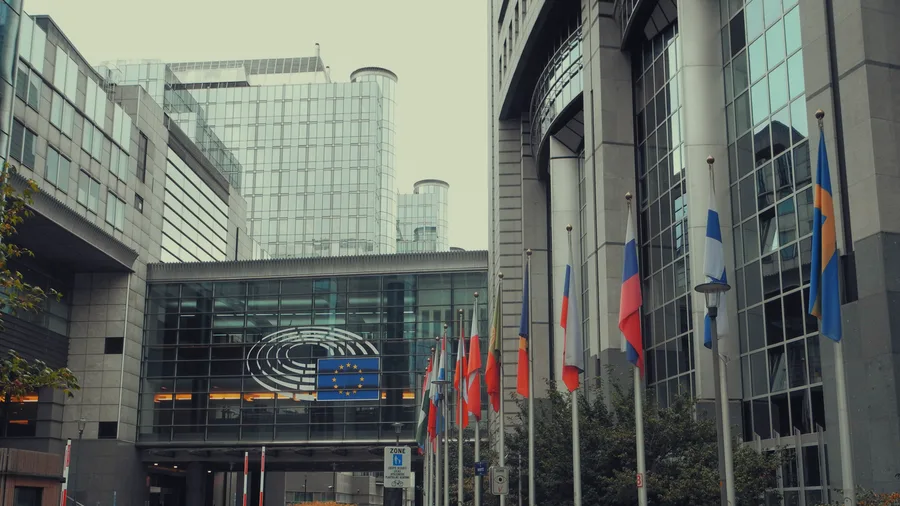
Picking an open program is only half the assessment. The other half is whether it will still be open when your application reaches the front of the queue.
The track record here is instructive rather than reassuring. Ireland, the Netherlands, and Portugal’s property route all looked stable in 2021. All three were gone by 2025. None of those closures came out of nowhere – the European Commission’s pressure on each was documented and public well before governments acted. The pattern was legible; most applicants just were not reading it.
EU membership remains the clearest structural risk factor. A program inside the EU answers to Brussels in a way that a program in Dubai or Dominica simply does not. The UAE and Caribbean schemes carry their own political risks – a change of government, a bilateral agreement, a domestic revenue decision – but no supranational body is systematically building a case for their closure the way the Commission has been doing with EU investor visa programs for several years running.
There are three warning signs you can track at no cost. Watch for pending legislation in the host country’s parliament. Watch for any new European Commission statement that names the country’s specific scheme – those statements have historically preceded formal pressure. And watch domestic election results: a governing coalition shift toward a party that campaigned against the program is an early indicator that should shorten your personal deadline.
Before committing funds, put three direct questions to an immigration lawyer: Has this program appeared in any Commission enforcement action or formal opinion in the past year? Has the investment minimum moved since the program launched? And is there legislation currently before parliament that could close new applications before your process would finish? If the answers to any of those are yes, that is not a reason to walk away automatically – but it changes the risk calculation, and you need to know.
Your First Week Before Applying to Any Program
Check the Official Source Before You Call Anyone

Once you have a target program and a sense of its closure risk, the first move costs nothing – and it should come before any professional consultation.
Pull up the official immigration ministry portal for the country you are considering. Most of them publish a program status page that confirms whether the scheme is currently open to new applicants, states the current investment minimum, and lists contact details for the processing authority directly. That page is more reliable than any secondary source, including this article, because it reflects today’s status rather than the status at time of writing. Spending twenty minutes there before making any calls is not optional – it is the check that tells you whether there is still a window to discuss.
Lawyers and agents are not interchangeable. A lawyer’s job is to assess whether applying makes sense for your specific situation – your nationality, your existing residency, your timeline, and the current closure risk of the program. An agent’s job is to process the paperwork once you have decided to go ahead. That sequence matters: the lawyer comes before the agent, not at the same time.
The conflict of interest is structural. Agents are paid on applications submitted, not on clients who decide a program is too risky to pursue. That is not a criticism – it is just the incentive structure, and it means an agent is the wrong person to ask whether you should apply at all.
Before any paid consultation, have four things ready: the specific country and program, the investment amount you intend to commit, the timeline you need from submission to residency, and your current nationality and residency status. Without those four, a lawyer cannot give you risk-specific advice, and you cannot tell whether what you are hearing is calibrated to your situation or just a general pitch.
Frequently Asked Questions
Is Portugal’s golden visa completely closed?
Portugal’s real-estate investment route closed in 2023. The remaining fund and capital-transfer routes are under active review as of early 2025 — they have not been confirmed as closed, but they face ongoing scrutiny. Verify current status at Portugal’s official immigration authority (AIMA) before making any plans based on those routes still being available.
Can I still apply to Greece’s golden visa program?
Greece’s program is open and processing applications as of early 2025 — it is currently the most stable of the remaining EU options. Investment thresholds have been revised since the program launched, so confirm the exact current minimum with Greece’s official immigration authority before budgeting. Processing under normal conditions typically runs 6 to 18 months.
If I already applied to a program that has since closed to new applicants, will my application be cancelled?
Most EU programs that have closed to new entrants have allowed formally submitted in-queue applications to proceed rather than voiding them. The risk is not cancellation — it is time and changing terms. In at least one program, investment minimums were revised on in-queue applicants before their cases resolved. Contact the host country’s immigration authority directly to confirm your queue position and whether terms have changed since you filed.
How long does golden visa processing take in the programs still open?
Under normal conditions, processing for open programs typically runs 6 to 18 months. Late-entry backlogs in programs under closure pressure have stretched timelines further. The current median processing time is the only figure that matters for your timeline — ask the official consulate or processing authority for it directly, not the figure from the program’s launch documentation.
Are Caribbean citizenship-by-investment programs likely to close the way EU ones have?
Caribbean schemes face different political dynamics from EU programs — there is no Brussels-equivalent supranational pressure driving closure in those jurisdictions. That does not make them risk-free: each operates under its own government’s political conditions, and due-diligence requirements have tightened over time. They are not immune to change, but the specific structural pressure that has closed EU programs does not apply to them.
Do I need a lawyer or just an immigration agent to apply?
You need both, but in a specific order. A lawyer should come first — their role is to assess whether applying to a given program is the right move for your situation, including the closure risk. An agent handles paperwork once that decision is made. Agents earn on submitted applications, which creates a conflict of interest when the primary question is whether to apply at all; that is why the lawyer — who can advise against applying — comes before the agent who processes it.
Where You Stand in the Queue Determines Your Next Move
Where you stand right now splits into two clear situations. If you have already filed, contact the host country’s immigration authority directly this week – not your agent, not the firm that submitted your paperwork – and ask for your queue position and current terms in writing. If you have not yet applied, rank Greece above Spain above Malta on EU stability, then weigh UAE and Caribbean programs against the fact that they move faster and carry no Commission-driven closure risk, even though they do not carry an EU passport at the end.
Portugal’s real-estate route closed while people were mid-process and did not know it. That is the specific outcome worth avoiding, and it is still possible in any program where the closure pressure is building and the queue is long.
Before you call an agent or a lawyer, do one thing that costs nothing: open the official immigration ministry portal of whichever country you are targeting and read the current program status page. It tells you whether new submissions are still accepted, what the investment floor is today, and who the right authority is to call next. Portugal used to be the safe bet. The programs still open are worth pursuing – but only if you check the door before you walk through it.
Start With the Official Portal, Not the Agent's Website
Before you book a consultation or pay any fee, go to the official immigration ministry portal of your target country and read the current program status page. Everything else in this article depends on that information being up to date.