
The Visa Loophole Digital Nomads Are Using Right Now


A passport stamped six times in four months – Berlin, Tirana, Skopje, Belgrade, Berlin again – tells a story that looks chaotic until you realise every single entry was legal.
You have probably heard there is a way to stay abroad for months without a formal visa: no application, no income threshold, no waiting on a consulate to rubber-stamp anything. That is not quite wrong.
But the word loophole is doing dangerous work here. What people are actually running is a sequence of legal tourist allowances from independent countries, threaded together in a deliberate order. It is real. It is also running on a tighter clock, a higher recurring cost, and a narrower margin for error than most accounts admit.
This article covers exactly what the strategy is, where it holds up, what it costs per year to sustain, and when one of the six formal digital nomad visa programs – Portugal, Costa Rica, Barbados, Greece, Croatia, Thailand – is the cheaper and safer choice. By the end, you will know which category you are in and the one step to take before booking anything.
It Is a Gray Area, Not a Secret Rule
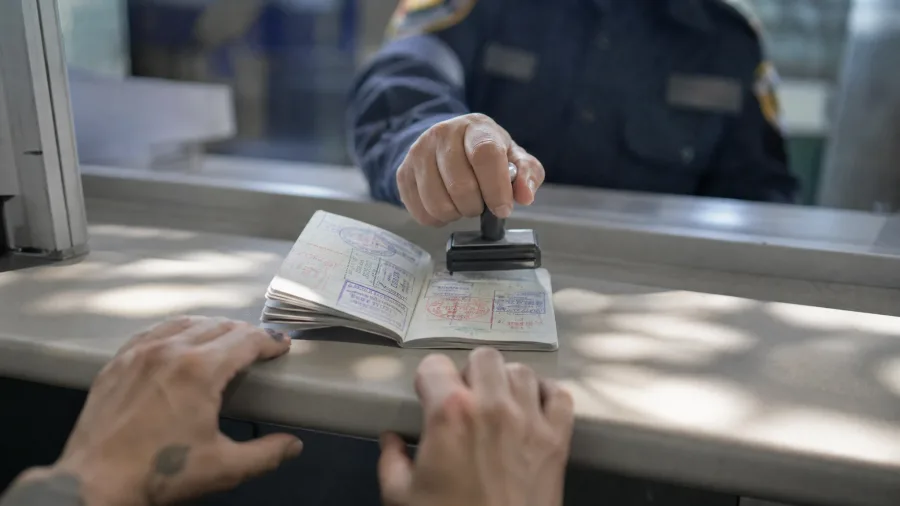
Call it what it actually is: a sequence of legal tourist allowances from independent countries, strung together in a deliberate order, exploited for long-term stays that no government intended tourist rules to cover.
Nobody issued a memo authorizing this. It works because countries do not share entry records with each other – when you land in a new country, that border system starts a fresh clock with no memory of where you were before. Each country sees only its own stamps. The cumulative picture only exists in your passport.
That is a fundamentally different thing from overstaying, which means remaining after your permitted period has expired and is illegal in every country that grants a tourist allowance. It is also not a formal digital nomad visa – a government-issued residency instrument with defined rights, a verifiable legal status, and a specific application process. This strategy sits in the space between those two: legal in each individual step, unacknowledged as a system by any of the governments involved.
The word loophole suggests a protected clause – a rule written in your favor that a government cannot simply revoke on a Tuesday. There is no such clause here. The protection is arithmetic: days in, days out, margins preserved. A border officer who decides your travel history looks like a working resident rather than a tourist can override that arithmetic at any entry point, and there is no rule to cite that overrules their judgment.
Everything in Europe Runs on the Schengen Clock

The clock that shapes the entire European version of this strategy belongs to the Schengen Area – a bloc of 27 countries that share a single external border and, critically, a unified system for tracking how long travelers have been inside it.
That last part is what catches people out. Spending a week in Portugal, then two weeks in Germany, then ten days in Italy does not mean three separate allowances. It means one running total. The 27 countries function as a single zone for entry-counting purposes, and your permitted days are consumed across all of them together.
The stay allowance is a rolling window, not a calendar-year reset. The exact number of days available to you on any given date depends on your specific entry and exit history – which means a round number you read in a forum is not your number. The European Commission runs an official Schengen calculator at ec.europa.eu. Run your actual dates through it before you plan anything.
Nomads using the tourist-chain approach treat that window as a countdown. The plan is to exit the zone before it hits zero, spend time somewhere outside Schengen while the window resets, then re-enter. In theory, clean and repeatable. In practice, the margin for error is smaller than it sounds – because border officers at Schengen entry points check stamped dates against the count on the spot. An honest miscalculation is still a miscalculation, and it shows up immediately at the desk.
What People Get Wrong About the Schengen Strategy
Non-Schengen Countries Act as the Reset Valve

When the Schengen window runs down, you need somewhere legal and workable to go – and for most nomads running the European circuit, that means Serbia, Albania, or North Macedonia.
All three sit close enough to major Schengen hubs that flights are short and cheap. None of them is inside the Schengen Area, which is the only qualification that matters mechanically: every day you spend in Belgrade or Tirana is a day the Schengen clock is frozen, not running. When you re-enter the zone, the count picks up from where it paused.
Historically, the cost of living in all three has been low enough to keep the reset period from being financially punishing – a week in Novi Sad costs a fraction of a week in Lisbon. That math is part of why these three countries became the standard buffer destinations rather than, say, the UK.
Do not take any of the above as current fact. Each of these countries writes its own entry rules, on its own schedule, with no obligation to sync with Schengen policy or with each other. Permitted stay lengths and any visa requirements can and do change independently – the only reliable check is each country’s official immigration authority, consulted before you book the flight, not after you land.
And budget the reset honestly. One cycle means a return flight, two to four nights of accommodation, and at least one full travel day that is not a billable working day. That is not a significant number the first time. Run the same cycle three or four times in a year and the annual total is a real figure – one worth comparing directly against the upfront cost of a formal visa application before assuming the tourist-chain strategy is the cheaper route.
⚠️ COMMON MISTAKE
Do Not Trust Forum Reports on Buffer Country Rules
Serbia, Albania, and North Macedonia each set their own entry terms. A post from six months ago may describe rules that no longer apply. Check the official immigration authority for each country before booking — not Reddit, not a Facebook nomad group, not this article.
Southeast Asia Is the Easiest Ground for the Strategy

The European circuit demands the most structural discipline – Schengen day counts, non-Schengen buffer hops, two to four nights of dead accommodation. The same rotating logic runs far cheaper and with far less scheduling pressure across Bali, Chiang Mai, and Ho Chi Minh City, which is the specific reason those three cities have become the default hubs for nomads who have the flexibility to choose their region.
All three deliver what the working day actually needs: co-working spaces on almost every block, internet fast enough for video calls without a dedicated line, and a cost of living that keeps the baseline low enough that a border-run week does not blow the monthly budget. Time zones require some discipline – European clients are reachable in the early morning, US clients in the evening – but the overlap exists and experienced nomads build their schedules around it.
The practical advantage that makes this region different from Europe is what a reset actually costs. A border run out of Chiang Mai – a short hop to a neighboring country, two nights of inexpensive accommodation, a flight back – might consume the equivalent of one lost billable day when you price it honestly. The same reset pattern from Lisbon, with European flight prices and accommodation rates, can run to four days of equivalent earnings.
That difference is not a small detail. It is the reason the tourist-chain strategy is genuinely sustainable for years in Southeast Asia for many nomads, where in Europe it tends to break the budget inside twelve months. Entry rules in Indonesia, Thailand, and Vietnam do change – visa-on-arrival conditions in particular have shifted without much warning in the past. The only reliable check is each country’s official embassy or consulate page; anything a forum posted six months ago should be treated as a starting point for verification, not a current answer.
Latin America Runs a Parallel Version for US Time Zones
For nomads billing US clients by the hour, absorbing a ten-hour time-zone gap is not a scheduling inconvenience – it is a direct income problem. Mexico, Panama, and Colombia solve that problem first, and the rest of the case for the Americas circuit follows from there.
All three countries sit inside or close to US business hours with no adjustment required. Flight costs from most US cities run substantially lower than comparable routes to Europe or Southeast Asia, and the cost of living in Medellín, Mexico City, or Panama City is well below any major US equivalent. When a nomad is choosing between Medellín and Bali on pure price, the numbers may be closer than expected – but the moment that nomad has a US client on a live retainer expecting afternoon availability, the time-zone arithmetic settles the question before the flight search opens.
Mexico carries the most generous entry terms of the three for most passport holders, but those terms come with defined limits and specific conditions that the Mexican immigration authority, INM, updates at gob.mx/inm. That is the only place to check before booking – not this article, not a travel forum, not the experience of someone who arrived six months before you.
The structural fragility is identical to every other region in this strategy. Each of these three countries writes its own entry rules independently, and a policy that has been consistent for several years is not a contractual promise. Generosity in the past is a useful signal, not a guarantee.
Americas Circuit vs. the Other Two Regions
🕐 Time Zone Window
Americas: overlaps US business hours directly. Europe: 6-9 hrs ahead. SE Asia: 11-14 hrs ahead.
✈️ Flight Cost from US
Americas routes typically cheapest from most US cities; Europe and SE Asia add significant airfare overhead per cycle.
📋 Entry Rule Authority
Mexico: gob.mx/inm. Panama and Colombia: each country's official immigration site. No secondary source is reliable.
📄 Formal Nomad Visa Option
Costa Rica offers a formal Digital Nomad Visa as an alternative to the tourist circuit — check current income and document requirements at official consulate.
⚠️ Circuit Fragility
Each country sets rules independently. A policy unchanged for years carries no guarantee — verify before every booking, not just the first.
💡 When to Leave the Circuit
If a US client retainer requires consistent afternoon availability and you are cycling SE Asia or Europe, the time-zone cost alone may exceed the price of a formal visa.
The question the prose leaves open
Costa Rica's formal Digital Nomad Visa is the structured exit from the Americas tourist circuit — income thresholds and fees change, so check the official consulate directly before applying.
Border Runs Cost More Than Most Nomads Budget

Both regions look favorable when you price a single cycle in isolation. The number that changes the calculation is the annual total – what it costs to keep the strategy running across every reset, not just the first one.
Each European reset carries three line items: the flight to Serbia, Albania, or North Macedonia; two to four nights of accommodation while the Schengen clock sits paused; and the working days absorbed by travel on either end. None of those costs is catastrophic on its own. But a cycle that repeats three or four times in a year turns a manageable inconvenience into a recurring overhead that rivals – and for many nomads exceeds – what a formal digital nomad visa application would have cost as a one-time fee.
That comparison requires an actual number from the consulate you are considering, not a figure from any article. Visa application fees change, and the gap between the tourist-chain annual total and the formal visa one-time cost is tighter in some programs than most nomads assume before they do the arithmetic.
The strategy still wins on cost under two specific conditions: you are based in a lower-cost region where accommodation during the reset runs cheap, or your daily rate is high enough that two lost travel days represent a small fraction of your monthly income. For nomads in European cities with higher fixed overheads, or for early-stage freelancers whose rate is still climbing, the annual border-run total tends to arrive somewhere uncomfortable – usually right around the time they are also wishing they had a verifiable address.
A Typical Schengen Reset Week — What It Actually Takes
This cycle recurs every reset. Five days of overhead, repeated multiple times a year, adds up to real cost and real lost working days.
Banks, Landlords, and Clients Want an Address You Lack
The money cost of border runs is at least visible on a spreadsheet. The costs that come from having no fixed address anywhere are harder to add up because they do not arrive as line items – they arrive as rejections.
Try to open a local bank account in Lisbon or Chiang Mai and the first question is proof of address. Try to sign a year lease and the landlord wants the same document. A new US client asks for a W-9 or a direct deposit setup, which means a stable banking relationship – the kind a tourist status makes nearly impossible to build. Official mail, signed contracts, anything requiring a physical destination: it all has nowhere to land.
The fix most nomads reach for is keeping a home-country address active – a parent’s house, a postal forwarding service backed by a real apartment they are nominally still renting. That resolves the paperwork friction immediately.
But it does not resolve quietly. A live home-country address reads to a tax authority as continued residency. The address that solves the bank form and the lease application may simultaneously be the address that keeps you on the hook for domestic tax obligations you assumed you had left behind. The administrative problem gets fixed; the financial exposure may get larger.
The one group that does not feel this particular pressure is the salaried remote employee still on a foreign employer’s payroll with a permanent home base intact. Their bank account, their address, their payroll infrastructure – all of it was already in place before the first long trip. The tourist-chain strategy did not require them to cut any of those ties, and they never noticed the friction that everyone else is now managing.
💡 PRO TIP
The Documents That Pre-Empt a Border Denial
Carry an employment letter on company letterhead, signed client contracts showing the work is performed for entities outside the country being entered, and proof of onward travel. These three documents together address the officer's primary concern before they have to ask.
Tax Residency Follows You Regardless of the Visa

Keeping a home-country address active is an administrative inconvenience you can paper over. What it points toward is a different order of problem entirely.
No combination of tourist stamps, digital nomad visas, or strategic border exits changes where tax is owed. Tax residency is determined by rules that run on their own clock, independent of what is in the passport. The entry and exit dates that matter to an immigration officer and the days-present counts that matter to a tax authority are calculated from the same calendar but toward completely different conclusions.
US citizens carry a specific exposure that does not go away regardless of where they live. The US taxes citizens on worldwide income, full stop. The rules covering foreign income exclusions and credits – including any qualifying thresholds and conditions – are held at IRS.gov, and the figures change. No number in a forum post or travel article, including this one, substitutes for checking the current rules there or working through them with a qualified expat tax professional.
Staying long enough in a foreign country adds a second layer. Many countries independently trigger domestic tax residency once a visitor’s days present cross a certain threshold – a threshold that varies by country and is not published anywhere central. The only reliable source is that country’s official tax authority.
This is the one risk in this entire strategy that requires professional advice before the trip is booked – not after an unexpected letter arrives six months later.
An Officer Can Turn You Away Even When the Days Add Up

Tax risk builds slowly and surfaces on a schedule someone else controls. A border denial happens in the next thirty seconds.
A border officer is not running your Schengen calculator. They are looking at a passport that shows twelve entry and exit stamps in four months, a two-day gap between a Schengen exit and the current re-entry, and the same three countries cycling through on repeat. That pattern has a name at most European and Southeast Asian entry points: it looks like someone living and working in the country without authorization. The day count being technically correct does not change what the pattern communicates.
Officers have the authority to deny entry based on that judgment alone, and they use it. The math is a floor, not a ceiling – clearing it does not guarantee anything.
Experienced nomads carry a specific paper buffer against that judgment: an employment letter on company letterhead showing the work is performed for an entity outside the country being entered, signed client contracts confirming the same, and a confirmed onward booking that proves the stay has a defined end. None of this is a guarantee, but it reframes the picture the officer is looking at.
A denial’s immediate consequences are not a fine or a warning. You find accommodation near the airport at whatever rate is available that night, rebook onward flights at unplanned prices, and figure out how to run a client schedule from a destination that is now off the table for an indefinite period. The cost is not hypothetical – it is a bad afternoon that turns into a bad week.
Tourist-Chain Strategy vs. Formal Digital Nomad Visa
Tourist-Chain Strategy
- No application process — start immediately
- Maximum flexibility: change regions any time
- Recurring cost every reset cycle
- No legal residency, no local bank account
- Officer discretion can override correct day math
Formal Digital Nomad Visa
- Legal residency status for a defined period
- Opens local banking, lease-signing, official address
- One upfront cost — no recurring border-run overhead
- Consistent income and health insurance required to qualify
- Clear posture at every border: valid residency document
A Formal Nomad Visa Removes the Quarterly Scramble

Six countries have built a direct exit from the quarterly scramble: Portugal, Costa Rica, Barbados, Greece, Croatia, and Thailand each now run a purpose-built residency program for remote workers – and holding one means the Schengen clock, the buffer-country shuffle, and the denial risk at the gate all stop being your problem at once.
What every one of those programs grants, regardless of the country, is legal residency status for a fixed term. That single change unlocks the things the tourist-chain strategy cannot give you: a local bank account in your own name, a lease you can actually sign, a verifiable address to hand a new client, official mail that reaches you. Every administrative friction described earlier in this article traces back to the absence of that status.
The programs are not interchangeable, though. Portugal’s D8 is designed for people who want a foothold inside the EU and are thinking in years, not months. Barbados’s Welcome Stamp targets remote employees on shorter placements. Thailand’s Long-Term Resident Visa is built around higher income thresholds and positions itself accordingly. Current fees, required income levels, and permitted stay lengths sit at each country’s official consulate or government immigration portal – those numbers move, and no figure printed here will stay accurate.
The border experience shifts too. A formal residency document is not a countdown you manage in a spreadsheet the night before a flight. You hand it over, it is checked, and you walk through.
📋 Applying for a Formal Digital Nomad Visa — The Sequence
Choose the program
Pick one country based on where you plan to be for six months or more, then verify current income thresholds and stay lengths at the official consulate website.
Gather income documentation
Collect three to six months of bank statements showing consistent monthly deposits, plus an employment contract or signed long-term client retainer agreements.
Secure qualifying health insurance
Purchase a private health insurance policy with the coverage level the specific program requires — the threshold varies by country and must be verified at the official source.
Submit the application
File through the official consulate or immigration portal for the destination country, paying the required fee and providing all documentation as specified.
Receive the visa and travel
Once approved, enter the country as a legal resident — no countdown clock, no reset cycles, a valid residency document for the duration of the approved period.
Qualifying Is Harder Than Nomad Forums Suggest

The programs are real, but the gap between what gets discussed in nomad forums and what a consulate actually wants to see at the window is wide enough to reject a lot of the people most likely to be reading this.
Every program asks for roughly the same three things: bank statements that show consistent deposits month over month, either an employment contract with a foreign-based employer or long-term signed retainer agreements with clients, and a valid private health insurance policy with adequate coverage. The exact thresholds and what counts as adequate coverage differ by country – check the official source for whichever program you are targeting, not a forum post from eight months ago.
The profile that clears those requirements without much trouble is a salaried remote employee whose foreign employer can issue a contract on letterhead, or a freelancer who has been billing the same two or three clients on a retainer for at least several months and whose bank statements reflect that regularity. That person can also show a health policy that meets the stated coverage floor.
The profile that doesn’t: an early-stage freelancer whose income spikes one month and drops the next, anyone whose client work is project-by-project with nothing ongoing on paper, and anyone who has been deferring health insurance on the assumption they won’t need it. Irregular deposits read as instability to a consulate reviewer, and no amount of explaining changes what the statements show.
One more hard requirement that forums tend to treat as a formality: a clean criminal record. Every program on this list requires one. It is an actual disqualifier, not a box to tick.
Frequently Asked Questions
Is the digital nomad visa loophole actually legal?
Yes — using tourist allowances across separate countries, each with its own entry clock, is legal as long as you respect the permitted stay in each country and do not overstay. The Schengen Area is the main complexity: 27 countries share one counter, so staying within the overall Schengen window is the key legal requirement. What is not guaranteed is continued entry — a border officer can deny access if the travel pattern suggests illegal working, even with the day count correct.
How much does the Europe border-run circuit actually cost per year?
Each reset cycle adds a budget flight plus two to four nights of accommodation plus lost working days — and it repeats multiple times a year. The exact total depends on where you fly from, your accommodation standard, and your daily billable rate. Run the annual total against the one-time cost of a formal digital nomad visa application by checking the official consulate of whichever program interests you — for many nomads in European cities, the formal visa is cheaper over a 12-month period.
Which digital nomad visa is easiest to qualify for?
Barbados’s Welcome Stamp and Croatia’s Digital Nomad Residence Permit are often cited as among the more accessible programs, but income thresholds, application requirements, and stay lengths change without notice. Check each country’s official government immigration portal before drawing any conclusions — do not rely on figures from articles, forums, or social media, including this one.
Can I be denied entry to the Schengen Area even if my day count is correct?
Yes. Correct day math is a necessary condition, not a sufficient one. A border officer who sees a pattern of short, repeated stays cycling through the same countries can deny entry on suspicion of illegal working. Carry an employment letter from a foreign employer, signed client contracts showing the work is performed for entities outside the country you are entering, and proof of onward travel — those three documents directly address the officer’s concern.
Does being on a tourist allowance mean I owe no taxes anywhere?
No. Tax residency is determined by rules entirely separate from what entry stamps are in the passport. US citizens owe tax on worldwide income regardless of physical location — check IRS.gov for current rules on foreign income exclusions. Extended stays in any country can also trigger tax residency under that country’s domestic rules. Consult a tax professional familiar with US expat or international freelance obligations before the first long trip, not after a problem surfaces.
Is Southeast Asia or Europe easier for the tourist-chain strategy?
Southeast Asia is easier financially: the lower cost of living in Bali, Chiang Mai, and Ho Chi Minh City means a border-run cycle costs a fraction of what the same exercise costs in a European city. Europe’s Schengen system is also more strictly tracked than the independent entry systems of Indonesia, Thailand, and Vietnam. That said, tourist and visa-on-arrival rules in Southeast Asia change frequently — always verify at each country’s official embassy or consulate site before booking.
Who Should Run the Strategy — and Who Should Just Apply
If your stays are short, your schedule is genuinely flexible, and your income is not yet consistent enough to satisfy a consulate’s documentation requirements, the tourist-allowance strategy is legal and workable – on the condition that you are tracking every day count precisely, budgeting the full annual border-run cost rather than a single cycle, and have spoken to a tax professional about what is owed at home before the trip is booked.
If the plan is six months or more in one place, your income is stable and documented, and the friction of having no fixed address has already shown up as a real problem with a bank, a landlord, or a client, then a formal digital nomad visa is cheaper and safer over the full period. One of the six countries that now offer purpose-built programs will fit your region and income profile. Check the official consulate page for that program before the next flight is booked.
The smarter strategy is real – and it is exactly as useful and exactly as fragile as the passport on that Belgrade desk suggests. The first move is not choosing a destination. It is opening the official government immigration portal for wherever you are going next and reading the current entry rules today, not last quarter’s forum thread.
Check the Official Entry Rules Before You Book
Every country named in this article holds its current entry requirements at its official embassy or government immigration portal. Open the one for your next destination now — before the flights are booked and the rules have already changed.