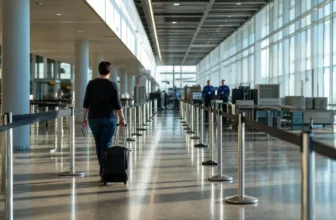
Why Some Countries Require a Visa Just to Transit Through


Booking a layover through London or Toronto and never planning to leave the terminal feels like a non-issue – but that assumption is exactly what gets travelers denied boarding, sometimes on trips they spent months arranging.
A six-hour connection inside an airport still puts you on foreign soil. The transit hall has no special legal status that suspends a country’s border rules. The UK, the USA, Canada, Australia, and every Schengen-area country each apply their own transit visa requirements to specific passport holders – and the airline may not let you board at the departure end if those requirements are not met.
Not leaving the airport has no meaning under border control law in most jurisdictions. The moment your itinerary touches down in a country, that country’s documentation rules apply to you.
Whether your layover triggers a visa requirement has nothing to do with the route you are flying. It has everything to do with which passport you are carrying and what the transit country’s government has – or has not – agreed with the country that issued it. By the time this article is done, you will know which variable to look up, which sources carry the answer, and how to confirm your status before you click purchase.
| Feature | Airside Transit | Landside Transit |
|---|---|---|
| Physical location | Inside secure zone, never crossing passport control | Through passport control and back into departures |
| Legal status | Still on the country’s sovereign territory | Formal entry into the country |
| Visa typically required | Transit visa (for certain nationalities) | Full visitor or entry visa |
| Typical fee range | Roughly $20–$160 | Often exceeds transit visa range; additional documents required |
| Common triggers | Passport nationality listed under requirement | Separate tickets, non-connected terminals, overnight layover |
| Where the check happens | Departure airport check-in or gate | Departure airport check-in or gate |
Airside Transit Still Puts You on Foreign Soil
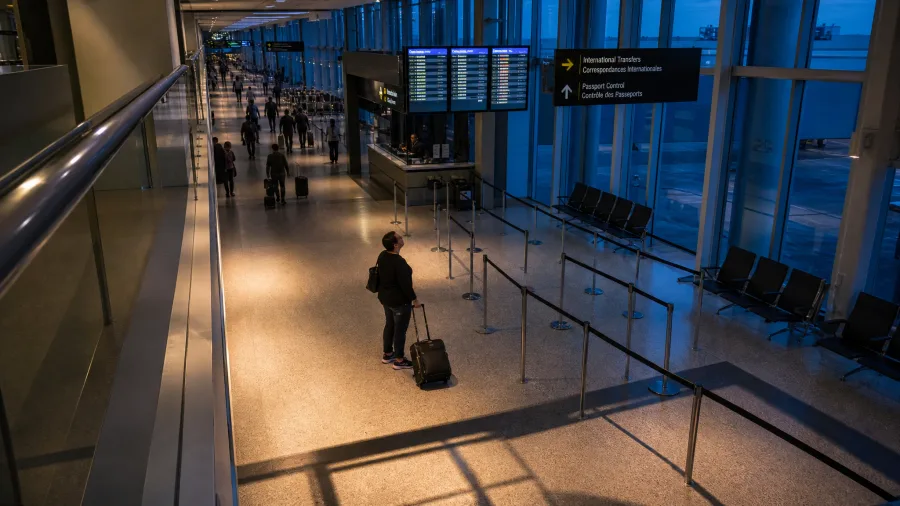
The transit hall is not neutral ground. The moment a plane lands at Heathrow, Toronto Pearson, or any major hub, every passenger on it is physically inside that country’s sovereign territory – including the ones who never plan to walk past the departure gates.
A government’s authority to screen who enters its territory covers the entire airport footprint. There is no legal carve-out for the airside lounge, no corridor of international limbo between the jet bridge and the departure board. The UK, USA, Canada, Australia, and Schengen-area countries have all codified this in practice: each requires a transit visa from certain passport holders even when those travelers intend to sit in the terminal for four hours and reboard.
‘Not leaving the airport’ is an intention, not a legal status. What border control rules in most of these countries actually respond to is physical presence on the territory – and a traveler in the airside lounge satisfies that condition the moment they arrive.
The practical consequence is direct. The variable that determines whether a transit visa applies is passport nationality, not the traveler’s itinerary, planned movements, or prior travel history. A routing through London or Sydney triggers a documentation question the moment it appears on an itinerary – and the answer depends entirely on which passport the traveler carries.
Landside Transit Means You Have Already Cleared Immigration
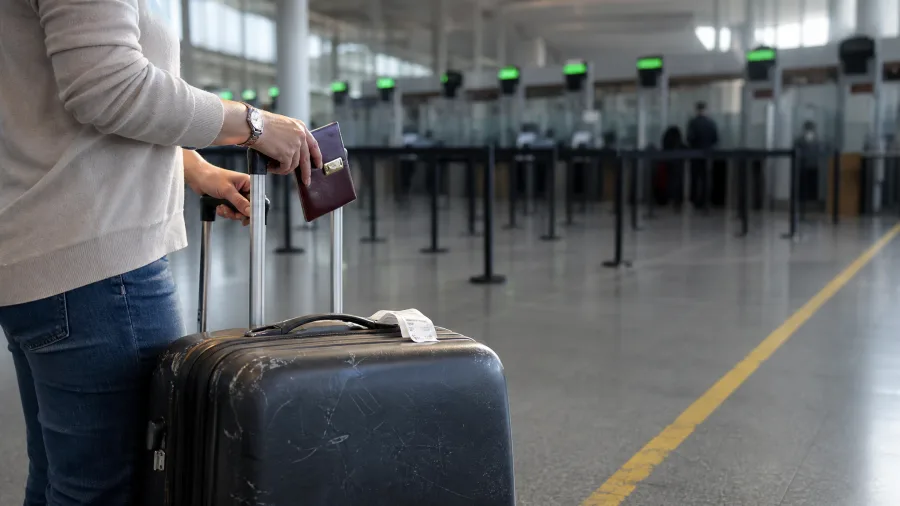
Crossing from airside to landside is not a choice – it is the moment a traveler formally enters the country, regardless of whether they intended to.
Three situations force that crossing without any say in the matter. Buying two separate tickets for connected flights is the most common: without a through-booking, the airline will not transfer baggage across the secure zone, so the traveler collects it, exits, and rejoins the queue at departures. A second trigger is terminal geography – some airports have no secure corridor between terminals, meaning the only path from one gate area to the next runs through immigration. A third is an overnight layover long enough that the transit hall closes; the traveler must exit, spend the night, and re-enter the next morning.
Once that passport control stamp lands, a transit visa is no longer the relevant document.
A standard visitor or entry visa applies instead – typically with higher fees, more supporting paperwork, and a longer processing window. Transit visa fees already reach roughly $20 to $160 depending on the country; a full entry visa for the same destination can push well beyond that range and add requirements such as proof of funds, accommodation bookings, and employer letters.
The ticket structure drives which category applies. Two separate tickets for the same routing can shift a traveler from transit visa territory into full entry visa territory – a difference in cost, preparation time, and documentation that has nothing to do with the route itself and everything to do with how the booking was assembled.
Single Ticket vs. Separate Tickets — What Changes
Single Through-Ticket
- Baggage transferred in the secure zone — no landside crossing triggered
- Transit visa fees in the $20–$160 range typically remain the applicable category
- Supporting documents usually limited to passport and onward itinerary
- IATA TIMATIC check at first check-in covers the full routing
- Terminal changes handled within the airside corridor where one exists
Separate Tickets
- Baggage collection forces an immigration crossing — transit visa becomes irrelevant
- Full entry visa applies: expect proof of funds, accommodation and employer letters
- Entry visa fees and processing windows exceed the $20–$160 transit range
- TIMATIC check at first departure may not flag the second ticket's requirements
- Overnight terminal closures compound the risk — re-entry next morning still needs entry-level documents
Security Screening Is the Primary Stated Reason Requirements Exist

Governments screen transit passengers for the same reason they screen everyone else who sets foot on their territory: the transit hall sits inside the country’s security perimeter, so the logic of pre-arrival checks applies there just as it does at any other arrival point.
The requirements are not theoretical. Documented cases of travelers using transit status – short connections, airside access – to overstay or enter without authorization shaped the specific nationality lists that major hubs currently maintain. When a government adds a passport to a required category, it is responding to a recorded pattern, not anticipating a hypothetical one.
Intelligence-sharing between allied governments adds another layer. Countries that exchange travel document data can adjust their requirement lists based on information that never surfaces in a public announcement – a passport nationality can be added or removed from a required category without any press release or policy notice, sometimes within weeks of a bilateral decision.
For the traveler, the key implication of all this is uncomfortable but clear. Requirements attach to passport nationality as a stand-in for assessed risk at the population level. A traveler with a spotless record, a strong itinerary, and years of complication-free international travel is still subject to the requirement if their passport falls in a required category – individual history does not override the nationality-based rule.
⚠️ COMMON MISTAKE
A Clean Travel Record Does Not Override Passport Nationality
Requirements at major hubs are assigned by passport nationality — not by how many stamps you have or how many times you have transited the same airport before. If your nationality is listed under a requirement, previous entry history in that country does not exempt you from obtaining the transit visa for the next trip.
Your Passport Determines the Risk Category You Are Assigned
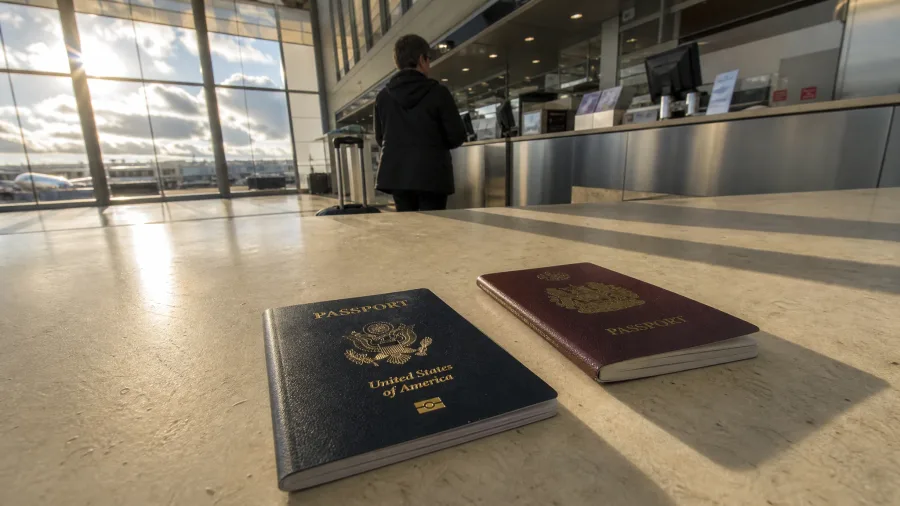
Security logic explains why governments screen transit passengers at all – but it does not explain why two people in adjacent seats on the same flight can walk off the plane and face completely different outcomes at the same border. That difference comes down entirely to what their passports represent in diplomatic terms.
There is no global transit visa standard. Requirements are set through agreements between specific pairs of countries, which means a waiver that exists for one nationality simply does not exist for another. A passport covered by US Visa Waiver Program arrangements or Schengen agreements will typically clear major hubs – London, Toronto, Sydney – without a transit visa. A passport from a country outside those treaty networks will not, even when both travelers are booked on the same flight, checking in at the same counter, sitting in the same seat class.
Same airport. Same aircraft. Entirely different paperwork.
Passport nationality outweighs every other variable in this calculation. The route does not override it. Neither does the airline, the layover length, or a spotless travel history across a dozen countries. If the passport falls into a category that the transit country’s government has not extended a waiver to, the requirement applies regardless of anything else on the itinerary.
That means any check for whether a transit visa is needed has to start with the specific passport in hand – not with the airport’s general reputation, not with what a travel forum says about the route, and not with what applied the last time the same connection was used with a different document.
Transit Visa: From Booking to Boarding
Reciprocity Turns a Security Rule into a Diplomatic Signal

Those risk categories are not fixed by security logic alone – they shift whenever two governments fall out of step with each other.
Visa policy is one of the tools governments reach for when diplomatic relations sour. If one country decides to impose a transit requirement on another’s passport holders, the second country typically mirrors the move within weeks – sometimes faster. The mechanism is well understood in foreign ministries and largely invisible to travelers until they go looking for a visa that did not exist six months ago.
That speed is the problem. A new requirement can clear a cabinet meeting and take effect before airline FAQ pages, booking platforms, or even some embassy websites have been updated. The traveler who researched the route in January and is flying in April may be working from information that became wrong in February.
Both rationales – border security and political signaling – run at the same time, and neither one cancels the other. A requirement can genuinely reduce unauthorized entry risk while simultaneously expressing that a government is displeased with another. Treating it as purely one or purely the other misreads how the policy actually works.
That volatility has a direct implication for when to run the check. Confirming requirements at the time of booking is necessary but not sufficient; a second check close to the departure date, using official government or consular sources, is the only way to catch a change that happened after the ticket was purchased.
Bilateral Agreements Create Exemptions for Specific Nationalities

The same political process that locks requirements into place can unlock them – and when it does, only certain passport holders get the benefit.
Visa waiver programs work by removing the requirement for citizens of specific treaty partners. That sounds broad, but each program is built from individual bilateral negotiations. The US Visa Waiver Program and the Schengen free-movement framework each cover a long list of nationalities, but that list was assembled one country at a time, and not every nationality made it onto any of them.
This is why two passengers can sit in adjacent seats on the same flight, routed through the same transit hub, and face completely different documentation requirements at check-in. One holds a passport whose government negotiated an exemption. The other holds a passport whose government did not – or whose inclusion in a waiver program was revoked.
A treaty exemption has no spillover effect. If you are a citizen of a country not named in that agreement, the treaty is not relevant to your situation, regardless of who else is on the flight or what airport they are transiting through.
Checking whether ‘most people’ on a given route need a transit visa is therefore the wrong question. The only question that matters is whether your passport nationality is covered by an active agreement with each specific country you are transiting through – and that answer sits in official consular sources, not in a forum thread about the route.
Transit Visa Application — What You Typically Need
🛂 Passport
Valid for the full transit period
✈️ Onward itinerary
Confirmed booking showing final destination
💵 Fee range
Roughly $20–$160 depending on issuing country
📅 Processing time
A few business days to several weeks
⚡ Expedited option
Available at some consulates for additional fee
💰 Proof of funds
Required by some issuing countries — check per transit hub
Key rule
Fees and requirements are set by the transit country, not the destination country — check each hub on your itinerary separately.
Airlines Check Documents at Departure, Not on Arrival
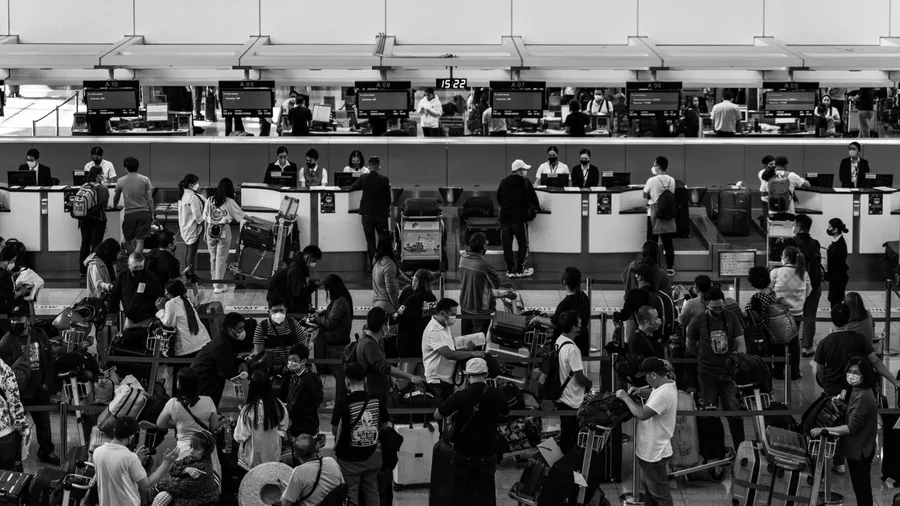
Enforcement happens at your departure gate, not at the transit hub – and that distinction changes what the requirement means in practice.
When you check in, the airline’s staff run your passport and destination details through IATA’s TIMATIC database, a real-time system that tells them which documents you need for every country on your itinerary, including any transit stop. This is standard procedure at every major hub, and it happens before you clear security, before you find your gate, before the flight is anywhere near the tarmac.
The reason airlines enforce this so carefully is money. If a carrier boards a passenger who is inadmissible at a transit or destination airport, that airline is financially responsible for putting them on a return flight – and the transit country’s immigration authority can also fine the carrier directly. A denied boarding at the origin airport costs the airline nothing beyond the inconvenience. A repatriation flight costs real money.
That commercial exposure is why the check is thorough and why it happens early. The traveler who shows up without the correct transit visa document is turned away at home – not intercepted at the connecting airport.
The check-in system is not a safety net for the traveler. A carrier that misses the problem still faces fines from the transit authority, but by then the passenger has already been flown somewhere they cannot legally be – and the trip has collapsed. The system exists to protect the airline’s liability position, not to give travelers a second chance.
Missing the Visa Means Losing the Flight, Not Paying a Fine

Being turned away at the departure counter is not a fine and not an arrest – it is simply the end of the trip before it starts.
That is the most common outcome: the gate agent’s screen flags the missing document, boarding is refused, and the traveler goes home. No penalty is levied against the passenger. The cost is the flight itself – any non-refundable fare, any hotel at the destination, any tour or connection already booked.
A worse version exists. Occasionally a passenger clears the departure check and is stopped at the transit airport instead. At that point there is no immediate return to the comfort of home. The traveler may be held in a secure area, placed on the next available return flight at their own cost, and given no guarantee of accommodation or rebooking assistance in the meantime. It is a more disruptive and significantly more expensive position to be in.
There is no fix available at the airport on either end.
A transit visa application requires a valid passport, a confirmed onward booking, and in some cases proof of funds. Processing windows run from a few business days on the short end to several weeks at slower consulates. Some issuing authorities offer expedited tracks, but even the fastest option takes days and typically requires the applicant to appear in person – or have a representative appear – in the country that issues the visa. None of that is possible in the hours before a flight.
The gap between ‘I just realized I need this’ and ‘I can legally board’ is measured in days at minimum. Advance confirmation is the only position that closes that gap.
Only Official Government Sources Give Current Requirements

Given that the timeline for obtaining a transit visa runs from a few business days to several weeks, the only window that actually works is before you book – which means knowing where to look.
Two sources are authoritative. The first is the embassy or consular website of each transit country on your itinerary; that is where current requirements are published and updated when policy changes. The second is IATA’s TIMATIC database – the same system the airline’s check-in agent is querying. Most airline booking flows make it accessible under a travel requirements or document check function; you do not need industry access to use it.
Every other source carries risk.
Third-party travel sites, travel forums, and some airline FAQ pages can sit months out of date after a policy shift. Requirements change quickly – sometimes within weeks of a diplomatic development – and a page that was accurate when it was written may not be accurate when you read it. A forum post describing what someone else experienced with a different passport is not evidence of what applies to yours.
That last point is the one most travelers miss. The check must be run with your specific passport nationality entered. General route information tells you nothing. A guide written for a German passport holder does not confirm anything for a holder of a Pakistani or Nigerian or Brazilian passport transiting the same airport.
Transit visa fees range from roughly $20 to $160 depending on the issuing country, and applications require at minimum a valid passport and a confirmed onward itinerary. Those specifics only matter once you have confirmed a requirement actually applies to you – and that confirmation comes from one of the two authoritative sources, with your nationality entered, checked for every transit point on the full itinerary.
Frequently Asked Questions
Do I need a transit visa if my layover is only a few hours?
Layover length is not the deciding factor. What matters is your passport nationality and whether your transit is airside or landside. A two-hour airside layover in the UK, USA, or Canada can still require a transit visa for certain nationalities — check TIMATIC or the relevant embassy site with your specific passport entered before booking.
Can I apply for a transit visa online or do I have to go to a consulate?
It depends on the issuing country. Some transit countries — including the UK — offer online applications. Others require an in-person application or submission through a visa application center. Processing times range from a few business days to several weeks, so start the application as soon as you confirm a requirement applies to your passport.
If I have a US visa or a Schengen visa, does that exempt me from transit visa requirements in other countries?
Sometimes, but not automatically. Holding a valid US visa can exempt certain nationalities from transit visa requirements in a handful of other countries, and a valid Schengen visa similarly creates some exemptions. These rules are country-specific and narrow. Verify the exact exemption conditions for each transit country on your itinerary against your passport nationality — never assume a visa for one country covers another.
What happens if the airline lets me board but the transit country turns me away?
You would be detained at the transit airport and returned on the next available flight to your origin. The airline that carried you is responsible for the repatriation cost and typically faces a fine from the transit country’s immigration authority. You would likely lose the onward journey with no guaranteed refund, and you would face the disruption without any consular assistance at the gate — which is why the check at departure is so critical.
How often do transit visa requirements actually change?
More often than most travelers expect. Requirements can shift within weeks of a diplomatic development, a reciprocal policy response, or an updated bilateral agreement. The practical implication: check official sources close to your departure date, not just at the time of booking — especially for routes through countries with recently strained diplomatic relationships.
Is TIMATIC free to use for travelers, or is it just for airlines?
TIMATIC is the airline industry’s standard tool, but travelers can access it through most major airline websites under a travel documents, visa check, or destination requirements section. Some airlines link directly to a passenger-facing version. It returns results based on your passport nationality, destination, and transit countries — and it is the same data source the check-in agent sees, which makes it the most reliable third-party check available to travelers.
Three Checks That Belong Before You Book, Not the Night Before You Fly
Start with the full itinerary, not just the destination. Every airport where your aircraft lands – including a forty-minute technical stop – is a transit country with its own rules. Look up requirements for each one using IATA’s TIMATIC database, accessible through any major airline’s booking site, or the relevant embassy’s consular page, with your specific passport nationality entered. A forum post about what most people do on that routing tells you nothing about your own status.
Then set what you find against the time you actually have. Processing windows run from a few business days to several weeks; expedited services exist at some consulates and not at others. If the math does not work, that is a booking decision, not an airport problem.
The traveler who started by wondering why anyone needs a visa just to change planes now has the full answer: the transit hall is foreign territory, the passport determines the rules, and the airline will enforce them at the departure gate before you are anywhere near the connection. Run the three checks – every transit airport, TIMATIC or embassy source with your passport nationality, lead time versus processing window – before you confirm the purchase. After that, there is nothing left to wonder about at the gate.
Check Every Transit Stop Before You Book
Use the TIMATIC tool on any major airline's website and enter your specific passport nationality for each country your itinerary touches. It takes five minutes and it's the same check the airline runs at the gate.